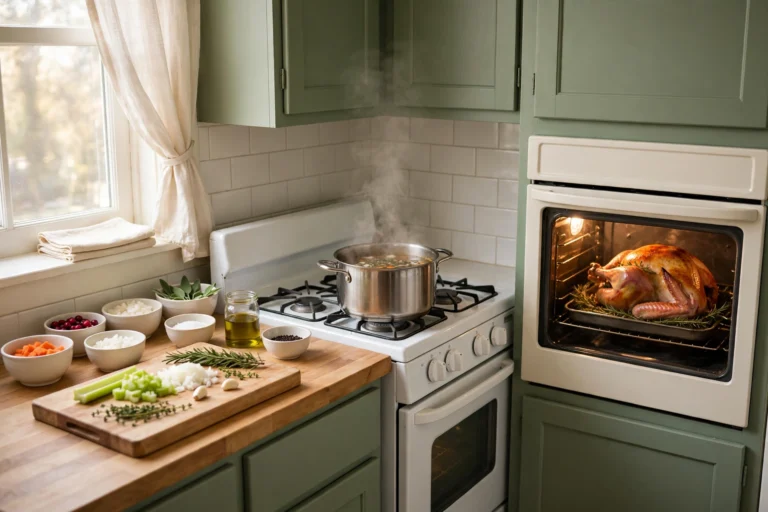
Hosting Christmas Dinner in a Tiny Kitchen
A tiny kitchen can host Christmas dinner. It will not look like a cooking show kitchen, and it does not need to. It needs a plan, clear counters, a few zones, and a menu that fits the oven you have, not the oven you wish you had. Most Christmas dinners fail in a small kitchen because the cook tries to make too many dishes at once, in too little space, with no plan for timing. A simple plan fixes all three problems.
The secret to a tiny kitchen Christmas is cooking in order, not all at once. Some dishes cook early and wait. Some dishes cook while the main dish rests. Some dishes never need the oven at all. When you know the order, the kitchen stays calm, the counters stay clear, and dinner comes out hot at the same time. This article shows you how to plan the menu, set up the kitchen in zones, time the dishes, and serve dinner from a small kitchen without stress.
The whole dinner costs what your normal Christmas shop costs, and the kitchen setup costs under twenty dollars if you need a few extra trays or containers. It takes a morning of cooking, an hour of serving, and a plan you write the night before. Follow the plan, and a tiny kitchen will host a Christmas dinner your guests remember.
Plan the menu for the oven you have
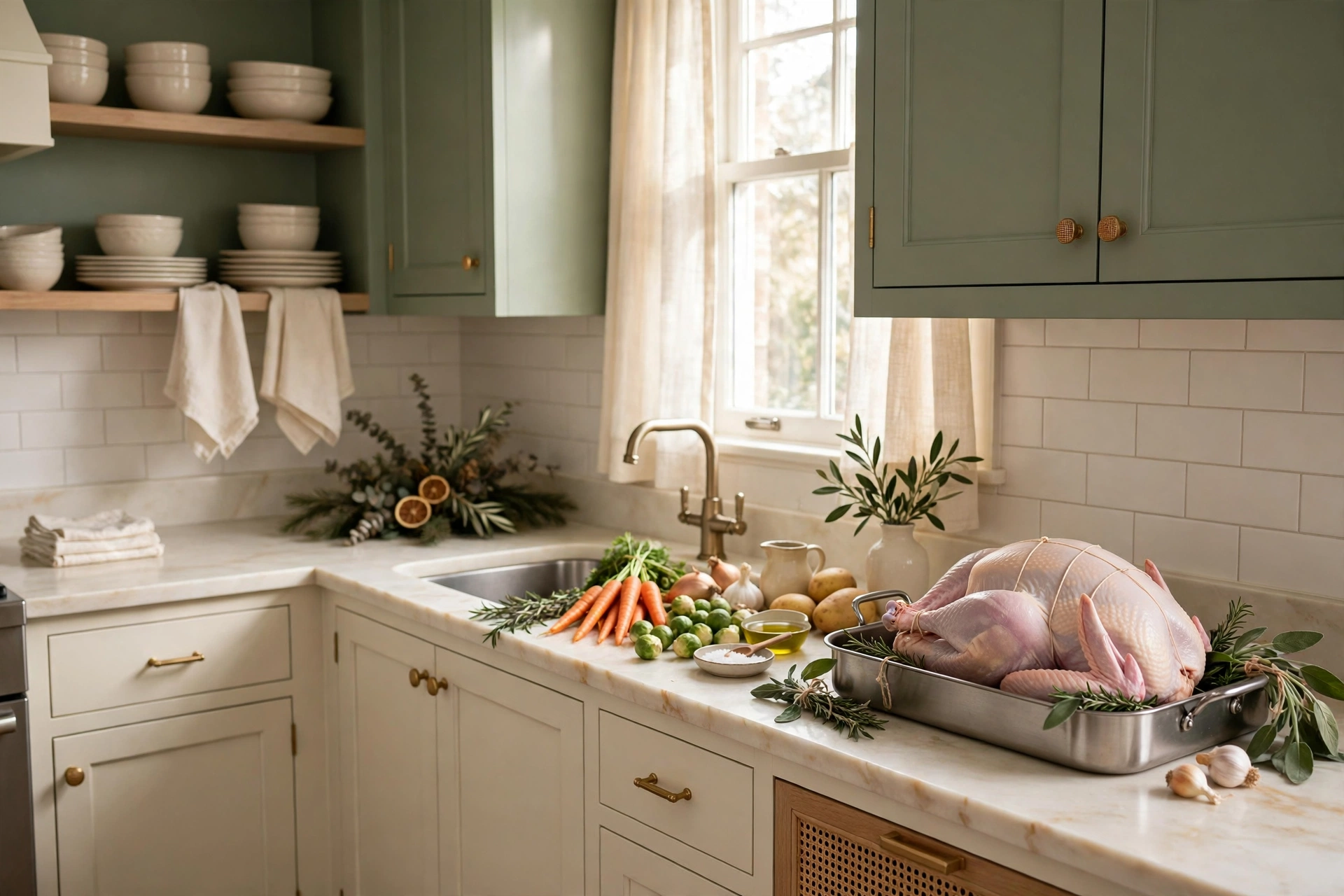
Start with the oven, because the oven decides the menu. Most small kitchens have one small oven, and one small oven can cook one main dish and one side dish at a time, not five dishes at once. Plan a menu that fits that limit. A main dish, two hot sides, one cold side, and a dessert that does not need the oven is a full Christmas dinner, and it fits in one small oven.
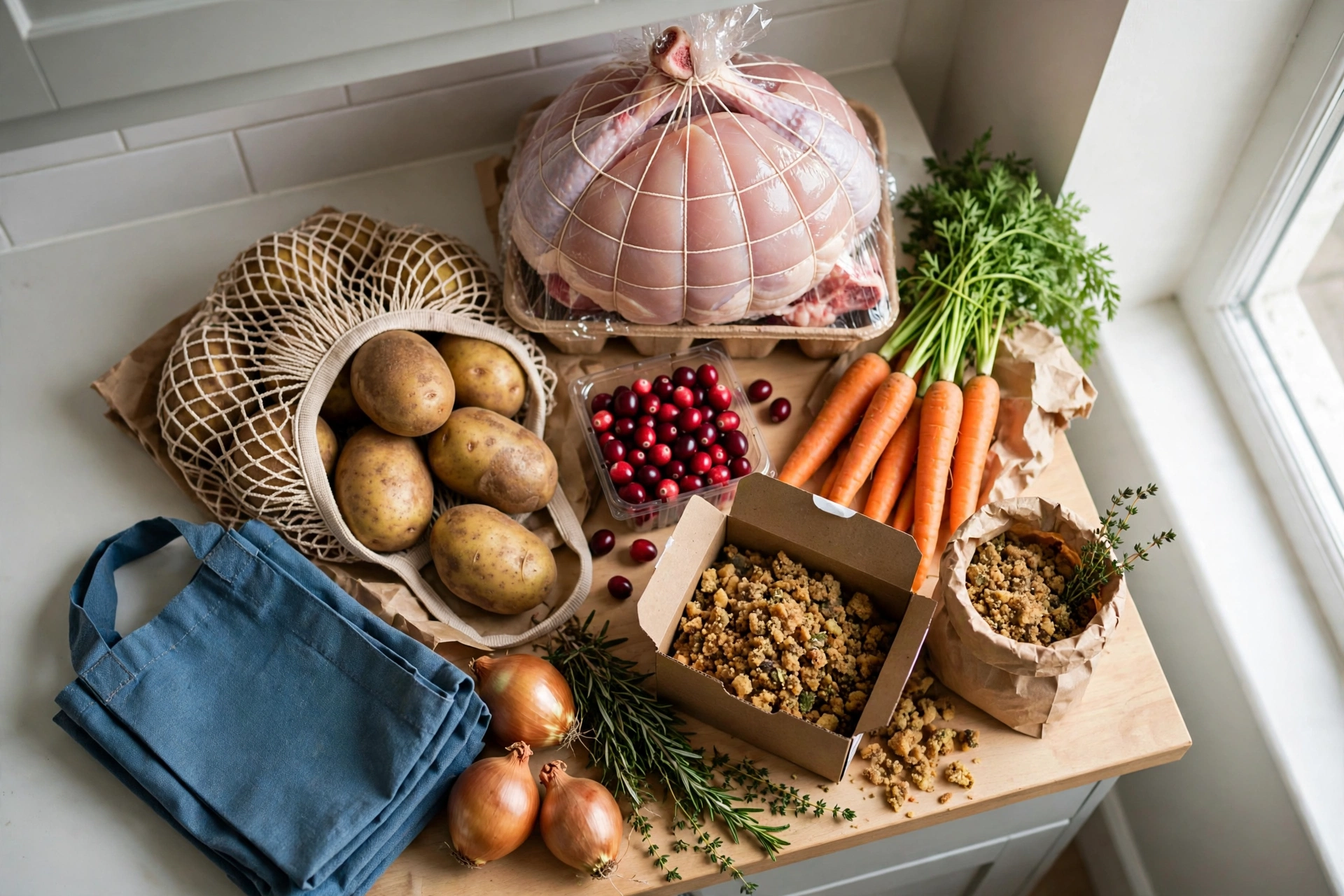
Pick a main dish that fits your oven and your roasting tray. A small turkey crown, a chicken, a ham, or a vegetarian nut roast all fit in a small oven and feed four to six people. A whole turkey does not fit in most small ovens, and it needs a tray most small kitchens do not own. A turkey crown costs about fifteen to twenty-five dollars, it cooks faster than a whole turkey, and it leaves room in the oven for the roast potatoes. Choose the main dish that fits, not the one that looks best in a photo.
Pick sides that cook at the same temperature as the main dish, or sides that do not need the oven at all. Roast potatoes and carrots cook at the same temperature as a turkey crown, so they can share the oven. A cold salad, a plate of bread, and a cranberry sauce made on the hob do not need the oven at all. A dessert that sets in the fridge, like a trifle or a cheesecake, needs no oven time. A menu that shares the oven and the hob is a menu that works in a tiny kitchen.
Clear the counters the night before
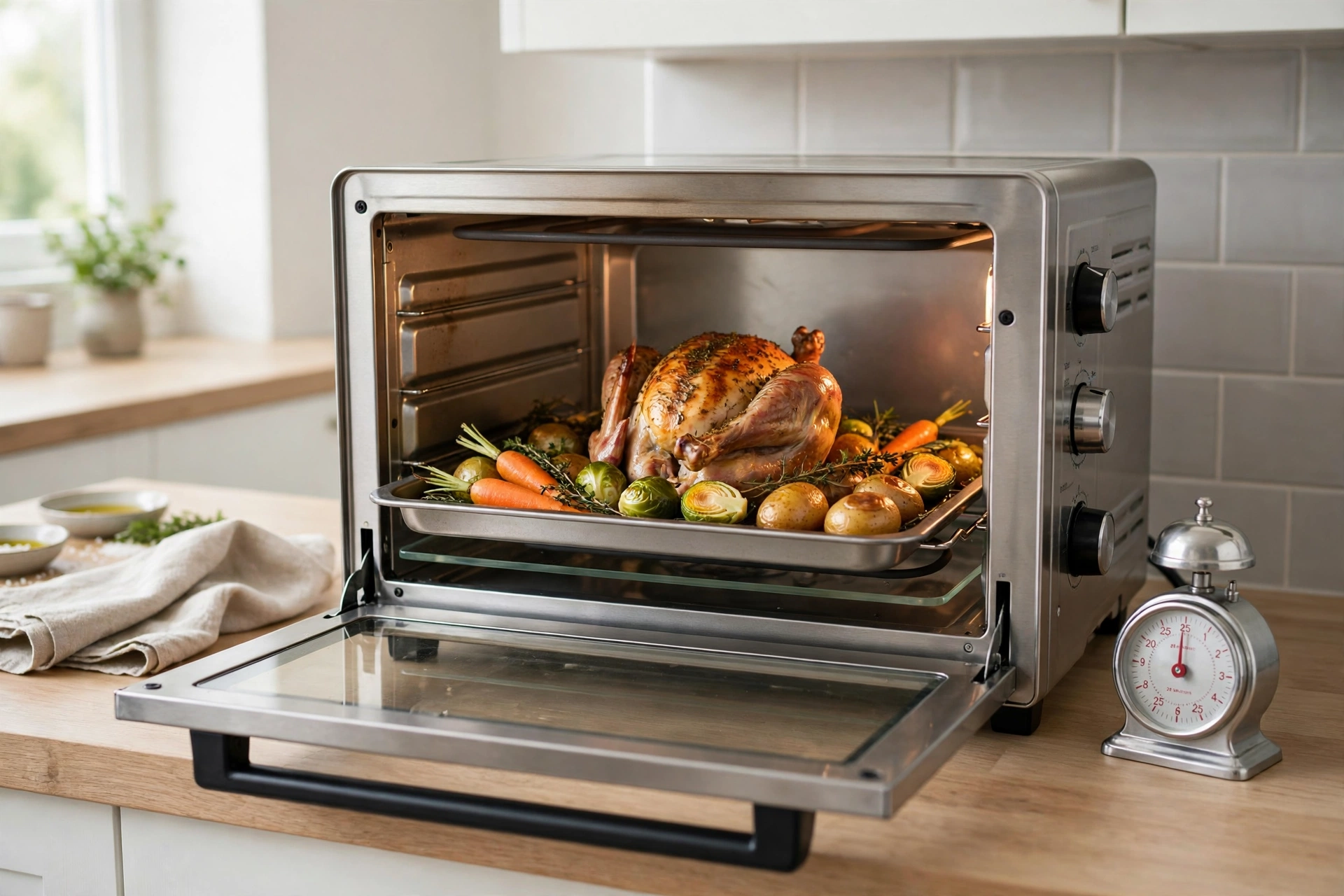
Clear the counters the night before Christmas dinner, not on the morning of it. Take everything off the counters that you will not use for cooking: the toaster, the kettle if you have another way to boil water, the fruit bowl, the mail, and the jars. Put them in a cupboard, on top of the fridge, or in a box in another room for the day. A clear counter is the most important tool in a tiny kitchen, because it is your only work space.
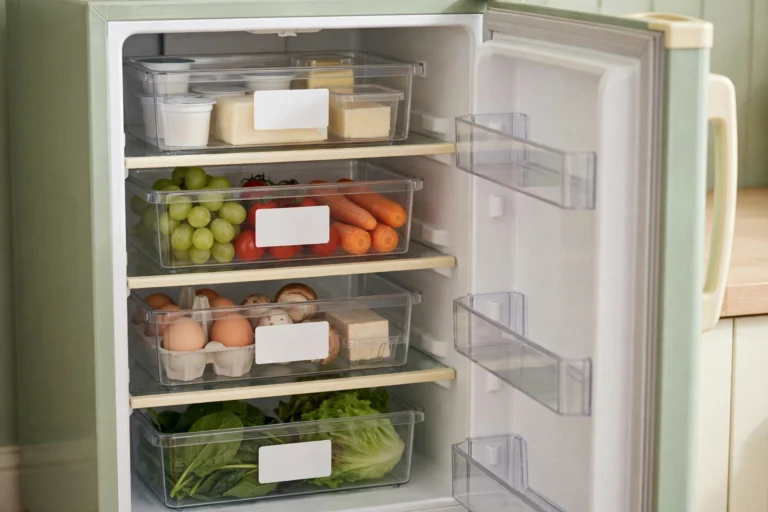
Wipe the counters, empty the sink, and put a clean tea towel on the rail. Make space in the fridge for the dishes you will cook, the drinks, and the leftovers. Throw away anything expired, and move the things you will not use to the back of the fridge. A tidy fridge means you are not hunting for space while the turkey is cooking and the potatoes are waiting.
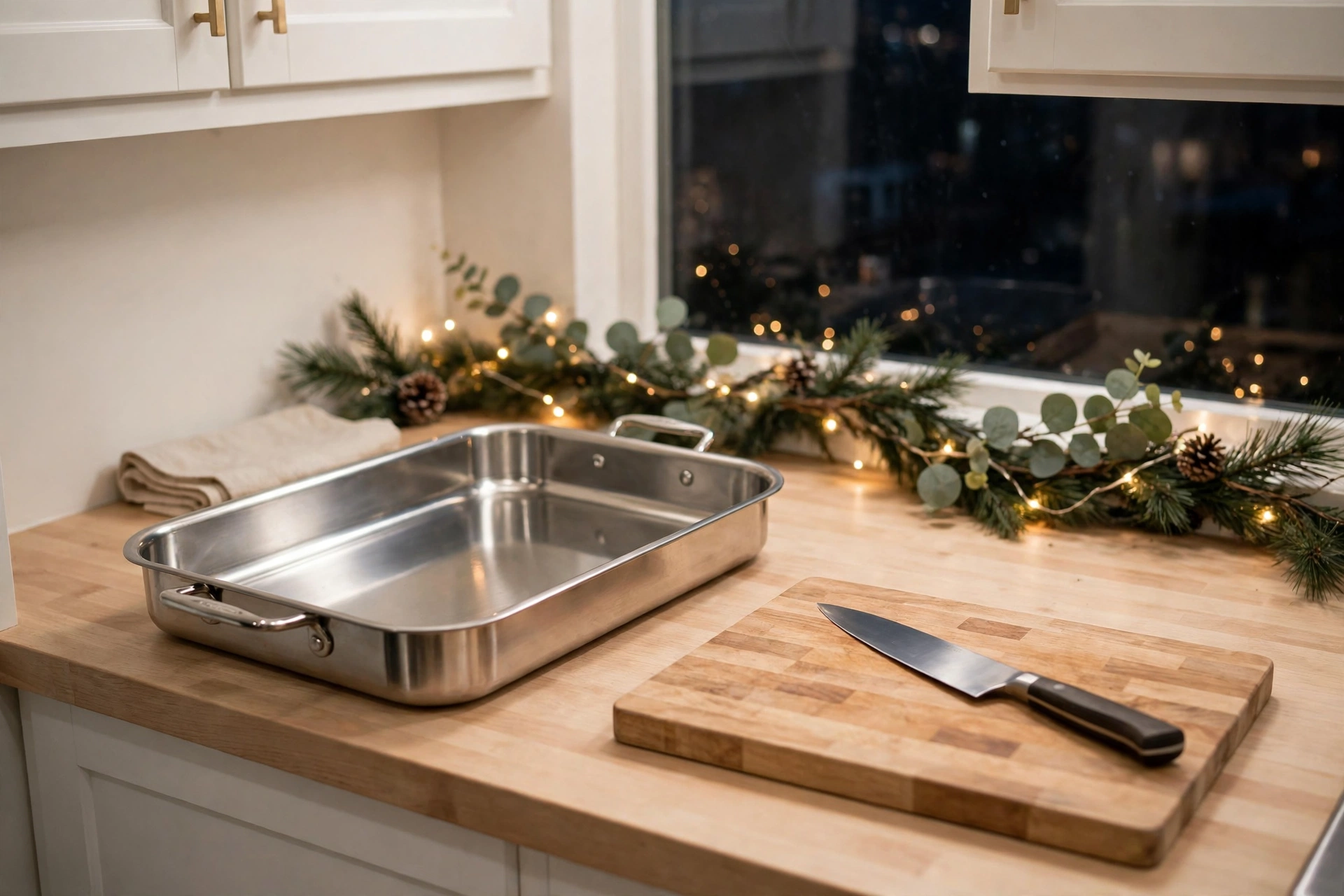
Set out the tools you will need on the morning, in one place, so you are not opening cupboards while your hands are full. A roasting tray, a chopping board, a sharp knife, a peeler, a saucepan, and a serving dish are the tools most Christmas dinners need. Put them on a clear counter or on the table, ready to use. A kitchen set out the night before cooks faster in the morning, because you start cooking instead of searching.
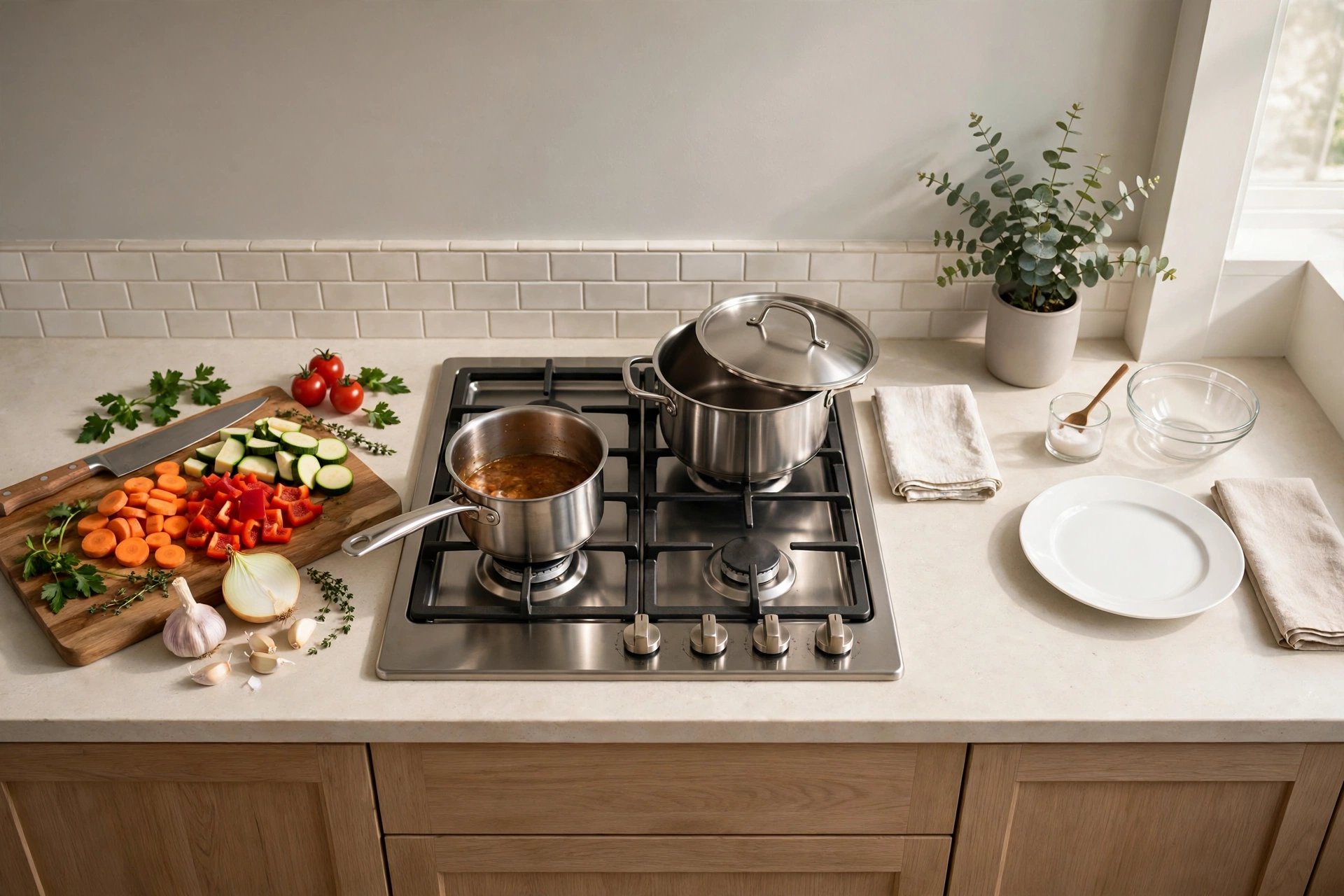
Counter zones: prep, cook, serve
A tiny kitchen works when every counter has a job, and no counter has two jobs at once. Set up three zones: a prep zone, a cook zone, and a serve zone. The prep zone is a clear counter with a chopping board, where you peel, chop, and mix. The cook zone is the area by the stove and the oven, where the pots and the trays live. The serve zone is a clear counter, a sideboard, or the dining table, where the finished dishes wait to be served.
Keep the prep zone clear all morning. Chop one thing, put it in a bowl, and move the bowl to the cook zone or the fridge. Do not let the prep zone fill up with peelings, bowls, and packets, because a full prep zone means you have nowhere to chop the next thing. Put a small bowl on the prep counter for peelings and rubbish, and empty it every hour. A small bin on the counter saves trips to the main bin and keeps the counter clear.
Keep the serve zone empty until the food is ready. Do not use the serve zone as extra storage in the morning, because you will need it clear when the dishes come out of the oven. If your kitchen has no spare counter for a serve zone, use the dining table, a sideboard, or a tray on top of the washing machine. The serve zone can be anywhere, as long as it is clear, clean, and close to the kitchen.
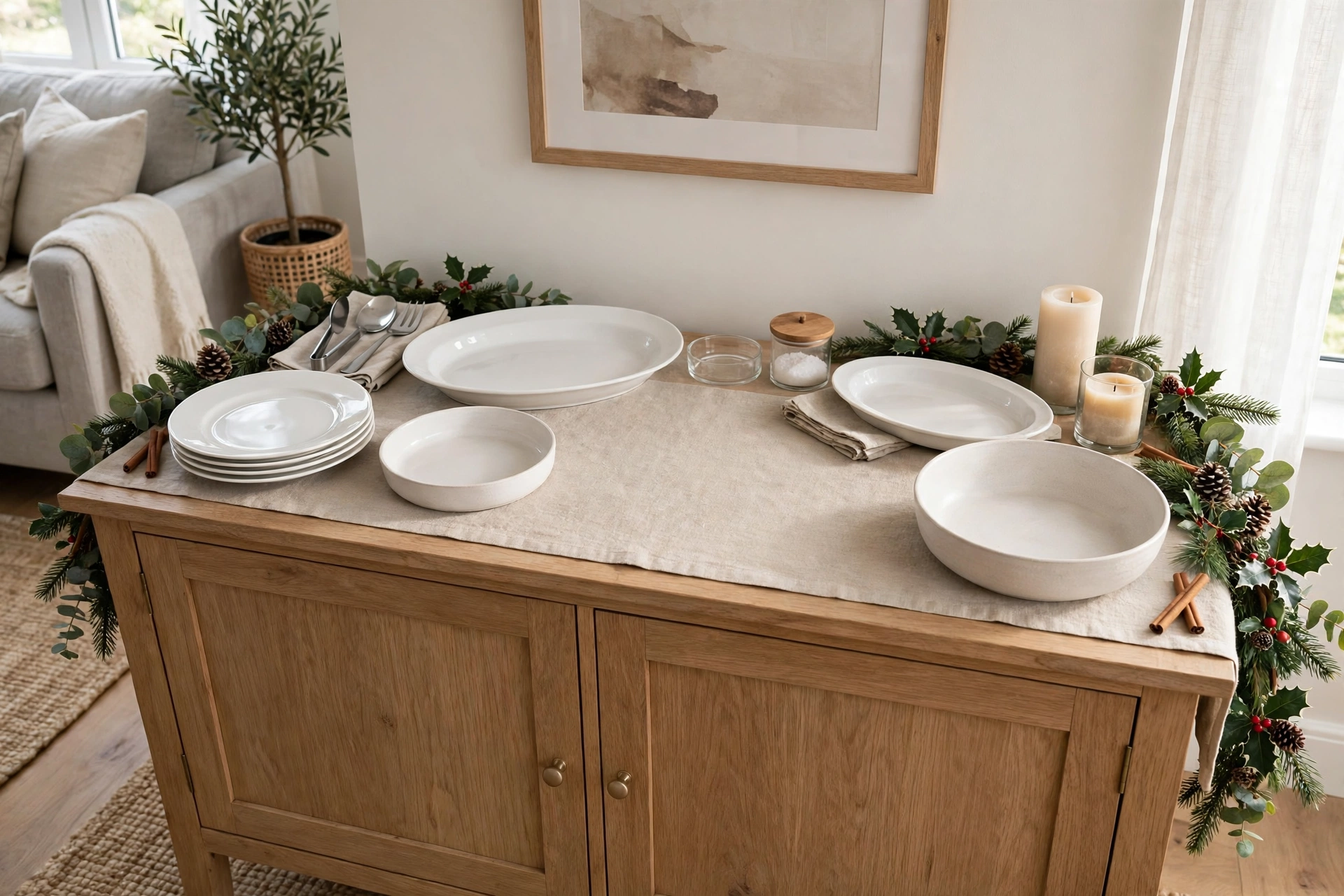
A serving station outside the kitchen
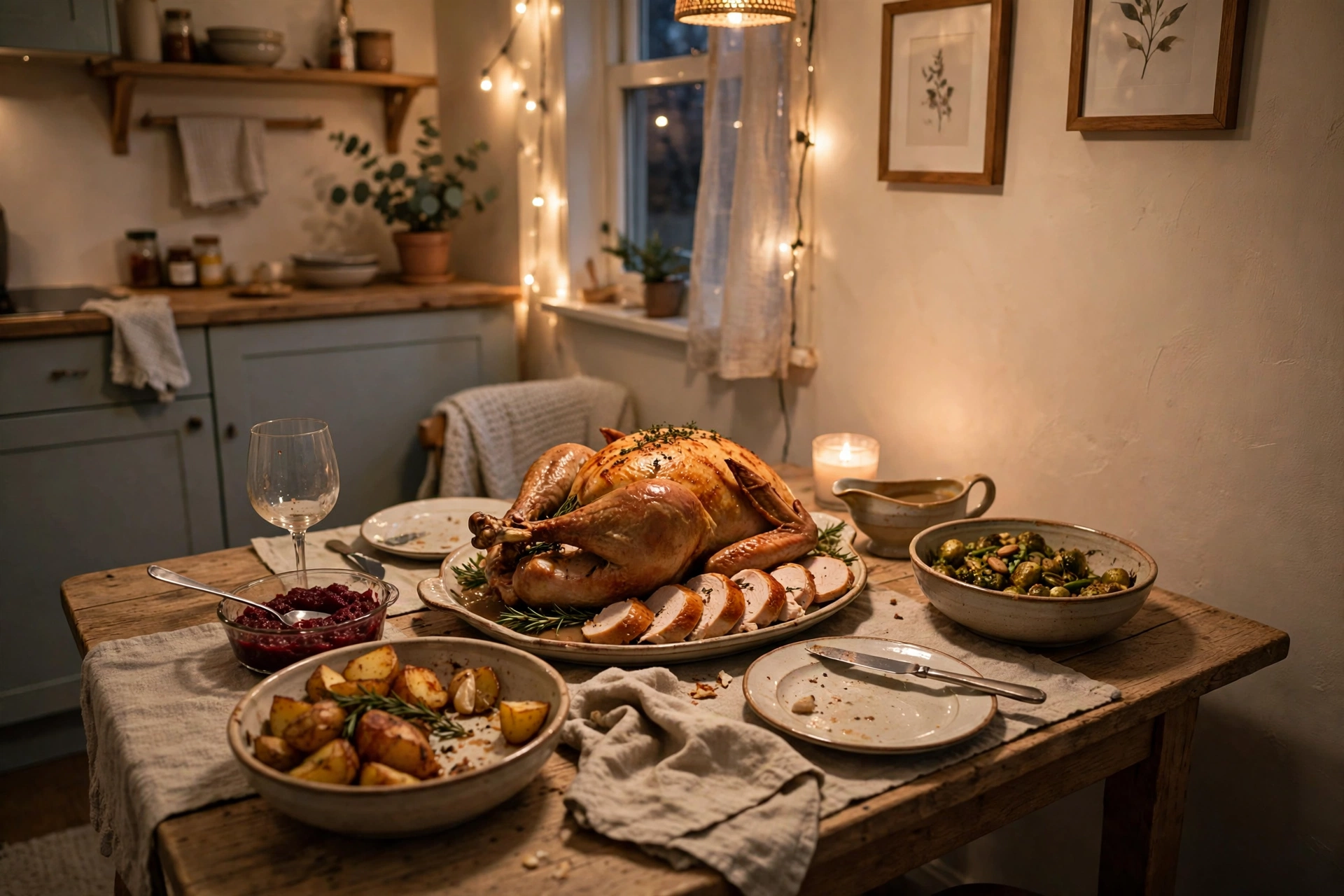
A serving station outside the kitchen is the trick that makes a tiny kitchen work for Christmas dinner. Put a table, a sideboard, or a folding table in the living room or the hallway, and use it as the place where the food waits to be served. Put the serving dishes, the plates, the cutlery, and the glasses on the station, and let guests serve themselves or let the host serve from the station. The kitchen stays clear for cooking, and the dining table stays clear for eating.
Set the serving station up before you start cooking, with the empty serving dishes, the serving spoons, and a tray for the main dish. When a dish is ready, carry it to the station, put it down, and go back to the kitchen for the next dish. The station keeps hot food out of the kitchen, where it would crowd the counters, and it keeps guests out of the kitchen too, because they can see the food and serve themselves without getting in the way.
If you have no sideboard or extra table, use a tray on the dining table, a chopping board on a stool, or a shelf cleared for the day. A serving station does not need to be a piece of furniture. It needs to be a clear, flat surface outside the kitchen, big enough for two or three serving dishes, and close enough to carry hot food to safely. A folding table costs about twenty to thirty dollars and folds away after Christmas, which makes it a good buy for a small flat that hosts dinner once a year.
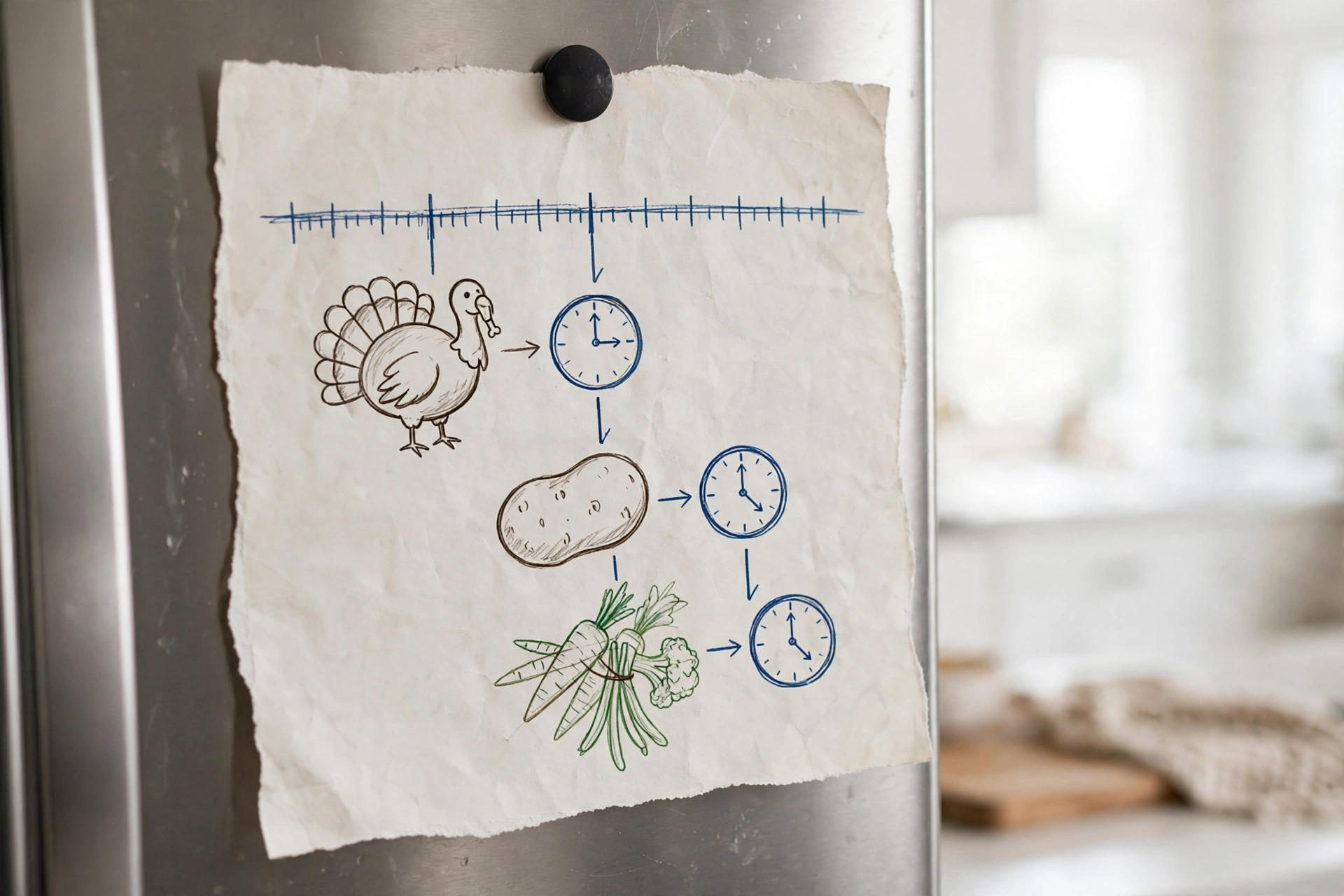
Timing the dishes: a simple timeline
Timing is the hardest part of Christmas dinner, and a written timeline makes it easy. Write the timeline the night before, on a piece of paper stuck to the fridge, with the time each dish goes in the oven and the time it comes out. Work backwards from the time you want to eat, and write every step down. A timeline you can see is a timeline you can follow, even when the kitchen is busy.
Here is a simple timeline for dinner at 2pm. At 10am, take the turkey crown out of the fridge and let it come to room temperature. At 11am, put the turkey in the oven. At 12pm, peel and chop the vegetables, and put the potatoes in the oven with the turkey. At 1pm, take the turkey out to rest, and put the carrots and the stuffing in the oven. At 1:30pm, make the gravy on the hob, warm the plates, and set the serving station. At 2pm, carve the turkey, put everything on the serving station, and sit down to eat.
The key step is resting the main dish. A turkey crown needs twenty to thirty minutes to rest, and during that rest the oven is free for the sides. Resting makes the meat juicier, and it gives you the oven time you need. Do not skip the rest because you are in a hurry. The rest is part of the cooking, and it is the step that makes the timing work in a small oven.
Cook ahead: what to make the day before
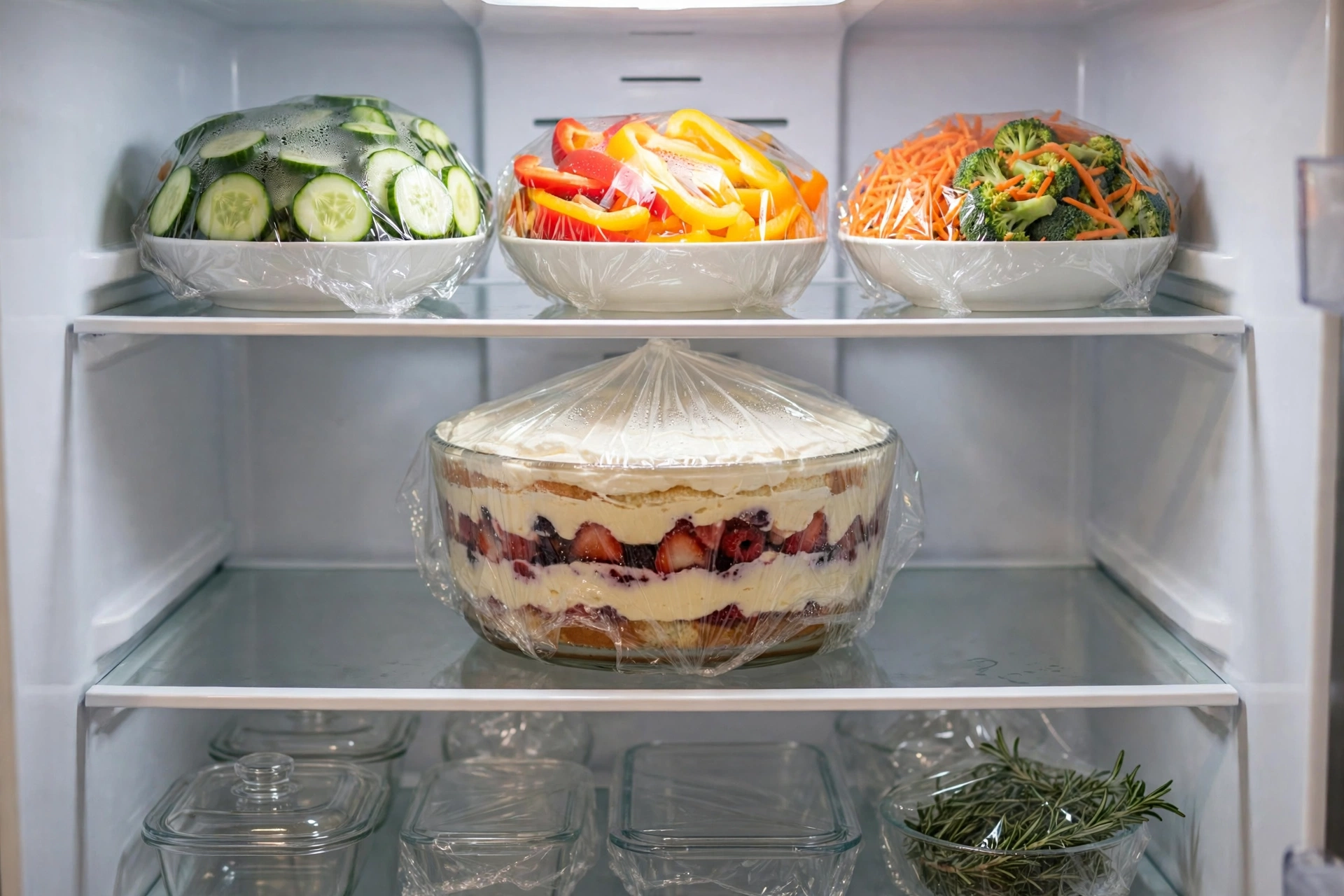
Cooking ahead is the best way to make Christmas morning calm. Some dishes taste better when they are made the day before, and they free up the oven and the counters on Christmas Day. Make the cranberry sauce, the stuffing, and the dessert the day before, and put them in the fridge. Make the gravy stock the day before, and warm it on the hob on Christmas Day. Peel the potatoes and the carrots the night before, and keep them in cold water in the fridge, so they are ready to cook in the morning.
A trifle, a cheesecake, or a chocolate mousse made the day before needs no oven time on Christmas Day, and it tastes better after a night in the fridge. A stuffing made the day before can be put in the oven for the last thirty minutes, while the turkey rests. A cranberry sauce made the day before can be served cold, straight from the fridge, and it needs no cooking time at all. Every dish you make ahead is one less dish to cook on the day, and one less thing crowding the kitchen.
Write a list of what to cook ahead, and do it on Christmas Eve, when the kitchen is quiet and you have time. A calm Christmas Eve of cooking makes a calm Christmas Day of serving. If you try to cook everything on Christmas Day, the kitchen will be full, the counters will be full, and dinner will be late. Cook ahead, and Christmas Day is for serving, not for cooking.
One oven, one hob, no stress
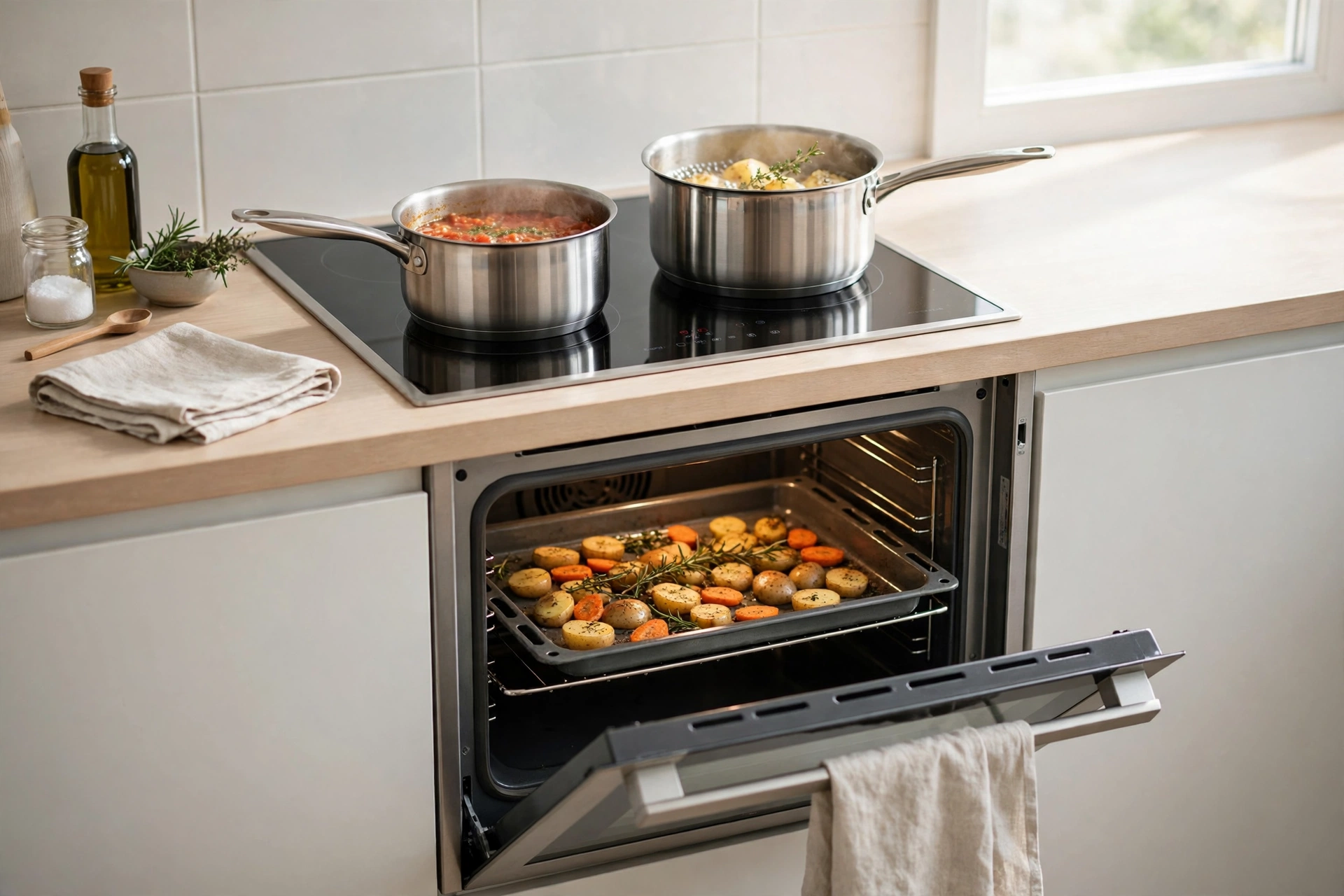
One small oven and one small hob can cook a full Christmas dinner if you use them in order. The oven cooks the main dish first, then the sides while the main dish rests. The hob cooks the gravy, the vegetables, and the sauces, while the oven is busy. The fridge holds the cold dishes and the dessert. That is the whole system, and it works because each dish has its turn.
Do not try to cook everything at once. A small oven with three trays in it cooks unevenly, because the heat cannot reach the middle tray. A small hob with four pots on it is hard to stir, because there is no space to move. Cook one or two things at a time, and let each dish have the heat it needs. A dish cooked properly in its turn tastes better than three dishes cooked badly at the same time.
Use the microwave if you have one, for warming, not for cooking. A microwave warms the stuffing, the gravy, and the vegetables in minutes, and it frees the oven and the hob for the dishes that need them. Use the slow cooker if you have one, for keeping the gravy warm or for cooking the vegetables while the oven is busy. A slow cooker costs nothing extra to run on Christmas Day if you already own it, and it keeps food hot without taking up oven space.
Keeping food warm without a big oven
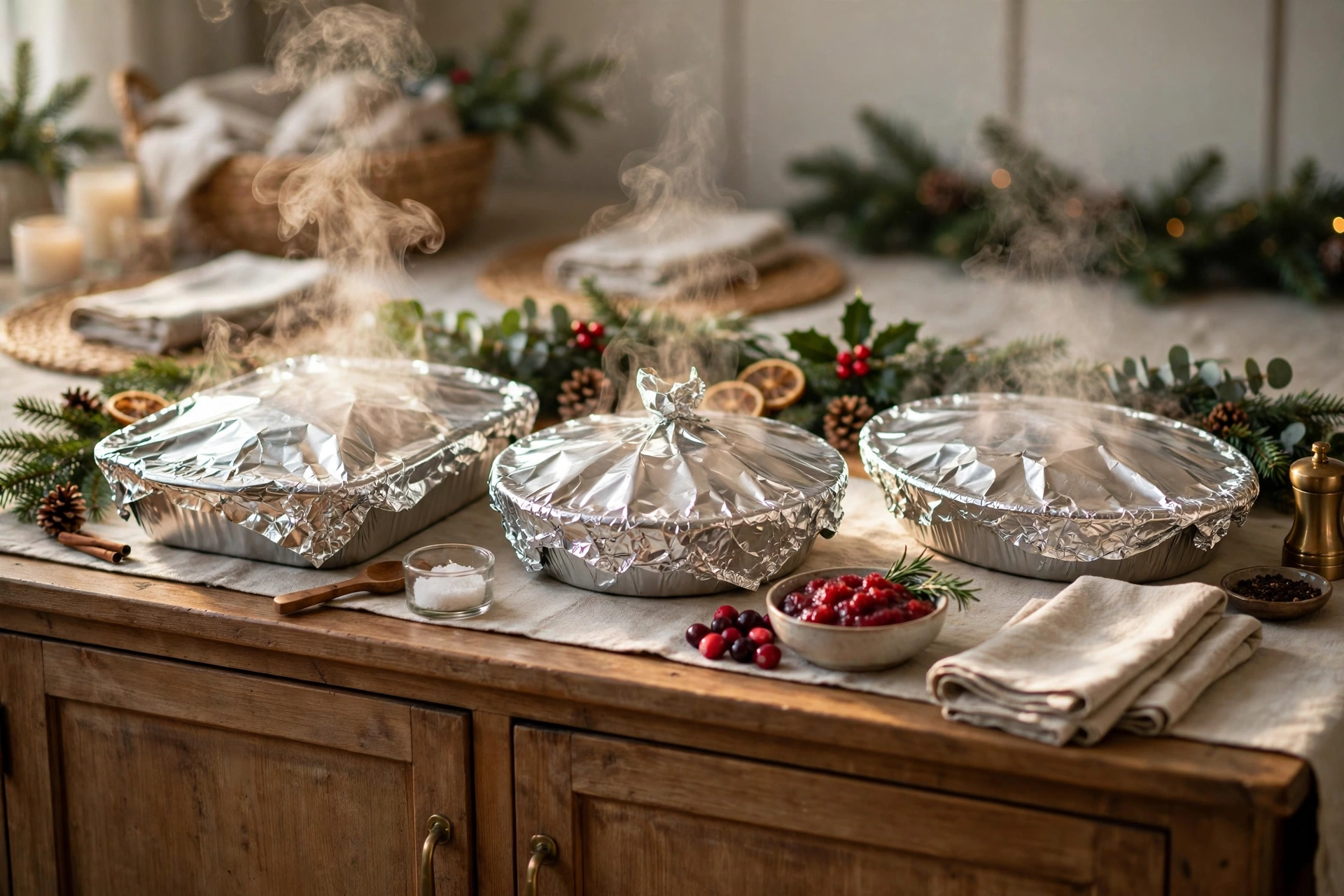
Keeping food warm is a problem in a small kitchen, because there is no warming drawer and no second oven. The solution is simple: cover the dishes with foil, put them on the serving station, and let the foil keep them warm while you finish the last dish. Foil keeps food warm for twenty to thirty minutes, which is long enough to carve the turkey and set the table. A roll of foil costs about two dollars and it is the most useful item in a tiny kitchen on Christmas Day.
Warm the plates before you serve, by putting them in the oven for five minutes after the food comes out, or by running them under hot water and drying them. Warm plates keep food hot for longer, and they make dinner feel like a restaurant meal. Do not put cold plates on the table, because cold plates cool the food in minutes, and the dinner will be cold before anyone finishes eating.
Serve the food in the order it is ready, and do not wait for everything to be perfect. Put the main dish on the serving station first, then the potatoes, then the vegetables, then the gravy. Guests can start serving themselves while you bring the last dish, and nobody will notice if the last dish arrives two minutes after the first. A dinner served warm and in order is better than a dinner served late and all at once.
Washing up as you go
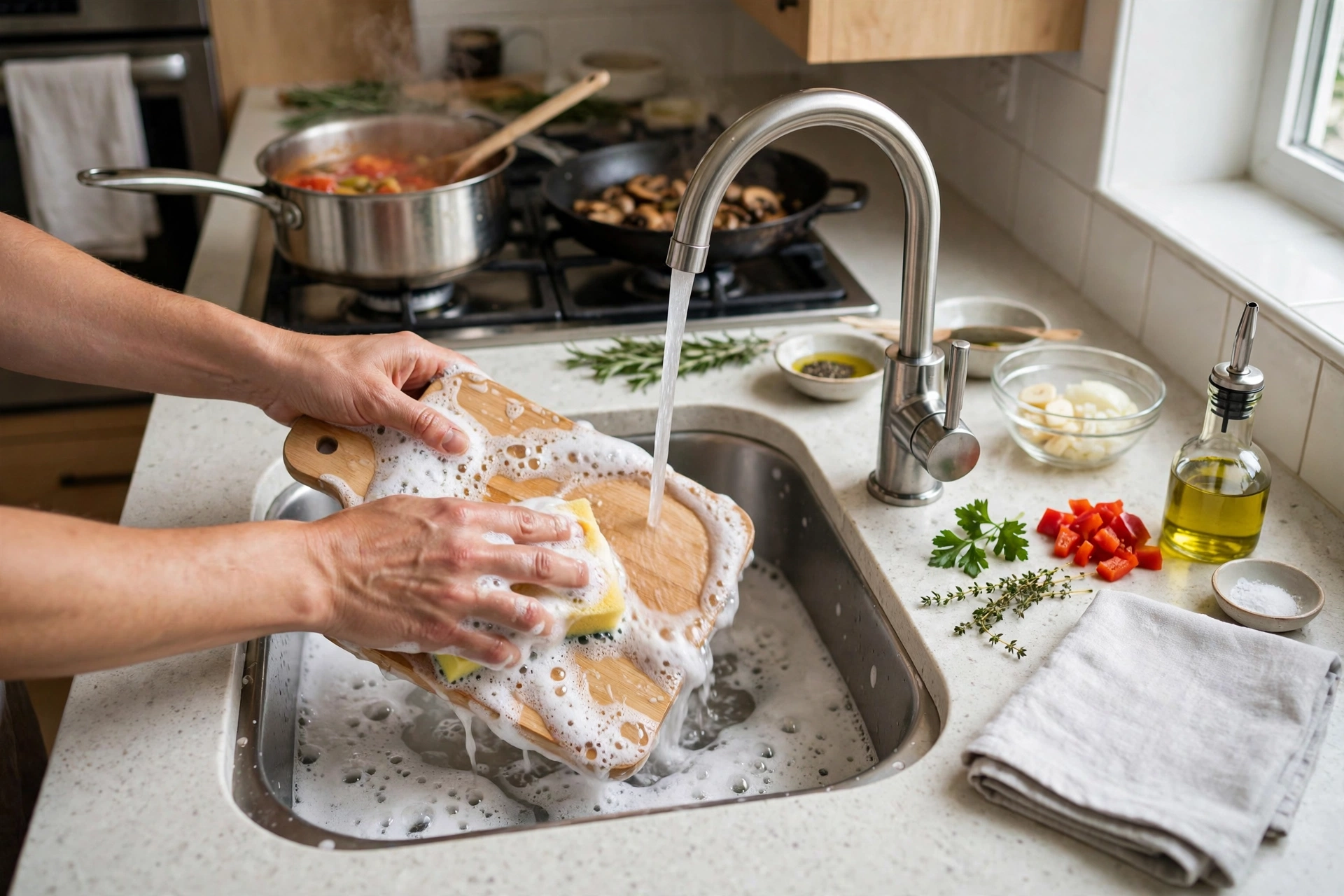
Washing up as you go is the habit that keeps a tiny kitchen usable all day. Wash the chopping board after you chop, wash the peeler after you peel, and wash the bowls after you mix. A sink with a few dishes in it is easy to clear. A sink full of dishes, with no space to wash the next bowl, stops the whole kitchen. Wash one thing, dry it, and put it away, and the kitchen stays clear.
Fill the sink with hot soapy water at the start of cooking, and use it for the small things as you go. Put the big roasting tray to soak after the turkey comes out, and wash it while the turkey rests. The turkey rest time is also the washing up time, and it is the best time to clear the kitchen, because the oven is free and the food is waiting. A kitchen cleared during the rest is a kitchen that is easy to clean after dinner.
After dinner, do not try to wash everything at once. Stack the plates, soak the roasting tray, and wash the glasses first, because they are the easiest. Put the leftovers in containers and in the fridge, and leave the big pots to soak overnight if you are tired. A tiny kitchen does not need to be spotless after Christmas dinner. It needs to be clear enough to make a cup of tea, and that is enough for the evening.
Budget Christmas dinner: what it costs
A Christmas dinner in a tiny kitchen does not need to cost more than a normal Christmas shop. A turkey crown for four to six people costs fifteen to twenty-five dollars. Potatoes, carrots, and vegetables cost five to eight dollars. Stuffing, cranberry sauce, and gravy cost five to seven dollars. A dessert made at home costs five to eight dollars. Drinks cost what you would normally spend. The whole dinner costs between thirty-five and fifty-five dollars for four to six people, which is less than a meal out for one person.
Save money by buying the vegetables loose, not pre-cut, and by making the stuffing and the cranberry sauce yourself instead of buying them ready made. A bag of potatoes costs less than a bag of pre-cut roast potatoes, and it tastes better. A jar of cranberry sauce costs more than a bag of cranberries cooked with sugar and water, and the homemade one tastes better too. A dessert made at home costs half the price of a shop bought one, and it can be made the day before.
Do not buy new serving dishes, new plates, or new cutlery for one dinner. Use the dishes you own, borrow a serving dish from a neighbor if you need one, or use a roasting tray as a serving dish. A roasting tray on the serving station, covered with foil until serving time, works just as well as a fancy serving dish, and it saves you money and storage space.
A tiny kitchen Christmas that works
Hosting Christmas dinner in a tiny kitchen is not about having a big kitchen. It is about planning the menu for one oven, clearing the counters the night before, setting up three zones, using a serving station outside the kitchen, and timing the dishes with a written timeline. Cook ahead where you can, wash up as you go, and keep the food warm with foil and warm plates. That is the whole method, and it works for four people, six people, and a kitchen with one small oven.
Write the timeline tonight, clear the counters tomorrow, and cook in order on Christmas Day. When the turkey is resting, the sides are in the oven, and the serving station is ready, the kitchen will feel calm, and dinner will be on the table on time. A tiny kitchen can host Christmas dinner, and it can do it well, because a small kitchen with a plan beats a big kitchen without one.
Related pins
- 10 Kitchen Storage Ideas Under $20
- Thanksgiving in a Tiny Kitchen
- Small Kitchen Pantry Organization
- Christmas Table Decor on a Budget
- New Year Home Reset in 7 Days