Fridge Organization for a Small Family
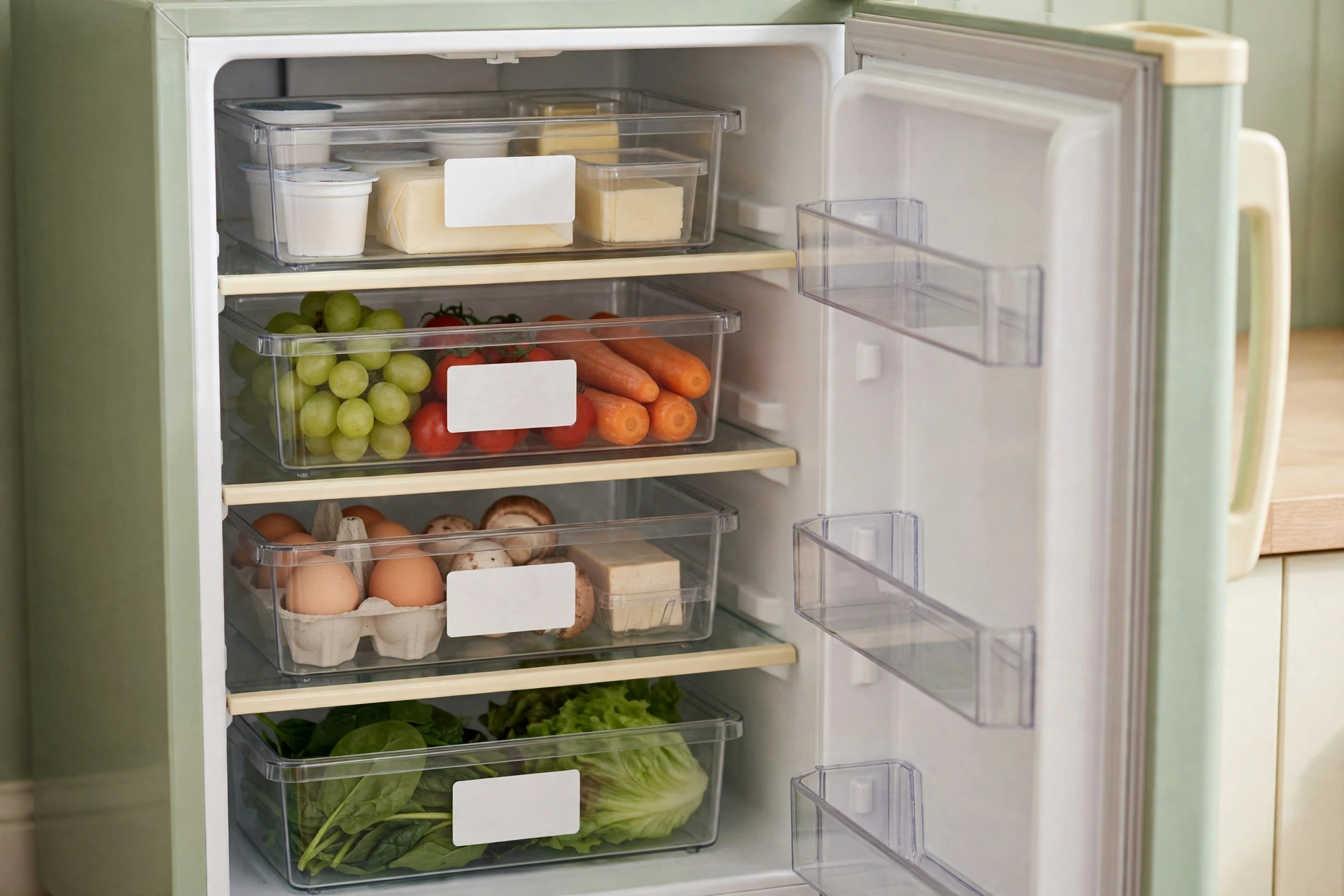
A family fridge fills up fast. Leftovers hide behind milk, the fruit you bought yesterday is already at the back, and dinner starts with moving everything to find one thing. This guide fixes that with ten ideas that work in a real small fridge, in order, from the cheapest and fastest to the ones worth spending a little more on.
Introduction
Small kitchens punish vague storage. A fridge has no fixed home for anything, so food lands wherever there is space, and that space is usually the back of a shelf. The fix is not a bigger fridge. It is one visible, easy place per food group, so putting things away takes less effort than shoving them in.
Fridge organization is also one of the strongest topics in this niche right now: “fridge organization for a small family” is a search people type when they are ready to fix the problem, and “kitchen” is one of the best categories to rank it in. The ideas below are built for that search, and for a fridge that feeds a family of four.
This guide gives you ten ideas that work in a real small fridge, in order, from the cheapest and fastest to the ones worth spending a little more on.
Before you buy anything
Do these three things first. They cost nothing, and they decide whether the rest of the ideas work or fail.
1. Empty the fridge completely.
Take everything out, shelf by shelf, and put it on the counter. Most family fridges hold food that is out of date, or doubled up, and you cannot see it until the shelf is empty.
2. Measure the shelves, not the product.
Measure the width, depth, and height of each shelf first, then buy the bin or container that fits it. Most storage fails because the product was bought first and the shelf was measured second.
3. Pick one colour family.
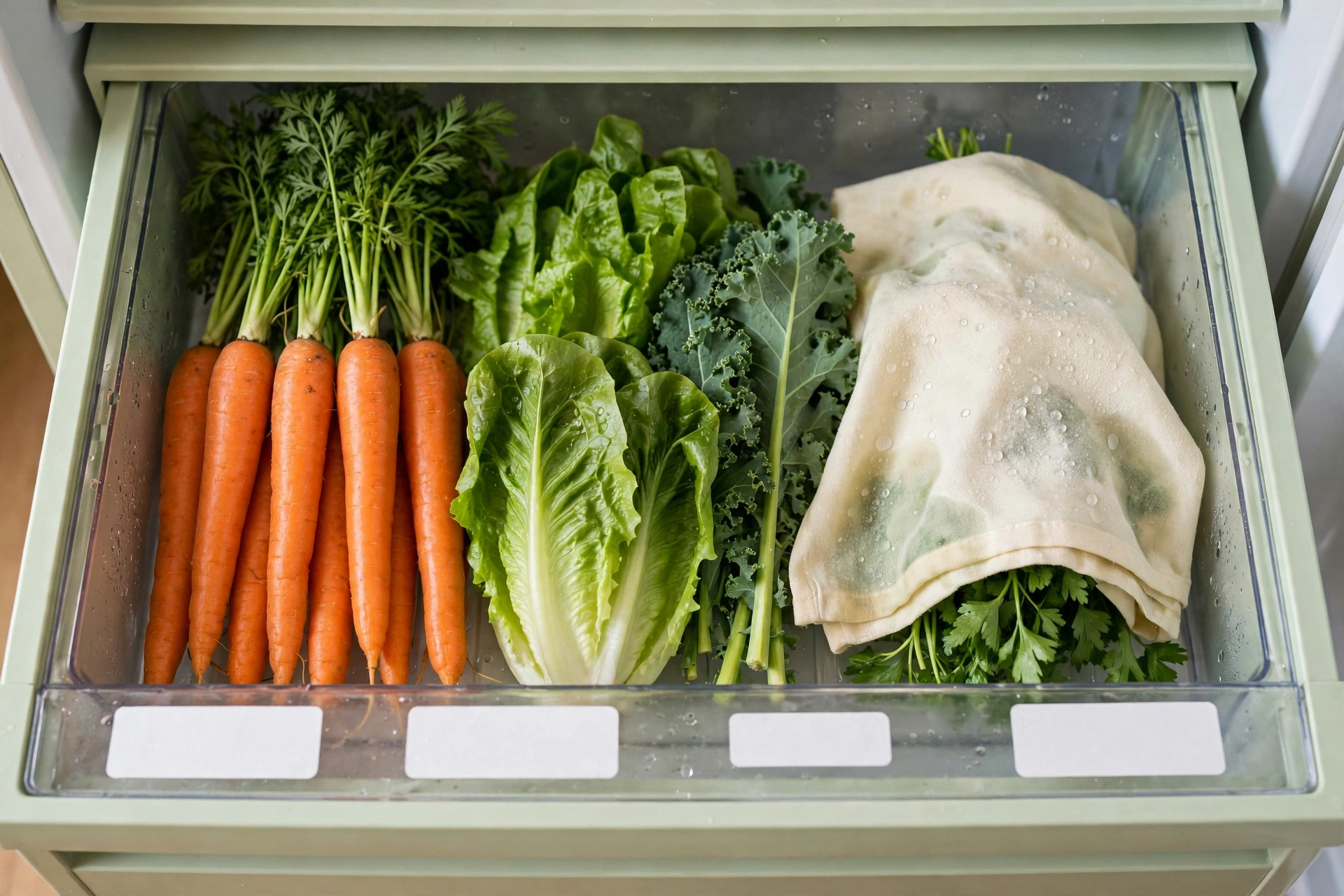
Choose clear bins and white labels, or cream and sage green, and stay with it for the visible storage. Matching bins and labels make a small fridge look calm instead of crowded.
Common mistake:
buying a matching set before you have emptied anything. You end up storing food you do not eat, in bins that do not fit, in a fridge that still looks full.
Three small looks to choose from
Pick one before you start. It keeps every later choice simple.
Clear bins and white labels.
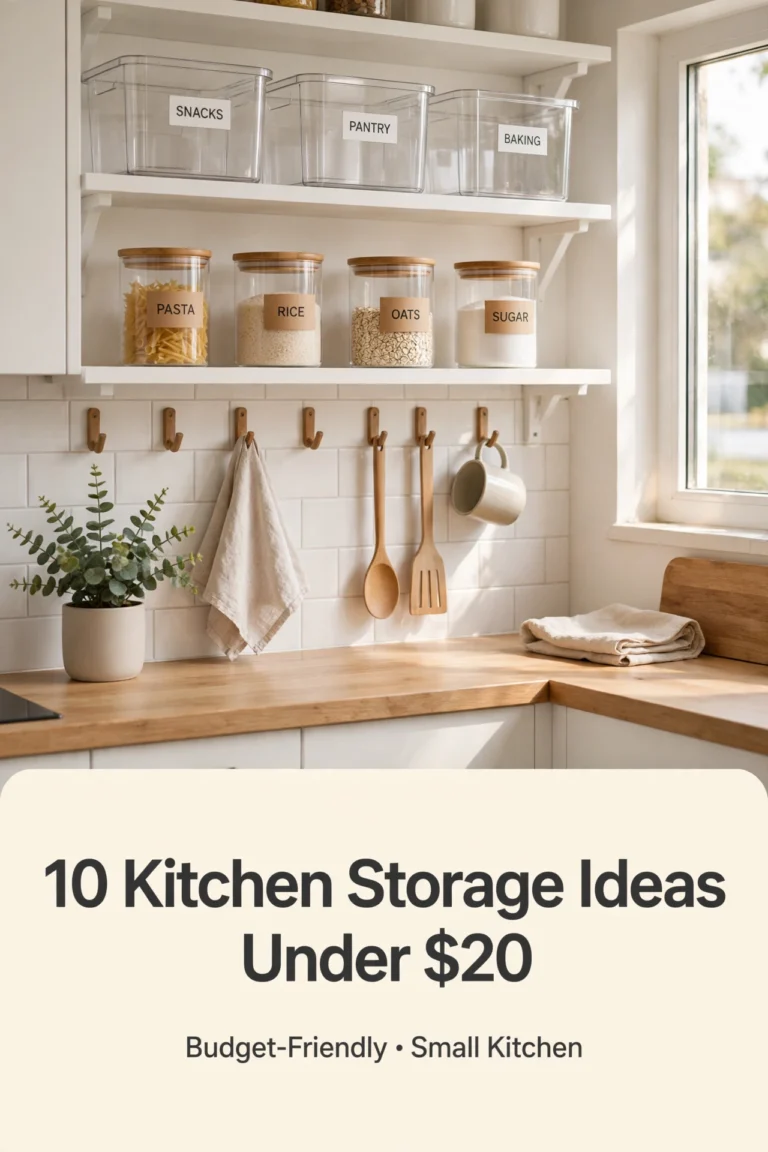
The clearest of the three, and the easiest to keep tidy. Clear bins, white labels, and one colour for the lids. It suits a family fridge because everyone can see what is inside.
Cream and sage green.
The calmest look. Cream containers, a sage bin or two, and natural labels. It suits a small kitchen because nothing in it shouts for attention.
Warm wood and white.
The warmest look. Light wood lids, white bins, and linen labels. It suits a kitchen that already has wooden shelves.
All three use the same rule: one colour family for the things you see, and plain, closed storage for the things you do not.
1. One bin per food group
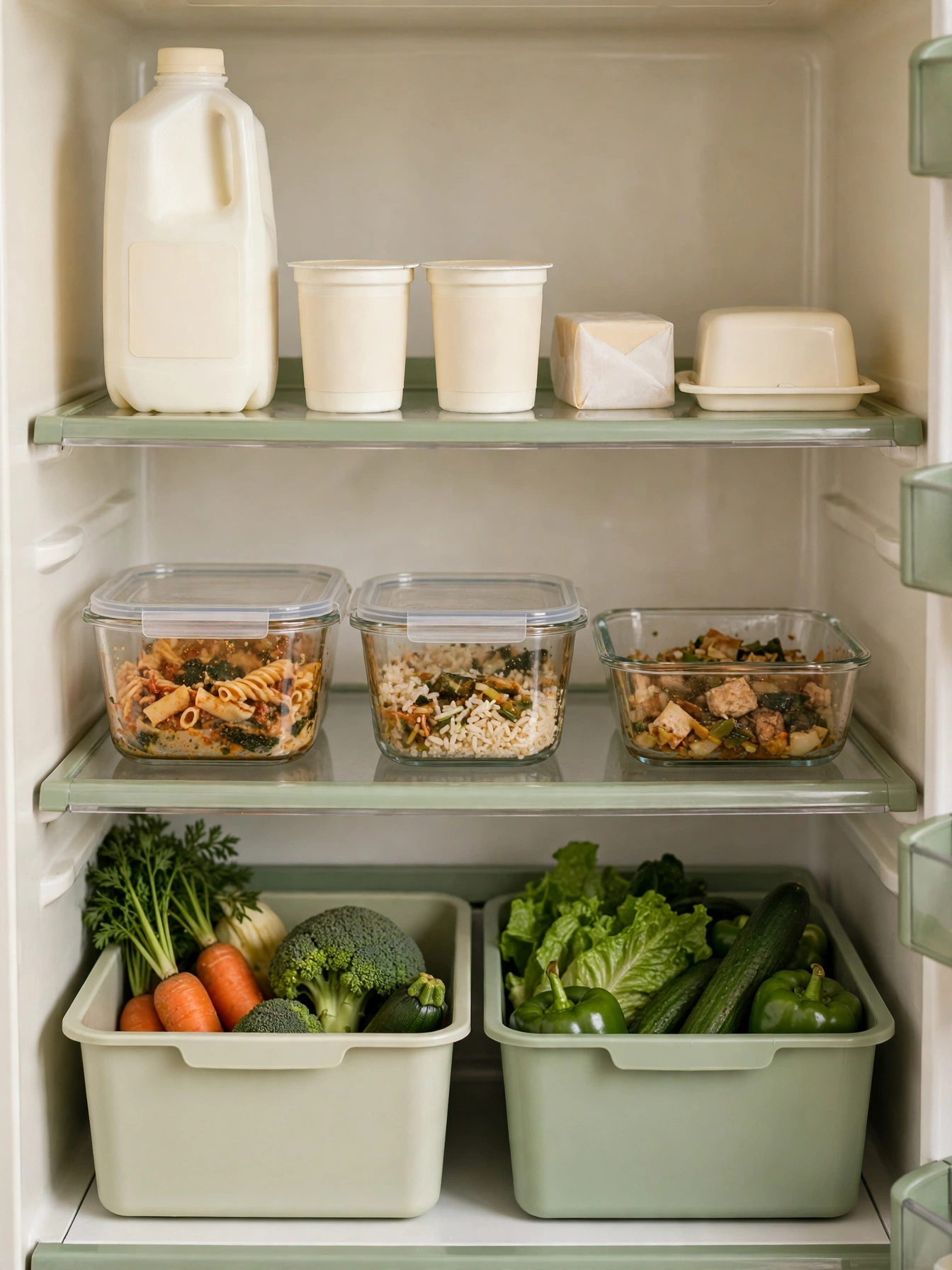
Bins the milk, the fruit, and the leftovers each have a bin, and nothing hides behind anything else.
What to buy: A set of three or four clear fridge bins, about 30 cm long, with handles. Look for bins with a flat base so they do not slide when you pull them out.
Where it goes: On the middle shelves, one bin per food group, with the labels facing out. Keep the milk and dairy in one bin, and the fruit in another.
Common mistake: using one big bin for everything. It fills up, things hide at the bottom, and the bin is too heavy to pull out. One bin per group, always.
Try this today: Put the milk and yoghurt in one bin and the fruit in another. If you can find the butter without moving anything, the bins work.
2. A lazy Susan for the deep shelves
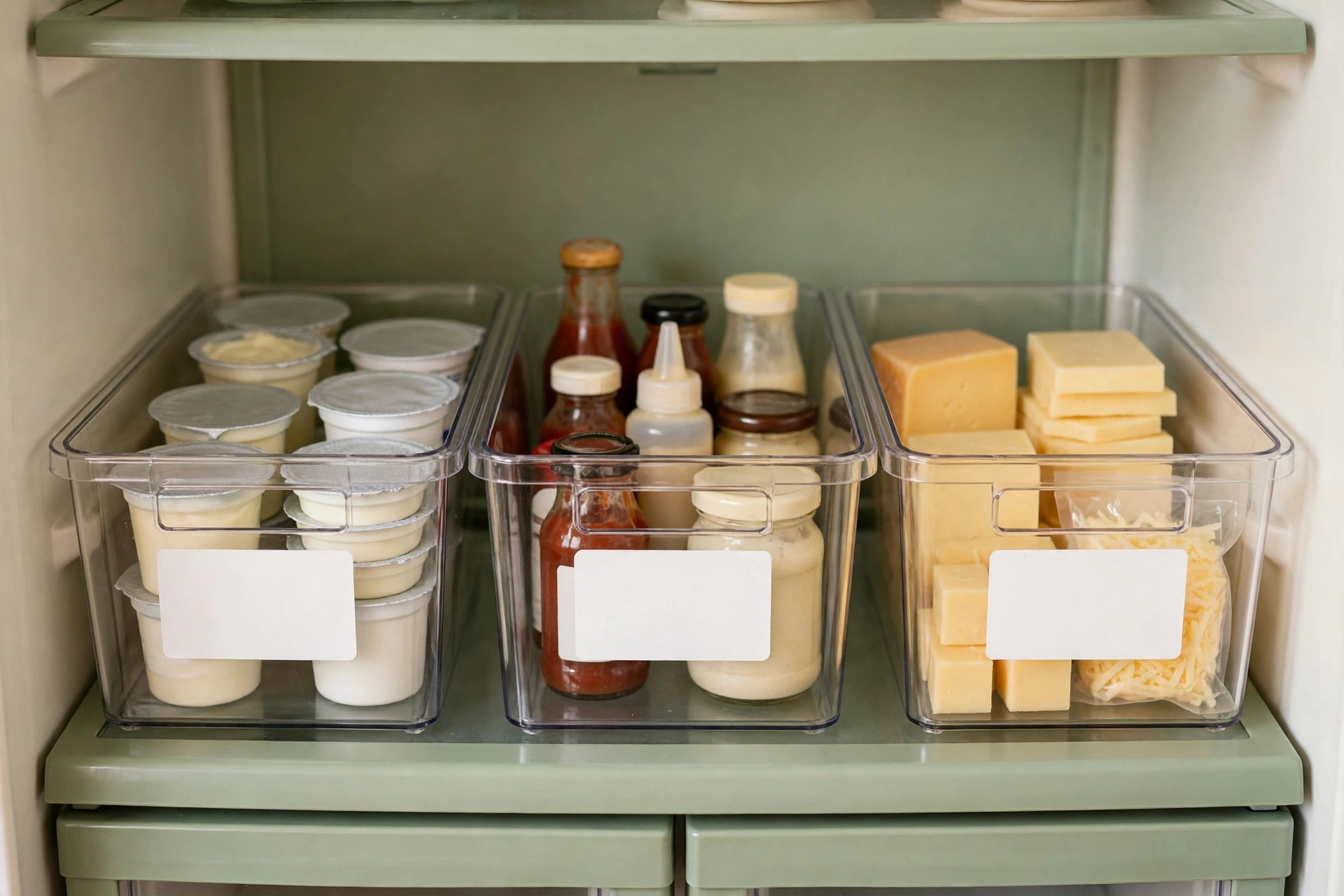
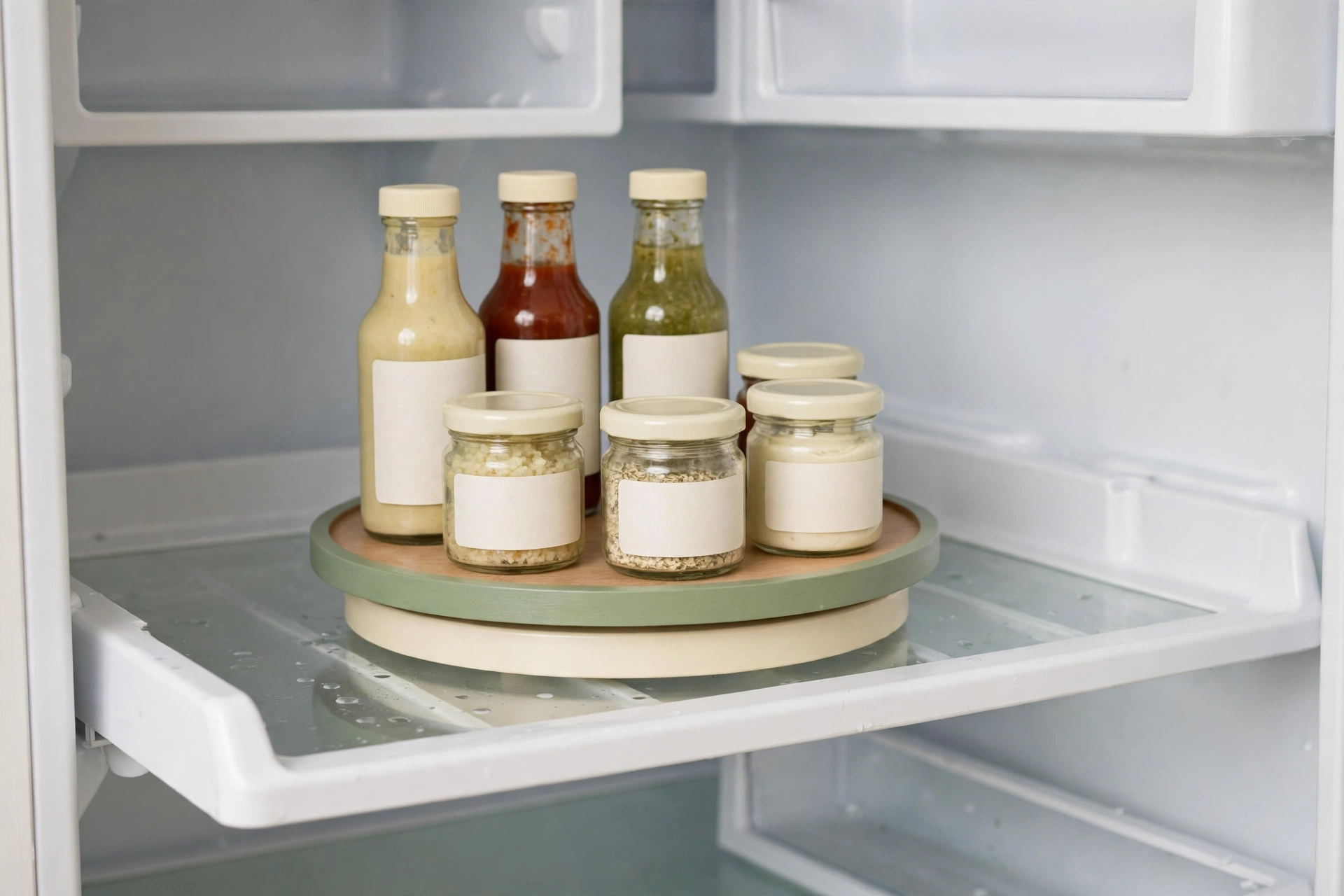
Spin the jars and sauces sit on a turntable, and the one at the back spins to the front.
What to buy: A fridge-safe lazy Susan, about 25 cm wide, with a non-slip base. Choose one with a low rim so tall bottles do not tip over.
Where it goes: On a deep shelf, at the back, where things get lost. Put the sauces and jars on it, and spin it to find what you need.
Common mistake: overloading the turntable. A turntable that is too full will not spin, and the jars at the back stay hidden. Leave one space free.
Try this today: Put the five sauces you use most on the turntable. If you can spin it with one finger, it fits.
3. Clear containers for leftovers
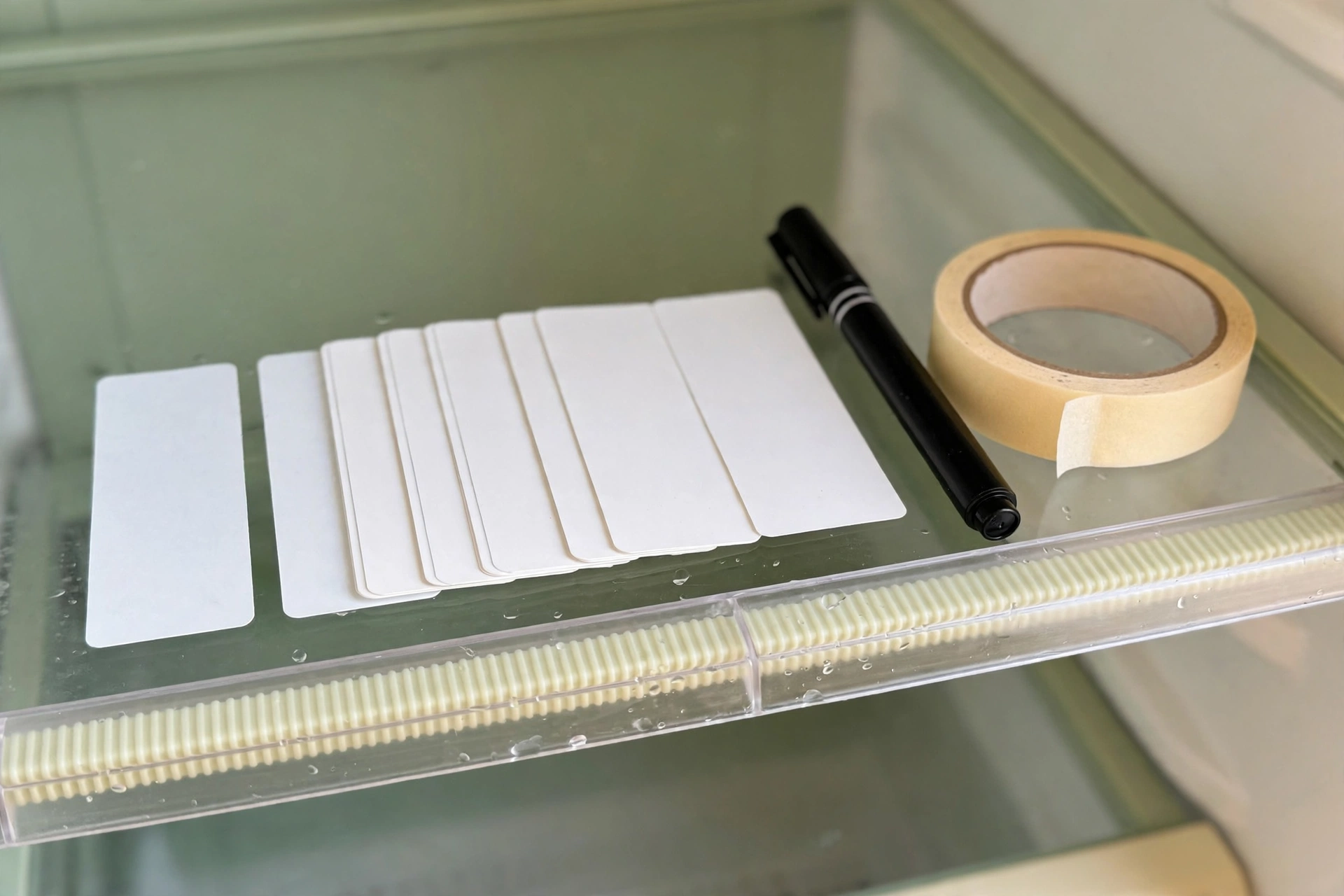
See-through the leftovers live in clear containers, labelled with the date, and nothing is a mystery.
What to buy: A set of four clear containers with lids, about 20 cm long, that stack without sliding. Choose containers with a label area, or add a white label yourself.
Where it goes: On one shelf, stacked two high, with the oldest at the front. Label each container with the date it was cooked, so you eat it in order.
Common mistake: using containers you cannot see through. You will open every one to find dinner, and the food goes off before you eat it. Clear containers only.
Try this today: Put tonight’s leftovers in a clear container and label it with the date. If you can see what it is from the door, the system works.
4. An egg holder that frees a shelf

Eggs the eggs live in their own holder in the door, and a whole shelf is free for food.
What to buy: A fridge egg holder with a lid, sized for 12 eggs, that fits in the door shelf. Measure the door shelf first, and buy the holder that is 2 cm smaller.
Where it goes: In the door, on the shelf where the eggs belong. Keep the eggs in their holder, and the shelf they used to sit on is free.
Common mistake: keeping eggs in the cardboard box on a shelf. The box takes up space, the eggs roll, and the shelf is wasted. A holder fixes all three.
Try this today: Move the eggs into a holder in the door. If a shelf is free tonight, the holder fits.
5. A snack bin the kids can reach
Kids’ shelf the snacks live in a low bin the children can reach, and the rest of the fridge stays tidy.
What to buy: One low, clear bin, about 25 cm wide, with a handle. Fill it with the snacks the children can have without asking, and nothing else.
Where it goes: On the lowest shelf, where the children can reach it without climbing. Keep the snacks they need permission for higher up, out of reach.
Common mistake: filling the bin with everything. It becomes a mess, the children cannot find anything, and the bin is emptied in a day. One bin, one kind of snack.
Try this today: Put the yoghurt and fruit packs in a low bin. If the children can find a snack without opening the whole fridge, the bin works.
6. A drinks shelf that stops the pile
Drinks the bottles and cans line up on one shelf, and the pile on the bottom shelf is gone.
What to buy: A can dispenser or a narrow bin for bottles, about 15 cm wide, that fits the shelf depth. Choose one that holds the drinks you buy most.
Where it goes: On one shelf, or in the door, where the drinks belong. Keep the water at the front and the juice behind it, so the children reach the water first.
Common mistake: laying bottles on their side on a shelf. They roll, they leak, and the shelf is a mess. Stand them up, in a bin, and they stay put.
Try this today: Line the drinks up on one shelf, labels facing out. If you can count them from the door, the shelf works.
7. Labels on everything

Labels every bin and jar has a label, and the whole family knows where things live.
What to buy: A roll of white labels and a marker, or a small label maker. Label each bin with the food group inside, and each jar with the date it was opened.
Where it goes: On the front of every bin, and on the lid of every jar. Keep the labels facing out, so you can read them from the door.
Common mistake: labelling only the bins. The jars are the ones that get lost, and the food goes off because no one knows when it was opened. Label the jars too.
Try this today: Label the three bins you use most. If the children can put the shopping away without asking, the labels work.
8. A weekly meal plan on the door
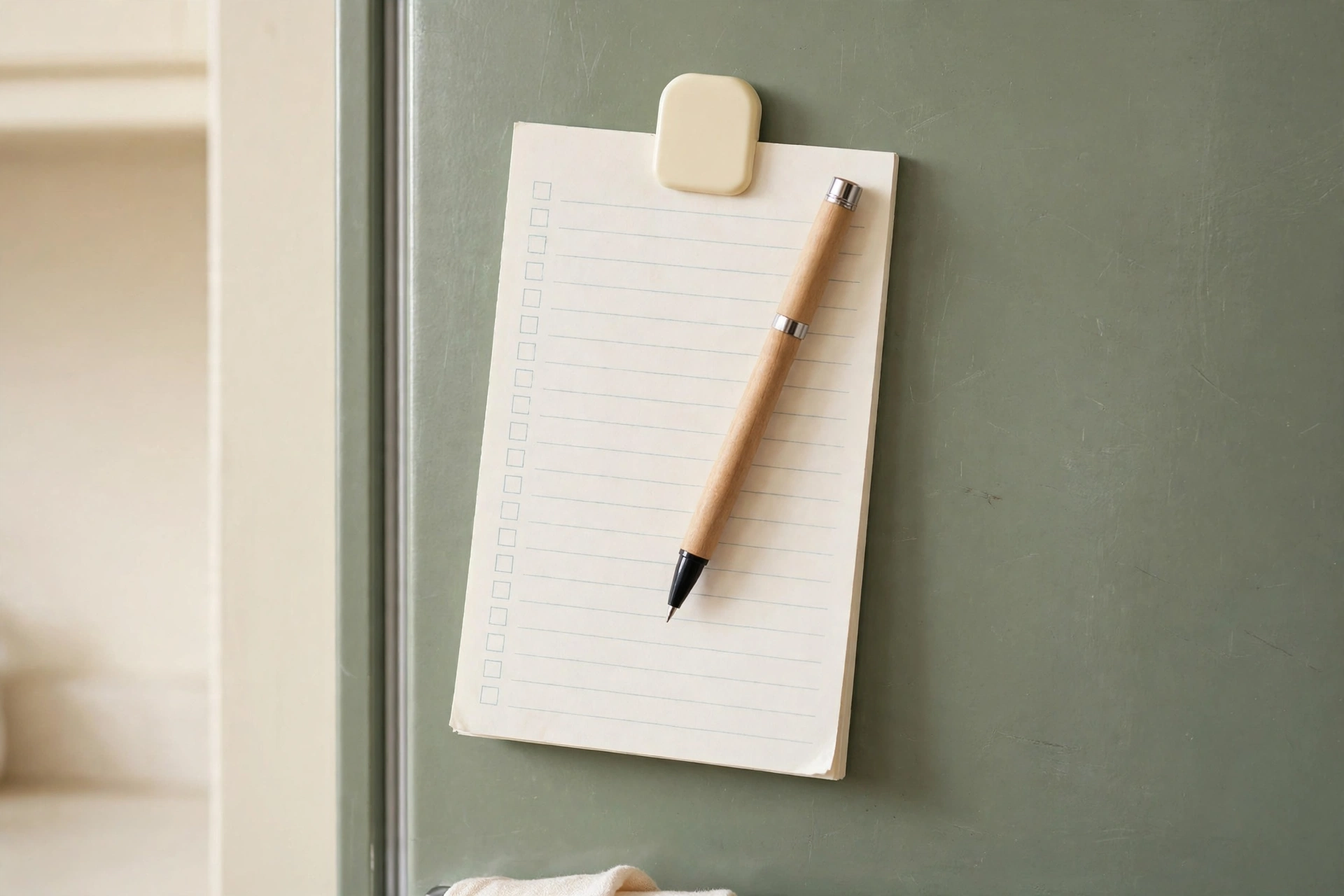
Plan the meals for the week are on the door, and the shopping list writes itself.
What to buy: A small magnetic whiteboard or a notepad with a magnet, and a pen that lives on the fridge. Write the week’s meals on it, and the shopping list underneath.
Where it goes: On the fridge door, at eye level, where the whole family can see it. Update it on shopping day, and the fridge stays full of what you need.
Common mistake: planning meals you do not have the food for. The plan only works if the fridge matches it. Check the fridge before you write the plan.
Try this today: Write this week’s dinners on the door. If the fridge has the food for three of them, the plan is working.
9. The top shelf for the things you use least

Top shelf the spare sauces and jars live up high, out of the way, and the middle shelves stay for the daily food.
What to buy: Nothing. A small label or a note on the shelf, and five minutes to move the spares up.
Where it goes: On the top shelf, at the back, where the food you use least belongs. Keep the daily food on the middle shelves, where it is easy to reach.
Common mistake: putting the daily food on the top shelf. You will stop reaching for it, and it will go off before you use it. Top shelves are for spares.
Try this today: Move the spare sauces to the top shelf. If the middle shelf feels lighter, the system is working.
10. One shelf out, one shelf wiped
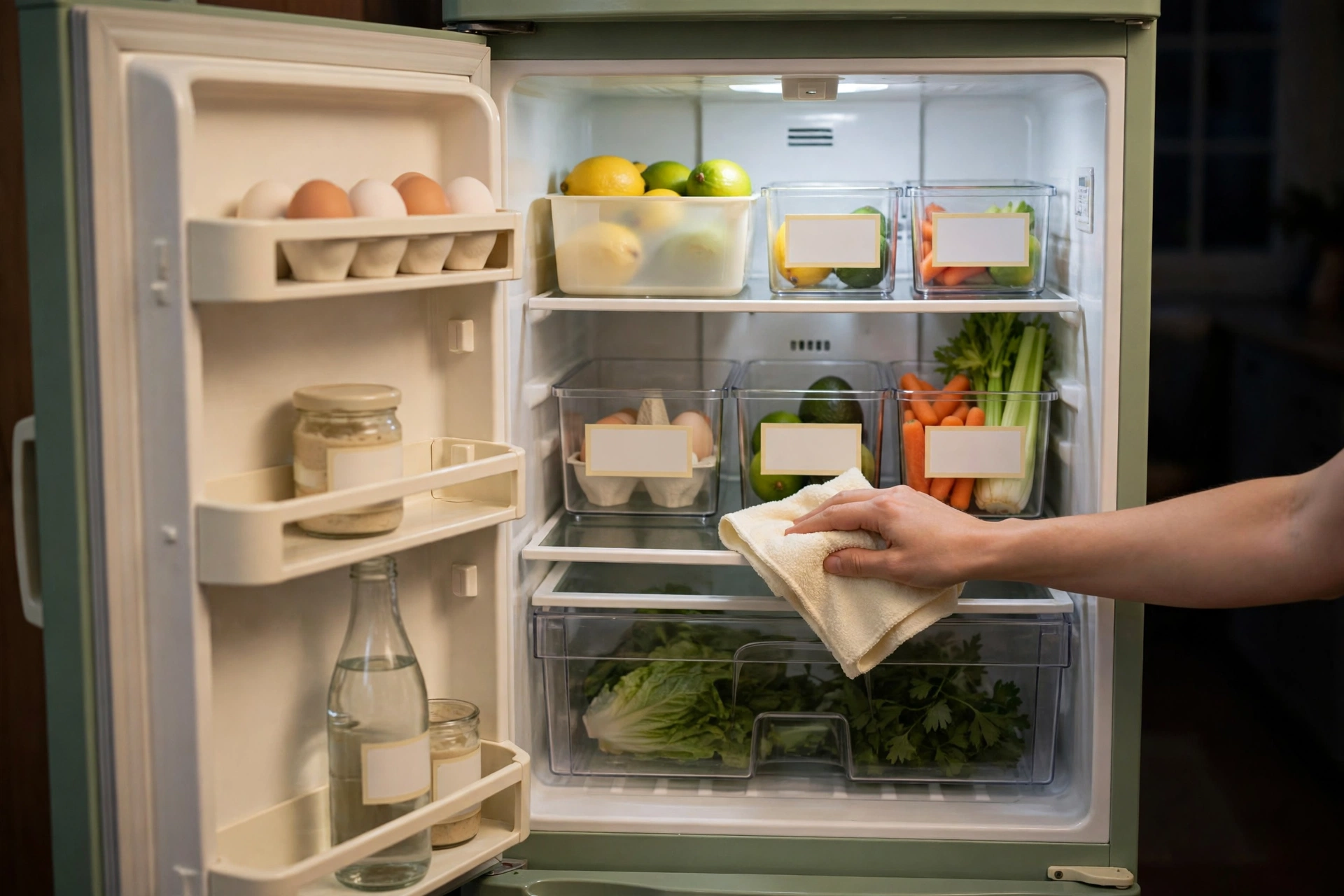
The rule one shelf wiped each week, and the fridge stays clean without a big clear-out.
What to buy: Nothing. A cloth, warm water, and five minutes each week to wipe one shelf.
Where it goes: Everywhere the food lives. The rule is the system: one shelf a week, wiped clean, and the fridge never needs a big clean.
Common mistake: treating the wipe as a chore. It is a habit, not a clean. Five minutes a week, and the fridge stays fresh without a big tidy-up.
Try this today: Tonight, wipe the shelf you use most. Tomorrow morning, notice how much fresher the fridge smells.
What it costs in total
The ten ideas use a mix of free habits and small purchases. This is the realistic range for a small family fridge, using the prices in this guide.
| Item | Approximate US price |
|---|---|
| Clear fridge bins, set of 4 | $15–$28 |
| Lazy Susan turntable | $12–$22 |
| Clear containers with lids, set of 4 | $14–$26 |
| Egg holder with lid | $8–$15 |
| Low snack bin | $7–$14 |
| Can dispenser for drinks | $10–$18 |
| Labels and a marker | $5–$10 |
| Magnetic whiteboard for the door | $10–$20 |
| Small label maker | $15–$30 |
| Cleaning cloths, pack of 5 | $5–$10 |
| Total, all ten ideas | about $101–$193 |
The starter set under $35: four clear bins, a lazy Susan, and a low snack bin. Those three alone solve the daily fridge problem.
The 15-minute version
If you only have 15 minutes today, do this. Empty one shelf, throw out anything out of date, and put the food back in bins, with the oldest at the front. The fridge will look calmer before you have spent anything.
FAQ
How do I organize a small fridge for a family of four?
One bin per food group, a lazy Susan for the deep shelves, and clear containers for leftovers. Those three hold a full week of food, and everyone can find what they need.
Where do I put milk in a small fridge?
On a middle shelf, in a bin, where the temperature is steadiest. Do not keep milk in the door, where the temperature changes every time it opens.
Do clear bins really help, or are they just pretty?
They help. A clear bin stops food hiding at the back, and you can see what you have before you shop. That alone cuts waste and saves money.
What is the best fridge organization for a rented home?
Bins, a lazy Susan, and containers. None of them need fixing to the fridge, and all three move with you. Avoid anything that sticks or screws into the shelves.
How often should I clean the fridge?
Wipe one shelf a week, and do a full clear-out once a month. A small fridge stays fresh with small, regular cleans, not with a big clear-out every few months.
Keep it going
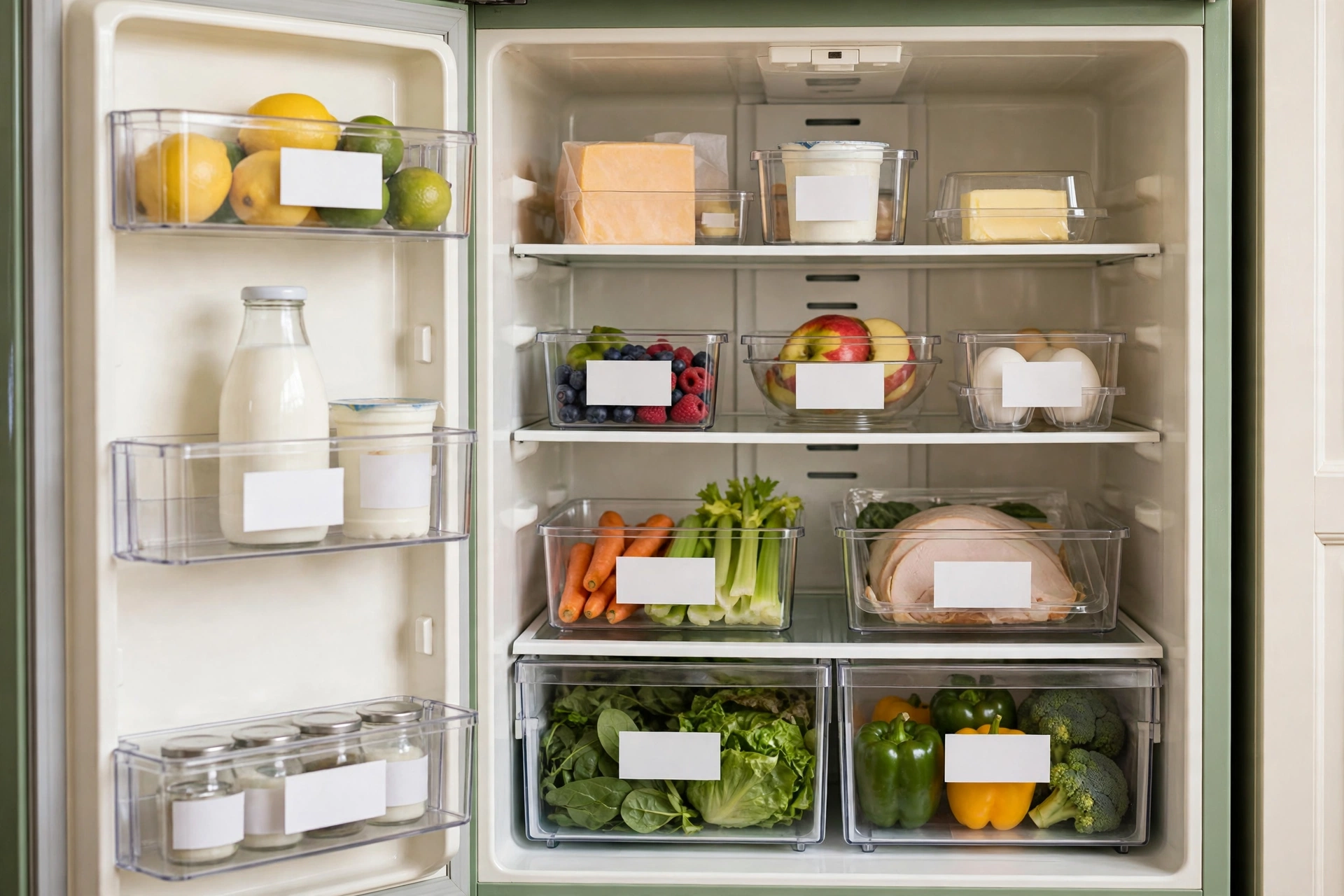
Keep it going one bin per food group, one shelf wiped a week, and the fridge stays calm without a big clear-out.
A small fridge is maintained by small habits, not by big clear-outs. Put the food away in its bin each evening, keep the spares on the top shelf, and the fridge stays calm. When new food comes in, choose one thing to use up first, so the fridge never fills up again.