
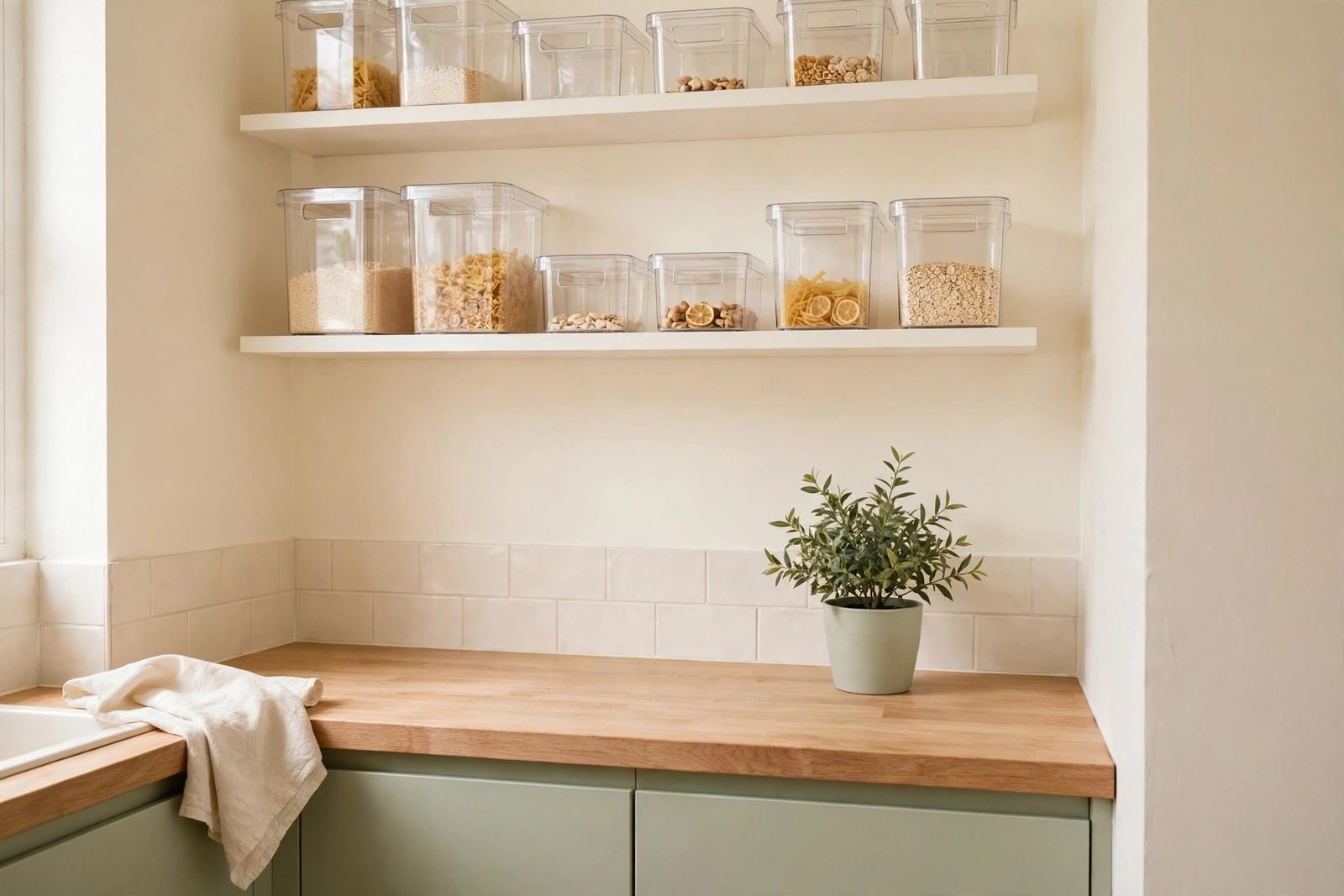
10 Kitchen Storage Ideas Under $20
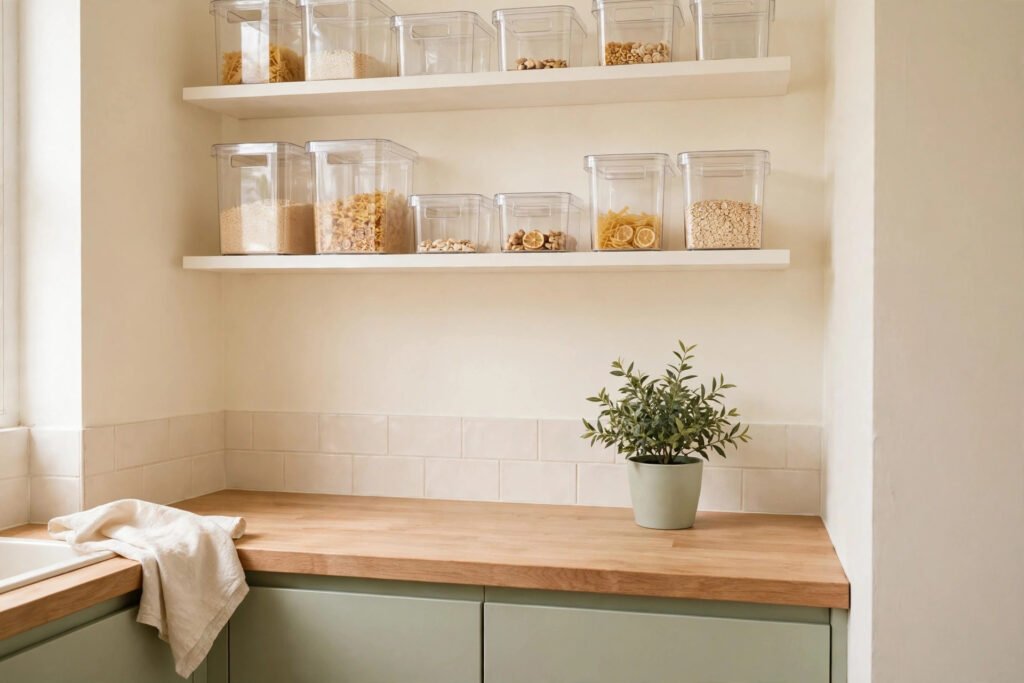
Introduction
A small kitchen does not need a renovation. It needs a system. Most small kitchens feel cramped for the same reason: everything is stored where it landed, not where it is used.
The ten ideas below each cost under $20, need no drilling, and can be done in one afternoon. They are written for renters nothing here damages a wall, a cabinet, or a deposit. Start with the two ideas that match your biggest daily frustration, usually the pantry shelf and the space under the sink, and add the rest over the next week, one shelf at a time. Prices are approximate US budget-store prices in 2026.
Before you buy anything
Do not buy a matching set of containers first. Containers bought before you know what you own become clutter themselves.
1. Measure. Measure the width, depth, and height of each shelf, and the clear space under the sink once the pipes are accounted for.
2. Declutter first. Empty one shelf at a time onto the counter. Throw out anything expired or broken, and anything unused in a year. Put “maybe” items in a dated box; unopened in 30 days, donate it.
3. Group before you contain. Put like with like on the counter first: all the pasta together, all the baking supplies together, all the cleaning supplies together. Only then decide what size bin each group needs.
Common mistake: buying a full matching set on day one. Buy three bins, live with them for a week, then buy more only for the shelf that still feels messy.
Small kitchen layouts
Galley kitchens have two parallel runs of counter with a walkway between them. Keep the walkway clear and use ideas that live inside cabinets risers, turntables, vertical tray storage, door hooks.
One-wall kitchens have everything along a single wall, often in a studio. Counter space is scarcest here, so anything that moves storage off the counter wins: hooks inside cabinet doors, a knife dock at the back, a caddy that lives in a cabinet.
L-shaped kitchens have a corner, and corners are where things go to be forgotten. That is where a lazy Susan earns its place, in the corner cabinet, holding oils and sauces you can spin into reach.
Whichever shape you have, store things where you use them.
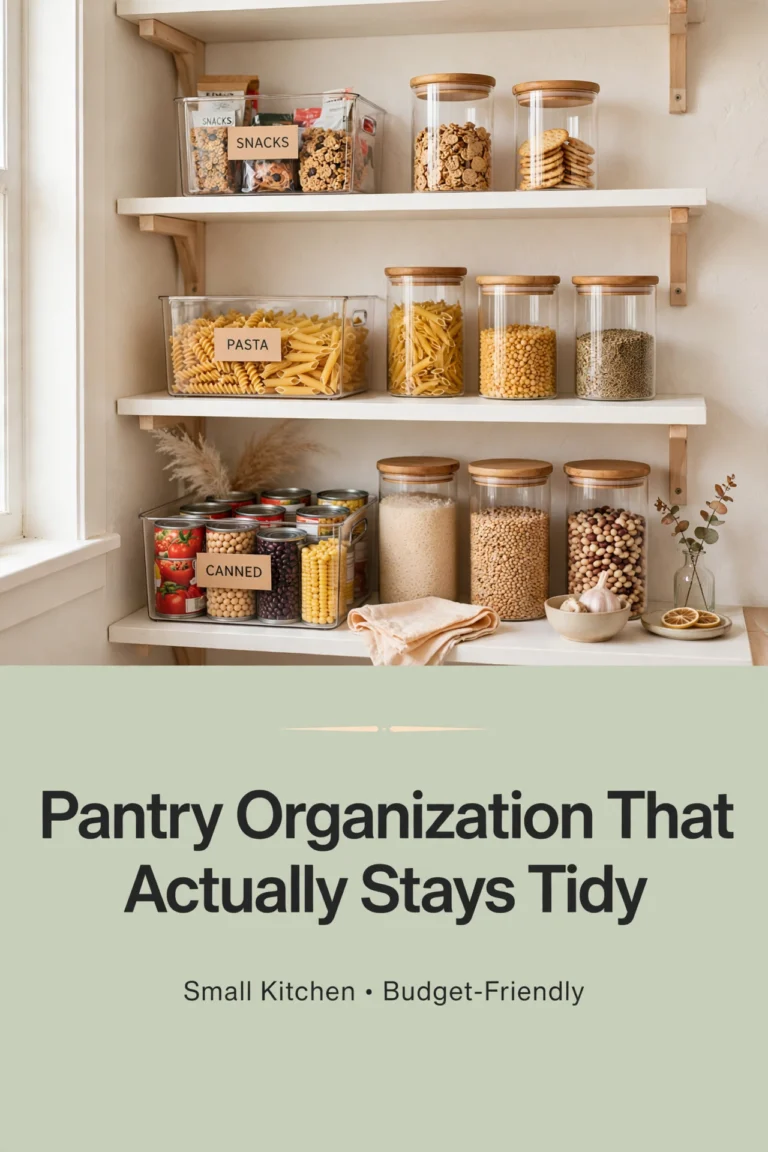
1. Clear bins with labels
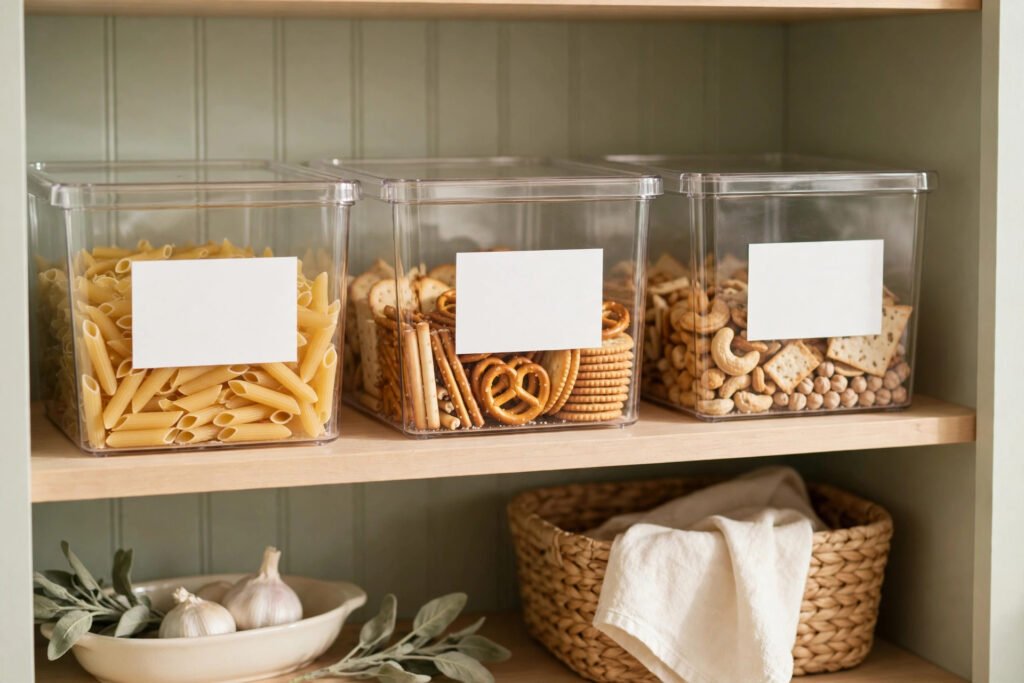
What to buy: Two or three clear bins, roughly 10–12 inches long, about $3–$6 each, or $10–$12 for a set of three.
Where it goes: One shelf at a time. Pasta in one bin, snacks in another, baking supplies in a third.
Common mistake: Buying bins too deep for the shelf, so you cannot see the back half; and decanting everything into matching jars on day one.
Try this today: Clear one shelf, group what was on it into piles, and put each pile in a bin.
2. Stackable shelf risers
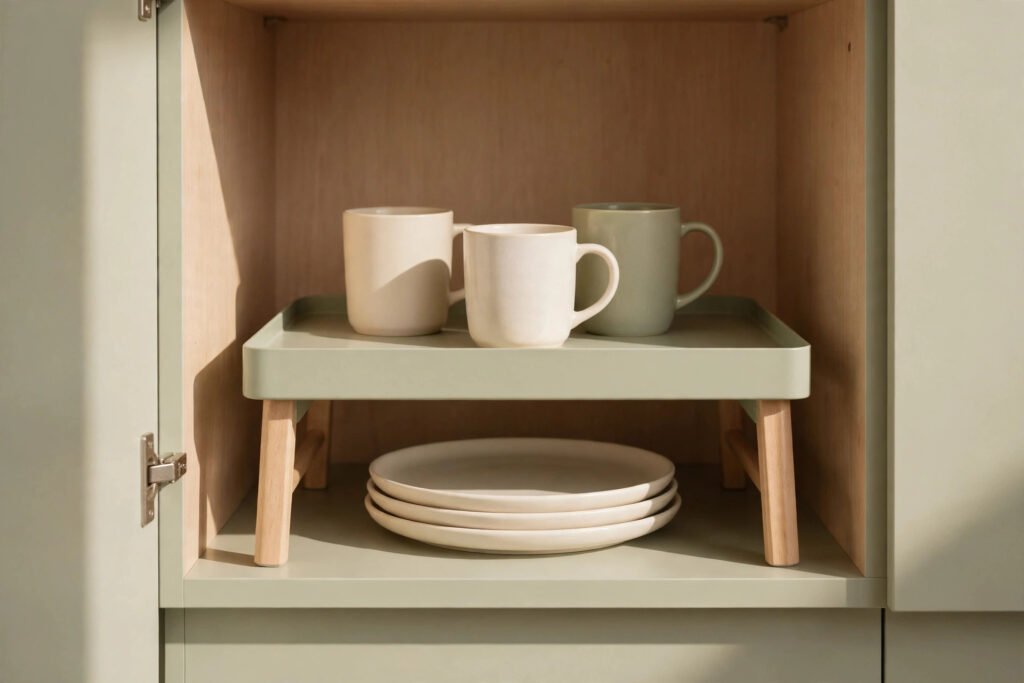
What to buy: One or two stackable shelf risers, metal or bamboo, about $5–$10 each.
Where it goes: Inside any cabinet with a tall gap between shelves. Mugs on the riser and plates underneath, or cans on top and jars below.
Common mistake: Buying a riser wider than the cabinet door opening it will not fit through the door even if it fits inside. Measure the door opening, not just the inside.
Try this today: Put a riser in the mug cabinet.
3. Hooks on the inside of cabinet doors
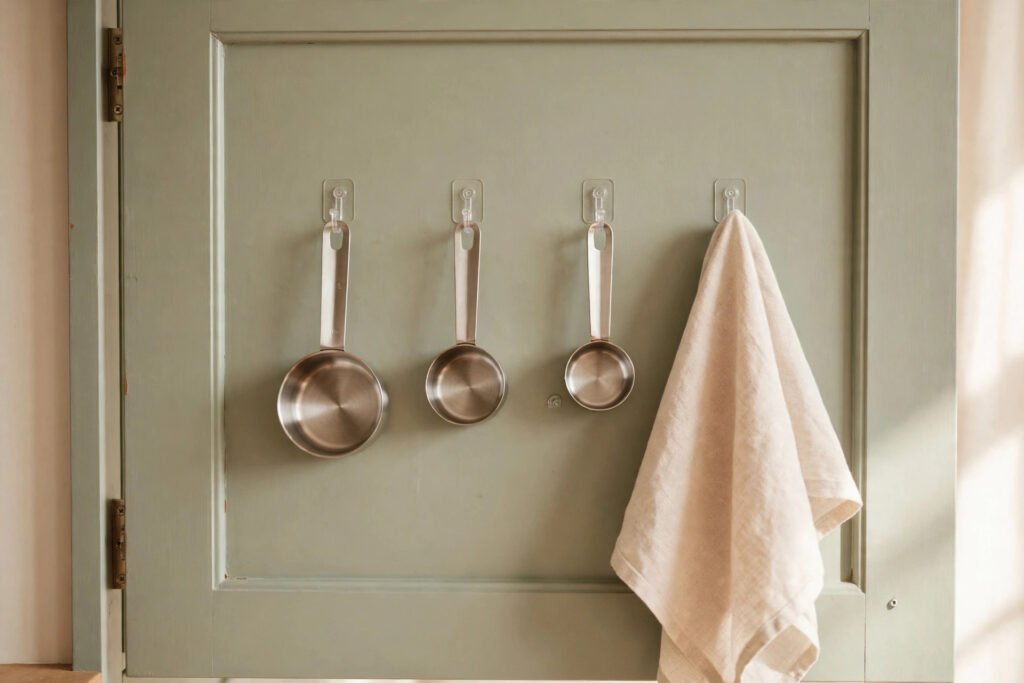
What to buy: A pack of small adhesive hooks, about $3–$5 for six to ten.
Where it goes: On the inside of a cabinet door, where items hang free and the door still closes. Measuring cups, pan lids, and small cleaning cloths all live well here.
Common mistake: Hanging items too long, so they catch on the shelf when the door closes; and sticking hooks to a greasy surface, which is why they fall off a week later.
Try this today: Stick two hooks inside the cabinet door nearest the sink and hang your measuring cups there.
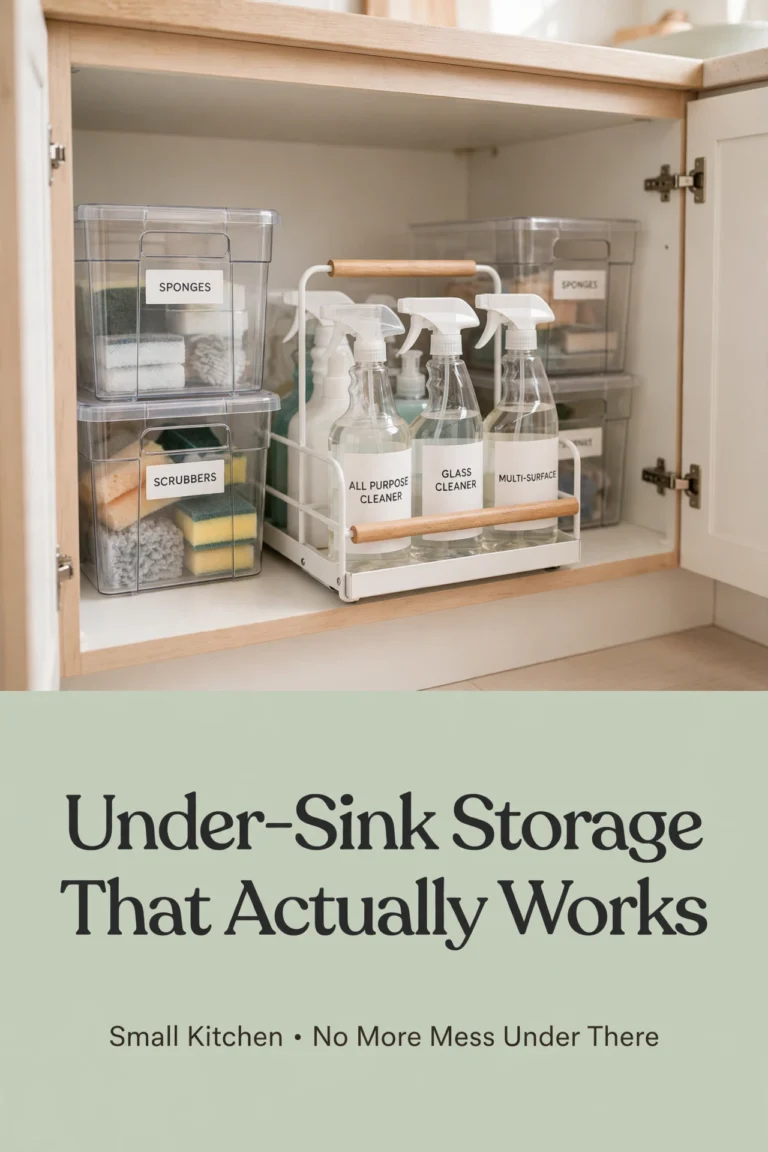
4. A tension rod under the sink
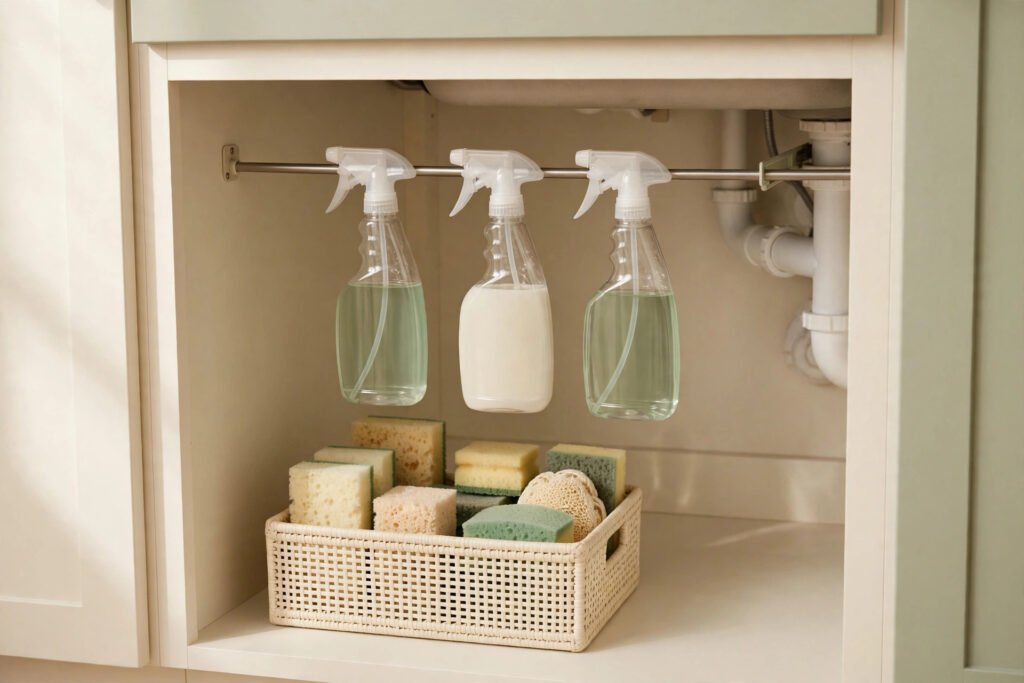
What to buy: One spring tension rod, about $5–$8, sized to the cabinet width. Most rods adjust from about 18 to 30 inches.
Where it goes: Across the under-sink cabinet, high enough that spray bottles hang clear of the floor but low enough to lift off by their triggers. The floor stays free for one bin of sponges, cloths, and dishwasher tablets.
Common mistake: Fitting the rod too low, so bottles drag on the floor; and hanging heavy bottles on a rod barely holding tension.
Try this today: Empty the under-sink cabinet, fit the rod, and hang your two most-used sprays from it.
5. A lazy Susan for oils and sauces
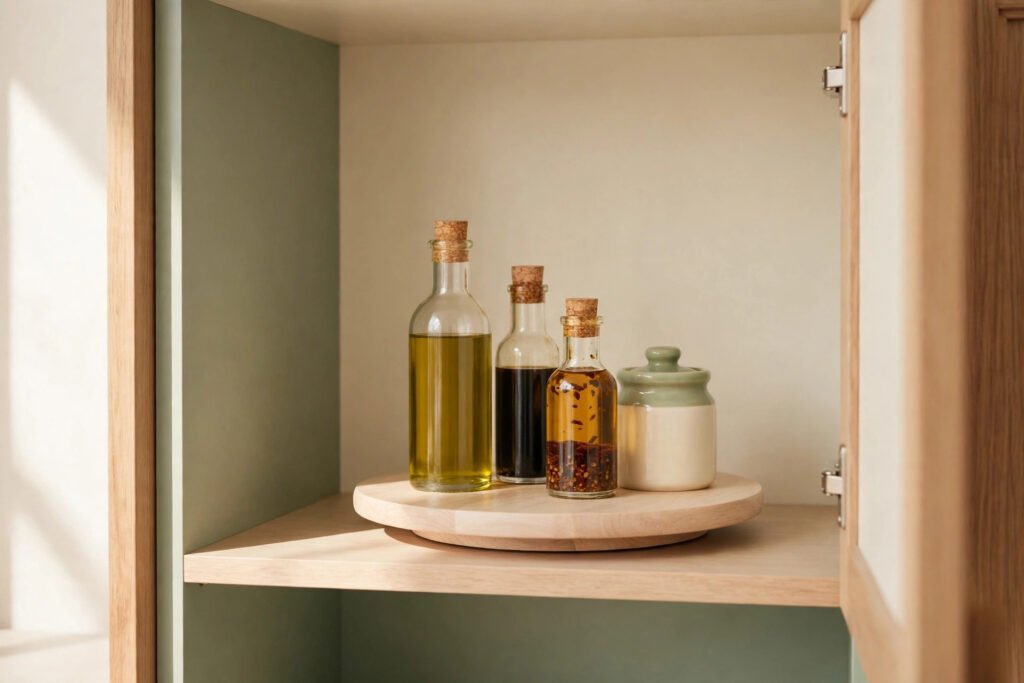
What to buy: One small turntable, 10–12 inches across, about $6–$10 for plastic and $10–$15 for bamboo.
Where it goes: In a corner cabinet, where things go to be forgotten, or on a deep pantry shelf. Oils, vinegars, and sauces go on it.
Common mistake: Overloading it. A turntable only spins well if it is not crammed; leave a little space around each bottle.
Try this today: Put a turntable in your worst corner cabinet and move the oils and sauces onto it.
6. Vertical storage for lids and trays
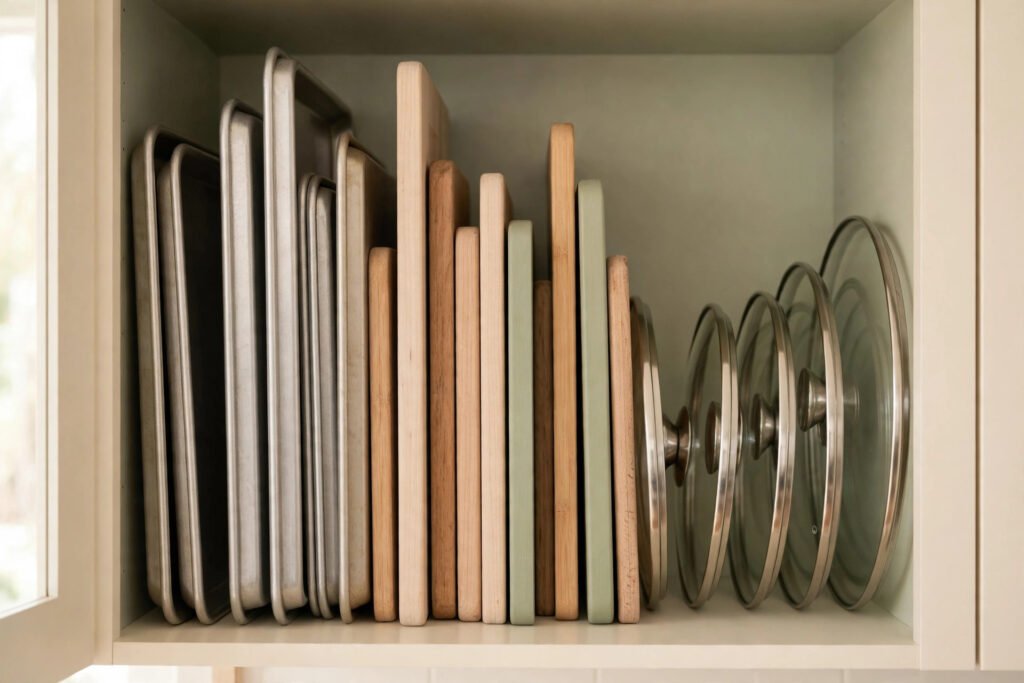
What to buy: A small file holder, a plate rack, or a vertical lid organizer, about $5–$12. A tension rod fitted vertically inside a cabinet also works as a divider, for about $5.
Where it goes: Inside a deep cabinet or a drawer. Store trays, boards, and lids vertically, like books, so you can pull one out without the stack sliding over.
Common mistake: Storing lids flat on top of their pans. It looks tidy and wastes a whole shelf, because you can only stack two or three pans before the tower wobbles.
Try this today: Stand your trays and lids upright in one cabinet using a file holder, or lean them against the wall with a tension rod as a divider.
7. One basket for the “junk” drawer
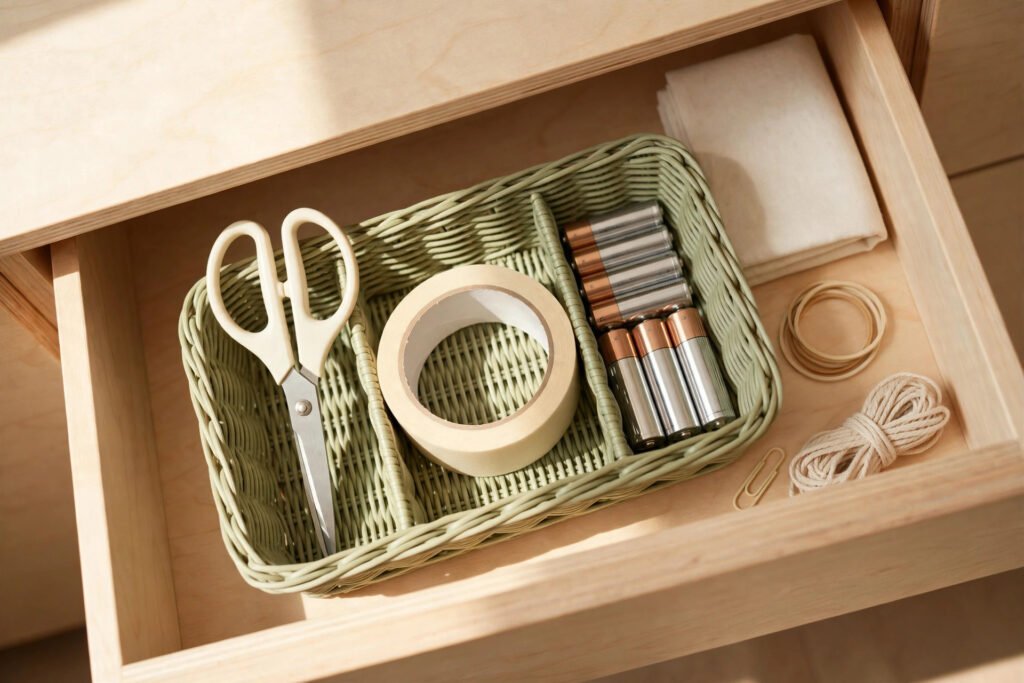
What to buy: One small basket or drawer organizer with dividers, about $5–$10.
Where it goes: In the drawer that collects everything. Give it sections: batteries and tape in one, scissors and pens in another, rubber bands and clips in a third.
Common mistake: Organizing the drawer without emptying it first. You will just be tidying around the things that should have left.
Try this today: Empty the junk drawer onto the counter, throw out five things without thinking about it, and put the rest in a divided basket.
8. A knife dock instead of a magnetic strip
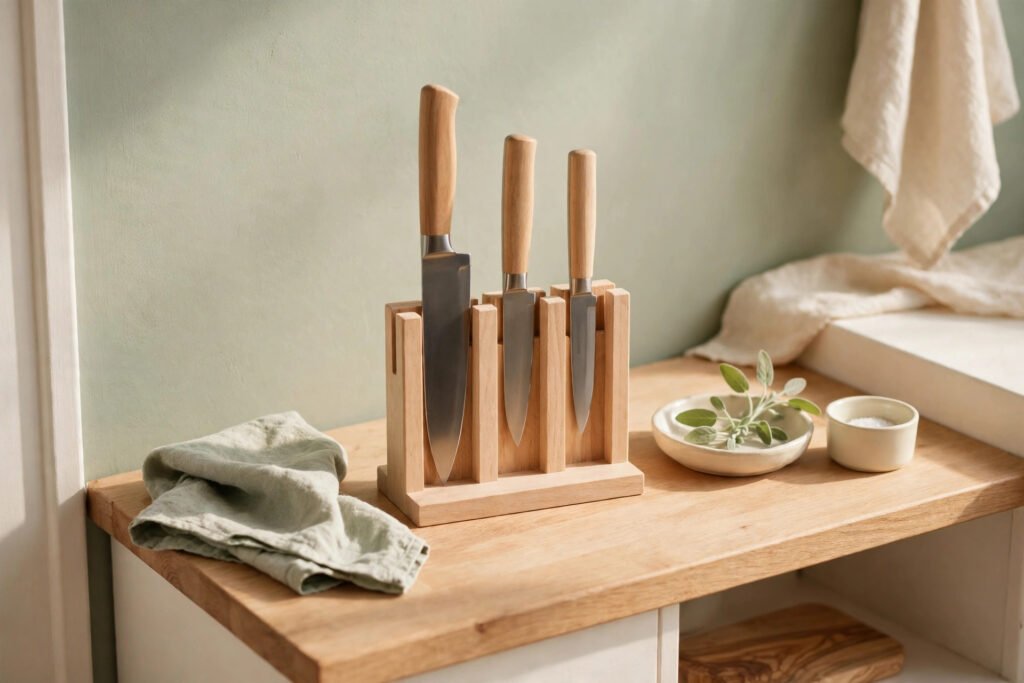
What to buy: A countertop knife dock or knife block, about $12–$18 for a basic wooden one. If you already own a knife block, just move it to the back of the counter.
Where it goes: At the back of the counter, near where you chop, but not in the middle of your prep space.
Common mistake: Keeping knives loose in a drawer. It dulls the blades, it is dangerous, and it takes up the space a divider could use.
Try this today: Move your knives out of the drawer and into one dock at the back of the counter.
9. A pull-out caddy for cleaning supplies
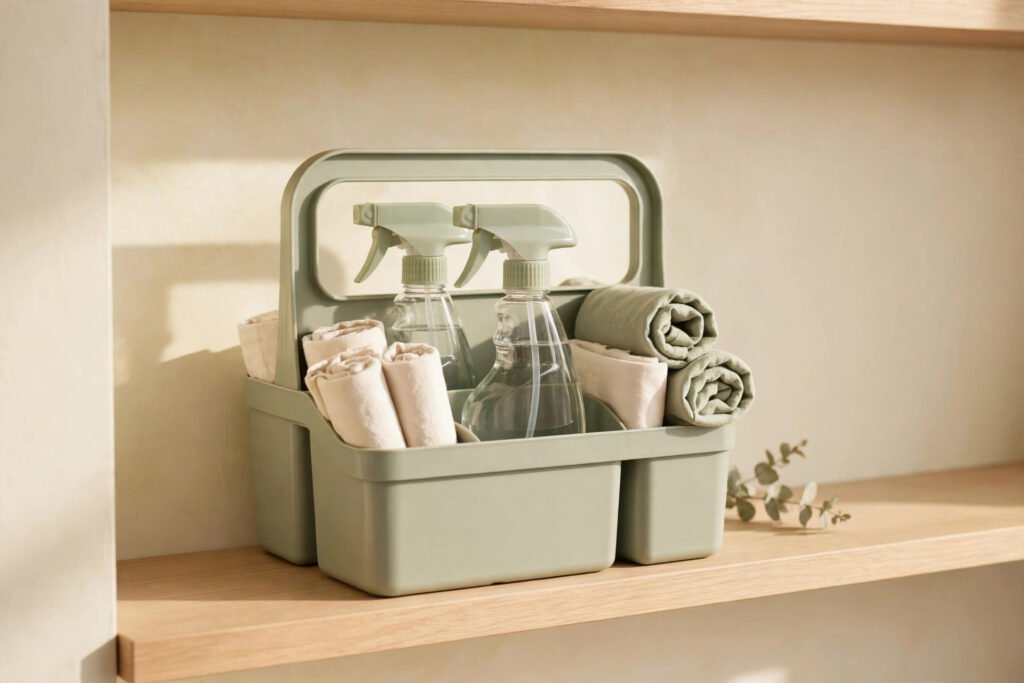
What to buy: One handled caddy, about $6–$10, plus the cloths and sprays you already own.
Where it goes: Under the sink, or on a shelf near the kitchen. One caddy holds your sprays, cloths, and scrubber.
Common mistake: Keeping a spray bottle in every room. You end up with five half-empty bottles and no idea which one is which. One caddy, one set of supplies, one home.
Try this today: Gather every spray bottle and cloth in the house into one caddy.
10. Zones, not piles

What to buy: Nothing. Zones are free.
Where it goes: Everywhere. Give every shelf a job: one shelf for breakfast, one for cooking, one for snacks.
Common mistake: Making too many zones. Three or four zones per area are enough.
Try this today: Pick one shelf and give it one job breakfast, for example.
What it costs in total
| Item | Approximate US price |
|---|---|
| 3 clear bins with labels | $10–$12 |
| 1 shelf riser | $5–$10 |
| Pack of adhesive hooks | $3–$5 |
| 1 tension rod | $5–$8 |
| 1 lazy Susan turntable | $6–$10 |
| 1 vertical lid/tray organizer | $5–$12 |
| 1 drawer basket with dividers | $5–$10 |
| 1 knife dock | $12–$18 |
| 1 cleaning caddy | $6–$10 |
| Zones and labels | $0–$2 |
| Total, all ten ideas | about $62–$97 |
The starter set under $35: Buy the clear bins ($10–$12), one shelf riser ($5–$10), and a pack of adhesive hooks ($3–$5), plus labels ($2). That is roughly $20–$29, and it fixes the pantry shelf, the mug cabinet, and the drawer. Add the tension rod and turntable next week, and the rest when a specific frustration appears.
The 15-minute version
If you only have 15 minutes today, do this: clear one shelf, put everything from it on the counter, throw out anything expired, put the rest in two clear bins with labels, and put the bins back. One shelf done is better than a whole kitchen planned and never started.
FAQ
Do these ideas work in a rental?
Yes. Nothing needs drilling, screws, or permanent changes hooks peel off, rods hold by pressure, and bins and risers just sit on shelves.
How much should I spend in total?
Each idea is under $20, and the full set is about $62–$97. The starter set bins, one riser, hooks, and labels is about $20–$29, and that is enough to feel the difference.
What if my kitchen has no pantry?
Then your “pantry” is one cabinet shelf, and the same rules apply. Give that shelf zones, use clear bins so you can see what is there, and keep daily items at the front.
Will clear bins really help, or is it just for photos?
They help because you can see what you have. The most common small-kitchen waste is buying a second bag of rice, pasta, or flour because you could not see the first one at the back of the shelf.
How do I keep it tidy after the first week?
Two habits. First, one-in-one-out: when something new comes in, something old leaves. Second, the 15-minute daily reset from Pin 3 five minutes in the living room, five in the kitchen, five on one small space.
Keep it going
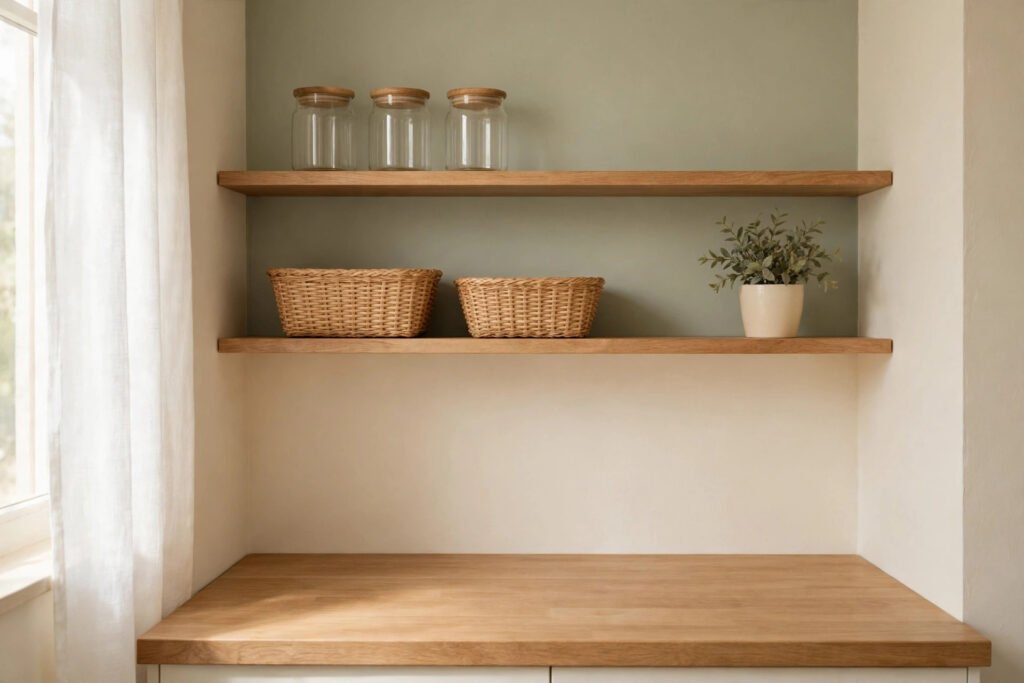
A small kitchen feels bigger when every item has a place and every place is easy to reach. Start with one shelf today.
Related pins
- Pin 5: Small Kitchen Pantry Organization Before & After System
- Pin 9: Under-Sink Kitchen Storage That Actually Works
- Pin 13 (Batch 4): Closet Organization Ideas for Small Spaces
- Pin 16 (Batch 4): Cleaning List by Room, Step by Step

One Comment