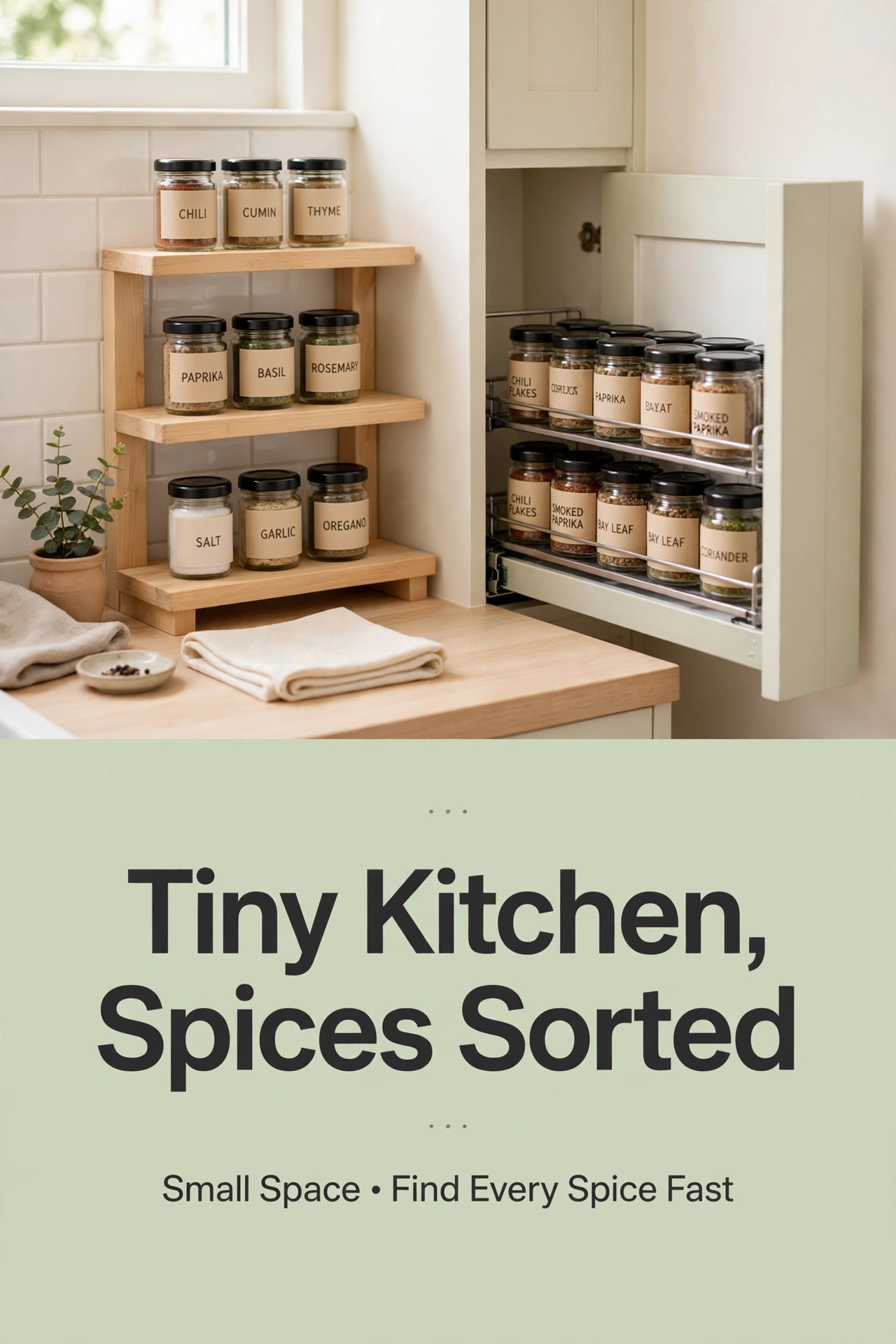
Spice Organization Ideas for Tiny Kitchens

A tidy spice drawer matching jars in neat rows, so you can see every spice at a glance while you cook.
Introduction
A tiny kitchen does not need more cupboards. It needs its spices in one place, where you can see them. Most tiny kitchens feel chaotic for the same reason: spices live wherever they landed a few jars by the stove, a bag of paprika behind the pasta, and three half-empty bottles of cumin in two different cupboards.
The ten ideas below each cost under $20, need no drilling, and can be done in one afternoon. They are written for renters nothing here damages a wall, a door, or a deposit. Start with the two ideas that match your biggest daily frustration, usually the drawer full of loose jars and the cupboard where spices hide at the back, and add the rest over the next week, one zone at a time. Prices are approximate US budget-store prices in 2026.
Spice organization is also one of the strongest topics in this niche right now: small kitchen storage and under-sink storage are the most-searched evergreen terms in home organization on Pinterest (US, data to 31 Oct 2026), and spice storage sits right at the centre of both, so this is the post Pin 17 will link to when the website goes live.
Before you buy anything
Do not buy a matching set of jars first. Jars bought before you know what you own become clutter themselves.
1. Count what you have. Gather every spice, herb, and seasoning from every cupboard, drawer, and shelf onto the counter. Most tiny kitchens hold 20 to 30 jars and bags, and about a third of them are duplicates, empty, or past their best.
2. Declutter first. Throw out anything with no smell left when you open it, anything you cannot name, and anything you have not used in a year. Old spices are not dangerous, they are just flavourless, and flavourless spices are taking up a shelf that a spice you actually use could have.
3. Group before you contain. Put like with like on the counter first: all the everyday cooking spices together, all the baking spices together, all the blends and rubs together. Only then decide what size jar and what kind of storage each group needs.
Common mistake: buying a full matching set of 24 jars on day one. Buy six jars, live with them for a week, then buy more only for the spices you actually reach for every day.
Spice storage spots
The drawer is the best spot in most tiny kitchens. A shallow drawer near the stove keeps spices at hand while you cook, and jars lying flat with the label facing up are easier to read than jars standing at the back of a cupboard. If your only free drawer is far from the stove, it still beats a high shelf you cannot reach without a step stool.
The door is the most wasted space in a tiny kitchen. The inside of a cupboard door holds a slim rack of small jars, and it uses space that was doing nothing. A rack that hangs over the door needs no fixings at all, and one that sticks on with adhesive strips comes off cleanly when you move out.
The wall works when drawer and cupboard space are both full. A magnetic strip, a slim shelf, or magnetic tins on the side of the fridge turn a blank stretch of wall into spice storage. Keep wall storage away from the steam above the stove, or the spices will clump.
The shelf is for the spices you use once a week or less. A tiered shelf inside a cupboard lifts the back row above the front row, so nothing hides. A turntable does the same job on a deep shelf: spin it, and the jar you want comes to you.
The pull-out is for the narrow gap beside the stove or the fridge. A slim pull-out rack turns a gap of four or five inches into two or three shelves of spices, and it slides back out of sight when you are done cooking.
Whichever spot you have, store spices where you use them: everyday cooking spices within arm’s reach of the stove, baking spices near the mixing bowls, and the rarely used ones up high or at the back.
1. A spice drawer with inserts
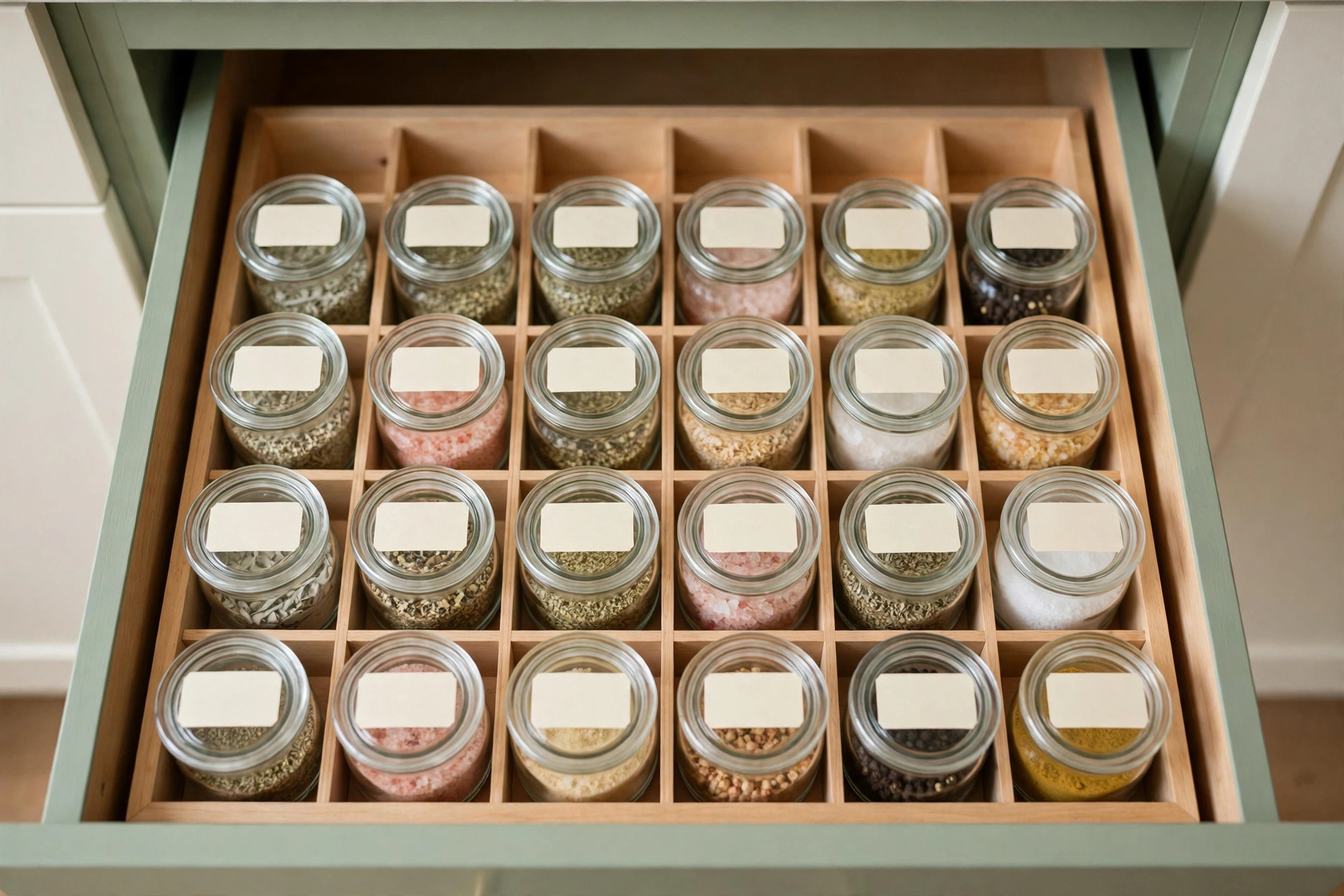
A spice drawer with inserts jars lying flat in neat rows, so you can read every label without moving a single jar.
What to buy: One drawer insert or a set of small bamboo or plastic dividers, about $8–$15, or a cutlery tray from the kitchen that costs about the same. A shallow baking tray lined with a non-slip mat works as a free version.
Where it goes: In the shallow drawer nearest the stove. Jars lie flat, labels facing up, in rows sorted by how often you use them. Everyday spices go at the front, baking spices at the back.
Common mistake: Putting jars in the drawer loose, with no insert. They roll around every time the drawer opens, and within a week the drawer looks exactly like it did before. The insert is the whole idea: without it, you just have a drawer full of jars.
Try this today: Empty one drawer, line it with a non-slip mat, and lay your six most-used spices flat in a row, labels up.
2. Matching small jars
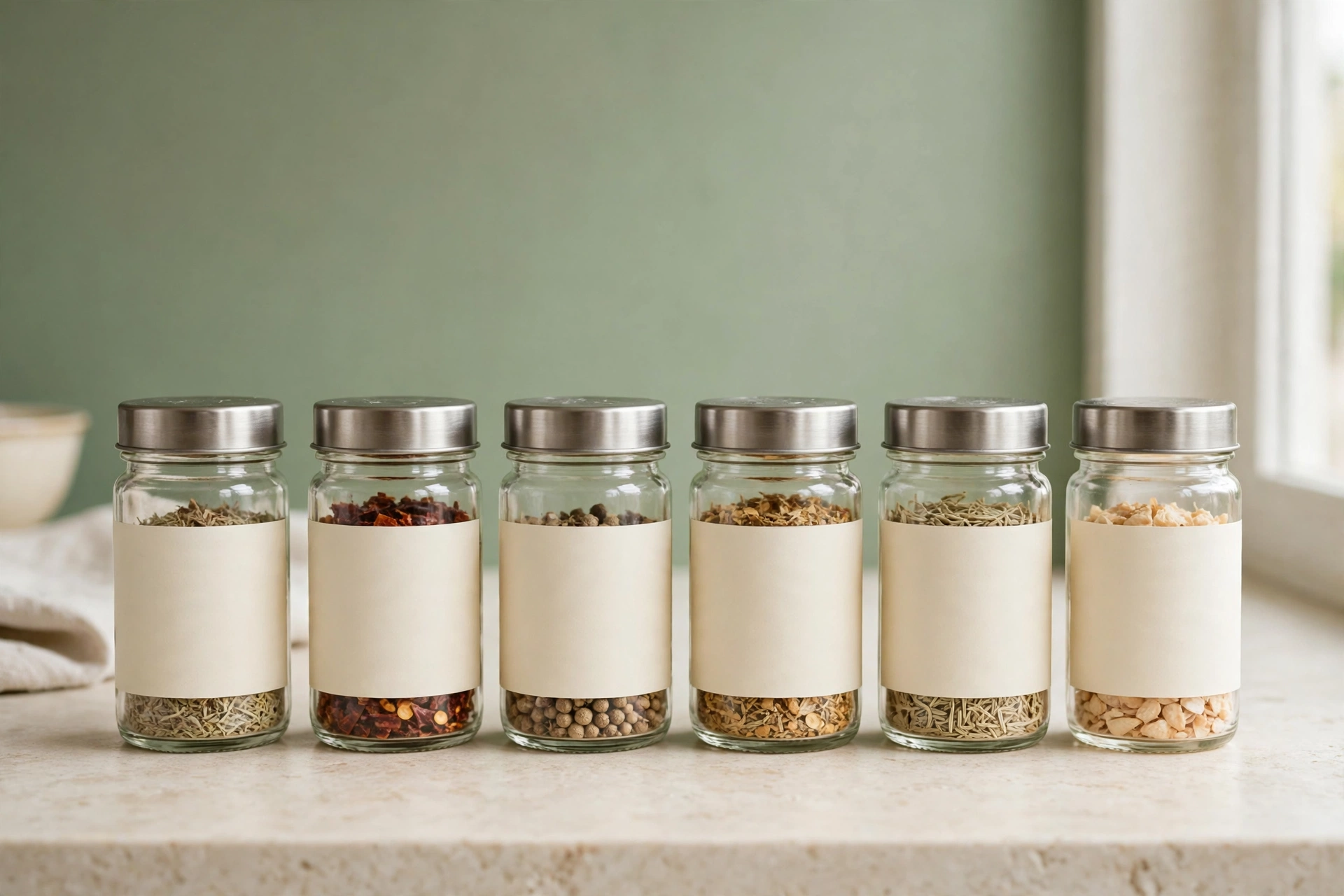
Matching small jars the same size, the same shape, and blank labels, so the shelf looks calm instead of crowded.
What to buy: Six to twelve small glass jars, about 4 ounces each, about $10–$15 for a set of twelve, plus a pack of blank labels for about $2. Small jars matter: a big jar of a spice you use once a month is just taking up space.
Where it goes: In the drawer from idea 1, on a tiered shelf, or standing in a row on the counter if you have the space. One spice per jar, filled only as full as you will use in three months.
Common mistake: Decanting every spice on day one, including the ones you barely use, and buying jars that are too big for the drawer or the rack. Measure your storage first, then buy jars that fit it. Keep the original jar for anything you are not sure about, and decant it later.
Try this today: Decant just your three most-used spices into matching small jars, and put the rest back in the cupboard until you know which jars you actually need.
3. A rack on the cupboard door
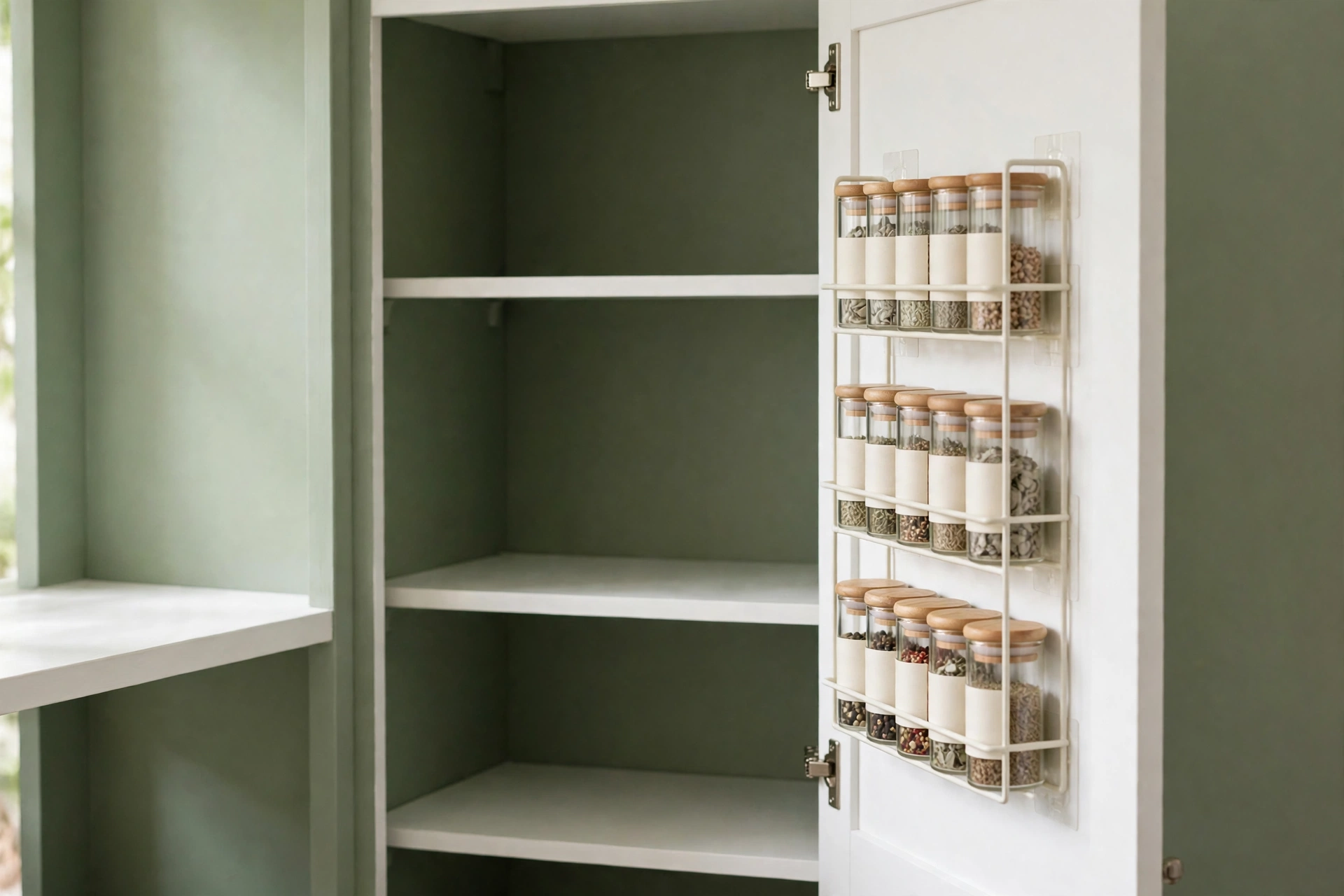
A rack on the cupboard door small jars in rows on space that was doing nothing, with no holes in the door.
What to buy: One over-door or adhesive spice rack, about $8–$15. Over-door racks hook over the top of the door and need no fixings at all; adhesive racks stick to the inside of the door and peel off when you move out.
Where it goes: On the inside of the cupboard door nearest the stove, where the jars hang in rows and the door still closes. Everyday spices go at eye level, less-used ones at the top and bottom.
Common mistake: Loading the rack with heavy glass jars until the door will not close, or sticking an adhesive rack to a greasy door, which is why it falls off a week later. Wipe the door clean first, wait a day before loading it, and keep the heaviest jars on the lowest row.
Try this today: Clear the inside of one cupboard door and hang a rack on it, then move your five most-used spices onto it.
4. Magnetic tins on the fridge
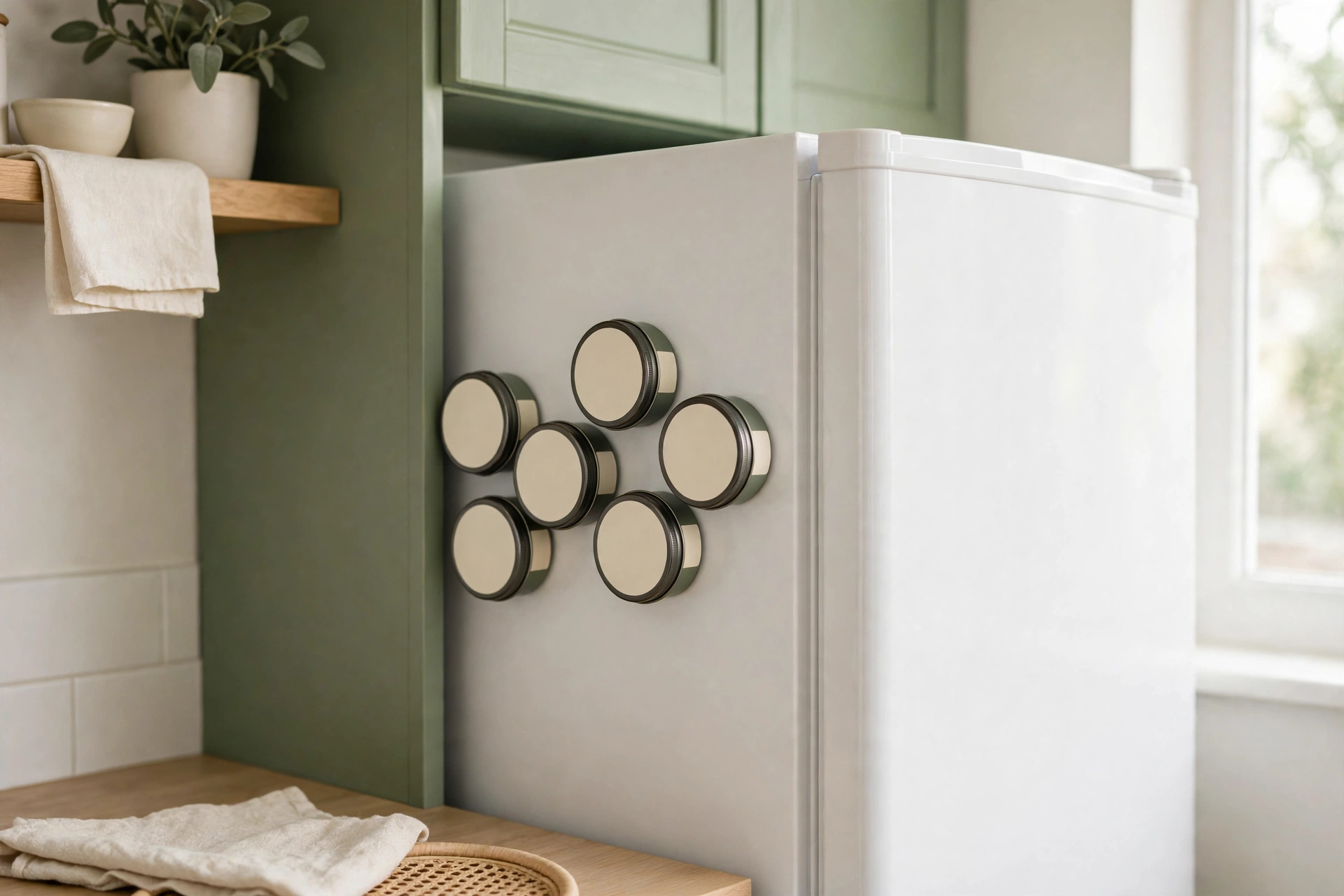
Magnetic tins on the fridge spices on the side of the fridge, off the counter and within reach of the stove.
What to buy: A set of six to twelve small magnetic tins, about $10–$15, with clear lids or blank labels so you can tell them apart. Round tins about two inches wide fit the side of most fridges.
Where it goes: On the side of the fridge, or on the front if the side faces a wall. Keep them away from the heat of the stove and the steam of the kettle, or the spices inside will clump and lose their smell.
Common mistake: Filling tins with spices you cannot identify, and putting them so high you need a step stool to reach them. Label every tin on the day you fill it, and keep the tins between shoulder and waist height.
Try this today: Stick four magnetic tins on the side of the fridge with your most-used spices, and see how often you reach for them this week.
5. A tiered shelf inside the cupboard

A tiered shelf inside the cupboard the back row lifted above the front row, so no jar hides behind another.
What to buy: One small tiered shelf or spice step, about $8–$12, in bamboo, plastic, or metal. Measure the cupboard first: most tiered shelves are about 10 inches wide and fit a standard kitchen cupboard.
Where it goes: Inside the cupboard where your spices already live, on the shelf you can reach without stretching. Everyday spices go on the front step, less-used ones on the back step, tallest jars at the back.
Common mistake: Buying a tiered shelf that is too tall for the cupboard, so the shelf above it will not close, or putting the tallest jars at the front, which hides everything behind them. Measure the gap between shelves first, and keep tall jars at the back.
Try this today: Put a tiered shelf in your spice cupboard and move the jars you use every day to the front step.
6. A pull-out rack in the gap

A pull-out rack in the gap the narrow space beside the stove, turned into two shelves of spices that slide away.
What to buy: One slim pull-out spice rack, about 4 to 5 inches wide, about $12–$18. Measure the gap first: most tiny kitchens have one, between the stove and the counter or beside the fridge.
Where it goes: In that gap. Everyday spices on the top shelf, cooking oils and sauces on the lower one if they fit. Pull it out like a drawer while you cook, and slide it back when you are done.
Common mistake: Buying a rack wider than the gap, or so narrow it tips over when you pull it out. Measure the gap, not just the rack, and keep heavy bottles on the bottom shelf.
Try this today: Measure the gap beside your stove or fridge. If it is four inches or more, that is a whole spice rack waiting to happen.
7. A turntable on a deep shelf

A turntable on a deep shelf spin it, and the jar at the back comes to you, with nothing knocked over.
What to buy: One small turntable, about 10 inches across, about $6–$10, in plastic or bamboo. A non-slip base matters, or the turntable will slide instead of spinning.
Where it goes: On a deep cupboard shelf, where jars at the back are usually forgotten. Group one turntable per category: one for everyday cooking, one for baking, one for blends and rubs.
Common mistake: Overloading the turntable so it will not spin, and putting tall jars on it that fall over when it turns. Keep it to one layer of jars, and keep the tallest ones in the middle.
Try this today: Put a turntable on your deepest spice shelf and move the jars you keep forgetting onto it.
8. Labelling with blank labels
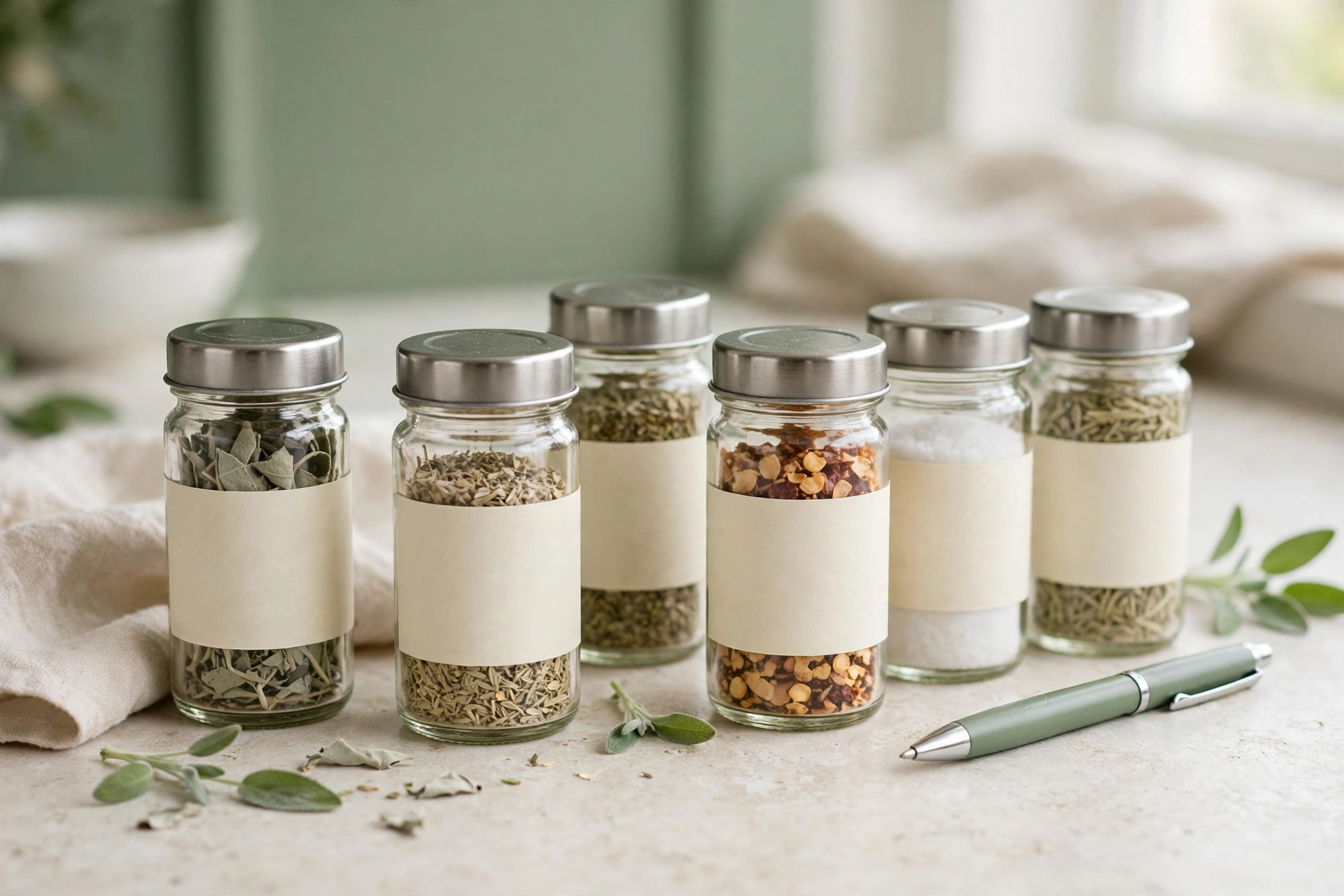
Labelling with blank labels every jar named and dated on the day it was filled, so nothing is a mystery.
What to buy: One pack of blank labels, about $2–$4, plus a pen that will not smudge. Chalk labels or masking tape work just as well and cost about the same.
Where it goes: On every jar, tin, and bag, on the front or the lid, wherever you will see it when you reach for it. Write the spice name and the month you filled it, so you know how old it is.
Common mistake: Decanting spices into matching jars and labelling them “later”. Later never comes, and within a month you will be opening five jars to find the paprika. Label the jar on the same day you fill it, every time.
Try this today: Label every jar in your spice drawer, even the ones you think you know by sight.
9. Grouping by cuisine
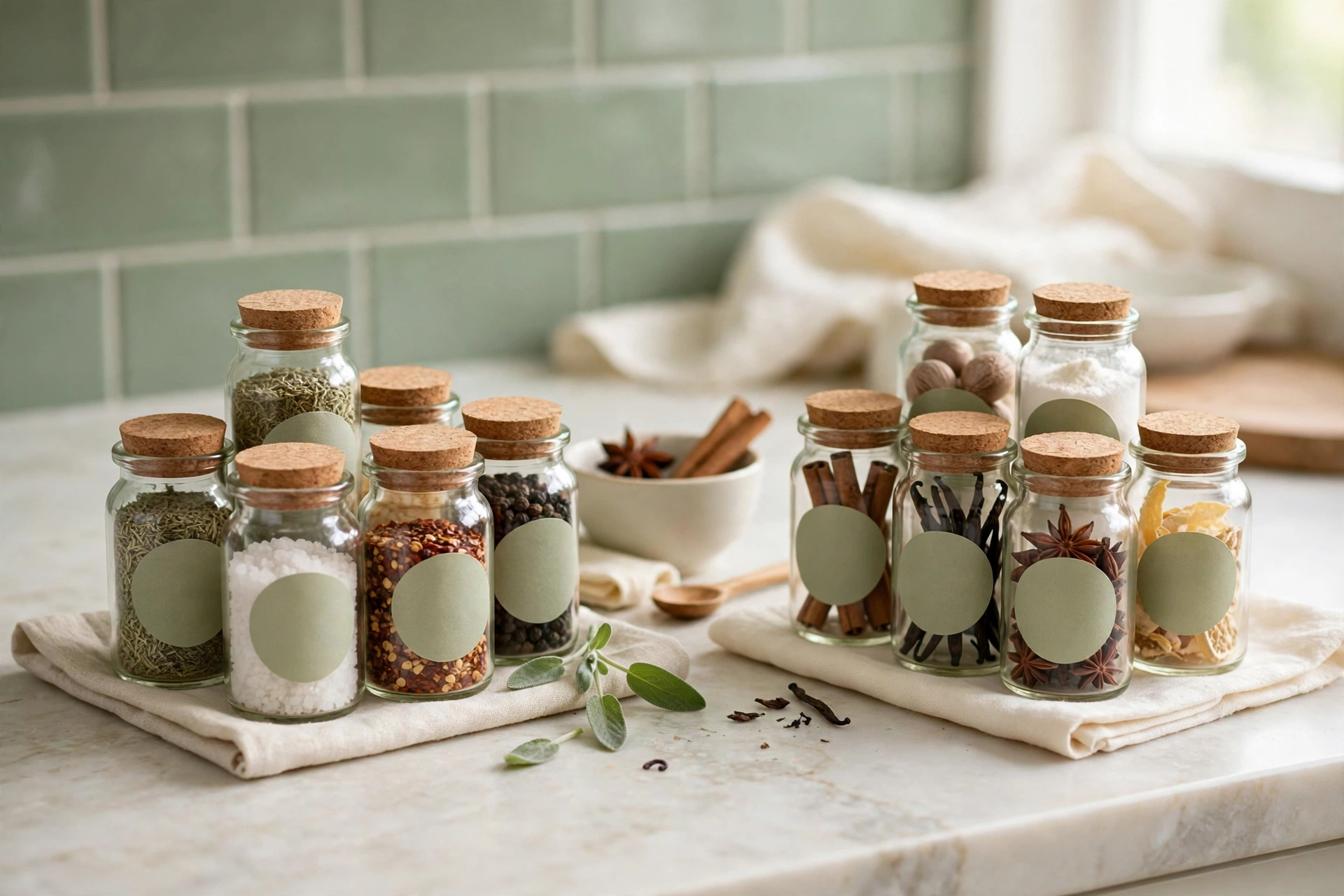
Grouping by cuisine spices stored by the meal you cook, not by the alphabet, so the whole group comes out together.
What to buy: Nothing. Grouping is free, and it uses the jars and storage you already have.
Where it goes: Everywhere your spices live. Put the spices you use together in the same place: the Italian group (oregano, basil, garlic powder) in one row, the Mexican group (cumin, chilli powder, smoked paprika) in another, the baking group (cinnamon, nutmeg, vanilla) on its own shelf or turntable.
Common mistake: Sorting spices alphabetically. Alphabetical looks tidy, but you never cook alphabetically. You cook by meal, so group by meal, and the whole group comes out and goes back together.
Try this today: Pick the three spices you use for your most-cooked dinner, and put them side by side in the drawer or on the rack.
10. A twice-a-year freshness check

The twice-a-year freshness check smell each jar, and if it smells like nothing, it goes.
What to buy: Nothing. The freshness check is free, and it saves you buying duplicates of spices you already own.
Where it goes: On the calendar, twice a year, in spring and autumn, or whenever the clocks change. Open each jar and smell it: if it smells strong, it stays. If it smells like nothing, it goes. Ground spices last about six months at their best, whole spices about a year.
Common mistake: Keeping a spice because it was expensive, or because you might use it one day. An expensive spice with no smell is still a jar of dust, and it is taking the place of a spice you would actually use.
Try this today: Open five jars right now and smell each one. Throw out any that smell like nothing, and write the rest on your next shopping list only when they run out.
What it costs in total
| Item | Approximate US price |
|---|---|
| Drawer insert or dividers | $8–$15 |
| 12 small matching jars | $10–$15 |
| Over-door or adhesive rack | $8–$15 |
| 6–12 magnetic tins | $10–$15 |
| Tiered shelf | $8–$12 |
| Slim pull-out rack | $12–$18 |
| Small turntable | $6–$10 |
| Blank labels + pen | $2–$4 |
| Grouping by cuisine | $0 |
| Freshness check | $0 |
| Total, all ten ideas | about $64–$104 |
The starter set under $35: Buy the drawer insert ($8–$15), six small matching jars ($5–$8), and a pack of blank labels ($2–$4). That is roughly $15–$27, and it fixes the two biggest problems first: the messy drawer and the jars you cannot identify. Add the tiered shelf and the turntable next, and the rest when a specific spot starts to annoy you.
The 15-minute version
If you only have 15 minutes today, do this: empty one drawer, line it with a non-slip mat, and lay your six most-used spices flat in a row, labels up. Label every jar while you are at it. That is the whole system in miniature, and it takes less time than scrolling through spice storage ideas online. You can add a tiered shelf next weekend and a turntable the weekend after that, one idea at a time.
FAQ
Do these ideas work in a rental?
Yes. Nothing needs drilling, screws, or permanent changes racks hang over the door or stick on with adhesive strips, tins hold by magnet, and shelves, turntables, and pull-out racks just sit in a cupboard or a gap.
How much should I spend in total?
Each idea is under $20, and the full set is about $64–$104. The starter set a drawer insert, six jars, and labels is about $15–$27, and that is enough to feel the difference.
How long will my spices stay fresh?
Ground spices are at their best for about six months, whole spices for about a year. If a spice has no smell when you open the jar, it is past its best, and no amount of storage will bring the flavour back.
What if I have no free drawer at all?
Use the door, the wall, or the gap. A rack on the cupboard door, magnetic tins on the fridge, or a pull-out rack in the gap all work without a drawer, and a tiered shelf or a turntable inside a cupboard uses space that is already yours.
Where should I start if I can only do one thing today?
Empty one drawer and lay your six most-used spices flat in a row, labels up. One tidy drawer is the whole system in miniature, and it takes about fifteen minutes.
Keep it going
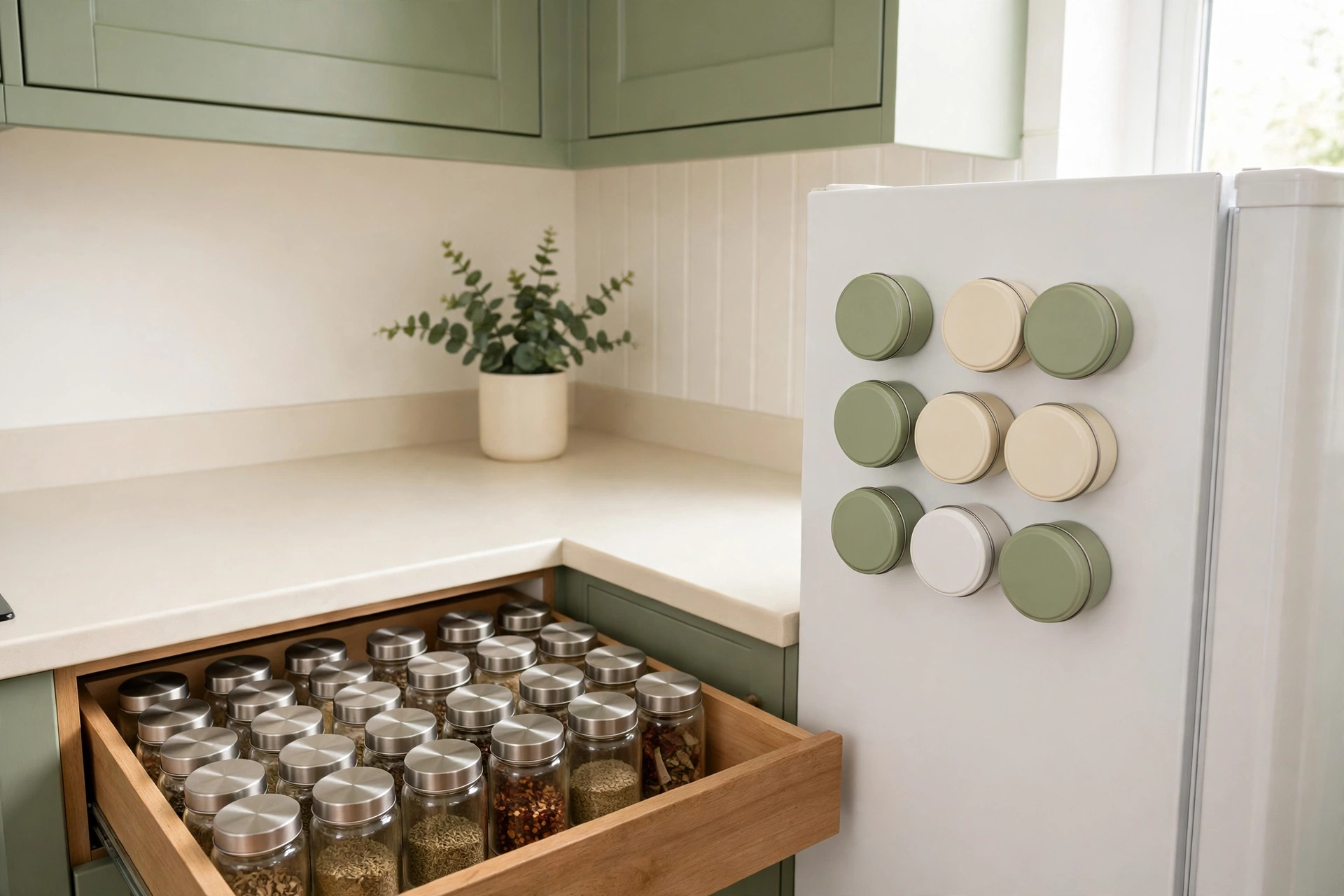
A tiny kitchen with every spice in its place drawer, door, and shelf, and a counter you can actually cook on.
A tiny kitchen feels bigger when every spice has a place and every place is easy to reach. Start with one drawer today.
Related pins
- Pin 9: “Under-Sink Kitchen Storage That Actually Works”
- Pin 1: “10 Kitchen Storage Ideas Under $20”
- Pin 5: “Pantry Organization for Small Kitchens”
- Pin 18: “Nightstand Organization in 10 Minutes”
- Pin 20: “Decluttering Aesthetic, A Calm, Sorted Home”