Thanksgiving in a Tiny Kitchen

Cooking Thanksgiving dinner in a small kitchen is a plan, not a problem.
Introduction
Thanksgiving in a tiny kitchen feels impossible until you have done it once. One oven, two burners, one small counter, and a dinner for six people. The turkey needs the oven, the sides need the oven, and the counter is already full before you start cooking.
The ten ideas below cook a full Thanksgiving dinner in a small kitchen, using a clear counter plan, one shelf per job and a few cheap tricks. Each idea costs under $20, most cost nothing at all, and all of them are renter friendly, with no drilling and no damage to the walls.
The secret is not a bigger kitchen. It is a plan written down before the day, a counter that is clear before you start, and dishes that do not all need the oven at the same time. Cook in this order, and the dinner lands on the table hot, with the kitchen still standing.
Before you buy anything
Do not buy new pans and gadgets first. Plan the meal and the order first, because most tiny kitchens already own enough pans, and the problem is timing, not tools.
1. Write the menu down, then cross out one dish. A turkey, two sides, one dessert and bread is a full dinner. Five sides is a restaurant, not a home dinner, and every extra dish needs oven space you do not have.
2. Mark each dish: oven, stove or no cooking. The turkey needs the oven. The mashed potatoes need the stove. The salad and the cranberry sauce need no cooking at all. A menu with one oven dish, one stove dish and two cold dishes fits a tiny kitchen. A menu with four oven dishes does not.
3. Write the cooking order on one page. What goes in the oven first, what goes in when the turkey comes out, what can be made the day before. One page, stuck on the fridge, and the whole day follows it. Cooking without an order is how everything is ready at different times.
Common mistake: starting to cook without clearing the counter. A counter full of yesterday’s dishes, mail and a fruit bowl leaves no room to work, and the cooking spreads onto the table, the chairs and the floor. Clear the counter the night before, and the cooking has somewhere to go.
1. Clear the counter the night before
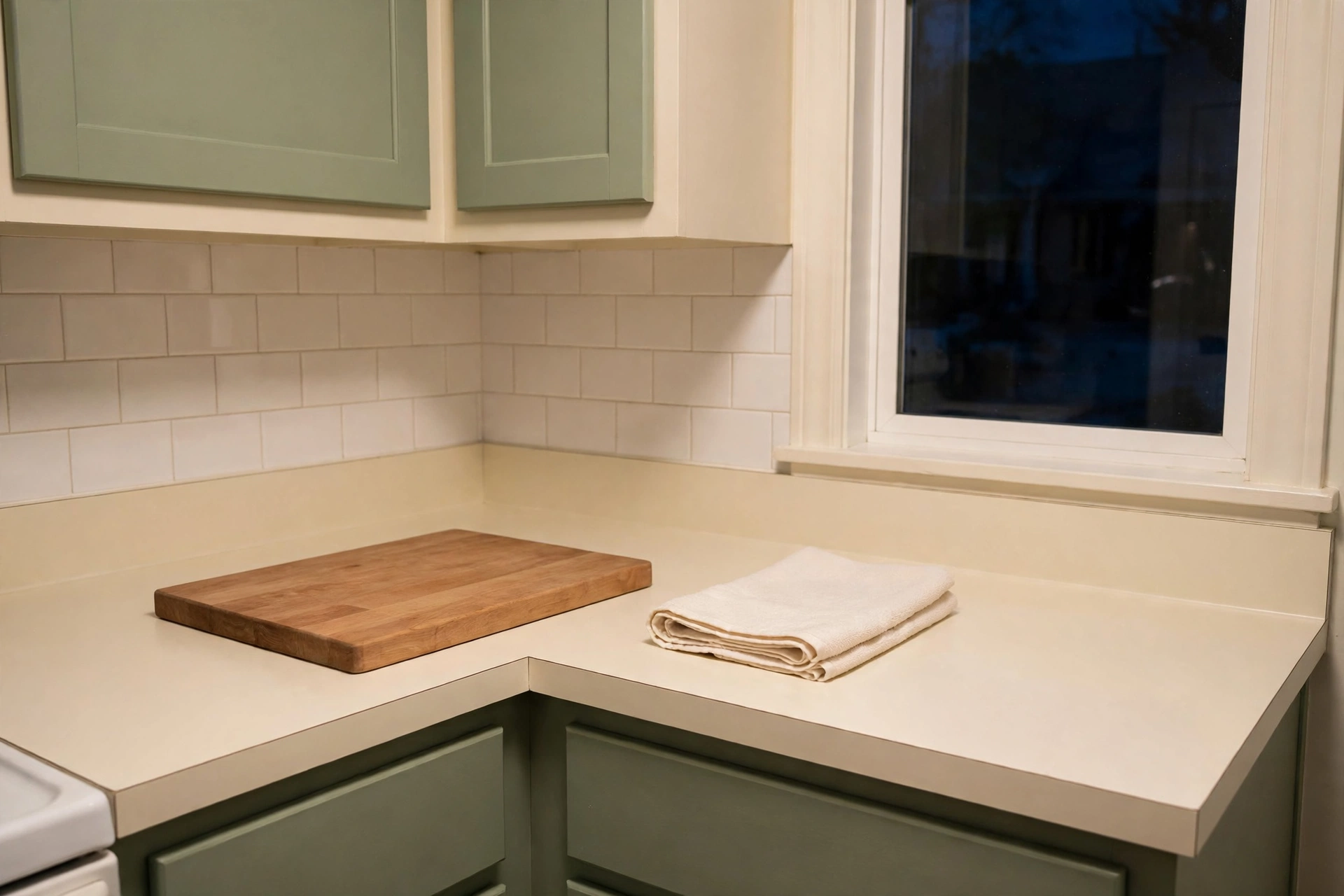
A clear counter is the biggest kitchen you can buy, and it costs nothing.
What to buy: Nothing. You need one hour the night before, and a box for the things that live on the counter.
Where it goes: Everything off the counter and into a box: the toaster, the fruit bowl, the mail, the jars. The box goes in a cupboard or on top of the fridge for the day. The counter stays empty until the cooking starts, and then only cooking lives on it.
Common mistake: Clearing the counter in the morning, while the turkey is waiting. The morning is for cooking, not for tidying, and a rushed clear leaves the counter half full. Clear it the night before, and the morning starts with space.
Try this today: Put everything from the counter into one box. Look at the empty counter. That empty space is what you will cook on, and it is bigger than you remembered.
2. One shelf per job
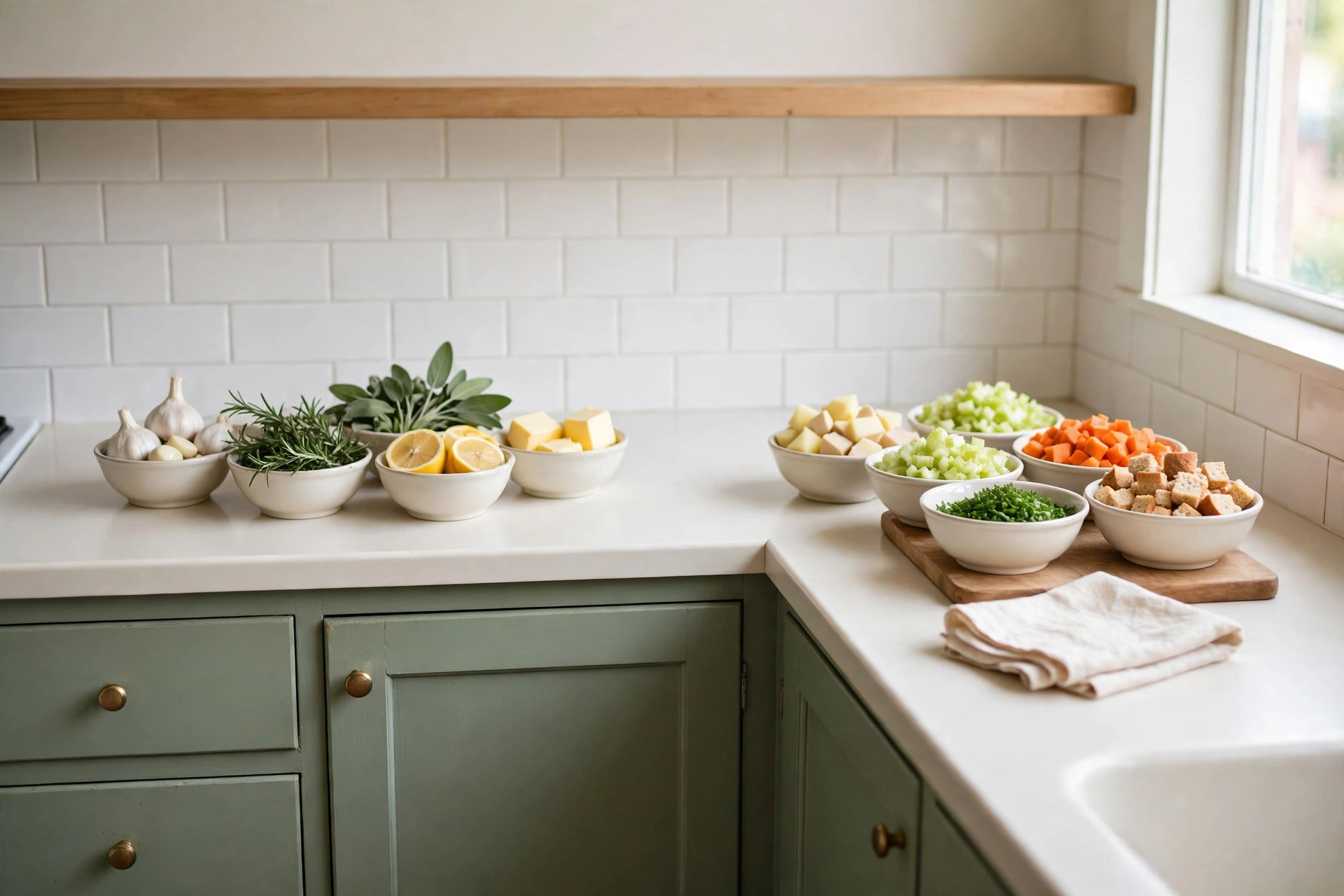
One shelf per dish, and you never hunt for the right ingredient.
What to buy: Nothing, or one small shelf for $10-$15 if you have a free stretch of wall. A tray on the counter works too, and you already own one.
Where it goes: Group the ingredients by dish before you cook. Turkey ingredients on one tray, mashed potato ingredients on another, salad ingredients in a bowl. Each dish gets its own spot, and you cook one dish at a time, from its own tray.
Common mistake: Piling all the ingredients in the middle of the counter. The pile mixes, the salt goes in the wrong dish, and you spend the day searching the pile. One tray per dish keeps the cooking calm.
Try this today: Put the ingredients for one dish on one tray. Cook that dish from the tray. If you never leave the tray, the system works.
3. Make the cold dishes the day before

Every dish made yesterday is one less dish to cook today.
What to buy: Two or three containers with lids, about $3-$5 each if you do not own enough. Or use bowls with plates on top.
Where it goes: Cranberry sauce, salad, the pie and the bread can all be made the day before, and they live in the fridge in covered bowls. On the day, they come out of the fridge and onto the table, with no cooking at all.
Common mistake: Cooking everything on the day, because it feels fresher. Fresh matters for the turkey, not for cranberry sauce, and cooking everything on the day means five dishes fighting for one oven. Yesterday’s cold dishes are the free space in your oven.
Try this today: Make one dish the day before your next big meal. Taste it the next day. It tastes the same, and the cooking day is one dish shorter.
4. The turkey rests, the sides use the oven
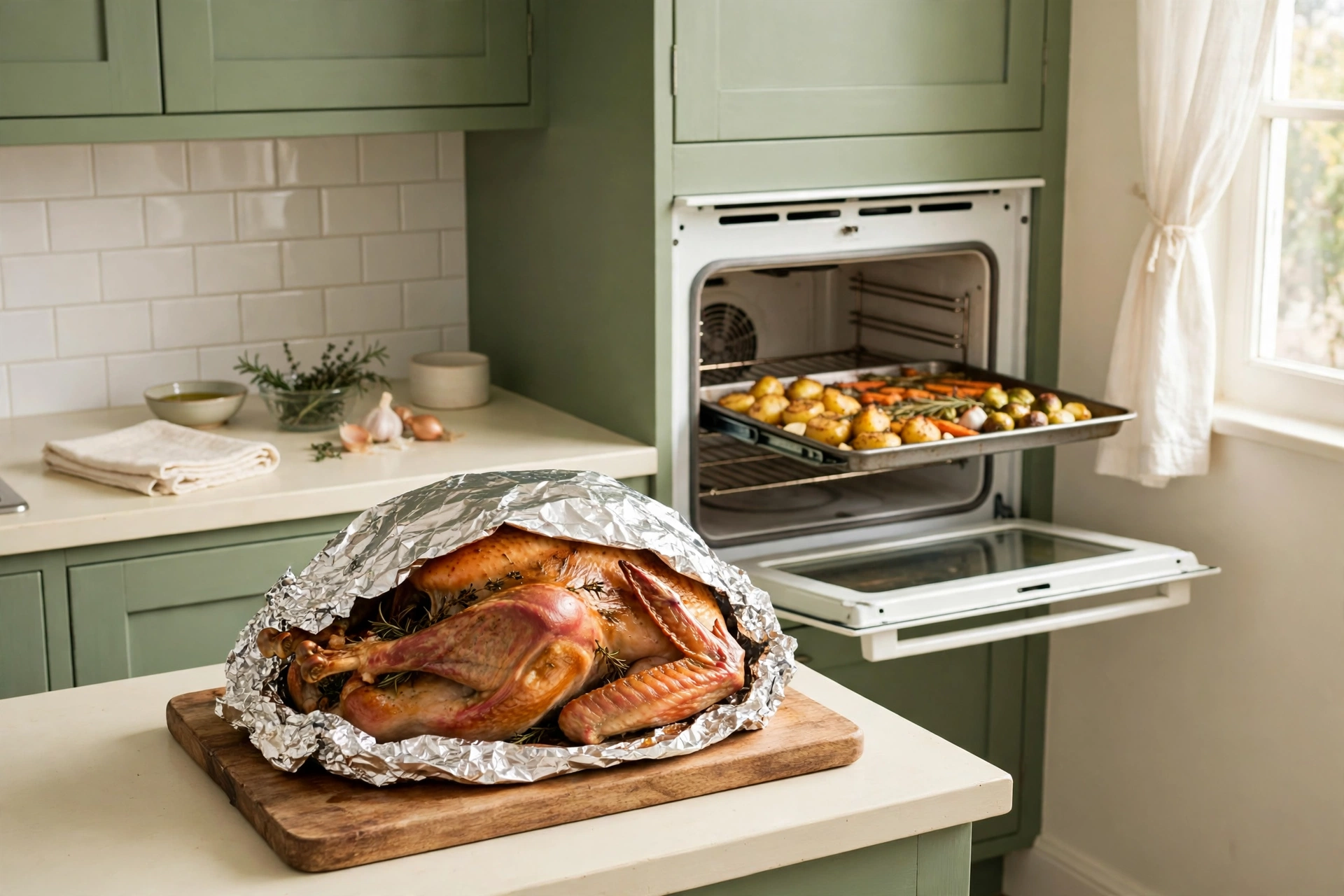
The turkey needs to rest anyway, so let the sides use the oven while it does.
What to buy: One roll of foil for $2-$3, and one roasting tray you already own. No new purchase needed.
Where it goes: Take the turkey out of the oven when it is done, cover it loosely with foil, and let it rest on the counter for twenty minutes. While it rests, the sides go into the hot oven. The turkey stays warm under the foil, the sides cook, and nothing waits for the oven.
Common mistake: Leaving the turkey in the oven while the sides wait, because you are afraid it will go cold. A turkey covered in foil stays hot for half an hour, and resting makes it juicier. The oven belongs to the sides while the turkey rests.
Try this today: Next time you roast anything, rest it under foil for twenty minutes and cook a side in the oven. The meat is juicier, and the side is ready at the same time.
5. Small bowls for everything
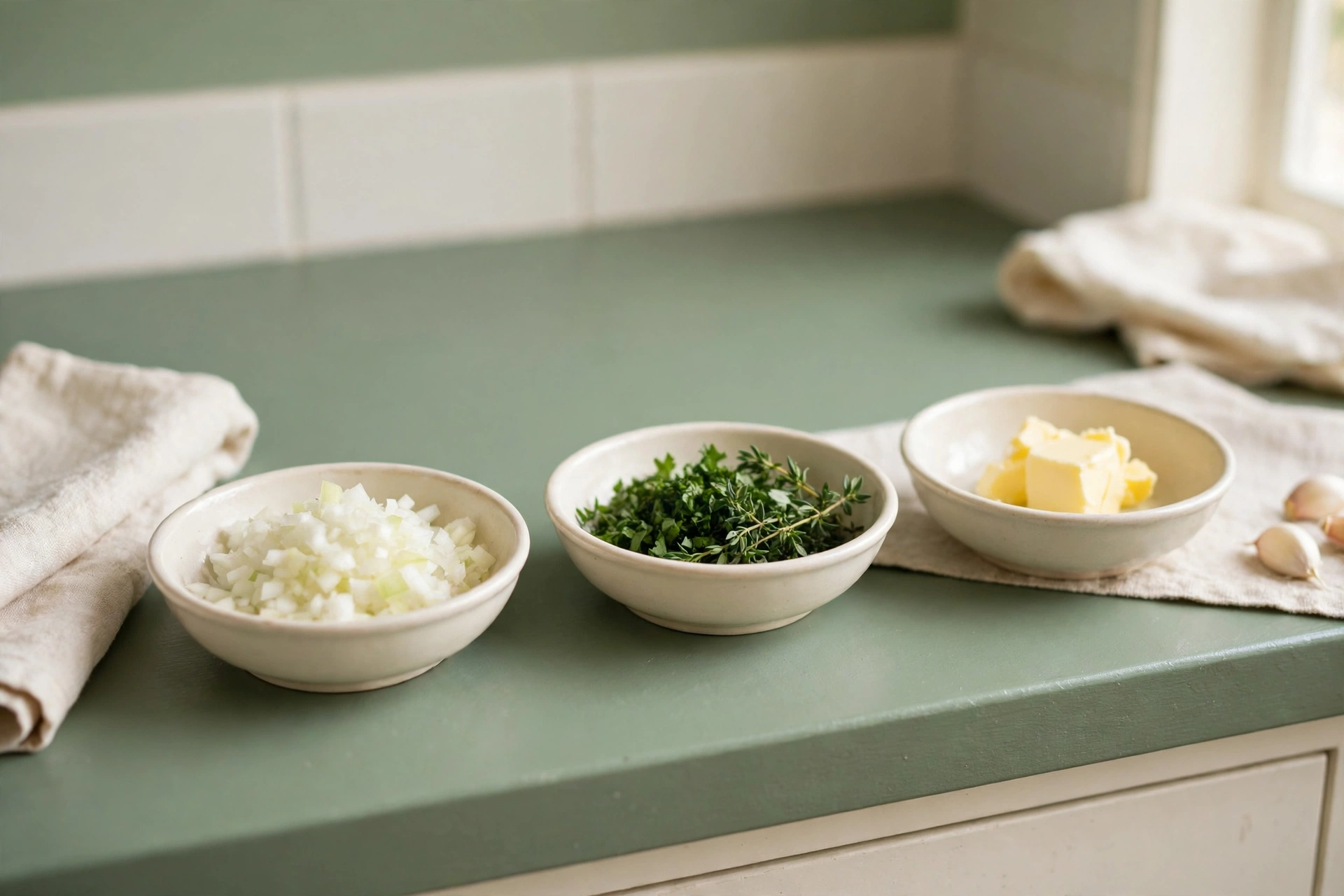
Small bowls keep a small counter tidy, and they stop you measuring twice.
What to buy: A set of small bowls for $5-$8, or use the mugs and cups you already own. Any small container works.
Where it goes: Measure everything into small bowls before you start cooking, and line them up in order. Onions in one, herbs in another, butter in a third. Cooking becomes pouring one bowl after another, and the counter stays tidy because the packets are already put away.
Common mistake: Measuring from the packet while you cook. The packet stays open on the counter, the flour spills, and the cooking stops while you measure. Bowls first, cooking second, and the meal comes together fast.
Try this today: Measure the ingredients for one meal into small bowls before you cook. The cooking takes half the time, because the measuring is already done.
6. The sink is a worktop too
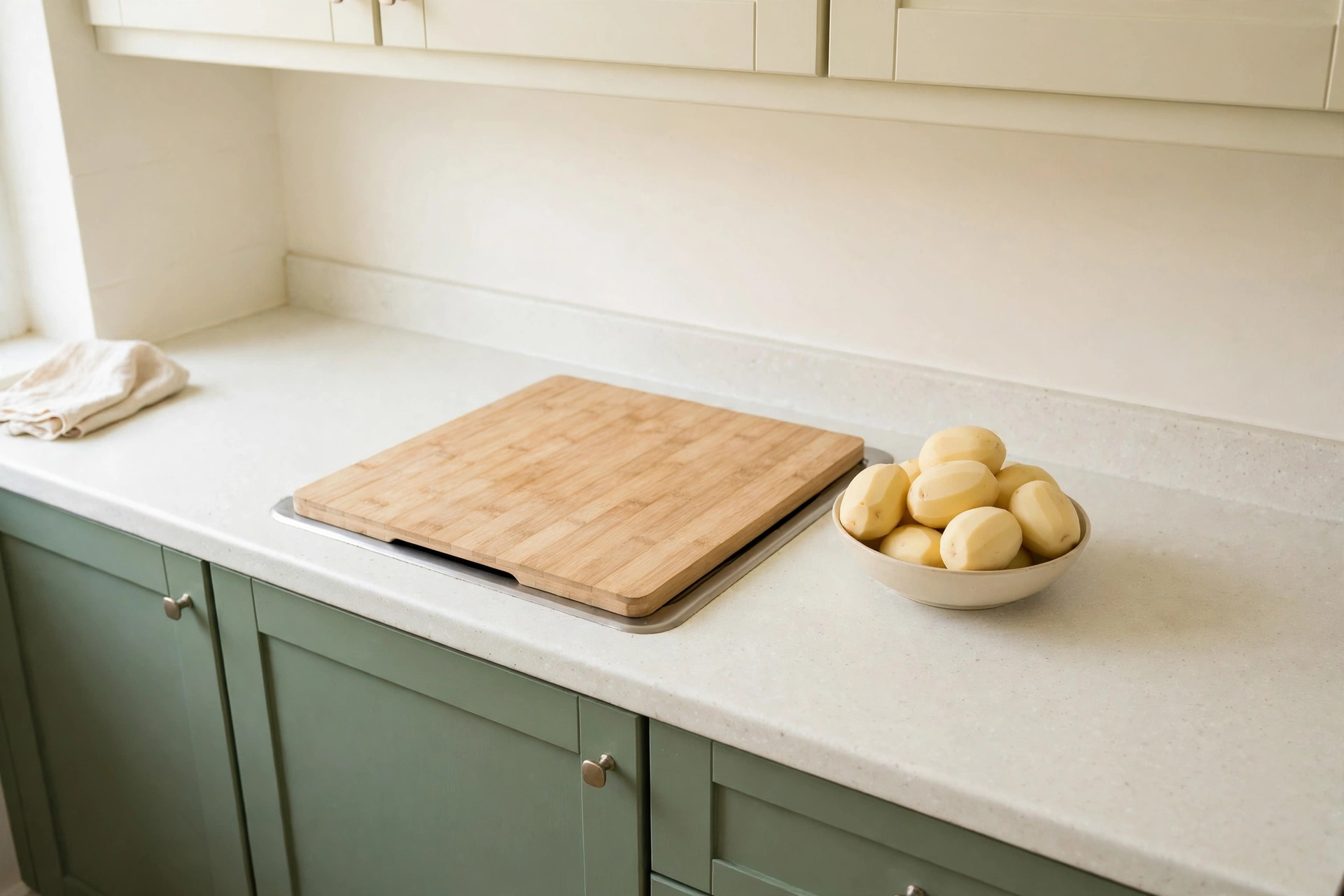
A board over the sink doubles your counter, and it costs nothing.
What to buy: One chopping board big enough to sit across the sink, about $8-$12 if you do not own one. Or use a baking tray.
Where it goes: Lay the board across the sink when you need more space. Peel vegetables over it, chop on it, or rest a bowl on it. When you need the sink, lift the board off. The sink is space you already own, and a board turns it into a counter.
Common mistake: Piling dirty dishes in the sink and losing the space. Wash as you go, or stack the dirty dishes in a basin beside the sink, and keep the sink free for the board. A sink full of dishes is a counter you have thrown away.
Try this today: Lay a chopping board across your sink. Peel one vegetable on it. That is extra counter space you already had.
7. Serve from the stove, not from the counter

Food served from the stove never needs counter space at all.
What to buy: Nothing. You need a table, plates and a serving spoon.
Where it goes: Keep the pots on the stove and let people serve themselves from the stove, or carry the pots straight to the table. The counter stays clear, because the food never lands on it. The table is for eating, the stove is for serving, and the counter stays free.
Common mistake: Moving every pot onto the counter to serve, then having nowhere to put the plates down. The counter is a workspace, not a serving table. Serve from the stove, eat at the table, and the kitchen stays calm.
Try this today: Serve your next meal from the stove. Put the plates on the table, the pots stay on the stove, and the counter stays empty.
8. Wash as you go, one bowl at a time
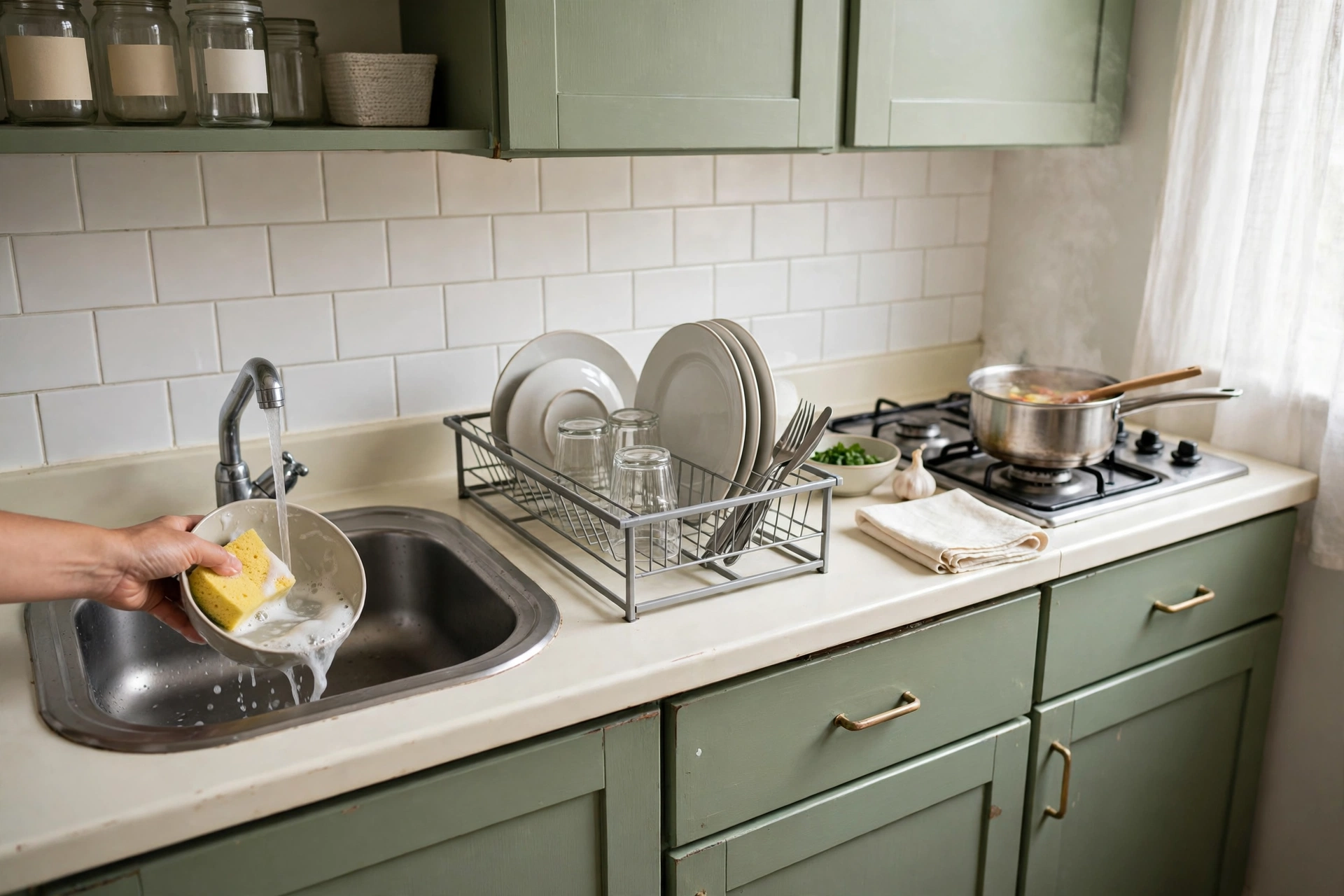
A bowl washed now is a bowl you can use again in ten minutes.
What to buy: Nothing. You need hot water, soap and the habit.
Where it goes: While the turkey roasts, wash the bowls you used for measuring. While the potatoes boil, wash the chopping board. One bowl at a time, in the quiet minutes, and the pile never grows. By dinner time the sink is empty and the kitchen is half clean already.
Common mistake: Leaving every bowl until after dinner. After dinner nobody wants to wash, and the pile is so big it takes an hour. Washing as you go spreads the work across the day, and after dinner there is almost nothing left.
Try this today: Wash one bowl while something cooks. It takes one minute, and the pile is one bowl smaller. Do it five times, and the pile is gone.
9. One tray for the table
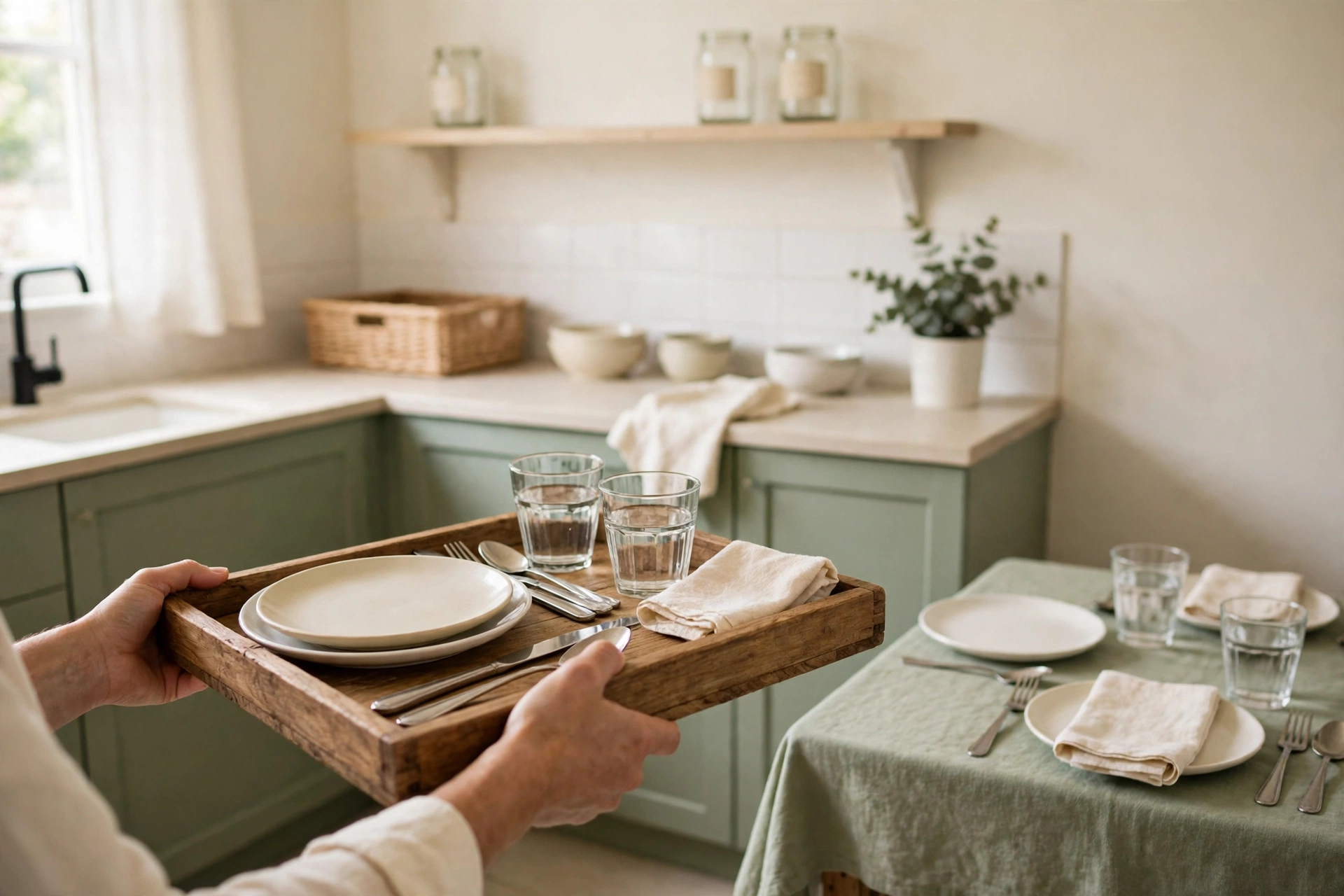
One tray carries the whole table in one trip, and the table is set in two minutes.
What to buy: One tray for $5-$8, or a baking tray you already own. One tray is enough.
Where it goes: Plates, glasses and cutlery go on the tray, and the tray goes to the table in one trip. No more walking back and forth with two plates at a time, dropping a fork on the way. One trip, one tray, and the table is set.
Common mistake: Carrying the table setting in your arms, piece by piece, while the food gets cold. Every trip is a minute, and five trips is five minutes of food going cold. A tray is the fastest way to set a table.
Try this today: Set your next meal on a tray and carry it in one trip. The table is set in one minute, and the food is still hot.
10. The day after is part of the plan

Leftovers are the second dinner, and they need a plan too.
What to buy: Three or four containers with lids, about $3-$5 each if you do not own enough, and a marker for labels.
Where it goes: After dinner, put the leftovers straight into containers, label them with the date, and stack them in the fridge. Turkey becomes sandwiches, mashed potatoes become soup, and the cranberry sauce goes on toast. Nothing is thrown away, and the next two days of cooking are already done.
Common mistake: Leaving the leftovers in the serving dishes in the fridge. Serving dishes take up the whole fridge, they have no lids, and the food dries out. Containers stack, they seal, and the food stays good for three days.
Try this today: Pack tonight’s leftovers into containers and label them. Tomorrow’s lunch is already cooked, and the fridge is tidy.
What it costs
Buy the small bowls and the tray first ($10-$16), and add a shelf if you have a free wall ($10-$15). That is roughly $10-$31 for the whole system, and the bowls and the tray last for years. The foil, the containers and the board are things you already own or can buy for a few dollars. Remember that ideas 1, 2, 4, 7 and 8 cost nothing at all, and they are the ones that make the day work.
The 15-minute version
If you only have 15 minutes today, do this: write the menu on one page, mark each dish as oven, stove or cold, and cross out one dish. Then clear the counter and put everything in one box. Three steps, and the whole day has a plan. The bowls and the trays can wait until the weekend.
FAQ
Can I really cook Thanksgiving dinner in a tiny kitchen?
Yes, if you plan the order. One oven dish, one stove dish and two cold dishes fit any kitchen. The turkey rests while the sides cook, the cold dishes are made the day before, and the counter is clear before you start. A plan matters more than space.
What if I only have one oven?
Then the turkey rests while the sides cook, and the cold dishes are made the day before. One oven is enough for a turkey and two sides, as long as they do not all need the oven at the same time. Timing is the oven you are missing.
How many dishes should I cook?
Four is a full dinner: a turkey, two sides, one dessert, plus bread. Five sides is too many for a small kitchen, and nobody eats them all. Cross out the dish you like least, and the day gets easier.
What can I make the day before?
Cranberry sauce, salad, pie and bread. They taste the same the next day, and they free the oven and the counter on the day itself. The turkey and the hot sides are the only things that need to be cooked fresh.
How do I keep the kitchen tidy while I cook?
Clear the counter the night before, wash one bowl at a time while things cook, and serve from the stove. A tidy kitchen is not a big kitchen. It is a kitchen where every bowl is washed as soon as it is empty.
Keep it going

The finished look: a clear counter, a plan on the fridge and a full table, and the tiny kitchen did it all.
Thanksgiving does not need a big kitchen. It needs a written plan, a clear counter and one dish made yesterday. Write the plan this week and the day will follow it.
Related pins
- Pin 29: Christmas Decoration Storage Ideas on a Budget
- Pin 30: Gift Wrapping Station Ideas on a Budget
- Pin 32: New Year Home Reset in 7 Days
- Pin 1: 10 Kitchen Storage Ideas Under $20
- Pin 9: Under-Sink Kitchen Storage That Actually Works
- Pin 5: Small Kitchen Pantry Organization, Before and After System