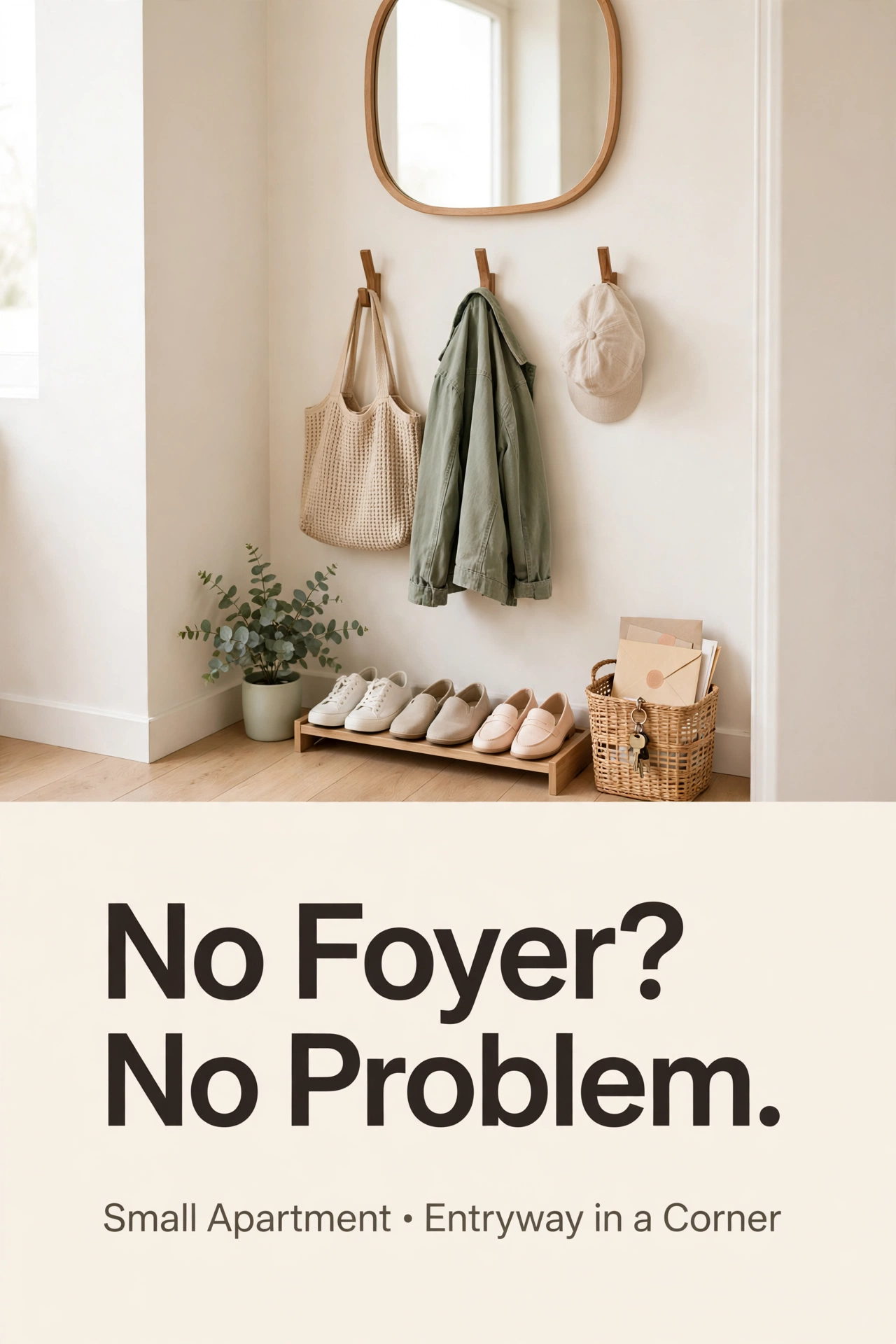
Entryway Organization for Homes With No Foyer
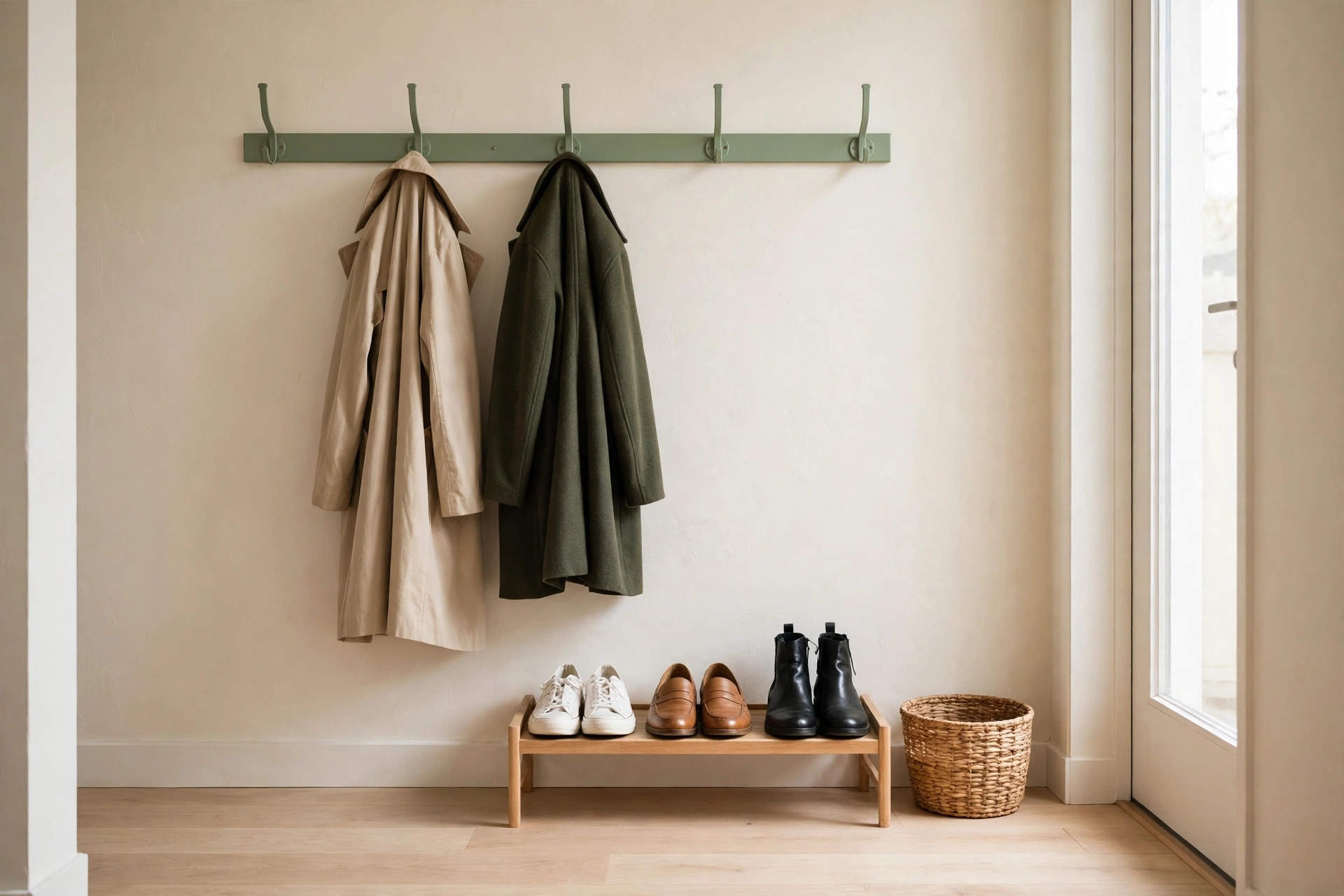
A small entryway with a place for coats, shoes and keys the goal is a landing zone, not a renovation.
Introduction
Most small apartments have no foyer at all. You open the front door and you are straight into the living room, or into a narrow hallway, or into a corner of the kitchen. There is no wall to hide behind, no closet to close, and no obvious place for the things that come in with you every day.
So the coats land on a chair, the shoes pile up by the door, the keys disappear into a bag, and the mail stacks up on the nearest flat surface. It is not that you are messy. It is that the space never had a job assigned to it. An entryway is not a room. It is a routine, a small patch of floor and wall where everything you need on the way out has a home, and everything you bring in has somewhere to land.
The ten ideas below each cost under $20, need no drilling, and can be done in one afternoon. They are written for renters. Nothing here damages a wall, a door, or a deposit. Start with the two ideas that match your biggest daily frustration, usually the shoes by the door and the keys you can never find, and add the rest over the next week, one zone at a time. Prices are approximate US budget-store prices in 2026.
Entryway organization is also one of the strongest topics in this niche right now: small apartment storage and under-sink storage are among the strongest evergreen search terms in Pinterest Trends (US, data to 31 Oct 2026), and “decluttering aesthetic” is up about 100% year-on-year, so this is the post Pin 11 will link to when the website goes live.
Before you buy anything
Do not buy a matching set of baskets first. Baskets bought before you know what you own become clutter themselves, and an entryway has no spare room for decorative clutter.
1. Watch your own routine for three days. Notice what you actually do when you walk in. Where do the shoes come off? Where do the keys go, honestly, not where you wish they went? What do you carry in your hands most days: a bag, a coat, the mail, a shopping bag? The answers tell you what your entryway needs to hold. A system built around your real routine will last. A system built around a photo of someone else’s hallway will not.
2. Measure the landing zone. Measure the wall beside the door, the floor space where shoes land, and the height of any shelf or console you are thinking about. An entryway is usually the tightest space in the flat, and a hook rail that is one inch too wide or a shoe rack that blocks the door swing is a purchase you cannot use.
3. Declutter the doorway first. Empty the space by the door completely. Take the coats that belong in a closet, the shoes nobody has worn in a month, the bags of things waiting to go out, and the pile of mail you have already dealt with. Put “maybe” items in a dated bag; unopened in 30 days, donate or bin it. What is left is what the entryway actually has to store, and it is usually far less than you thought.
Common mistake: buying a full matching set on day one, including a console table, a mirror, and four baskets, before you know what fits. Buy two hooks and one tray, live with them for a week, then buy more only for the problem that is still there.
Entryway types
Door opens straight into the living room. This is the most common small-apartment layout, and the hardest, because there is no wall to mark where the entryway ends and the living room begins. Here the entryway is defined by objects, not walls: a doormat marks the floor, a row of hooks marks the wall, and a shoe tray marks the boundary. Keep everything within one arm’s reach of the door, and keep it low and slim so it reads as a zone, not as furniture blocking the room.
Narrow hallway. A hallway gives you walls on both sides, which is a gift, but very little floor. Use the walls, not the floor: hooks, a slim shelf, a mirror, and a key hook. Keep the floor to one slim shoe tray and one doormat. Anything that sticks out more than a few inches will catch a bag or a coat every time you pass, and you will stop using it.
Shared hallway. If the hallway outside your flat is shared with neighbours, or the hallway inside is shared with flatmates, your entryway has to be compact and clearly yours. One basket per person, one hook per person, and a tray that holds only your shoes keeps the peace. Label the baskets if you share with flatmates, and keep nothing in the shared space that you would mind a neighbour seeing.
No wall space. Some doors open onto a wall of windows, or a radiator, or a kitchen counter, with no blank wall at all. Then the entryway lives on the floor and on the door itself: an over-door hook rail, a shoe tray, a small basket that sits on the floor, and a key bowl on the nearest shelf or console. The door becomes your wall.
Whichever shape you have, store things where you use them: keys by the door, shoes where they come off, mail where you open it, and the bag where you pick it up on the way out.
1. Wall hooks by the door
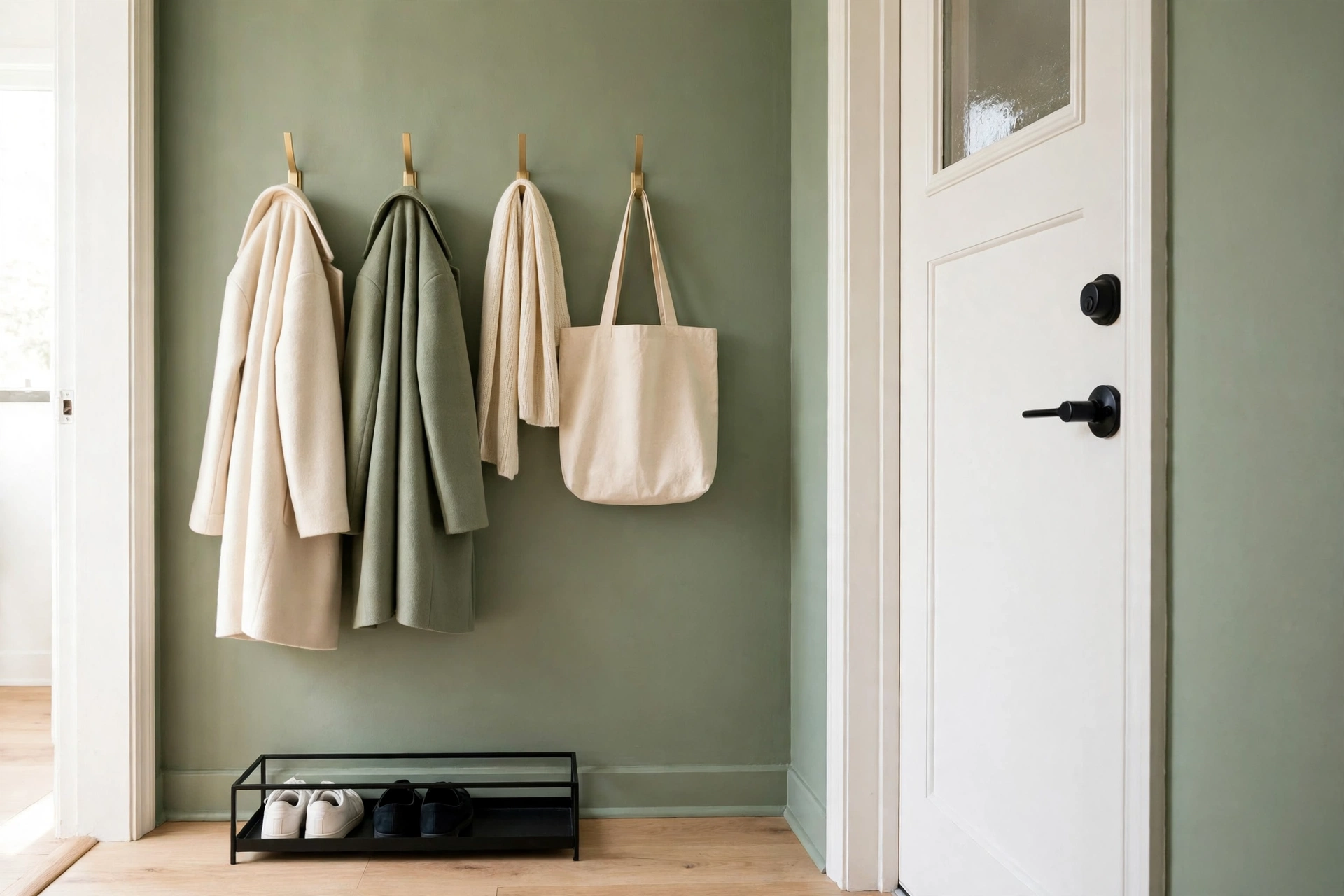
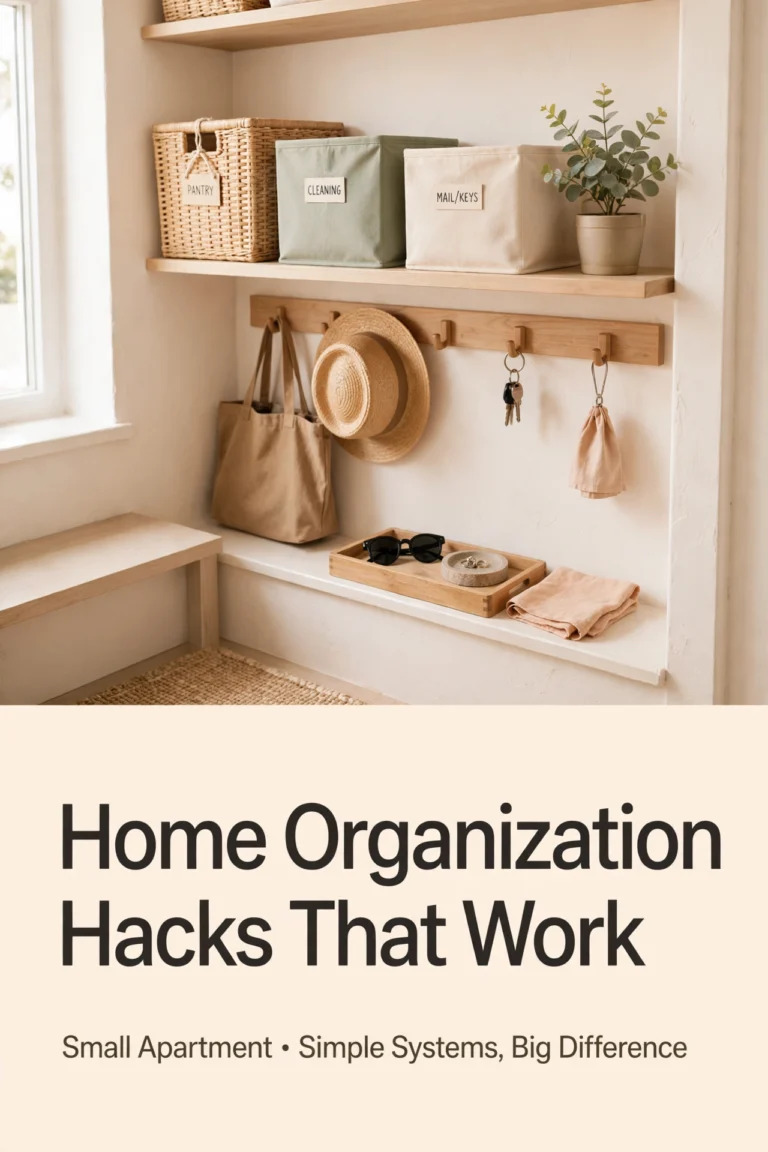
Wall hooks by the door coats, scarves and a tote bag off the chair and off the floor, with no holes in the wall.
What to buy: A row of three or four adhesive hooks, or one over-door hook rail, about $5–$10. Adhesive hooks rated for a few pounds each are plenty for a coat, and they peel off cleanly when you move out. If the wall is textured or damp, an over-door rail is the safer choice.
Where it goes: On the wall beside the door, at a height you can reach without stretching, usually about five feet up. Coats on the outer hooks, scarves and the dog lead on the inner ones. One hook per person, plus one spare for a guest, is enough. Any more and the row becomes a second closet.
Common mistake: Hanging hooks too high, so short coats drag and nobody reaches them, and sticking adhesive hooks to a dusty or damp wall, which is why they fall off a week later. Wipe the wall dry first, press firmly, and wait a day before hanging anything heavy.
Try this today: Put two adhesive hooks beside the door and move the coat that lives on the back of the chair onto one of them.
2. A slim shoe tray or rack
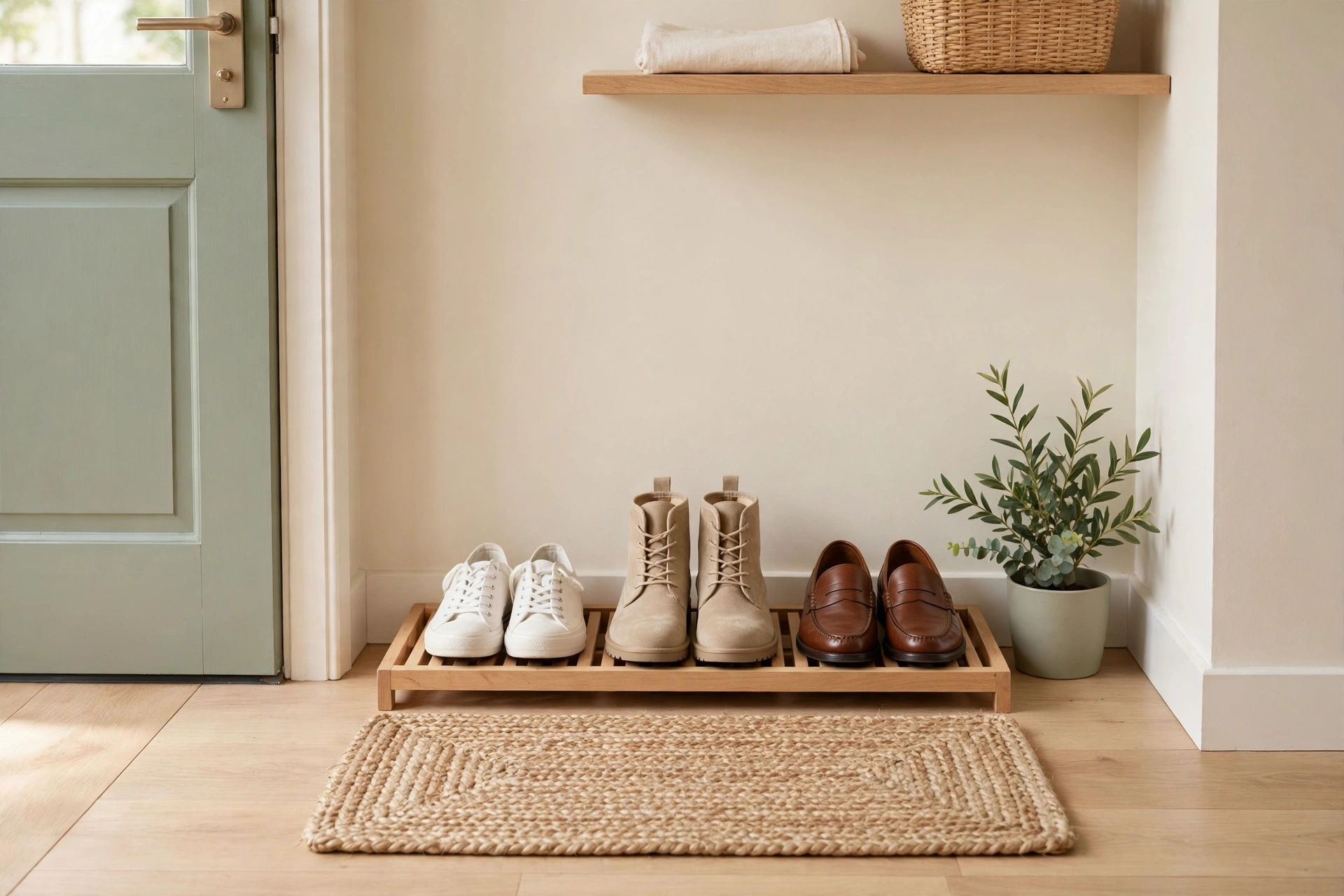
A slim shoe tray three pairs of shoes in a row, dirt and rain kept off the floor, and the doorway clear.
What to buy: One slim shoe tray, about $6–$12, or a two-tier shoe rack about $10–$15 if you have the floor space. A tray with a raised edge is best, because it catches rain, mud, and grit instead of letting it spread across the floor.
Where it goes: Directly inside the door, where shoes come off. The tray marks the boundary of the entryway, and it tells everyone in the house exactly where shoes belong. Two or three pairs per person is the limit. The rest live in a closet or under the bed.
Common mistake: Buying a rack that is wider than the space, so it blocks the door swing, and keeping every pair of shoes you own by the door “just in case”. Measure the floor space first, and keep only the shoes you wear this week in the tray.
Try this today: Put a tray by the door and move every shoe that is not in it into a closet or under the bed. Count the pairs as you go.
3. One small basket per person
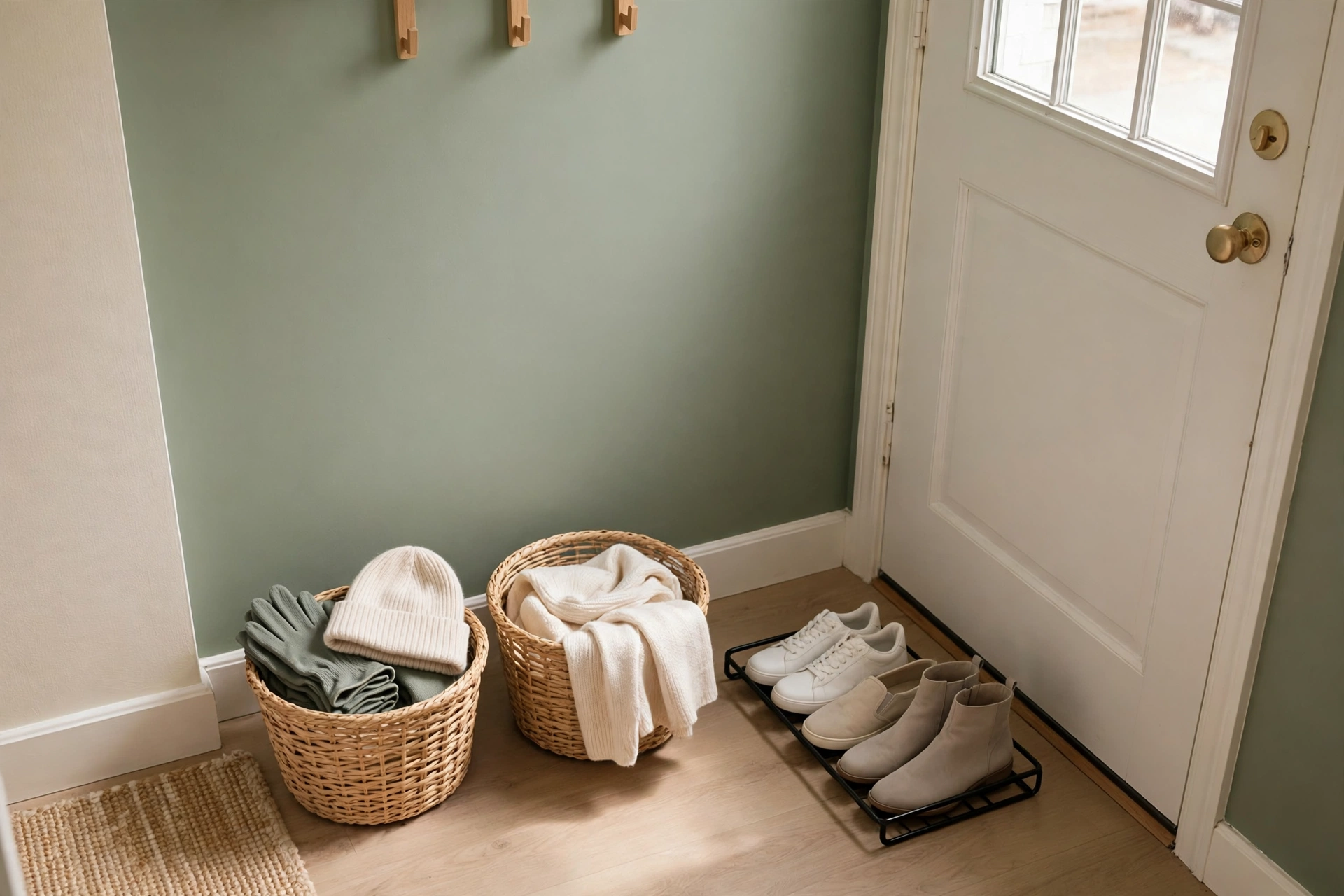
One basket per person gloves, hats and scarves each have a home, so nobody digs through a shared pile.
What to buy: One small basket per person, about $3–$5 each, plus a label maker or masking tape and a pen, about $2. Woven or fabric baskets look warm and hide the contents; clear ones make it easier to see what is inside.
Where it goes: On the floor beside the shoe tray, or on the lower shelf of a console if you have one. Everything that person carries in and out daily, gloves, a hat, a scarf, sunglasses, lives in their basket, and the basket stays by the door.
Common mistake: Making the baskets too big. A small basket forces a choice about what you actually use; a big one just becomes another drawer, and then a dumping ground. If it does not fit in the basket, it does not live by the door.
Try this today: Give everyone in the house one small basket and ask them to put only what they used this morning into it.
4. A key bowl or key hook
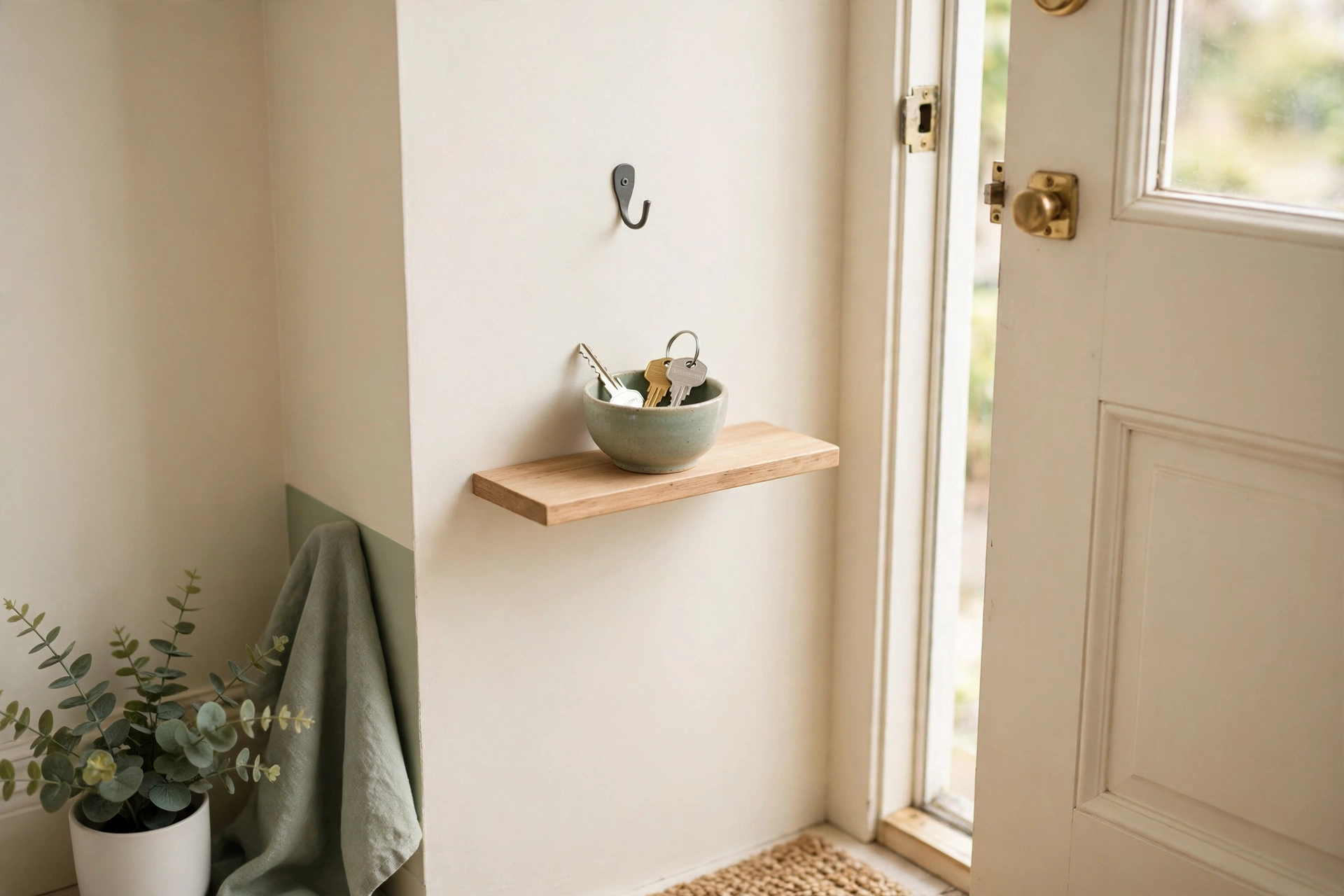
A key bowl by the door keys in one place, every time, so the morning search never happens.
What to buy: One small bowl or tray, about $3–$6, or a row of two or three small adhesive hooks, about $4–$7. A bowl is better if several people share the keys; hooks are better if each person has their own set.
Where it goes: On the nearest flat surface to the door, a narrow shelf, a console, or the top of a shoe rack, or on the wall just inside the door. The rule is simple: keys go in the bowl the second you walk in, before you do anything else. No exceptions, not even for a minute.
Common mistake: Putting the bowl somewhere you pass on the way in but never stop, like a shelf in the next room. If you have to go out of your way to use it, you will not use it. The bowl has to be within one step of the door.
Try this today: Put a small bowl by the door and drop your keys in it the moment you get home tonight. Tomorrow morning, notice how long the search takes. It should take zero seconds.
5. A mirror to define the zone
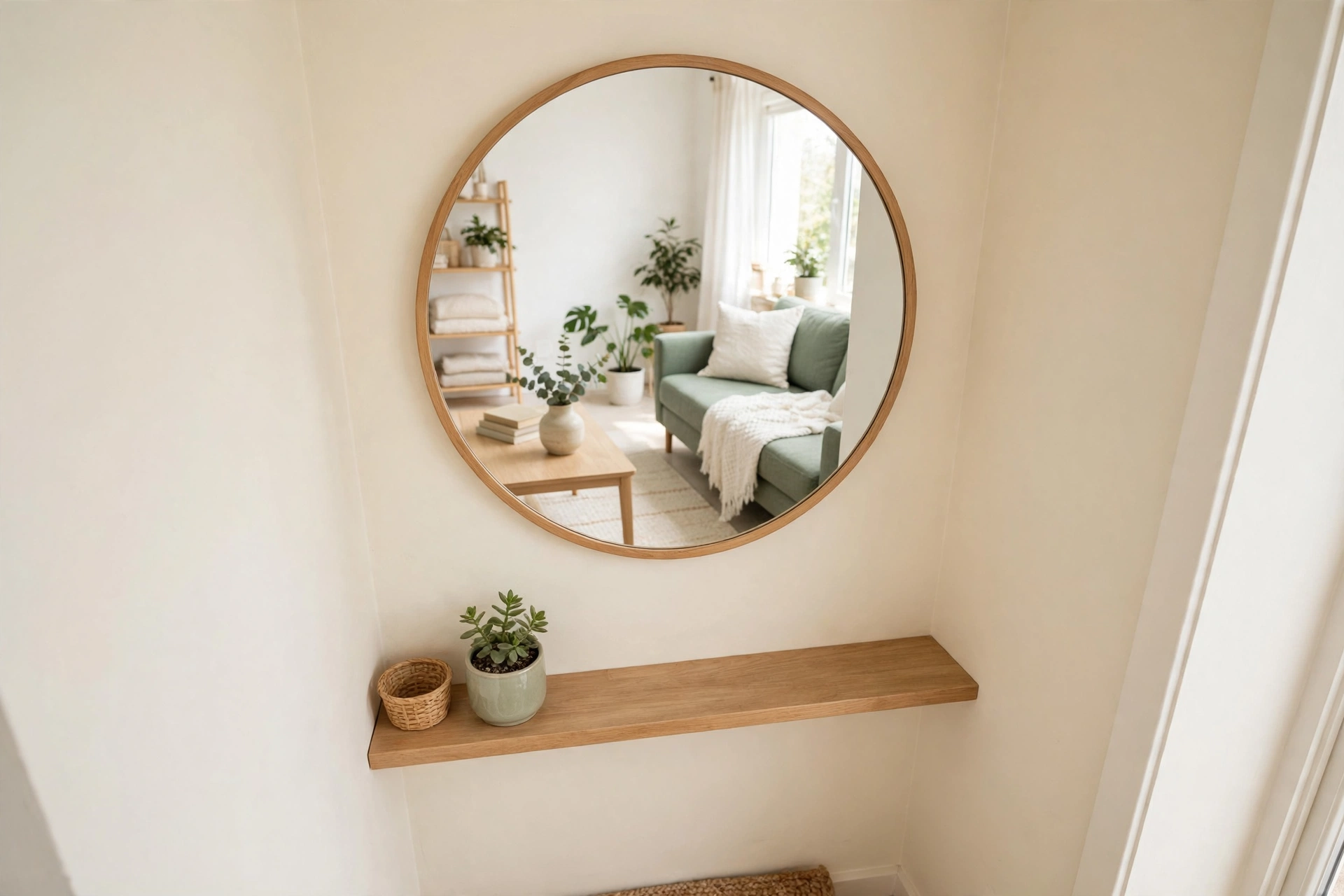
A mirror above the entryway shelf it marks the zone, bounces light into a dark hallway, and gives you a last look before you leave.
What to buy: One round or rectangular mirror, about $10–$18, with adhesive mounting strips or a leaning design. A mirror that leans against the wall on a console needs no fixings at all, and it is the easiest option for renters.
Where it goes: On the wall above the shelf or console, or leaning on the console itself. It does two jobs at once. It marks the entryway as a zone, so the living room starts where the mirror ends, and it bounces light into a hallway that usually has none. It also gives you a last look before you leave, which is the moment you notice the toothpaste on your chin.
Common mistake: Hanging a mirror so high it only shows the ceiling, or so small it looks lost on a big wall. The centre of the mirror should sit at about eye level, and the mirror should be roughly two-thirds the width of the shelf below it.
Try this today: Hold a mirror up on the wall above your entryway shelf and step back. If it reflects light and shows your face at eye level, that is the spot.
6. A narrow console or shelf
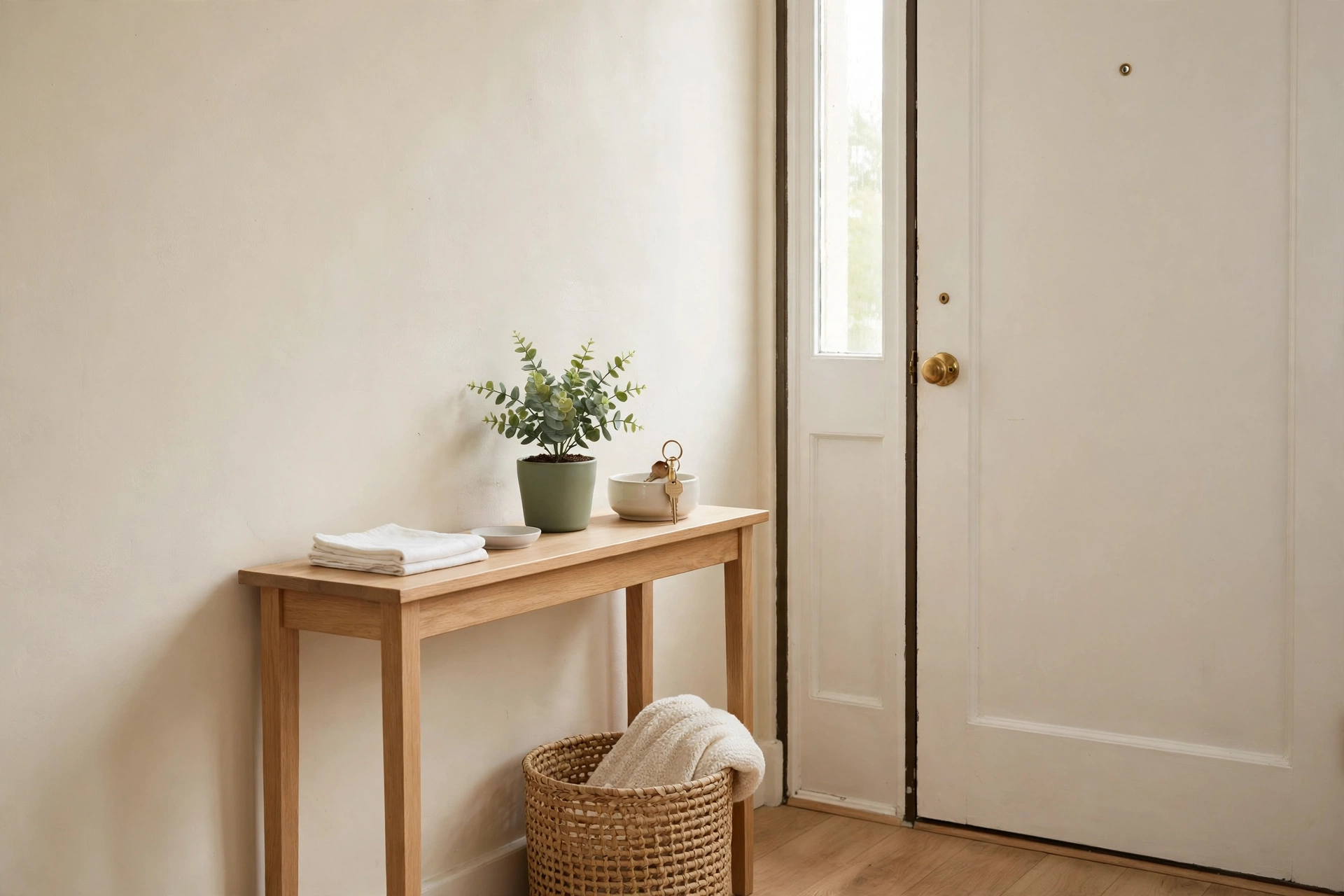
A narrow console table a landing surface for keys and mail, with a basket underneath for shoes or bags.
What to buy: One narrow console table or floating shelf, about $12–$18 for a small table, or $8–$15 for a shelf with adhesive brackets. The console should be no deeper than about ten inches, or it will block the walkway.
Where it goes: Against the wall beside the door, where it becomes the landing surface for everything in your hands: keys, mail, sunglasses, the parcel you are about to open. A basket underneath holds shoes or a bag, and a mirror above it finishes the zone.
Common mistake: Buying a console that is too deep for the space, and then filling it with decorative objects until there is no room left for the keys. A console is a landing strip, not a display shelf. Keep two-thirds of it clear.
Try this today: Clear the top of whatever surface sits nearest your door, and leave only the key bowl and the mail tray on it. Notice how much calmer the doorway looks.
7. A doormat system
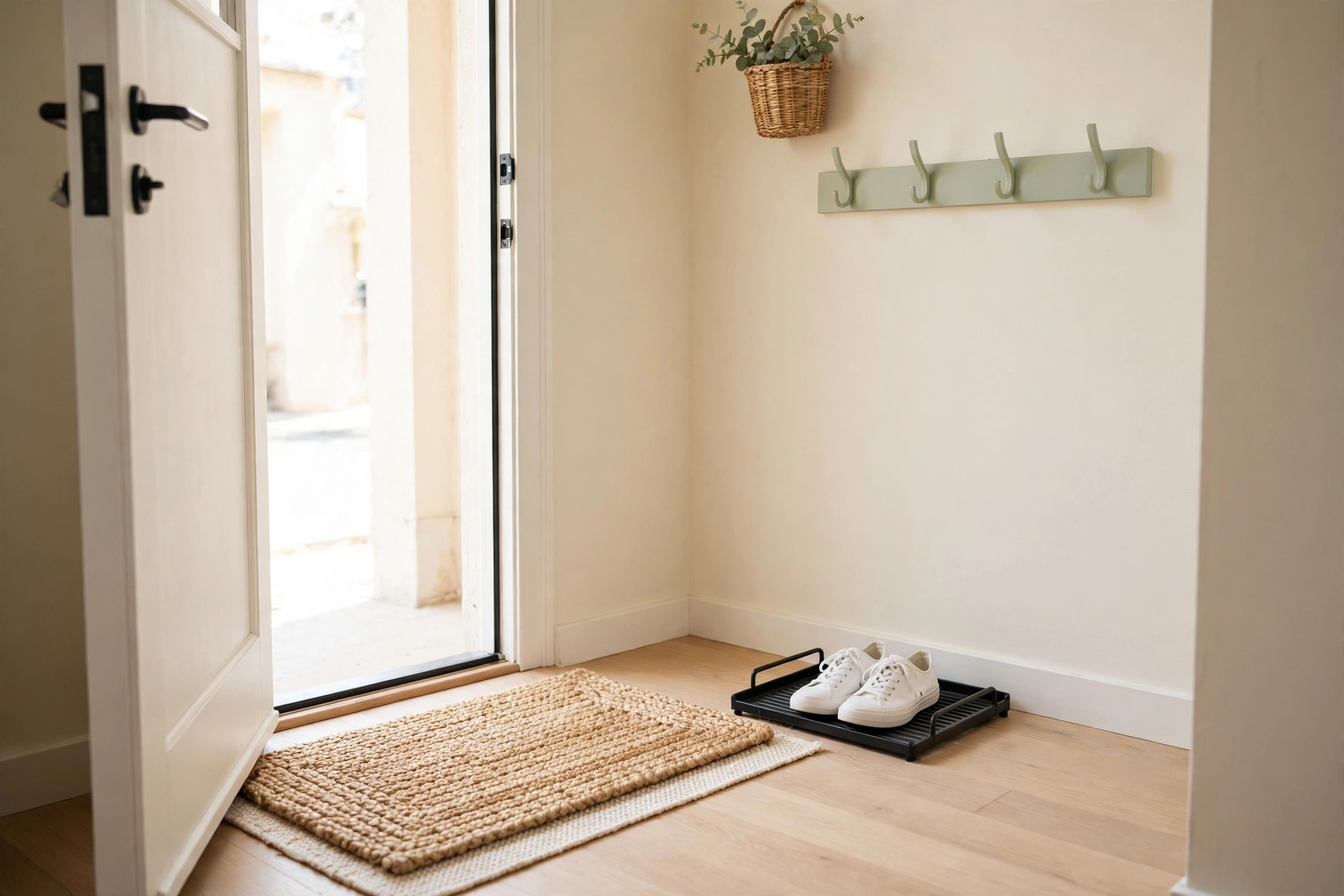
A doormat system one mat outside, one inside, and wet shoes never reach the living room floor.
What to buy: One doormat for inside the door, about $6–$10, and one for outside if your building allows it, about $5–$8. A coir mat outside scrapes off mud; a washable mat inside catches what is left.
Where it goes: Inside the door, flat on the floor, with the shoe tray beside it, not on top of it. The mat is the first thing your feet touch, and it is the line between outside and inside. Wet shoes stay on the mat and the tray, and the living room floor stays clean.
Common mistake: Buying a mat that is too small, so feet land half on the mat and half on the floor, and never washing it. A mat should be wide enough for both feet at once, and it should be shaken out or washed once a week, or it just moves the dirt around.
Try this today: Shake out your doormat outside, and put it back flat by the door. If it slides around, a few dots of rug gripper underneath, about $3, will hold it still.
8. A bag hook
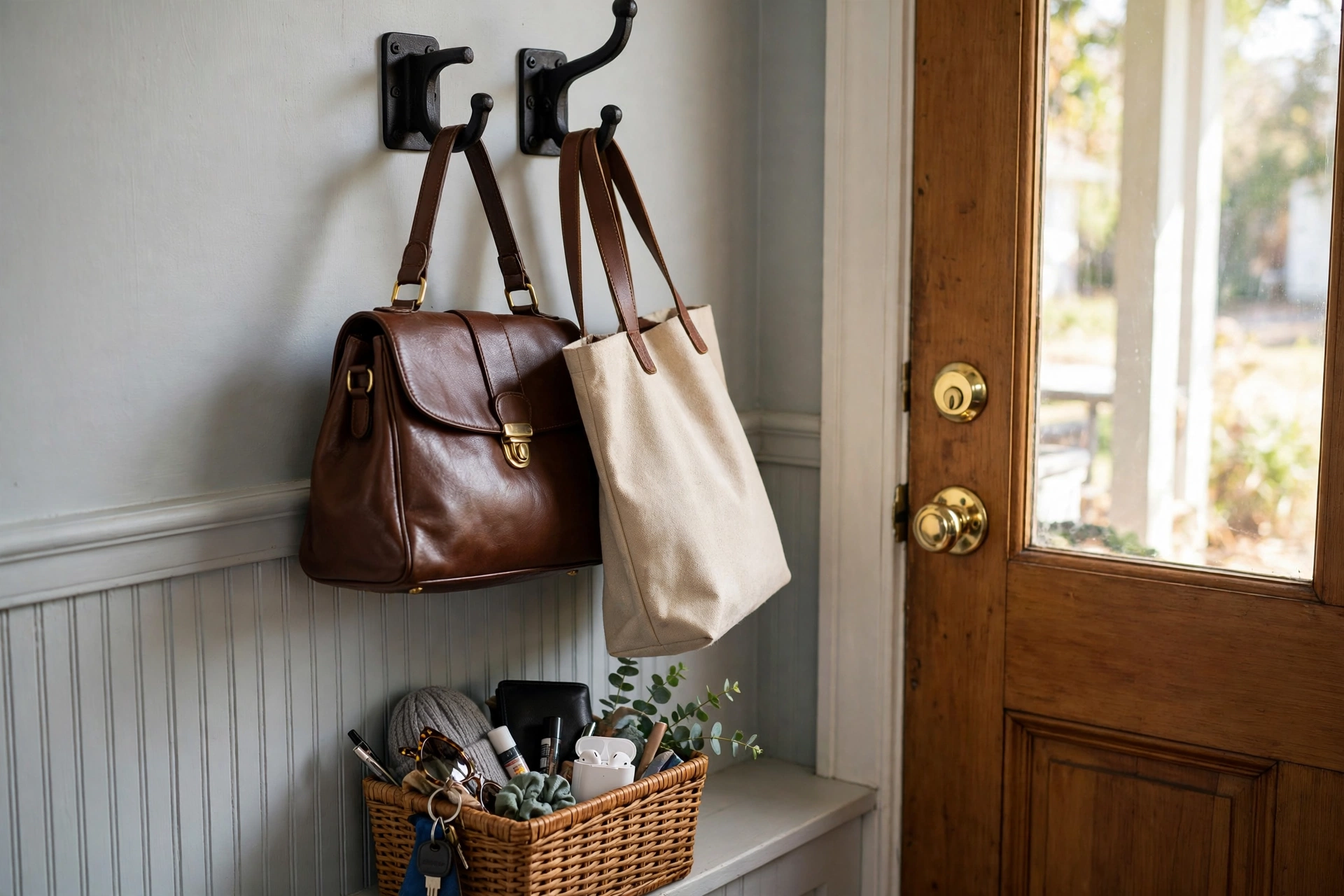
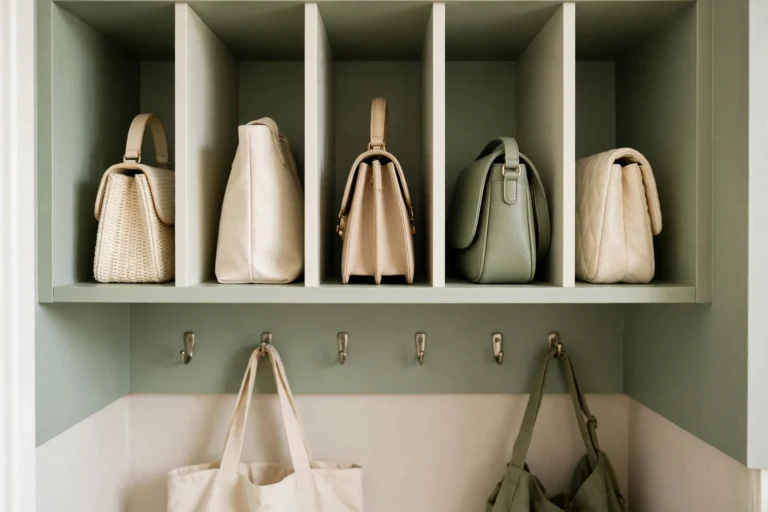
A bag hook your everyday bag hangs by the door, packed and ready, instead of sliding off a chair.
What to buy: One sturdy adhesive hook or an over-door hook, about $4–$8. It needs to hold more weight than a coat hook, so check the rating before you buy, and use a hook rated for at least five pounds.
Where it goes: Beside the coat hooks, at a height where the bag hangs free and does not drag on the floor or block the door. The everyday bag lives here, packed and ready, so you grab it on the way out instead of repacking it every morning.
Common mistake: Hanging the bag on a coat hook that is too weak, so it falls in the night, and hanging three bags on one hook. One bag per hook, and the hook should be the strongest one you own.
Try this today: Hang your everyday bag on a hook by the door tonight, packed with what you need tomorrow. Tomorrow morning, just grab it and go.
9. Mail sorting
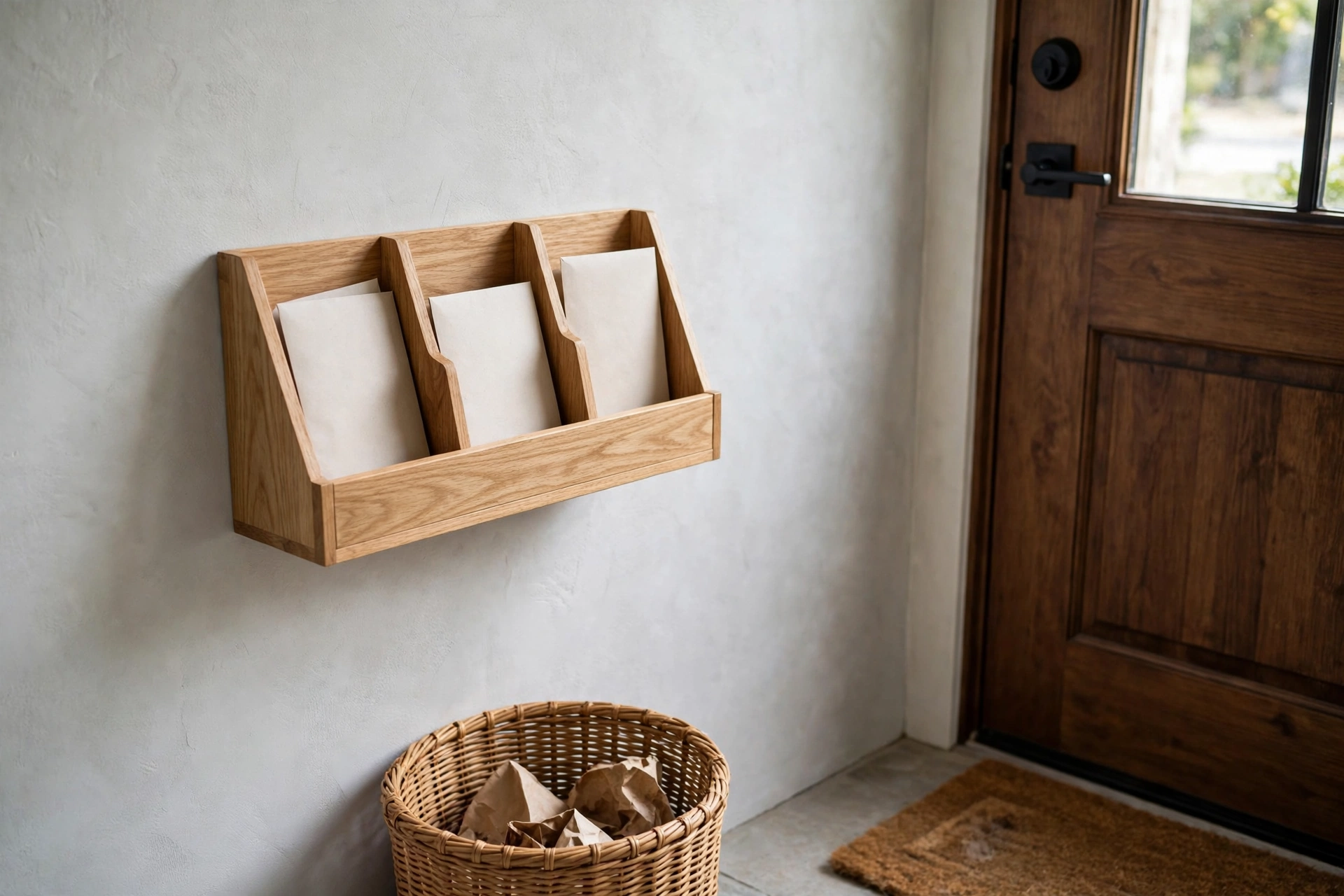
Mail sorting one tray for letters to open, one spot for recycling, and no more piles on the kitchen counter.
What to buy: One small mail tray or wall-mounted sorter, about $5–$10, and one small basket or bag for recycling, about $3–$5. A tray on the console works just as well as a wall sorter, and it needs no fixings.
Where it goes: On the console or shelf by the door, or mounted on the wall beside it. Incoming mail goes in the tray, and it gets opened once a day, not once a week. Junk goes straight into the recycling basket, and letters to deal with go in the front of the tray.
Common mistake: Letting the mail pile grow until the tray overflows, and opening mail in the kitchen where it then lives on the counter forever. The rule is: mail is opened at the door, and what stays goes in the tray. What leaves goes in the recycling, today, not tomorrow.
Try this today: Gather every piece of mail in the house into one pile by the door, open it all, recycle the junk, and put what is left in one tray.
10. The 2-minute landing routine
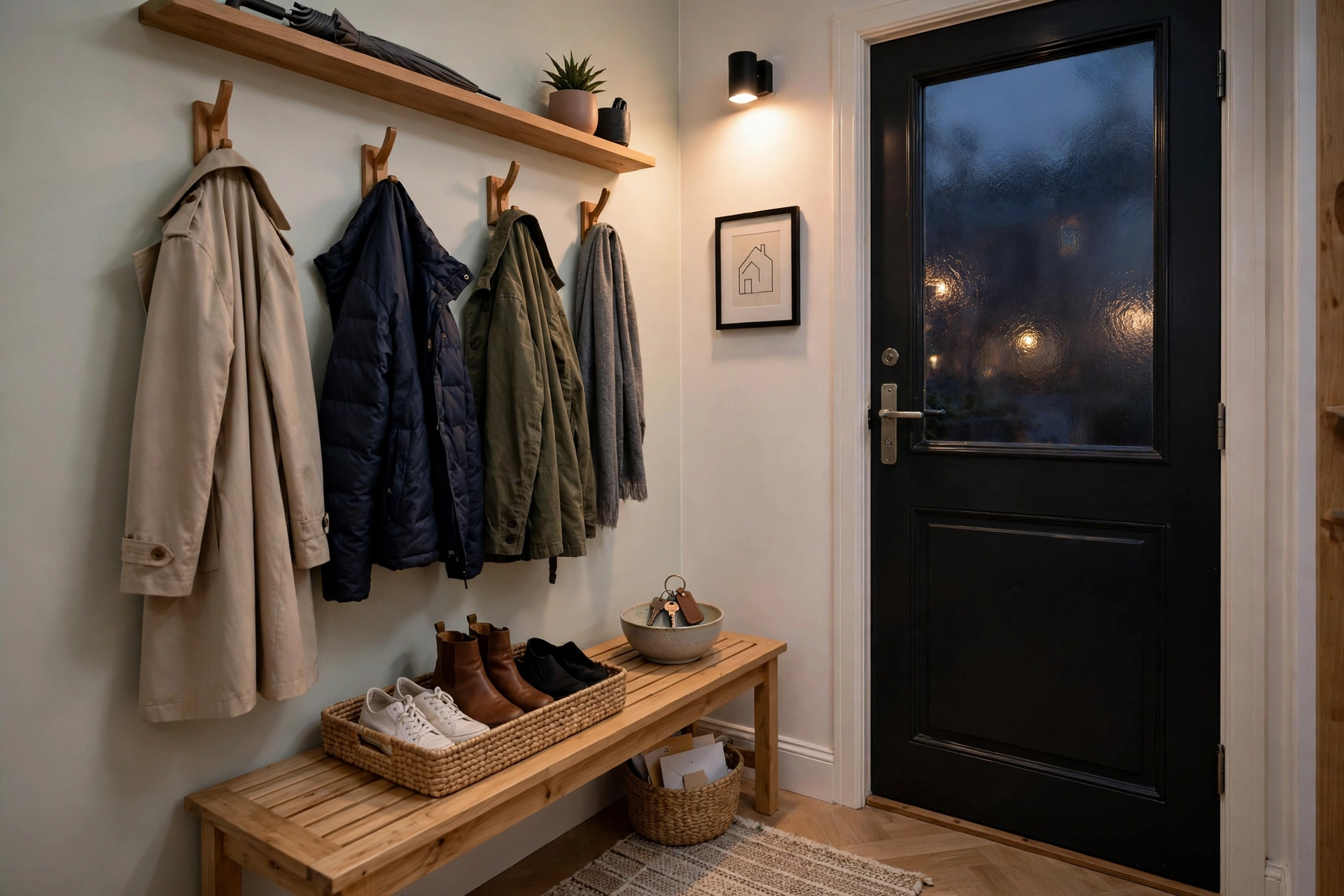
The 2-minute landing routine shoes in the tray, coat on the hook, keys in the bowl, and the doorway resets itself.
What to buy: Nothing. The routine is free.
Where it goes: Everywhere. The routine is the system that keeps the other nine ideas working. When you walk in: shoes in the tray, coat on the hook, keys in the bowl, bag on its hook, mail in the tray. Two minutes, every time, no exceptions. When you walk out: grab the bag, check the mirror, lock the door.
Common mistake: Treating the routine as optional on busy days. Busy days are exactly when it matters most, because one skipped evening becomes a pile by Friday, and a pile becomes a weekend of tidying. Two minutes now saves an hour later.
Try this today: Do the landing routine tonight, exactly as written, and time it. It will take less than two minutes, and tomorrow morning the doorway will be clear.
What it costs in total
| Item | Approximate US price |
|---|---|
| Wall hooks, set of 3–4 | $5–$10 |
| Slim shoe tray or rack | $6–$15 |
| 2 small baskets + labels | $8–$12 |
| Key bowl or key hooks | $3–$7 |
| Mirror | $10–$18 |
| Narrow console or shelf | $8–$18 |
| Doormat system | $6–$18 |
| Bag hook | $4–$8 |
| Mail tray + recycling basket | $8–$15 |
| 2-minute landing routine | $0 |
| Total, all ten ideas | about $58–$121 |
The starter set under $35: Buy the wall hooks ($5–$10), the slim shoe tray ($6–$12), and the key bowl ($3–$6), plus labels ($2). That is roughly $16–$30, and it fixes the coats, the shoes, and the keys, which are the three things that make a doorway feel chaotic. Add the mirror and the console next week, and the rest when a specific frustration appears.
The 15-minute version
If you only have 15 minutes today, do this: clear the space by the door completely, put a shoe tray down and move the shoes you wear this week into it, hang two hooks and move the coat that lives on the chair onto one of them, and put a small bowl by the door for the keys. One doorway done is better than a whole apartment planned and never started.
FAQ
Do these ideas work in a rental?
Yes. Nothing needs drilling, screws, or permanent changes. Hooks peel off or hang over the door, trays and consoles just stand on the floor, and a leaning mirror needs no fixings at all.
How much should I spend in total?
Each idea is under $20, and the full set is about $58–$121. The starter set, hooks, shoe tray, key bowl, and labels, is about $16–$30, and that is enough to feel the difference.
What if my front door opens straight into the living room?
Then define the zone with objects, not walls. A doormat marks the floor, a row of hooks marks the wall, and a shoe tray marks the boundary. Keep everything within one arm’s reach of the door, and keep it slim so it reads as a zone, not as furniture blocking the room.
What if I have no wall space at all?
Use the door and the floor. An over-door hook rail holds coats and bags, a shoe tray holds the shoes, a small basket on the floor holds gloves and scarves, and a key bowl sits on the nearest shelf or console. The door becomes your wall.
How do I keep it tidy after the first week?
One habit: the 2-minute landing routine, every time you walk in. Shoes in the tray, coat on the hook, keys in the bowl, mail in the tray. Pair it with the 15-minute daily reset from Pin 3, and the doorway resets itself instead of piling up.
Keep it going
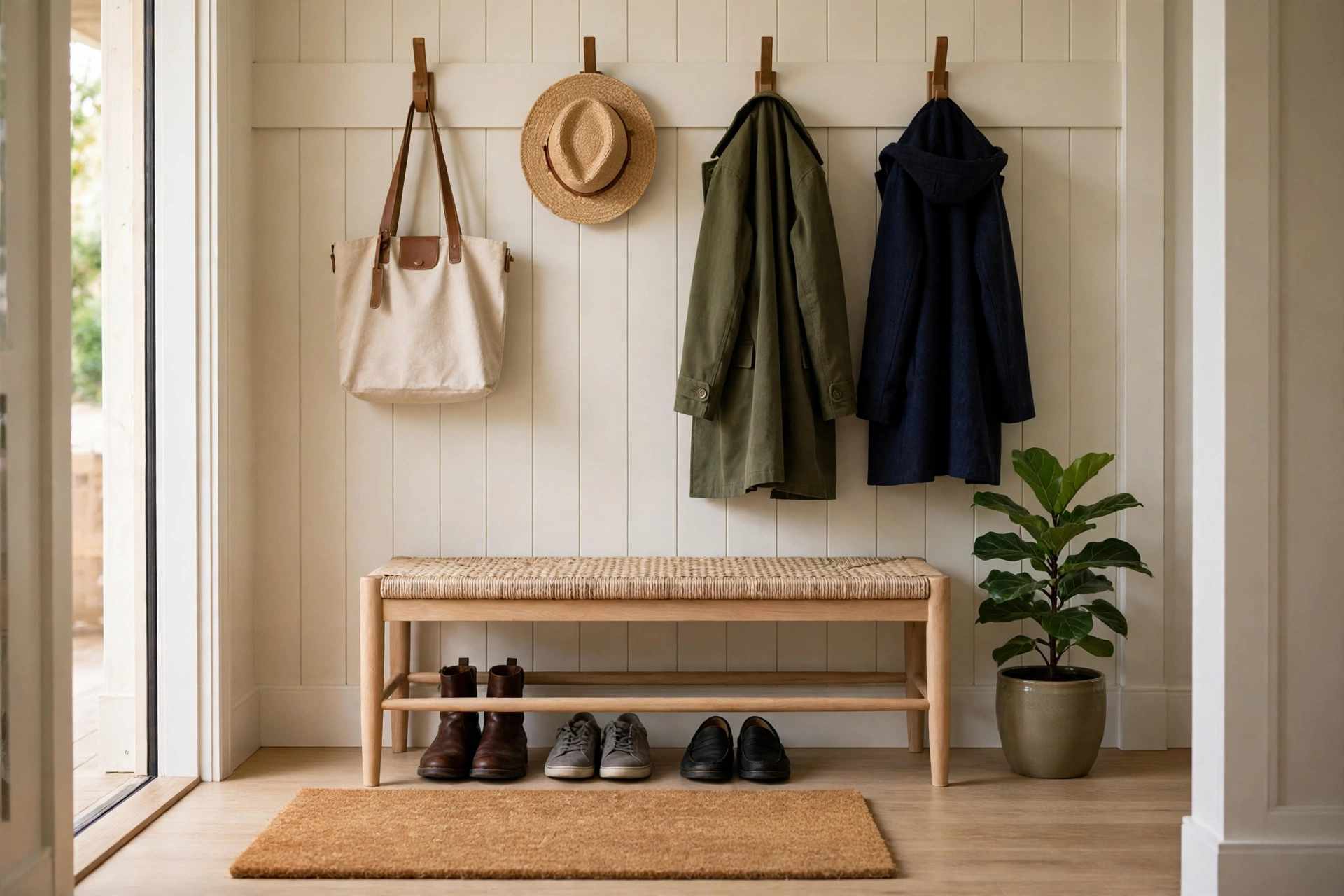
The finished entryway hooks, tray, baskets and mirror, all in place. No foyer, no renovation, no big budget.
A small home feels bigger when the doorway has a job and every item has a place. Start with one hook today.
Related pins
- Pin 1: 10 Kitchen Storage Ideas Under $20
- Pin 3: 15-Minute Daily Reset Routine
- Pin 11: Entryway Organization for Homes With No Foyer
- Pin 13: Closet Organization Ideas for Small Spaces
- Pin 18: Nightstand Organization in 10 Minutes

One Comment