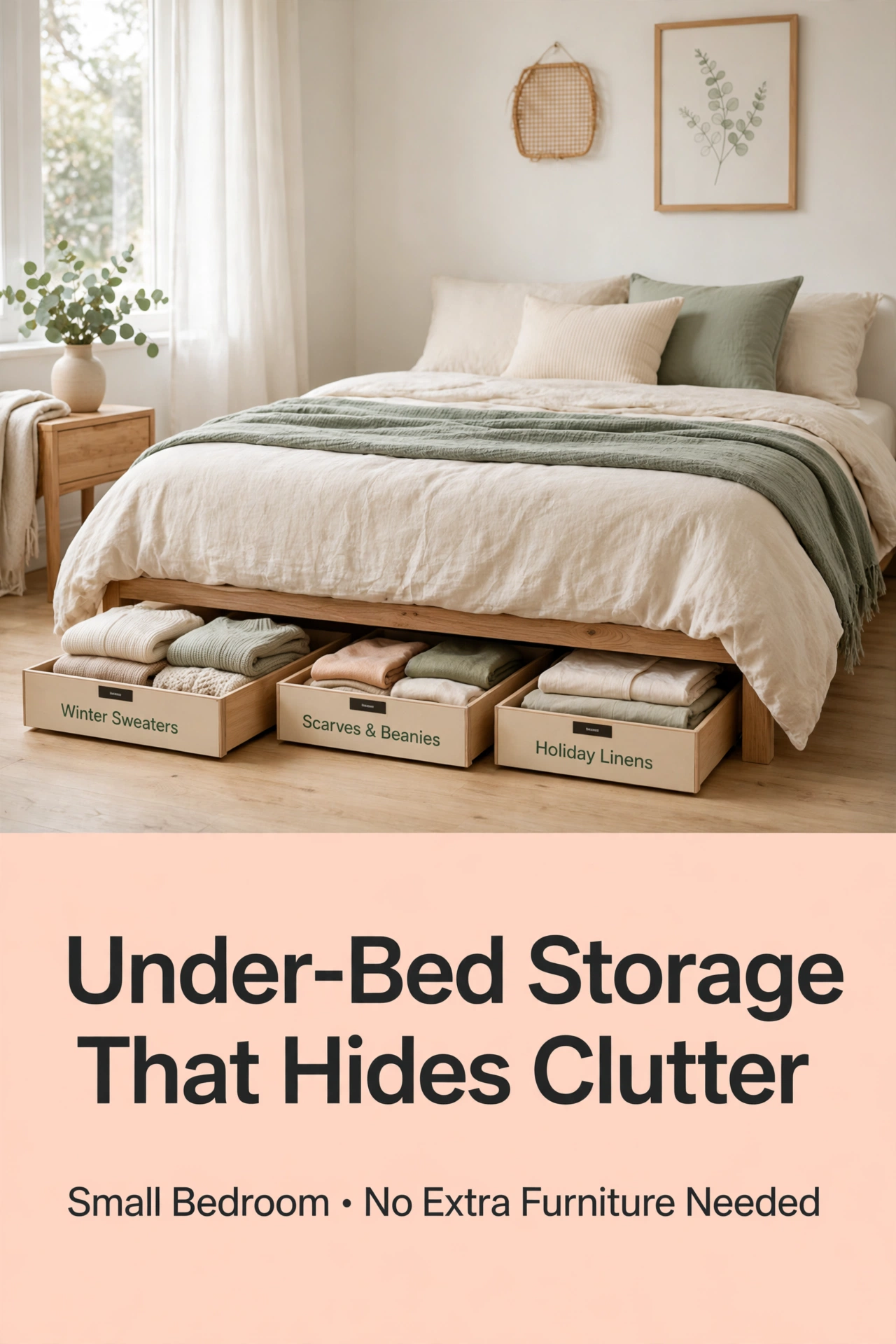
Under-Bed Storage Ideas That Hide Clutter

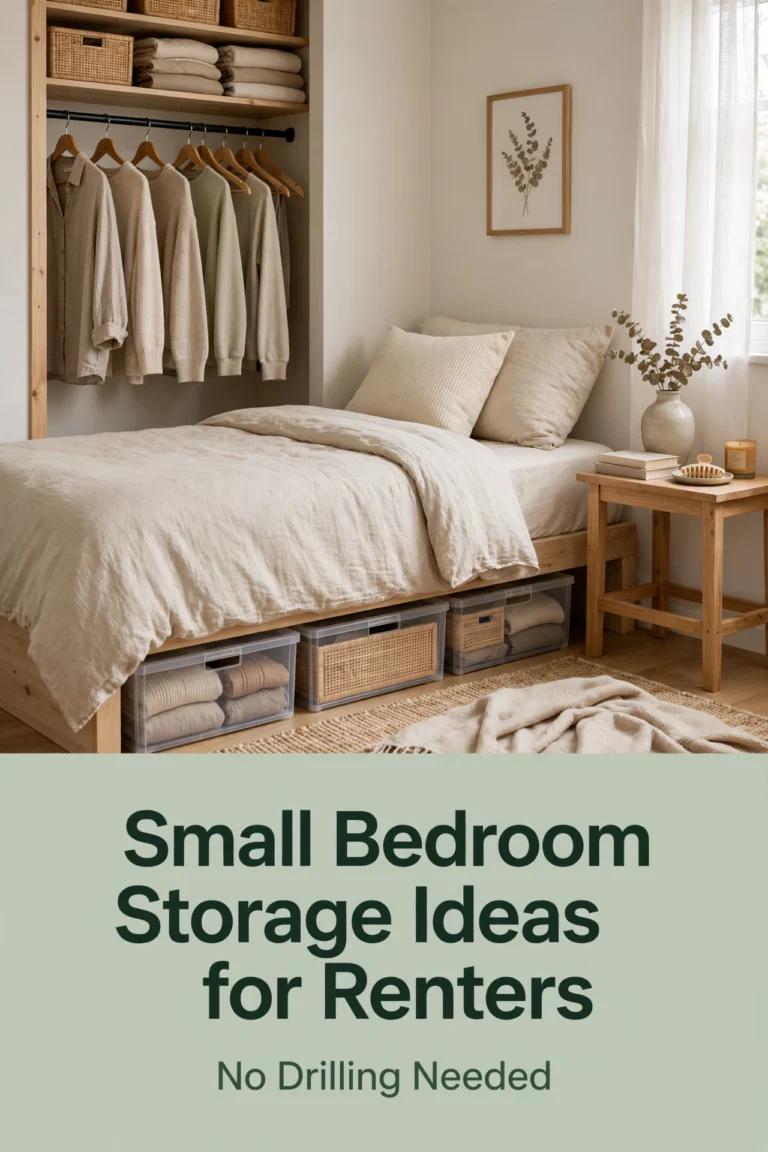
A tidy small bedroom with under-bed storage boxes pulled out just enough to show folded clothes. The space under the bed is the biggest cupboard most small bedrooms already have.
Introduction
The space under your bed is probably the largest storage area in your bedroom, and it is probably doing nothing. In a small bedroom, every inch counts, and the gap under the bed can
hold out of season clothes, spare bedding, shoes, books and keepsakes, all out of sight and all within reach. You do not need a bigger bedroom. You need a plan for the space you already have.
The ten ideas below each cost under $20, need no drilling, and can be done in one afternoon. They are written for renters, so nothing here damages a bed frame, a floor or a deposit. Start with the two ideas that match your biggest problem, usually clothes you only wear for part of the year and spare bedding that has nowhere to live, and add the rest over the next week, one box at a time. Prices are approximate US budget-store prices in 2026.
Under-bed storage is also one of the strongest topics in this niche right now. Small bedroom storage is one of the most searched evergreen terms in Pinterest Trends (US, data to 31 Oct 2026), and under-bed storage sits right at the centre of it, because it solves the exact problem small bedrooms have: too much stuff, too little cupboard space, and no room for extra furniture. This is the post Pin 10 will link to when the website goes live, and it pairs naturally with Pin 2, “Small Bedroom Storage Ideas for Renters”, and Pin 13, “Closet Organization Ideas for Small Spaces”.
Before you buy anything
Do not buy a matching set of boxes first. Boxes bought before you know what you own become clutter themselves, just hidden under the bed instead of on the floor.
1. Measure. Measure the height, width and depth of the gap under your bed, and check how far the bed is from the wall. A box that is one inch too tall will not slide under the bed at all, and a box that is too deep will stick out into the room. Measure twice, in inches, and write the numbers on your phone before you go shopping.
2. Declutter first. Pull everything out from under the bed onto the bedroom floor. Throw out anything broken, stained or unused in a year. Put “maybe” items in a dated bag, and if the bag is still unopened in 30 days, donate it or bin it. Under-bed space is too useful to spend on things you do not want.
3. Group before you contain. Put like with like on the bed first: all the winter jumpers together, all the spare bedding together, all the shoes together, all the keepsakes together. Only then decide what size box each group needs. A group that fills half a box needs a smaller box, not a bigger one.
Common mistake: buying tall, pretty boxes that do not fit under a low bed, or buying boxes with lids that lift off instead of sliding out. Measure the gap first, then buy flat boxes with handles that pull out like drawers.
Bed types and what fits underneath
Low beds sit close to the floor, often with only 4 to 6 inches of clearance. Flat boxes, vacuum bags and slim shoe trays are the only things that fit here. Do not force a tall box under a low bed, because it will scrape the floor and jam every time you pull it out.
Beds with legs usually have 8 to 12 inches of clearance, which is the easiest gap to work with. Standard flat boxes, rolling drawers and labelled bins all fit comfortably, and you can still reach them without moving the bed. This is the best case for under-bed storage.
Platform beds often have a solid base with little or no gap underneath, or built-in drawers already. If your platform bed has drawers, use the ideas below inside those drawers instead. If it has no gap at all, bed risers will not help, because there is no frame to lift, so skip to the swap system in idea 10 and use the top of the wardrobe instead.
Divan beds usually have drawers built into the base, or a solid base with a fabric cover. Use the divan drawers for the things you reach for most often, like bedding and pyjamas, and keep the ideas below for anything the drawers cannot hold. If your divan has no drawers, treat it like a low bed and use only flat boxes and vacuum bags.
Beds with no under-bed gap at all, such as a mattress straight on the floor, cannot use under-bed storage until the bed is raised. Bed risers, covered in idea 9, can create 5 to 7 inches of space under a standard frame for about $10 to $15. If risers are not safe for your bed, perhaps because the frame is old or wobbly, do not use them, and store the same groups in labelled boxes on top of the wardrobe instead.
Whichever bed you have, store things where you use them: bedding near the head of the bed, shoes near the foot, and out of season clothes in the middle where you only need them twice a year.
1. Flat under-bed boxes
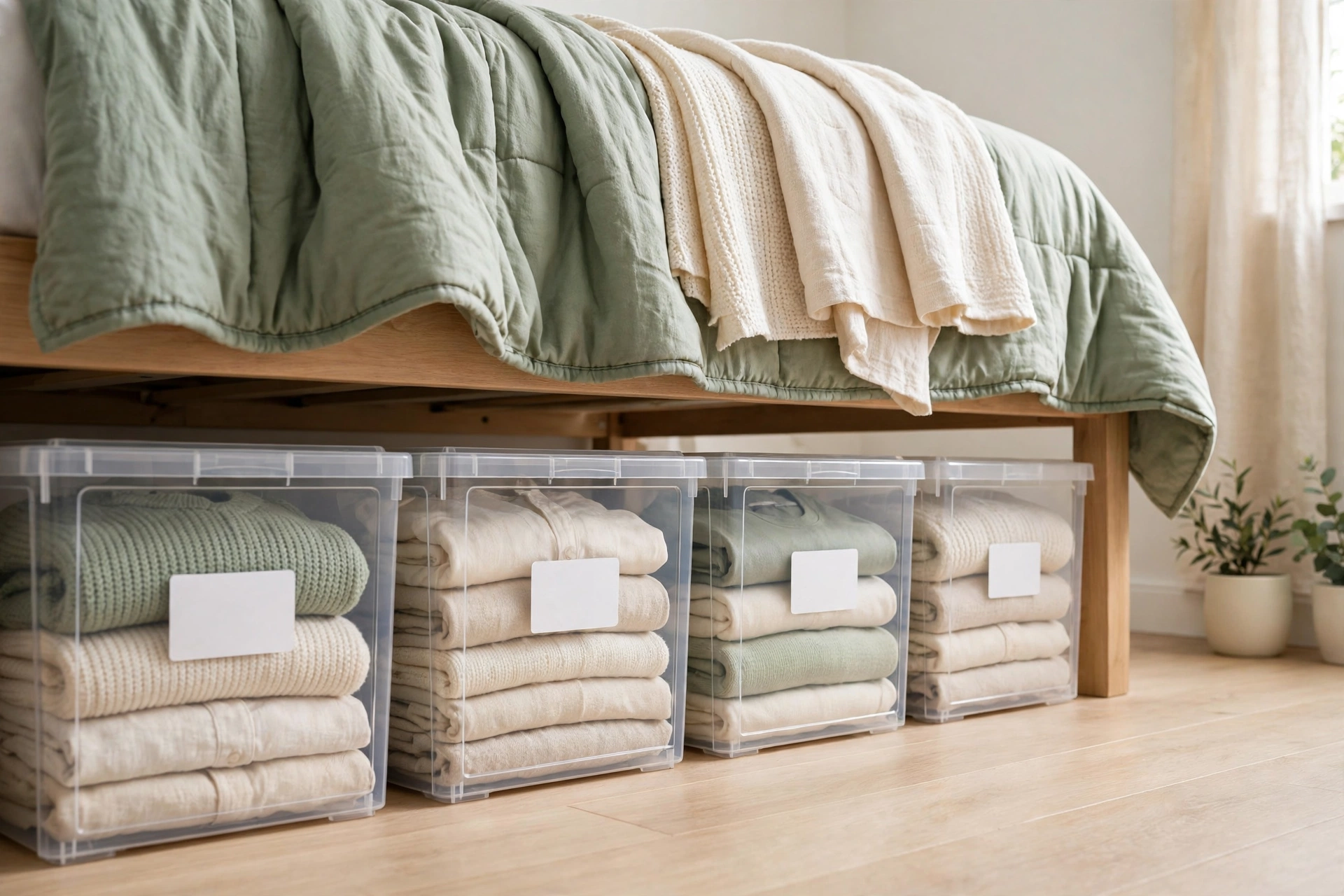
Flat under-bed boxes clear lids, low profile, and handles that pull out like drawers. The simplest way to use the space under the bed.
What to buy: Two or three flat under-bed boxes with lids, roughly 24 to 30 inches long and 4 to 6 inches tall, about $6–$10 each, or $12–$18 for a set of two. Clear boxes are best, because you can see what is inside without pulling the box out. Boxes with wheels roll more easily on carpet.
Where it goes: Under the bed, pushed fully in so nothing sticks out. Put the things you use most often nearest the edge you can reach, and the things you use least often at the back. One box for spare bedding, one for out of season clothes, and one for everything else to start with.
Common mistake: Buying boxes without measuring the height of the gap first, and buying boxes with lids that lift straight up, which you cannot open while the box is still under the bed. Choose boxes with lids that slide, or no lid at all, and handles on the short end.
Try this today: Measure the gap under your bed, then order or buy one flat box that fits it. Put your spare duvet cover and pillowcases in it tonight.
2. Rolling drawers
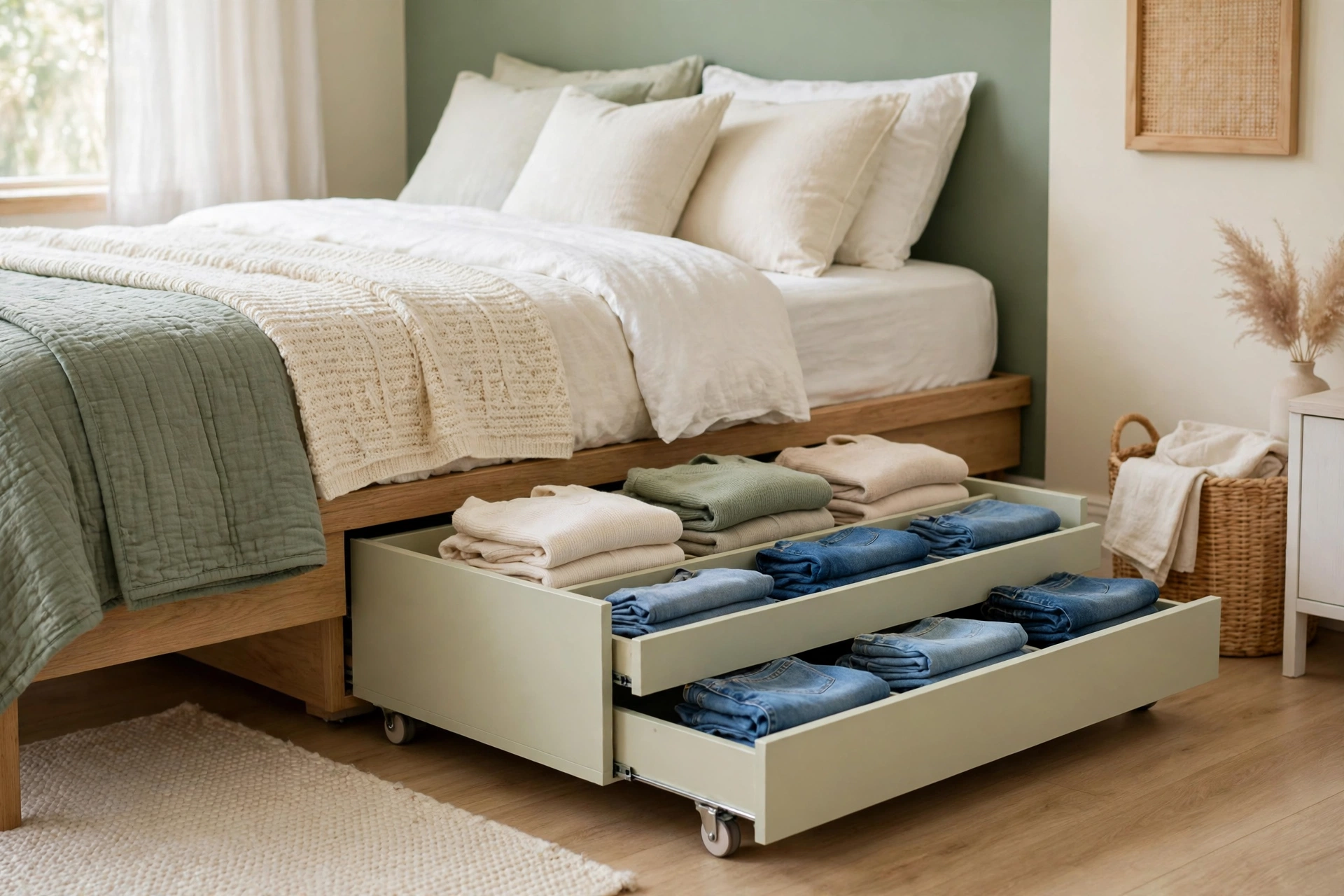
Rolling drawers on wheels they slide out like a real drawer, so you can reach the back of the bed without moving it.
What to buy: One or two low rolling drawers, about $10–$18 each, or a pair of wheeled under-bed crates for about $15–$20. Look for drawers with small wheels and a handle on the front, so they roll smoothly on carpet and on hard floors.
Where it goes: Under the bed on the side you get out of in the morning, so the drawer you open most often is the easiest to reach. Rolling drawers work best for clothes you wear every week, like jumpers, jeans and pyjamas, because you can pull the whole drawer out in one movement.
Common mistake: Overfilling a rolling drawer so it will not roll, and putting heavy books in a drawer meant for clothes. Keep each drawer light enough to pull out with one hand, and keep heavy items in a flat box that stays put.
Try this today: Move the jumpers and jeans that live in a pile on your chair into one rolling drawer under the bed, and see how much floor space that frees up.
3. Vacuum bags
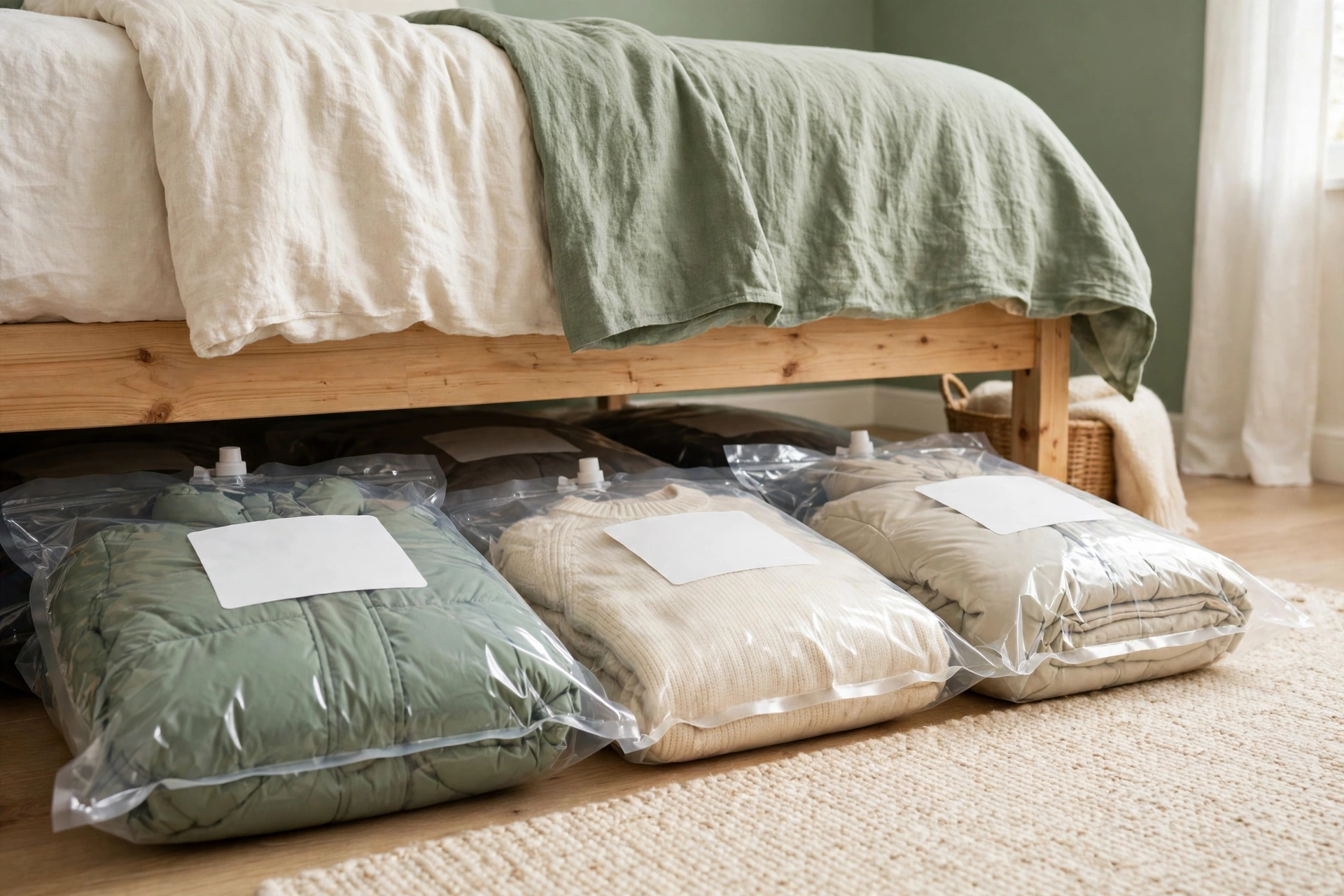
Vacuum bags bulky winter coats and jumpers pressed flat, so a whole season fits in one thin layer under the bed.
What to buy: A pack of four to six vacuum storage bags, about $8–$12, plus a vacuum cleaner you already own to suck the air out. No special pump is needed for most bags, and a standard vacuum hose fits the valve.
Where it goes: Under the bed, flat, on top of a flat box or straight on the floor. Vacuum bags are best for bulky, soft things that squash well, like winter coats, thick jumpers, duvets and spare pillows. Do not use them for anything you need this week, because opening and resealing a bag takes a few minutes.
Common mistake: Stuffing a vacuum bag too full before sealing it, so the seal pops open, and storing leather, suede or anything damp in a vacuum bag, which can damage it. Fill each bag only three quarters full, seal it twice, and make sure everything inside is clean and fully dry first.
Try this today: Put the thick winter jumper you will not wear again until autumn into one vacuum bag, seal it, and slide it flat under the bed.
4. Labelled bins
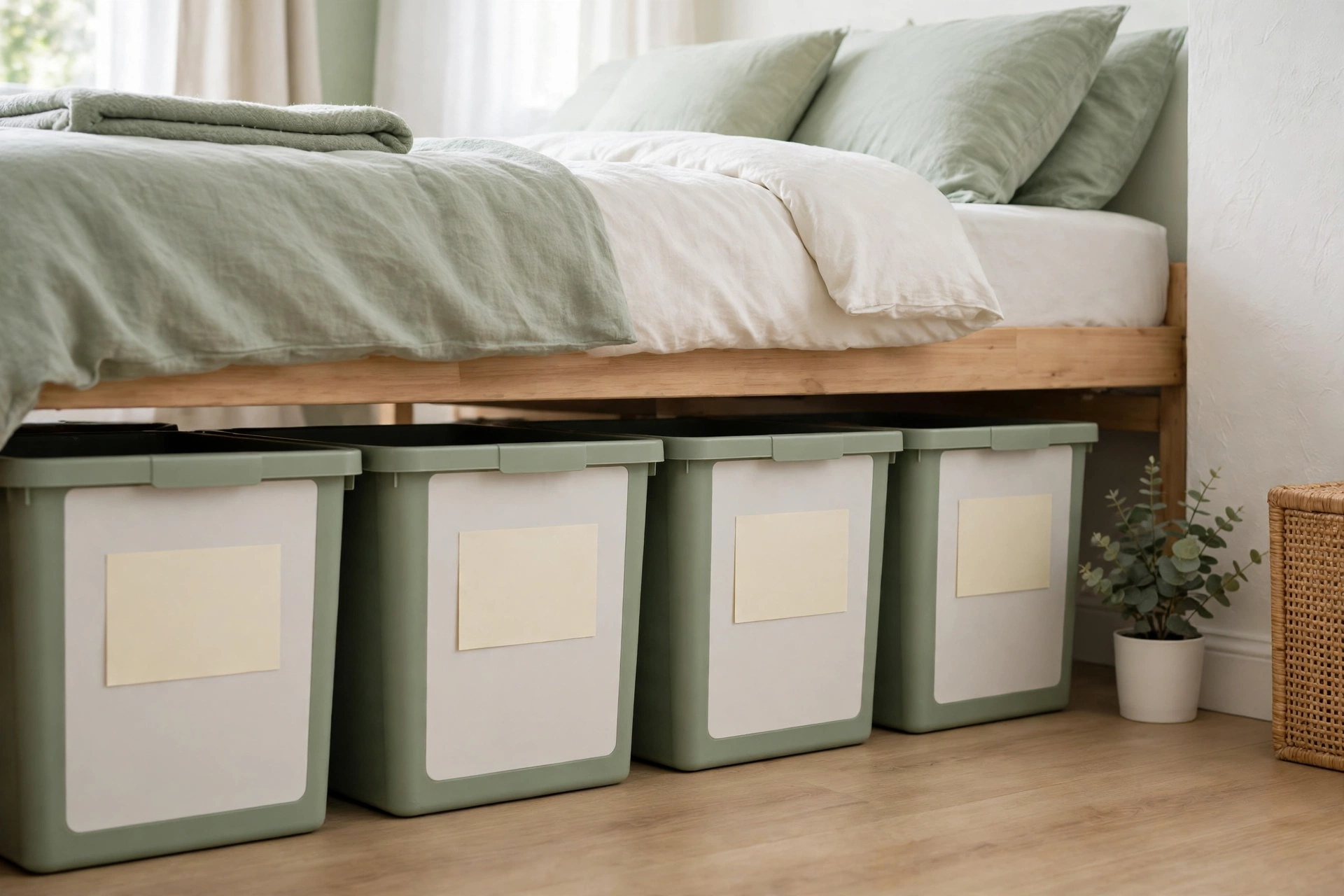
Labelled bins blank cream labels on the front, so you know what is inside without pulling every box out.
What to buy: Two or three fabric or plastic bins that fit under your bed, about $4–$8 each, plus a label maker or masking tape and a pen, about $2. Blank labels matter here, because a label you can read from the side of the bed saves you pulling out three boxes to find one thing.
Where it goes: Under the bed with the label facing outwards, towards the room. Label each bin with what is actually inside it, not what you hope will be inside it: “Winter jumpers”, “Spare bedding”, “Shoes”, “Keepsakes”. One word is enough if it is honest.
Common mistake: Labelling a bin “Misc” or “Stuff”, which tells you nothing, and writing the label on the top of the box where you cannot see it while the box is under the bed. Put the label on the short end that faces the room, and rewrite it the moment the contents change.
Try this today: Put a blank label on every box under your bed right now, and write on it what is really inside each one.
5. Shoe storage
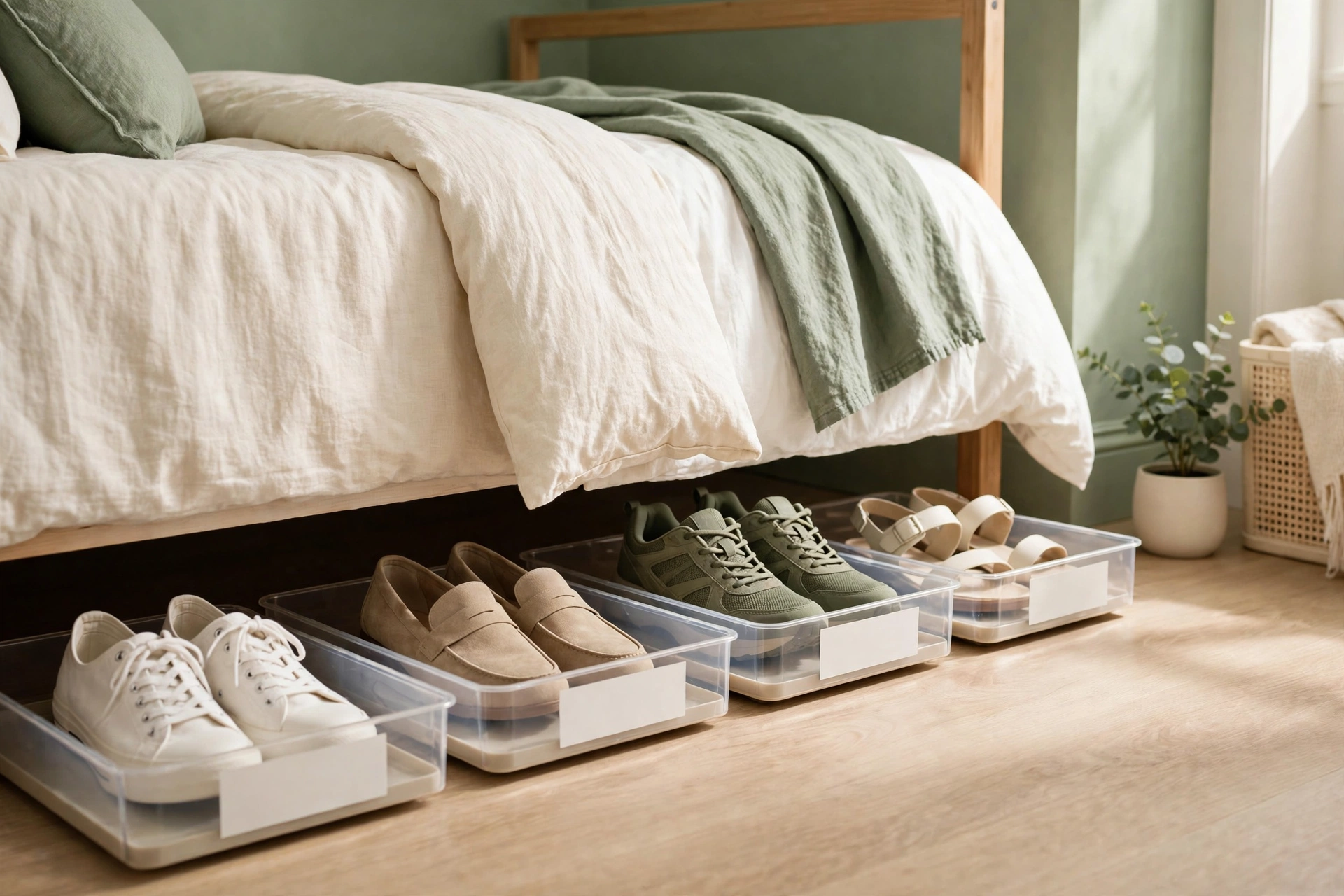
Shoe storage under the bed flat trays and fabric organizers, pairs kept together, and no shoes piled by the door.
What to buy: One or two flat shoe trays or under-bed shoe organizers, about $6–$12 each, or a fabric shoe organizer with separate pockets for about $8–$12. Trays with a low lip keep dust off and stop shoes sliding around.
Where it goes: Under the bed near the foot, so you can sit on the edge of the bed and reach your shoes without standing up. Keep the pairs you wear most often nearest the edge, and the pairs you wear least often, like party shoes or hiking boots, at the back.
Common mistake: Storing shoes loose under the bed with no tray, so pairs get separated and dusty, and storing muddy or wet shoes under the bed at all. Clean and dry shoes before they go under the bed, and keep one pair per pocket or section.
Try this today: Gather every pair of shoes that lives on your bedroom floor into one tray under the bed, and count how many pairs you actually own.
6. Seasonal clothes

Seasonal clothes folded in neat stacks, one box per season, so the wardrobe only holds what you are wearing now.
What to buy: One flat box per season, about $6–$10 each, or one vacuum bag plus one flat box for about $12–$15 together. Use the box for clothes that crease easily, and the vacuum bag for bulky knits and coats.
Where it goes: Under the bed in the middle, where you only need to reach it twice a year. When summer ends, the summer clothes go into the box and the winter clothes come out. When winter ends, swap them back. The wardrobe should only ever hold the clothes for the season you are in.
Common mistake: Keeping every season in the wardrobe at once, so you cannot find anything, and storing clothes that are dirty or damp, which can smell and stain while they sit under the bed. Wash and dry everything before it goes into the seasonal box.
Try this today: Take five items out of your wardrobe that you will not wear for the next three months, fold them, and put them in a box under the bed.
7. Bedding and spare linen
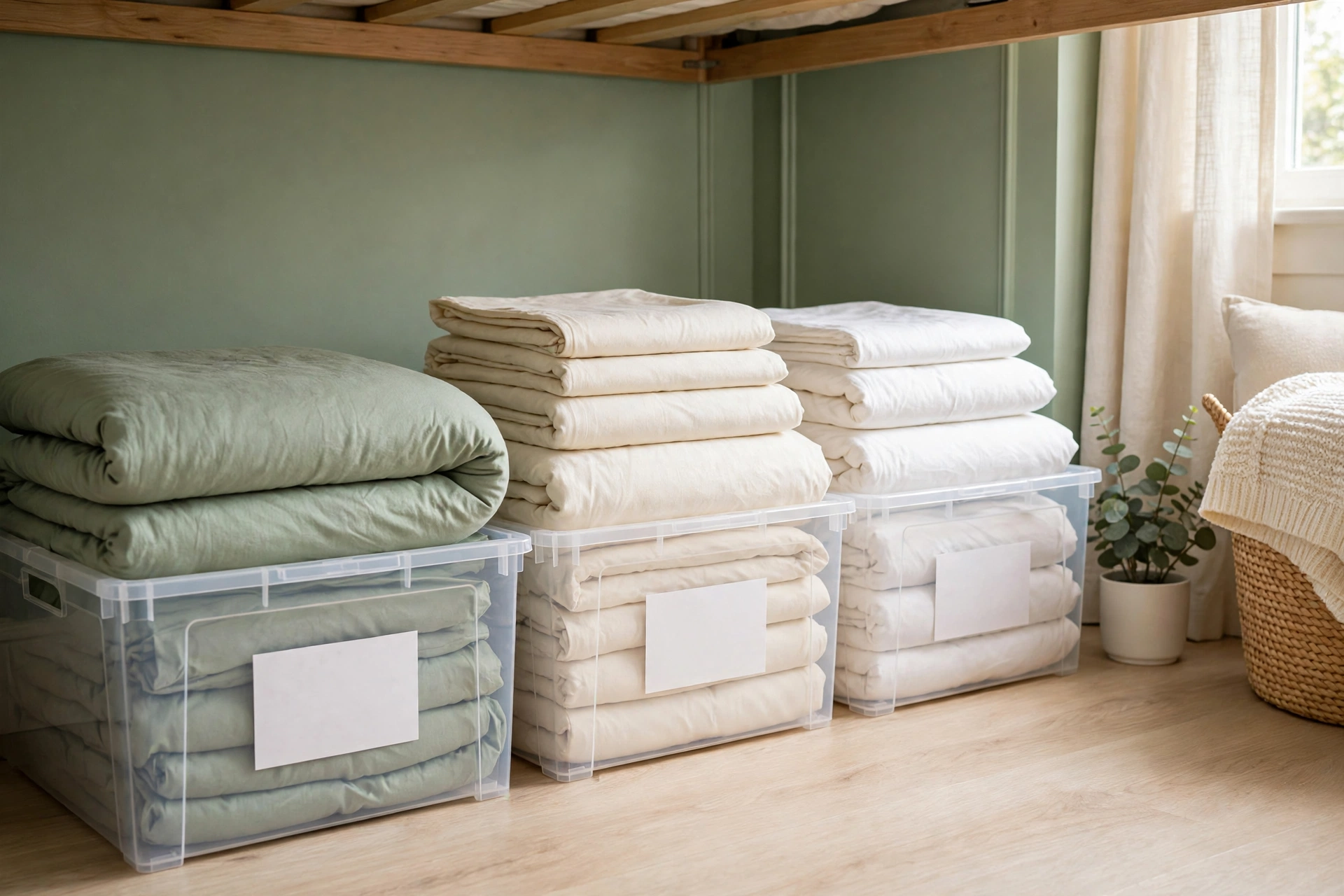
Bedding and spare linen folded by set, duvet cover and pillowcases together, so changing the bed takes two minutes.
What to buy: One flat box with a lid, about $6–$10, or one fabric storage bag for about $5–$8. A box with a lid keeps dust off the bedding, which matters because bedding sits under the bed for weeks at a time.
Where it goes: Under the bed near the head, so you can reach it when you change the sheets without walking across the room. Fold each set together, duvet cover with its pillowcases inside it, so you never hunt for a matching pillowcase again.
Common mistake: Keeping four or five spare sets “just in case” for one bed, and storing bedding loose under the bed where it collects dust. Two sets per bed in use, plus one spare, is enough for a small bedroom. The rest are just taking up a box.
Try this today: Fold one complete spare bedding set, duvet cover with pillowcases tucked inside, and put it in a box under the bed near the head.
8. Books and keepsakes
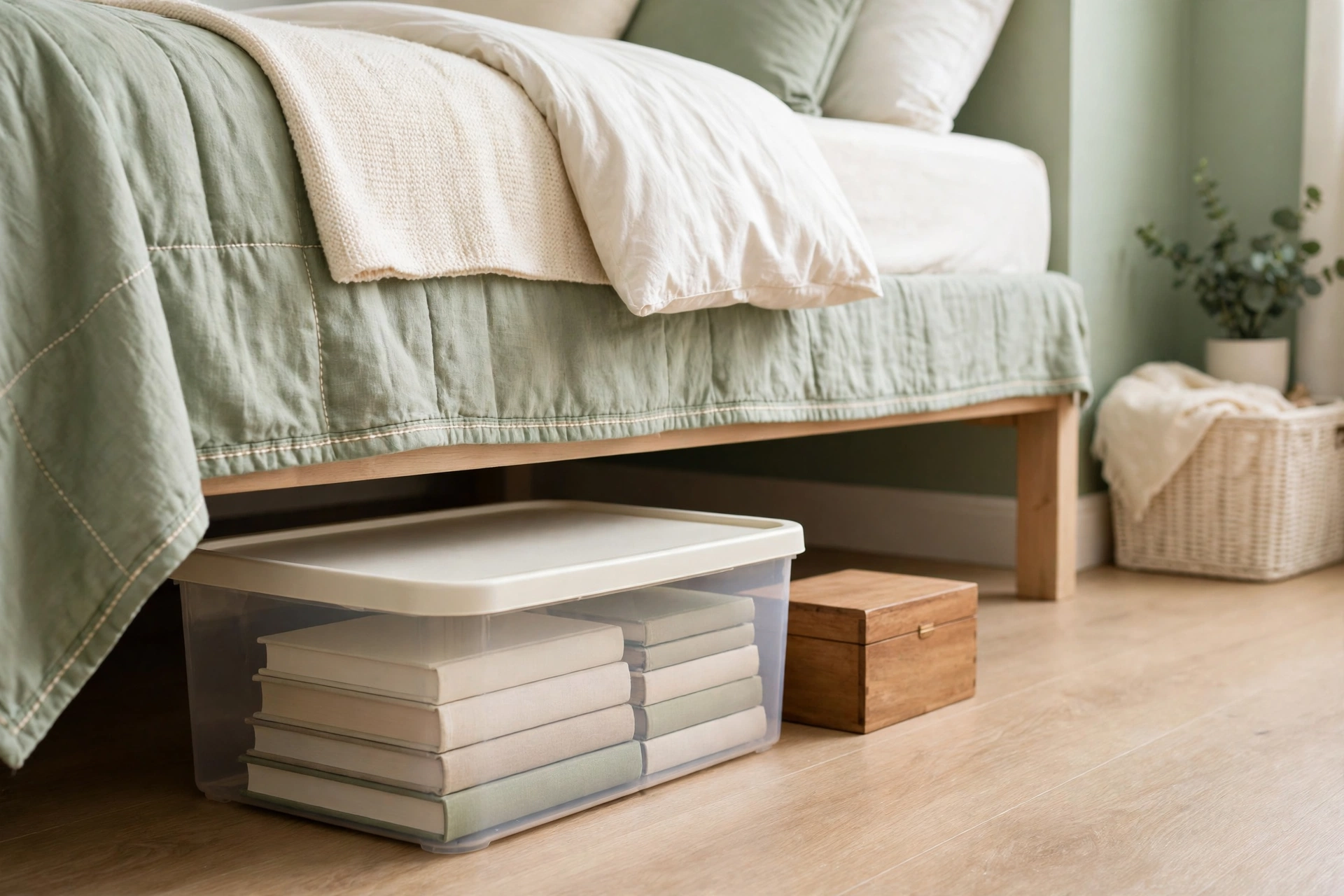
Books and keepsakes in a sturdy lidded box, protected from dust and damp, in the least reachable spot under the bed.
What to buy: One small, sturdy box with a lid, about $5–$10, or a fabric keepsake box for about $6–$12. A hard box protects books and keepsakes better than a soft bag, and a lid keeps dust out.
Where it goes: Under the bed at the back or in the middle, where it will not be knocked about every day. Books and keepsakes are things you want to keep, not things you need every morning, so they can live in the least reachable spot under the bed.
Common mistake: Storing books and paper keepsakes straight on the floor under the bed, where damp and dust can damage them, and keeping every old birthday card and ticket stub. Keep one small box of keepsakes, not five, and check it once a year to see what still matters.
Try this today: Put your five favourite keepsakes into one small box with a lid, and slide it under the bed where it will stay safe and dry.
9. Risers to create space
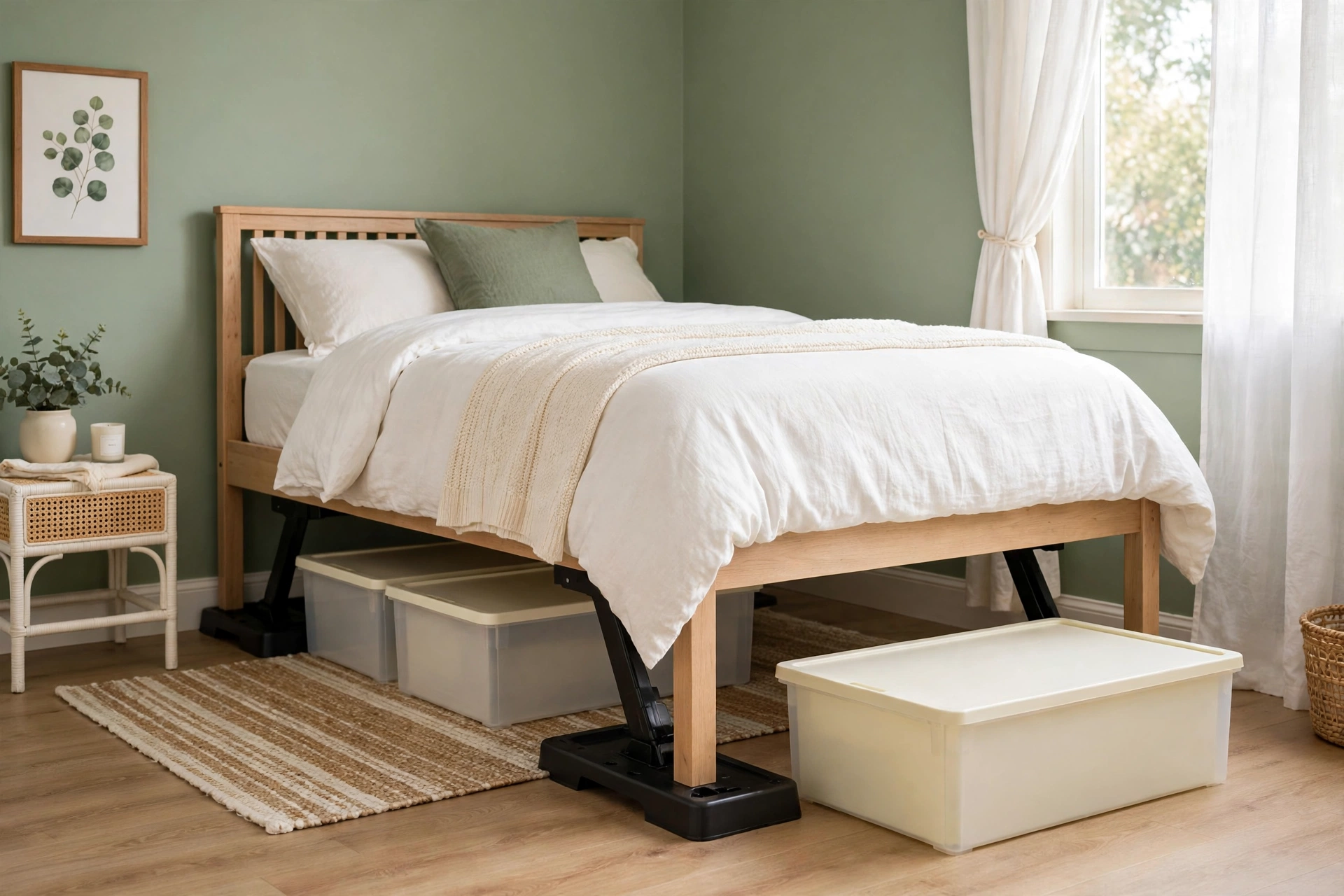
Bed risers lifting the frame just enough to fit flat boxes underneath, the cheapest way to create storage where there was none.
What to buy: One set of four bed risers, about $10–$15, or a set of adjustable risers for about $12–$18. Choose risers made for your bed frame, and check the weight limit before you buy them.
Where it goes: Under each leg or corner of the bed frame, so the whole bed lifts evenly by 5 to 7 inches. That new gap is enough for flat boxes, vacuum bags and shoe trays that would not have fitted before. Do not use risers on a bed with a broken or wobbly frame, and do not stack two sets of risers.
Common mistake: Buying risers that are too tall, so the bed feels unstable and getting in and out becomes awkward, and forgetting that a taller bed needs longer bedding. Start with the lowest risers that give you enough room for a flat box, and test the bed by sitting on it before you load the boxes underneath.
Try this today: Measure the gap under your bed. If it is under 4 inches, risers could give you the space for one flat box, so check the weight limit on a set before you buy.
10. A twice-a-year swap system
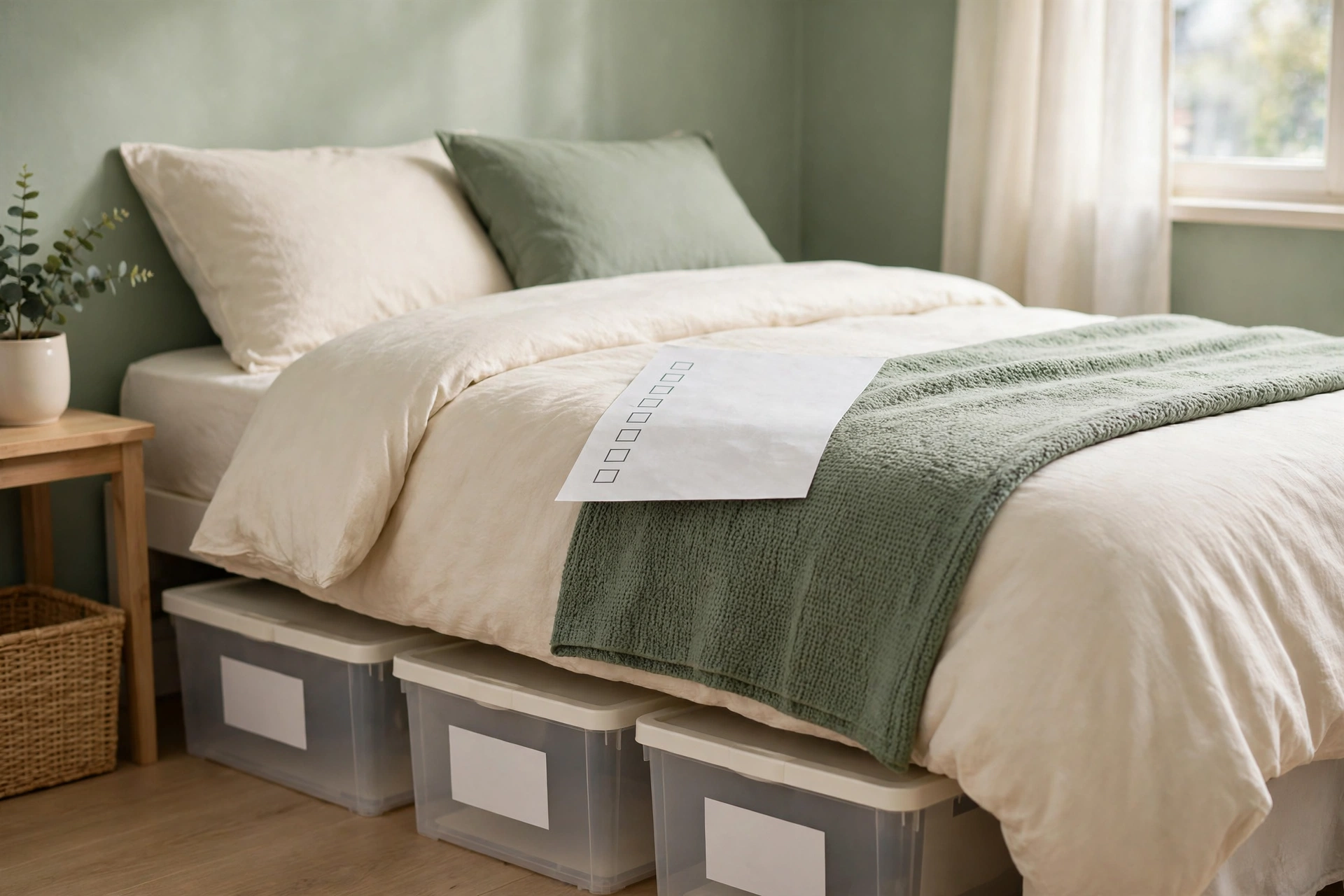
The twice-a-year swap every box pulled out, checked, and put back, so under-bed storage never turns into a hidden junk pile.
What to buy: Nothing new. The swap system uses the boxes, bags and labels from ideas 1 to 9, plus a phone reminder set for the first weekend of spring and the first weekend of autumn, which is free.
Where it goes: Everywhere under the bed. Twice a year, pull every box out, check what is inside it, and ask three questions: did I use this in the last six months, is it clean and dry, and does it still belong under the bed. Anything that fails one of those questions leaves the box. Then swap the seasonal clothes, check the labels, and push everything back in.
Common mistake: Never opening the boxes under the bed again after the first week, so they slowly fill up with things you forgot you owned. The swap is what stops under-bed storage turning into a hidden junk pile. Put the two dates in your phone now, and treat them like any other appointment.
Try this today: Set two reminders in your phone, one for the first weekend of spring and one for the first weekend of autumn, labelled “Under-bed swap”.
What it costs in total
| Idea | What to buy | Approx. cost |
|---|---|---|
| 1. Flat under-bed boxes | Two or three flat boxes with lids | $12–$18 |
| 2. Rolling drawers | One or two low rolling drawers | $10–$18 |
| 3. Vacuum bags | Pack of four to six bags | $8–$12 |
| 4. Labelled bins | Two or three bins and labels | $10–$18 |
| 5. Shoe storage | One or two shoe trays or organizers | $6–$12 |
| 6. Seasonal clothes | One flat box per season | $6–$12 |
| 7. Bedding and spare linen | One flat box with a lid | $6–$10 |
| 8. Books and keepsakes | One small sturdy box with a lid | $5–$10 |
| 9. Risers to create space | One set of four bed risers | $10–$15 |
| 10. A twice-a-year swap system | Nothing, just two phone reminders | Free |
| Total, all ten ideas | A full under-bed system | $83–$143 |
That total is for all ten ideas at once. The starter set below, the two boxes that solve the two biggest problems first, costs about $18–$30, and you can add the rest one idea at a time.
The 15-minute version
If you only have 15 minutes today, do this: measure the gap under your bed, pull out one box, and put your spare bedding set and your out of season clothes into two flat boxes under the bed. Label both boxes. That is the whole system in miniature, and it takes less time than scrolling through storage ideas online. You can add a rolling drawer next weekend and a vacuum bag the weekend after that, one box at a time.
FAQ
Do these ideas work in a rental?
Yes. Every idea in this post needs no drilling, no screws and no permanent changes, so they are all safe for a rental. Flat boxes, rolling drawers, vacuum bags and labels all come out again when you move, and bed risers lift off the bed frame without leaving a mark.
How much weight can I store under the bed?
There is no single limit, because it depends on your bed frame. Keep each box light enough to pull out with one hand, do not stack heavy boxes on top of each other, and do not store anything very heavy, like books in bulk, under a bed with a thin slatted base. If in doubt, keep the heavy things in a box on the floor instead.
What if I have no space under my bed at all?
If your bed sits flat on the floor, bed risers in idea 9 can create 5 to 7 inches of space for about $10 to $15, if your frame is safe to lift. If risers are not safe for your bed, use the same groups in labelled boxes on top of the wardrobe, and use the swap system in idea 10 to keep them tidy.
Will things under the bed get dusty or damp?
They can, which is why boxes with lids matter. A box with a lid keeps dust off bedding and clothes, and keeping things off the floor inside a box stops damp from reaching them. Check the boxes twice a year in the swap, and air them out if anything smells musty. If your bedroom is damp, put a small moisture absorber near the bed and keep books and paper in a sealed box.
Where should I start if I can only do one thing today?
Measure the gap under your bed and buy one flat box that fits it. Put your spare bedding set in it. That one box solves the most visible problem, it costs under $10, and it takes about five minutes once the box is home.
Keep it going
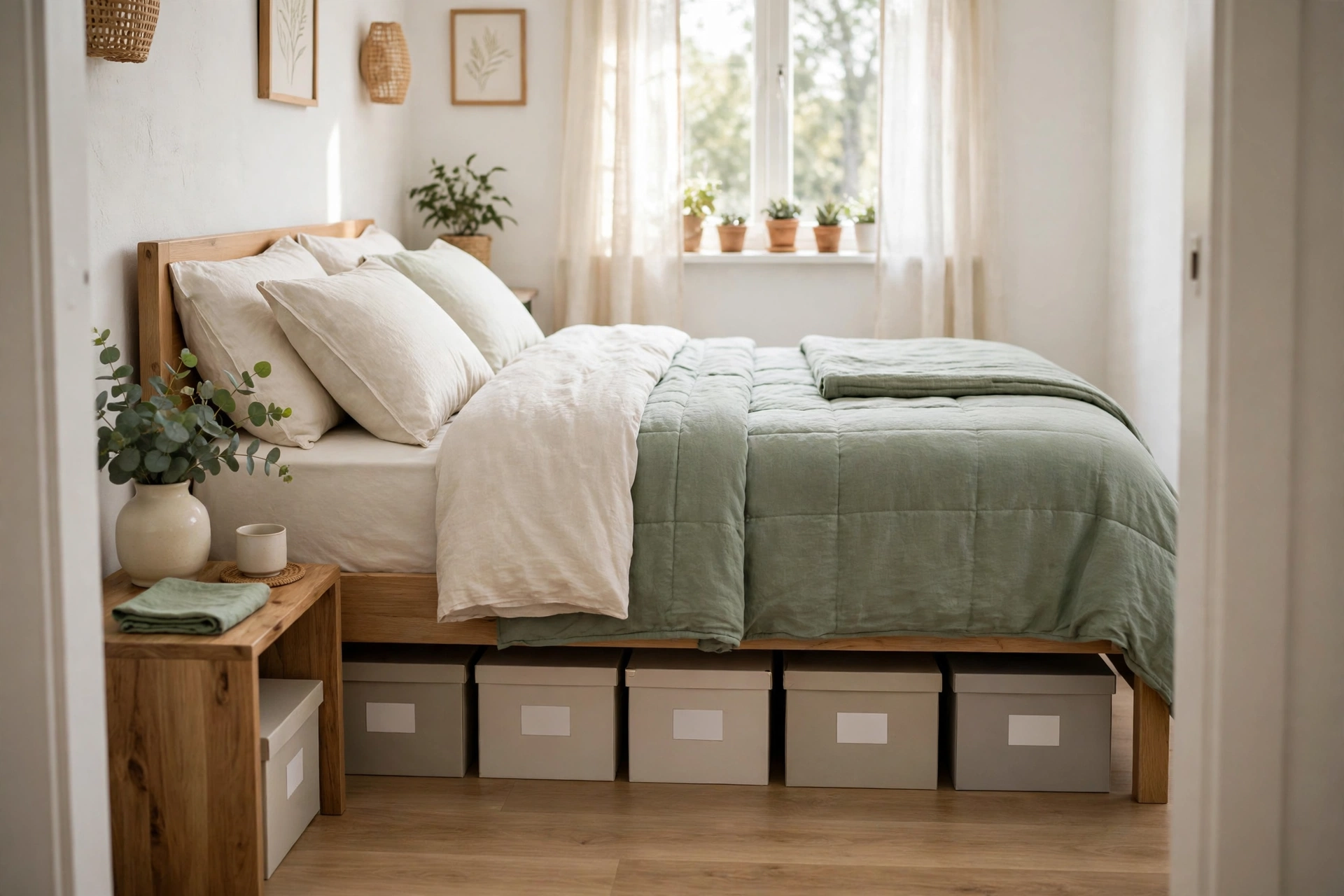
A tidy small bedroom with a clear floor, and the space under the bed doing its job. One box tonight, one idea each weekend.
A small bedroom feels bigger when the floor is clear and every group has a box with a label on it. The space under your bed is not a junk drawer, it is the biggest cupboard in the room, and it is already yours. Start with one box tonight, add one idea each weekend, and set the two swap reminders before you forget. By the end of the month, the floor will be clear, the wardrobe will hold only this season, and the space under your bed will be doing its job.
Related pins
- Pin 2: “Small Bedroom Storage Ideas for Renters”
- Pin 13: “Closet Organization Ideas for Small Spaces”
- Pin 19: “Small Bedroom Layout Ideas for a Tiny Room”
- Pin 23: “10 Small Bedroom Ideas That Actually Work”