Tiny House Storage Ideas That Hide Everything

A tiny house does not need more storage. It needs storage that hides, so the room looks like a home, not a warehouse.
Introduction
A tiny house has no spare room, no hallway cupboard and no garage to hide the mess in. Everything you own lives in the same few square metres you cook, sleep and sit in, so the house only feels calm when everything has a hidden home. The moment things sit out in the open, the house feels full, however tidy you are.
The ten ideas below hide storage in places that already exist: above the door, under the bed, on the back of a door, inside a bench. Each one costs under $20, most cost under $10, and none of them need drilling into the structure, which matters in a tiny house on wheels. Together they hide the everyday clutter, so the house feels bigger than it is.
Start with the two ideas that hide the most, usually the shelf above the door and the storage bench, and add the rest over the next few weeks. Prices are approximate US budget-store prices in 2026.
Before you buy anything
Do not buy storage first. Empty one space first, because a tiny house does not need more boxes. It needs fewer things in sight, and you cannot see what the house needs until one shelf is clear.
1. Empty one surface completely. The kitchen counter, or the top of the storage bench, or the windowsill. Take everything off it, then put back only what you use every day. The rest goes to its real home, or out of the house. A tiny house feels bigger the moment one surface is clear, and that surface shows you what actually needs a home.
2. Count what lives on the floor. Walk through the house and count everything that sits on the floor because it has no home: shoes, bags, the laundry basket, the toolbox, the dog lead. Write the number down. That number is how many hidden homes you need to make, and it is usually smaller than you think. Most tiny houses need five or six hidden homes, not twenty.
3. Measure the dead spaces. The space above the door, under the bed, behind the bathroom door, on top of the kitchen cabinets. Measure each one and write the numbers on your phone. Hidden storage works when it fits the dead space exactly. A box that is two inches too wide for the space above the door is a box that lives on the floor.
Common mistake: buying pretty baskets and boxes before you know what needs hiding, and ending up with more storage than stuff. Storage you buy first becomes clutter itself. Empty first, count second, buy third, and the storage will actually hide something.
1. The shelf above the door
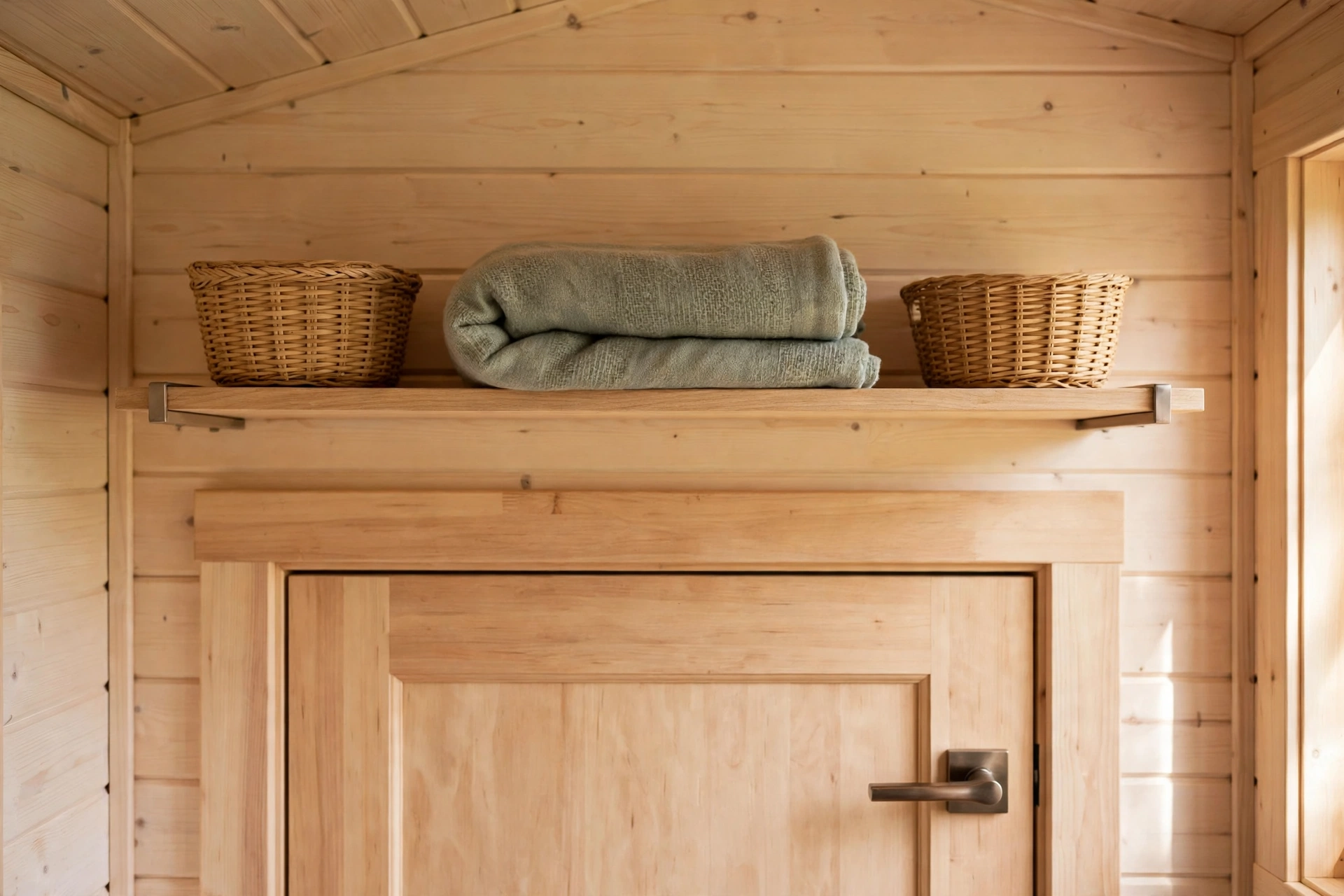
The space above the door is the most wasted space in a tiny house, and it is the easiest to use.
What to buy: One small wooden shelf and two brackets, about $10-$15, or a ready-made floating shelf for $12-$18. Choose a shelf that is the width of the door frame, no wider, so it does not stick out into the walkway.
Where it goes: Above the door you use least, usually the bathroom door or the bedroom door, high enough that you do not hit your head, low enough that you can reach it. It holds the things you need once a week, not every day: spare towels, the first aid kit, the spare bedding.
Common mistake: Putting everyday things on the high shelf, then climbing on a chair every morning to reach them. A high shelf is for weekly things. Daily things live at hand height, or the shelf becomes a chore you stop using.
Try this today: Put one basket on top of the door frame, or on the highest shelf you already have, and put the spare towels in it. If the bathroom feels calmer tonight, the shelf is worth the $12.
2. A bench that holds everything
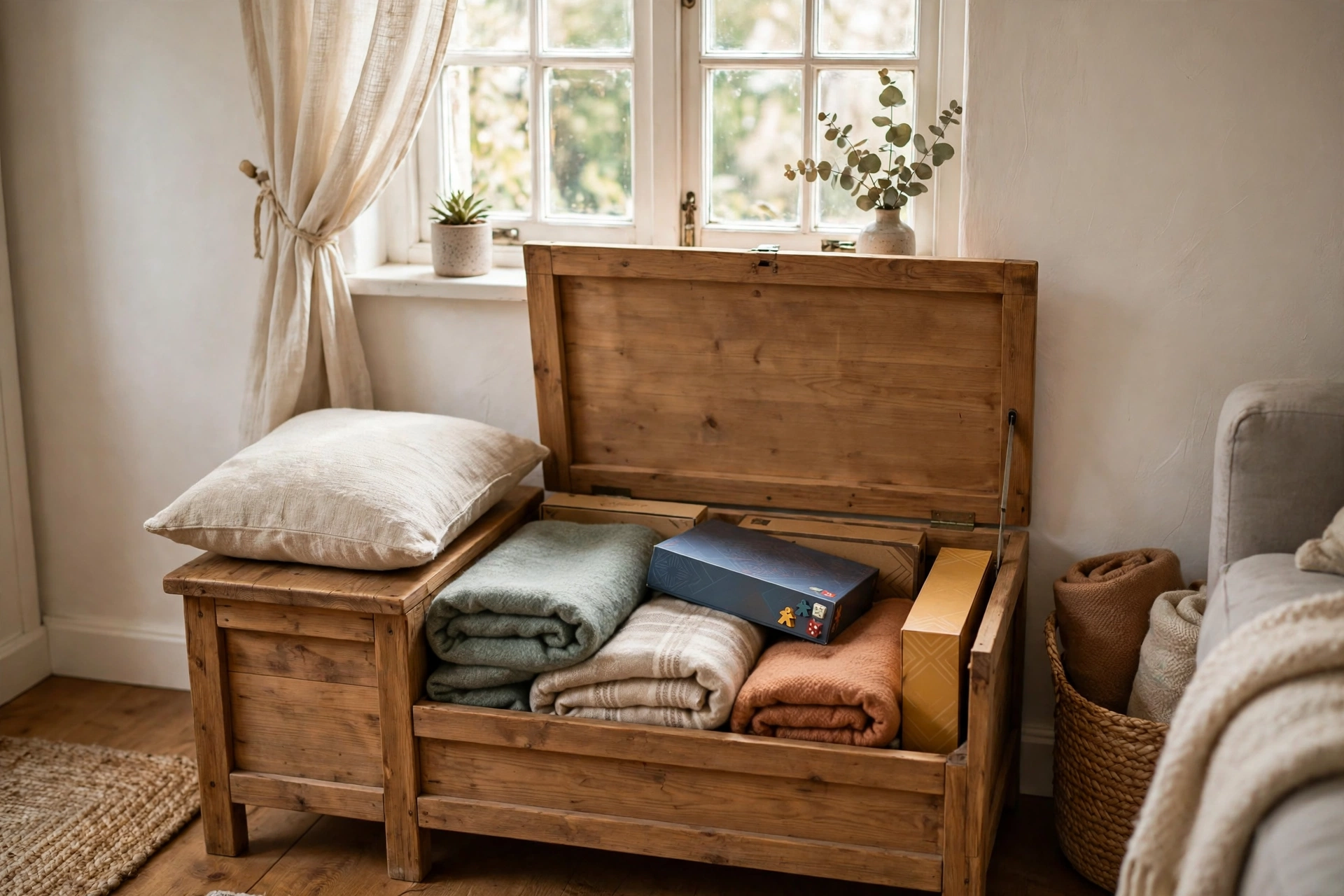
A bench is a seat, a table and a cupboard, and in a tiny house that is three pieces of furniture in one.
What to buy: One storage bench or ottoman, about $15-$20 second-hand, or a simple wooden box with a cushion on top for $10-$15. Choose one that fits under the window, where a bench is a seat with a view.
Where it goes: Under the window, or at the foot of the bed, where it is a seat by day and storage by night. It holds the things that have no other home: spare blankets, the board games, the shoes you wear once a week.
Common mistake: Filling the bench until the lid does not close, then piling things on top of the lid. A bench that is full is a bench that stops being a seat. Leave a hand’s width empty at the top, so the lid closes easily every time.
Try this today: Put every spare blanket and every pair of shoes you wear once a week into any box you already own, and put the box under the window. If the floor looks clearer tonight, the bench is worth the $18.
3. The pull-out pantry
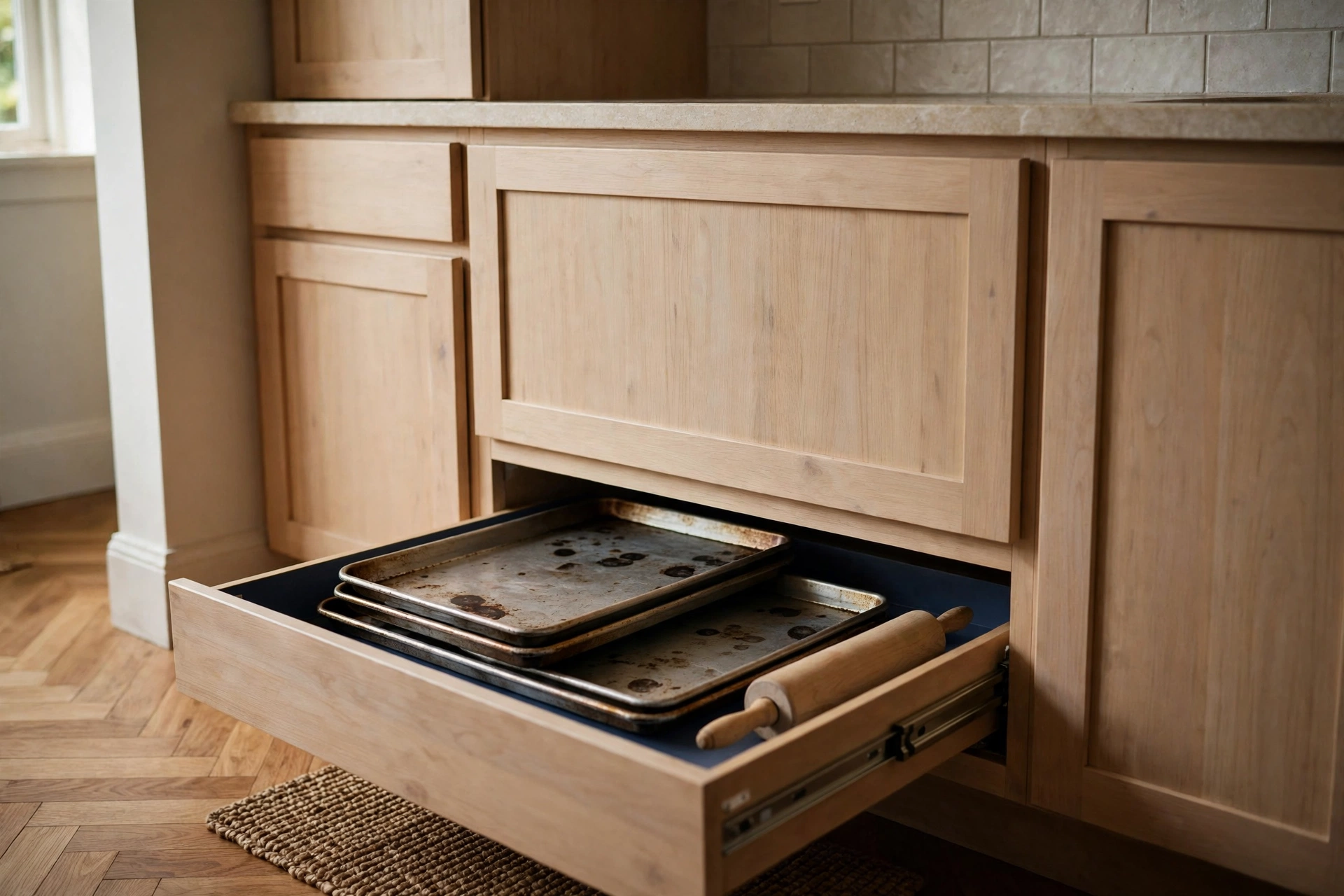
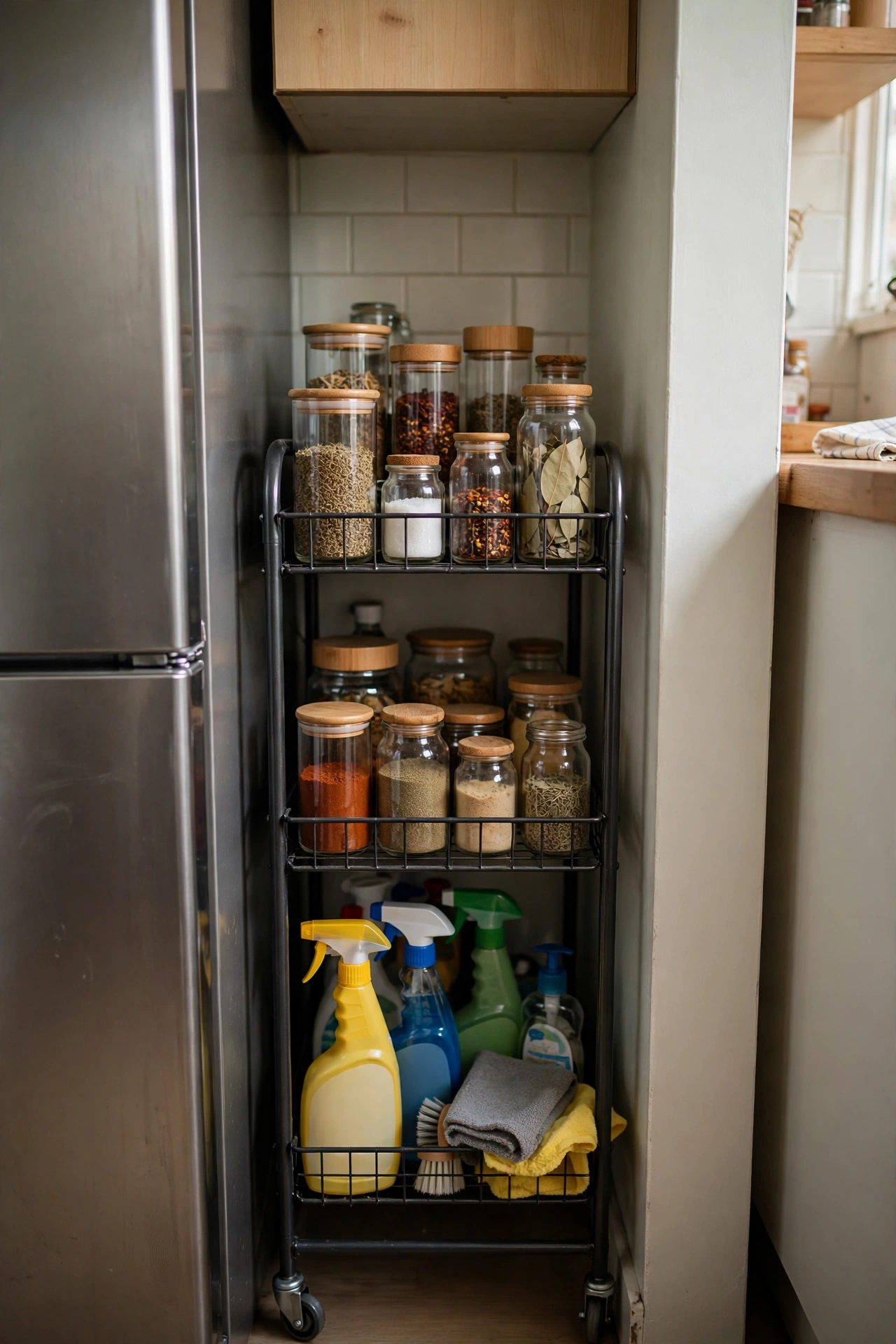
A pull-out pantry uses the gap beside the fridge, which is the thinnest wasted space in the kitchen.
What to buy: One narrow rolling cart or pull-out shelf unit, about $12-$18, that fits the gap beside the fridge. Measure the gap first, because the gap is usually 6 to 8 inches wide, and the cart has to slide in without catching.
Where it goes: In the gap beside the fridge, or between the fridge and the wall, holding the tins, jars and packets that usually crowd the counter. It pulls out when you cook, and slides away when you do not.
Common mistake: Buying a cart that is too wide for the gap, then leaving it in the middle of the kitchen because it does not fit. Measure the gap twice, and buy the cart that is one inch narrower than the gap, not the one that looks right.
Try this today: Take everything off the kitchen counter and put it in a box on the floor beside the fridge. Cook one meal with the counter clear. If cooking feels easier, the pull-out pantry is worth the $15.
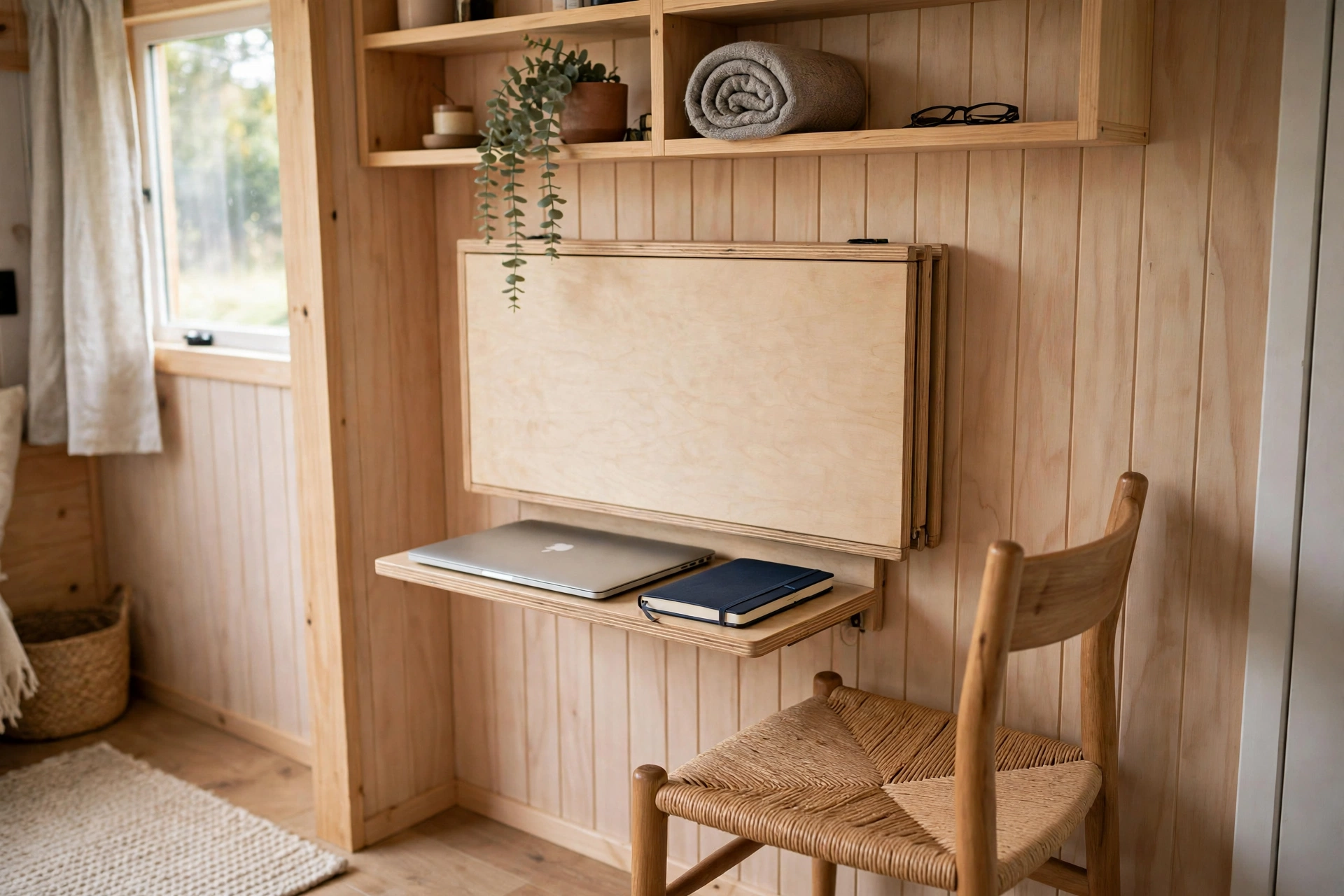
4. A fold-down desk
A fold-down desk is a desk when you work and a wall when you do not, and in a tiny house that is the whole point.
What to buy: One small fold-down wall desk, about $15-$20, or a wall-mounted drop-leaf table for $12-$18. Choose one that folds flat against the wall, with a lip that holds a laptop when it is down.
Where it goes: On the wall you face when you sit, near a plug socket, with a stool that tucks underneath when the desk is folded up. Not in the walkway, because a desk in the walkway is a desk you walk into every day.
Common mistake: Putting the desk where the light is worst, then working in your own shadow. Put the desk near the window, or near the lamp, so the light falls on the work, not on your back.
Try this today: Clear the kitchen table and work there for one evening, with everything you need in one small box. If the table works as a desk, the fold-down desk is worth the $18. If it does not, the problem is the light, not the desk.
5. Hooks on the back of every door

The back of a door is a wardrobe that takes up no floor space at all.
What to buy: One over-door hook rail, about $5-$8, or a pack of adhesive hooks for $3-$5. The rail hangs over the top of the door, so it needs no screws, which matters in a tiny house on wheels.
Where it goes: On the back of the bedroom door for coats and bags, and on the back of the bathroom door for towels. One rail per door, three hooks per rail, and nothing else, because a door with six hooks is a door that does not close properly.
Common mistake: Hanging everything on the door until it will not close, then leaving the door open all the time. A door that cannot close is a door that has failed. Three hooks is the limit, and the rest goes in the bench.
Try this today: Hang your coat, your bag and one towel on the back of the bedroom door, on any hooks you already own. If the floor looks clearer tonight, the hook rail is worth the $6.
6. The under-bed drawers
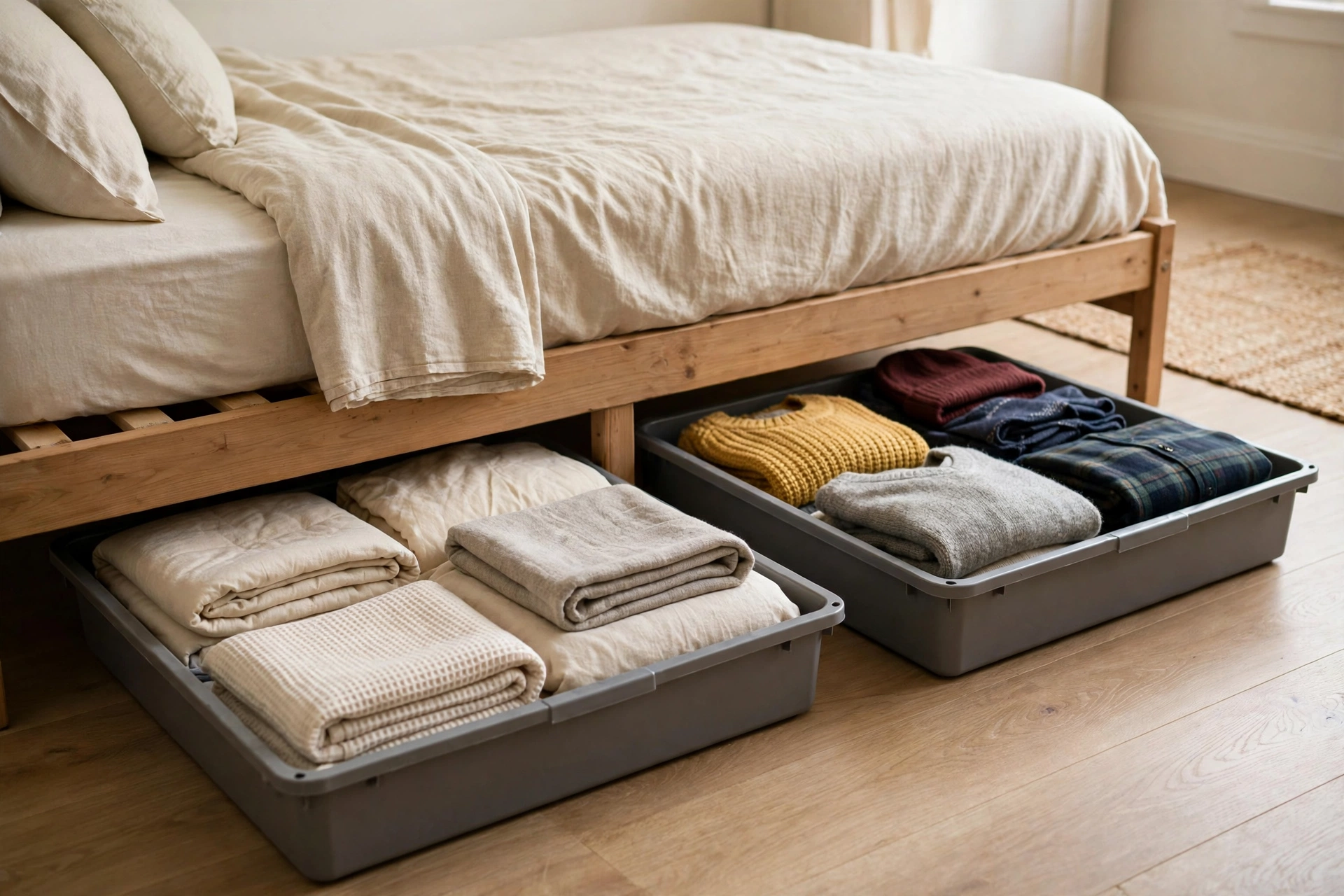
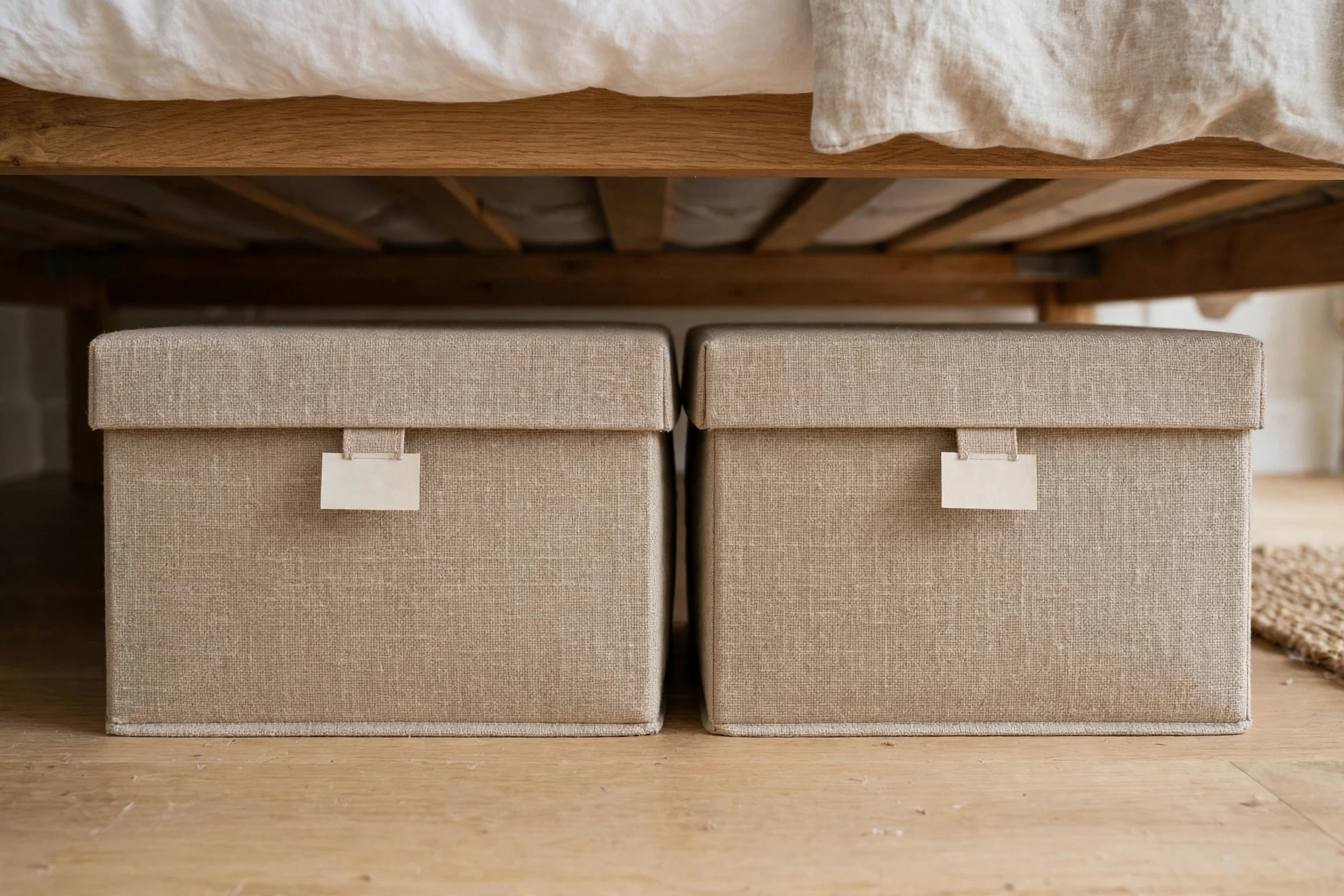
Under the bed is the biggest hidden space in a tiny house, and it is already there.
What to buy: Two low flat storage boxes with lids, about $8-$12 each, or one set of under-bed drawers for $15-$20. Choose boxes that slide easily on the floor, with handles you can pull without lifting.
Where it goes: Under the bed, one box for out-of-season clothes, one box for spare bedding. Not under the bed for everyday clothes, because pulling a box out every morning is a chore you will stop doing.
Common mistake: Using under-bed boxes for things you need every day, then leaving the boxes out because you are tired of sliding them in and out. Under the bed is for weekly and seasonal things. Daily things live at hand height.
Try this today: Put the out-of-season clothes into any flat box you already own and slide it under the bed. If the wardrobe feels roomier tonight, the under-bed boxes are worth the $16.
7. A slim shoe cabinet
Shoes on the floor make a tiny house feel full. Shoes in a slim cabinet make the entry feel calm.
What to buy: One slim shoe cabinet, about $15-$20, or a narrow shoe rack with a cover for $10-$15. Choose one that is no deeper than the shoes it holds, so it does not stick out into the entry.
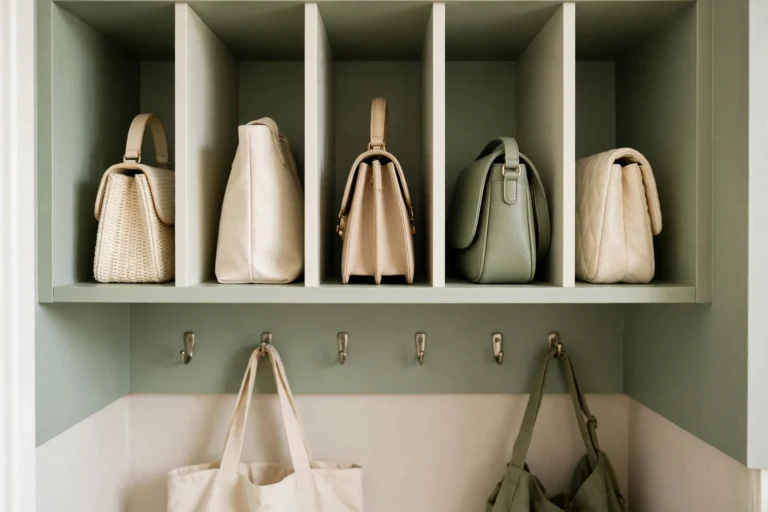
Where it goes: Beside the front door, on the wall you face when you come in, where you can put your shoes away without thinking. It holds two pairs per person, no more, because a shoe cabinet that holds six pairs is a shoe shop by the door.
Common mistake: Buying a shoe cabinet that is too deep, so it blocks the door swing. Measure the door swing first, and buy a cabinet that leaves the door free to open fully.
Try this today: Put all but two pairs of shoes per person into a box under the bed, and leave two pairs by the door. If the entry feels calmer tonight, the shoe cabinet is worth the $18.
8. Baskets on top of the kitchen cabinets
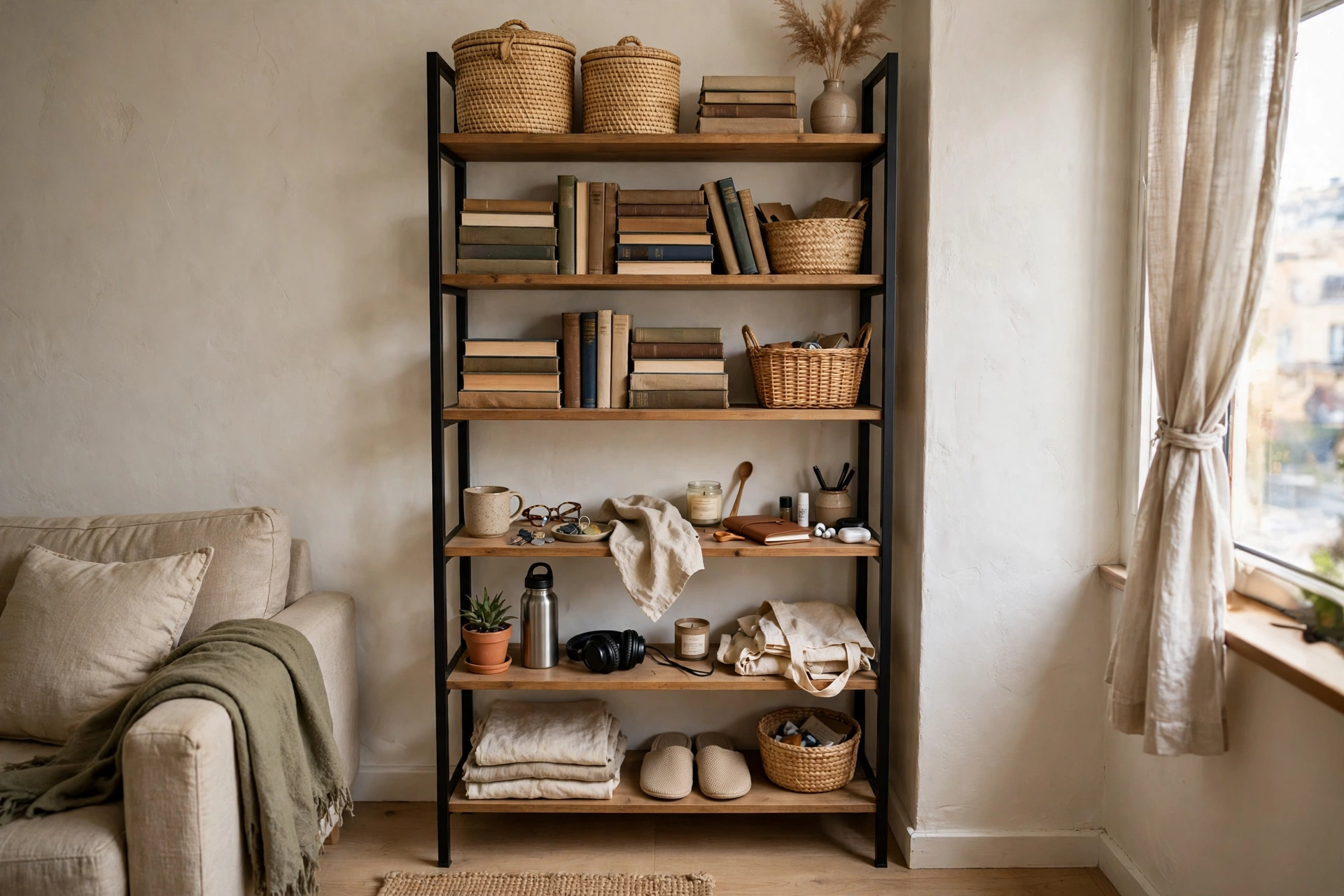
The top of the kitchen cabinets is a shelf you already own, and two baskets make it a cupboard.
What to buy: Two matching baskets, about $6-$10 each, that fit the space on top of the cabinets. Choose baskets with lids, or baskets that sit neatly, so they look like part of the kitchen, not like storage.
Where it goes: On top of the kitchen cabinets, one basket for spare linens, one basket for the things you use once a month: the picnic set, the spare tablecloth, the cake tins. Not for everyday things, because the top of the cabinets is a ladder job.
Common mistake: Putting baskets on top of the cabinets without lids, then watching dust and cooking grease settle on everything inside. Use baskets with lids, or put a cloth over the top, and the things inside stay clean.
Try this today: Put the picnic set and the spare tablecloth into any bag you already own and put it on top of the cabinets. If the kitchen feels calmer tonight, the baskets are worth the $14.
9. The rolling cart in the bathroom

A rolling cart turns the gap beside the sink into a bathroom cabinet.
What to buy: One slim three-tier rolling cart, about $12-$18, that fits the gap beside the sink or the toilet. Measure the gap first, because bathroom gaps are narrow, and the cart has to roll in and out easily.
Where it goes: In the gap beside the sink, holding the toiletries you use every day on the top tier, the towels on the middle tier, and the cleaning things on the bottom tier. It rolls out when you need it, and rolls away when you do not.
Common mistake: Filling the cart until it is too heavy to roll, then leaving it stuck in the gap. A rolling cart that cannot roll is a shelf in the wrong place. Keep it light, and it will roll every day.
Try this today: Put all the toiletries into one small box and put the box beside the sink. If the sink feels clearer tonight, the rolling cart is worth the $15.
10. The label that keeps it hidden
A hidden home only stays hidden if everyone knows what lives in it, and a label is how they know.
What to buy: One pack of labels or a marker and masking tape, about $3-$5. That is all. A label does not need to be pretty, it needs to be true.
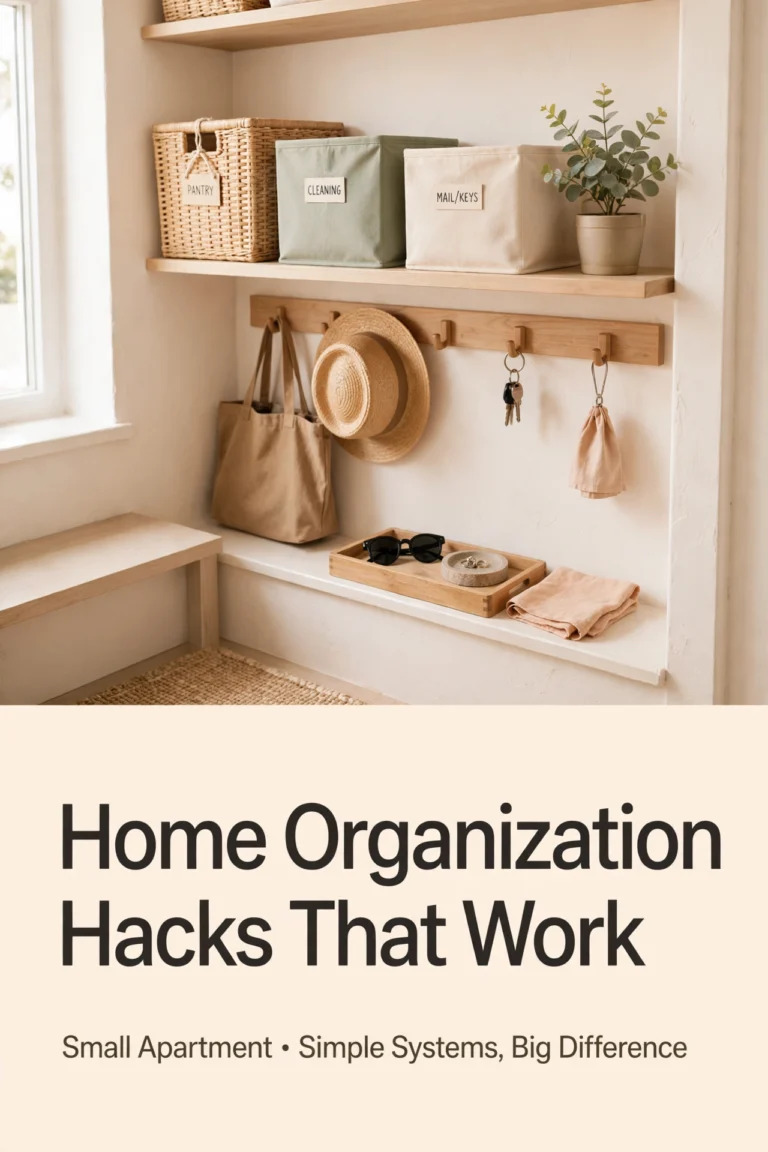
Where it goes: On the front of every box, basket and drawer, where you can read it without opening it. One or two words is enough: spare towels, winter clothes, picnic set. If the label needs a sentence, the box holds too many kinds of things.
Common mistake: Labelling the box with what you wish was in it, not what is actually in it. A label that lies is worse than no label, because you open the wrong box every time. Label what is inside, and change the label when the box changes.
Try this today: Write the contents of three boxes on masking tape and stick the tape on the front. If you find things faster tonight, the labels are worth the $4.
What it costs
Buy the shelf above the door and the hook rail first ($15-$23), and add the rolling cart if the bathroom feels crowded ($12-$18). That is roughly $27-$41, and it hides the everyday clutter in the places that already exist. Add the storage bench next, when one specific pile starts to bother you. Remember that the labels cost $4, and they keep every hidden home working.
The 15-minute version
If you only have 15 minutes today, do this: put one basket above the door, hang a hook rail on the back of the bedroom door, slide one box under the bed, and label three boxes you already own. Four small changes, one calmer evening. The rest of the list can wait until the weekend.
FAQ
How much hidden storage does a tiny house need?
Five or six hidden homes is enough for most tiny houses: the shelf above the door, the bench, the under-bed boxes, the shoe cabinet, the rolling cart, and one basket on top of the cabinets. More than that, and the storage starts to become clutter itself.
Will hidden storage work in a rented tiny house?
Yes, because none of these ideas need drilling into the structure. The shelf uses brackets on the door frame, the hooks hang over the door, and the carts and boxes slide into gaps that already exist. Check with your landlord before you screw anything into a wall.
What if I have no dead space left?
Then the labels matter more, not less. When every space is used, the only thing that keeps the house calm is knowing what lives where, so you can find it without emptying three boxes. Label everything, and the house will feel bigger.
Do I need matching baskets?
No. Two matching baskets on top of the cabinets look tidy, but the boxes under the bed can be any boxes that fit. Matching matters where you can see it. Under the bed, nobody sees it, and fit matters more than matching.
How do I keep the hidden storage working?
Ten minutes every evening, same order, every night. Put things back in their hidden homes before bed, so the house starts calm every morning. Hidden storage is not a one-day project. It is a ten-minute habit.
Keep it going
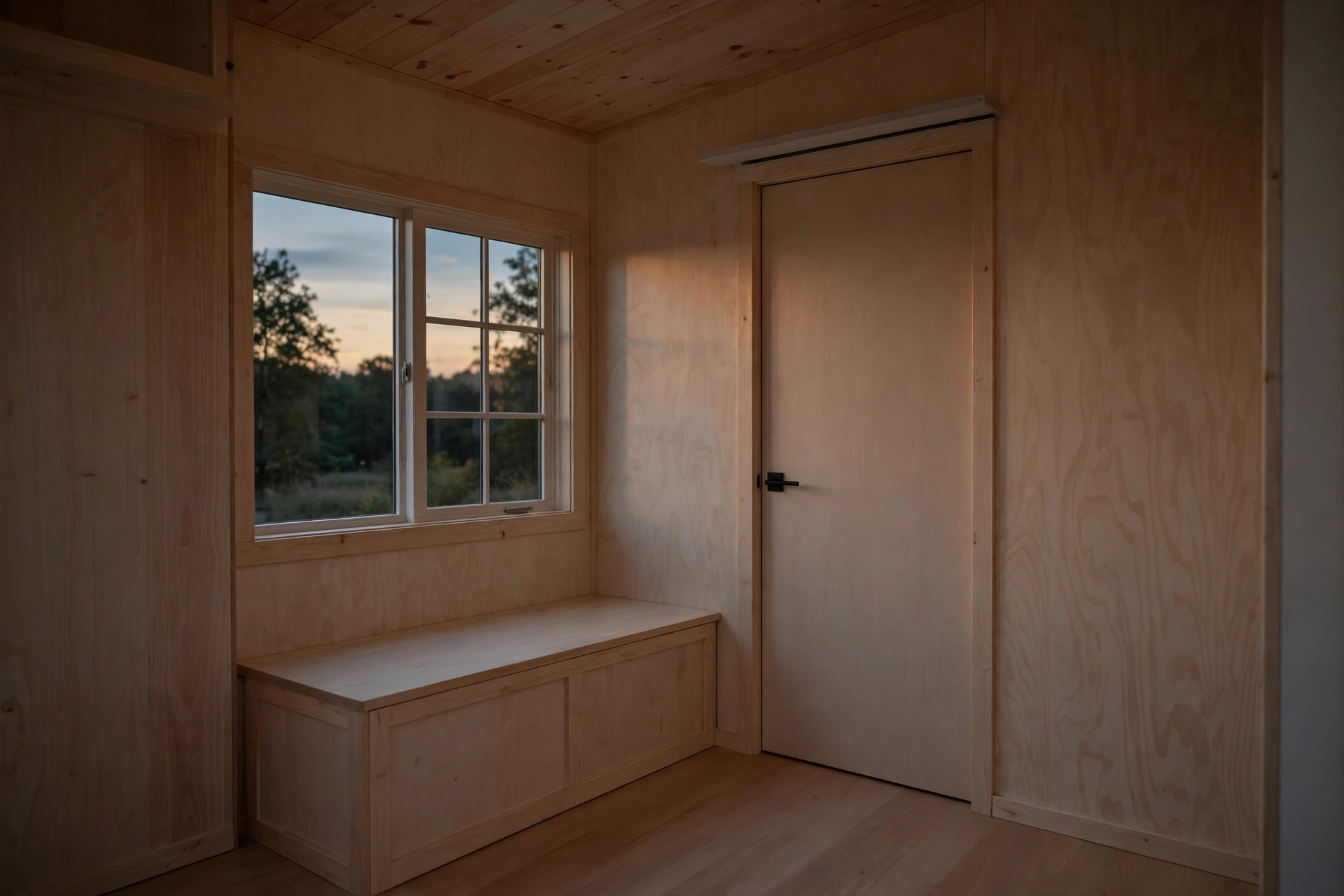
The finished look: everything has a hidden home, and the house feels bigger than it is.
A tiny house does not need more storage. It needs storage that hides, and ten minutes every evening to put things back. Start with the shelf above the door today.
Related pins
- Pin 23: Tiny House Storage Hacks
- Pin 13: RV Storage Ideas for Families
- Pin 16: Vertical Storage Ideas for Small Kitchens
- Pin 2: Small Apartment Storage Ideas
- Pin 11: Entryway Organization for Homes With No Foyer
- Pin 1: 25 Small Space Storage Ideas