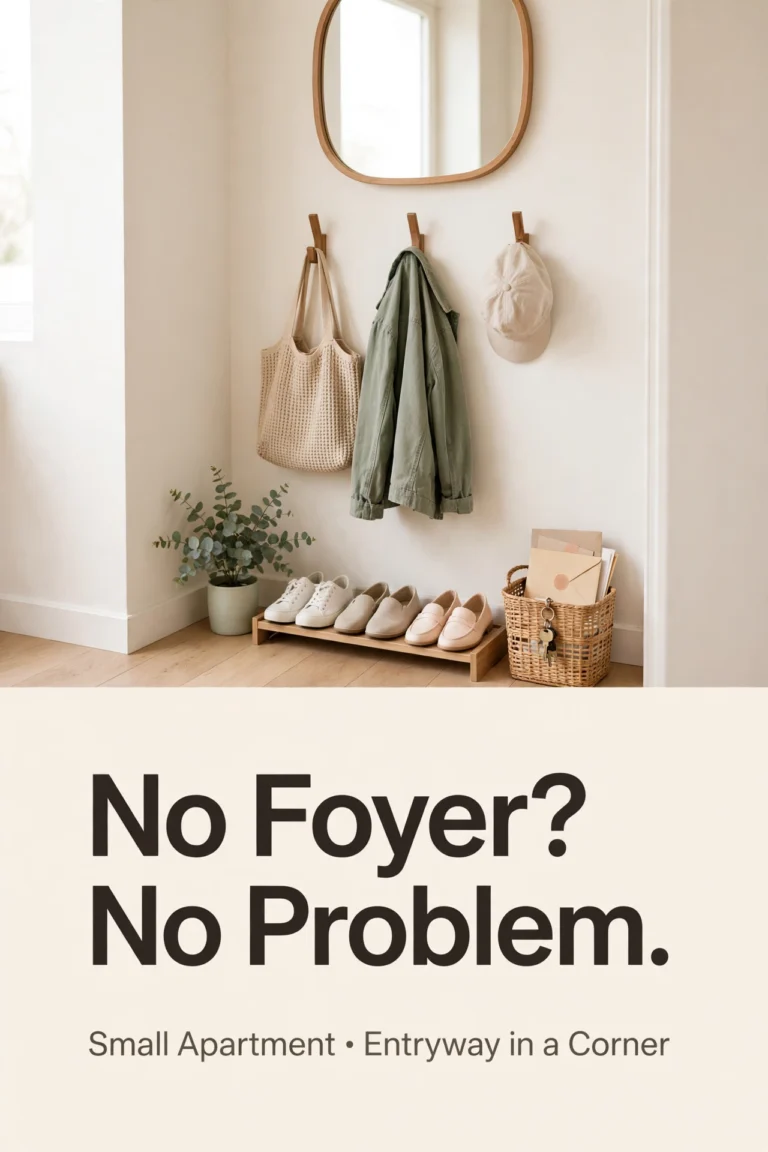
Purse Storage Ideas That Actually Work
Purses are the hardest thing in a small apartment to store. They are bulky, they lose their shape, and the one you want is always at the back. This guide fixes that with ten ideas that work in a real small apartment, in order, from the cheapest and fastest to the ones worth spending a little more on.
Introduction
Small apartments punish vague storage. A purse has no fixed home, so it lands on a chair, a hook, or the floor by the door, and the strap you need is always tangled with the one you do not. The fix is not a bigger cupboard. It is one visible, easy place per purse, so putting it away takes less effort than dropping it by the door.
Purse storage is also one of the strongest topics in this niche right now: “purse storage ideas” is a search people type when they are ready to fix the problem, and “small apartment” is one of the best categories to rank it in. The ideas below are built for that search, and for an apartment where the entryway is a strip of wall, not a room.
This guide gives you ten ideas that work in a real small apartment, in order, from the cheapest and fastest to the ones worth spending a little more on.
Before you buy anything
Do these three things first. They cost nothing, and they decide whether the rest of the ideas work or fail.
1. Count the purses you actually use.
Take every purse out of the apartment and count them. Most small apartments hold eight to twelve purses, and only four or five are used every month. The rest are spares, and spares can live somewhere else.
2. Measure the space, not the product.
Measure the shelf, the cupboard, or the gap beside the door first, then buy the hook or box that fits it. Most storage fails because the product was bought first and the space was measured second.
3. Pick one colour family.
Choose cream and sage green, or warm wood and white, and stay with it for the visible storage. Matching hooks and boxes make a small apartment look calm instead of crowded.
Common mistake:
buying a matching set before you have counted anything. You end up storing purses you do not use, in boxes that do not fit, in an apartment that still looks full.
Three small looks to choose from
Pick one before you start. It keeps every later choice simple.
Cream and sage green.
The calmest of the three, and the easiest to live with. Cream totes, a sage bag or two, pale wood shelves, and natural baskets. It suits a small apartment because nothing in it shouts for attention.
Warm wood and white.
The warmest look. Light oak shelves, white boxes with wooden lids, linen baskets, and a cream tote by the door. It suits an apartment that already has wooden furniture.
Soft grey and natural linen.
The most practical if you have children or pets. Grey baskets hide marks, linen softens hard edges, and a folded grey tote looks tidy even when it is not perfect.
All three use the same rule: one colour family for the things you see, and plain, closed storage for the things you do not.
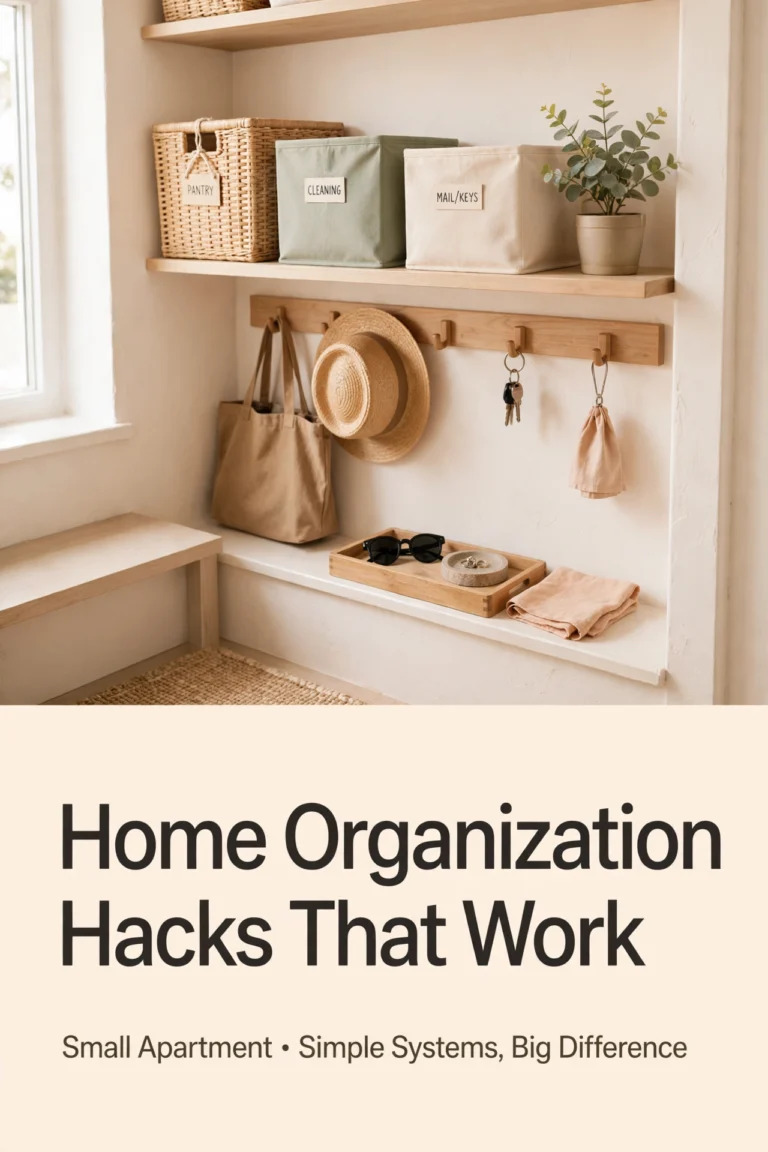
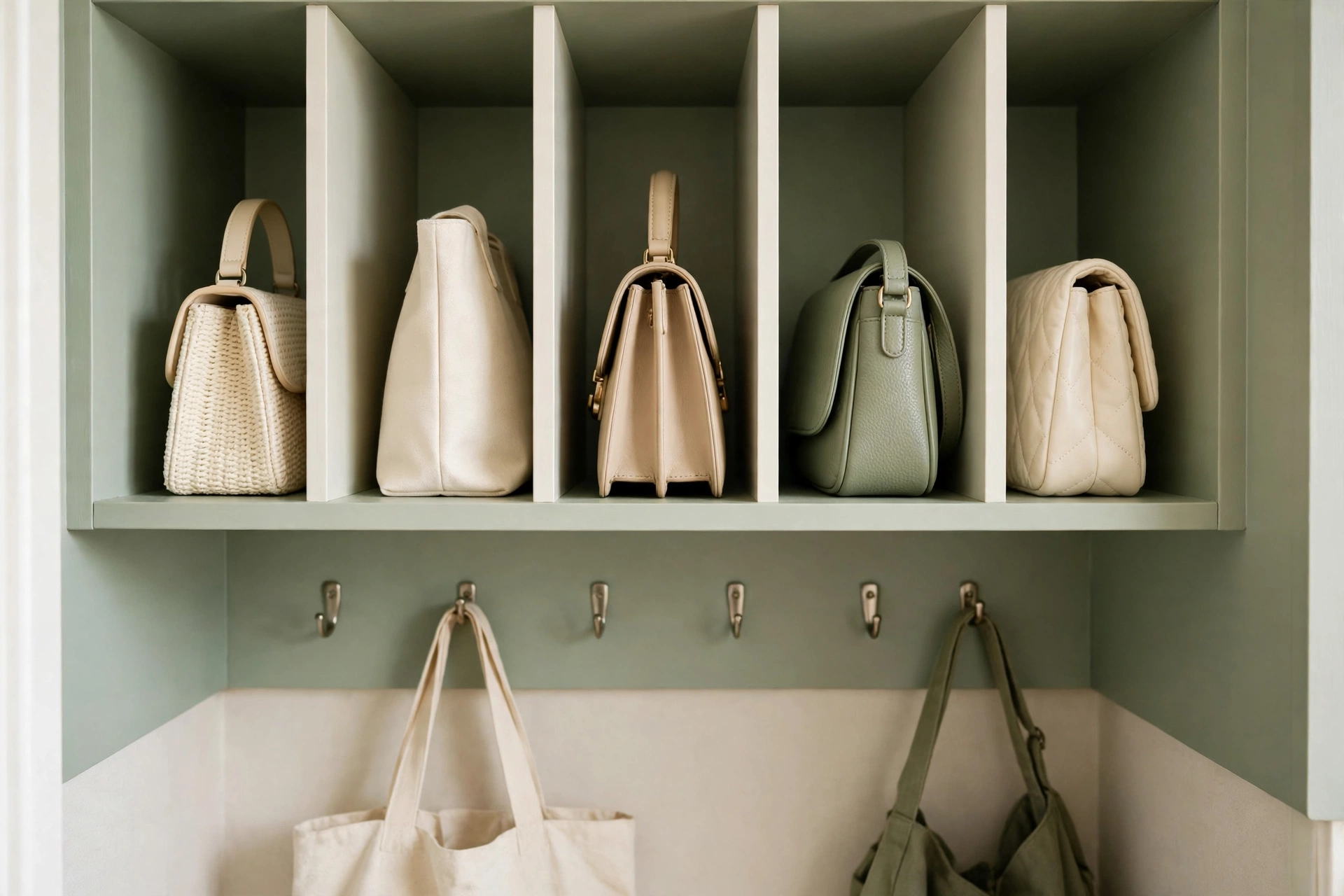
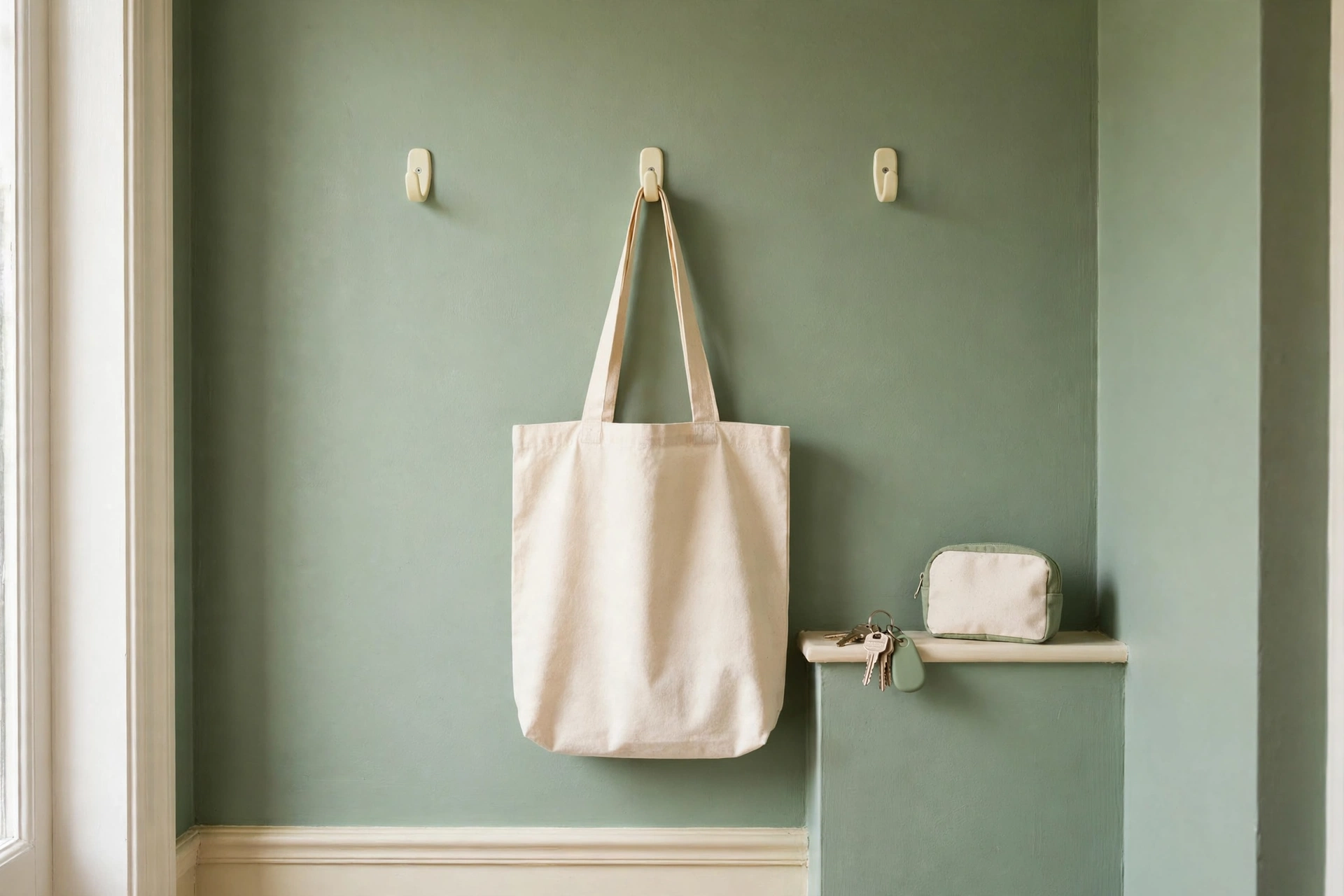
1. A row of hooks by the door
Hooks the purses you use every week hang here, visible and easy to grab, and the floor by the door stays clear.
What to buy: A wall-mounted hook rail with four or five hooks, about 60 cm long, with screws and wall plugs rated for the weight. Look for hooks with a rounded end so the straps do not slip off.
Where it goes: On the wall beside the door, at shoulder height, where you can reach it with your coat on. Leave 15 cm between hooks so the bags do not overlap.
Common mistake: hanging more than one purse per hook. The straps tangle, the bags lose their shape, and the rail looks messy. One purse per hook, always.
Try this today: Hang the purse you use every day on the hook nearest the door. If it is not the easiest purse to reach when you leave, the rail is in the wrong place.
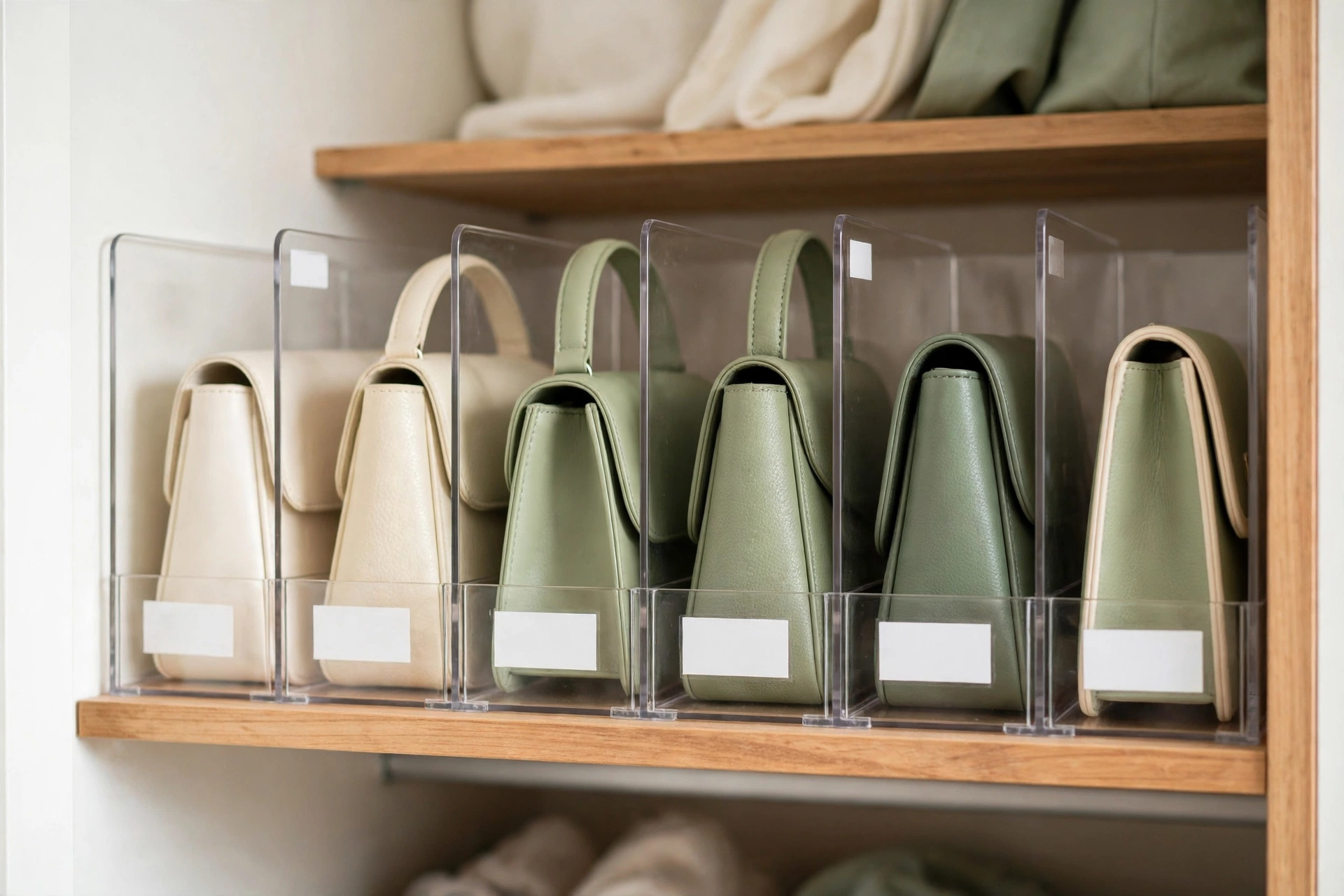
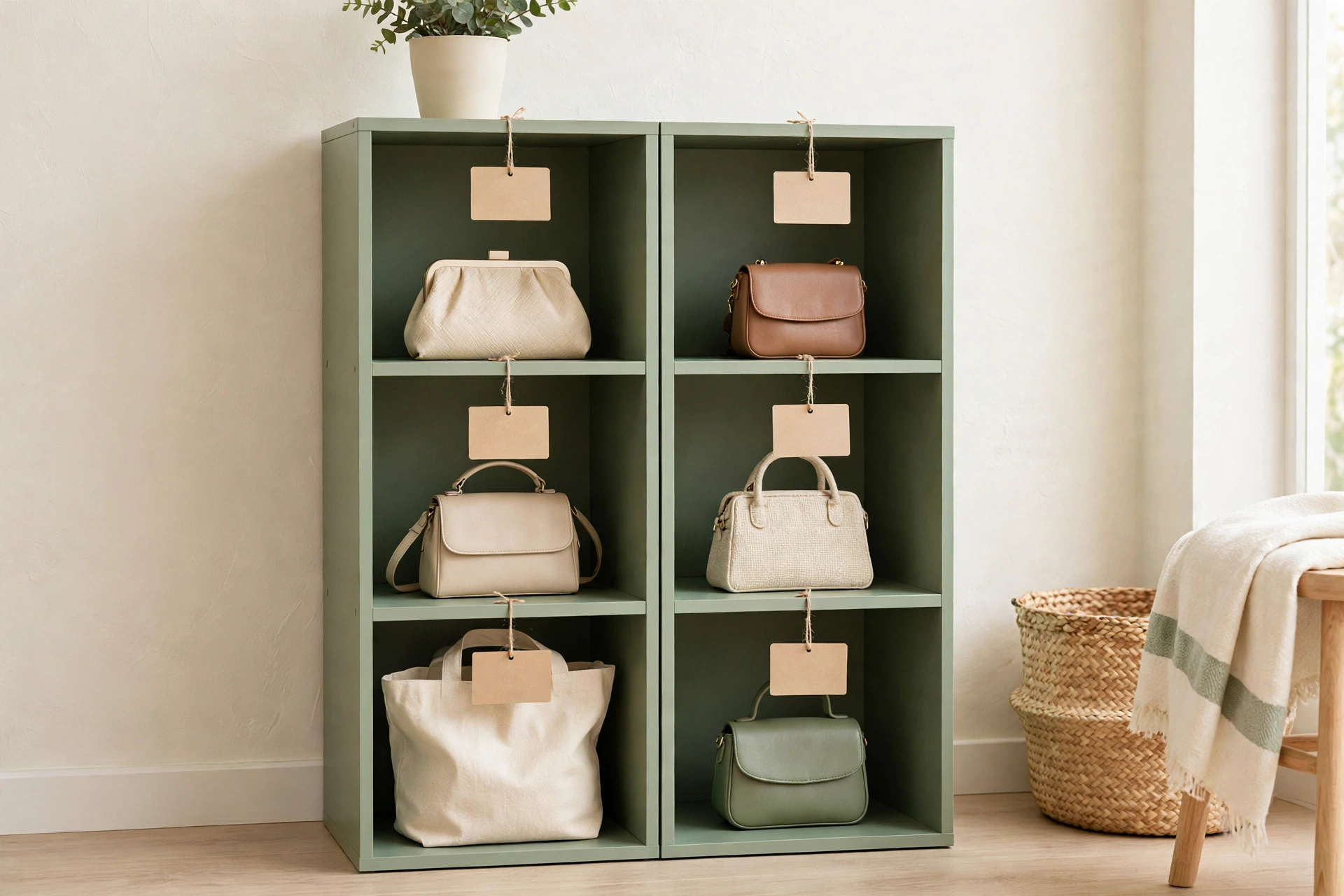
2. Clear boxes on a shelf for the rest
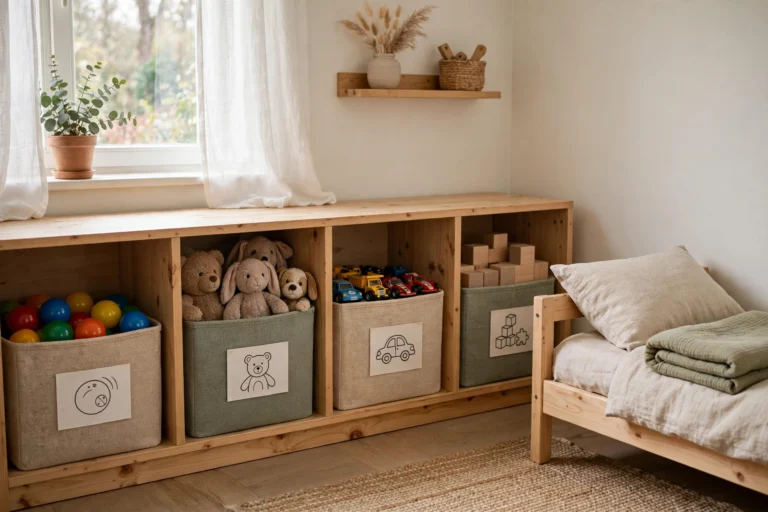
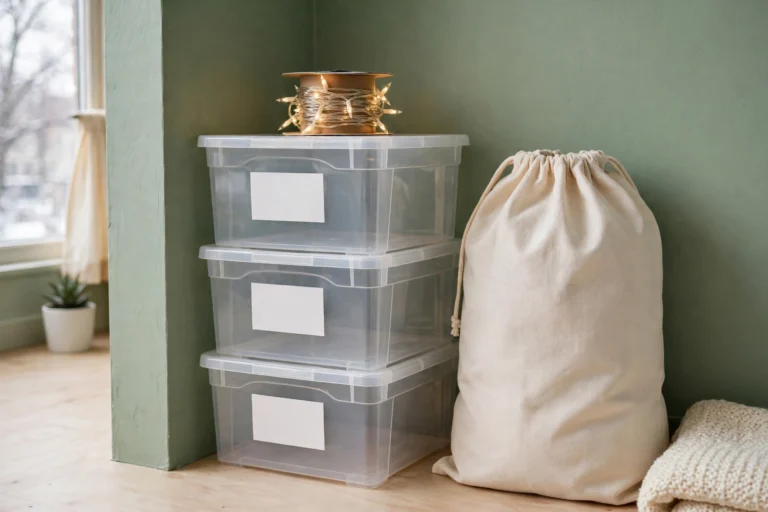
Clear boxes the purses you use less often live in boxes you can see through, so you never dig for the right one.
What to buy: A set of two or three clear storage boxes with lids, about 30 cm wide, that stack without sliding. Choose boxes with a handle cut-out so you can pull one out with one hand.
Where it goes: On a shelf in the closet, or on top of a wardrobe, where the purses you use less often belong. One purse per box, with the strap folded inside.
Common mistake: using coloured boxes you cannot see through. You will open every box to find one purse, and the shelf will never stay tidy. Clear boxes only.
Try this today: Put the purse you use least in a clear box and label the front. If you can find it without opening the box, the system works.
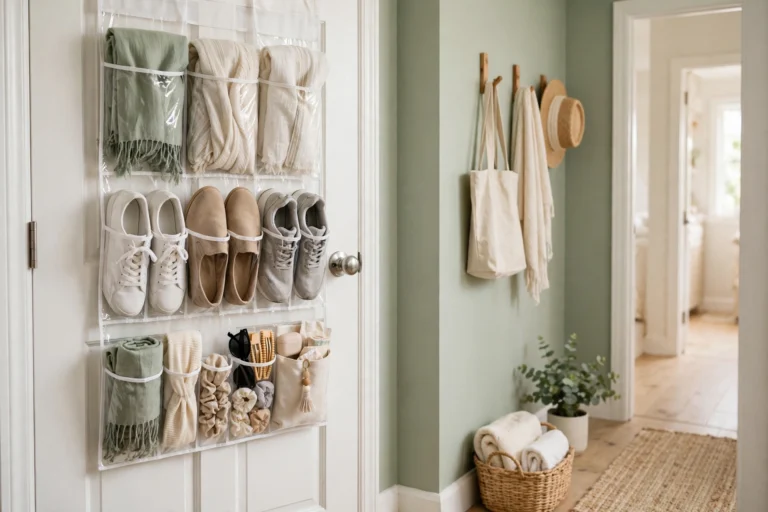
3. A hanging organizer on the closet door
Door storage the purses hang in clear pockets on the back of the door, and the closet shelves stay free.
What to buy: An over-door hanging organizer with clear pockets, about 40 cm wide, with hooks that fit over the door without screws. Choose one with pockets deep enough for a small handbag.
Where it goes: On the back of the closet door, or on the bedroom door, where the space is wasted. Keep the small bags in the top pockets and the larger ones at the bottom.
Common mistake: overloading the pockets. A pocket that is too full will stretch, and the bag inside loses its shape. One bag per pocket, and the door stays flat.
Try this today: Hang the three smallest purses in the top pockets of the organizer. If the door still closes easily, the organizer fits.
4. Purse inserts that hold the shape
Shape the insert holds the purse upright, the straps stay tidy, and the bag looks new for longer.
What to buy: A fabric purse insert with pockets, sized to fit your most-used bag. Measure the bag first, and buy the insert that is 2 cm smaller on each side.
Where it goes: Inside the purse, all the time. Move it from bag to bag when you swap purses, and the insert keeps its shape for the next bag.
Common mistake: buying an insert that is too big for the bag. It bulges, the zip will not close, and the bag looks worse than without it. Measure first.
Try this today: Put an insert in the purse you use most. If it stands upright on the shelf tonight, the insert fits.
5. A basket by the door for the daily bag

One basket the bag you use every day lives here, and the floor by the door stays clear.
What to buy: One large wicker or seagrass basket, about 40 cm wide, with handles. A basket you can carry to the sofa is worth more than a pretty one you cannot move.
Where it goes: Beside the door, on the side you come in. If there is no floor space, use the top of a low shoe cabinet instead.
Common mistake: using the basket as a dump for everything you carry. It is for the bag you use today, not for mail, keys, and umbrellas. Empty it every evening.
Try this today: Put tomorrow’s bag in the basket before you go to bed. Tomorrow, you will reach for the basket, not the chair.
6. A shelf above the door for spares
High storage the spare purses live above the door, out of the way, and the closet stays for the clothes.
What to buy: One floating shelf, about 60 cm long, with two sturdy brackets and wall plugs rated for the weight. A shelf that holds four purses weighs about 5 kg.
Where it goes: Above the apartment door, or above a wardrobe, where the space is wasted. Keep the purses you use least up there, and the daily ones down low.
Common mistake: putting the daily bag on the high shelf. You will stop using the shelf within a week. High shelves are for spares, not for today.
Try this today: Put the spare purse you use least on the shelf above the door. If you can reach it standing on tiptoes, it is low enough.
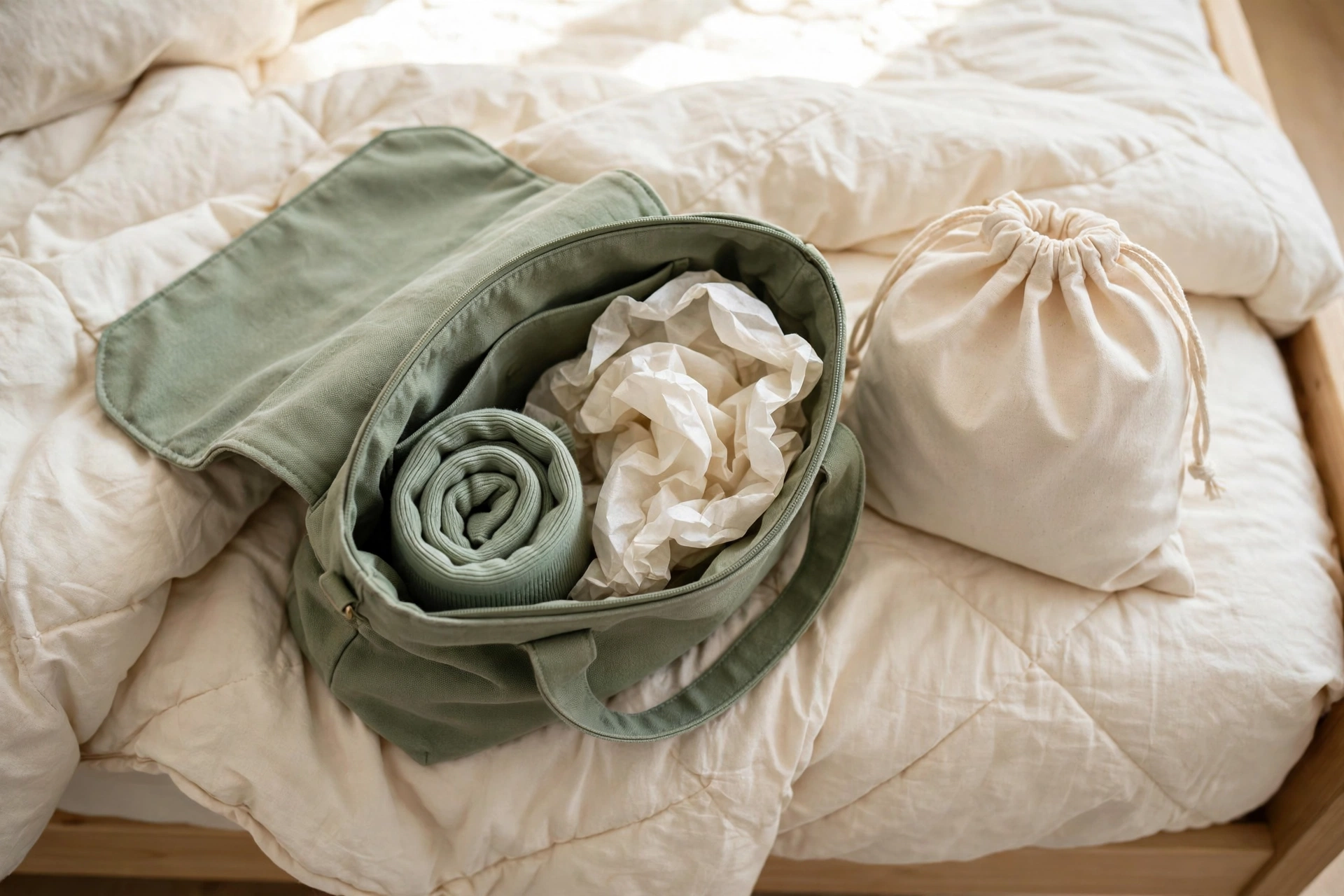
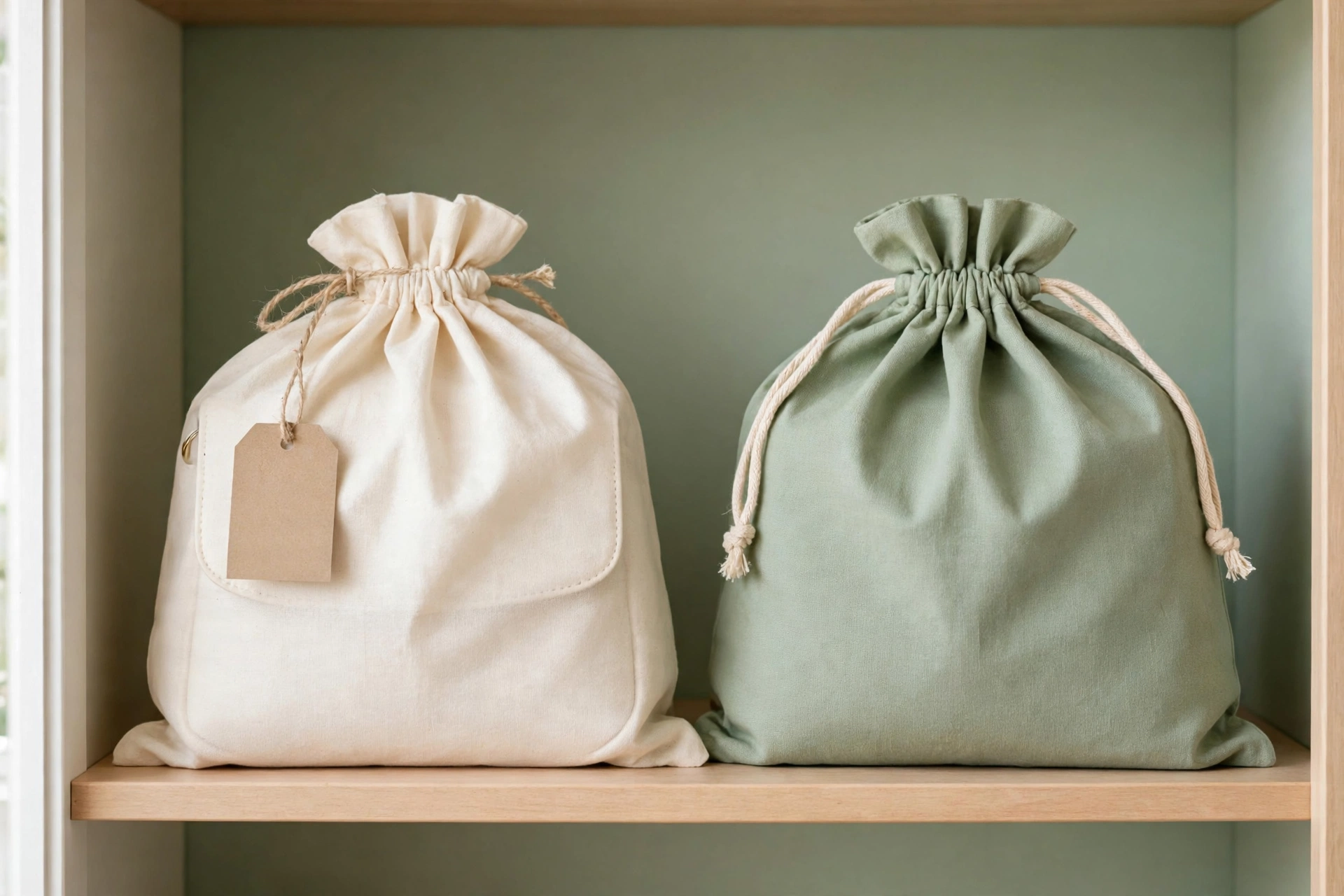
7. Dust bags and tissue for the good ones

Protected the good purses live in dust bags, stuffed with tissue, and they look new for years.
What to buy: A set of cotton dust bags, one per good purse, and acid-free tissue paper. Stuff the bag lightly so it holds its shape, and keep the strap inside.
Where it goes: On a shelf in the closet, upright, with the dust bags facing out. Label each bag with the purse inside, so you do not open all of them to find one.
Common mistake: storing a good purse in a plastic bag. Plastic traps damp, and the leather suffers. Cotton dust bags only, and the purse can breathe.
Try this today: Put your best purse in a dust bag with tissue inside. If it stands upright on the shelf, it will keep its shape.
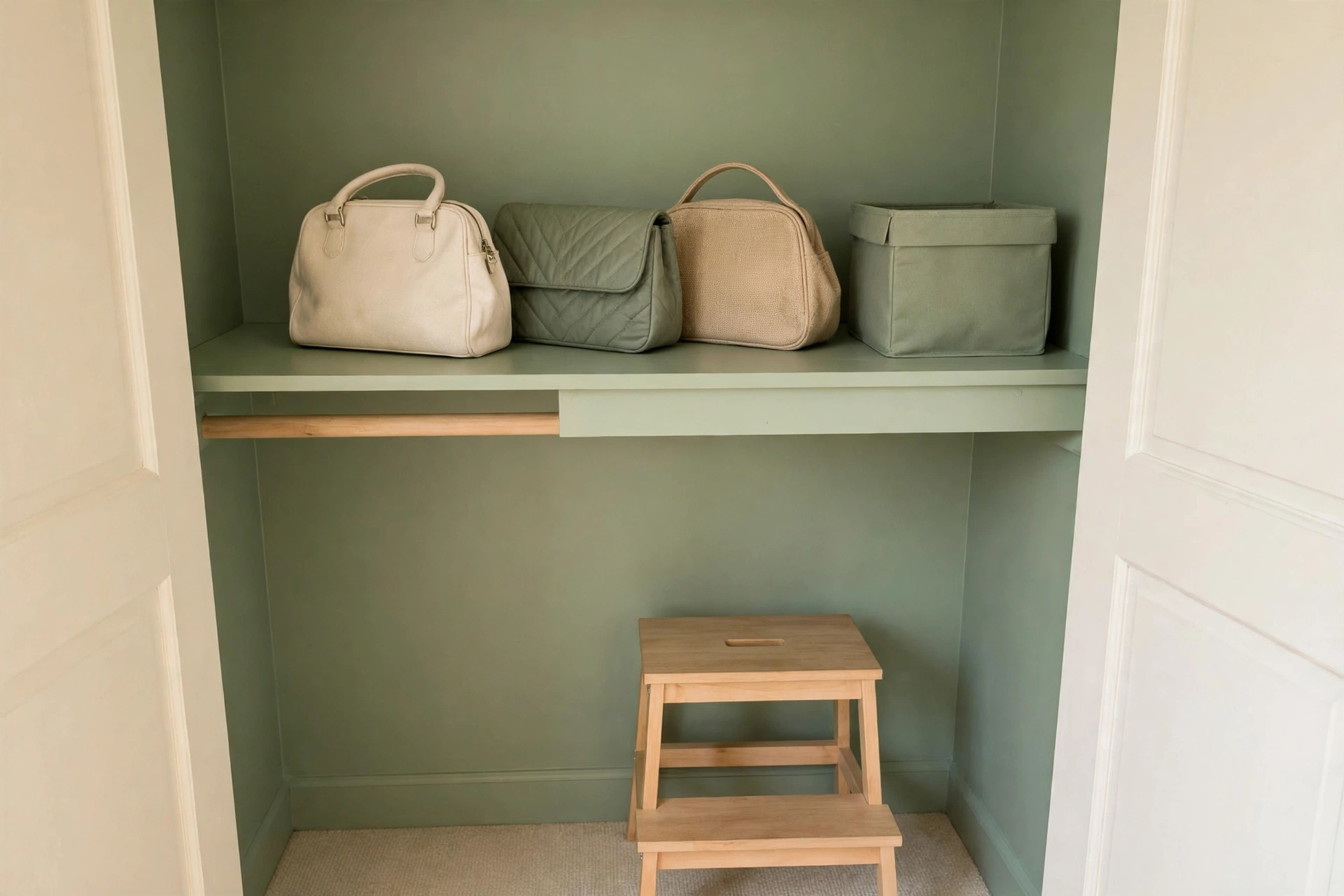
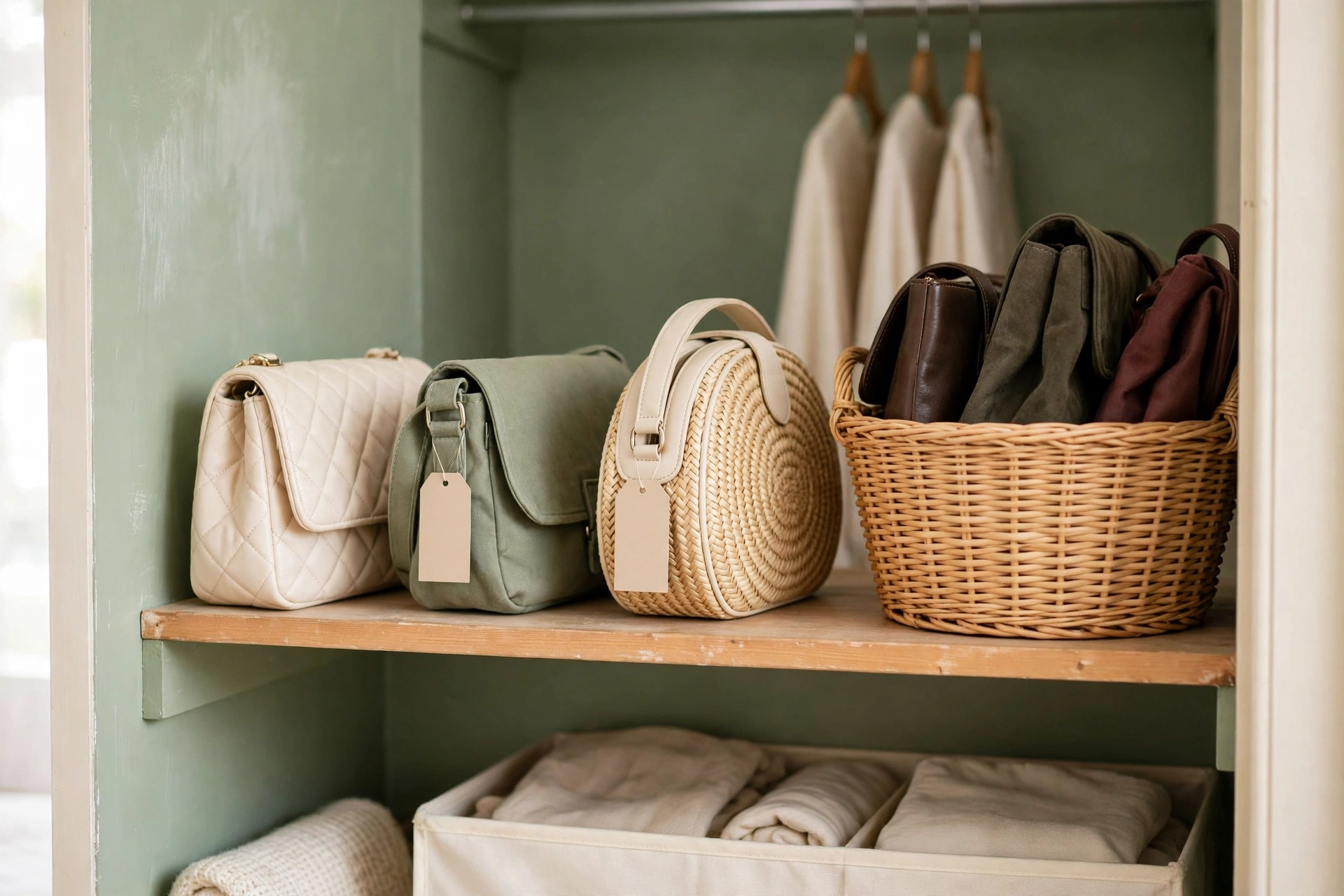
8. A small shelf inside the closet
Closet order the purses stand upright on their own shelf, and the closet rod is free for clothes.
What to buy: One small shelf, about 50 cm long, with two brackets, or a stackable shelf riser. Choose a shelf deep enough for a handbag standing upright, about 25 cm.
Where it goes: Inside the closet, at eye level, where the purses are easy to see. One purse per space, standing upright, with the handles facing out.
Common mistake: stacking purses on top of each other. They lose their shape, and the one at the bottom is always crushed. One purse per space, always.
Try this today: Move the three purses you use most onto the new shelf. If you can see all three at a glance, the shelf is in the right place.
9. A tote hook on the back of a chair
Chair hook the tote you use for shopping hangs on the back of a chair, ready to grab, and off the floor.
What to buy: A small over-chair hook or a bag hanger that clips to a table edge. Choose one rated for the weight of your fullest tote, about 3 kg.
Where it goes: On the back of a dining chair, or on the side of a table, where the tote is out of the way but easy to grab. Keep the daily tote here, and the spares in the closet.
Common mistake: hanging a heavy tote on a hook meant for a light bag. The hook bends, the bag falls, and the chair tips. Check the weight rating first.
Try this today: Hang tomorrow’s tote on the chair hook tonight. If it is still there in the morning, the hook holds.
10. One bag out, one bag away

The rule the bag you use today is the only one out, and the rest have a home you can find in the dark.
What to buy: Nothing. A small label or a note on the box, and five minutes each evening to put the bag away.
Where it goes: Everywhere the purses live. The rule is the system: one bag out at a time, and it goes back to its place before the next one comes out.
Common mistake: treating the rule as a chore. It is a habit, not a clean. Five minutes in the evening, and the apartment stays calm without a big tidy-up.
Try this today: Tonight, put the bag away before you go to bed. Tomorrow morning, notice how much quicker the apartment feels tidy.
What it costs in total
The ten ideas use a mix of free habits and small purchases. This is the realistic range for a small apartment, using the prices in this guide.
| Item | Approximate US price |
|---|---|
| Hook rail with 5 hooks | $12–$25 |
| Clear storage boxes, set of 3 | $15–$28 |
| Over-door hanging organizer | $10–$20 |
| Purse inserts, set of 2 | $12–$22 |
| Large wicker basket | $18–$35 |
| Floating shelf with brackets | $15–$30 |
| Cotton dust bags, set of 5 | $10–$18 |
| Small closet shelf with brackets | $12–$25 |
| Over-chair hook | $6–$12 |
| Labels and a label maker | $10–$18 |
| Total, all ten ideas | about $120–$233 |
The starter set under $35: one hook rail, a set of two clear boxes, and a wicker basket. Those three alone solve the daily purse problem.
The 15-minute version
If you only have 15 minutes today, do this. Count the purses, put today’s bag in the basket by the door, and hang the rest on hooks or put them in clear boxes. The apartment will look calmer before you have spent anything.
FAQ
How many purses should a small apartment keep?
Four or five for daily use, plus one or two spares. More than that, and the storage will always feel full. Spares can live in another room, in clear boxes, until the season changes.
Where do I store purses if I have no entryway?
On hooks beside the door, in a basket, and in clear boxes on a closet shelf. Those three places hold a full set without an entryway, and they keep the purses visible and easy to reach.
Do purse inserts damage handbags?
No, if you buy the right size and you do not overfill them. An insert that is 2 cm smaller than the bag on each side holds the shape without stretching the leather.
What is the best purse storage for a rented apartment?
A hook rail that uses adhesive strips, a basket, and an over-door organizer. None of them need drilling, and all three move with you. Avoid shelves that need wall plugs unless your landlord agrees.
How do I stop purse straps tangling?
One purse per hook, and fold the strap inside the bag when it is in a box. If two straps are touching, they will tangle. Give each bag its own space.
Keep it going
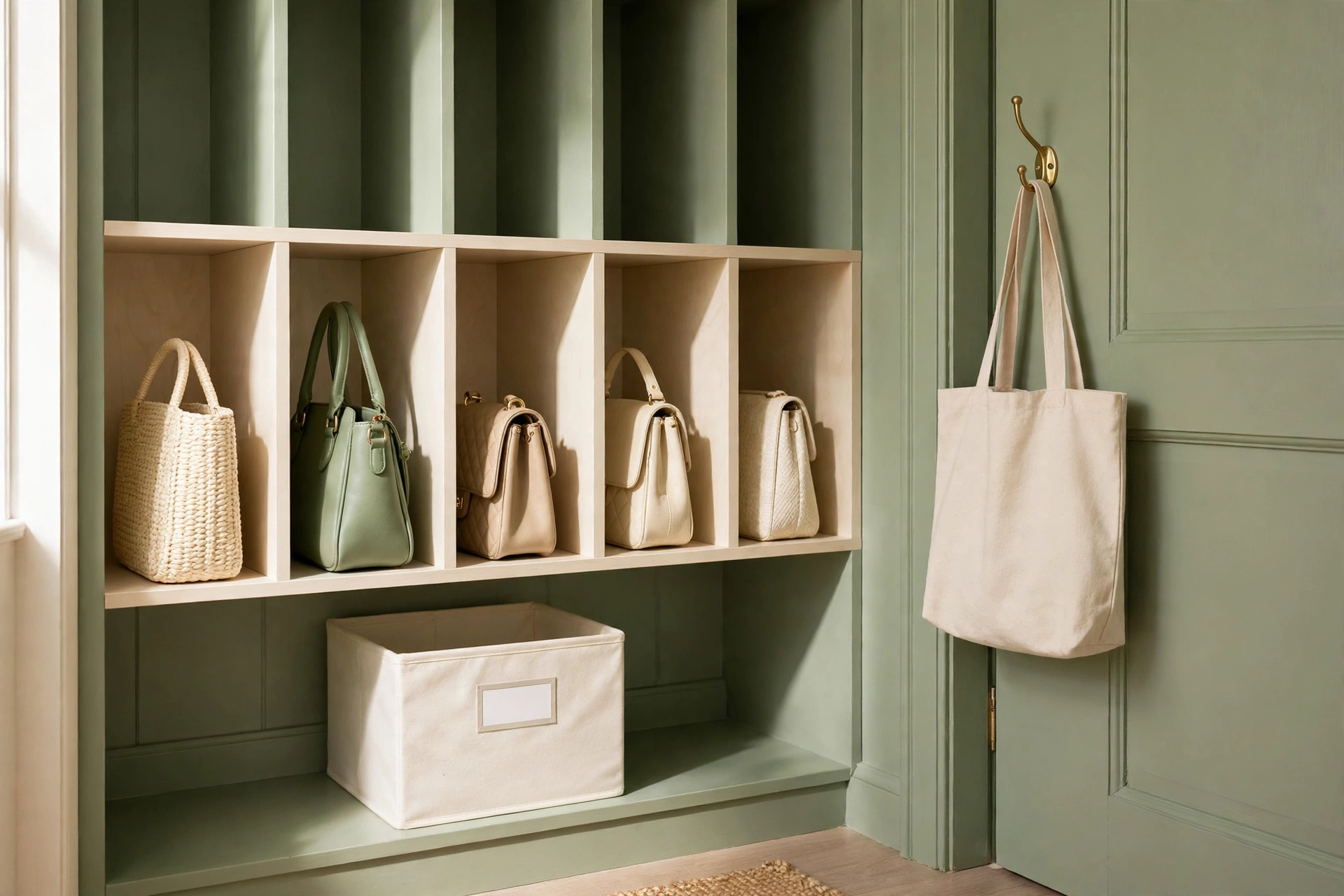
Keep it going one bag out, one basket by the door, and the apartment stays calm without a big tidy-up.
A small apartment is maintained by small habits, not by big clear-outs. Put the bag away each evening, keep the spares in their place, and the apartment stays calm. When a new purse comes in, choose one to move on, so the apartment never fills up again.