Small Bedroom Storage Ideas for Renters No Drilling Needed
Introduction
A small bedroom feels bigger when everything has a place. In a rental, that place cannot involve drilling holes in the wall. Most small bedrooms are not short of space. They are short of systems. Nothing here needs a landlord’s permission, a power drill, or a big budget. Every idea uses space you already have: under the bed, behind the door, on top of the wardrobe, and inside the closet. Pick one idea, do it this weekend, and add the next when it works.
Before you buy anything
Buying storage before decluttering is the most common mistake in a small bedroom. New boxes do not fix too many clothes they just hide them more neatly. Before you spend a dollar, measure the height under your bed, the length of your closet rail, and the depth of your drawers. Then declutter into keep, donate, and maybe date the “maybe” box, and donate it unopened if you do not open it in 30 days. Finally, count what is left, because that count tells you what to buy.
Try this today: measure the space under your bed and the length of your closet rail, and write both numbers in your phone.
1. Under-bed boxes
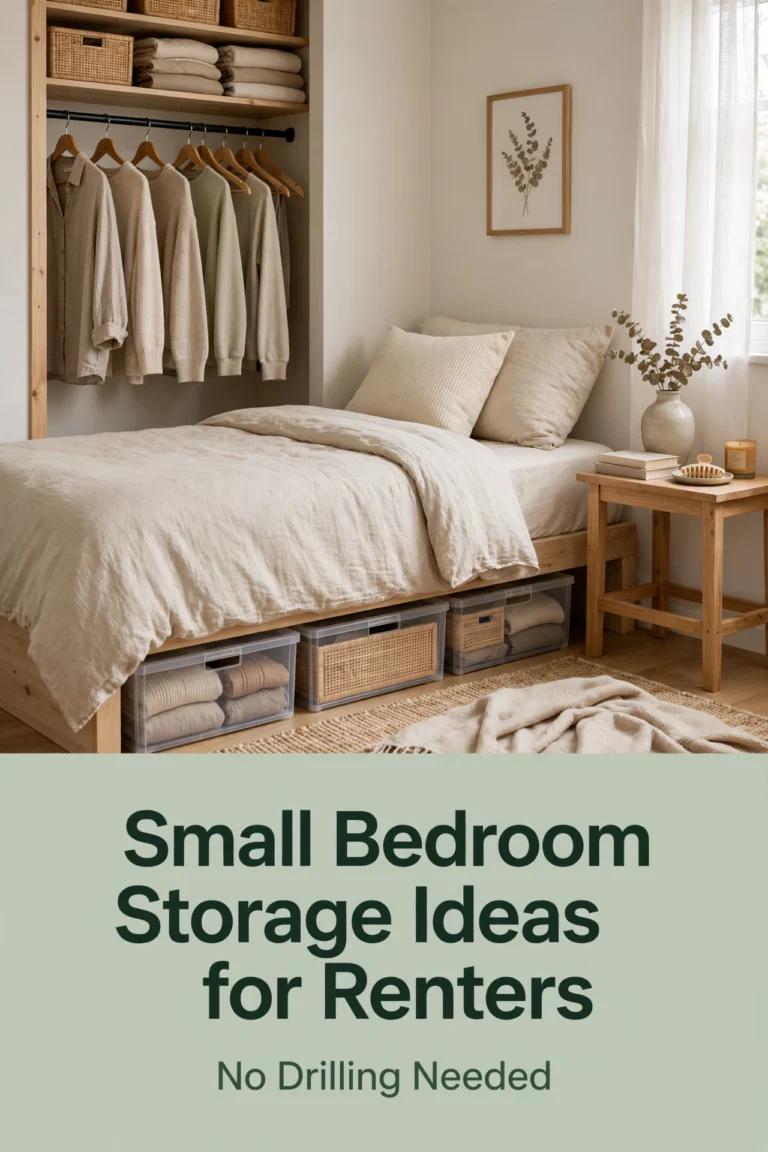
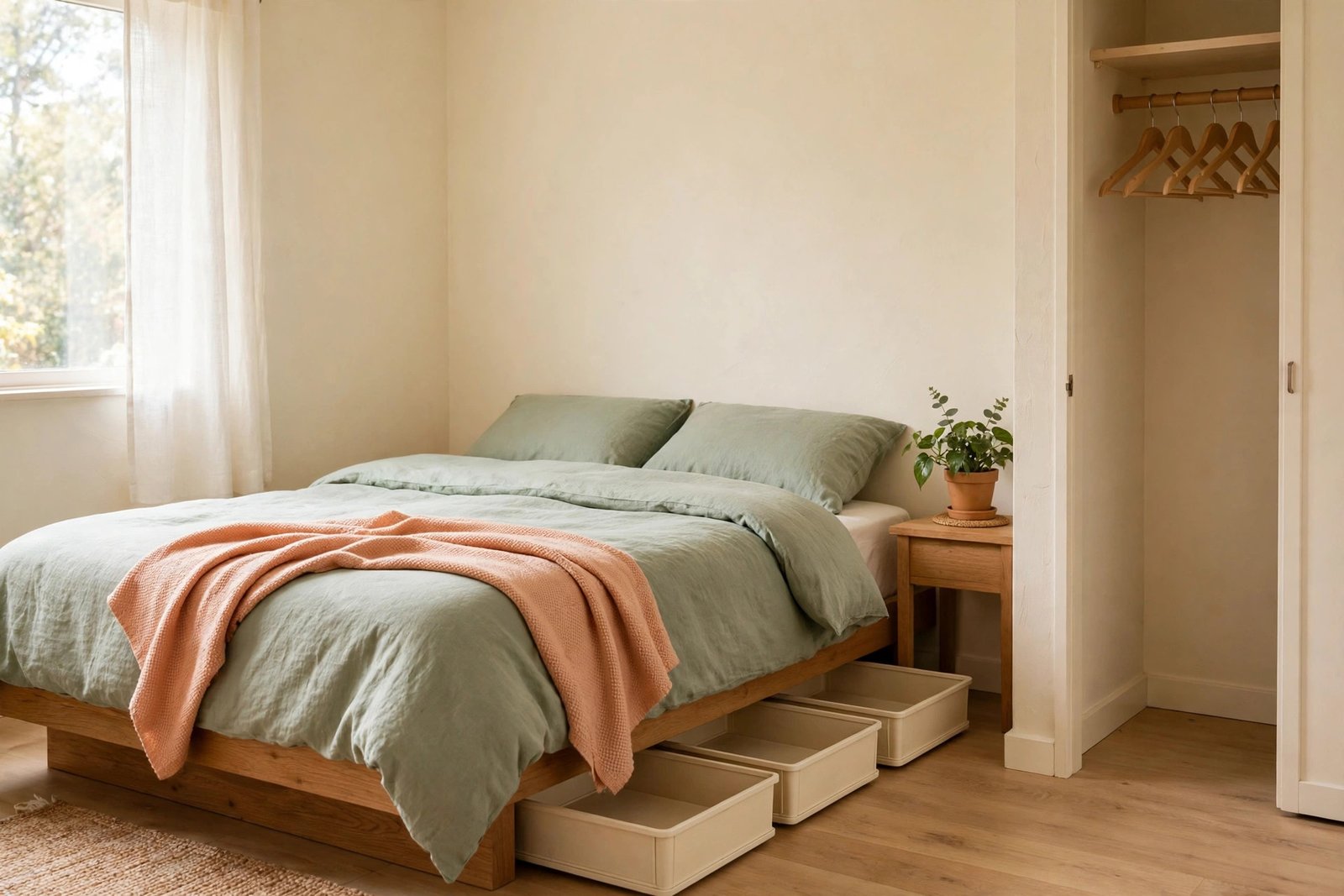
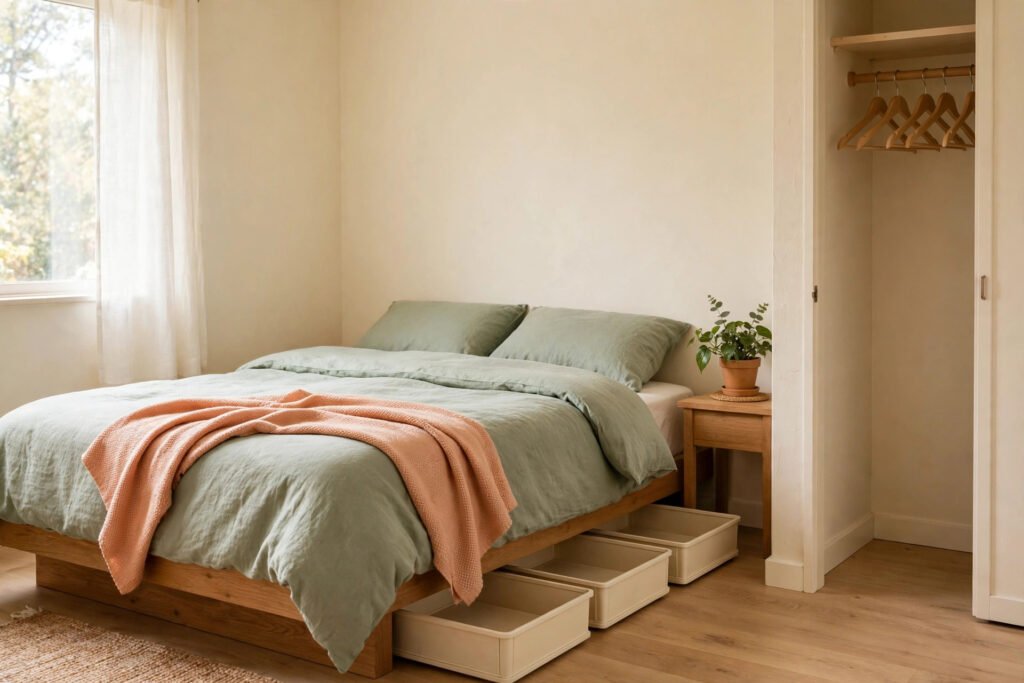
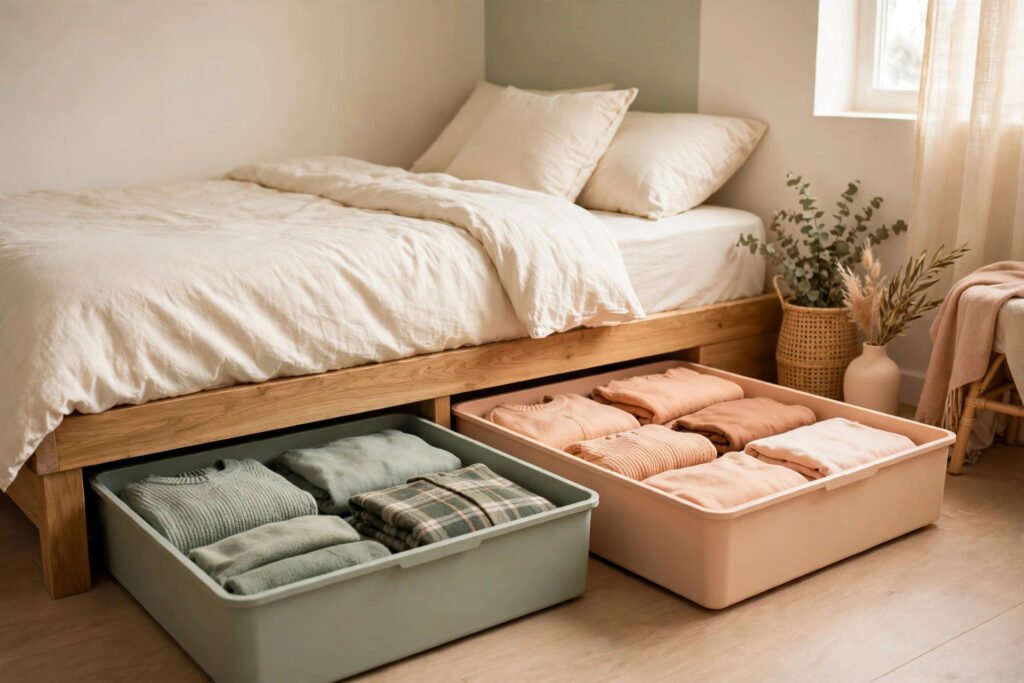
The space under the bed is the biggest unused storage area in most small bedrooms, and it is free. Two or three slim boxes under a double bed hold a whole season of clothes or spare bedding.
What to buy: slim, lidded boxes about 30–32 inches long and 5–6 inches high, with handles on the short ends. Clear plastic boxes cost about $8–$15 each; fabric boxes with a clear window cost about $10–$18 each. Where it goes: the box you reach for most often goes on the side of the bed you get out of, and the off-season box on the far side. Label the short end, not the top. Common mistakes: buying boxes too tall for the gap, filling them with things you use every day, and skipping the lid, which lets dust settle on everything. Try this today: slide one empty box under the bed, check it fits and slides out easily, then fill it with clothes you have not worn this season.
2. Matching hangers and a zone system
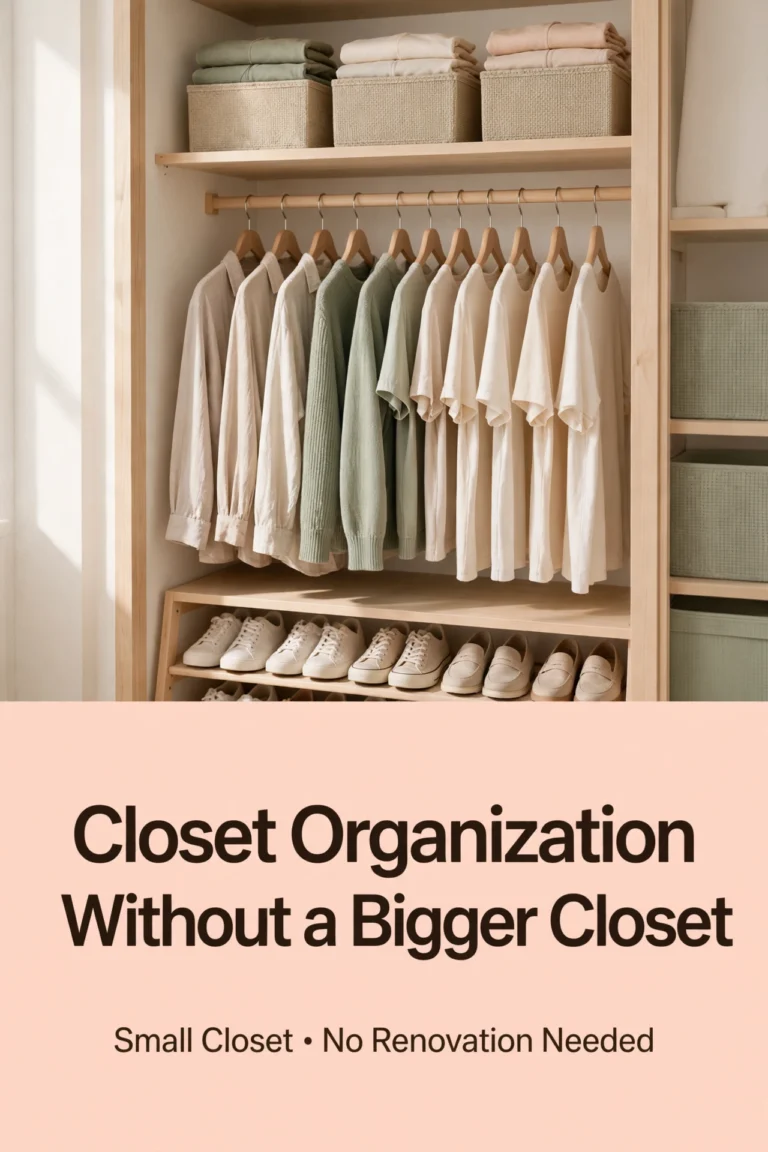
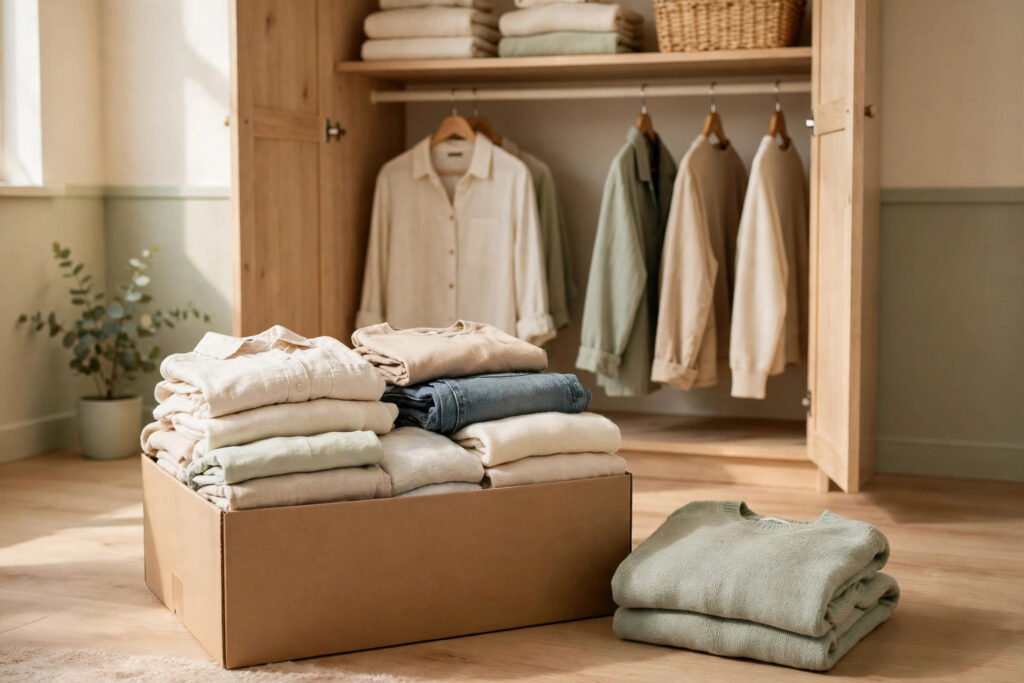
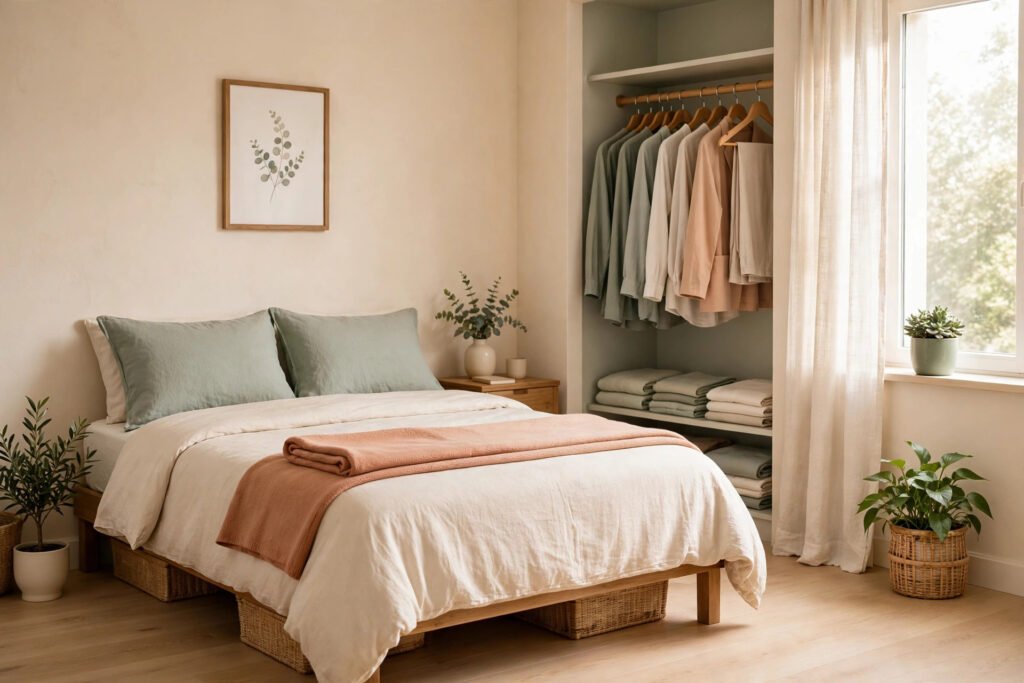
Matching slim hangers make a closet look twice as big. Mixed hangers hang clothes at different heights and waste inches between them. Slim velvet hangers are all the same shape, so clothes hang at the same height and pack closer together. A set of 30 costs about $10–$15, and that one change frees up 20 to 30 percent of the rail in most small closets.
What to buy: one pack of 30 slim velvet hangers (about $10–$15) and three small shelf baskets (about $5–$10 each) for scarves, belts, and off-season clothes. Where it goes: zone the rail everyday clothes on the left, work clothes in the middle, seasonal clothes on the right, and within each zone hang clothes from light to dark. Common mistakes: buying hangers but keeping everything, zoning by colour alone, and hanging heavy coats on slim hangers, which can bend. Try this today: swap ten hangers on one side of the rail for matching slim ones and push them together.

See also Pin 6: Closet Organization Without a Bigger Closet, and Pin 13: Closet Organization Ideas for Small Spaces.
3. Over-the-door organizers
The back of a door is a whole wall of storage that most renters never use, and it needs no screws at all. An over-the-door rack hooks over the top of the bedroom door or the closet door and hangs there by its own weight. It holds shoes, scarves, belts, and bags.
What to buy: a clear-pocket over-the-door organizer for about $10–$15. Clear pockets matter if you cannot see what is inside, the pockets become a second junk drawer. A shoe-rack version with larger pockets costs about $12–$18. Where it goes: on the inside of the closet door if you have one, or on the back of the bedroom door if you do not. Keep the things you reach for most often at eye level. Common mistakes: overloading it four to six pairs of shoes, plus scarves and belts, is the realistic limit. The second mistake is putting it on a door you open and close twenty times a day. Try this today: hang the organizer and fill only the top two rows with the shoes and scarves you wore this week.

4. A nightstand with a job
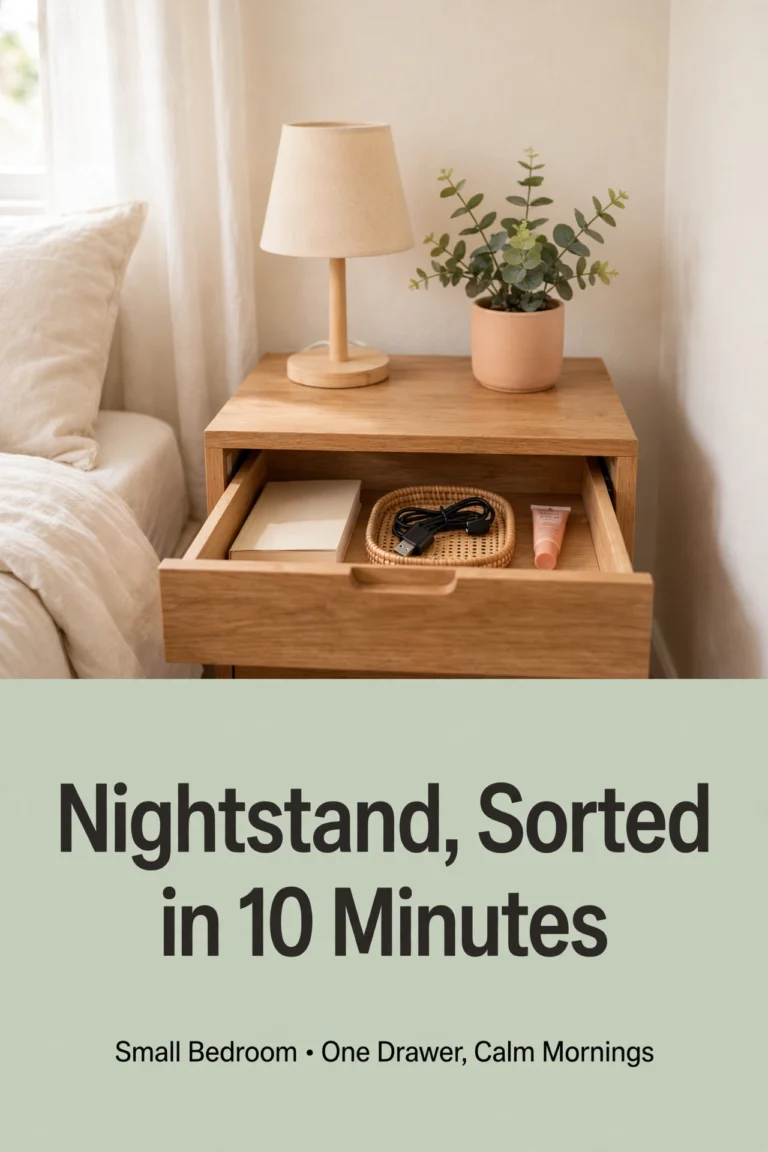
A nightstand should hold three things: what you use at night, what you charge, and one book. That is all. When the top holds seven things, the room feels crowded, even if the rest of the room is tidy.
What to buy: one small tray, about 8–10 inches across, for your phone and glasses (about $5–$10), and one drawer divider or small fabric box for the drawer (about $5–$8). You do not need a new nightstand. Where it goes: the tray goes on top, on the side nearest the bed, so your phone and glasses land in the same place every night. The drawer divider splits the drawer into sections for chargers, lip balm, and hand cream. Common mistakes: treating the nightstand as a second closet, and letting a charger cable live nowhere give it a clip on the back of the nightstand or a section of the divider. Try this today: take everything off the nightstand, put back only your phone, your glasses, and one book, and put the rest somewhere else.

See also the Batch 5 candidate: Nightstand Organization in 10 Minutes.
5. Baskets on top of the wardrobe
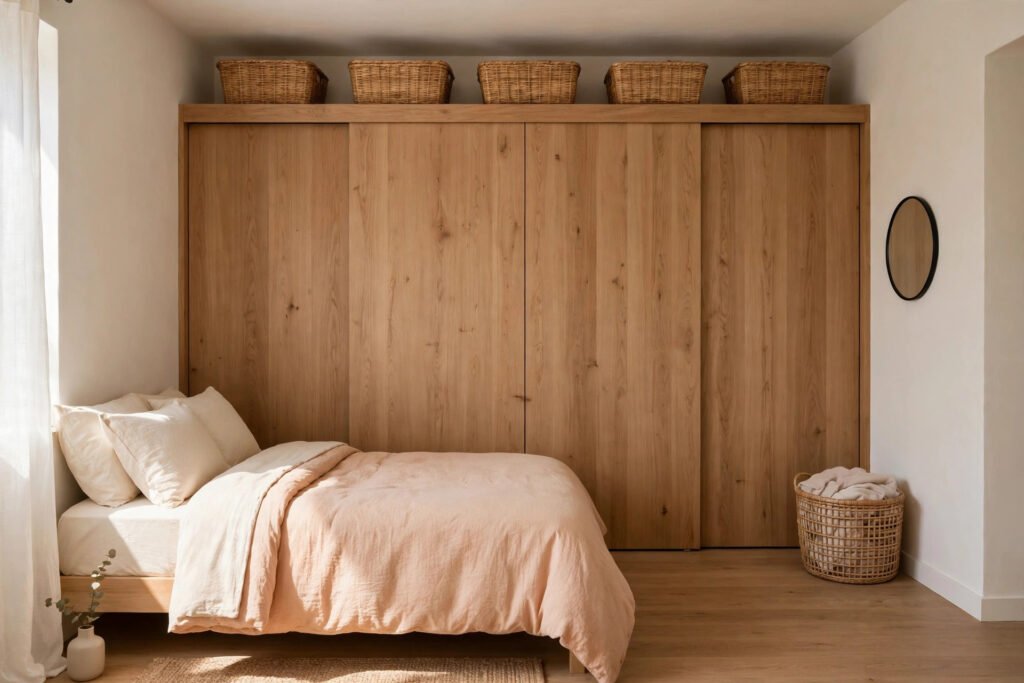
The top of a wardrobe is wasted space in most bedrooms, and it is the easiest space to use because it is already there. Two matching baskets up there hold out-of-season clothes or spare linens, and because they are above eye level, they need to look tidy.
What to buy: two matching woven or fabric baskets, about 12–15 inches wide and 10–12 inches tall, for about $8–$15 each. Measure the height between the top of the wardrobe and the ceiling first in some rentals that gap is only 10 inches. Where it goes: one basket holds out-of-season clothes, the other holds spare bedding or linens. Label the front of each basket so you can see it from the bed. Common mistakes: using the top of the wardrobe as a dumping ground, and storing things you need every week up there. Try this today: put one matching basket on top of the wardrobe with the spare bedding in it.

6. One in, one out
Small bedrooms stay tidy with a simple rule: when something new comes in, something old goes out. A new sweater means one old sweater is donated. New shoes mean one old pair leaves. This rule costs nothing, needs no storage, and does more than any container you can buy because the real problem is usually volume, not storage.
What to buy: nothing. You need one bag or box kept in the closet, marked “donate,” and a habit: when the bag is full, it leaves the house. Where it goes: the rule applies to clothes, shoes, bags, and bedding the four things that fill a small bedroom fastest. It does not apply to things you genuinely use up, like socks, or to the one or two sentimental items you keep on purpose. Common mistakes: applying the rule only to expensive purchases and ignoring the small things three cheap tops a month add up to 36 tops a year. The second mistake is a donation bag that sits in the closet for six months. Try this today: pick one item you have not worn in a year, put it in a donation bag, and put the bag by the door.
7. Fold vertically
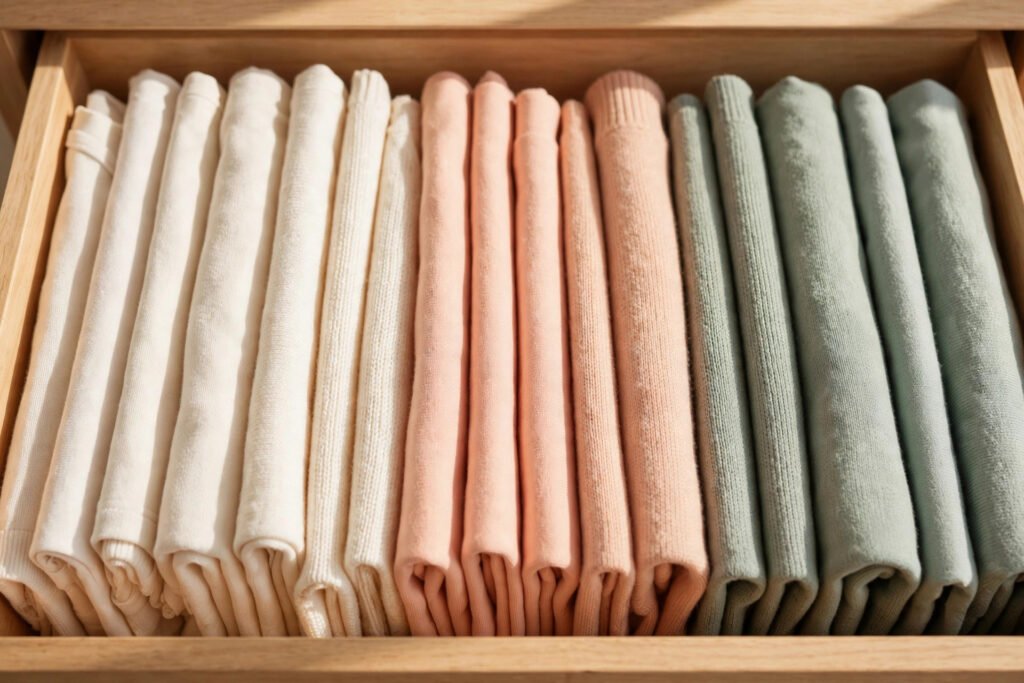
Fold clothes so they stand up in a drawer, like files in a filing cabinet. You can see every item at a glance instead of digging through a stack, and the drawer holds more. This is the cheapest idea in the post: it costs nothing and takes ten minutes to learn.
What to buy: nothing is required. If you want help keeping the rows upright, one drawer divider or a few small fabric boxes cost about $5–$10, and they stop the rows from falling over when the drawer is half empty. Where it goes: vertical folding works best for t-shirts, sweaters, jeans, and children’s clothes anything soft that holds a fold. Fold each item into a small rectangle about the height of the drawer, then stand the rectangles in rows. Common mistakes: folding the rectangles too tall for the drawer, so it will not close, and packing the rows so tightly that you cannot pull one item out. Leave a finger’s width of space at the end of each row. Try this today: take one drawer, fold everything in it vertically, and stand the items in rows.
Small bedroom layouts
The same seven ideas work in every small bedroom, but where you put things depends on the layout.
Bed against the wall. The bed is pushed against one wall with a narrow walkway on the other side. Put the under-bed boxes on the walkway side, not the wall side, so you can slide them out without moving the bed. Put the nightstand on the walkway side too.

The closet wall. One whole wall is a wardrobe or a built-in closet, and the bed faces it. This is the best layout for storage: the closet wall holds almost everything. Use matching hangers and zones on the rail, baskets on the shelf above it, and matching baskets on top.
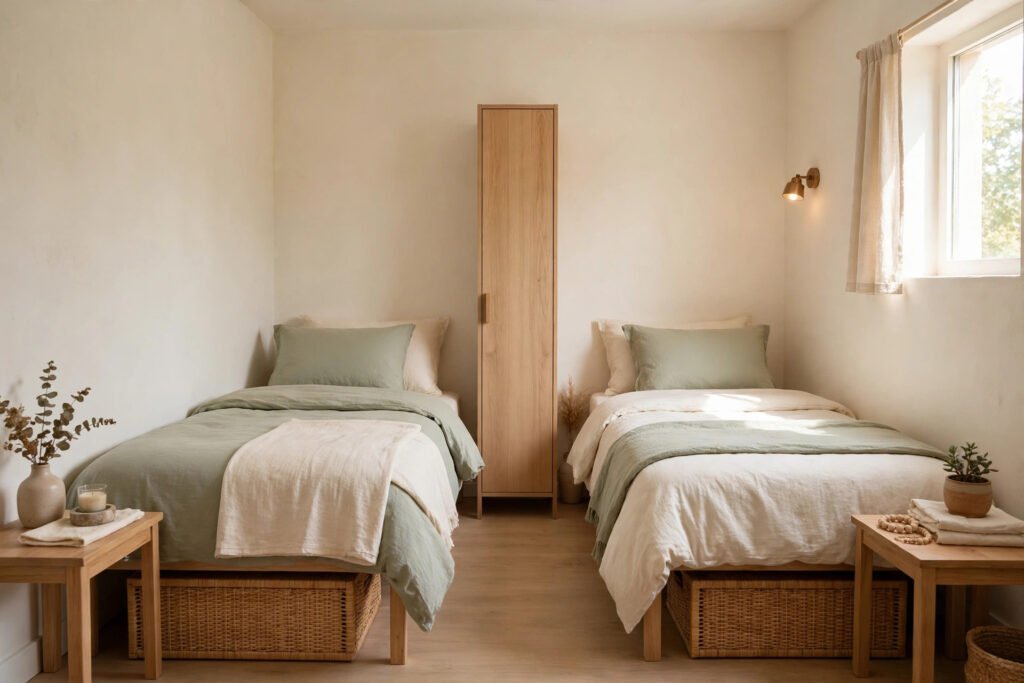
A shared room. When two people share a small bedroom, storage has to be split fairly, or one person’s things slowly take over. Give each person one side of the closet rail, one under-bed box, and one drawer and label them. Agree the one-in-one-out rule together, and agree that neither of you declutters the other’s things without asking.
What it costs in total
You do not need to buy everything at once. Prices below are approximate US prices for budget and dollar-store ranges, and they vary by store.
| Item | Approx. price |
|---|---|
| Slim under-bed boxes (x2) | $16–$30 |
| Slim velvet hangers (x30) | $10–$15 |
| Closet shelf baskets (x3) | $15–$30 |
| Over-the-door organizer (x1) | $10–$15 |
| Nightstand tray (x1) | $5–$10 |
| Drawer divider (x1) | $5–$8 |
| Wardrobe-top baskets (x2) | $16–$30 |
| Donation bag (x1) | $0 |
| Drawer dividers for folding (optional) | $0–$10 |
| Total for the full system | about $77–$148 |
If that total feels like a lot, buy hangers first ($10–$15), then two under-bed boxes ($16–$30), then the over-the-door organizer ($10–$15) about $36–$60 in total and let the rest wait a month.
The 15-minute version
Pick the closet rail. Take everything off it, put back only what you wore in the last month, and put the rest in a box marked “maybe” with today’s date. If you do not open the box in 30 days, donate it. That one step usually frees a third of the rail. Then, if you still have five minutes, fold one drawer vertically.
Frequently asked questions
Can I organize a small bedroom without buying anything?
Yes start with the free ideas. Declutter first, fold vertically, apply one-in-one-out, and zone the closet rail with the hangers you already own. Most small bedrooms feel better after decluttering and vertical folding alone.
My landlord does not allow any holes in the walls. What can I use instead?
Everything in this post. Over-the-door organizers hook over the door, under-bed boxes slide under the bed, and baskets sit on shelves and on top of the wardrobe. Removable hooks can hold light things, but check your lease first.
How many clothes should a small bedroom hold?
A useful test: if you cannot see every item in your closet and drawers without moving things, you have too many for the space. Aim for about 30–40 hanging items, two under-bed boxes, and one drawer per category.
What do I do with out-of-season clothes?
Wash them, fold them, and put them in a labelled under-bed box or a basket on top of the wardrobe not on the rail, where they take up space you need every day. When the season changes, swap the boxes.
How do I keep a small bedroom tidy once it is organized?
Two habits do almost all of the work. First, the 15-minute daily reset from our earlier post. Second, one-in-one-out: nothing new comes in without something old going out.
What to buy (and what to skip)
Buy: slim under-bed boxes, matching hangers, one over-the-door organizer, one drawer divider, two matching wardrobe-top baskets. Skip: a new wardrobe. In a small rental bedroom, better use of the existing closet beats new furniture almost every time. Skip matching container sets bought all at once buy two boxes, live with them for a week, then buy more only where it still feels messy.
Related pins
- Pin 6: Closet Organization Without a Bigger Closet
- Pin 10: Under-Bed Storage Ideas That Hide Clutter
- Pin 13: Closet Organization Ideas for Small Spaces