Nightstand Organization in 10 Minutes

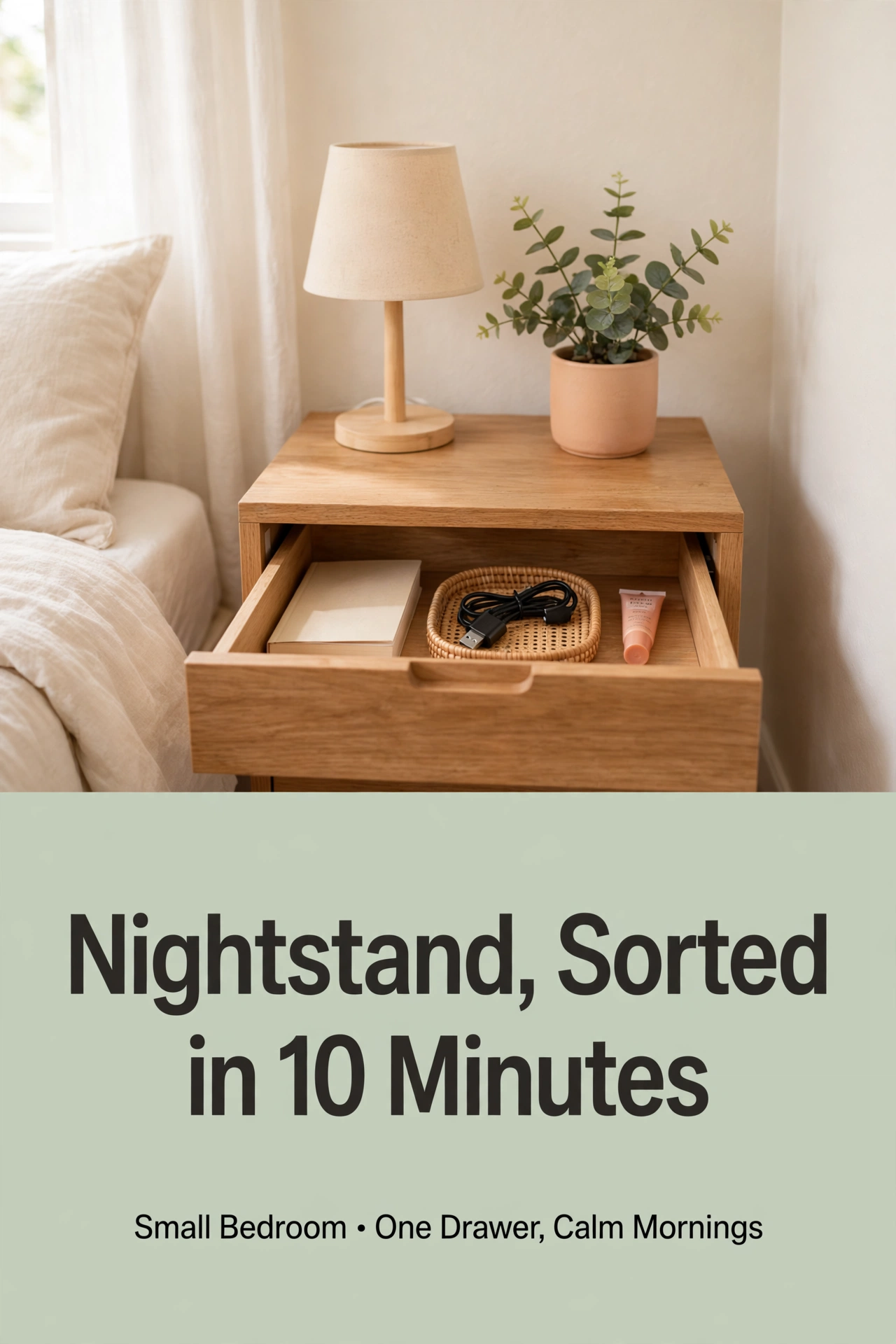
A tidy nightstand with a lamp, a book, a small tray and a glass of water. Everything you need at night, nothing you do not.
Introduction
A nightstand is the smallest piece of furniture in the bedroom, and the one that collects the most clutter. A phone charger, a glass of water, a book, a hand cream, a lip balm, three receipts, and a pair of earrings, and suddenly there is no room for the lamp. The ten ideas below fix that in ten minutes, not a weekend, and nothing here costs more than $20.
This post is the bedside companion to Blog Post 14, Bathroom Organization Ideas for Small Bathrooms. That post covers the bathroom, this one covers the last thirty centimetres of the bedroom, and the nightstand is where the day ends and the morning starts. Start with idea 1, the clear-out, because you cannot organise what you have not seen.
Nightstand organization is also a rising topic in this niche right now: “nightstand organization” is up about 35% year-on-year in Pinterest Trends (US, data to 31 Oct 2026), and it rose about 60% in the last week of that data, so this is the post Pin 18 will link to now that the website is live.
Before you buy anything
Do not buy a new nightstand, a set of matching boxes, or a drawer unit before you know what actually lives on the one you have.
1. Empty the whole nightstand. Take everything off the top and out of the drawer, and put it on the bed. Every charger, every book, every half-used cream, and every receipt. You need to see the whole pile before you decide what stays.
2. Sort it into three piles. Keep on the nightstand, keep in the drawer, and leave the bedroom. The third pile is usually the biggest: books you have finished, chargers for devices you no longer own, and samples you will never use.
3. Count the chargers. Most nightstands hold two or three chargers for one phone. Keep the short cable you use every night and move the rest to a drawer in another room.
Common mistake: buying a bigger nightstand to hold the clutter. A bigger surface collects more things, and you are back where you started in a month. The ten-minute clear-out, not a new purchase, is what fixes a nightstand.
Nightstand types
Open shelf nightstands have one shelf and no drawer. Everything is visible, so the rule is simple: only the things you use every night live here, and the rest goes in a basket under the bed or in the wardrobe.
One-drawer nightstands have a drawer under the top. The top holds the nightly essentials, and the drawer holds the rest. If the drawer has no dividers, add two or three small boxes, because a single open drawer becomes a junk drawer in a week.
Two-drawer nightstands give you more room, but the bottom drawer fills with things you do not need at night. Keep the top drawer for nightly items, and use the bottom drawer for spare bedding or out-of-season clothes, not for more clutter.
Wall-mounted or floating nightstands hang on the wall with no legs, so the floor stays clear and the room looks bigger. They usually have one drawer and a small top, so the same rules apply, but you need to be stricter about what lives on top.
Whichever type you have, the rule is the same: the top holds what you need between getting into bed and falling asleep, and the drawer holds the rest. If it does not fit that rule, it does not belong on the nightstand.
1. Clear it out completely
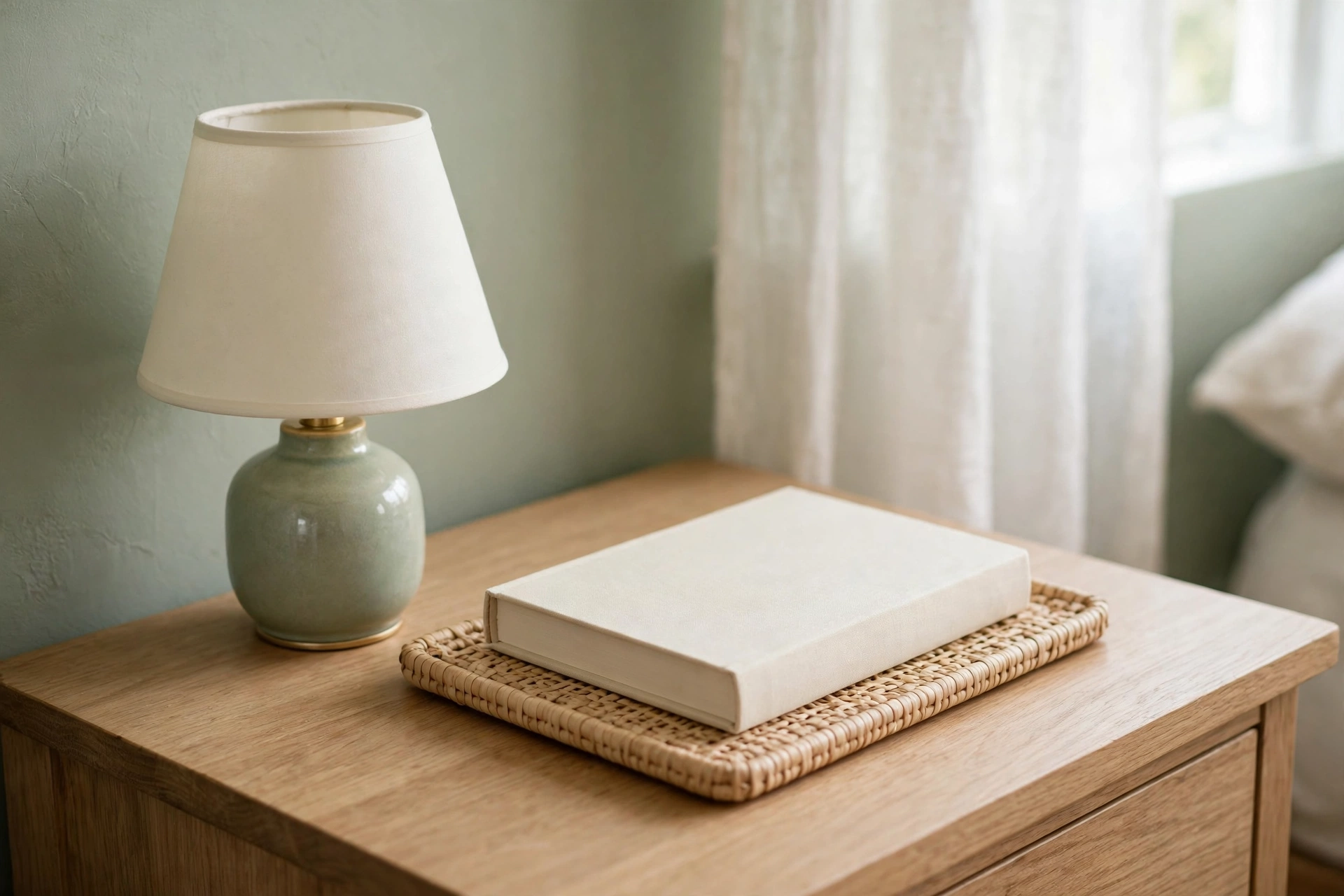
The clear-out every item off the nightstand and onto the bed, so you can see what you actually own.
What to buy: Nothing. A bin bag, a laundry basket, and ten minutes of your evening.
Where it goes: Everything comes off the top and out of the drawer. The keep pile goes back on the nightstand, the drawer pile goes in the drawer, and the leave pile goes in a bag to the right room or the bin.
Common mistake: Tidying around the clutter instead of removing it. Moving a pile of books from one side of the nightstand to the other is not organising. Everything comes off, and only what you need comes back.
Try this today: Take everything off the nightstand, sort it into three piles, and put back only the five things you used last night.
2. A small tray for the essentials
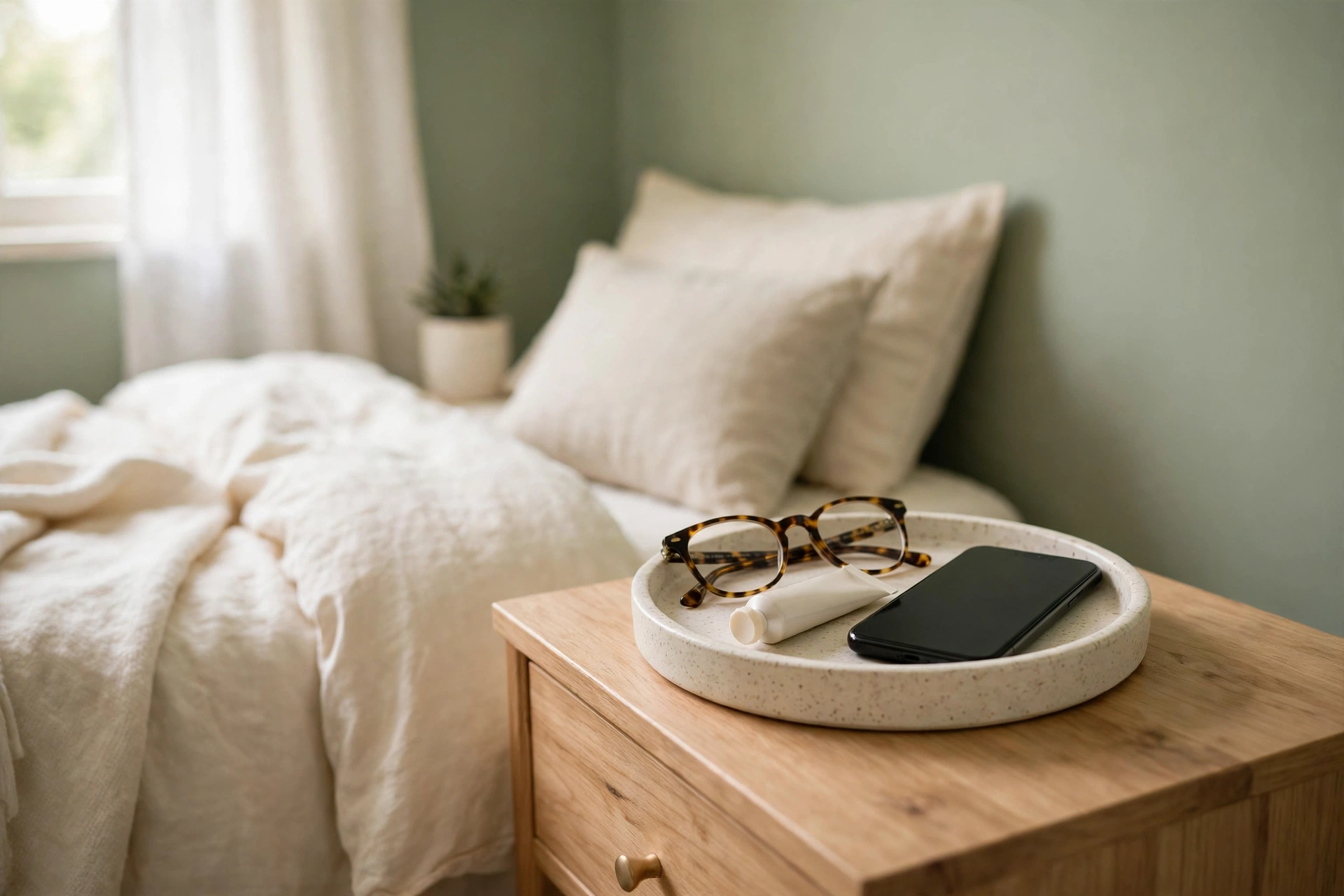
A small tray the nightly essentials in one place, so the top of the nightstand stays clear.
What to buy: One small tray, about $5–$10, in wood, ceramic, or metal. A shallow dish, a soap dish, or a small plate from the kitchen works just as well.
Where it goes: On the top of the nightstand, on the side furthest from the lamp. The phone, lip balm, hair tie, and earrings live in the tray. Nothing else goes in it.
Common mistake: Buying a tray that is too big for the nightstand, or filling it with things you use once a month. A tray should hold the four or five things you reach for in the dark, and nothing else.
Try this today: Put a small tray or a shallow dish on the nightstand, and move the phone, lip balm, and earrings into it.
3. Drawer dividers or small boxes

Drawer dividers or small boxes every item in the drawer has its own place, so nothing slides around.
What to buy: Drawer dividers or two or three small boxes, about $5–$10, in cardboard, bamboo, or plastic. A cut-down cereal box works just as well for a first try.
Where it goes: Inside the drawer. One box holds chargers and cables, one holds creams and medicines, and one holds a notebook and a pen. If there is no room for three boxes, use two.
Common mistake: Buying dividers before you know what the drawer holds. Measure the drawer, sort the contents, and then buy dividers that fit what you actually keep. A divider that does not fit is just more clutter.
Try this today: Put one small box or a cut-down cereal box in the drawer, and move the chargers into it.
4. A short cable and a cable clip
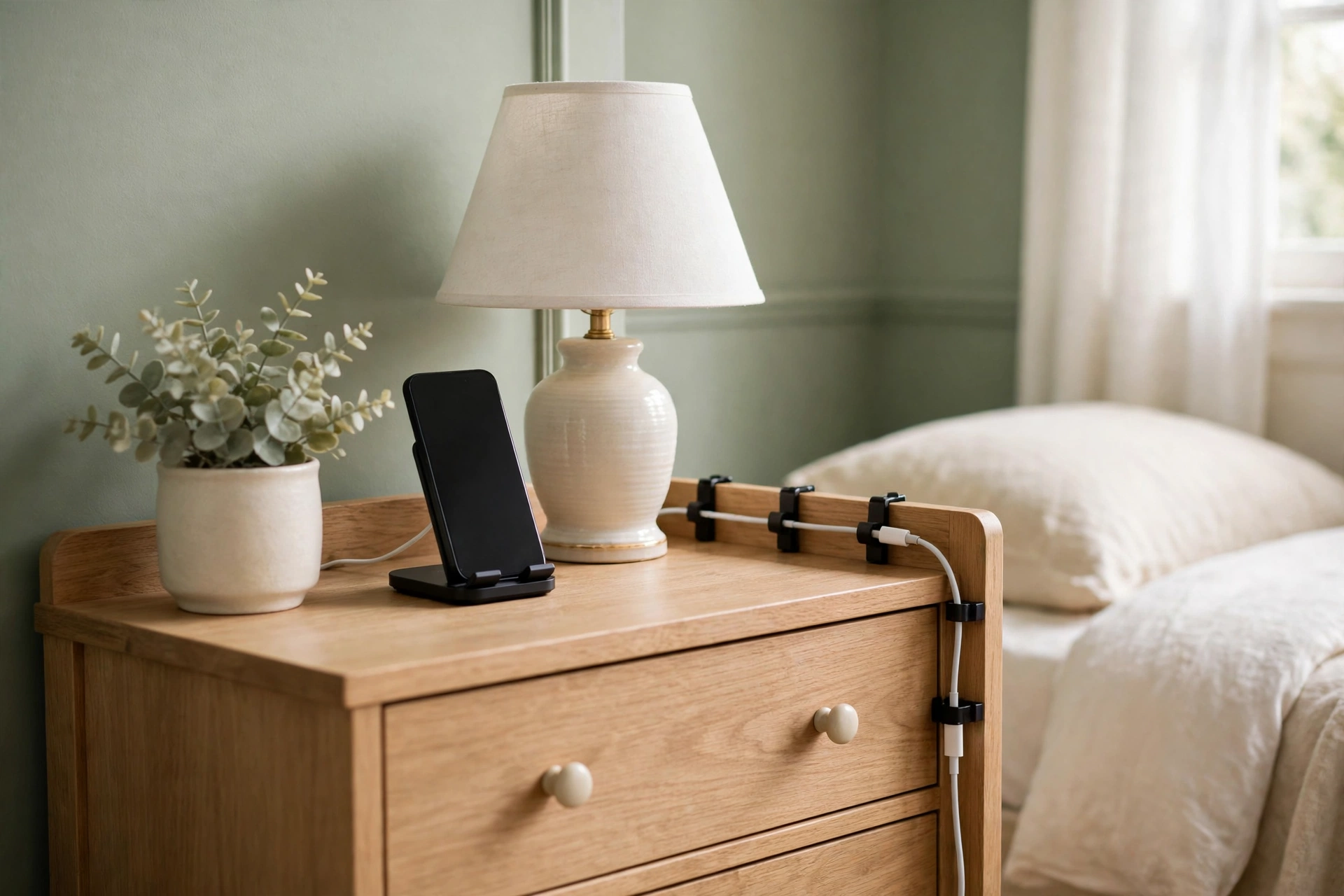
A short cable and a clip the charger stays where you can reach it, and the cable never falls behind the bed.
What to buy: One short charging cable, about 30 cm, about $5–$10, and a small adhesive cable clip, about $3–$4.
Where it goes: The cable clip sticks to the back or the side of the nightstand, and the short cable threads through it. The phone charges on the tray, not on the floor or under the pillow.
Common mistake: Using a long cable that falls behind the bed every night, or charging the phone under the pillow. A short cable and a clip cost a few dollars and end the daily search behind the bed.
Try this today: Swap the long cable for a short one, and clip it to the side of the nightstand.
5. One book, not a stack
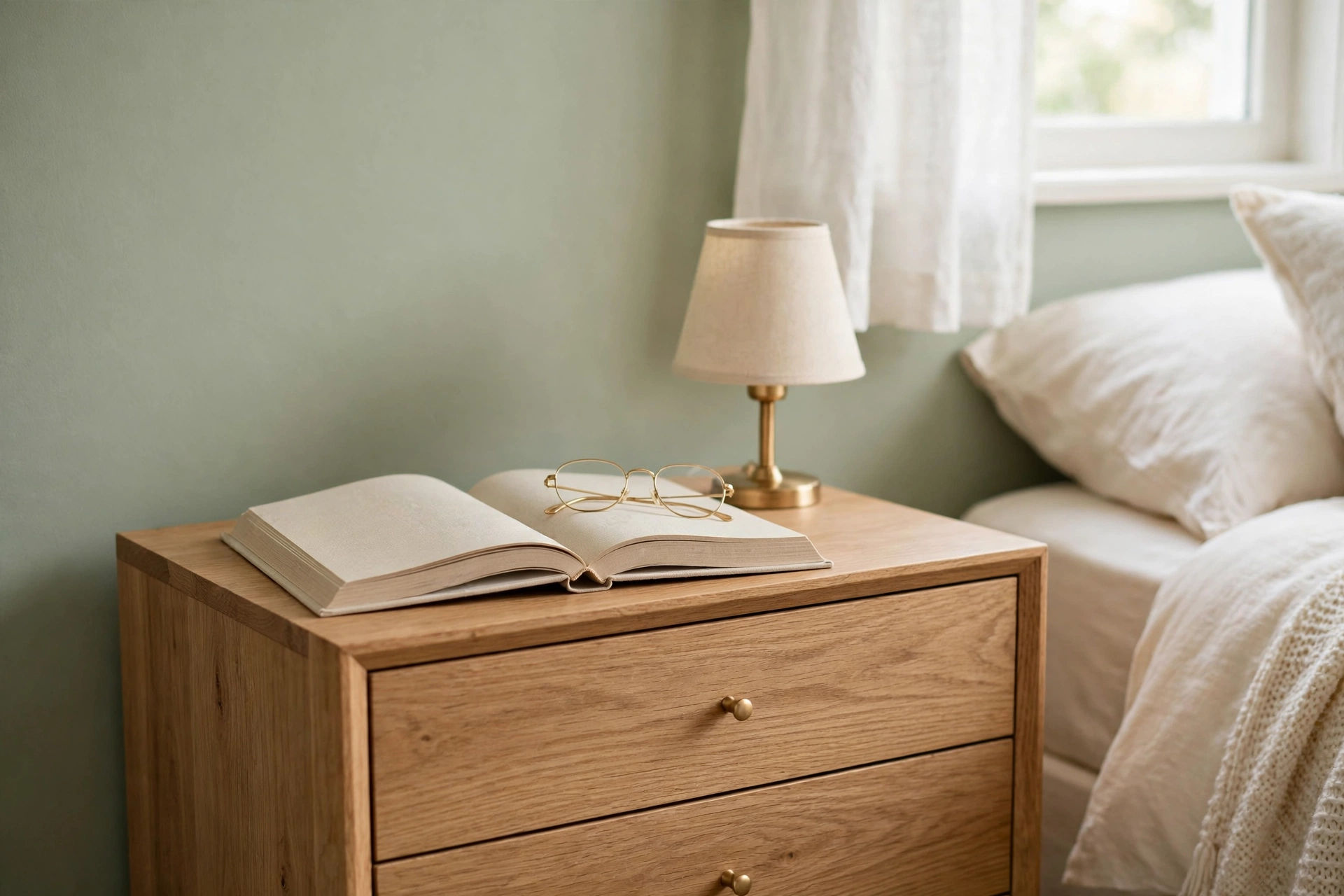
One book, not a stack the book you are reading now, and the finished ones back on the shelf.
What to buy: Nothing, or a small book stand for about $5–$8 if you like to keep the book open.
Where it goes: The book you are reading now lives on the nightstand, either on the tray or beside the lamp. Finished books go back to the bookshelf, and the book you will read next waits in the wardrobe or on the shelf.
Common mistake: Keeping a stack of five books on a nightstand that is barely wider than one book. A stack leans, slides, and falls behind the bed. One book stays put, and the stack lives where books belong.
Try this today: Put the finished books back on the shelf, and leave only the one you are reading now.
6. A small basket for personal items
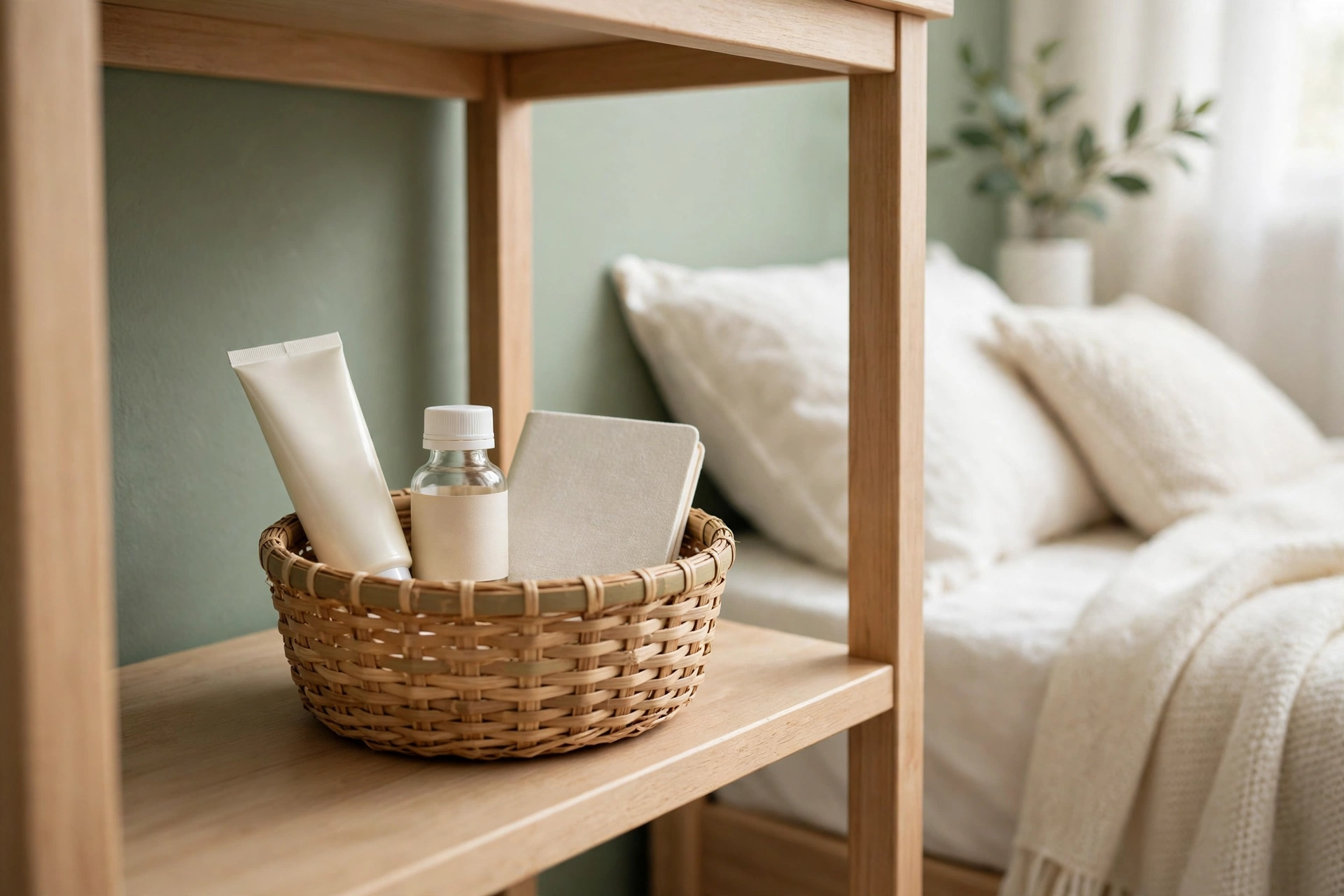
A small basket the things you use every night, but do not need to see, in one place.
What to buy: One small basket, about $5–$10, in seagrass, fabric, or plastic. A small box or a large mug works just as well.
Where it goes: In the drawer, or on the lower shelf of an open nightstand. It holds the things you use every night but do not need on display: hand cream, lip balm, a small notebook, and a pen.
Common mistake: Buying a basket that is too big, or putting things in it that belong in another room. A basket on the nightstand holds nightly items, not a second junk drawer.
Try this today: Put the hand cream, lip balm, and notebook in a small basket, and put the basket in the drawer.
7. A coaster for the water glass

A coaster a glass of water at night, and no ring on the wood in the morning.
What to buy: One coaster, about $2–$4, in cork, wood, or ceramic.
Where it goes: On the top of the nightstand, next to the lamp. The water glass lives on the coaster every night, and the coaster lives on the nightstand.
Common mistake: Putting the glass straight on the wood, or on a book, and waking up to a ring mark. A coaster costs a few dollars and saves the nightstand.
Try this today: Put a coaster on the nightstand, and put the water glass on it before bed.
8. A small bedside lamp

A small lamp warm light to read by, and a clear top so the lamp can be the star.
What to buy: One small bedside lamp, about $10–$18, or a clip-on reading light for about $5–$10 if the top is too small for a lamp.
Where it goes: On the back corner of the nightstand, furthest from the edge of the bed, so it cannot be knocked off in the night. The lamp stays put, and the tray and the book live in front of it.
Common mistake: Buying a lamp that is too big for the nightstand, so it crowds out the tray and the book. A small lamp, or a clip-on light, leaves room for the things you actually use at night.
Try this today: Move the lamp to the back corner of the nightstand, and clear everything in front of it.
9. The two-minute nightly reset
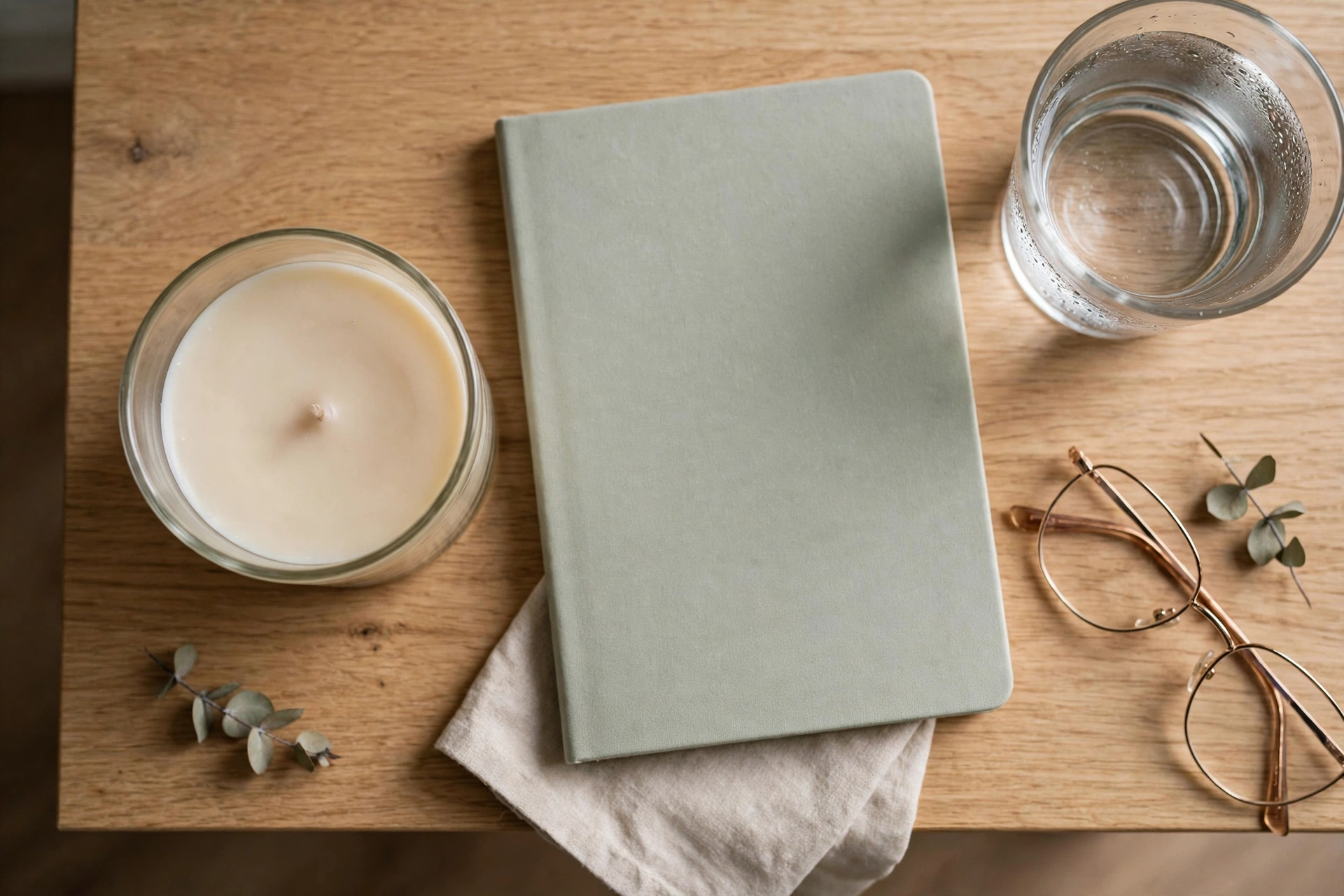
The nightly reset two minutes before bed, and the nightstand is ready for the morning.
What to buy: Nothing. This is a habit, not a product, and it costs nothing.
Where it goes: Every night, before you get into bed. Put the phone on the tray, the glass on the coaster, the book beside the lamp, and everything else in the drawer. Two minutes, and the nightstand is tidy.
Common mistake: Leaving the reset until the morning, when you are in a hurry and the clutter is the first thing you see. Two minutes at night saves ten minutes of tidying in the morning.
Try this today: Before you get into bed tonight, spend two minutes putting the nightstand back to how it looked this morning.
10. Rules for the nightstand
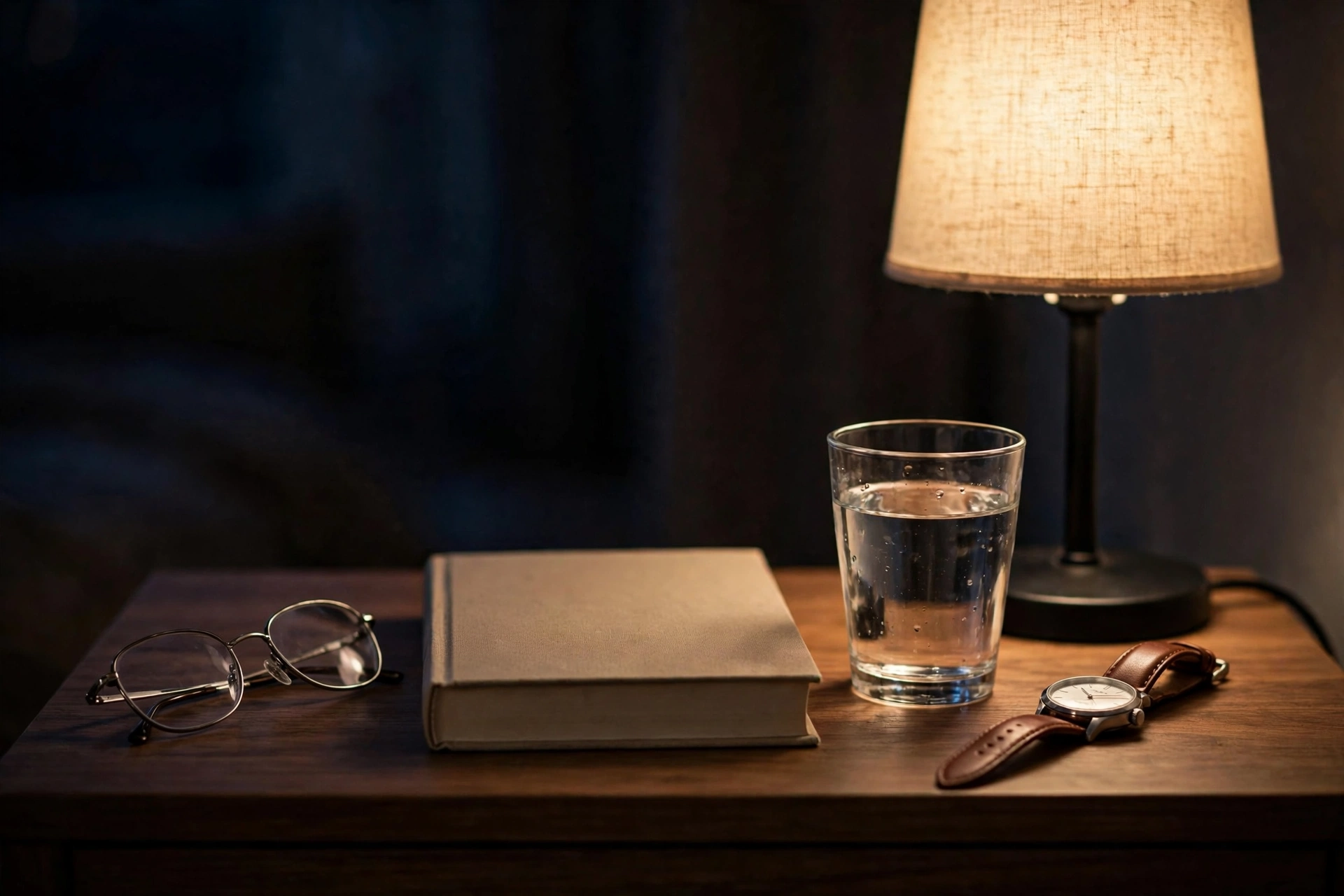
The rules a clear top, a full tray, and a drawer with dividers. That is the whole system.
What to buy: Nothing. Rules are free, and they are what keep the nightstand tidy after the ten-minute clear-out.
Where it goes: On the fridge, or in your phone. Three rules: only five things live on the top, everything else lives in the drawer, and nothing stays on the nightstand that you have not used in a week.
Common mistake: Thinking the clear-out is the whole job. A clear-out without rules lasts a week. A clear-out with three rules lasts until you move house.
Try this today: Write the three rules on a note and stick it on the fridge. Five things on top, the rest in the drawer, and nothing you have not used in a week.
What it costs in total
| Item | Approximate US price |
|---|---|
| Small tray for essentials | $5–$10 |
| Drawer dividers or small boxes | $5–$10 |
| Short cable + cable clip | $8–$14 |
| Small basket for personal items | $5–$10 |
| Small bedside lamp | $10–$18 |
| Coaster for the water glass | $2–$4 |
| Book stand (optional) | $5–$8 |
| Clearing, sorting, rules, reset | $0 |
| Total, all ten ideas | about $40–$74 |
The starter set under $25: Buy the tray ($5–$10), the drawer dividers or small boxes ($5–$10), and the short cable ($5–$10). That is roughly $18–$34 at the top end, or under $25 if you use a dish from the kitchen as the tray and a cut-down cereal box as the divider. Add the lamp and the basket only if the nightstand asks for them.
The 10-minute nightstand reset
If you only have ten minutes today, do this: take everything off the nightstand, sort it into three piles, put the five nightly essentials back on the top, and put the rest in the drawer. That is the whole list in miniature. Ten minutes, one nightstand, and the bedroom is back to calm.
FAQ
Do I need to buy a new nightstand?
No. The ten-minute clear-out works on any nightstand, and the tray and dividers cost less than $25. A new nightstand is the last resort, not the first step.
How many things should live on the nightstand?
Five: a lamp, a book, a water glass, a phone, and a small tray for the little things. Everything else lives in the drawer.
What if I share a bed and we have one nightstand?
Each person gets a small tray, one on each side of the lamp. The drawer is split with a divider, one side each. The rules stay the same: five things on top per person, and the rest in the drawer.
Will the two-minute nightly reset really keep it tidy?
Yes, if you do it every night. Two minutes before bed, and the nightstand never builds up enough clutter to need another clear-out. Miss a week, and you need ten minutes again.
How do I keep the drawer tidy after the first week?
Three rules. First, the two-minute nightly reset, every night. Second, one drawer sort a month, on the same day you change the sheets. Third, the five-things rule for the top, so the drawer never becomes the overflow for the top.
Keep it going
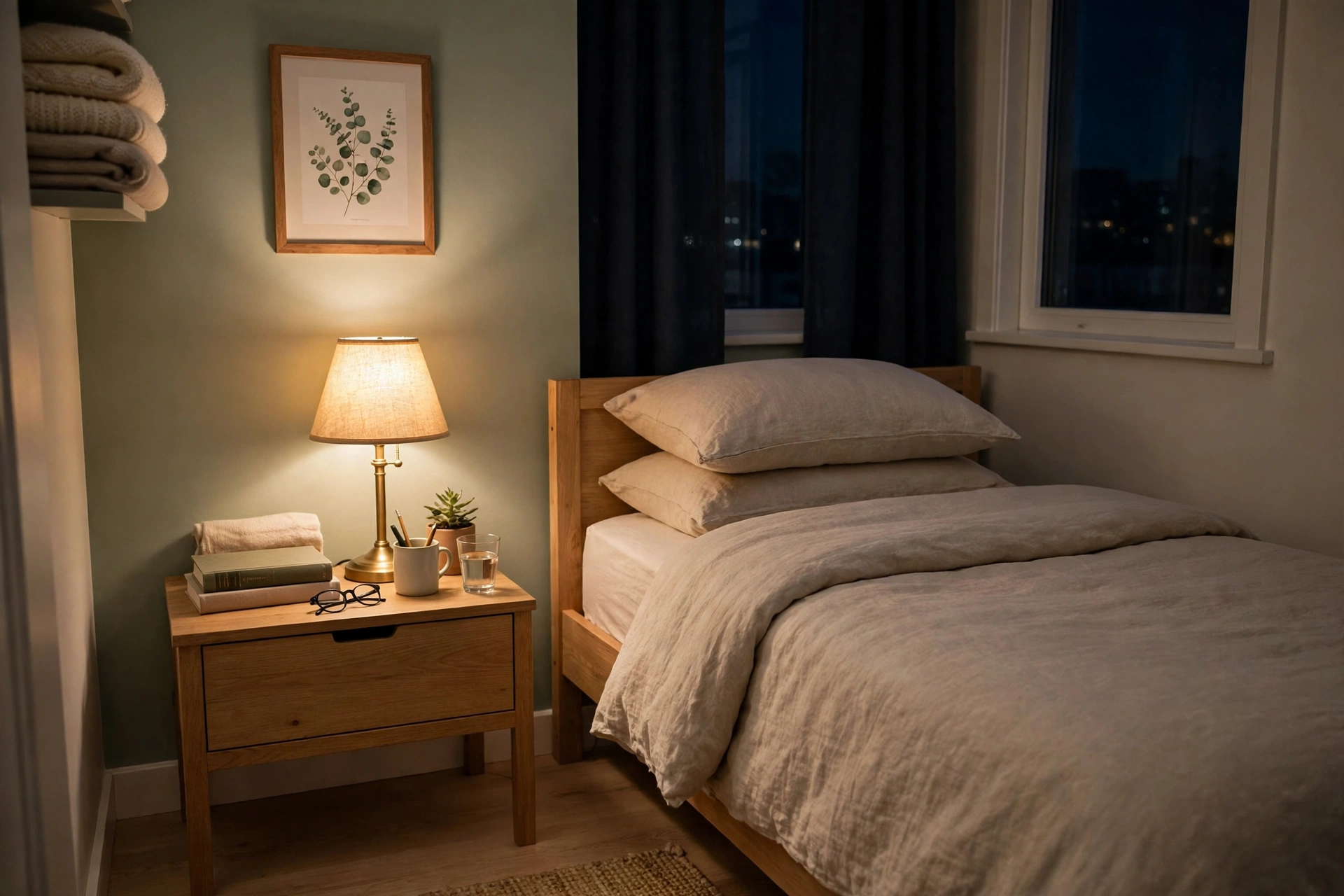
The finished nightstand clear top, full tray, and a drawer with dividers. Ten minutes to set up, two minutes a night to keep.
A nightstand stays tidy when the top holds five things, the drawer holds the rest, and the reset takes two minutes. Start with the clear-out today, and the bedroom will follow.
Related pins
- Pin 14: Bathroom Organization Ideas for Small Bathrooms
- Pin 4: Small Bathroom Organization Ideas
- Pin 16: Cleaning List by Room, Step by Step
- Pin 3: 15-Minute Daily Reset Routine
- Pin 15: Home Organization Hacks That Actually Work