Closet Organization Without a Bigger Closet
Introduction
A small closet does not need to be bigger. It needs a system. Most small closets feel full for the same reason: everything was hung where there was a gap, not where it belongs winter coats beside summer dresses, one good shirt buried behind five you never wear, and the top shelf a pile you are afraid to touch.
The ten ideas below each cost under $20, need no drilling, and can be done in one afternoon. They are written for renters nothing here damages a wall, a rail, or a deposit. Start with the two ideas that match your biggest daily frustration, usually the hanging rail and the top shelf, and add the rest over the next week, one zone at a time. Prices are approximate US budget-store prices in 2026.
Closet organization is also the strongest rising topic in this niche right now: “closet organization ideas small space” is up about 400% year-on-year in Pinterest Trends (US, data to 31 Oct 2026), so this is the post Pins 6 and 13 will link to when the website goes live.
Before you buy anything
Do not buy a matching set of boxes first. Boxes bought before you know what you own become clutter themselves.
1. Empty one zone at a time. Take everything off the rail onto the bed. Try on the “maybe” pile if it does not fit, you do not love it, or you have not worn it in a year, it leaves. Put “maybe” items in a dated bag; unopened in 30 days, donate or bin it.
2. Group before you contain. Put like with like on the bed first: all the work clothes together, all the everyday clothes together, all the seasonal clothes together. Only then decide what size box each group needs.
3. Measure the closet. Measure the rail length, the height from the rail to the shelf above it, and the depth of the shelf. A box that is one inch too wide is a box you cannot use.
Common mistake: buying a full matching set on day one. Buy two boxes, live with them for a week, then buy more only for the zone that still feels messy.
Small closet layouts
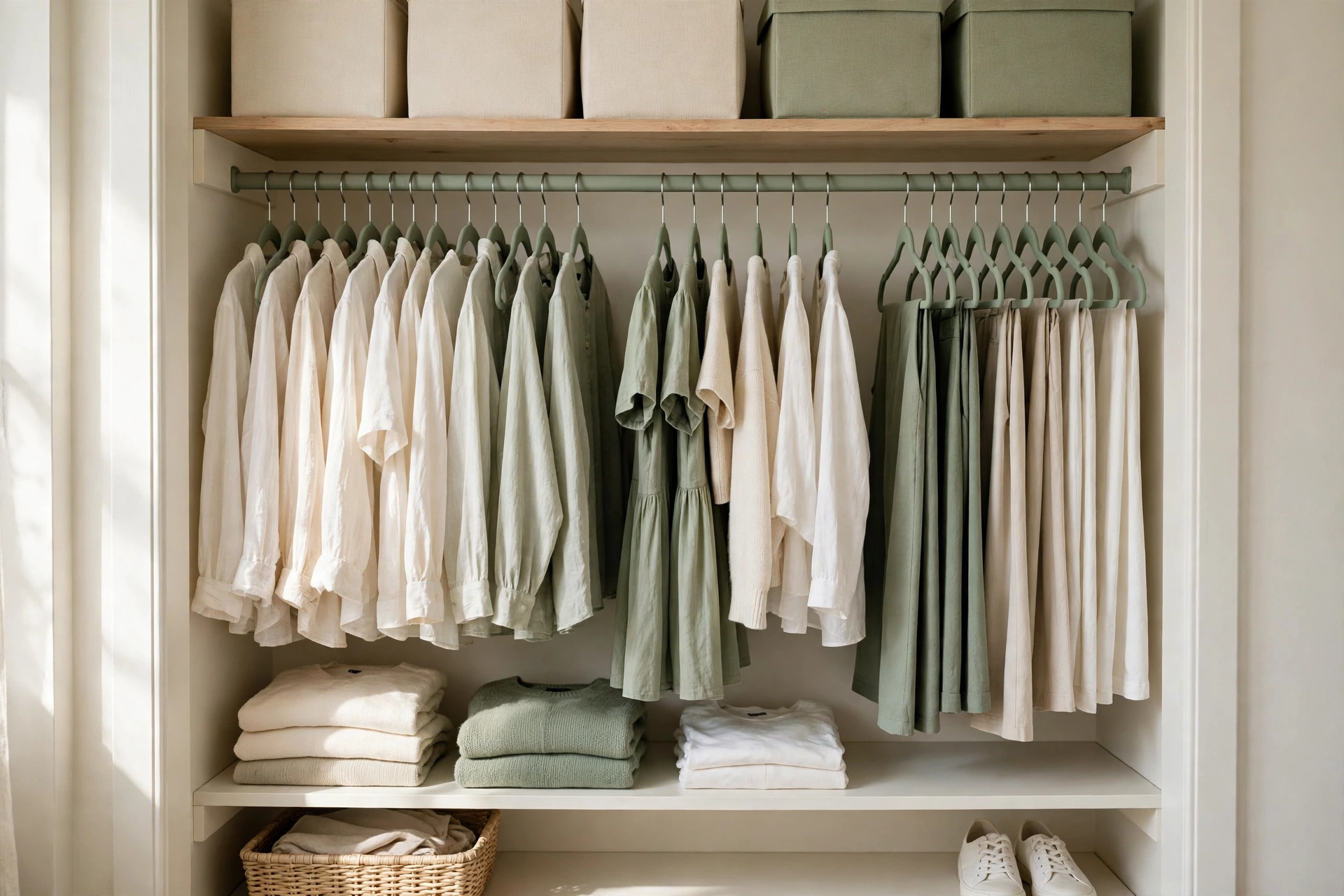
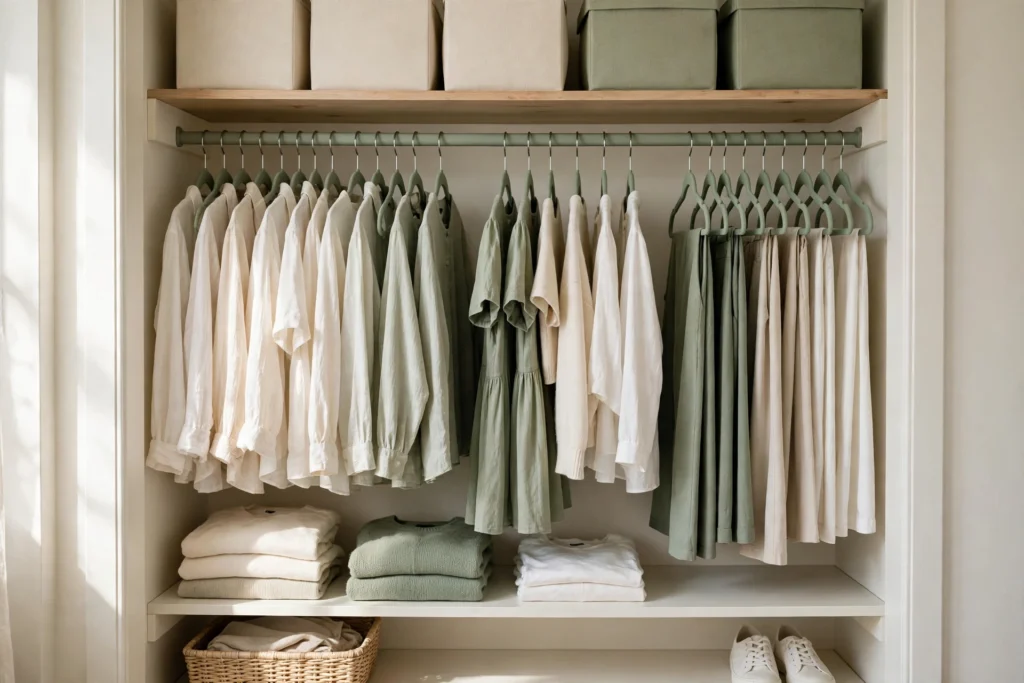
One-rail closets have a single hanging rail and one shelf above it, often in a studio or a small flat. Hanging space is scarcest here, so anything that doubles the rail or uses the shelf wins: matching slim hangers, a second rail below, and shelf boxes.
Closets with a deep top shelf hide things at the back. That is where labelled boxes earn their place: one box per group, pulled out like a drawer, so nothing is lost behind the front row.
Closets with no doors, or sliding doors are always visible, so matching hangers and boxes matter more but the system is the same: one zone per section, heavy things low, daily things at eye level.
Whichever shape you have, store things where you use them: everyday clothes at eye level, work clothes together, seasonal clothes on the top shelf, and shoes on the floor in one row.
1. Matching slim hangers
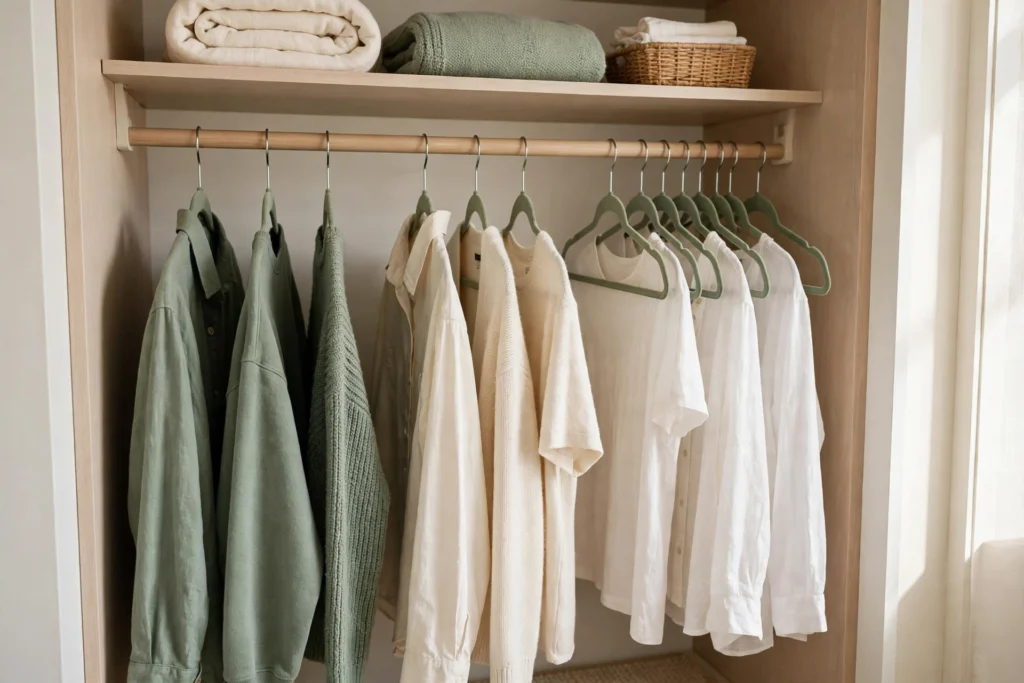
What to buy: One pack of slim velvet hangers, about $8–$12 for 20–30 hangers. Slim hangers take up about half the space of thick plastic ones.
Where it goes: On the rail, one hanger per item, clothes grouped by type and then by colour. The rail holds more, and nothing slides off onto the floor.
Common mistake: Keeping the mixed bag of wire, plastic and wooden hangers you collected over the years. Mixed hangers hang at different heights, and clothes slip off the wire ones.
Try this today: Replace ten hangers with slim matching ones and hang your ten most-worn items on them.
2. Shelf boxes on the top shelf

What to buy: Two or three fabric shelf boxes, roughly 10–12 inches wide, about $5–$8 each, or $12–$18 for a set of three. Labels on the front, not the top.
Where it goes: On the top shelf, one box per group seasonal clothes in one, spare bedding in another, accessories in a third. Pull a box out like a drawer instead of reaching into a pile.
Common mistake: Buying boxes too tall for the shelf, and labelling them before you have lived with the system for a week. Live with the groups first, then label what stays.
Try this today: Empty the top shelf, group what was on it into piles, and put each pile in a box.
3. A second rail below
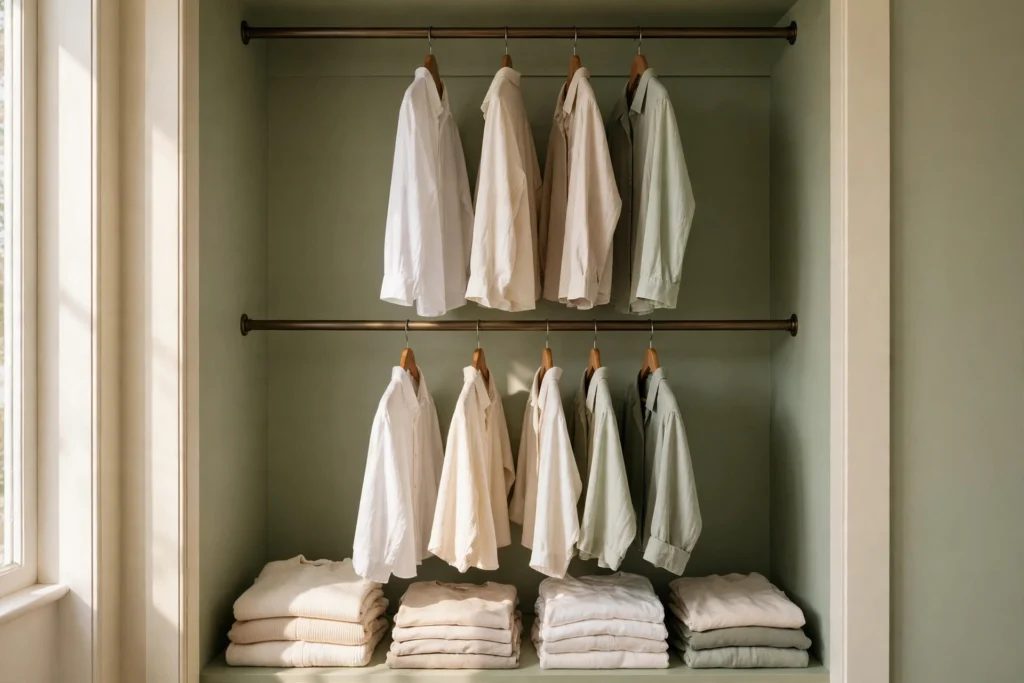
What to buy: One hanging rail extender or a tension rod, about $8–$12. A freestanding double rail costs about $15–$18 and needs no fixings at all.
Where it goes: Below the main rail, at about waist height. Short items shirts, blouses, folded trousers hang on the lower rail, longer items stay on the top one.
Common mistake: Hanging long coats on the lower rail so they bunch on the floor. The lower rail is for short items only.
Try this today: Hang one tension rod below the main rail and move five shirts onto it.
4. Zones: everyday, work, seasonal

What to buy: Nothing. Zones are free a label or two, about $2, is all you need.
Where it goes: Everywhere. Give every section a job: the left of the rail is for everyday clothes, the middle is for work, the top shelf is for seasonal. Nothing lives on the rail “for now”.
Common mistake: Making too many zones. Three or four zones per closet are enough: everyday, work, seasonal, and accessories.
Try this today: Pick one section the left third of the rail and give it one job. Move everything else off it.
5. Drawer dividers for the small stuff
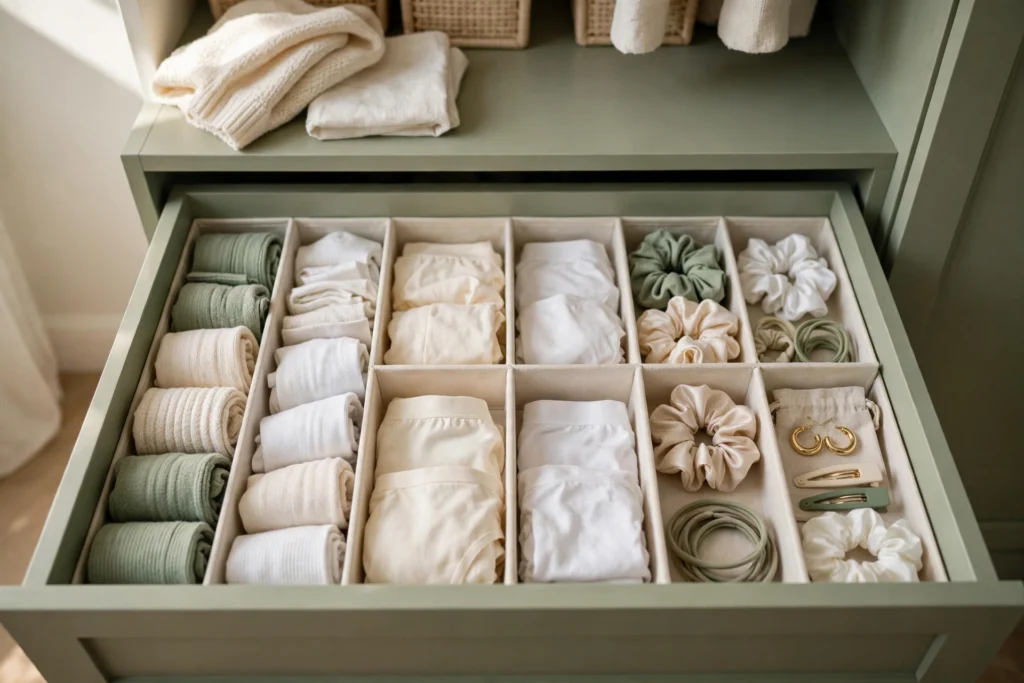
What to buy: One set of small drawer dividers or a fabric drawer organizer, about $5–$10. A cutlery tray from the kitchen works just as well and costs about the same.
Where it goes: In the closet drawer, or in a small storage unit beside the closet. Give it sections: socks in one, underwear in another, belts and scarves in a third.
Common mistake: Organizing the drawer without emptying it first. You will just be tidying around the things that should have left.
Try this today: Empty the closet drawer onto the bed, throw out five things without thinking about it, and put the rest in a divided tray.
6. One basket per person, or per category

What to buy: One small basket per category, about $3–$5 each, plus a label maker or masking tape and a pen, about $2.
Where it goes: On a shelf or in the cupboard, one basket each. Everything in that category lives in its basket, and the basket comes out and goes back as one unit.
Common mistake: Making the baskets too big. A small basket forces a choice about what you actually use; a big one just becomes another drawer.
Try this today: Give gym clothes one small basket and accessories another, and move everything else out of them.
7. Hooks on the door
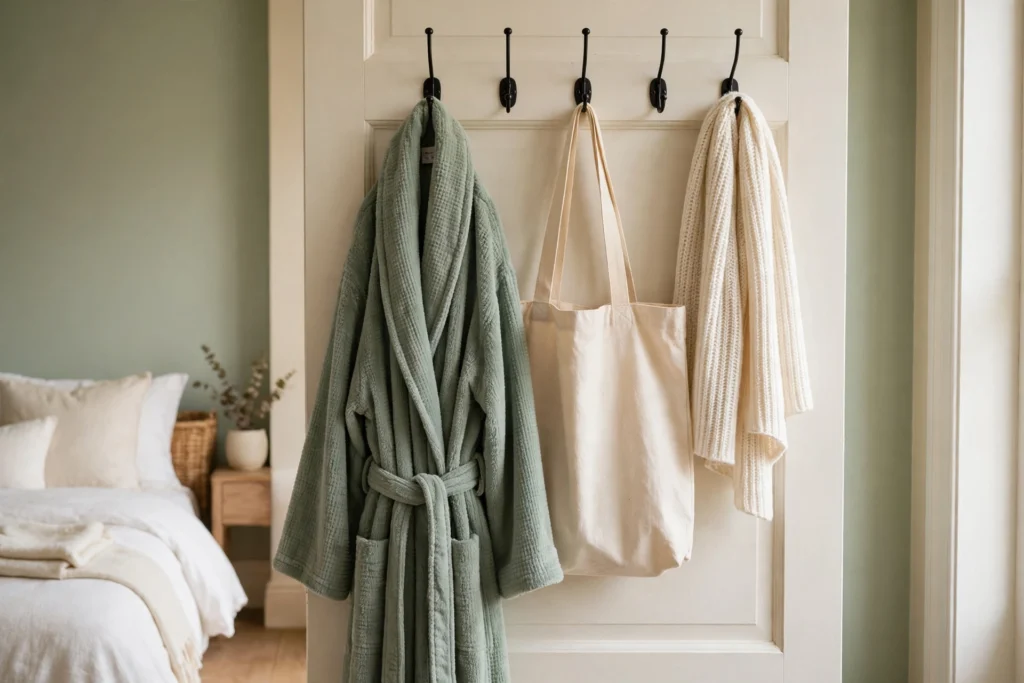
What to buy: One over-door hook rail or a pack of adhesive hooks, about $4–$8. Over-door hooks need no fixings at all and lift off when you move out.
Where it goes: On the back of the closet or bedroom door, where tomorrow’s outfit, a bag and a scarf hang free and the door still closes.
Common mistake: Hanging items so long they catch on the floor, and sticking adhesive hooks to a dusty surface, which is why they fall off a week later. Wipe the surface dry first, and wait a day before hanging anything heavy.
Try this today: Hang two hooks on the back of the door and lay out tomorrow’s outfit on one of them tonight.
8. A shoe row on the floor
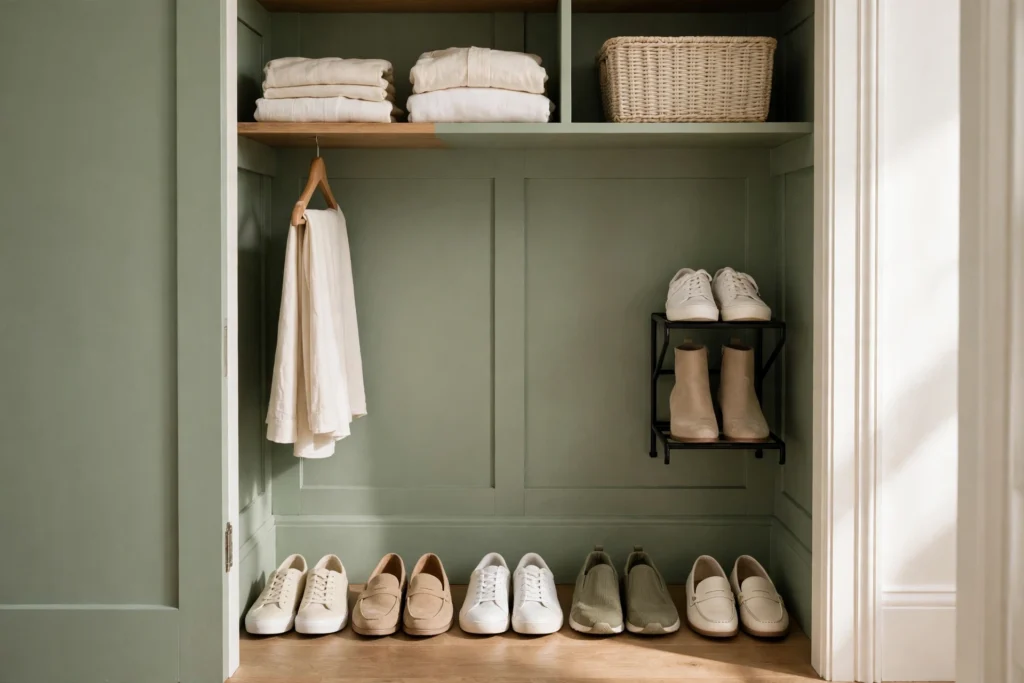
What to buy: One small two-tier shoe rack, about $10–$15, or a pair of shoe organizers for about $5–$8. The rack is the system it costs almost nothing.
Where it goes: On the closet floor, in one row. The pairs you wear most often go at the front, the rest behind them or on the rack.
Common mistake: Keeping six pairs for one season “just in case”. Two or three pairs in regular use, plus one spare, is enough for a small closet. The rest are just taking up floor space.
Try this today: Line up every pair of shoes in the closet in one row and count them as you go.
9. A “wear again” hook

What to buy: One hook or a small valet hook, about $3–$6. The hook is the system it costs almost nothing.
Where it goes: On the side wall of the closet or the back of the door. Anything worn once but still clean hangs here, and it gets worn again before anything fresh comes out.
Common mistake: Letting the “wear again” pile grow into a second closet. If it has more than three items on it, something needs washing or putting away.
Try this today: Put one hook in the closet and move the shirt you wore today onto it instead of the chair.
10. The seasonal swap: one box, twice a year

What to buy: One large labelled box, about $6–$10, plus a label, about $1. The box is the system it costs almost nothing.
Where it goes: On the top shelf or under the bed, holding the out-of-season clothes. Twice a year, swap the box: winter clothes in, summer clothes out, and the rail only ever holds this season.
Common mistake: Swapping everything at once on a day you do not have time for. Do it in one hour, one zone at a time, and stop when the timer ends.
Try this today: Put the clothes you have not worn this season into one box and move it to the top shelf.
What it costs in total
| Item | Approximate US price |
|---|---|
| Slim hangers, pack of 20–30 | $8–$12 |
| 2–3 fabric shelf boxes | $12–$18 |
| Second rail / tension rod | $8–$12 |
| Drawer dividers or organizer | $5–$10 |
| 2 small baskets + labels | $8–$12 |
| Over-door hooks | $4–$8 |
| Two-tier shoe rack | $10–$15 |
| “Wear again” hook | $3–$6 |
| Seasonal box + label | $6–$10 |
| Zones and labels | $0–$2 |
| Total, all ten ideas | about $64–$105 |
The starter set under $35: Buy the slim hangers ($8–$12), two shelf boxes ($12–$18), and the over-door hooks ($4–$8). That is roughly $24–$38, and it fixes the rail, the top shelf, and the door. Add the second rail and the shoe rack next week, and the rest when a specific frustration appears.
The 15-minute version
If you only have 15 minutes today, do this: take five things off the rail that you have not worn in a year, put the daily clothes in one row at eye level, and put the small stuff in one divided tray. One section done is better than a whole closet planned and never started.
FAQ
Do these ideas work in a rental?
Yes. Nothing needs drilling, screws, or permanent changes rails hang by tension or stand on the floor, hooks peel off or hang over the door, and boxes just sit on the shelf.
How much should I spend in total?
Each idea is under $20, and the full set is about $64–$105. The starter set hangers, two boxes, and hooks is about $24–$38, and that is enough to feel the difference.
What if my closet is just one rail and one shelf?
Then start with the slim hangers and the shelf boxes. Together they double the usable space on one rail without a single fixing, and the zones still work one rail, three groups, one box each.
Should I buy a whole matching set of boxes?
No. Buy two boxes, live with them for a week, then buy more only for the zone that still feels messy. Boxes bought before you know what you own become clutter themselves.
How do I keep it tidy after the first week?
Two habits. First, one-in-one-out: when a new item comes in, an old one leaves. Second, the “wear again” hook and the seasonal swap the rail only ever holds this season, and the chair stays empty.
Keep it going

A small closet feels bigger when every item has a place and every place is easy to reach. Start with one section today.
Related pins
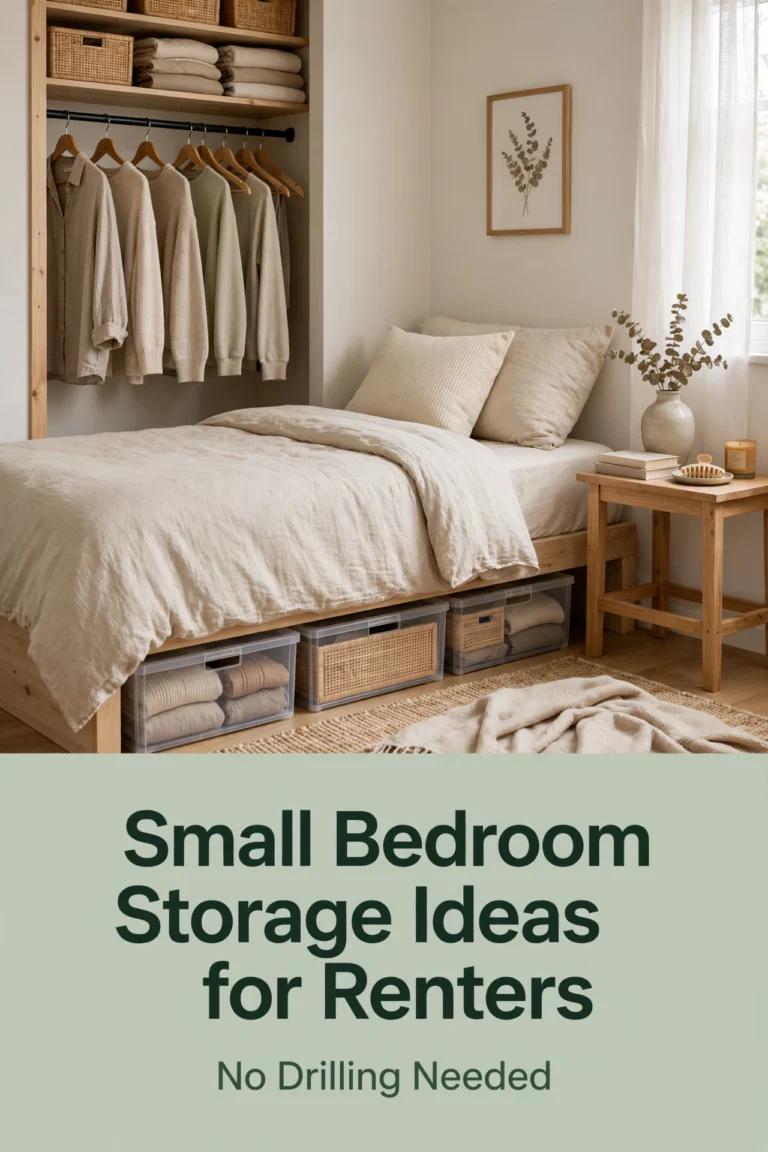
- Pin 2: Small Bedroom Storage Ideas for Renters No Drilling Needed
- Pin 10: Under-Bed Storage Ideas That Hide Clutter
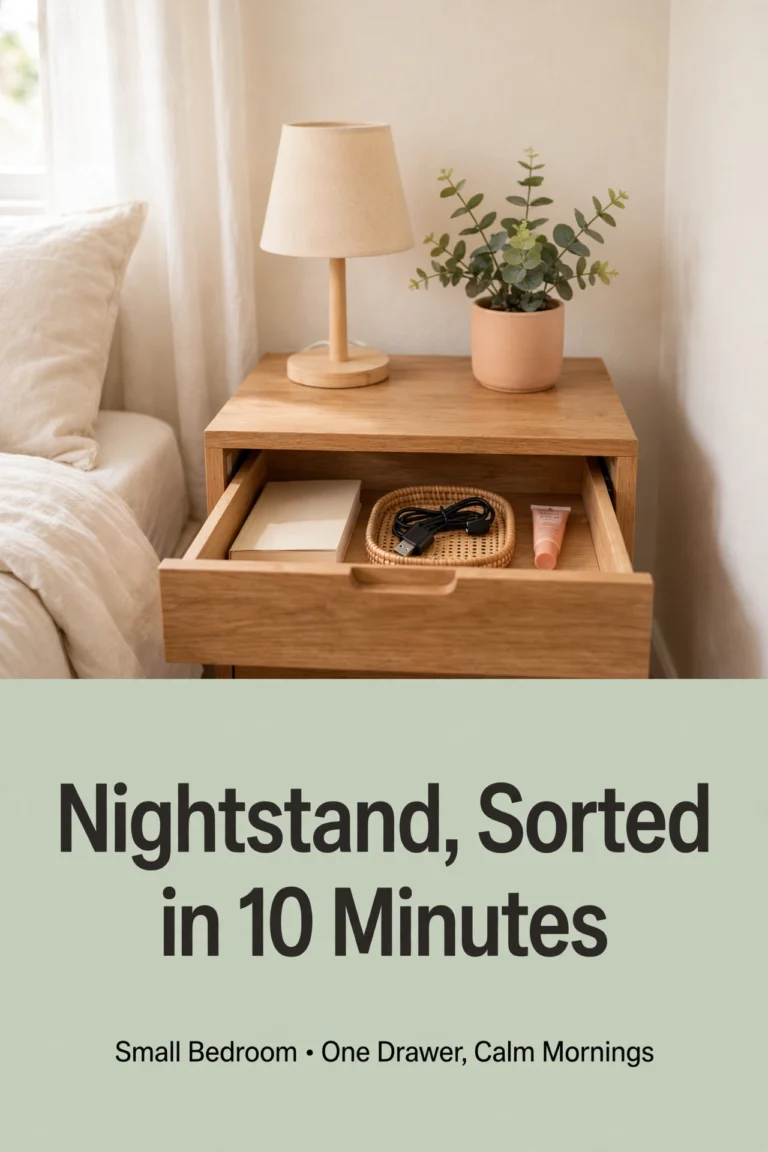
- Pin 18 (Batch 5): Nightstand Organization in 10 Minutes
- Pin 13: Closet Organization Ideas for Small Spaces
- Pin 3: 15-Minute Daily Reset Routine