Small Desk, Big Focus: Home Office Organization for Tiny Spaces
A home office in a tiny flat is not a room, it is a corner, a desk against a wall, or a table that has to do two jobs at once. Most work-from-home advice assumes you have a spare room, a big desk, and a door you can close. In a small apartment, the desk shares the living room, the bedroom, or the kitchen, and the work stuff has to disappear when the working day ends, or the whole flat feels like an office. The good news is that a small desk can work brilliantly, because a small desk forces you to keep only what you need, and a tidy desk makes it easier to focus.
The trick is to treat the desk like a system, not a pile. A corner desk or a small writing desk, a chair that fits under it, one drawer for supplies, cables hidden out of sight, and a ten minute reset at the end of the day. The whole setup costs between thirty and eighty dollars if you buy a desk and a chair second hand, and under twenty dollars if you already have a table and only need the organising pieces. It takes one afternoon to set up, it takes up about four square feet of floor, and it gives you a proper place to work, instead of working from the sofa with a laptop on your knees.
Home office and productivity is an underrated, low-competition niche on Pinterest, which means a good desk setup pin has room to stand out. January is the best month to set one up, because the New Year brings a work reset, new routines, and new goals. This article shows you how to pick the right desk for a tiny space, set it up in a corner, manage the cables, build a one-drawer supply system, and pack the work away at the end of the day, all without drilling a single hole.
Pick the right desk: small, corner, or folding
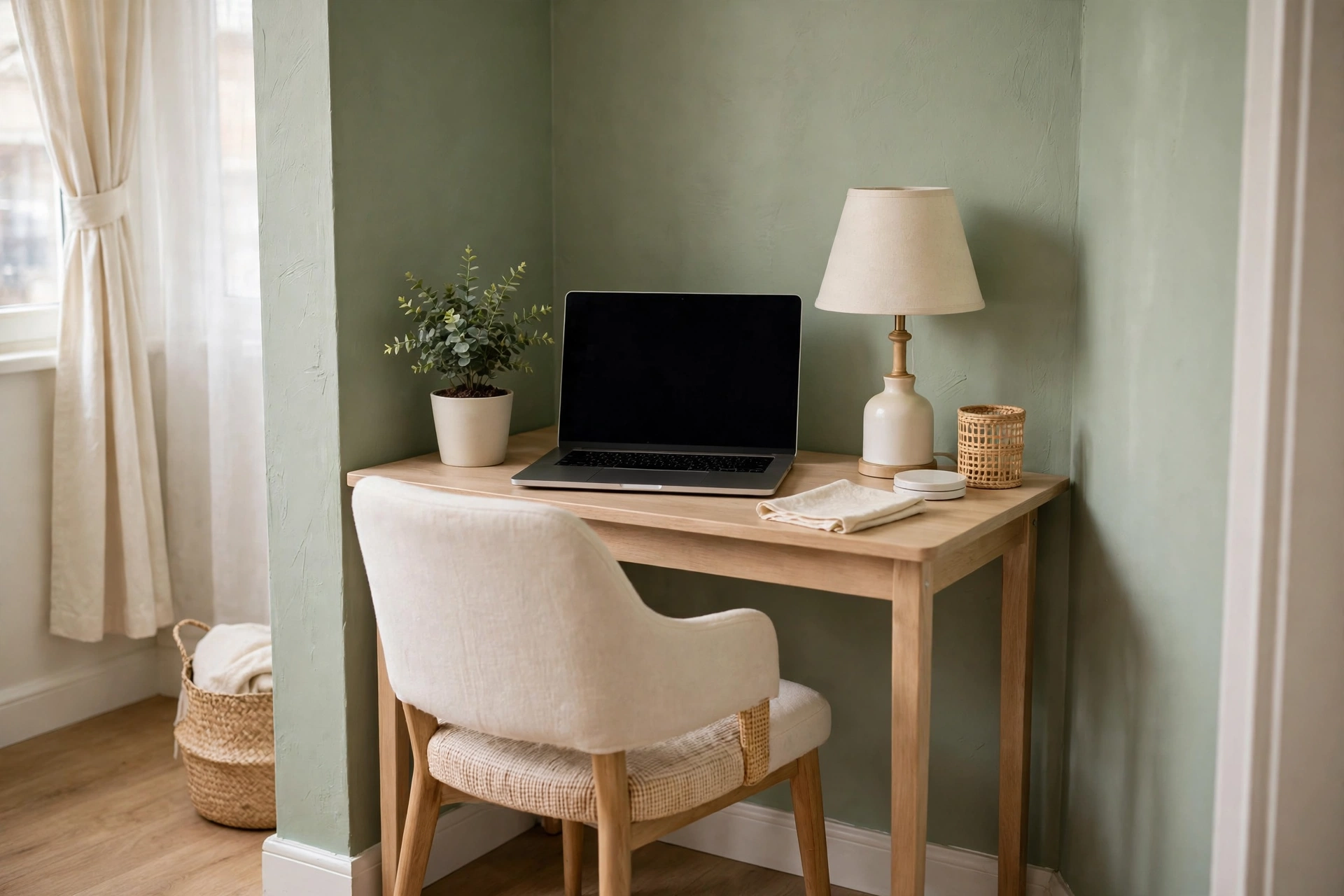
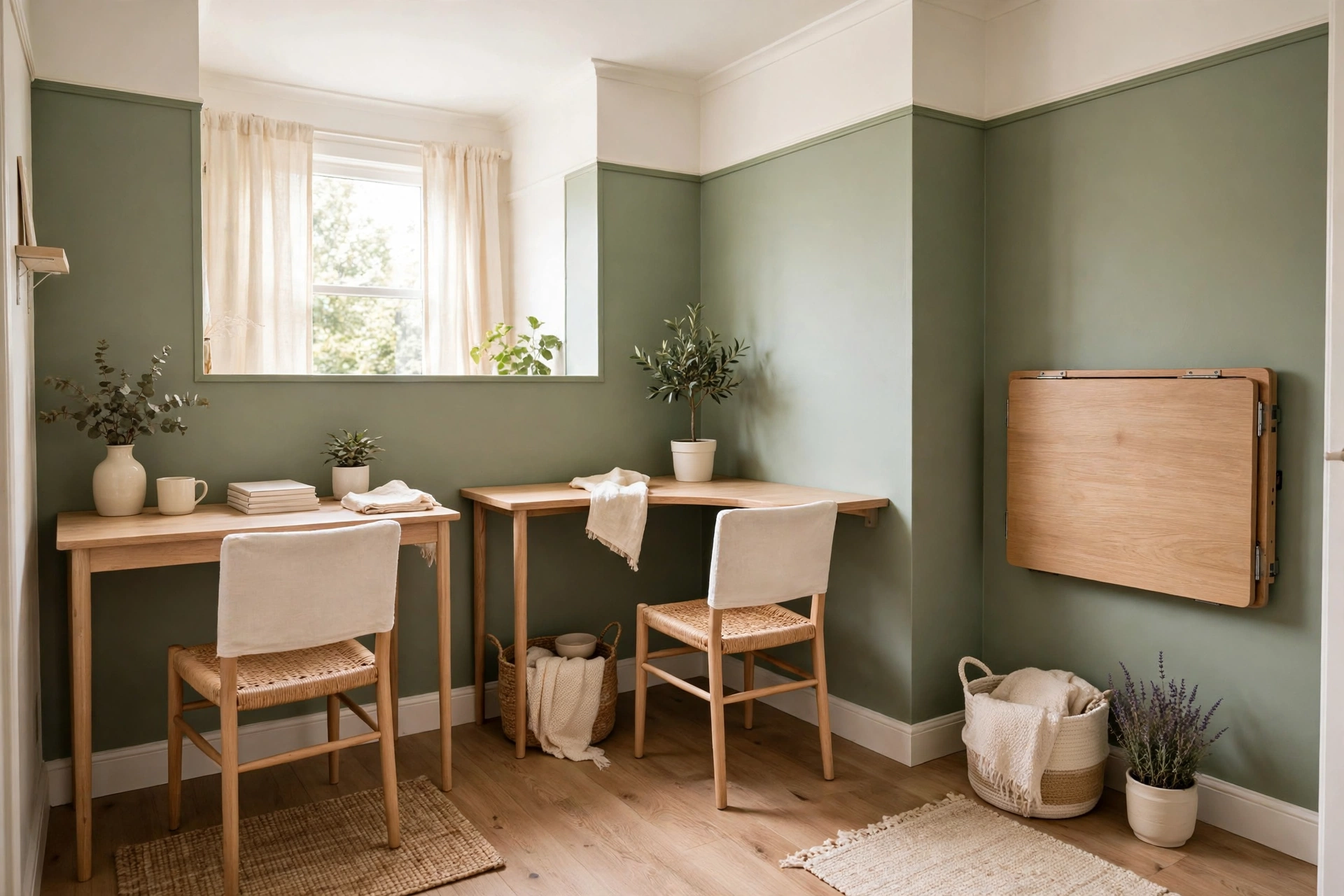
There are three desks that work in a tiny flat, and each one suits a different space. A small writing desk is a plain desk, about thirty-six to forty-two inches wide and twenty inches deep, with no drawers and no bulk. It costs between thirty and sixty dollars new, and ten to twenty dollars second hand. It is the best choice if you have a free stretch of wall and you want a desk that looks like furniture, not office equipment.
A corner desk fits into a corner that nothing else can use, and it gives you more surface than a straight desk in the same floor space. A corner desk costs between forty and eighty dollars new, and about twenty dollars second hand. It is the best choice if your only free space is a corner, or if you need room for a laptop and a second screen. Measure the corner first, because corner desks are wider than they look, and a desk that sticks out into the walkway will annoy you every day.
A folding desk or a wall-mounted drop-leaf desk is the best choice for the smallest flats. A drop-leaf desk folds flat against the wall when you are not working, and opens into a desk about twenty-four inches deep when you are. It costs between twenty-five and fifty dollars, and it needs no floor space at all when it is folded up. It is completely renter-friendly if you fix it with removable brackets, and it is the best option if your desk has to share a wall with the dining table or the bed.
Where to put the desk: light, wall, and a boundary
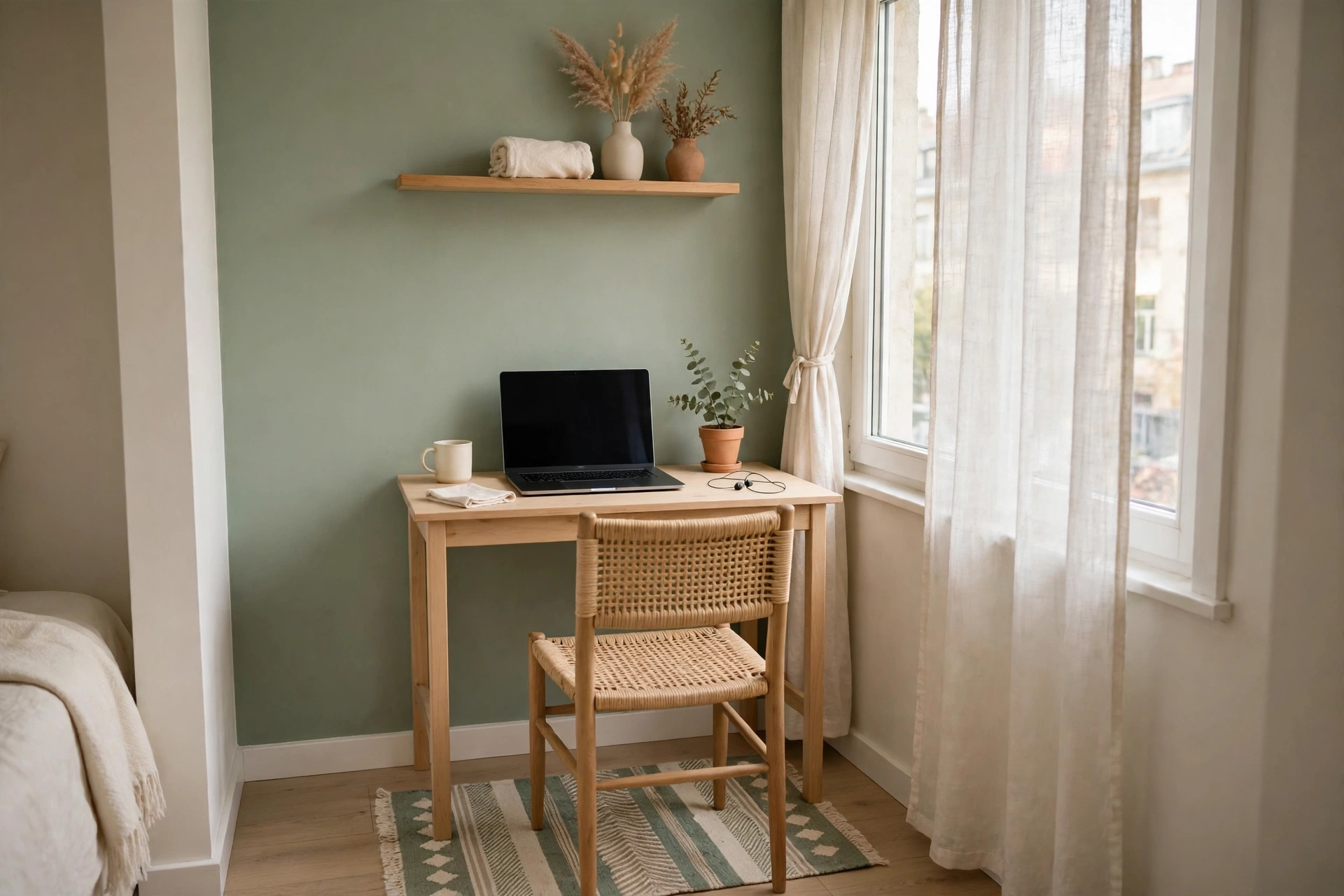
The best spot for a desk in a small flat is near a window, against a wall, where you can see the room behind you. Natural light is the cheapest productivity tool you can get, and a desk by the window means you are not working under a ceiling light all day. If there is no window free, put the desk against the longest empty wall, facing into the room, so you can see the door and the rest of the flat while you work. Facing a blank wall all day makes a small space feel smaller.
Give the desk a boundary, even if it is only a visual one. A small rug under the desk and the chair marks the work zone, and it makes the corner feel like an office instead of a desk pushed against a wall. A rug about three feet by four feet costs between ten and twenty dollars, and it also protects the floor from the chair wheels. A shelf above the desk marks the boundary too, because it holds the work things and nothing else, and it tells your brain that this corner is for working.
Keep the desk away from the bed if you can. Working from the bed or next to the bed blurs the line between work and rest, and it makes it harder to sleep. If the bedroom is the only option, put the desk as far from the bed as the room allows, and pack the work away at the end of the day, so the bedroom feels like a bedroom again in the evening.
The chair matters more than the desk
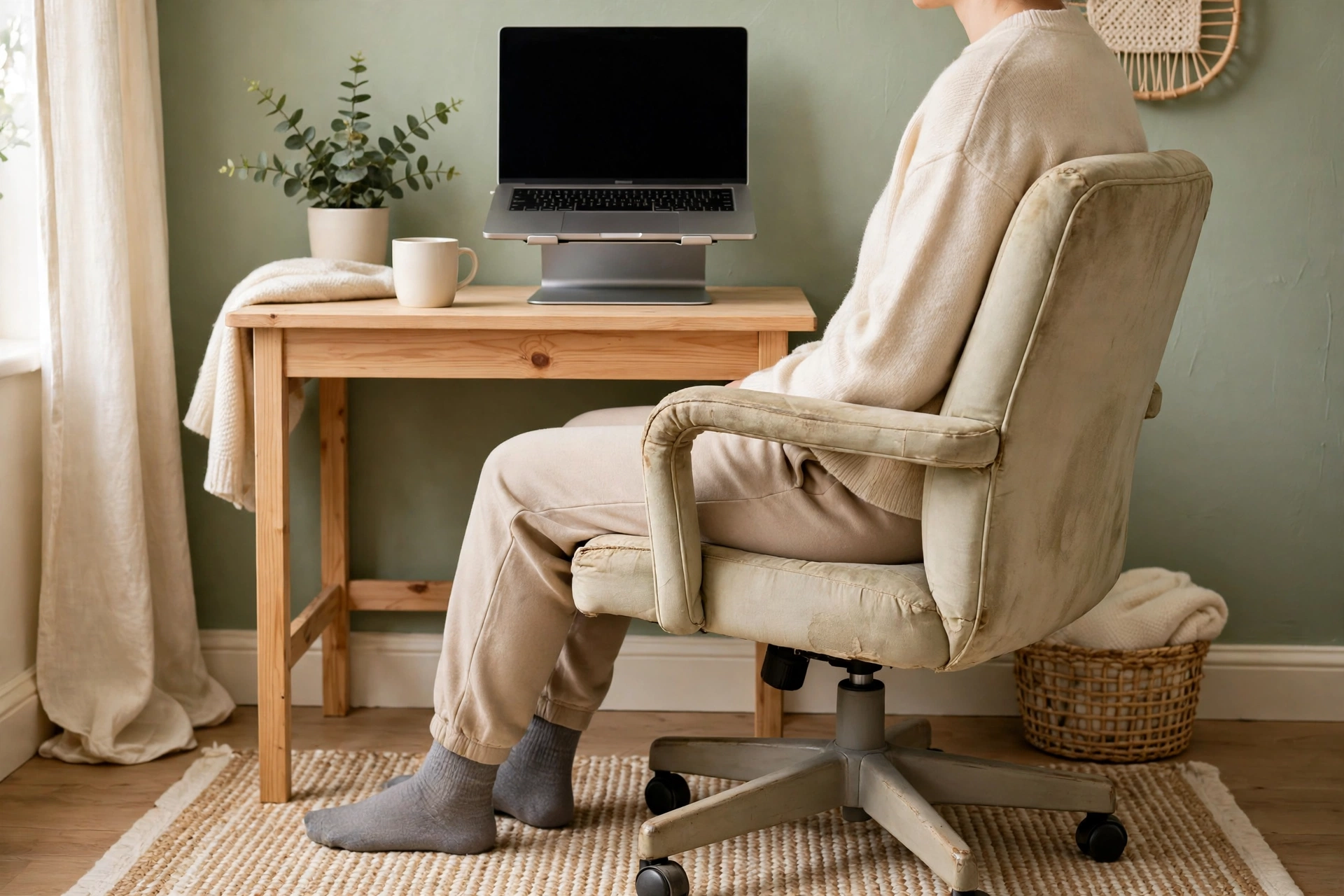
The chair is the most important part of a home office, because you sit in it for hours, and a bad chair hurts your back, your neck, and your focus. A good chair does not have to be expensive. A second-hand office chair with adjustable height and a back that supports your lower back costs between twenty and forty dollars, and it is a better buy than a new dining chair that looks nice and feels terrible after an hour.
The test is simple: sit in the chair, put your feet flat on the floor, and check that your knees are at about ninety degrees. Your elbows should rest on the desk at about ninety degrees too, and the top of your laptop screen should be at eye level. If the screen is too low, put the laptop on a stack of books or a laptop stand, which costs about ten dollars. A laptop that is too low is the most common cause of neck pain in a home office, and it is the easiest problem to fix.
The chair should fit under the desk when you are done working. A chair that sticks out into the room all evening makes the flat feel like an office, while a chair tucked under the desk disappears. If your chair has wheels, a small chair mat or the rug underneath stops it rolling across the room and protects the floor.
Cable management: hide the spaghetti
Cables are the fastest way to make a small desk look messy, because a laptop charger, a phone charger, a lamp, and a monitor cable tangle into a nest behind the desk within a week. The fix takes ten minutes and costs under ten dollars. Start by unplugging everything, then plug in only what you need. Most desks need three cables: laptop, lamp, and phone. Everything else can live in the drawer until you need it.
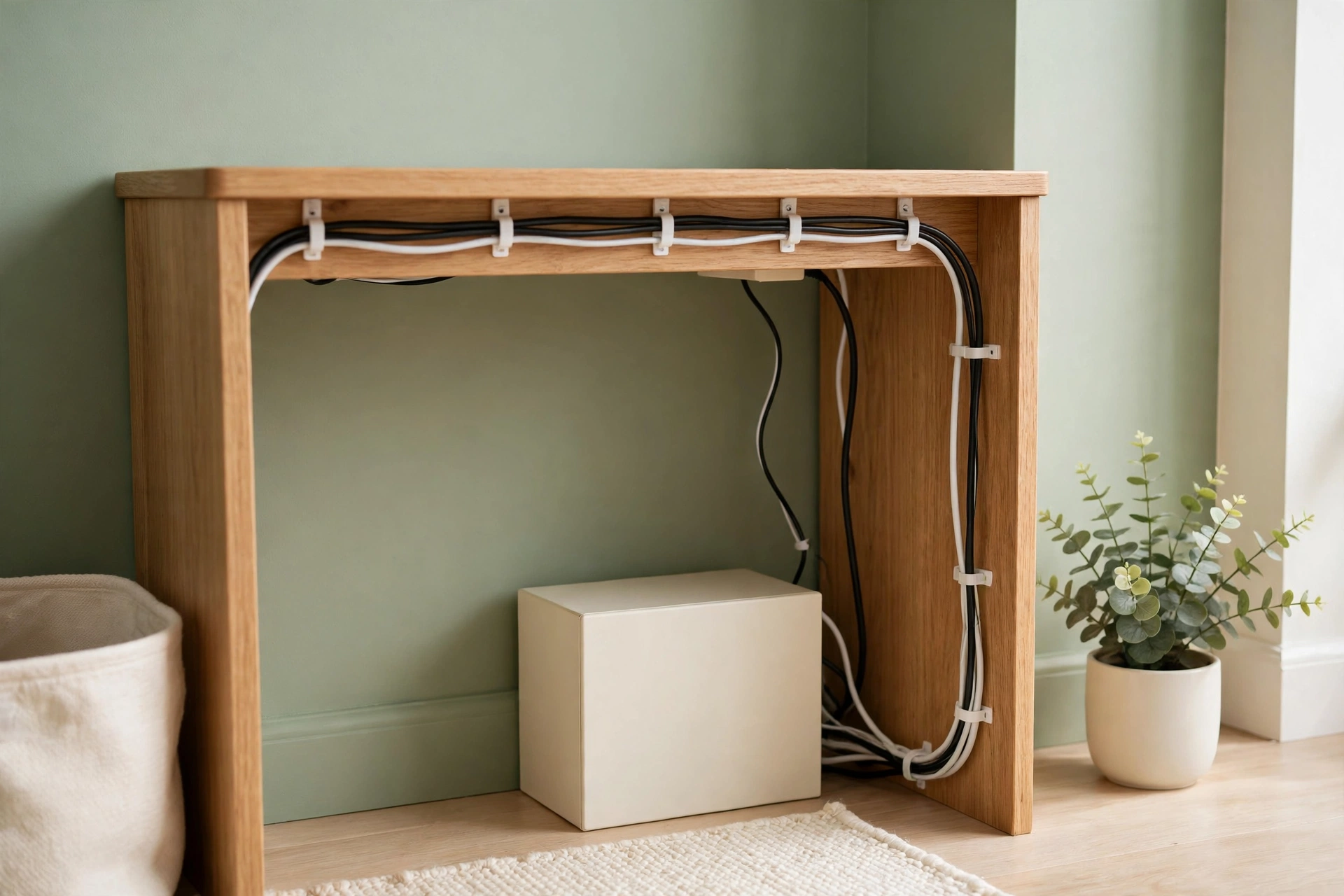
Run the cables along the back edge of the desk with adhesive cable clips, which cost about three dollars for a pack of six. The clips stick to the desk or the wall, they peel off without a mark, and they hold each cable in its own channel, so the cables never tangle. Coil the spare length of each cable and tie it with a reusable twist tie or a small velcro strap, so there is no loop of cable hanging down the back of the desk.
Put the plug strip in a small cable box or behind the desk leg, not on the floor where you can see it. A cable box costs about eight dollars and hides the whole plug strip and the spare cable length in one tidy box. One power strip with four sockets is enough for a small desk, and it means you only have one cable going to the wall. A tidy back of the desk makes the whole corner look calm, and it makes cleaning the floor much easier too.
The one-drawer supply system
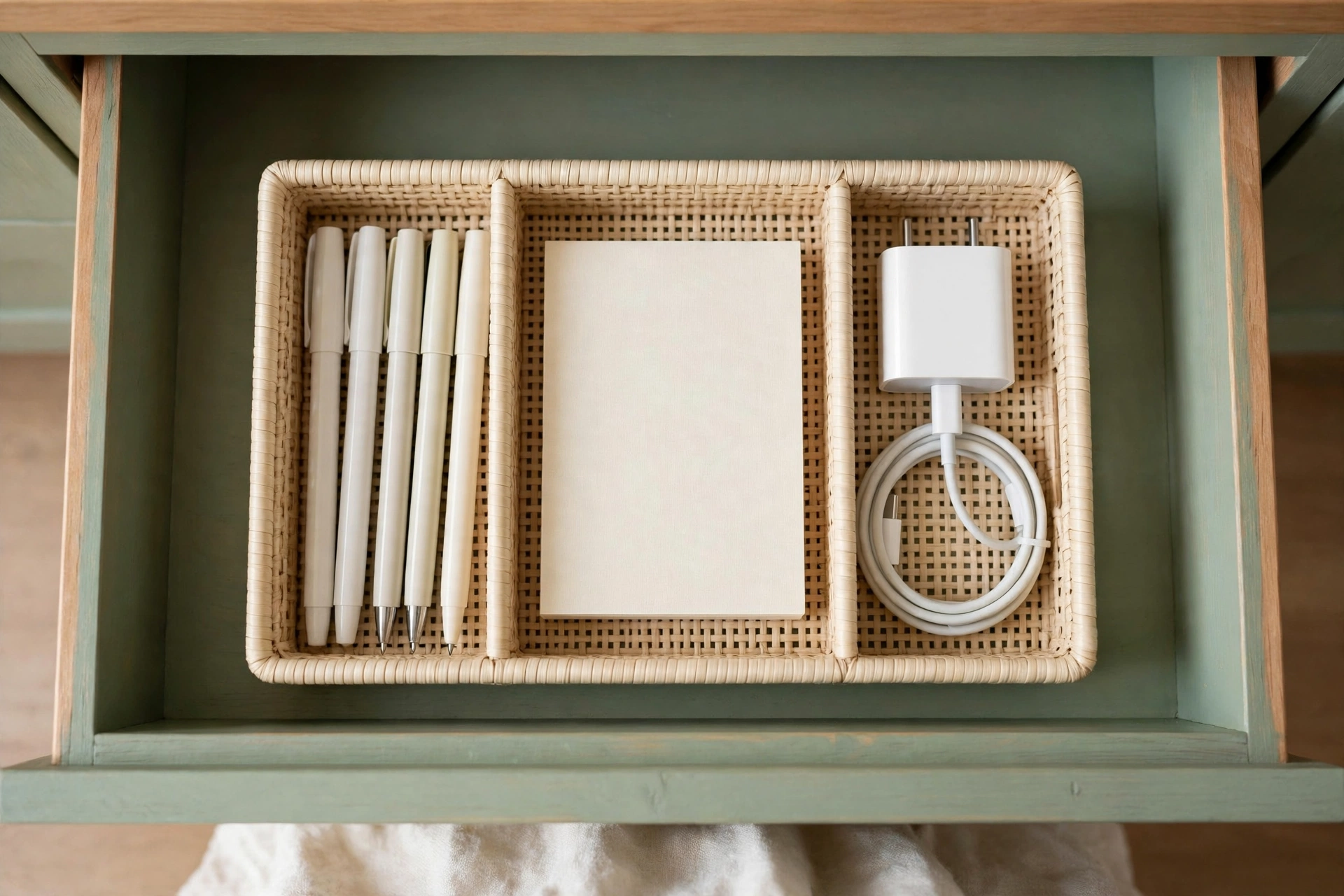
A small desk has no room for a stationery shop, so the supply system is one drawer, or one small box, with a simple rule: if it does not fit in the drawer, it does not live on the desk. The drawer holds the things you use every day: two pens, one pencil, a small notepad, scissors, tape, a phone charger, and a few paperclips. That is it. Everything else, the spare notebooks, the craft supplies, the old chargers, lives somewhere else in the flat.
Use a small tray or a cutlery insert inside the drawer to keep the supplies from sliding around. A bamboo cutlery tray costs about five dollars and fits most desk drawers, and a shoebox lid cut to size works just as well for free. One section for pens, one for small items, and one for the charger. When you open the drawer, you can see everything at once, and you never have to dig.
If your desk has no drawer, a small desktop organiser does the same job. A three-compartment organiser costs about eight dollars and holds the pens, the notepad, and the phone. Keep it small, because a big organiser on a small desk eats the working surface. The rule is the same: the organiser holds the daily tools, and everything else lives in a cupboard. A desk with a clear surface is a desk you can actually work on.
Keep the desktop clear: the landing zone
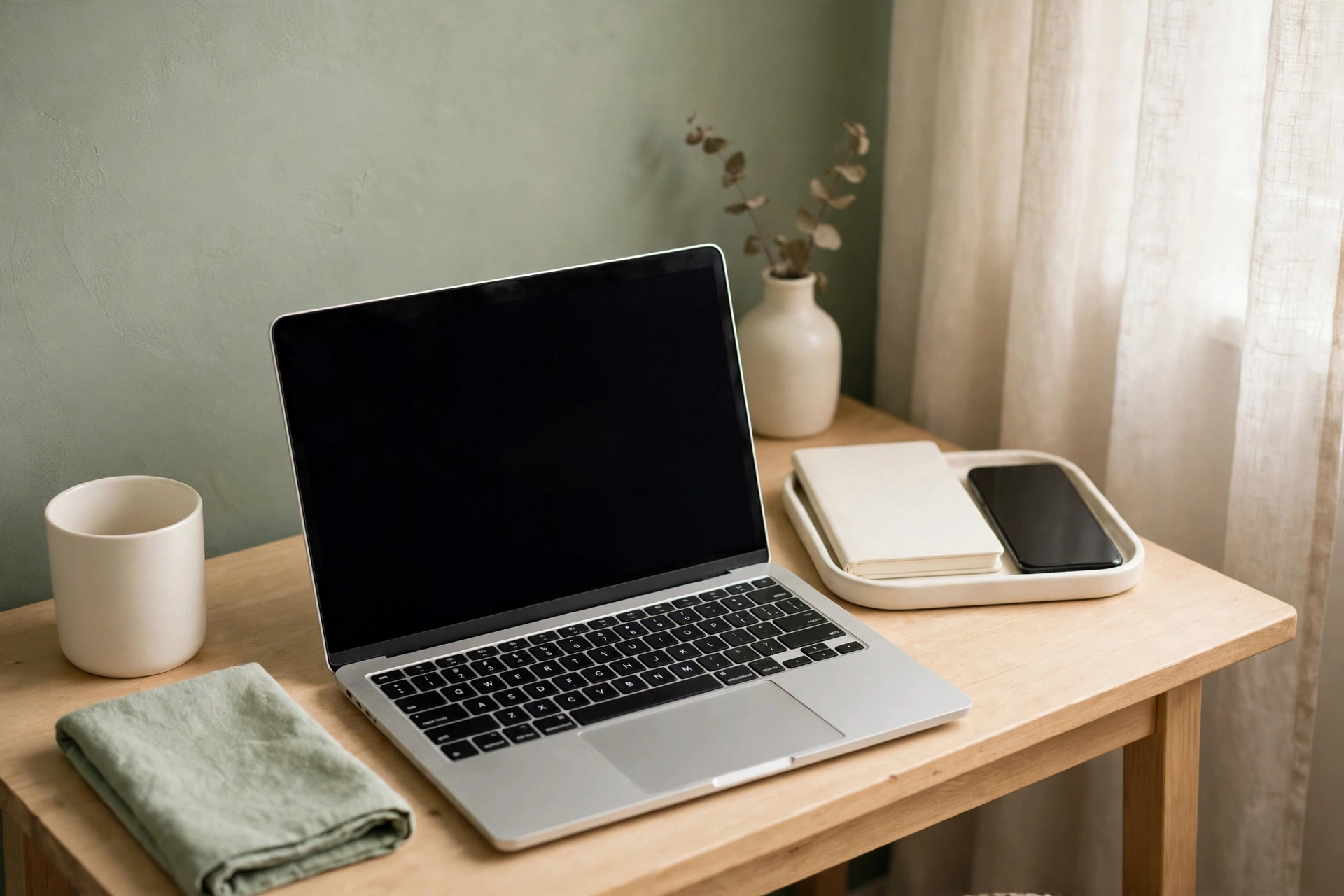
A small desktop only works if it stays clear, and it only stays clear if everything has a place to land. The landing zone is one small tray, about eight inches square, that sits at the back corner of the desk. It holds the things that arrive during the day: the post you need to read, the notebook you are using, and the phone when it is charging. Everything else goes in the drawer, on the shelf, or back in the room where it belongs.
The rule is that the landing zone is the only place on the desk where loose items are allowed. If the tray is full, something has to leave before anything new lands. This one rule stops the slow spread of papers, cups, and chargers across the whole desk, because there is a visible limit. A small tray costs about five dollars, and a baking tray or a chopping board works just as well.
Keep the working area, the space directly in front of you, completely clear except for the laptop and one notebook. A clear working area makes it easier to focus, because your eyes are not pulled to the clutter at the edge of the desk. At the end of the day, the landing zone gets emptied, the notebook goes in the drawer, and the desk is clear again. A clear desk in the morning is the best start to a working day.
Vertical storage: use the wall above the desk
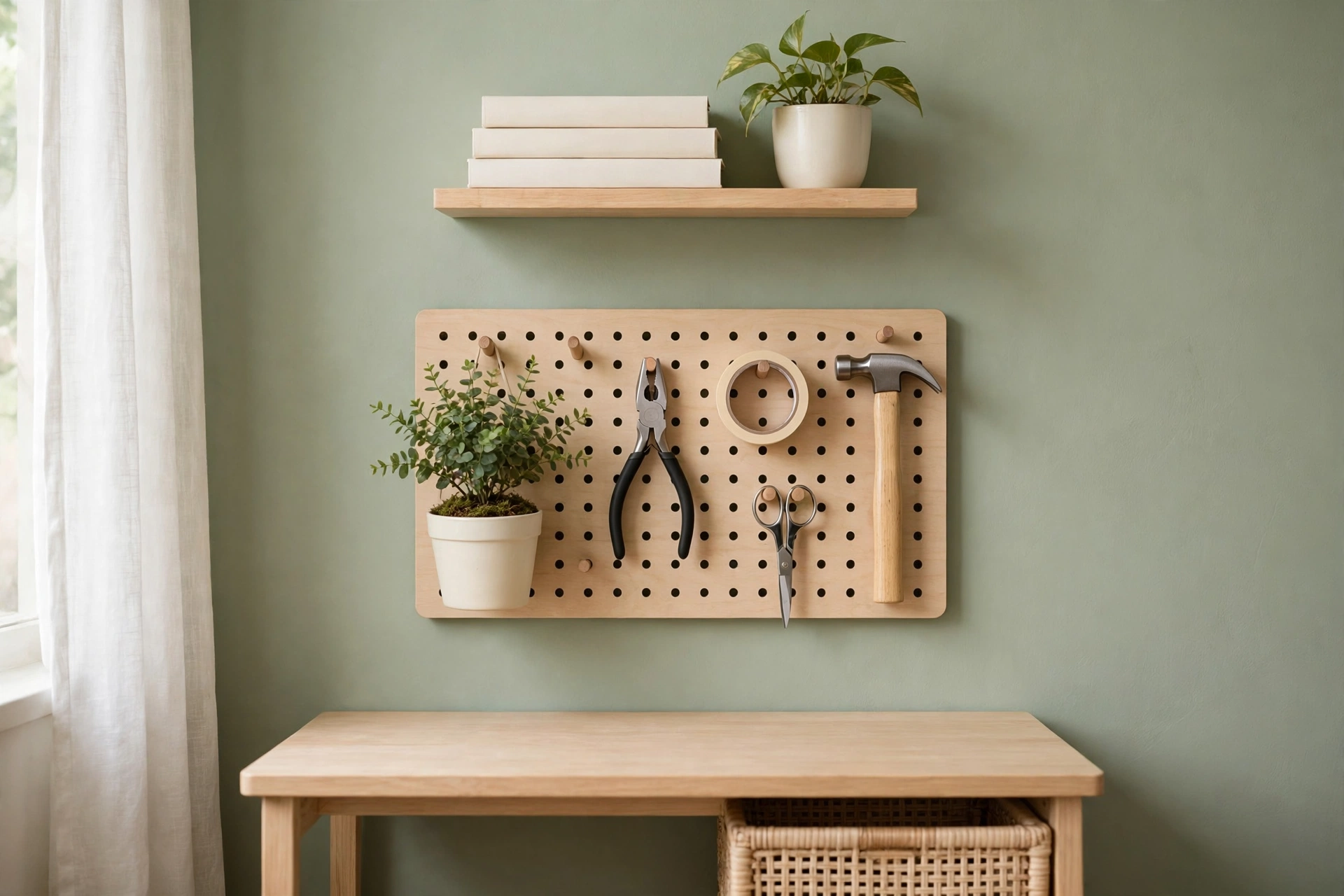
A small desk has no room for piles, so the storage goes up. The wall above the desk is free space, and it can hold a shelf, a small pegboard, or a row of hooks, all without taking a single inch of desk surface. A small floating shelf above the desk holds the books, the reference notes, and the plant. A shelf about twenty-four inches wide and eight inches deep costs between ten and twenty dollars, and it sticks to the wall with removable brackets, so it is renter-friendly.
A pegboard is even better for a work corner, because you can move the hooks and the small baskets around as your needs change. A small pegboard, about eighteen inches square, costs between twelve and twenty dollars, and it holds scissors, tape, cables, and a small basket for the daily notebook. Hang it at eye level above the desk, so you can reach everything without standing up, and keep it tidy, because a pegboard full of things you never use is just a wall of clutter.
Keep the wall storage to one shelf and one board, no more. A wall covered in shelves makes a small room feel crowded, and it is tempting to fill every shelf with things you do not need. One shelf, one board, and a clear desk is the right amount of storage for a tiny home office.
Light and sound: the two things that make focus possible
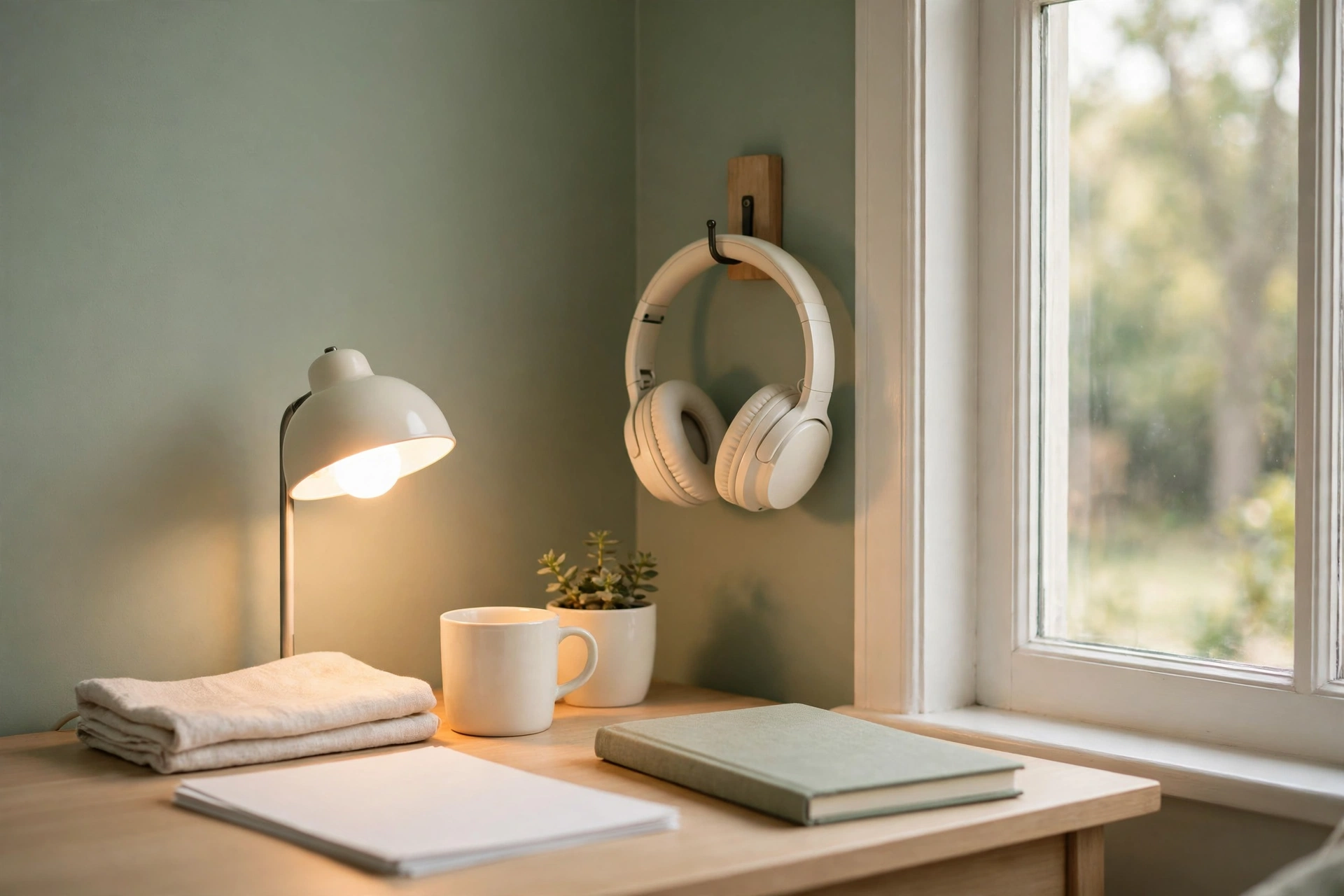
Good light is the difference between a desk you enjoy and a desk you avoid. Natural light is best, so put the desk near the window if you can. For the rest of the day, a small desk lamp with a warm white bulb costs about ten dollars and gives you focused light exactly where you work, without lighting the whole room. A lamp with an adjustable arm is best, because you can point it at the notebook when you write and at the keyboard when you type.
Keep the light on the opposite side to your writing hand, so your hand does not cast a shadow on the page. If you are right-handed, the lamp goes on the left. If you are left-handed, it goes on the right. This tiny detail makes a big difference, and it costs nothing.
Sound matters too, especially in a small flat where the television, the washing machine, and the neighbours all share the same space. A pair of headphones, even a cheap pair, creates a boundary between you and the flat, and it tells everyone else that you are working. A small pair of earbuds costs about ten dollars, and a pair of over-ear headphones costs about twenty. Add a simple rule: headphones on means do not disturb, unless it is urgent. A shared flat needs a signal like this, because a closed door is not an option.
Pack it away: the ten minute end-of-day reset
A home office in a shared living space only works if the work disappears at the end of the day. The ten minute reset does that. When you finish work, do four things. Close the laptop and put it in the drawer, on the shelf, or in a laptop sleeve. Put the notebook and the pens back in the drawer. Empty the landing zone tray and put the post and the papers where they belong. Push the chair under the desk and wipe the desktop with a damp cloth.
Ten minutes, four steps, and the living room is a living room again. The reset matters because a desk left covered in work makes the whole evening feel like work, and it makes the next morning harder, because you start the day by facing yesterday’s mess. A clear desk in the evening means a clear head in the evening, and a fresh start in the morning.
If your desk is a drop-leaf or a folding desk, fold it up after the reset. A folded desk gives the room back its floor space, and it is the clearest signal that work is over. If your desk is a fixed desk, a small cloth or a laptop sleeve over the closed laptop does the same job visually: it hides the work and tells your brain that the working day is done.
The January work reset: a fresh start for your desk
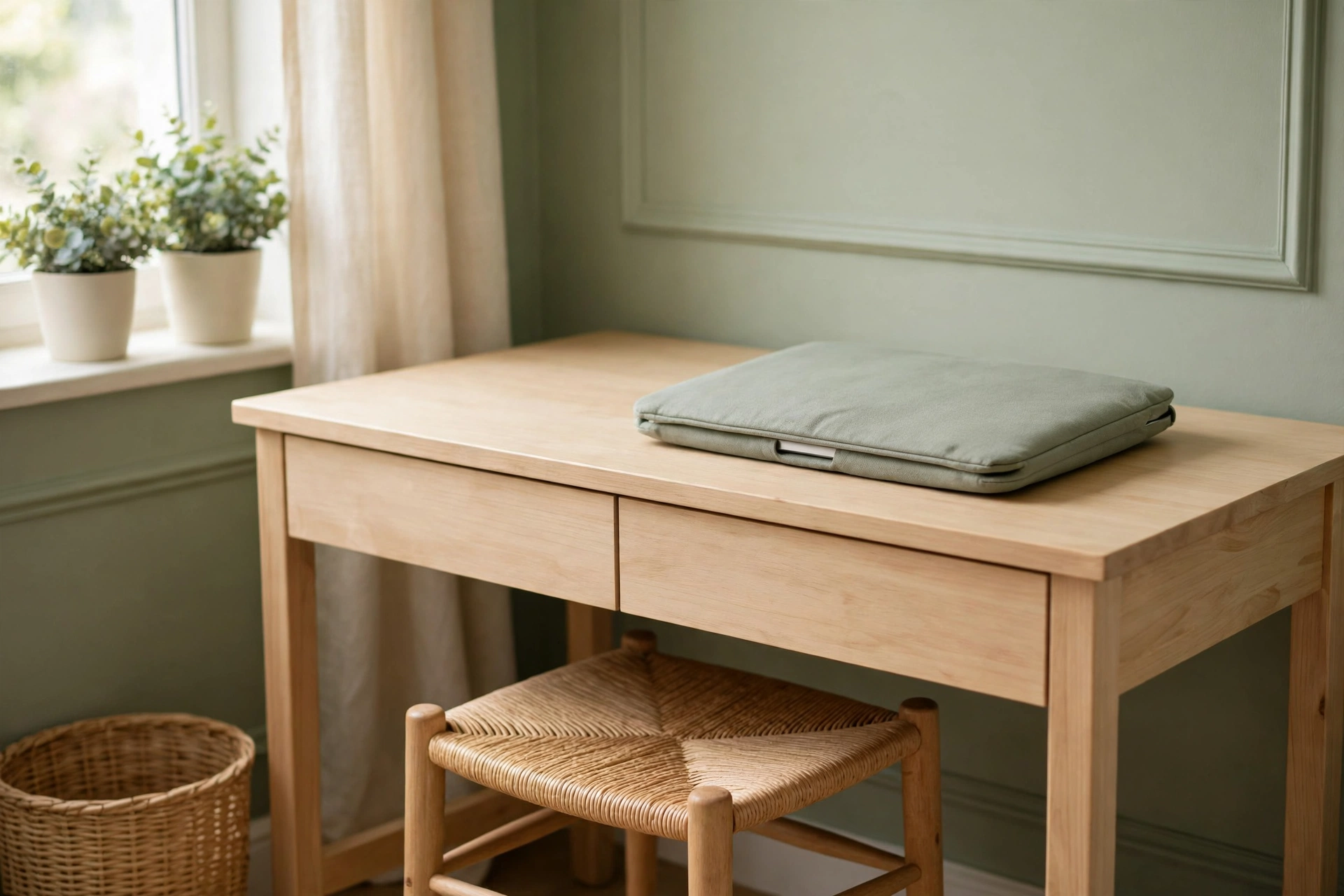
January is the best month to reset your desk, because the New Year brings new work goals and new routines, and a fresh desk makes the reset real. Start by emptying the desk completely, every drawer, every shelf, and every cable. Wipe the surfaces, throw out the dried-up pens, the old notebooks, and the cables for devices you no longer own. Keep only the tools you used in the last month.
Then set three work goals for the next three months, and write them on a small card on the shelf above the desk. The goals should be small and specific, for example “finish the course”, “apply for five jobs”, or “write for thirty minutes a day”. A card on the shelf is a reminder every time you sit down, and it is better than a goal written in a notebook you never open.
Finally, add one thing that makes the desk yours: a small plant, a framed photo, or a mug you love. A desk that feels personal is a desk you want to sit at, and a desk you want to sit at is a desk where the work gets done. One personal item is enough, because the desk is small, and the work needs the space more than the decorations do.
Your small desk plan, step by step
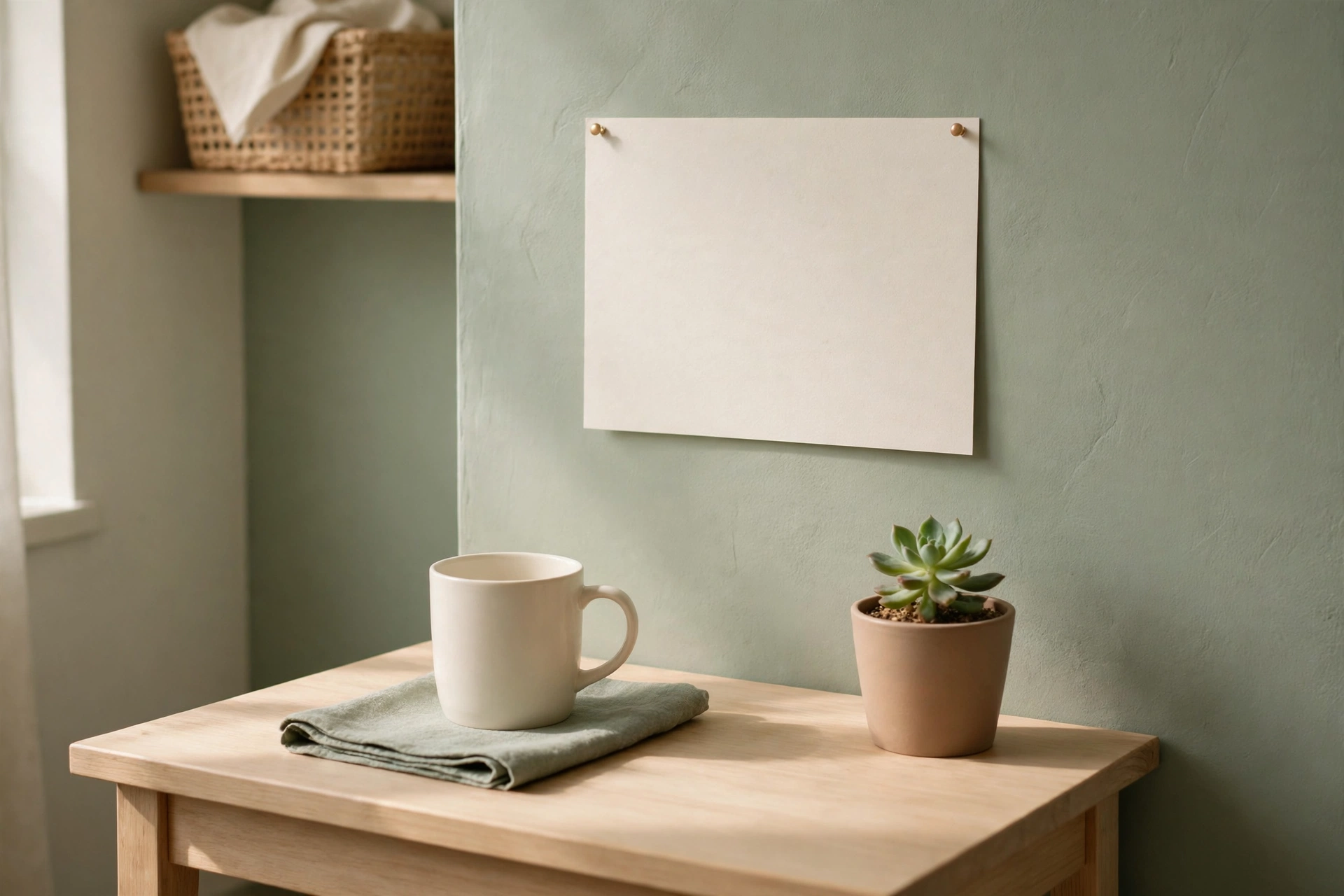
Here is the whole home office as a one afternoon plan. First, measure the corner or the wall and pick the desk that fits: small writing desk, corner desk, or folding desk. Second, find a chair that fits under the desk and supports your back, second hand is fine. Third, put the desk near the window, add the rug, and raise the laptop to eye level with a stand or a stack of books.
Fourth, manage the cables with clips and a small box, and set up the one-drawer supply system. Fifth, fix the shelf or the pegboard above the desk, add the lamp, and put the landing zone tray on the back corner. Sixth, add the personal touch, the plant or the photo, and do the first ten minute reset. Sit down, open the laptop, and work for an hour. If the chair feels good, the light is right, and the desk is clear, it works.
A small desk in a tiny flat is not a compromise. It is a system that fits the space you have, and it works because it is small: less stuff, less clutter, and more focus. Start with the measure, find the desk this weekend, and by Monday you will have a proper place to work, a place that disappears in ten minutes when the working day ends.
Related pins
- Small Apartment Organization Ideas
- 15-Minute Daily Reset Routine
- Declutter in 7 Days
- New Year Home Reset in 7 Days
- New Year Pantry Makeover