Small Entryway Ideas for Narrow Spaces (Renter-Friendly)
The entryway is the smallest room in the flat, and it does the hardest job. It has to hold coats, shoes, bags, keys, post, and umbrellas, and in a narrow flat it has to do all of that in a strip of hallway that is sometimes barely three feet wide. Most entryways fail because they try to copy a big house hallway: a wide bench, a big console table, and a row of hooks at one height. In a narrow space, that plan blocks the walkway, and within a week the coats are on a chair, the shoes are in a pile, and the keys are lost again.
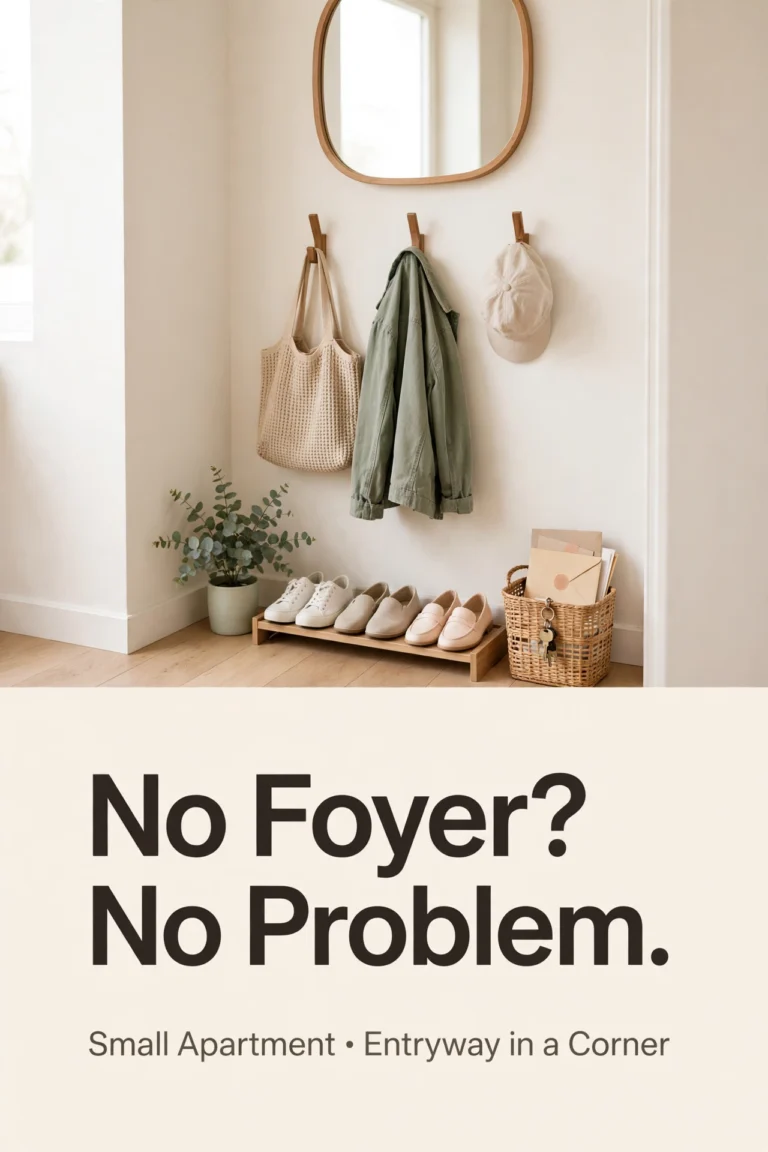
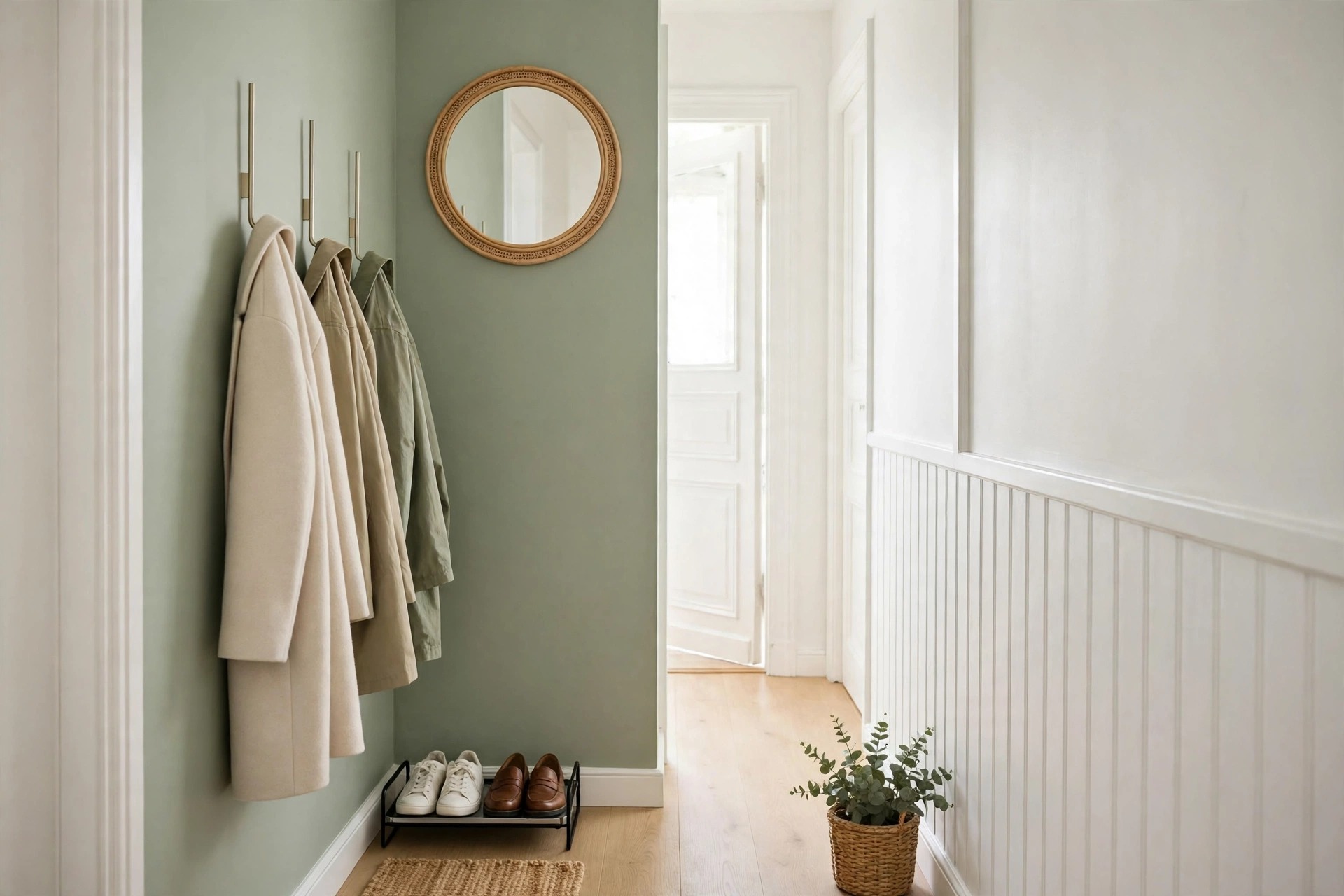
A narrow entryway needs a different plan. Everything goes on the wall or up high, nothing sticks out further than it has to, and every item has one small home. A slim shoe tray, a row of hooks, a mirror to bounce the light, and a tiny shelf for keys can turn a cramped hallway into a calm first impression, and the whole setup costs between twenty and fifty dollars. It takes one afternoon, it needs no drilling, and it works in a rented flat, because every fix in this article comes off the wall without a mark.
“Entryway ideas” is one of the most searched home topics on Pinterest, with about 673,000 searches, and the long-tail searches are just as strong: “small entryway ideas” gets about 147,000 searches and “narrow entryway ideas” about 71,000. People are looking for this because almost every small flat has the same problem. This article shows you how to measure a narrow entryway, pick furniture that fits, use hooks and trays instead of bulky storage, add light with a mirror, and keep the whole space tidy with a two minute habit.
Measure first: the two numbers that decide everything
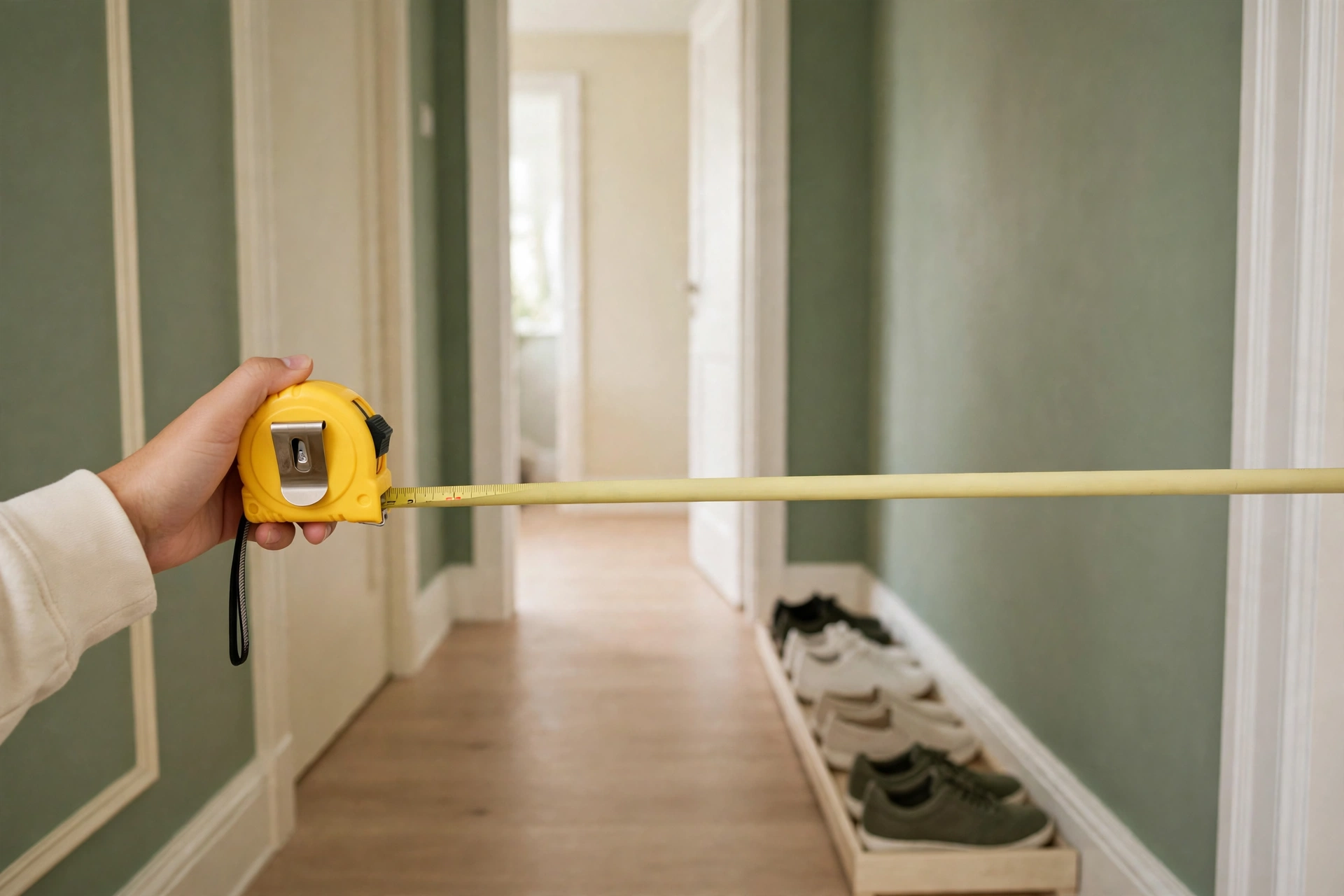
A narrow entryway has two numbers that matter, and both take two minutes to measure. The first is the width of the hallway, wall to wall. The second is the depth you can spare, which is the width minus the space you need to walk through. You need at least twenty-four inches of clear walkway to pass comfortably, and thirty inches is better if you carry shopping bags or a buggy. If your hallway is forty inches wide, you have ten to sixteen inches of depth for furniture. If it is thirty-six inches wide, you have six to twelve inches. That is the number that decides what you can buy.
Write the numbers down and take them shopping with you, on your phone or on a scrap of paper. A console table that is twelve inches deep fits a forty inch hallway and blocks a thirty-four inch hallway. A shoe rack that is ten inches deep works almost everywhere. A bench that is fourteen inches deep is a tripping hazard in a narrow hall, while a wall-mounted shelf that is six inches deep is not. Measure first, buy second, and you will only buy once.
Measure the height as well. Hooks work best at about sixty inches from the floor for adults, and lower, at about forty-eight inches, for children. A mirror works best with its centre at eye level, about fifty-eight to sixty-two inches from the floor. A shelf above the hooks should sit at about seventy inches, high enough that you do not bump your head, low enough that you can reach it without a step stool.
The wall is your best friend: hooks, rails, and no drilling
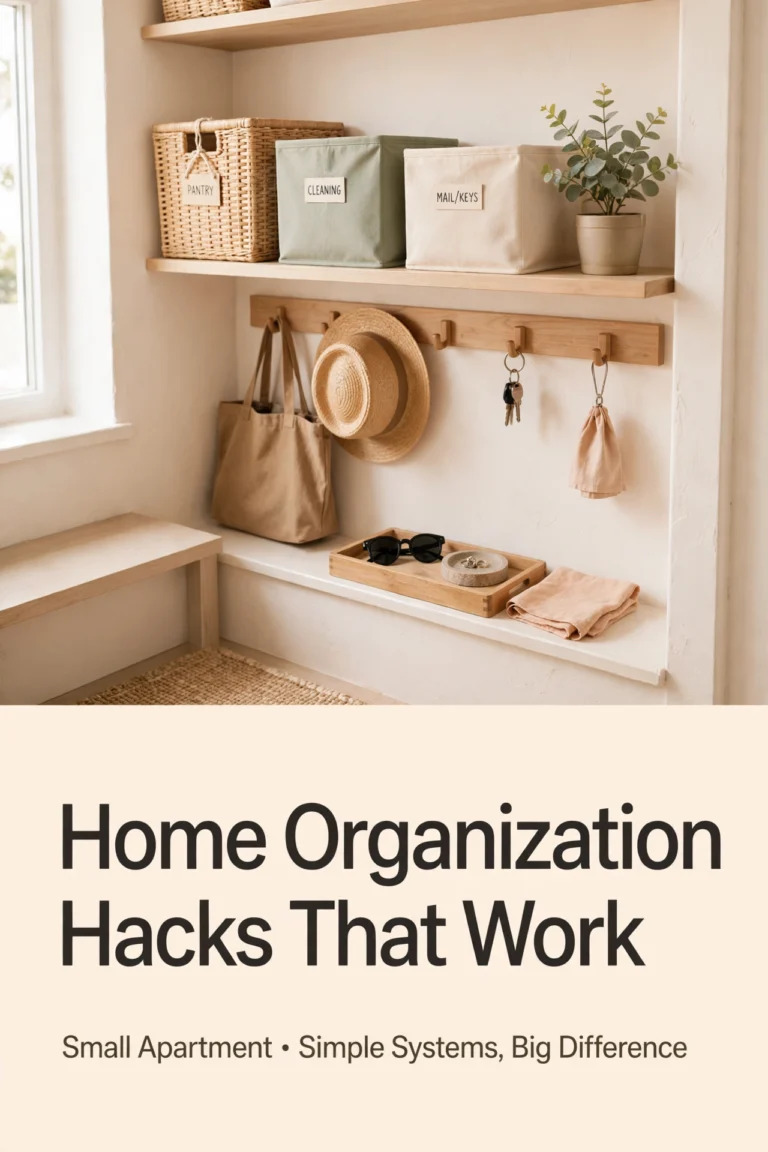
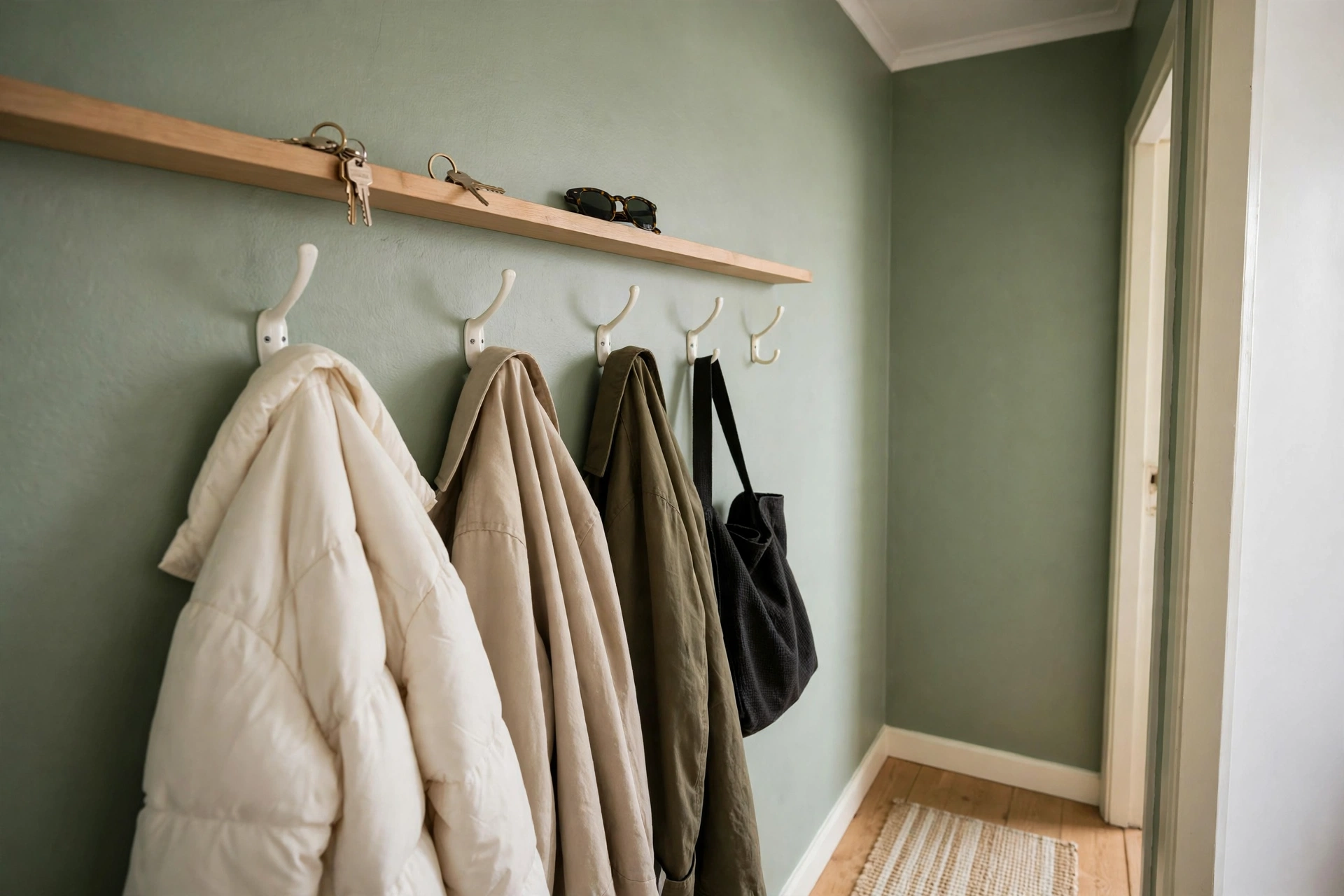
In a narrow entryway, the wall does the work that furniture does in a wide hallway. A row of hooks holds coats, bags, and dog leads. A wall rail with hooks holds keys, hats, and scarves. A small wall shelf holds the post, the sunglasses, and the hand cream. All of it sits flat against the wall, so the walkway stays clear, and all of it can be fixed without drilling.
Removable adhesive hooks are the renter’s best friend. A pack of four large hooks costs about five to eight dollars, holds up to seven pounds each, and peels off the wall without a mark when you move out. Put one hook per person for coats, plus one spare for guests, and space them about eight inches apart so the coats do not bunch up. Hang the heaviest coat on the hook closest to the wall stud or the strongest spot, and keep the lighter jackets on the ends.
A wall rail with a small shelf on top does two jobs at once. The hooks below hold the coats, and the shelf above holds the things you grab on the way out: keys, wallet, sunglasses, and post. A rail costs between ten and twenty dollars, and the removable kind sticks on with adhesive strips. If you want something even simpler, a strip of three adhesive hooks at shoulder height plus a small basket on the floor for shoes covers the whole entryway for under ten dollars.
Shoes: the tray, the rack, and the one pair rule
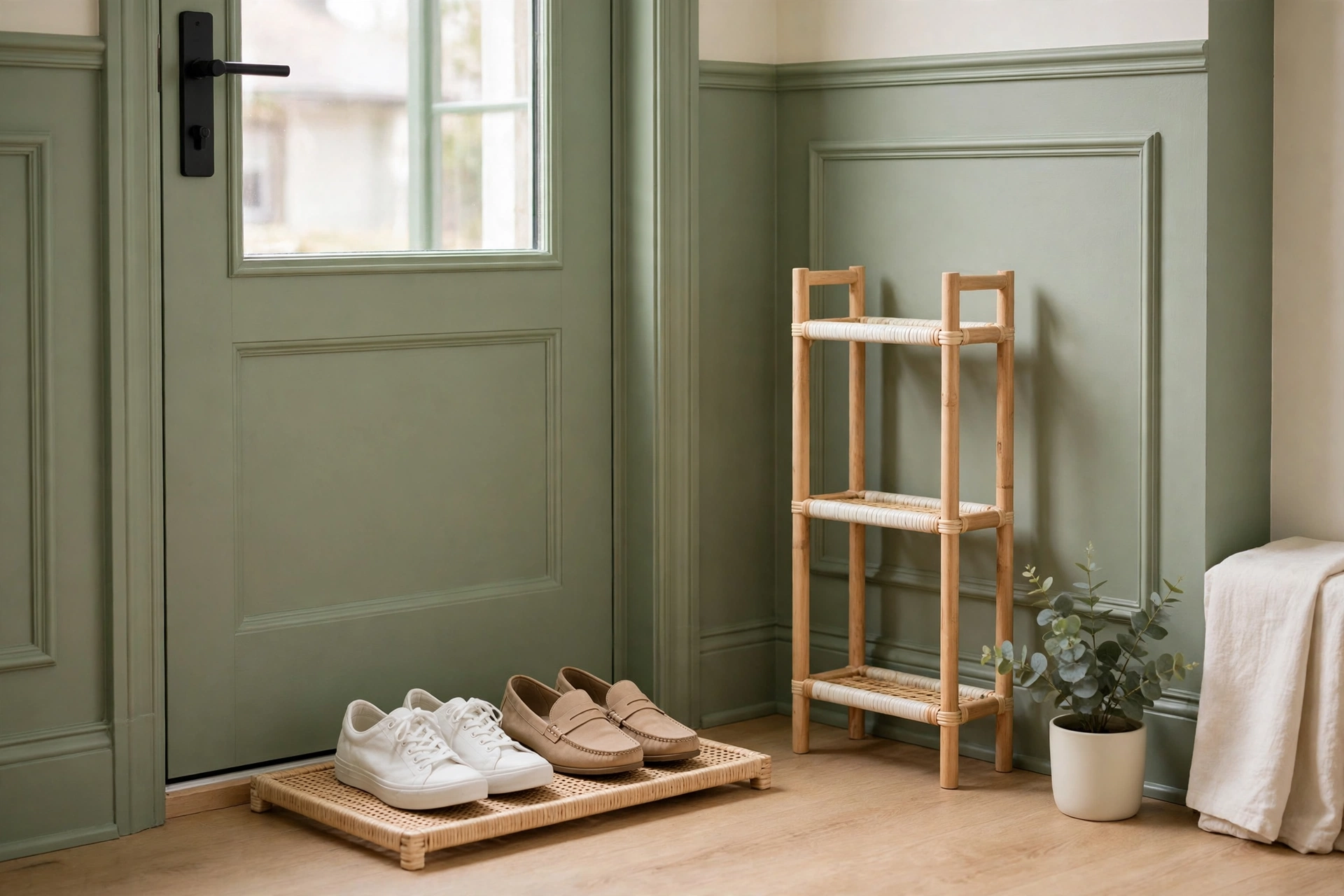
Shoes are the reason most narrow entryways look messy, because every pair left by the door adds up fast. The fix is a shoe tray and a rule. The tray is a low, flat tray, about twenty-four inches wide and twelve inches deep, that sits on the floor by the door. It holds two to four pairs of shoes, it catches mud and rain, and it costs between five and twelve dollars.
The rule is one pair per person by the door, plus one spare pair each. Everything else lives in the bedroom closet or in a box under the bed. When you come home, the shoes you are wearing go on the tray. When you go out, you take them off the tray. Shoes that stay on the tray for more than a day get put away. This rule sounds strict, but it is the difference between a hallway you can walk through and a hallway you have to step over.
If you need more shoe storage, a slim vertical shoe rack works better than a wide one in a narrow hall. A rack that is ten inches deep and four tiers high holds eight pairs and takes up less floor space than a bench. Put it against the wall, not across the walkway, and keep the shoes you wear most on the middle shelves where they are easiest to reach. A small shoe rack costs between twelve and twenty-five dollars, and the fabric kind folds flat when you move.
A slim bench or console, only if it fits
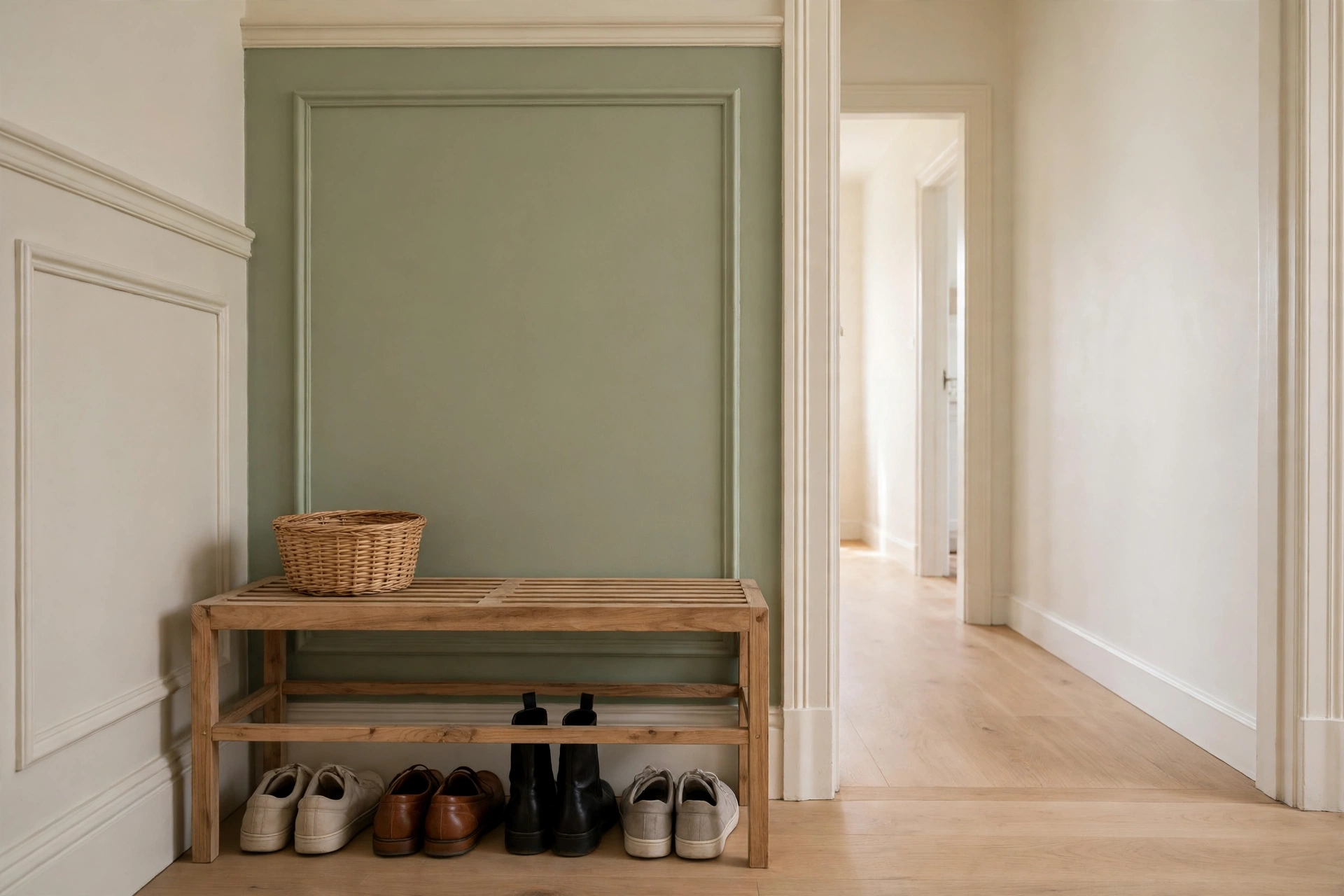
A bench or a console table is lovely in an entryway, but only if the hallway is wide enough. The test is simple: put the bench where you want it, then walk through the hallway carrying a shopping bag. If you have to turn sideways, the bench is too deep. A bench should be no more than twelve inches deep in a narrow hall, and a console table should be no more than ten inches deep. Anything deeper belongs in a wider hallway or a different room.
If it fits, a slim bench does three jobs. It gives you somewhere to sit while you put your shoes on, it holds shoes underneath, and it gives you a surface for a small basket of gloves and hats. A narrow bench costs between twenty-five and fifty dollars, and a second-hand one costs much less. Look for one with open space underneath, not a solid base, because the open space holds shoes and lets you see the floor, which makes the hallway look wider.
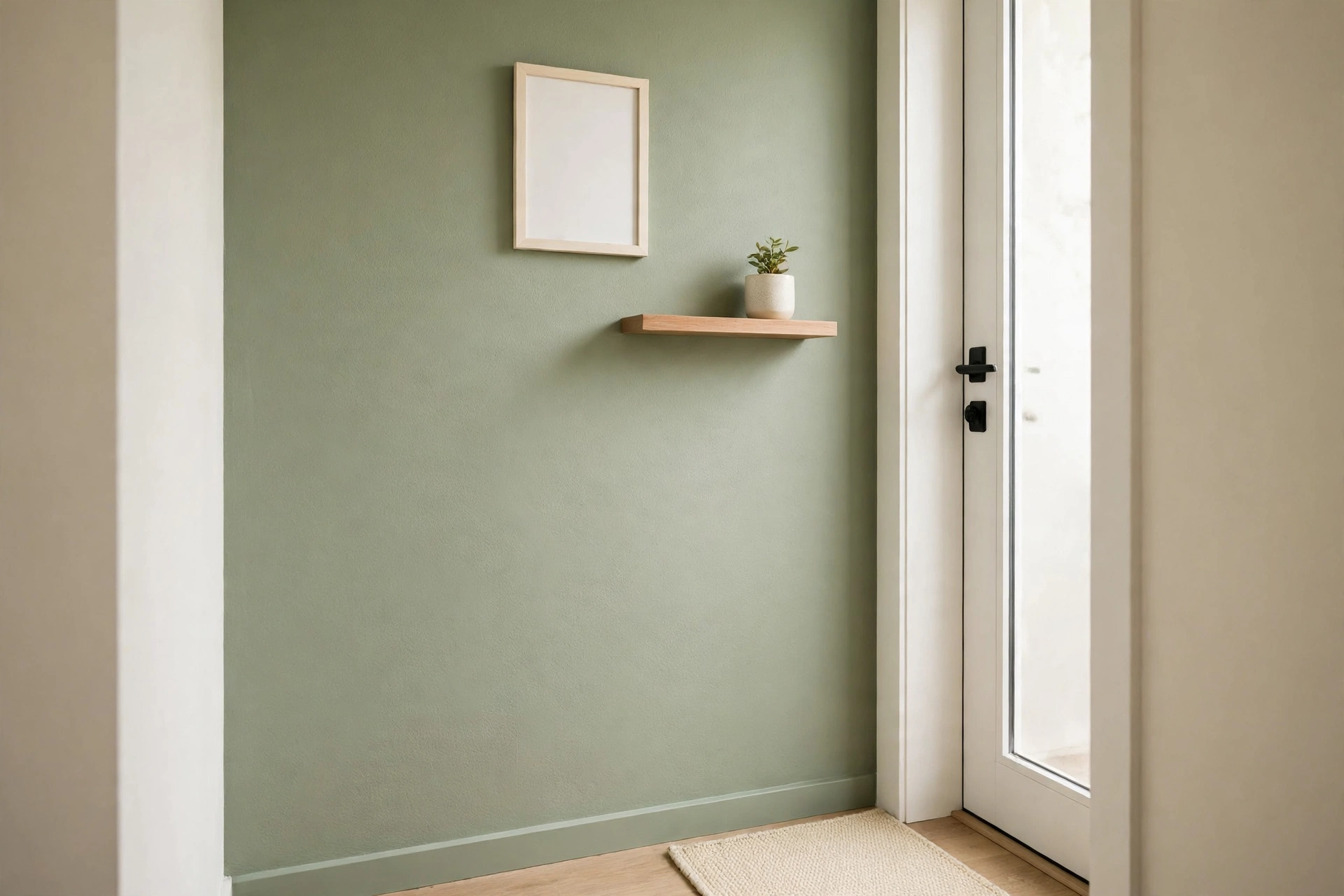
If a bench does not fit, a floating shelf does the same job without touching the floor. A small shelf at about thirty inches high holds a basket for gloves, a dish for keys, and a small plant. It costs under fifteen dollars, it sticks to the wall with adhesive strips or a removable bracket, and it leaves the floor completely clear, which is the best trick for a narrow hallway. A clear floor makes a hallway feel twice as wide.
The mirror trick: light, space, and a last check
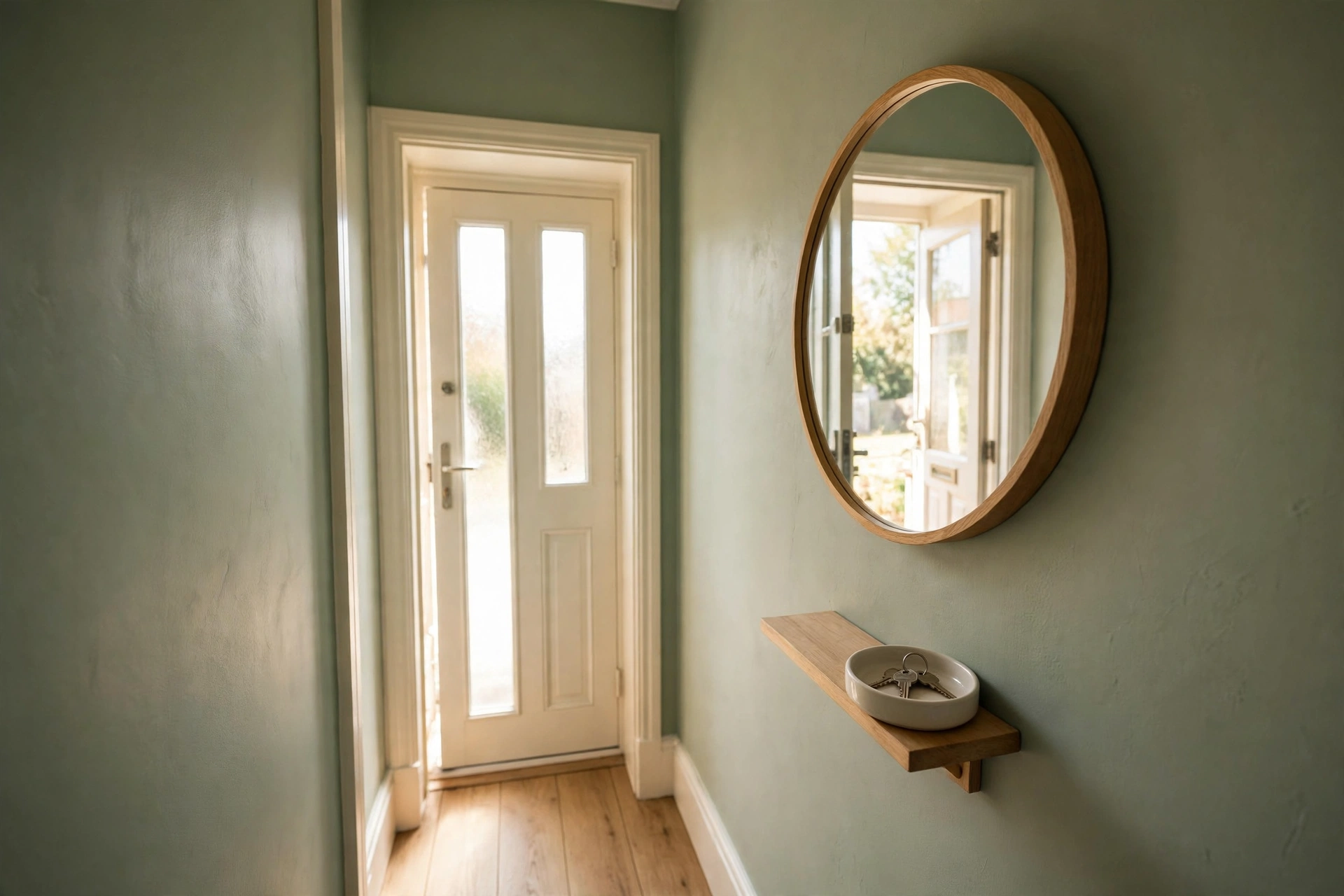
A mirror is the single best thing you can add to a narrow entryway, and it does three jobs at once. It bounces light from the front door or the nearest window down the hallway, which makes a dark hall feel brighter. It makes the hallway look wider, because your eye reads the reflection as extra space. And it gives you a last check of your outfit before you leave, which is what a mirror by the door is for.
A round mirror works best in a narrow hall, because it has no corners to catch your eye and it softens the straight lines of the walls. A mirror about eighteen to twenty-four inches across is right for most entryways. Hang it at eye level, with its centre about sixty inches from the floor, on the wall opposite the door or on the longest wall. A round mirror costs between fifteen and thirty dollars, and a removable adhesive mirror, the kind that sticks on with strips, costs under ten dollars and is perfect for renters.
Keep the mirror clean, because a dusty mirror in a dark hallway makes the space feel worse, not better. A quick wipe once a week with a damp cloth is enough. Do not hang the mirror where it reflects a messy room, because it will double the mess. Hang it where it reflects a window, a light wall, or the front door, and it will double the light instead.
Keys, post, and the small stuff: one dish, one tray
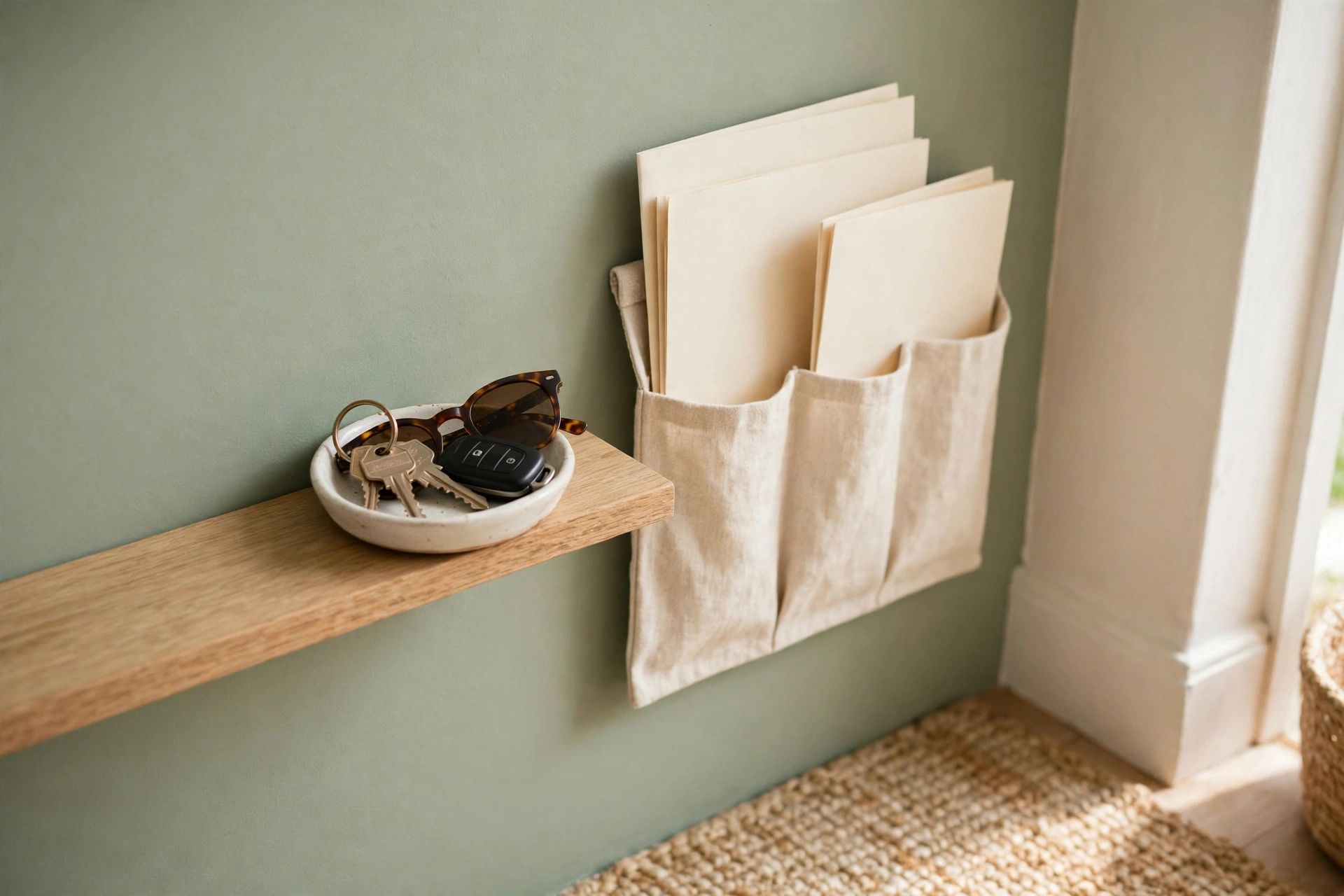
The small things are what make an entryway feel chaotic: keys, post, coins, sunglasses, lip balm, and the dog lead. The fix is one dish and one tray, and a rule that everything small lives in one of them. A small dish or a tiny bowl by the door holds the keys. A slim tray or a wall-mounted pocket holds the post. Sunglasses and lip balm go in the same dish as the keys, so you grab everything in one motion on the way out.
The dish should be small, about four to six inches across, and it should sit on the shelf or the console, not on the floor. A dish you already own works perfectly, a small cereal bowl, a saucer, or a jam jar lid. If you want something tidier, a wall-mounted key holder with three small hooks costs about eight dollars and holds the keys off the surface entirely, which leaves the shelf clear for the post tray.
Post needs its own spot, because post left on the entryway surface becomes a pile within a week. A slim wall pocket or a small tray holds the post until you deal with it. Sort the post the day it arrives: bin the junk, file the bills, and act on the letters that need a reply. A two minute sort at the door saves a twenty minute sort at the end of the month, and it keeps the entryway clear.
Coats: the seasonal swap that saves the hallway
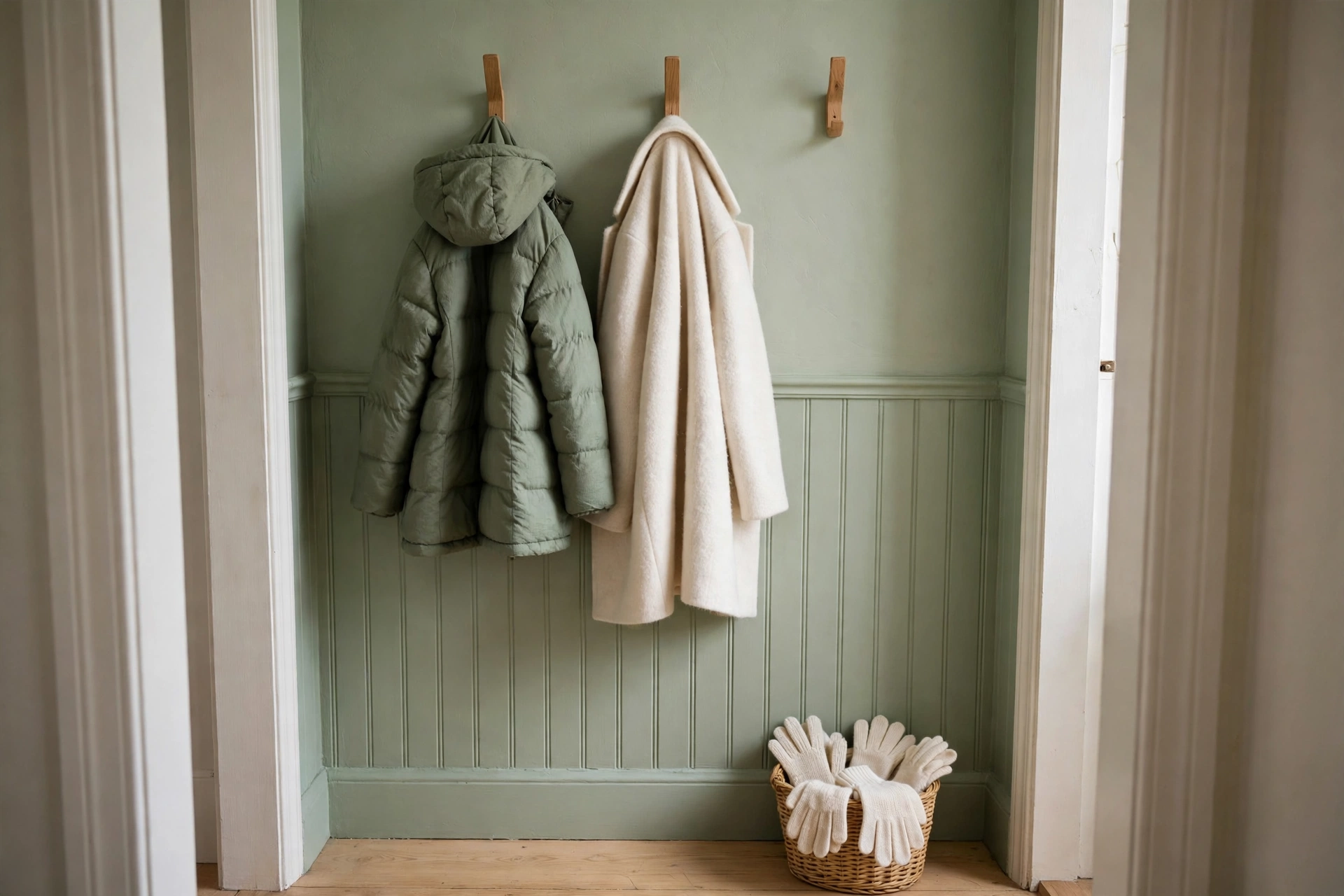
Coats are the biggest thing in an entryway, and a narrow hallway can only hold a few. The fix is a seasonal swap. In winter, the hooks hold the winter coats, one per person. In summer, the winter coats move to the bedroom closet or a vacuum bag under the bed, and the hooks hold light jackets. The swap takes twenty minutes twice a year, and it is the difference between a hallway with three coats and a hallway with eight.
Keep the coats you actually wear on the hooks, and store the rest. A coat you have not worn in a month does not belong by the door. A coat that is too heavy for the season does not belong by the door either. When the season changes, swap them in one go, and while you are there, check the pockets for old receipts, tissues, and loose change, and give the hooks a wipe.
Guests need a hook too. Keep one spare hook empty, or keep a folding hook that folds flat against the wall when it is not in use. A guest who has somewhere to hang their coat feels welcome, and a coat on a hook is better than a coat on a chair, which is where guest coats go when there is no hook. A folding hook costs about five dollars and it is the smallest, cheapest upgrade in this whole article.
Lighting a dark hallway without rewiring
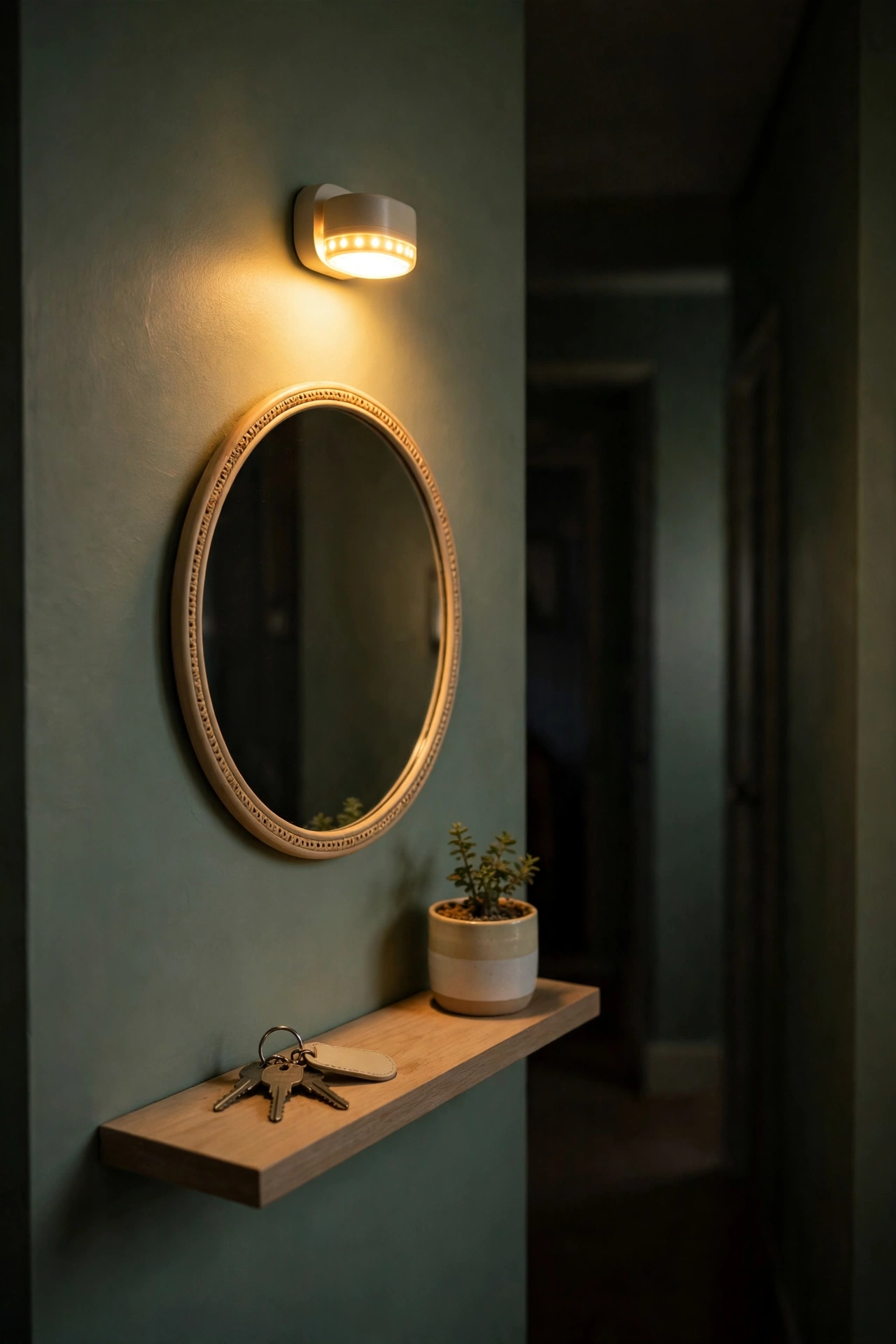
Most narrow hallways are dark, because they have no window and one ceiling light. The fix is small, cheap, and needs no electrician. A battery-powered LED light stuck to the wall above the mirror costs about five dollars and gives you light exactly where you need it, at the mirror and the key dish. A plug-in night light in the hallway socket costs about three dollars and keeps the hallway safe at night without leaving the big light on.
A small table lamp on the console or the floating shelf works too, if you have a plug socket nearby. A lamp with a warm bulb makes the hallway feel welcoming instead of gloomy, and it costs less than a pound a year to run on a timer plug. A timer plug costs about seven dollars and switches the lamp on at the same time every evening, so you come home to a lit hallway in winter.
Keep the light warm, not bright white. A warm light makes a small hallway feel calm and cosy, while a bright white light makes it feel like a corridor in an office. One warm light at the mirror, plus the ceiling light when you need it, is enough for any narrow entryway.
Make it yours: a small personal touch
An entryway is the first thing you see when you come home and the last thing you see when you leave, so it should feel like yours, not like a storage cupboard. One small personal touch is enough, and it should be small, because a narrow hallway has no room for a gallery wall. A framed photo, a postcard from a trip, or a small print in a simple frame costs a few dollars and makes the hallway feel like home.
A small plant works too, if the hallway gets any light. A small succulent or a trailing plant on the shelf needs almost no care and it softens the hard lines of the walls. If the hallway has no natural light at all, a good fake plant looks just as good and needs no watering. Keep it small, about six inches tall, so it does not block the mirror or the walkway.
A doormat is the last touch, and it is a practical one. A slim doormat, about eighteen inches deep, catches mud and rain before it reaches the floor, and it marks the entryway as its own space. A coir mat costs about eight dollars, it shakes out easily, and it lasts for years. Pick a plain one in a colour that matches the hallway, because a busy pattern in a narrow hall makes the space feel smaller.
The two minute tidy that keeps it working
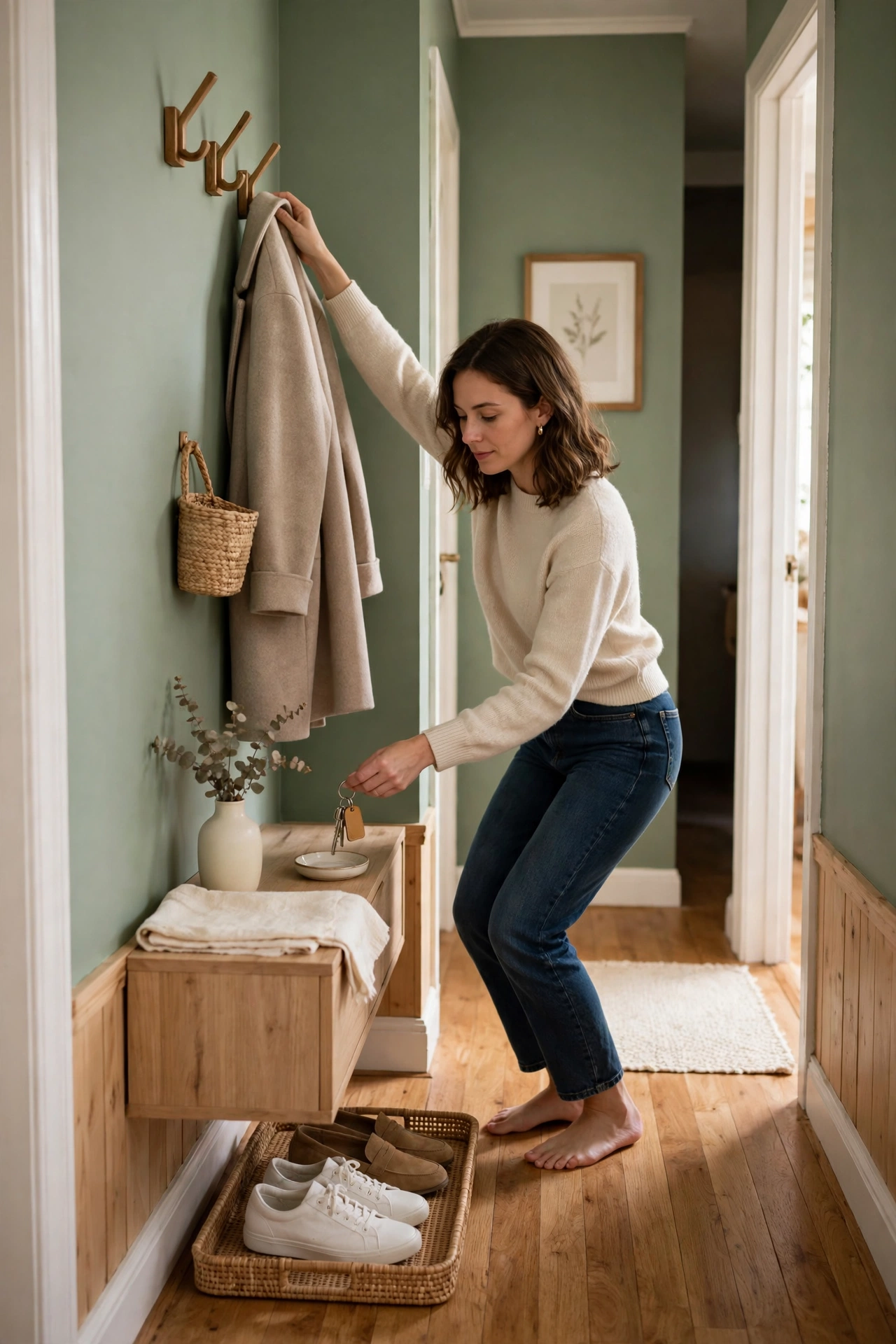
A narrow entryway only works if it stays tidy, and it only stays tidy with a two minute habit. Every evening, when you come home, do three things. Hang your coat on your hook, put your shoes on the tray, and drop your keys in the dish. It takes thirty seconds, and it means the hallway is ready for the morning. Then once a day, pick up anything that does not belong in the hallway, a toy, a bag, a parcel, and carry it to the room where it belongs.
Once a week, spend two minutes on the hallway. Wipe the mirror, shake the doormat outside, check the shoe tray for mud, and sort the post. Two minutes a week stops the slow build-up that turns a tidy hallway into a dumping ground. If the hallway starts to fill up again, do a one bag check: walk through the hallway with a bag, and put anything that does not belong there into the bag. One bag, two minutes, done.
Teach everyone in the flat the same three steps. A hallway is a shared space, and it only works when everyone uses the hooks, the tray, and the dish. Put a small note on the inside of the door for the first week if it helps, then take it down when the habit sticks. A narrow entryway is not a design problem, it is a habit problem, and the habit is small.
Your narrow entryway plan, step by step
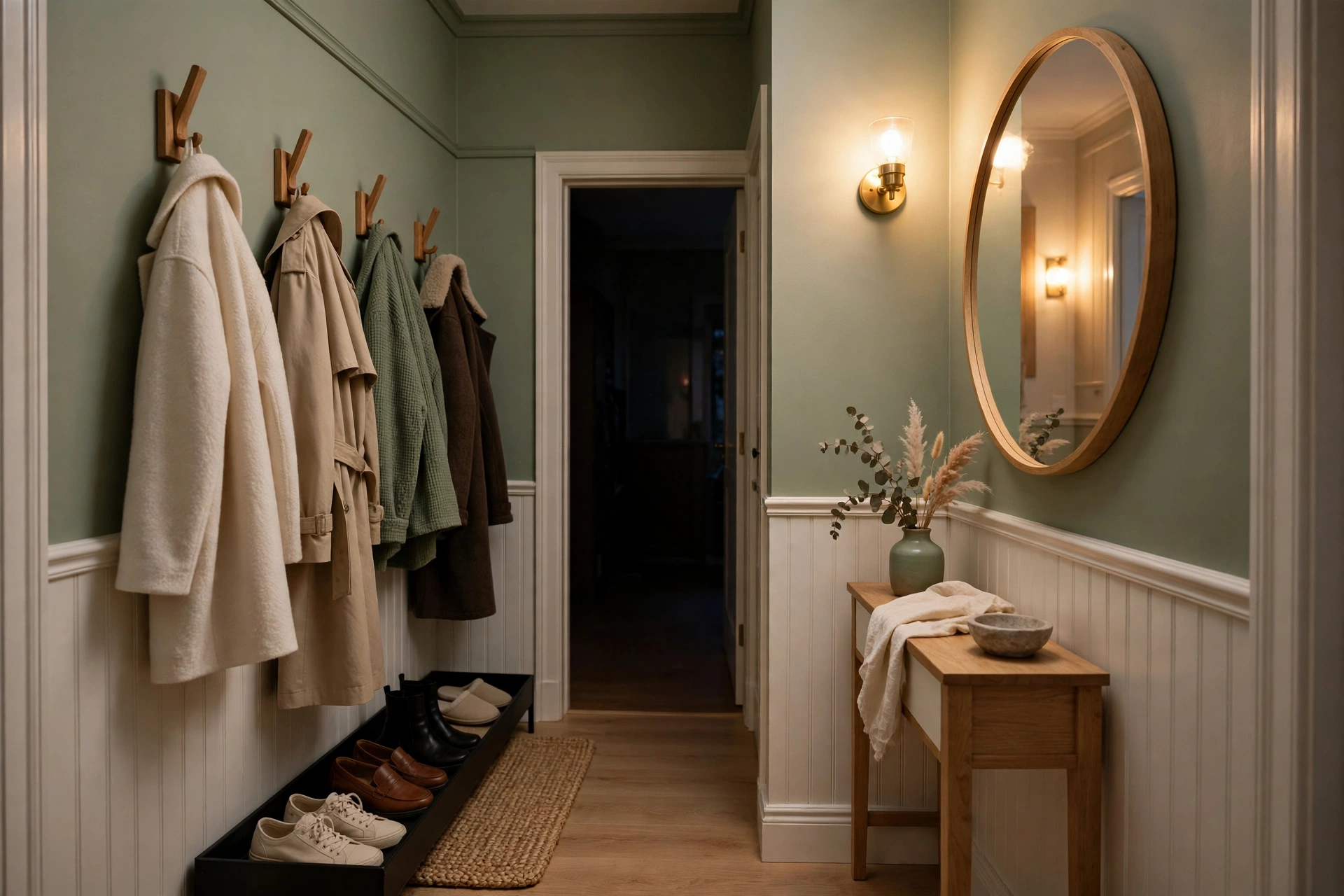
Here is the whole entryway as a one afternoon plan. First, measure the hallway and write down the width and the depth you can spare. Second, clear everything out of the hallway and sort it into keep, move, and donate. Third, fix the hooks and the rail to the wall with removable adhesive strips, at sixty inches for coats and seventy inches for the shelf. Fourth, put the shoe tray by the door and the mirror on the wall opposite the door.
Fifth, add the small things: the key dish, the post tray, and the doormat. Sixth, bring back only the coats, shoes, and bags that belong in the hallway, one per person, and put the rest away. Seventh, add the personal touch, the photo or the plant, and switch on the light. Stand at the front door, look down the hallway, and walk through it carrying a bag. If you can walk through without turning sideways, it works.
A narrow entryway does not need a big budget or a renovation. It needs a tape measure, a row of hooks, a shoe tray, a mirror, and a two minute habit. Start with the measure, add the hooks this weekend, and by next week the hallway will be the calmest part of the flat, the part that says welcome home instead of watch your step.
Related pins
- Small Apartment Organization Ideas
- 15-Minute Daily Reset Routine
- New Year Home Reset in 7 Days
- Declutter in 7 Days
- Small Christmas Tree Ideas for Tiny Apartments