Kids Room Organization Ideas That Actually Stick
A kids room stays tidy only if a child can tidy it alone, and that means everything has a home a child can reach.
Introduction
A kids room gets messy faster than any other room in the house, and it is not because children are messy. It is because the room asks them to do something they cannot do: put things away in places they cannot reach, in boxes they cannot open, with labels they cannot read. The room is set up for an adult, and the child lives in it.
The ten ideas below make a small kids room work for the child who lives in it. Every home is low, open and labelled with pictures, so a three-year-old can tidy up alone and a seven-year-old can keep it tidy. Each idea costs under $20, most cost under $10, and none of them need drilling, which matters in a rented home. Together they give every toy a home a child can reach, so tidy-up takes five minutes, not an hour.
Start with the two ideas that change the room fastest, usually the low cubbies and the picture labels, and add the rest over the next few weeks. Prices are approximate US budget-store prices in 2026.
Before you start
Do not buy storage first. Watch the child tidy up first, because a kids room does not need more boxes. It needs homes a child can reach, and you cannot see what the room needs until you watch a child try to tidy it.
1. Watch the child tidy up once. Ask the child to tidy the room, then watch, without helping. Where do they stop? What do they leave on the floor? What do they put in the wrong place? The places where they stop are the places the room fails them: a box that is too high, a lid that is too hard to open, a label they cannot read. Fix those places first, because they are the reason the room gets messy.
2. Count what lives on the floor. Walk into the room and count everything on the floor that has no home: the toys, the books, the shoes, the clothes. Write the number down. That number is how many homes you need to make, and it is usually smaller than you think. Most kids rooms need five or six homes, not twenty.
3. Measure the low spaces. The space under the bed, the bottom shelf of the bookcase, the floor beside the bed. Measure each one and write the numbers on your phone. Kids storage works when it fits the low space exactly, because a child can only use what a child can reach. A box that is two inches too wide for the low shelf is a box that lives on the floor.
Common mistake: buying pretty baskets and boxes before you know what needs a home, and ending up with more storage than toys. Storage you buy first becomes clutter itself. Watch first, count second, buy third, and the storage will actually get used.
1. Low cubbies the child can reach
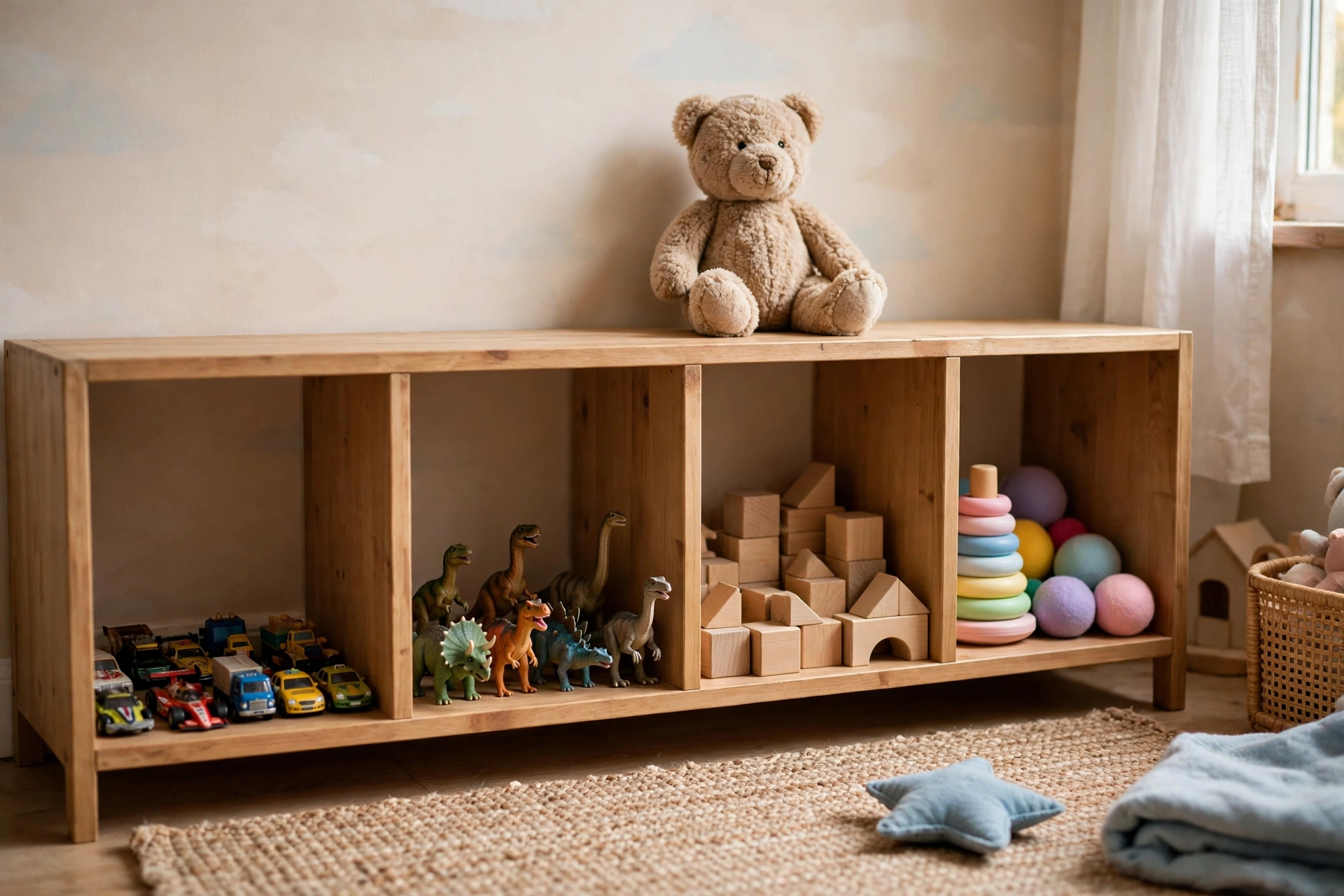
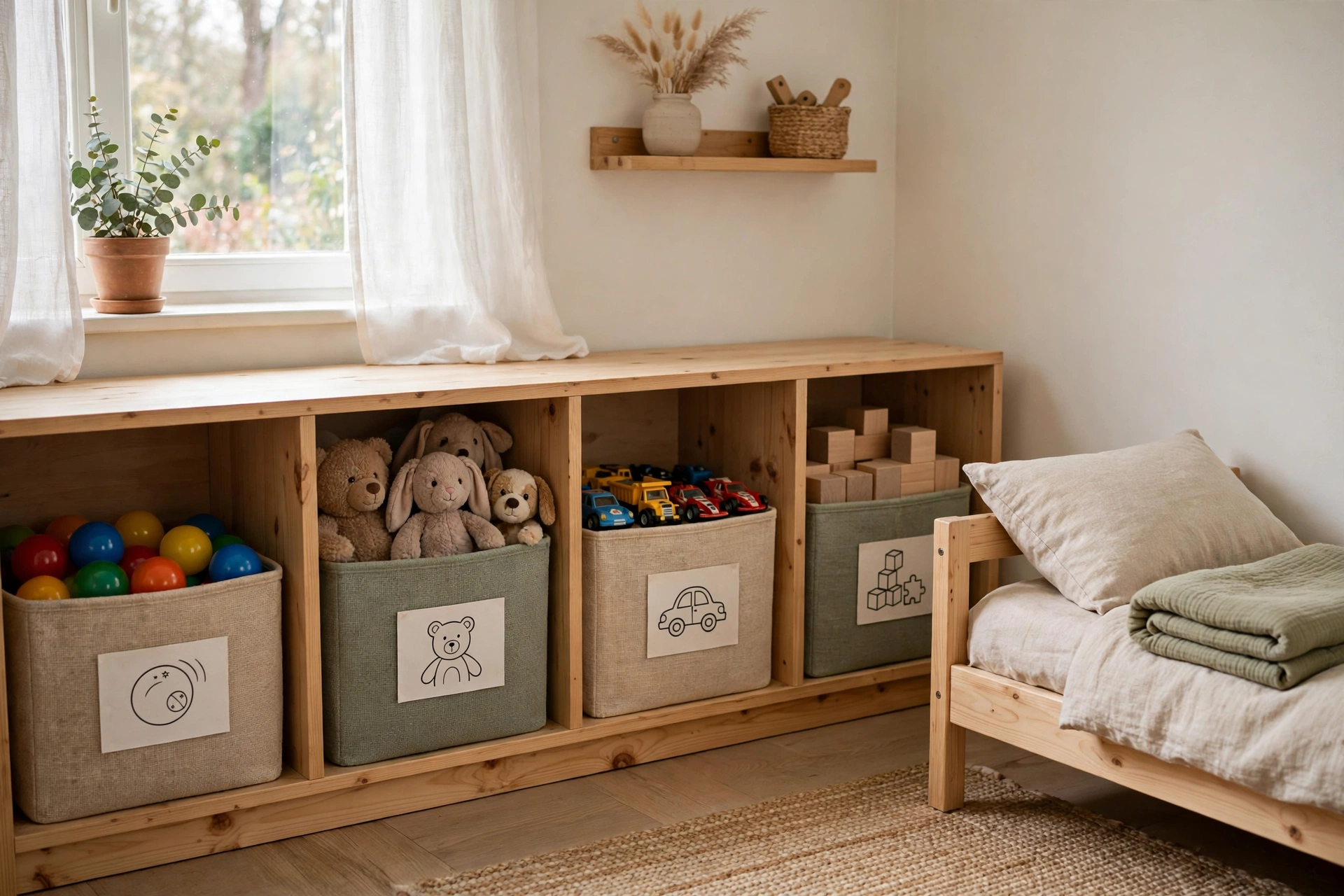
A cubby a child can reach is a cubby a child will use. A cubby a child cannot reach is decoration.
What to buy: One low cube shelf unit, about $15-$20, or a set of low open bins for $10-$15. Choose a unit that is no taller than the child’s chest, so every cubby is within reach without climbing.
Where it goes: Against the wall the child faces when they play, low enough that the child can see into every cubby without standing on tiptoes. Not in the corner behind the door, because a cubby the child cannot see is a cubby the child will not use.
Common mistake: Buying a tall bookcase and putting the toys on the top shelves, then wondering why the toys live on the floor. A child uses the bottom two shelves and ignores the rest. Low is the whole point, and low is what makes tidy-up work.
Try this today: Take everything out of the toy box and put it on the lowest shelf you already have, in the open, where the child can see it. If the child plays with more toys tonight, the low cubbies are worth the $18.
2. Picture labels, not word labels
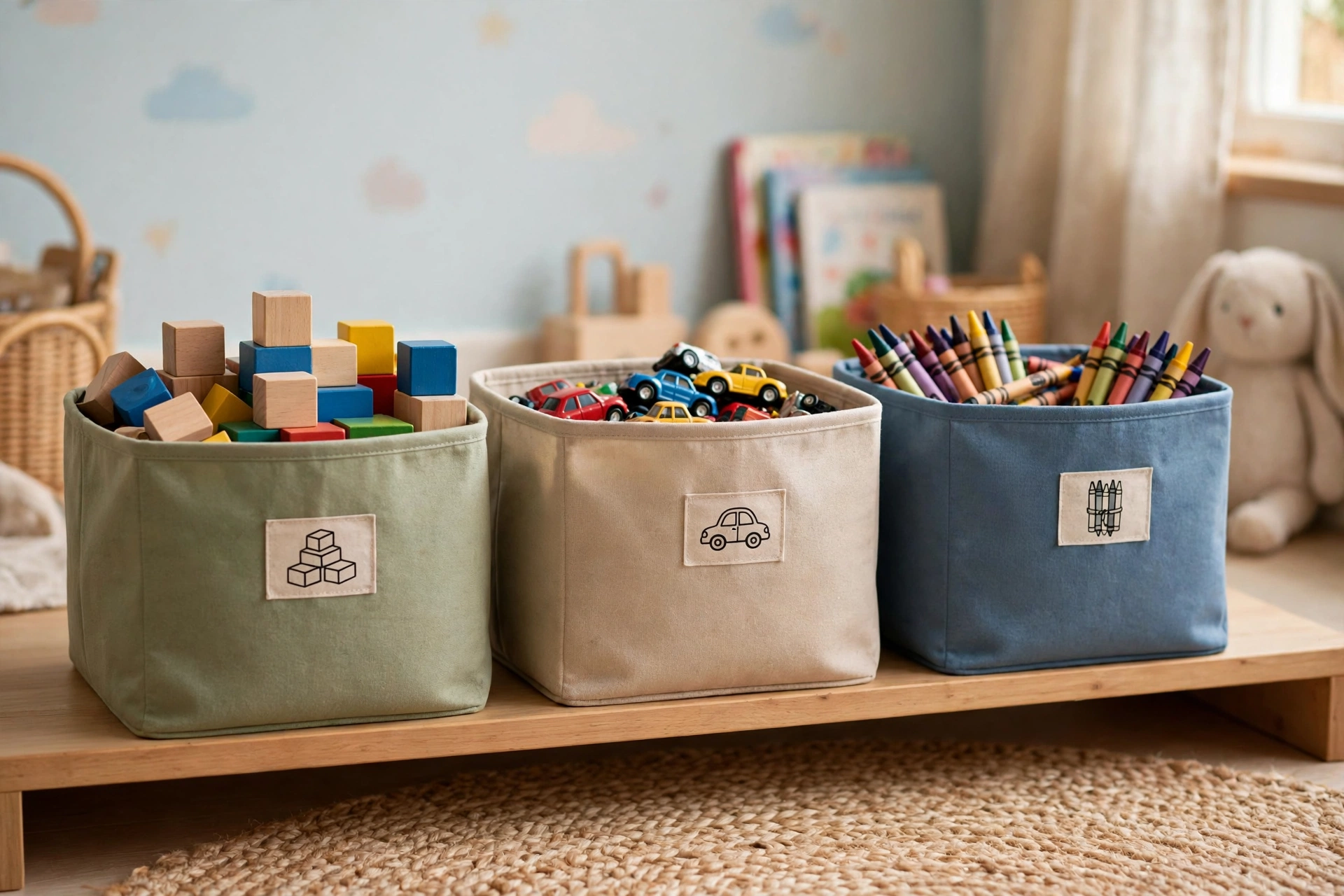
A child who cannot read can still tidy up, if the label shows a picture of what lives inside.
What to buy: One pack of picture labels, or a marker and card for $3-$5. Draw the toy, or print a photo of it, and stick the picture on the front of the bin. That is all a label needs to be.
Where it goes: On the front of every bin, box and basket, at the child’s eye level, where the child can see it without opening the bin. One picture per bin, and one kind of toy per bin, because a bin with two pictures is a bin the child has to think about.
Common mistake: Writing the toy’s name in neat handwriting, then wondering why the child puts the cars in the blocks bin. A child who cannot read the word cannot use the label. A picture needs no reading, and it works the first time.
Try this today: Draw a car on a piece of card and stick it on the bin that holds the cars. Ask the child to put the cars away. If the cars go in the right bin, the picture labels are worth the $4.
3. One bin per kind of toy
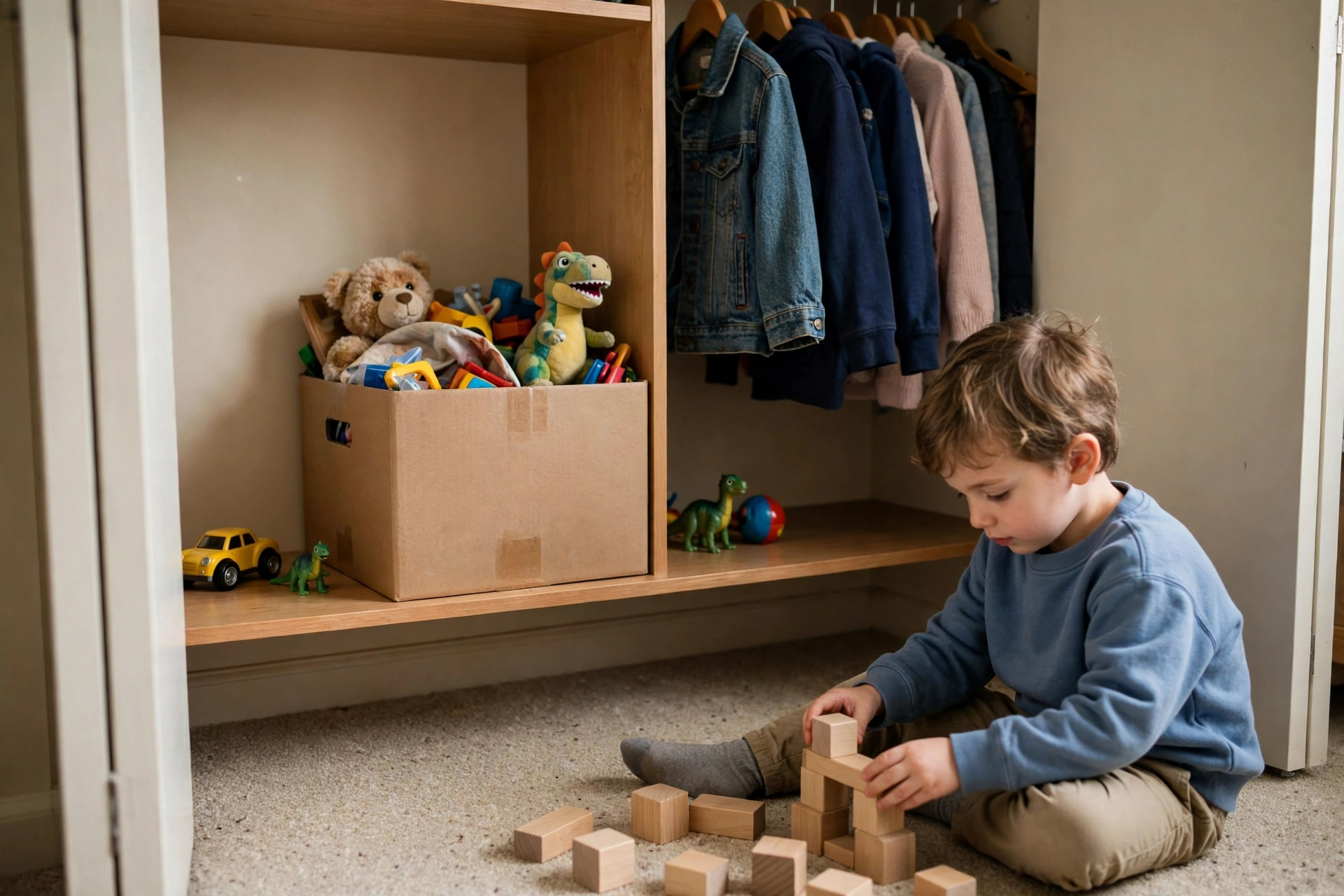
One kind of toy per bin means the child never has to decide where a toy goes, and that is what makes tidy-up fast.
What to buy: Three or four small bins, about $4-$6 each, or one set of four for $12-$18. Choose bins the child can lift with one hand, with no lids, because a lid is a step the child will skip.
Where it goes: In the low cubbies, one bin per kind of toy: blocks in one bin, cars in one bin, dolls in one bin. Not mixed together, because a mixed bin is a bin the child has to dig through, and digging is what makes tidy-up slow.
Common mistake: Using one big toy box for everything, then watching the child tip the whole box out to find one toy. A big box hides the toys, and a hidden toy is a toy the child forgets. Small bins show the toys, and a toy the child can see is a toy the child will play with.
Try this today: Put the blocks in one bag, the cars in another bag, and the dolls in a third bag, and put the bags on the low shelf. If tidy-up takes less time tonight, the bins are worth the $15.
4. A book shelf that faces out
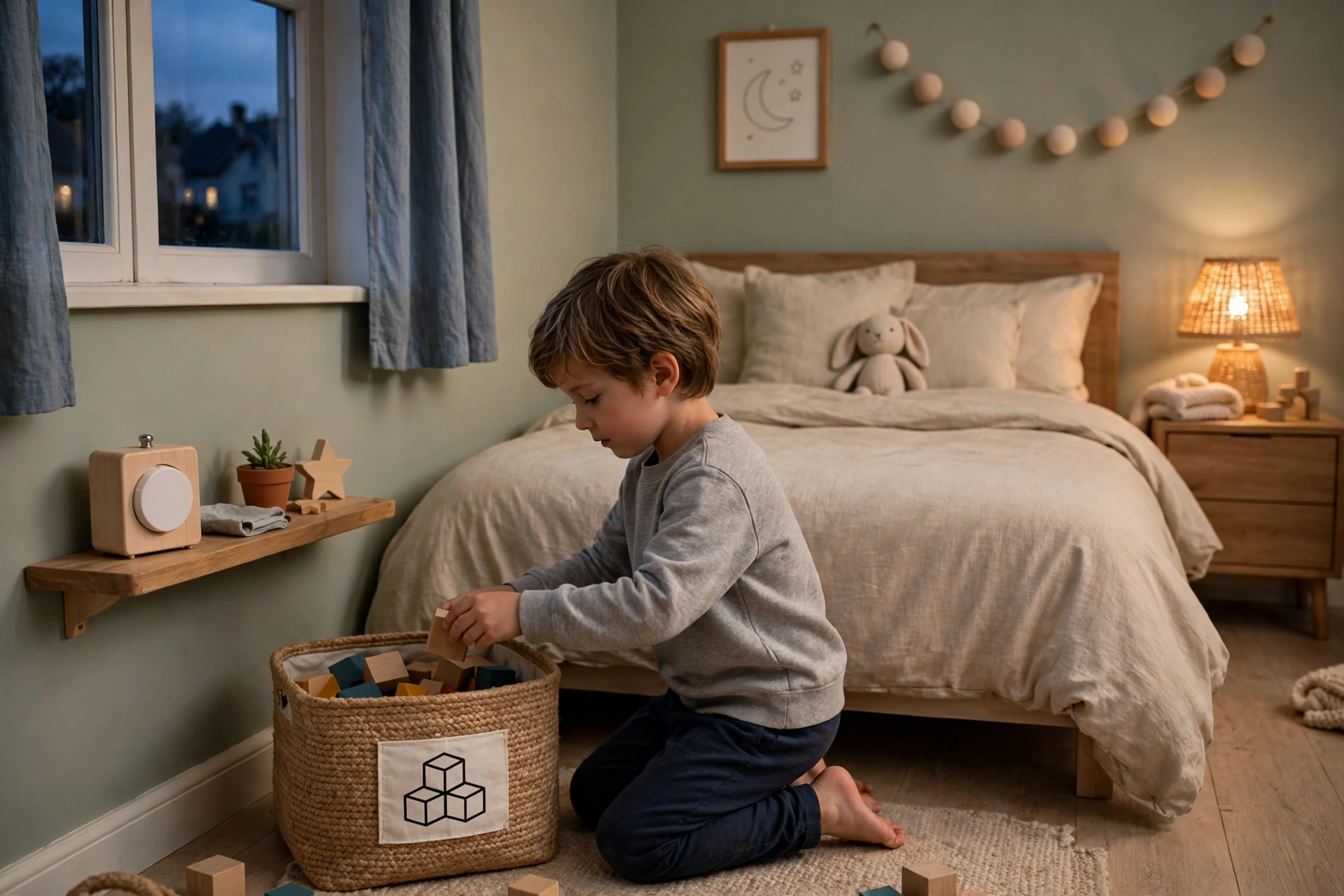
A child chooses a book by its cover, so a shelf that shows the covers is a shelf that gets used.
What to buy: One small forward-facing book shelf, about $12-$18, or a picture ledge for $8-$12. Choose a shelf that holds the books with their covers facing out, low enough that the child can reach the top shelf.
Where it goes: On the wall beside the bed, or beside the reading cushion, where the child can see the covers and choose a book without pulling them all out. Not high on the wall, because a book the child cannot reach is a book the child will not read.
Common mistake: Putting the books spine-out on a tall shelf, then wondering why the child never reads. A child cannot read a spine, and a spine-out shelf is a shelf for an adult. Covers out is what makes a child choose a book.
Try this today: Turn five books cover-out on the lowest shelf you already have, and put a cushion in front of it. If the child reads more tonight, the forward-facing shelf is worth the $15.
5. The under-bed box for out-of-season toys
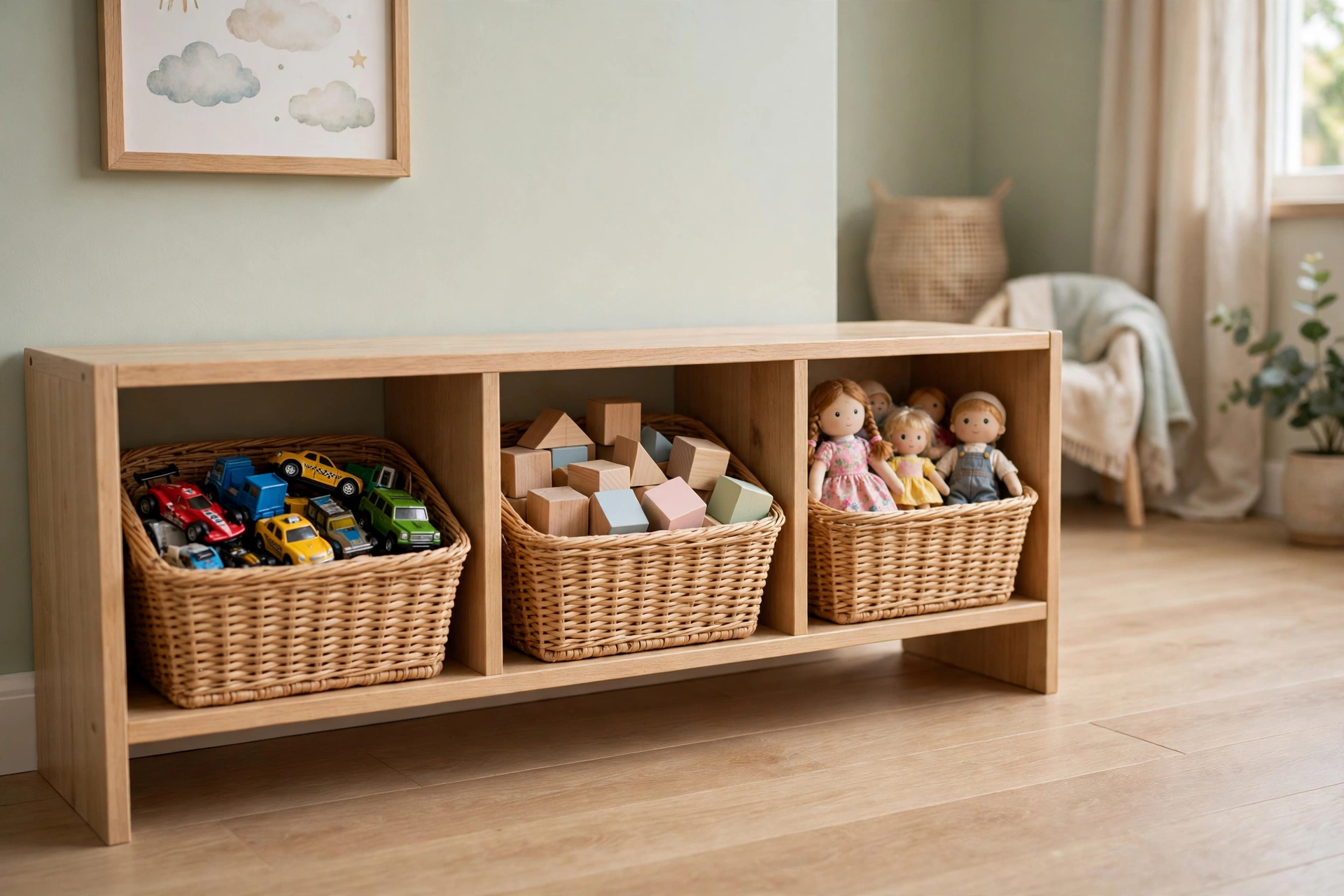
Under the bed is the biggest hidden space in a kids room, and it is already there.
What to buy: One low flat storage box with a lid, about $8-$12, that slides under the bed. Choose a box the child can pull out alone, with a handle the child can grip.
Where it goes: Under the bed, holding the toys the child has outgrown for now, or the toys that come out on rainy days. Not under the bed for everyday toys, because pulling a box out every morning is a chore the child will stop doing.
Common mistake: Using the under-bed box for the toys the child plays with every day, then watching the box live on the floor because the child is tired of sliding it in and out. Under the bed is for weekly and rainy-day toys. Daily toys live in the cubbies.
Try this today: Put the toys the child has not played with this week into any flat box you already own and slide it under the bed. If the room feels calmer tonight, the under-bed box is worth the $10.
6. Hooks at the child’s height
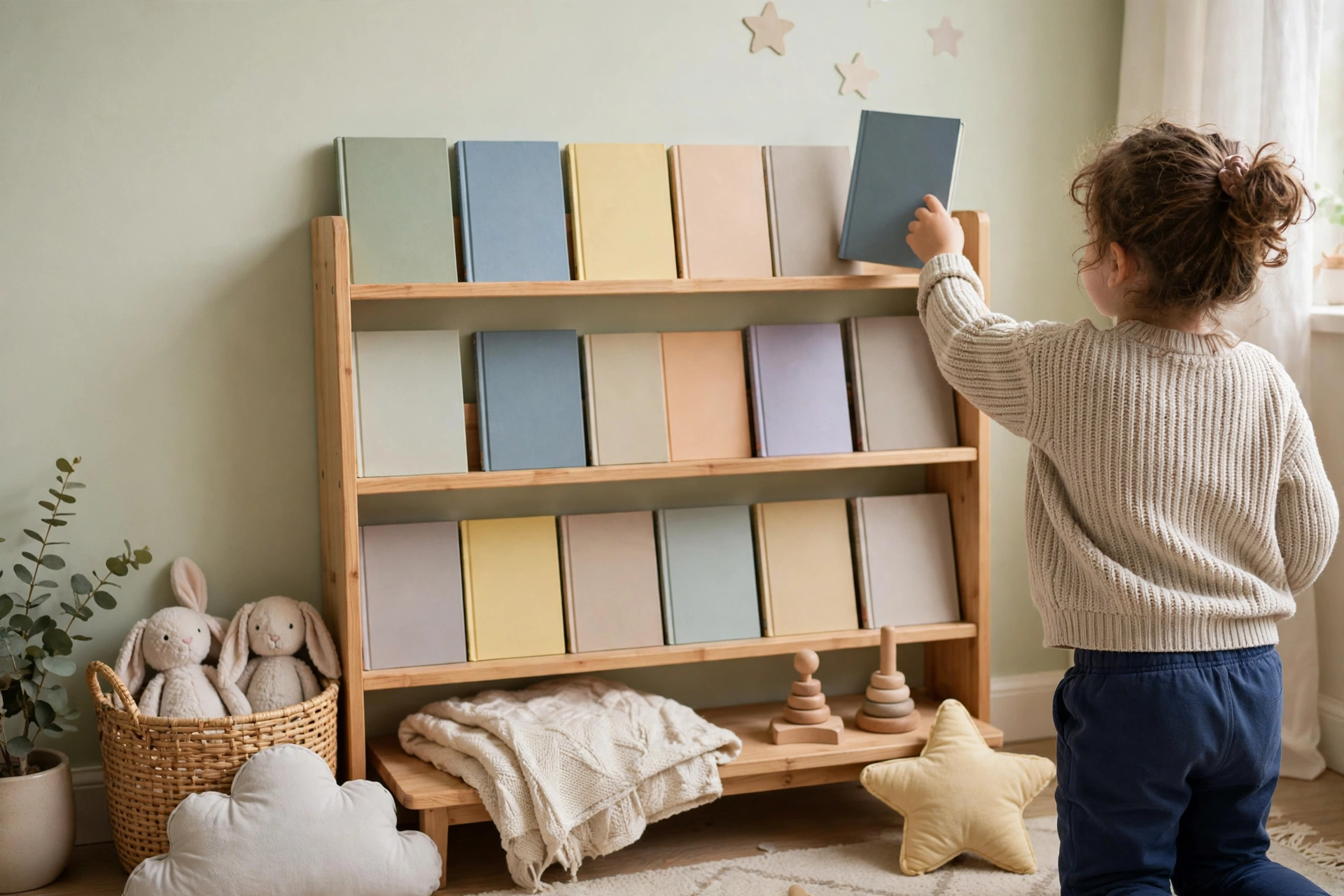
A hook at a child’s height is a hook a child will use. A hook at an adult’s height is a hook the child walks past.
What to buy: One row of low wall hooks, about $8-$12, or a pack of adhesive hooks for $3-$5. Choose hooks that stick out enough for a coat, but not so far that the child walks into them.
Where it goes: On the wall beside the door, at the child’s shoulder height, where the child can hang a coat and a backpack without help. Not high on the wall, because a hook the child cannot reach is a hook that holds nothing.
Common mistake: Putting the hooks at adult height, then hanging the child’s coat there yourself every day. A hook the parent uses is a hook the child never learns to use. Low is the whole point, and low is what makes the habit stick.
Try this today: Hang the child’s coat on any hook you already own, at the child’s height, and ask the child to hang it up. If the coat stays off the floor tonight, the low hooks are worth the $10.
7. A laundry basket the child can carry
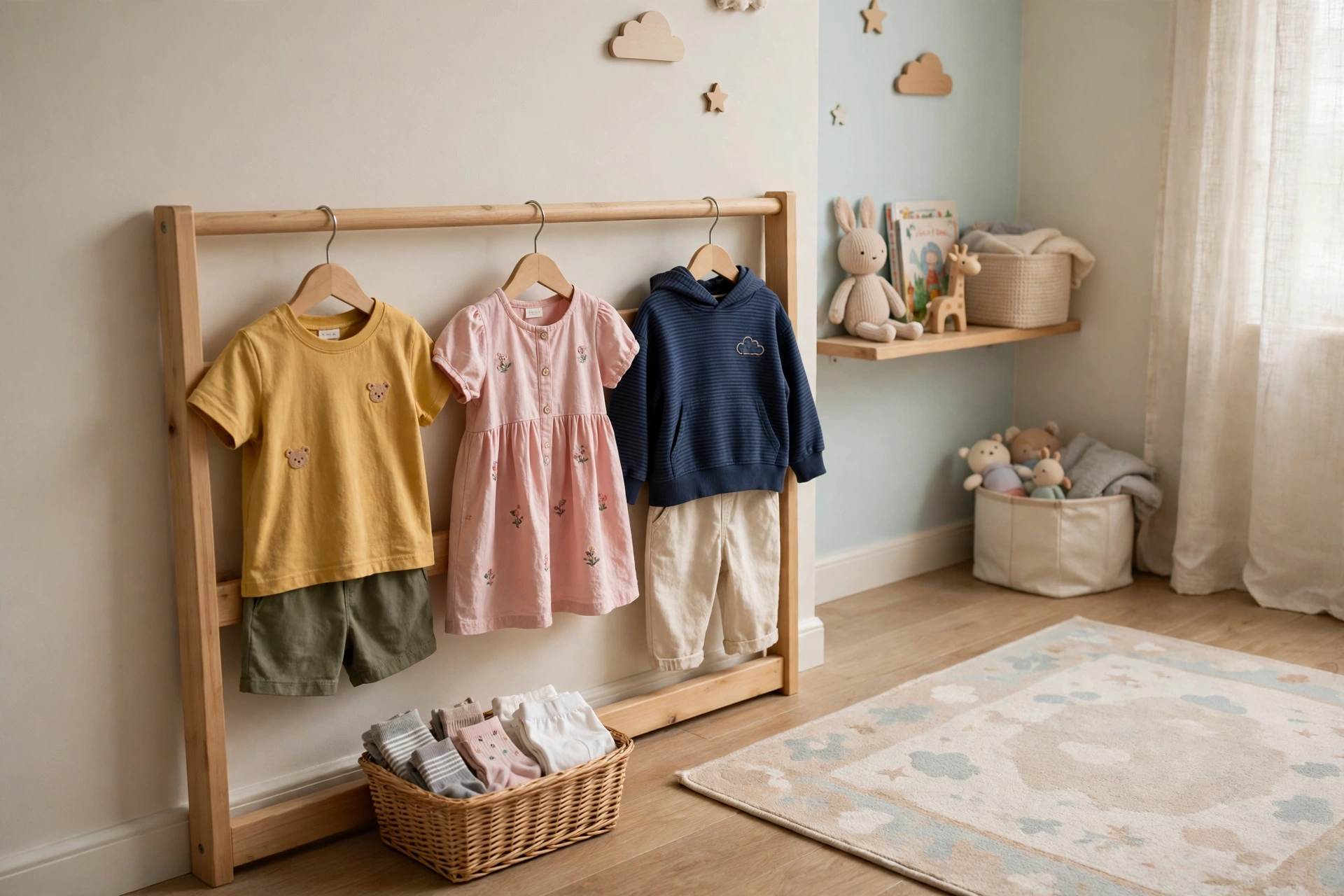
A laundry basket a child can carry is a basket a child will use, and that is one less pile on the floor.
What to buy: One small light laundry basket, about $6-$10, with handles a child can grip. Choose a basket the child can carry when it is full, not one that is too heavy to lift.
Where it goes: Beside the bed, where the child undresses, so the clothes go in the basket, not on the floor. Not in the bathroom, because the child undresses in the bedroom, and the basket has to be where the clothes come off.
Common mistake: Buying a big laundry basket that the child cannot lift, then wondering why the clothes live on the floor. A basket the child cannot carry is a basket the parent empties. Small and light is what makes the habit stick.
Try this today: Put any small basket or bag beside the bed and ask the child to put tonight’s clothes in it. If the floor is clear in the morning, the small basket is worth the $8.
8. A display shelf for the favourites
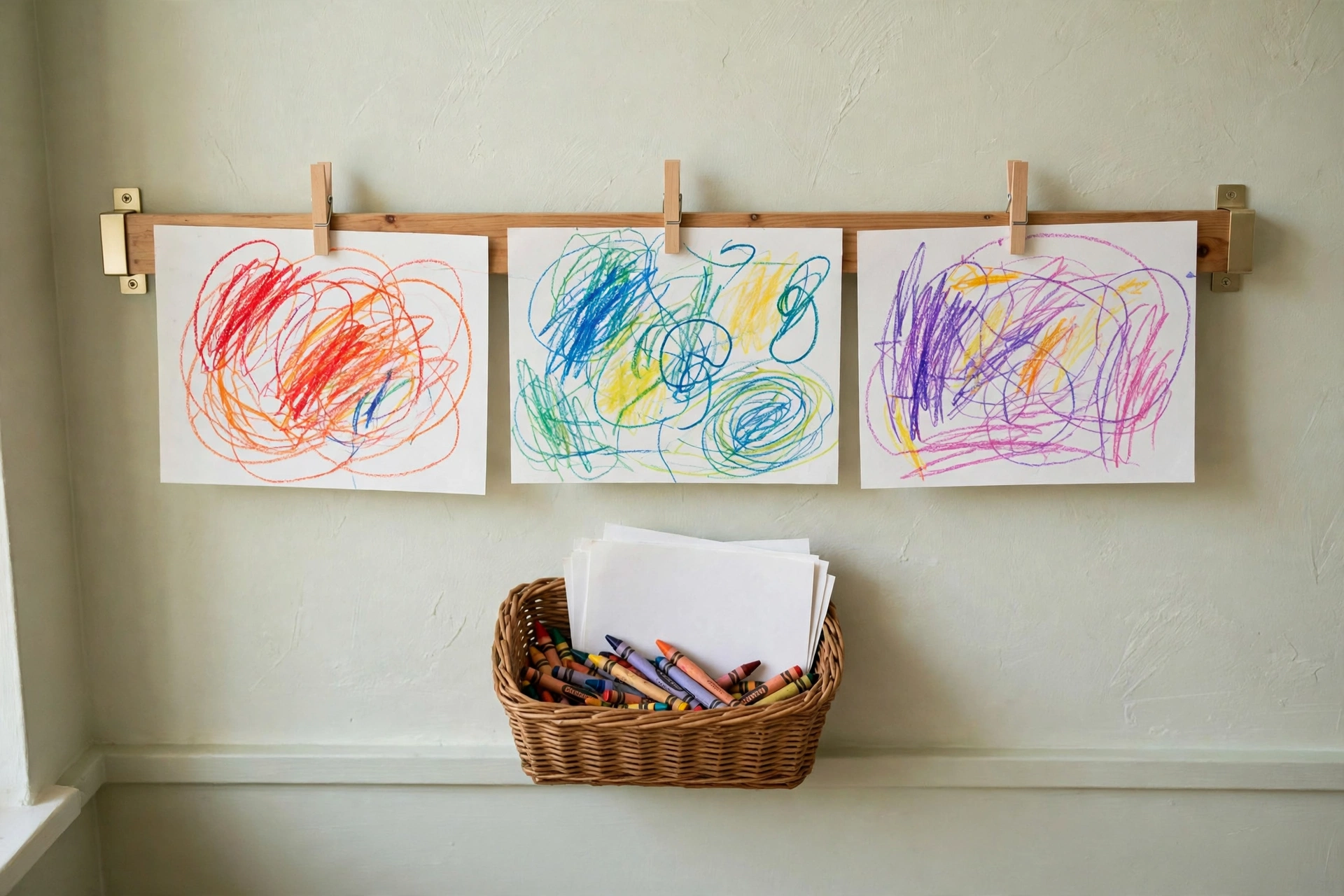
A child needs somewhere to show the favourites, because a favourite on display is a favourite that stays special.
What to buy: One small display shelf, about $8-$12, or a picture ledge for $6-$10. Choose a shelf that holds three or four favourites, no more, because a display with ten things is not a display.
Where it goes: On the wall the child sees when they wake up, at the child’s eye level, where the favourites can be seen and admired. Not above the bed, because things fall off shelves, and a shelf above the bed is a shelf the child cannot reach.
Common mistake: Putting every toy on display, then wondering why the room still looks messy. A display holds the favourites, and the rest live in the bins. Three favourites on a shelf is a display. Ten toys on a shelf is a pile with a ledge.
Try this today: Ask the child to choose three favourites and put them on any shelf you already have, in a row, where they can be seen. If the child keeps them there tonight, the display shelf is worth the $10.
9. The tidy-up song and the timer
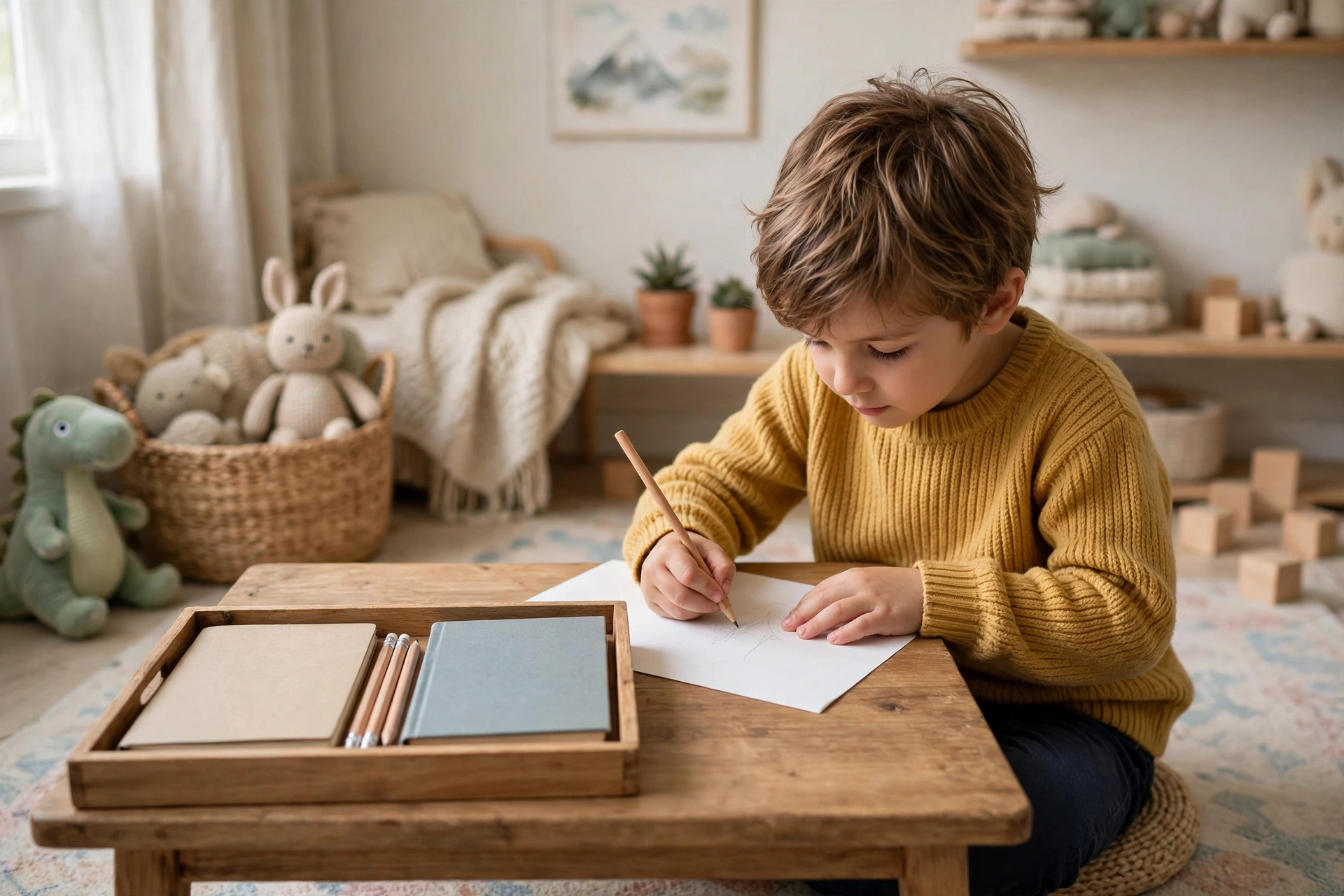
Tidy-up works when it is a game with a timer, not a chore with no end.
What to buy: One small kitchen timer, about $5-$8, or a sand timer for $3-$5. That is all. A timer does not need to be pretty, it needs to be loud enough to hear from the next room.
Where it goes: On the low shelf, where the child can see it and turn it, so tidy-up has a start and a finish. Set it for five minutes, and tidy up together until it rings. Five minutes is enough, because five minutes is a game, and an hour is a chore.
Common mistake: Telling the child to tidy the whole room, then watching them give up after ten minutes. A whole room is too big a job for a child. Five minutes and one shelf is a job a child can finish, and a finished job is a job the child will do again.
Try this today: Set a timer for five minutes and tidy one shelf together, singing the tidy-up song if you have one. If the shelf is tidy when the timer rings, the timer is worth the $6.
10. The one-in, one-out rule
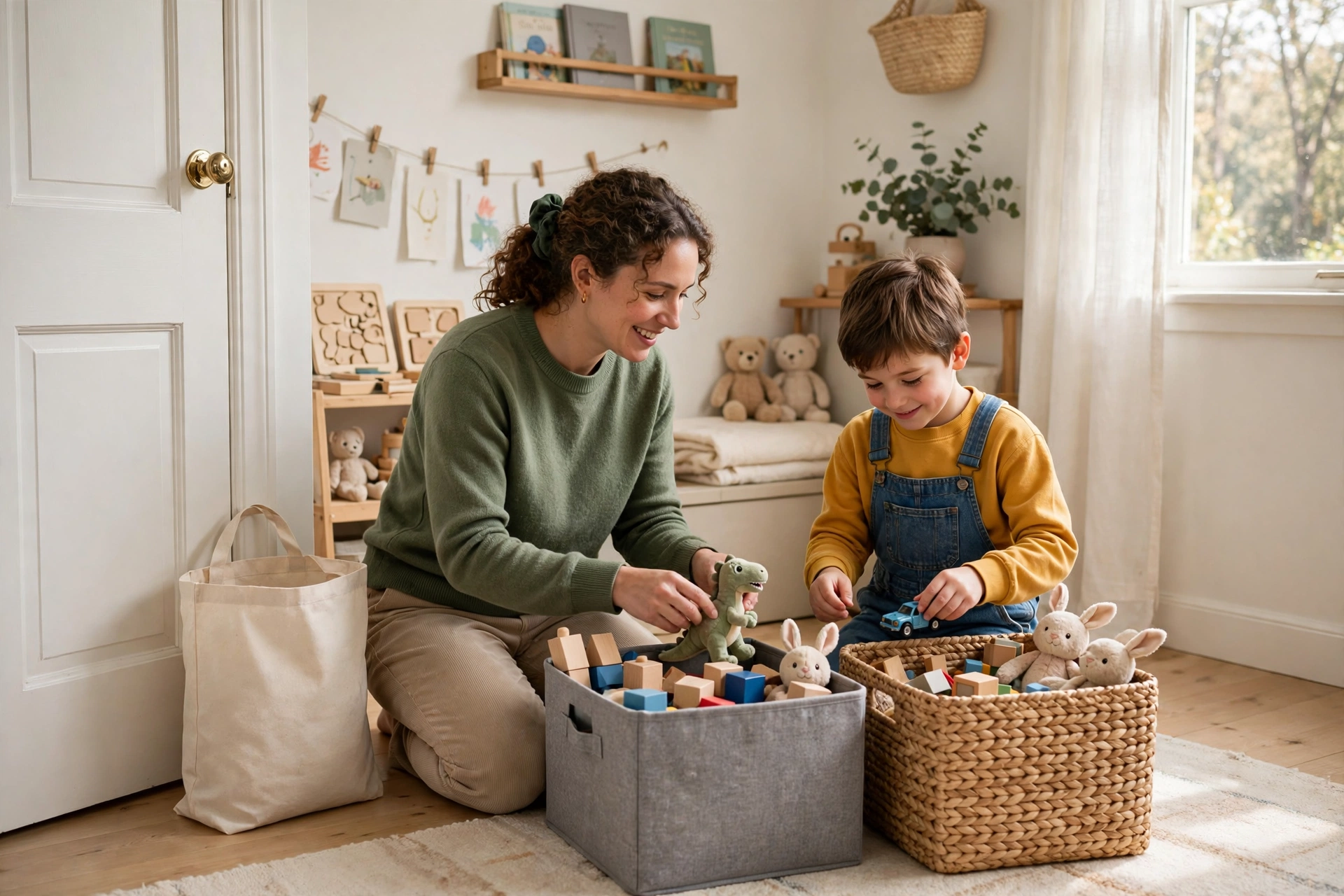
A kids room stays tidy only if something leaves when something new arrives, and that is a rule the child can learn.
What to buy: One donation box, about $5-$8, or any box you already own. Put it by the door, where the child can see it, and label it with a picture of a toy going to a new home.
Where it goes: By the door, or in the cupboard, where it is easy to reach when a new toy arrives. When a new toy comes in, the child chooses one old toy to put in the box. One in, one out, every time, so the room never gets fuller than it is today.
Common mistake: Giving the old toys away without the child, then wondering why the child hides the new toys. A child who chooses what goes is a child who trusts the rule. A child who finds toys missing is a child who hides the next ones.
Try this today: Ask the child to choose one toy to give away, and put it in any box by the door. If the child chooses willingly, the one-in, one-out rule is worth the $6 box.
What it costs
Buy the low cubbies and the picture labels first ($19-$24), and add the bins if the toys still have no homes ($12-$18). That is roughly $31-$42, and it gives every toy a home a child can reach, so tidy-up takes five minutes. Add the book shelf next, when one specific pile starts to bother you. Remember that the timer costs $6, and it is what makes tidy-up a game.
The 15-minute version
If you only have 15 minutes today, do this: put the toys on the lowest shelf you already have, draw a picture label for the cars bin, hang the child’s coat on a low hook, and set a timer for five minutes of tidy-up together. Four small changes, one calmer evening. The rest of the list can wait until the weekend.
FAQ
How do I get my child to tidy up without a fight?
Make it a game with a timer, and make the homes easy to use. Five minutes, one shelf, and a picture label the child can follow. A child who can tidy up alone will tidy up alone, because it feels good to finish. A child who cannot reach the homes will not try, however much you ask.
Will this work for a three-year-old?
Yes, if the homes are low and the labels are pictures. A three-year-old can put blocks in a bin with a picture of blocks on it, and can hang a coat on a hook at their own height. A three-year-old cannot read a word label, and cannot reach a high shelf, so low and picture are the whole point.
What if my child has too many toys?
Then the one-in, one-out rule matters more, not less. When a new toy arrives, the child chooses one old toy to give away, so the room never gets fuller. Start with the toys the child has not played with this week, and put them in the under-bed box first.
Do I need matching bins?
No. The bins can be any bins that fit the low cubbies, as long as they are open and the child can lift them. Matching matters where you can see it. In the cubbies, fit and picture labels matter more than matching.
How do I keep the room tidy after the first week?
Five minutes every evening, same order, every night, with the timer. Tidy-up is not a one-day project. It is a five-minute habit, and the habit is what keeps the room tidy.
Keep it going
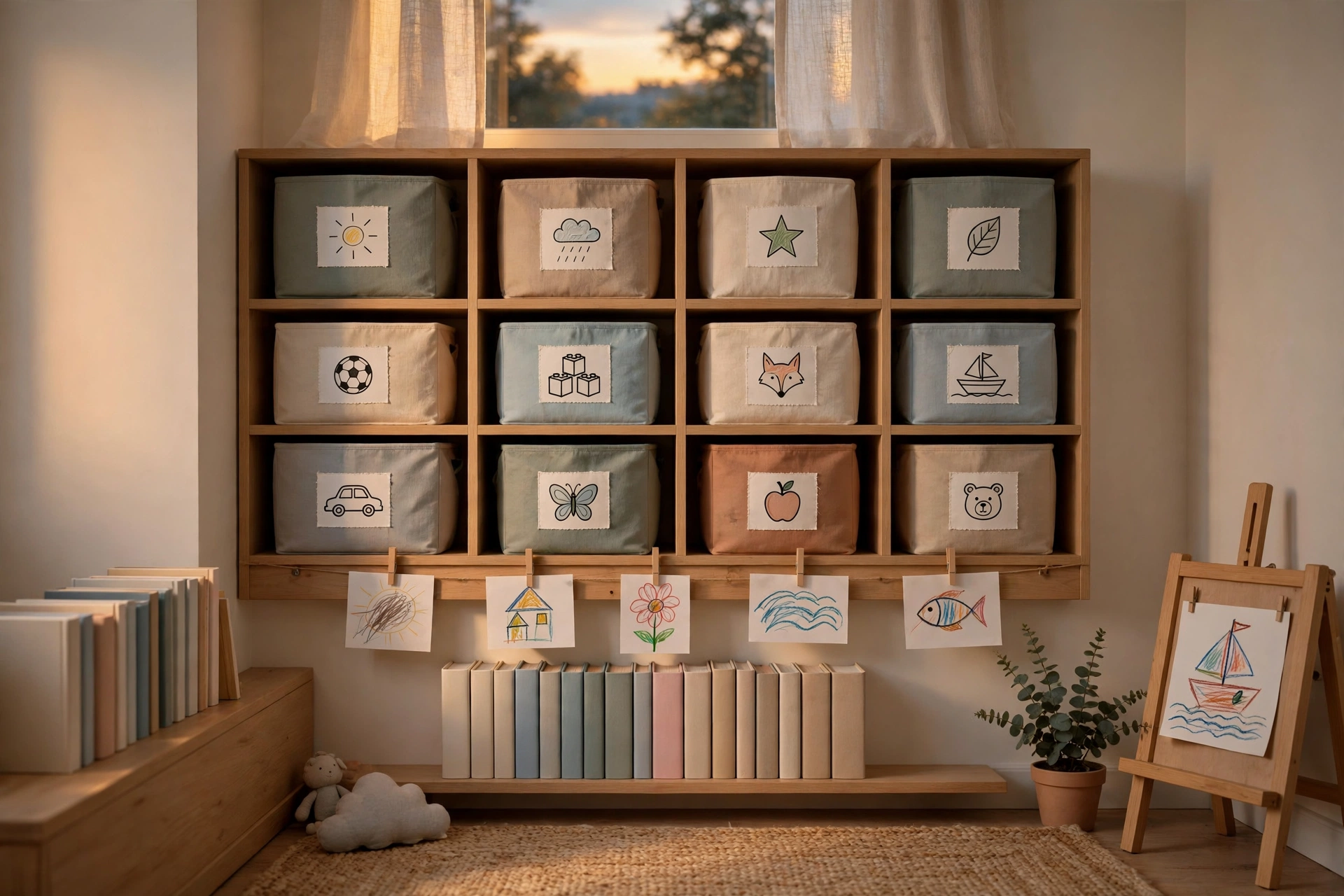
The finished look: every toy has a home a child can reach, and tidy-up takes five minutes.
A kids room does not need more storage. It needs homes a child can reach, picture labels a child can follow, and five minutes every evening. Start with the low cubbies today.
Related pins
- Pin 15: Kids Room Storage Ideas for Small Spaces
- Pin 24: Toy Storage Ideas That Kids Can Use
- Pin 5: Closet Organization for Kids
- Pin 14: Small Bedroom Ideas for Kids
- Pin 12: Playroom Organization on a Budget
- Pin 6: Kids Closet Organization Ideas