Under-Sink Cupboard Makeover on a Budget
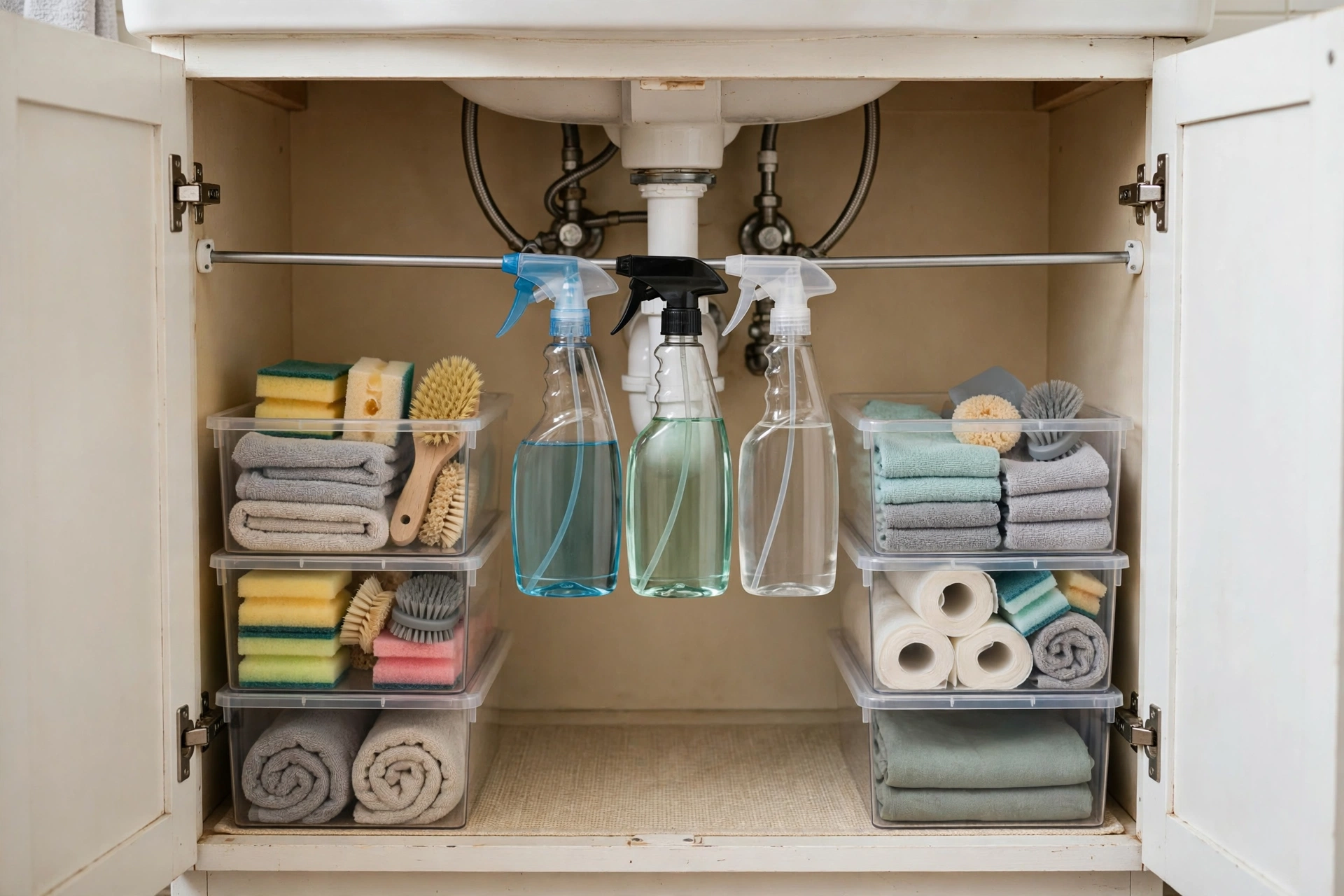
The cupboard under the sink is the messiest cupboard in the house, and it is also the easiest one to fix, because it only needs bins, a rod and zones.
Introduction
Open the cupboard under the bathroom sink and you will find the same mess in every small home: cleaning sprays fallen over, spare toilet rolls in a pile, half-empty bottles from three years ago, and one thing you need right now buried at the back behind the pipes. It is a small cupboard, but it holds the things you reach for every day, so its mess slows down every morning.
The ten ideas below make over the under-sink cupboard without any drilling and without new furniture. Each one costs under $20, most use bins and rods you already own, and all of them work for renters. Together they give the cupboard clear zones, so you can see everything at a glance and reach what you need without moving five other things.
Start with the two ideas that change the cupboard fastest, usually emptying it completely and adding the stackable bins, and add the rest over the next week. Prices are approximate US budget-store prices in 2026.
Bathroom organization is also one of the rising topics in this niche right now: “bathroom organization” is up about 15% in Pinterest Trends (US, Nov 2026), and under-sink storage is one of the strongest evergreen terms in the niche, searched all year round. November is the right month for it, just before the December to January home organization peak.
Before you buy anything
Do not buy bins and rods first. Empty the cupboard first, because most under-sink cupboards hold more than they can use, and you cannot see what the cupboard needs until it is empty.
- Take everything out, then throw the dead things away. Put it all on the bathroom floor. Throw away anything empty, anything you have not used in a year, and anything that has leaked or gone sticky. Most cupboards lose a third of their contents in this one step, and the cupboard already looks bigger.
- Measure around the pipes before you shop. The pipes are the reason under-sink storage fails: the bin is too tall, the shelf is too deep, and nothing fits. Measure the width, the depth and the height on each side of the pipes, and write the numbers on your phone. A bin that fits around the pipes looks like it was made for the cupboard. A bin that is two inches too tall does not fit at all.
- Choose one zone per shelf, not one zone per bottle. Daily things in front, weekly things behind, spares at the back or on the top. Three zones is the limit. A cupboard with three zones is a cupboard you can use with your eyes closed. A cupboard with ten zones is a cupboard nobody understands.
Common mistake: buying a shelf unit that fits the cupboard on paper, then finding the pipes are in the way and the shelf wobbles. Measure the pipes first, then buy the bins. The pipes decide what fits, not the shop.
1. Empty it completely first
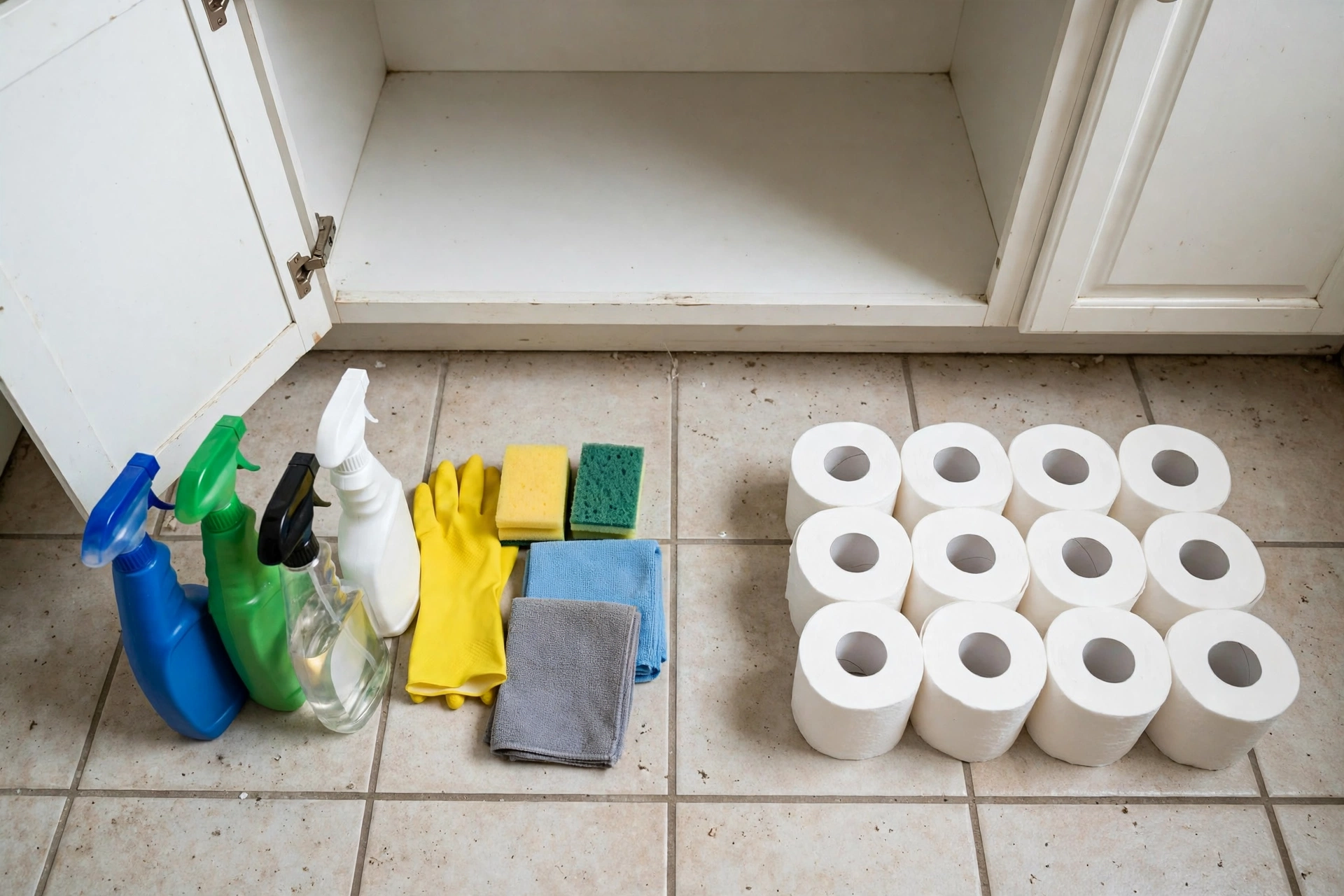
You cannot organize a cupboard you cannot see into, so everything comes out first, and the cupboard gets cleaned before anything goes back.
What to buy: Nothing. This idea is free, and it is the one that makes the whole makeover work. You need a bin bag, a cloth and ten minutes.
Where it goes: Everything on the bathroom floor, in groups: daily cleaning together, spare toilet rolls together, medicines together, the things to throw away in the bag. Then wipe the cupboard floor clean, because it has not been cleaned since the last makeover, if it ever had one.
Common mistake: Pulling out half the cupboard, shoving the rest to the back, and calling it organized. Half empty is not empty. The things at the back are the things that leak, go out of date and fall over, and they are the reason the cupboard gets messy again in a month.
Try this today: Empty the cupboard right now and put everything on the floor. If you find three things you forgot you owned, the cupboard needed this, and the makeover starts here.
2. Stackable bins for clear zones
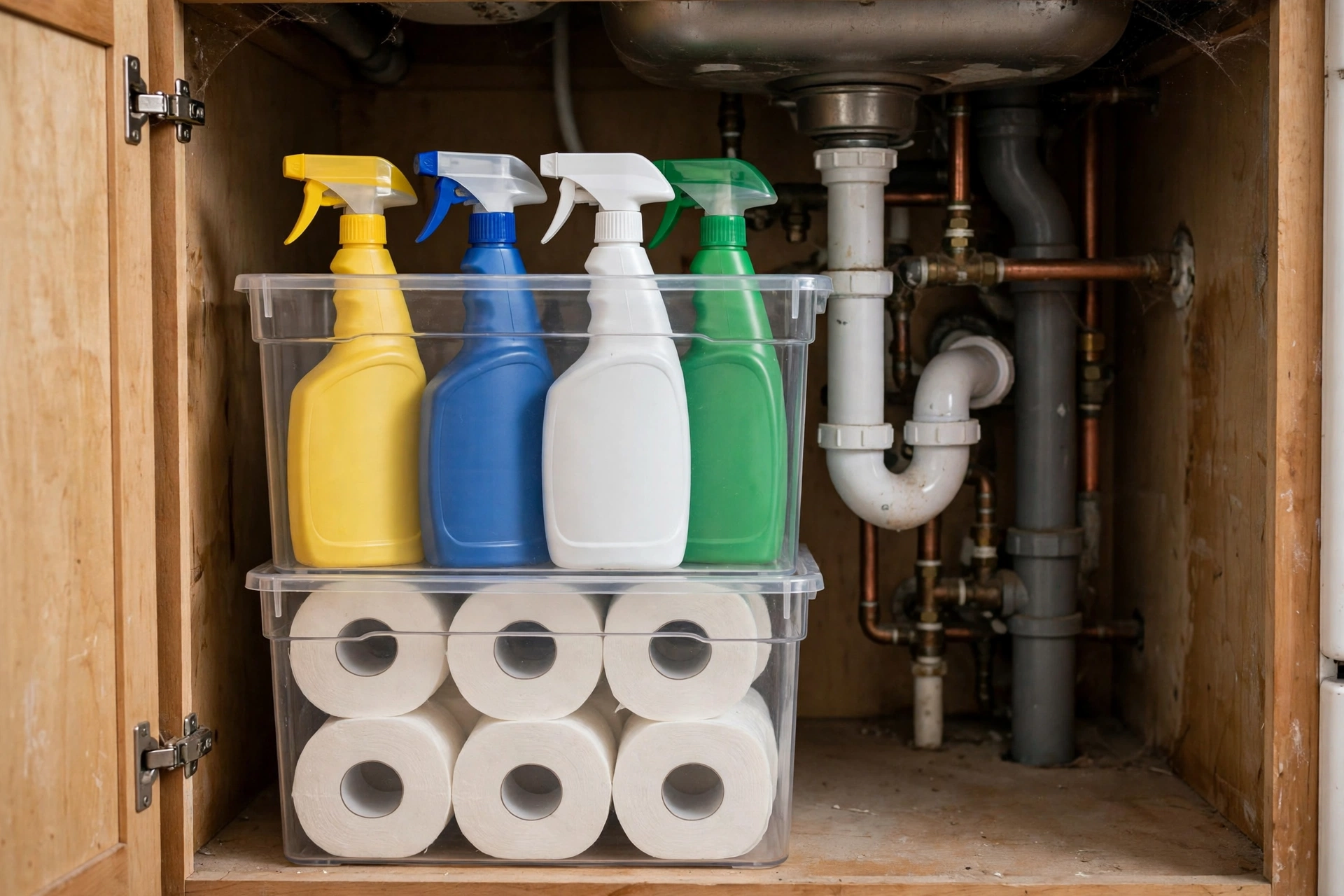
Stackable bins turn one messy cupboard into two tidy shelves, and you can see everything without moving anything.
What to buy: Two stackable bins, about $5-$8 each, clear if you can find them, so you can see what is inside without pulling the bin out. Choose bins that fit around the pipes, not bins that fight them.
Where it goes: One bin on the cupboard floor for daily cleaning things, one bin stacked on top for weekly things, both on the side away from the pipes. Spare toilet rolls go in a third bin at the back, or on top of the stack if there is room.
Common mistake: Buying bins that are too tall to stack under the sink, so the top bin will not fit and the cupboard door will not close. Measure the height from the cupboard floor to the bottom of the sink, then buy bins that are at least two inches shorter.
Try this today: Put the daily cleaning sprays in any box you already own, and put the box in the cupboard. If you can reach the spray you need without moving the box, the bins will work, and the $12 is worth it.
3. A tension rod for spray bottles
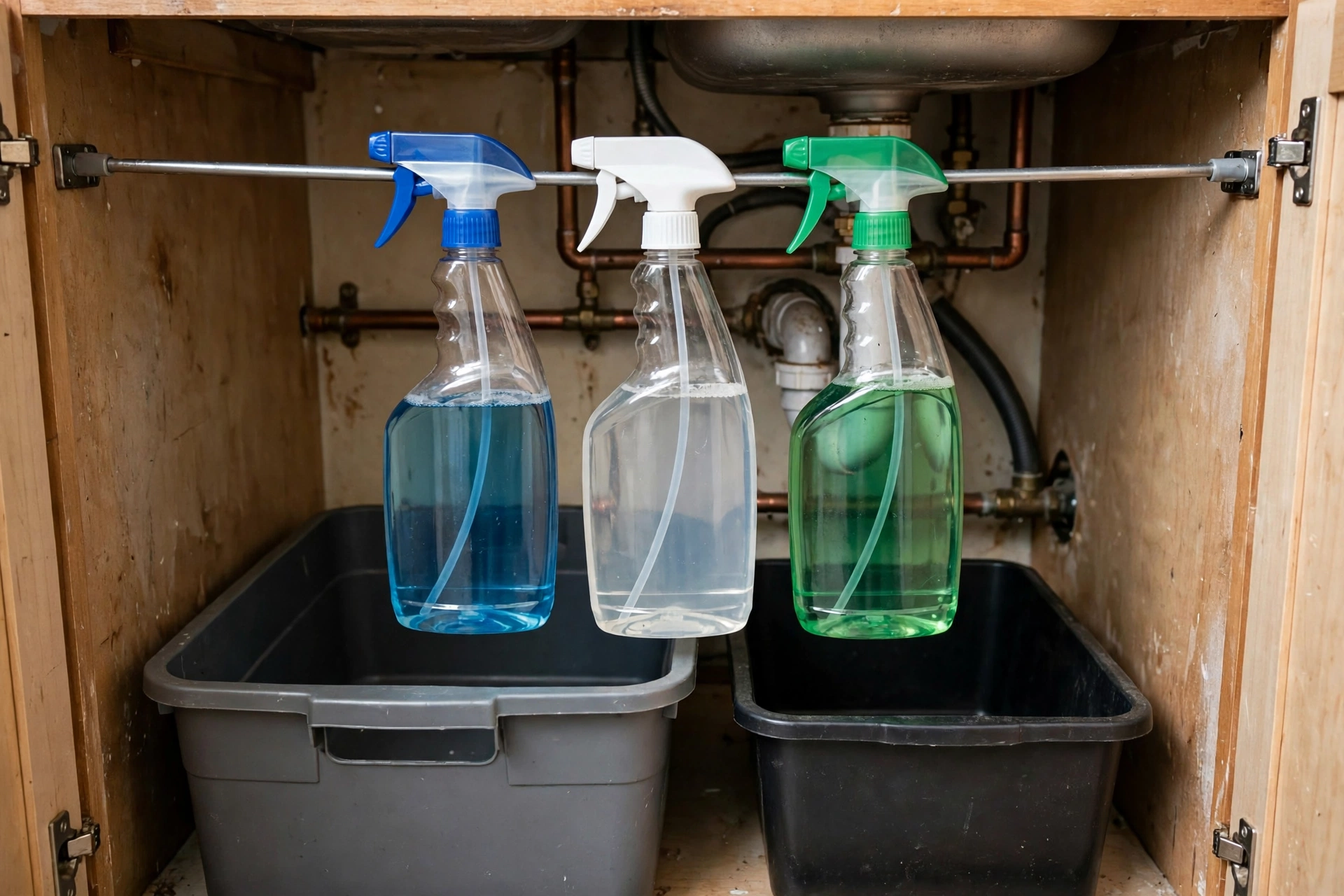
A tension rod hangs the spray bottles up in the air, and the floor of the cupboard is suddenly free.
What to buy: One tension rod, about $5-$8, that fits the width of the cupboard. Choose a rod with rubber ends, so it grips the cupboard walls and does not slip when you hang the bottles on it.
Where it goes: Across the cupboard, about halfway up, in front of the pipes, so the spray bottles hang from it by their triggers. Not too high, because you need to lift the bottles off without hitting the sink, and not too low, because the bottles will sit on the bins below.
Common mistake: Hanging every bottle in the house on the rod, so it sags and falls down in the middle of the night. Three spray bottles is the limit. The rest live in the bins below.
Try this today: Hang one spray bottle from a hook or a piece of string across the cupboard tonight. If it hangs neatly and the cupboard floor looks clearer, the tension rod is worth the $7.
4. Clear zones: daily, weekly, spare
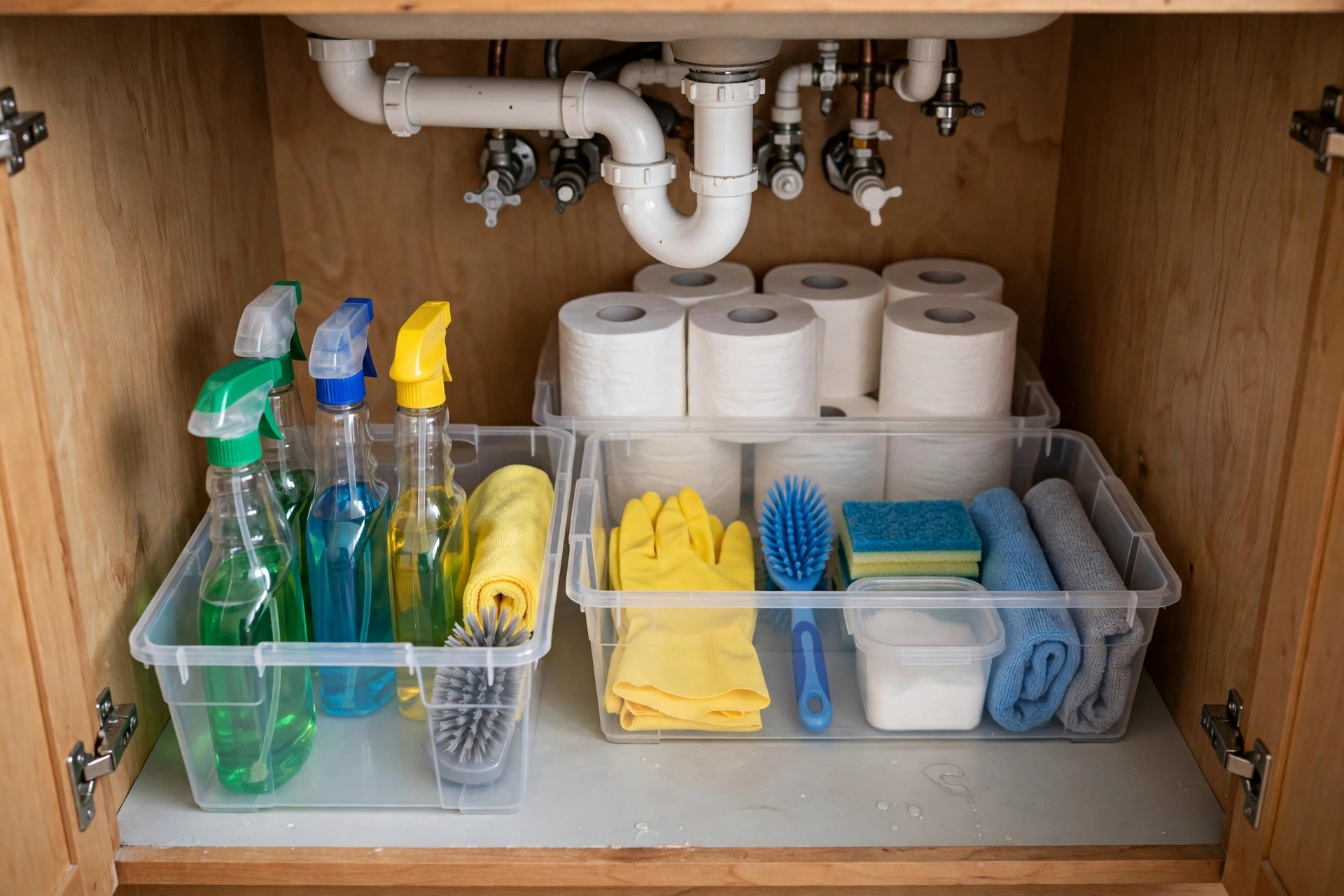
Three zones is the whole system: what you use daily in front, what you use weekly behind it, and spares at the back.
What to buy: Nothing new, if the bins from idea 2 are already there. This idea is a rule, not a purchase: daily in front, weekly behind, spares at the back, and the rule never changes.
Where it goes: Everywhere in the cupboard. The daily spray and cloth live in the front bin, where your hand reaches without looking. The weekly cleaner lives in the back bin. The spare toilet rolls and spare sponges live at the very back, where you reach once a week.
Common mistake: Mixing the zones, so the daily spray ends up behind the spare rolls and you move five things every morning to reach it. When a zone breaks, the cupboard breaks, so put the thing back in its own zone every time.
Try this today: Move the daily spray to the front of the cupboard tonight, and the spare rolls to the back. If tomorrow morning is faster, the zones work, and the rule is worth keeping.
5. A small turntable for the back corner

A turntable brings the back of the cupboard to the front, so nothing gets lost behind the pipes again.
What to buy: One small turntable, about $8-$12, that fits the depth of the cupboard. Choose one with a low edge, so the bottles do not fall off when it spins.
Where it goes: In the back corner of the cupboard, holding the small bottles: the drain cleaner, the spare soap, the stain remover. Spin it, take what you need, spin it back. Not in the front, because the front is for daily things, and not under the pipes, because it will not spin.
Common mistake: Putting tall bottles on the turntable, so they fall over every time it spins. Small and short is the rule: bottles under 8 inches tall only. Tall bottles stand in the bins.
Try this today: Put the small bottles on a plate in the back of the cupboard and spin the plate. If you can reach the bottle at the back without moving the front bins, the turntable is worth the $10.
6. Hooks on the inside of the doors
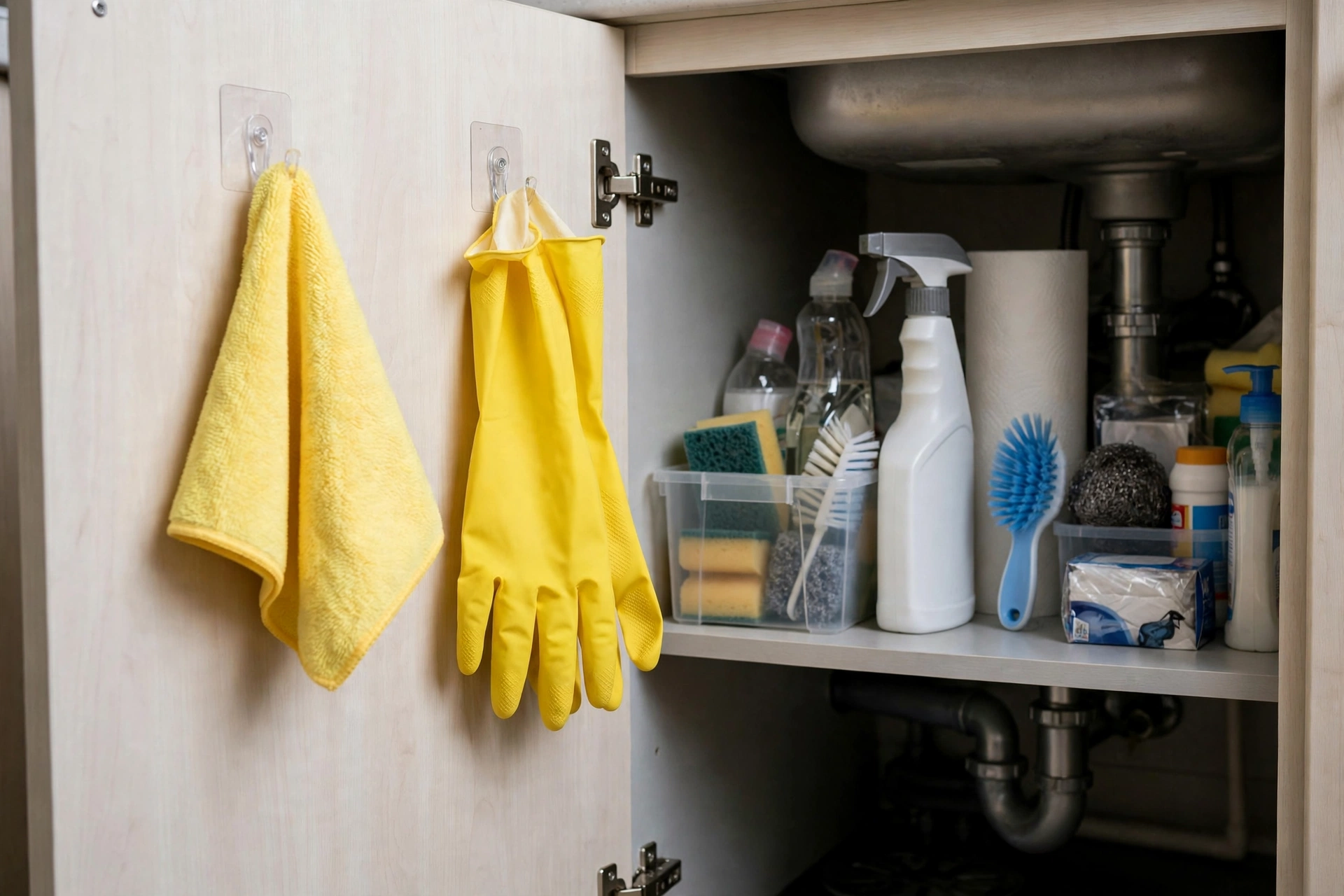
The inside of the cupboard door is a whole wall of storage that nobody sees, and it needs no drilling at all.
What to buy: A pack of small adhesive hooks, about $3-$5, that stick to the inside of the door. Choose hooks rated for the weight of a cloth and a pair of gloves, not heavy hooks for coats.
Where it goes: On the inside of the cupboard door, one hook for the cleaning cloth and one for the rubber gloves. Not on the outside of the door, because they will catch on everything, and not near the hinges, because the door will not close.
Common mistake: Hanging so much on the door that it will not close, or the hooks fall off when you open the door. Two hooks is the limit. A door that closes is storage. A door that will not close is clutter.
Try this today: Hang the cleaning cloth on a hook on the inside of the door tonight. If the cupboard closes properly and the cloth is dry in the morning, the hooks work, and the $4 pack is worth buying.
7. Label the bins, so everyone knows the zones
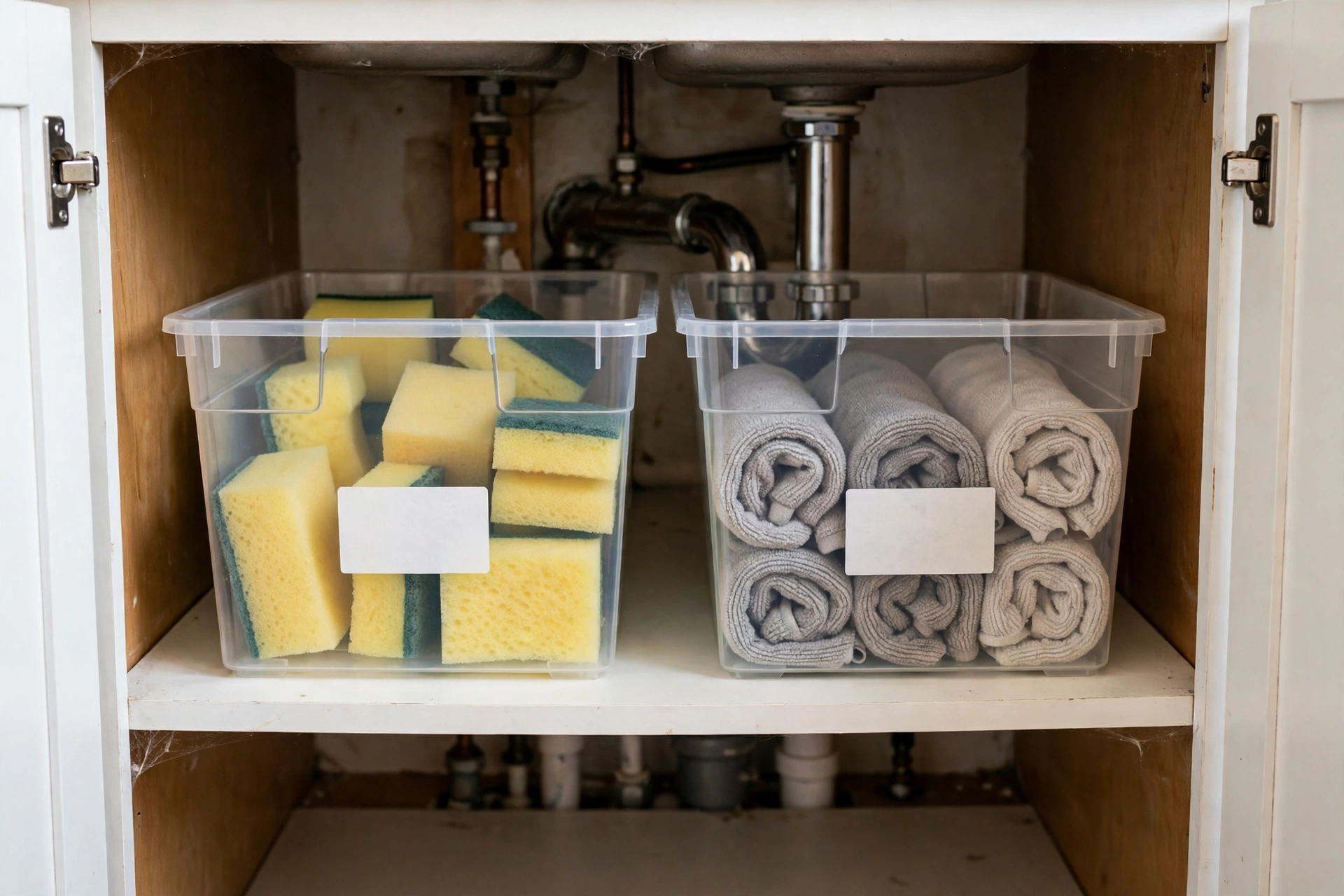
A label is what turns a bin into a zone, because everyone in the house can see where things go.
What to buy: One pack of plain sticky labels, about $3-$5, or a marker and masking tape you already own. Write the label in big clear words, because you will read it in the dark under the sink.
Where it goes: On the front of every bin: “daily cleaning”, “weekly cleaning”, “spares”. One label per bin, two words at most, and the label faces out, where you can see it when you open the door.
Common mistake: Labelling the bin with what you hope is inside, not what is actually inside. Open the bin, check what is in it, then write the label. A wrong label is worse than no label, because you open three wrong bins before you find the right one.
Try this today: Label the two bins tonight, with a marker and masking tape. If you can find the daily spray without looking tomorrow, the labels work, and the $4 pack is worth buying.
8. A tray under the pipes, for drips
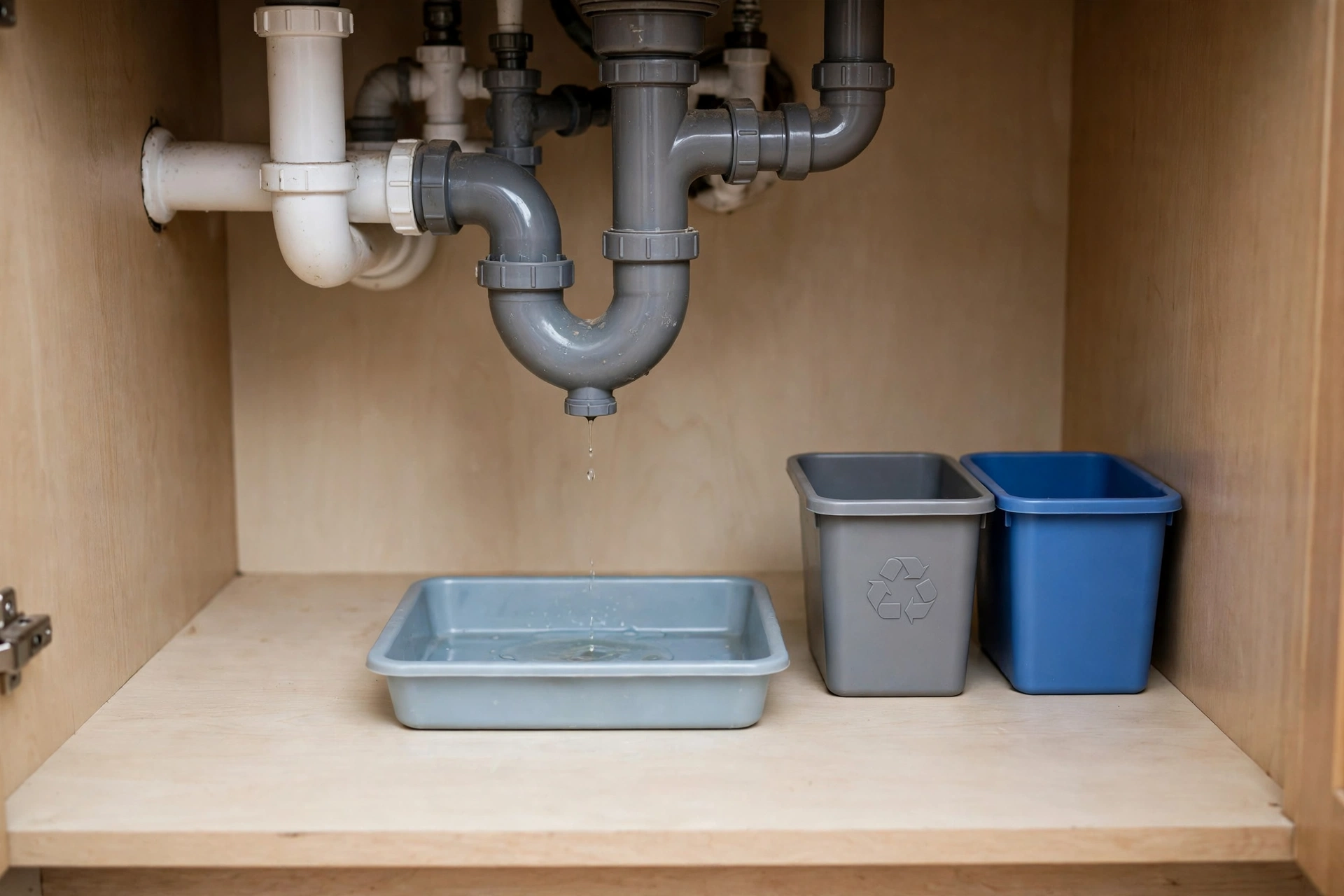
A tray under the pipes catches the drip before it ruins the cupboard floor, and it costs less than a coffee.
What to buy: One small plastic tray or a baking tray, about $3-$5, that fits under the pipes. Choose a tray with a small lip, so the water stays in the tray and does not run onto the cupboard floor.
Where it goes: On the cupboard floor, directly under the pipes and the sink trap, where the drips fall. Not under the bins, because the bins will sit in the water, and not at the front, because you will kick it every time you open the door.
Common mistake: Forgetting to check the tray, so it fills up and overflows onto the cupboard floor anyway. Check it once a month, when you do the weekly reset, and empty it if there is water in it. A tray you never check is not protection, it is a puddle with edges.
Try this today: Put a baking tray under the pipes tonight. If it is dry in a week, the pipes are fine and the tray stays as insurance. If it is wet, you have found a leak early, and the tray has already paid for itself.
9. Decant into matching bottles, only if you want to
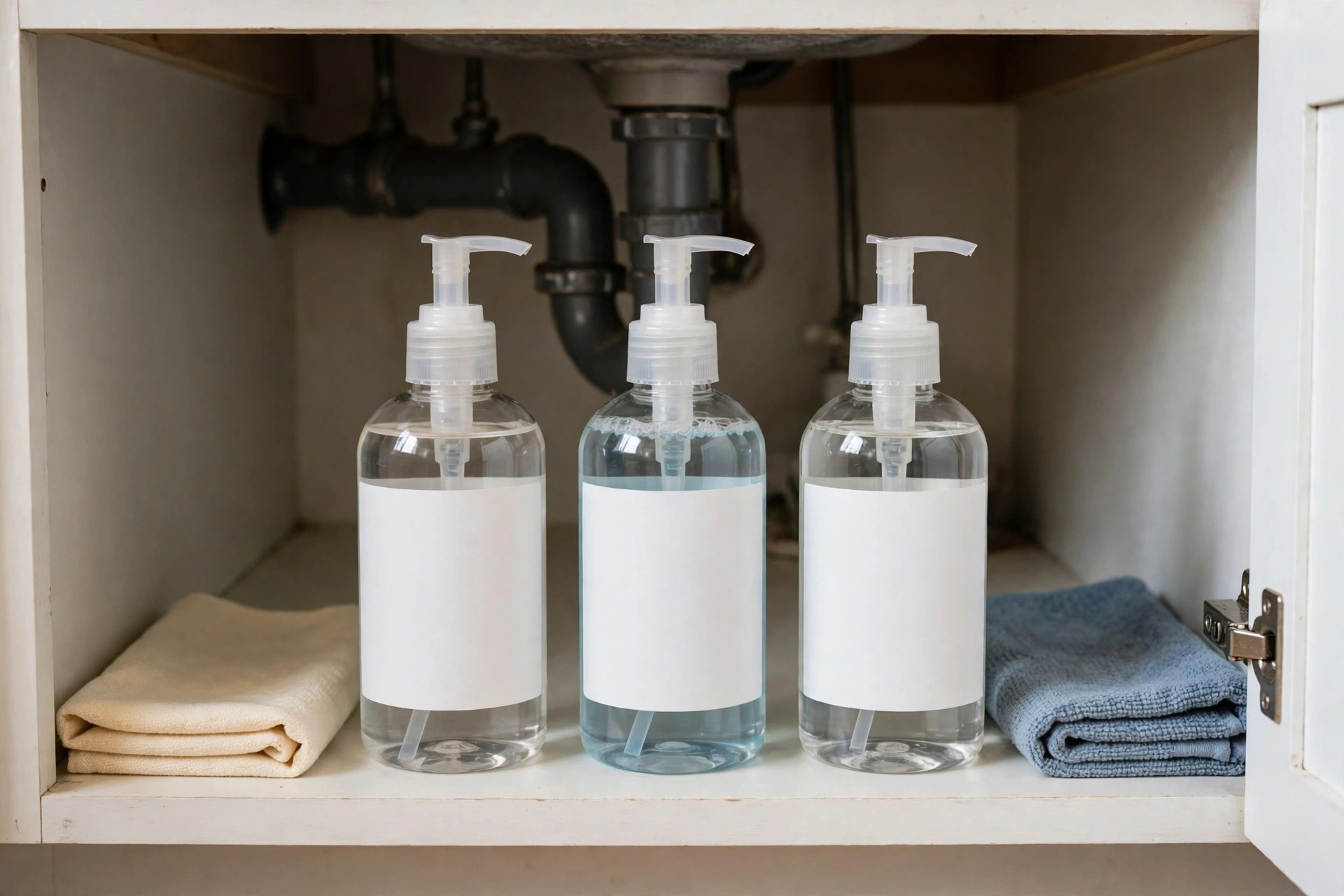
Matching bottles look calm, but they are the last step, not the first, and the cupboard works fine without them.
What to buy: Two or three matching pump bottles, about $3-$5 each, only for the things you use daily: hand soap, the daily spray, the dish soap. Choose plain bottles with no writing on them, so your label is the only writing.
Where it goes: In the front bin, where your hand reaches without looking. Not for everything in the cupboard, because decanting the weekly cleaner and the drain cleaner is work nobody needs, and not for anything with a safety warning on the bottle, because the warning stays on the original bottle.
Common mistake: Decanting everything on day one, before the zones work, and ending up with pretty bottles in a messy cupboard. Zones first, labels second, matching bottles last, and only for the daily things. A tidy cupboard with plain bottles beats a messy cupboard with pretty ones.
Try this today: Decant the hand soap into any plain bottle you already own, and put it in the front bin. If the cupboard looks calmer, the matching bottles are worth the $10. If it looks the same, skip them and spend the money on bins instead.
10. The five-minute weekly wipe
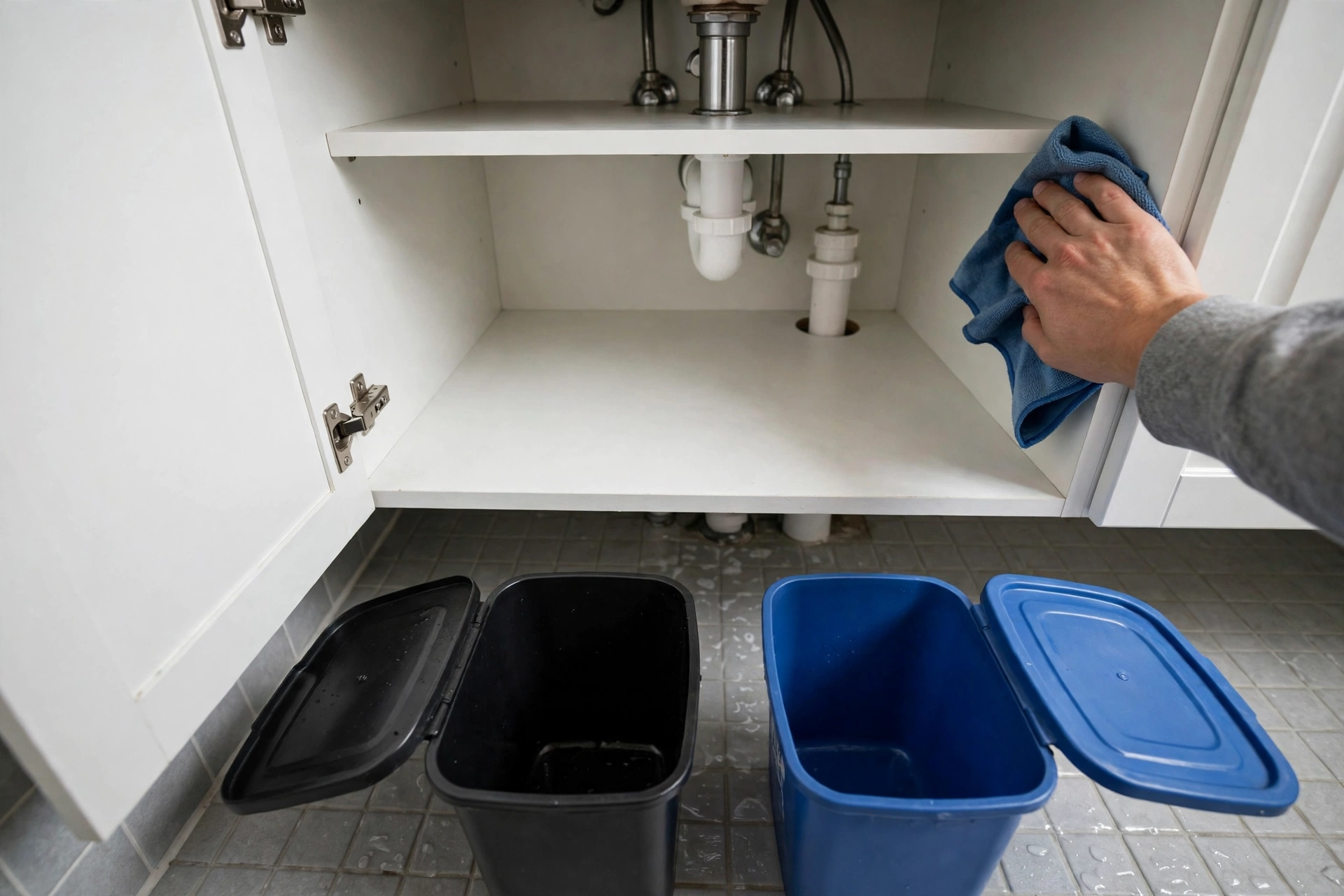
A cupboard stays tidy only if it gets five minutes every week, and five minutes is all it takes.
What to buy: Nothing. This idea is a habit, not a purchase. You need a cloth and the daily spray from the front bin.
Where it goes: Every week, same day: pull the bins out, wipe the cupboard floor, check the tray under the pipes, throw away anything empty, and put the bins back in their zones. Five minutes, same order, every week, so the cupboard starts clean every Monday.
Common mistake: Doing a big clean once a year and letting the cupboard fall apart for eleven months. A cupboard that is wiped for five minutes every week never needs a big clean, and it never leaks onto the floor without you noticing.
Try this today: Wipe the cupboard floor tonight, while the cupboard is empty for the makeover. In the morning, the cupboard will smell clean and look new, and five minutes a week will keep it that way.
What it costs
Buy the two stackable bins and the tension rod first ($15-$23), and add the turntable if the back corner keeps hiding things ($8-$12). That is roughly $23-$35, and it gives the cupboard clear zones, hanging sprays and a turntable for the back. Add the matching bottles next, only if the cupboard already works and you want it to look calmer. Remember that ideas 1, 4 and 10 cost nothing at all, and they change the cupboard more than any purchase.
The 15-minute version
If you only have 15 minutes today, do this: empty the cupboard completely, throw away the dead things, put the daily sprays in any box in the front and the spares at the back, and wipe the cupboard floor clean. Four small changes, one tidy cupboard. The rest of the list can wait until the weekend.
FAQ
How do I organize under the sink with pipes in the way?
Measure around the pipes first, then buy bins that fit the space on each side of them. Short bins, stackable bins and a tension rod all work around pipes, because they use the air, not the floor. A shelf unit that ignores the pipes will not fit, however good it looks in the shop.
Will a tension rod damage the cupboard?
No, if the rod has rubber ends and you do not overload it. Three spray bottles is the limit. A rod that holds three bottles will stay up for years. A rod that holds ten bottles will fall down in a week.
What if my cupboard is very small?
Then the bins and the rod matter more, not less. One stackable bin and one tension rod is enough for a very small cupboard, because the daily things hang and the weekly things stack. Do not buy a shelf unit for a small cupboard until you have tried the bins.
Do I need clear bins?
Clear bins help, because you can see what is inside without pulling the bin out, but plain bins with labels work just as well. Spend the money on bins that fit around the pipes, not bins that are clear.
How do I stop the cupboard getting messy again?
Five minutes every week, same day, same order: pull the bins out, wipe the floor, check the tray, throw away the empty things, put the bins back in their zones. A cupboard is not a one-day project. It is a five-minute habit, and the habit is what keeps it tidy.
Keep it going
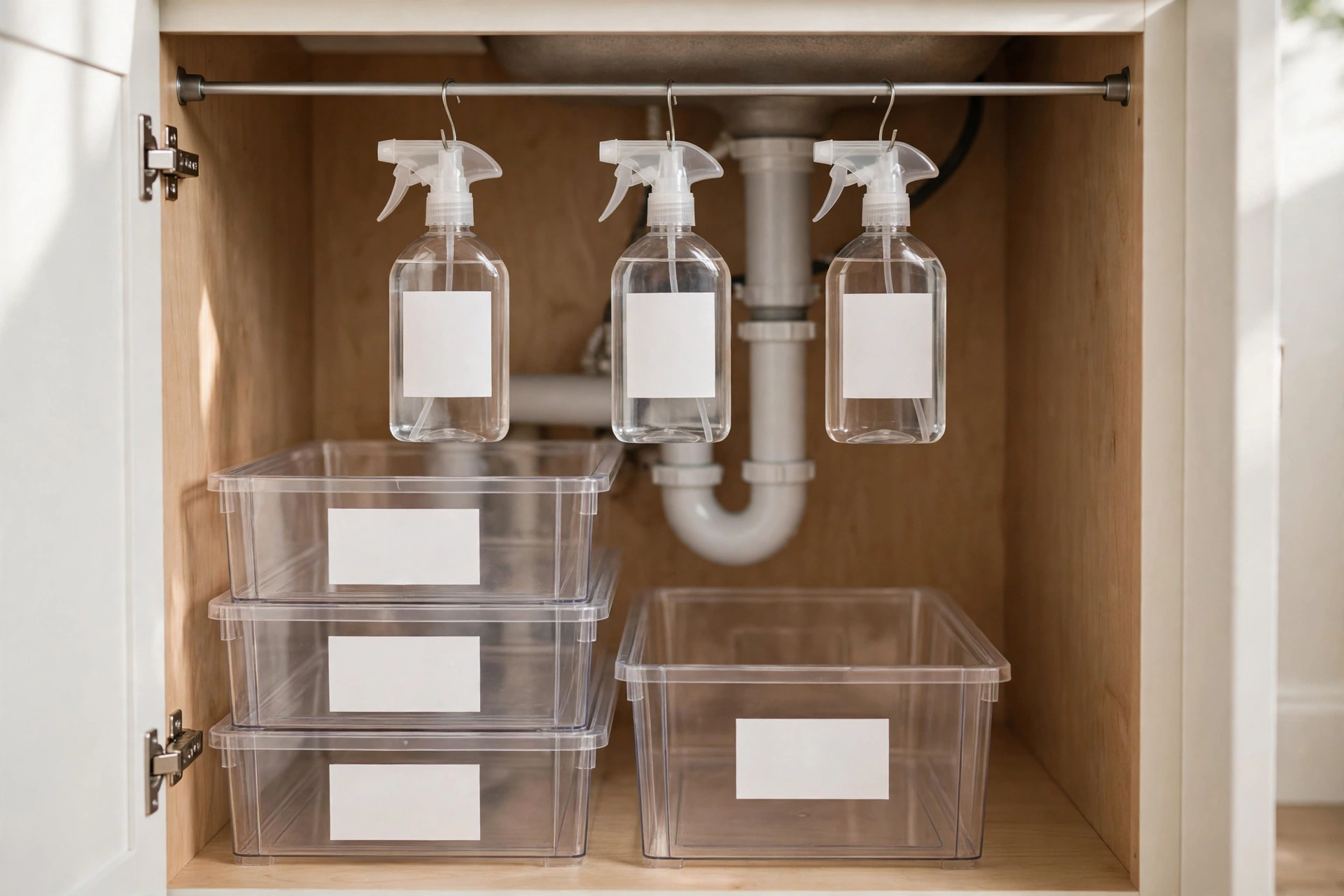
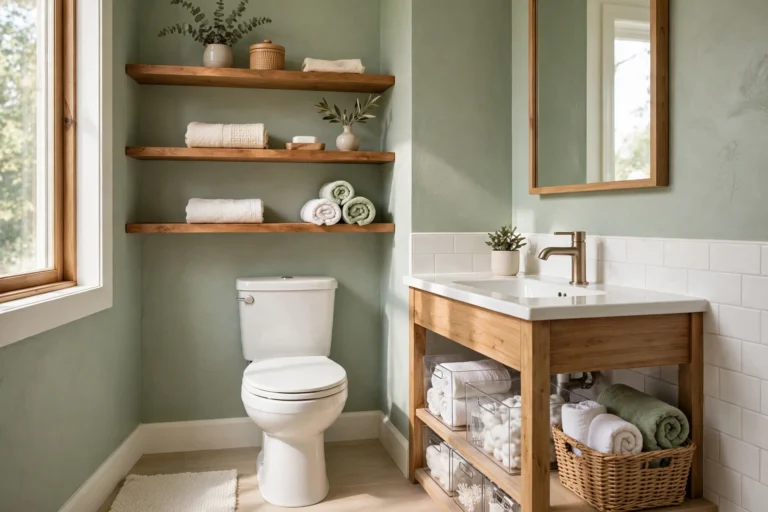
The finished look: clear zones, hanging sprays and a dry floor, and the messiest cupboard in the house is finally easy to use.
The cupboard under the sink does not need new furniture. It needs bins that fit around the pipes, a rod for the sprays and five minutes every week. Start by emptying it today.
Related pins
- Pin 9: Under-Sink Kitchen Storage That Actually Works
- Pin 12: Bathroom Drawer Organization on a Budget
- Pin 4: Small Bathroom Organization Ideas
- Pin 14: Bathroom Organization Ideas for Small Bathrooms
- Pin 3: 15-Minute Daily Reset Routine
- Pin 16: Cleaning List by Room, Step by Step