A Comfy Reading Nook in a Tiny Corner (No Spare Room Needed)
A reading nook sounds like a luxury for a big house: a window seat, a built-in bookshelf, and a whole spare room. In a tiny apartment, a reading nook is something much simpler and much better. It is one unused corner, one comfortable chair, one warm light, and a basket of books. That is all a nook needs, because the point of a nook is not the furniture, it is the feeling: a small, calm spot that belongs to you, where you can sit down with a book and the rest of the flat disappears for half an hour.
Most small flats already have a corner that can be a nook. The corner by the window that nothing fits in, the space at the end of the sofa, the bit of bedroom next to the wardrobe, or the landing that is too small for furniture. These corners are wasted space right now, and a chair and a light turn them into the best seat in the flat. The whole nook costs between thirty and seventy dollars, it takes one afternoon to build, and it needs no drilling, no new furniture, and no spare room.
Winter is the best time to build one, because the evenings are long, the light is low, and a warm, cosy corner makes the dark months feel good instead of gloomy. This article shows you how to find your corner, pick a chair that fits, add warm light, store your books in a basket, and keep the nook cosy all winter, for less than the price of a night out.
Find your corner: the wasted space is already there
Start by walking around the flat and looking for wasted space, not empty space. Wasted space is a corner that holds nothing but a plant you never water, a pile of bags, or a chair that nobody sits in. The best nook corners are near a window, because daylight is the best reading light, and near a plug socket, because the lamp needs power. A corner by the bedroom window, a corner at the end of the living room, or a corner of the hallway that is wide enough for a chair all work.
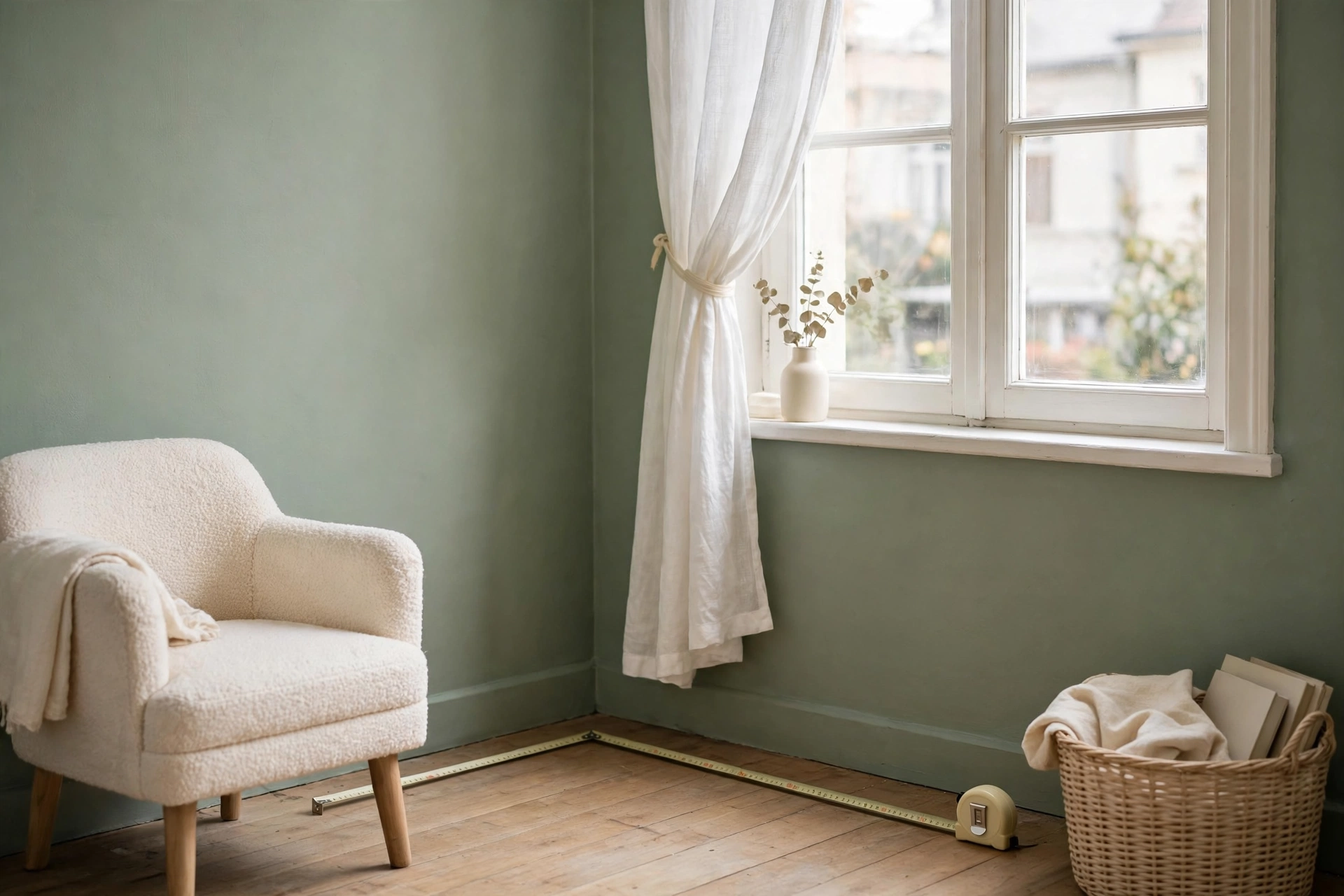
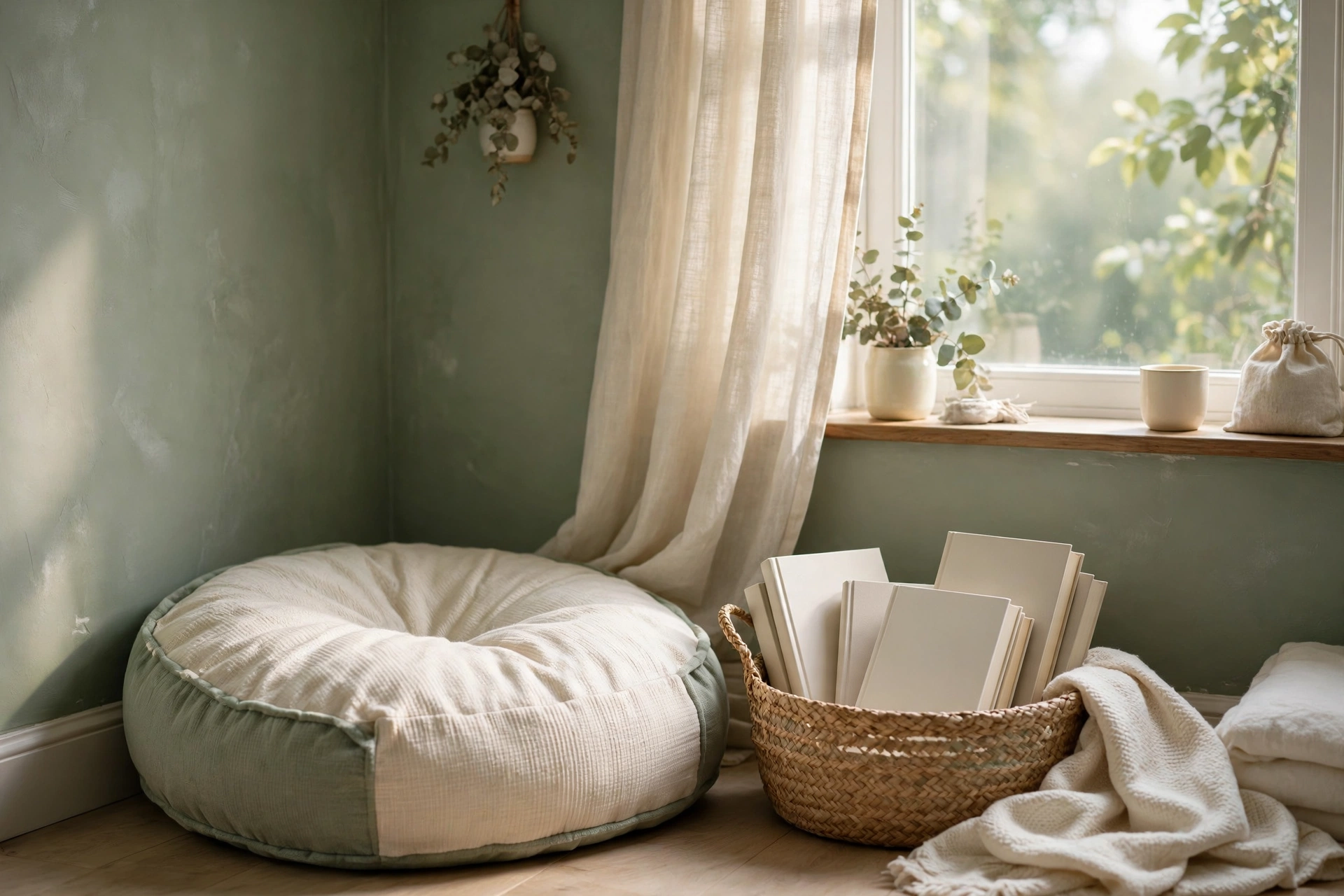
Measure the corner before you buy anything. A reading chair needs about twenty-four to thirty inches of width and about thirty inches of depth, including room for your feet and a small basket. Measure the width of the corner wall to wall, and the depth from the wall to the nearest walkway. You need at least twenty-four inches of walkway left clear, so the chair does not block the room. If the corner is too small for a chair, it can still be a nook with a floor cushion and a small basket, which needs only eighteen inches of floor.
Check the light at the time you usually read. If you read in the evening, the corner needs a plug socket for a lamp. If you read in the morning, the corner needs a window. If the corner has neither, pick a different corner, because a nook without light is just a chair in a dark corner, and nobody will sit in it. The right corner has light, power, and a little bit of quiet, and most flats have one if you look for it.
The chair: small, comfy, and easy to move
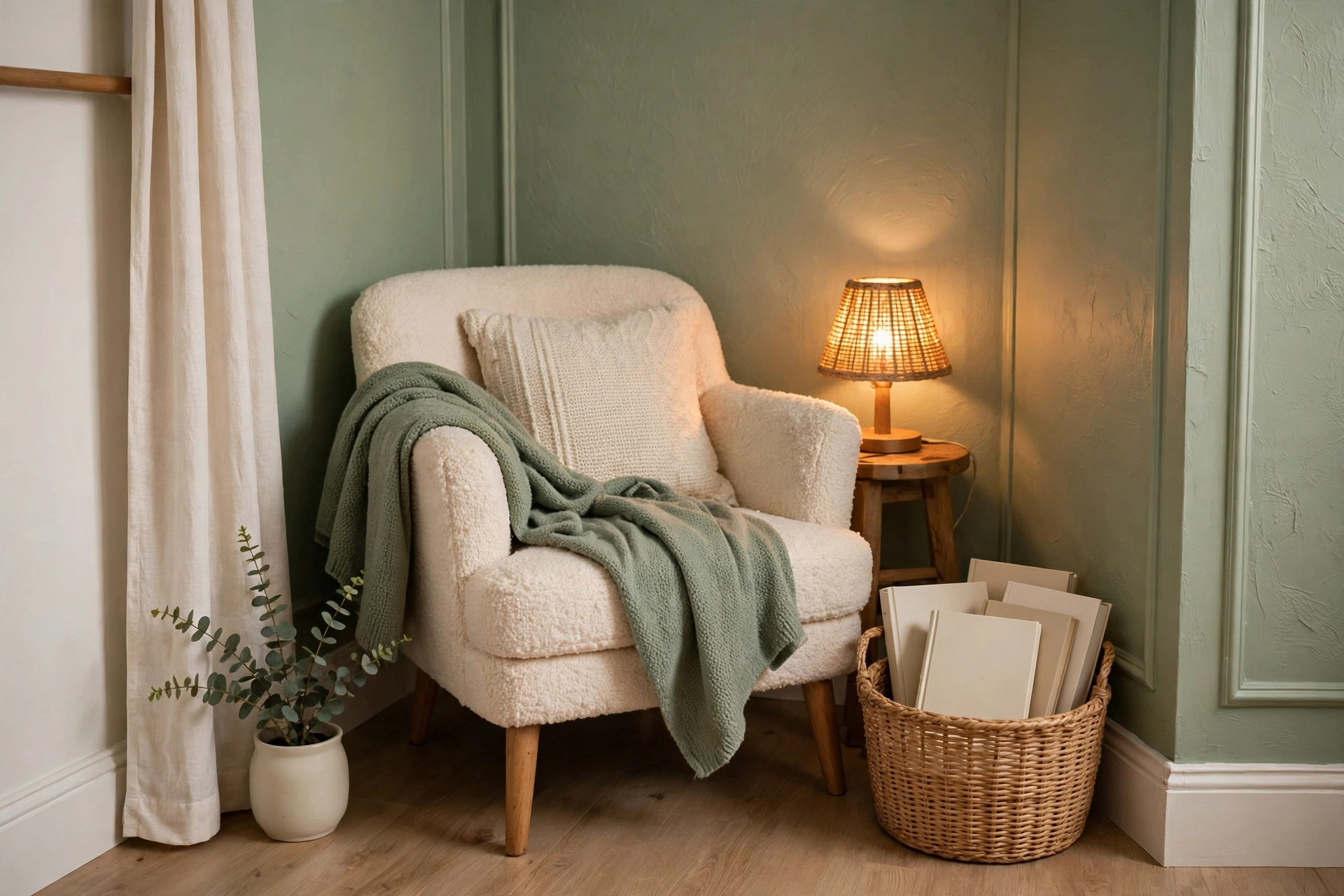
The chair is the nook, so pick it carefully, but do not overthink it. A small armchair, about twenty-four to twenty-eight inches wide, is the best choice for a tiny corner. It should be deep enough to curl up in, with arms low enough to rest a book on, and a back high enough to lean against. A second-hand armchair costs between twenty and forty dollars, and it is often more comfortable than a new one, because it is already broken in. Searches for a comfy reading chair for small spaces are up 455%, so a good small chair is worth hunting for. Check the seat before you buy it: sit in it for five minutes with a book, and if your back hurts, it is the wrong chair.
A small accent chair, a reading chair with a low back, or even a large floor cushion all work in a nook. A floor cushion costs about fifteen dollars, it needs no legs, and it folds away when you need the floor. A small rocking chair works too, if the corner has room for the movement. The chair should be easy to move, because a nook chair sometimes has to move for guests, for cleaning, or for a sunny spot by the window in the morning.
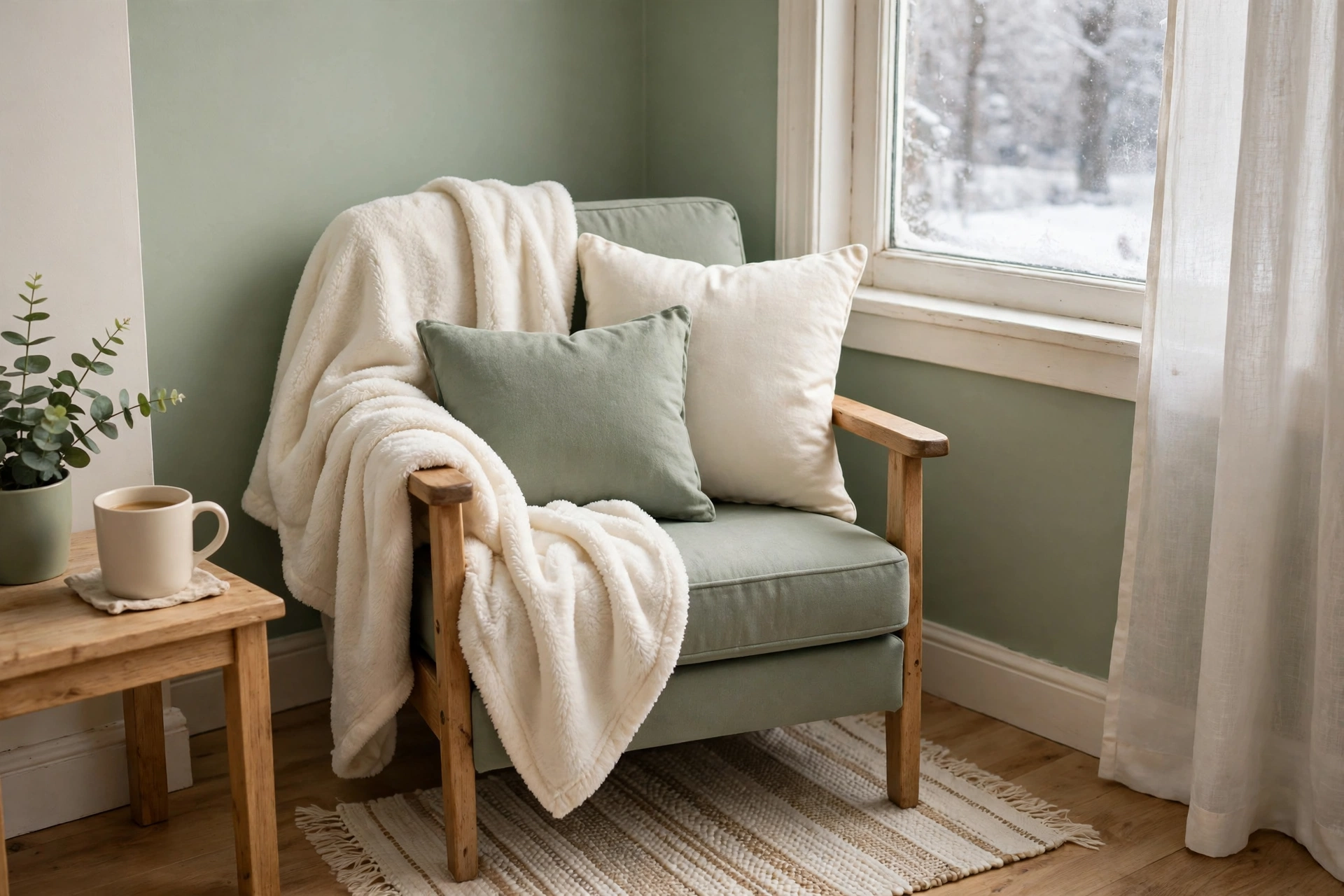
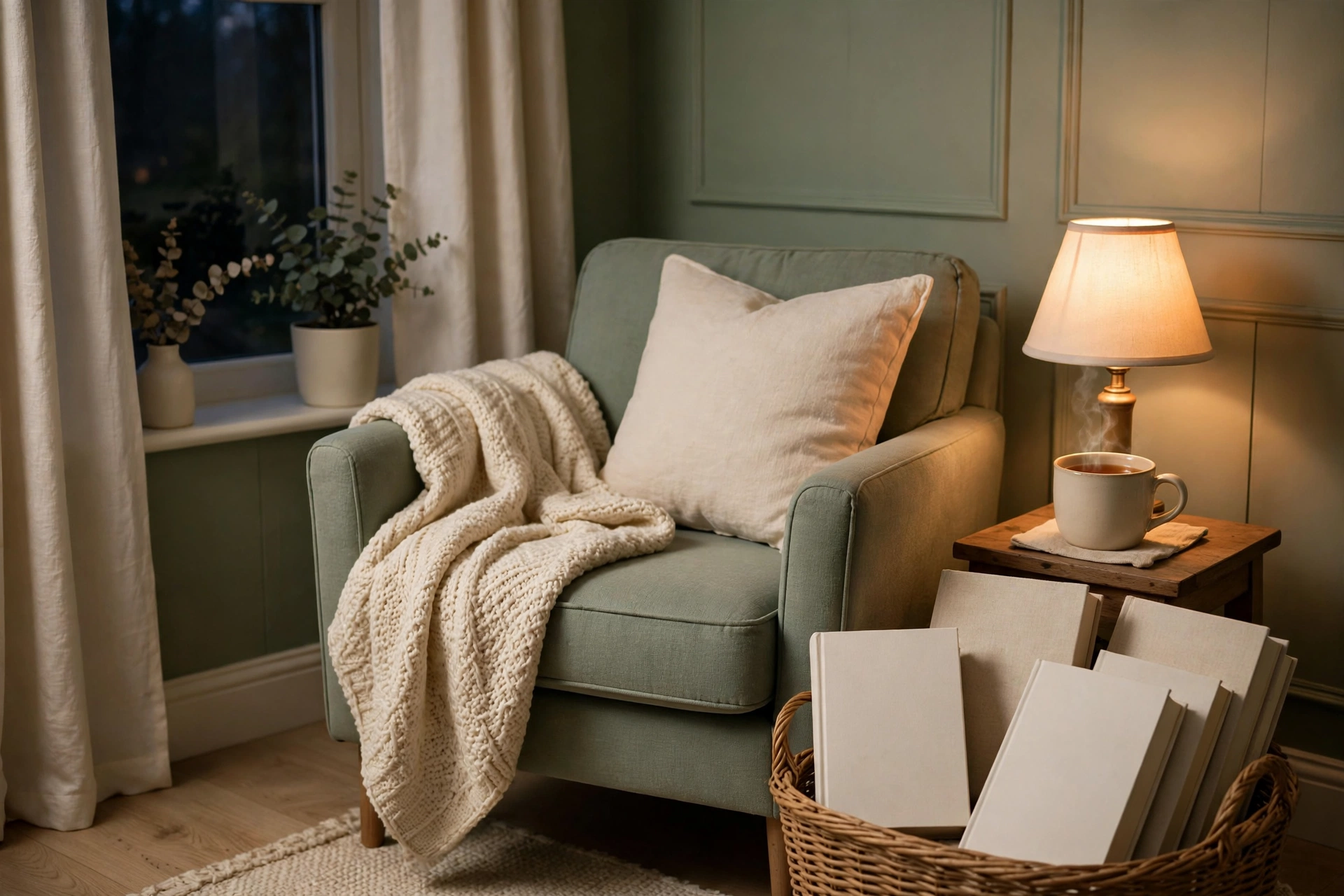
Put the chair at a slight angle to the wall, not flat against it, so it feels like a seat and not like furniture pushed into a corner. Leave six inches between the chair and the wall, so the cushion can breathe and the wall does not mark the fabric. Add a small cushion behind your back and a folded blanket over the arm, and the chair is ready. A chair with a blanket on it is a chair that gets used, because it looks inviting even when nobody is sitting in it.
Warm light: the part that makes it a nook
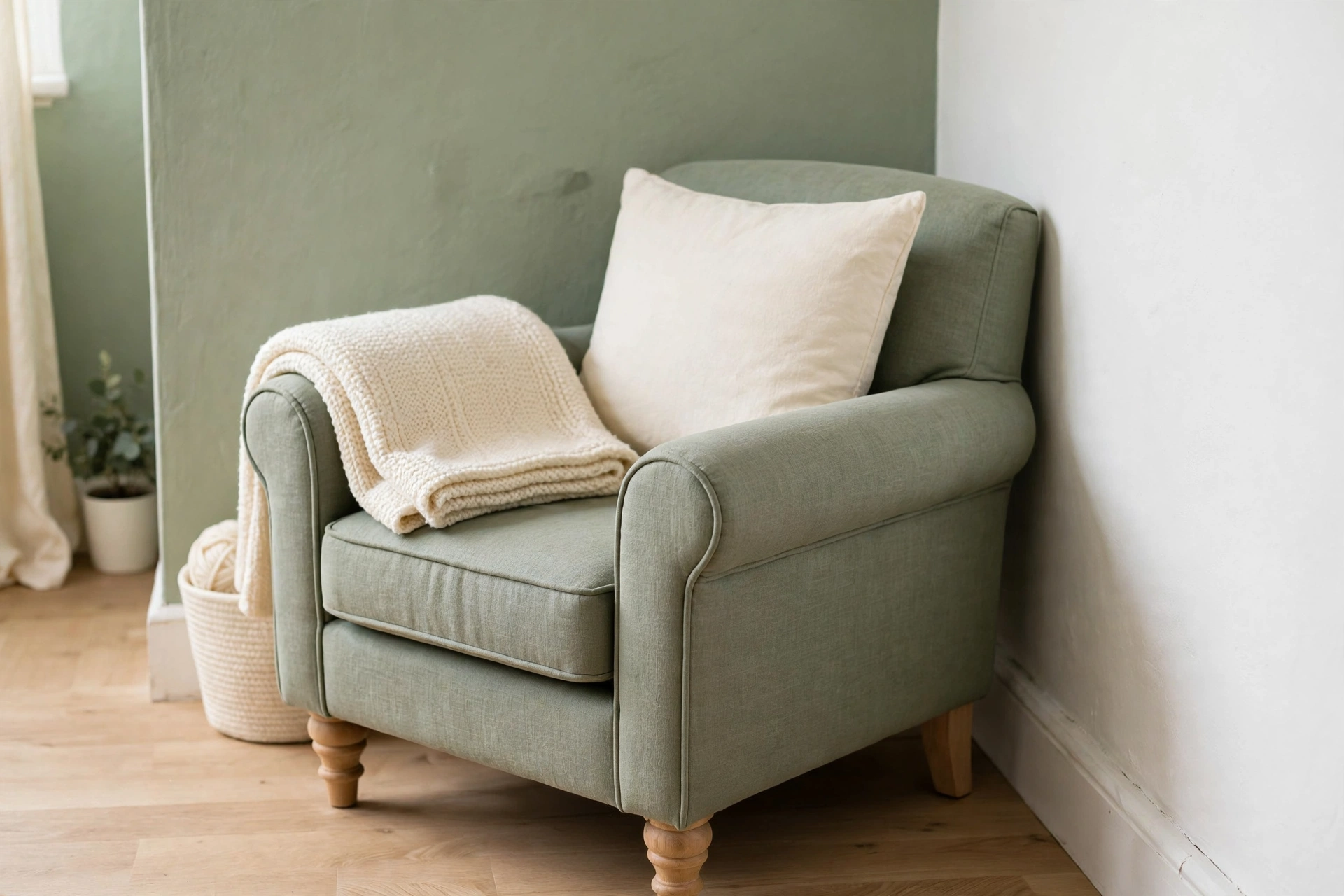
Light is what turns a chair in a corner into a reading nook. Without a good light, the corner is dark in the evening and nobody sits there. With a warm light, the corner glows, and it pulls you in every night. A small table lamp, a floor lamp, or a clip-on reading light all work, and the choice depends on the space you have. A small table lamp on a shelf or a side table costs about ten dollars and gives the best light for reading, because it sits at shoulder height and shines down on the page.
A floor lamp works if there is no surface for a table lamp. A slim floor lamp costs between fifteen and twenty-five dollars, it takes up almost no floor space, and it lights the whole corner. Put it behind the chair, on the side of your non-reading hand, so the light falls on the book without shining in your eyes. A clip-on light that fixes to a shelf or the chair itself costs about eight dollars, it needs no table and no floor space, and it is the best option for the smallest nooks.
Use a warm white bulb, not a bright white one. A warm bulb makes the nook feel calm and cosy, while a bright white bulb makes it feel like a dentist’s waiting room. A bulb of about 2700 kelvin is right for a reading nook. Put the lamp on a timer plug if you have one, which costs about seven dollars, so the nook lights up at the same time every evening, and it feels like the corner is waiting for you.
The book basket: your library in one basket
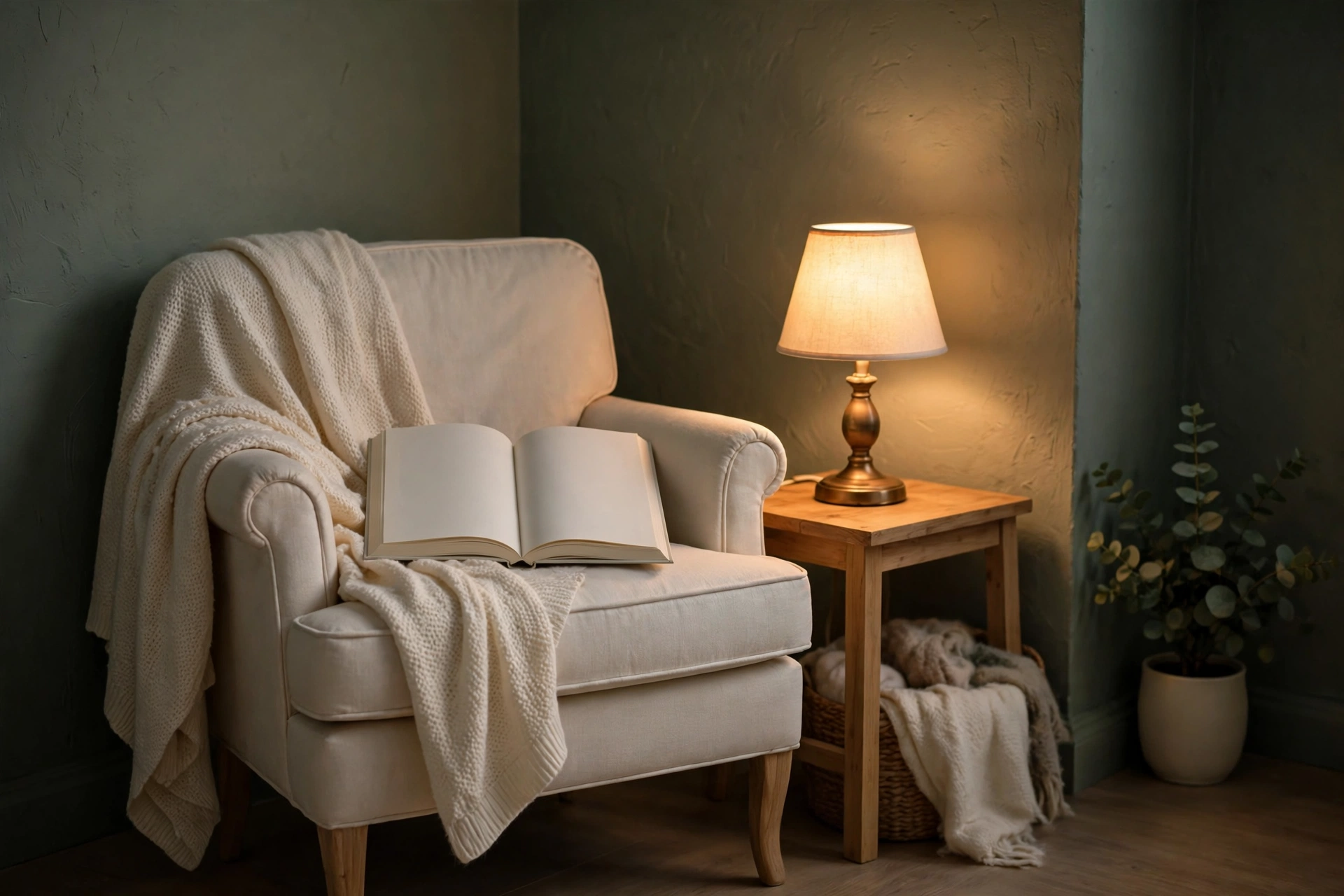
A reading nook does not need a bookshelf. It needs a basket, because a basket holds the books you are reading now, it fits in a corner, and it moves with you. A small basket, about twelve inches wide, holds five to eight paperbacks, and it costs between five and twelve dollars. A basket you already own works just as well, and a tote bag hung on a hook beside the chair works too. The basket sits on the floor beside the chair, or on a small stool if you prefer it at arm height.
Keep only the books you are reading now in the basket: the book you are in the middle of, the next one, and one or two you might pick up. The rest of your books live on the shelf, in the bedroom, or in a box under the bed. A basket with thirty books in it is not a reading basket, it is a storage problem. When you finish a book, put it back on the shelf and take the next one from the shelf. This one-in-one-out habit keeps the basket light and the nook tidy.
Cosy layers: blanket, cushion, and a rug
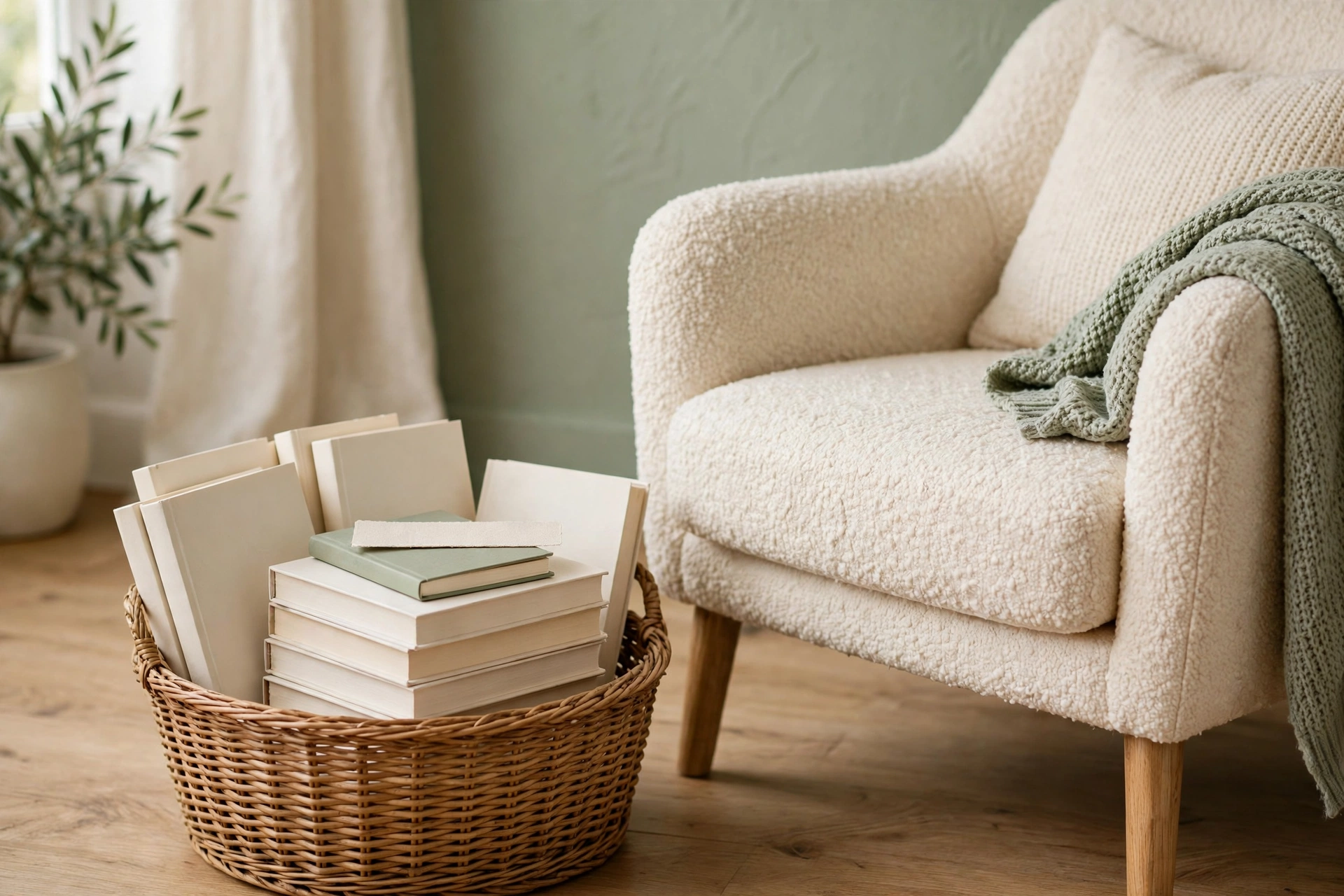
A reading nook should feel warm, soft, and a little bit like a nest, and that feeling comes from layers. A soft blanket folded over the arm of the chair is the most important layer. It costs between eight and fifteen dollars, it keeps you warm on winter evenings, and it makes the chair look inviting. A fleece throw is best, because it is light, warm, and easy to wash. Pick a colour that matches the room, a cream, a sage green, or a soft grey, so the nook feels calm and not busy.
A cushion behind your back is the second layer. It supports your lower back while you read, and it adds a soft shape to the chair. A small cushion, about sixteen inches square, costs between five and ten dollars, and a cushion you already own works just as well. A small cushion on the seat, under your knees, helps too if you like to curl up with your legs tucked under you.
A small rug under the chair is the third layer, and it does two jobs. It marks the nook as its own space, separate from the rest of the room, and it keeps your feet warm when you read in socks. A rug about two feet by three feet costs between ten and twenty dollars, and a small sheepskin-style rug costs about the same and feels lovely under bare feet. Three layers, blanket, cushion, and rug, and the corner feels like a nook instead of a chair.
A tiny side table: somewhere for the tea
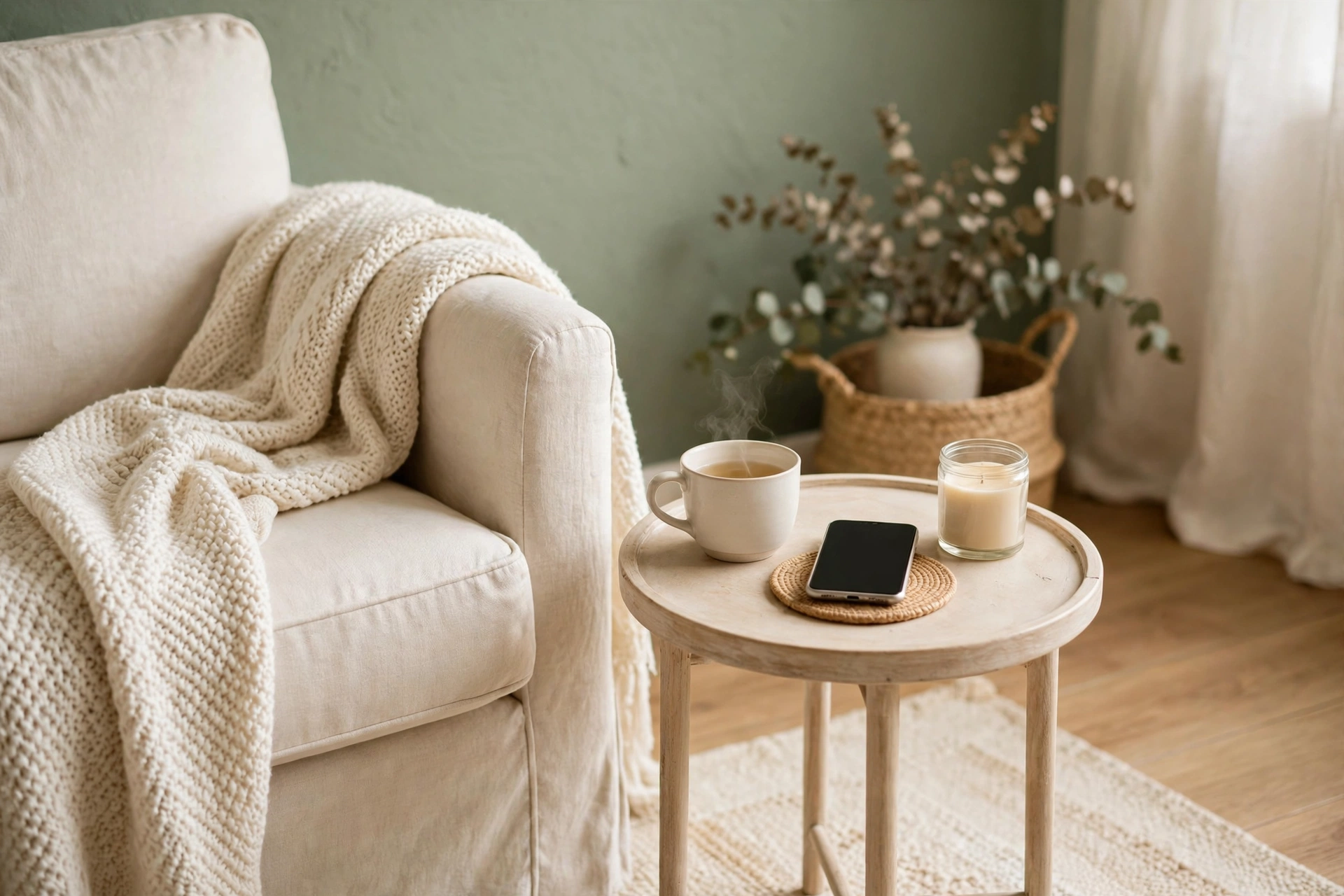
Every reading nook needs a small surface for a cup of tea, a glass of water, and a phone. A tiny side table, about twelve inches across, is the best option, and it costs between ten and twenty dollars. A small stool, a plant stand, or a stack of books tied with a ribbon all work as a side table too, and a stack of books is free if you already own them. The surface should sit at about the same height as the arm of the chair, so you can reach your tea without stretching.
Keep the side table clear except for the drink and the phone. A side table that collects post, keys, and random clutter is not a side table, it is another dumping ground. One coaster on the table protects it from tea rings, and a coaster costs a few dollars or nothing at all if you use a folded tea towel. A candle on the side table adds a lovely glow on winter evenings, but keep it in a jar and away from the blanket, and never leave it burning when you leave the room.
If there is no room for a side table, a small shelf on the wall beside the chair does the same job. A shelf about twelve inches wide and six inches deep holds a cup, a phone, and a small plant, and it costs under ten dollars. A wall shelf is completely renter-friendly with removable brackets, and it leaves the floor clear, which matters in a tiny corner.
Storage for the rest of your books
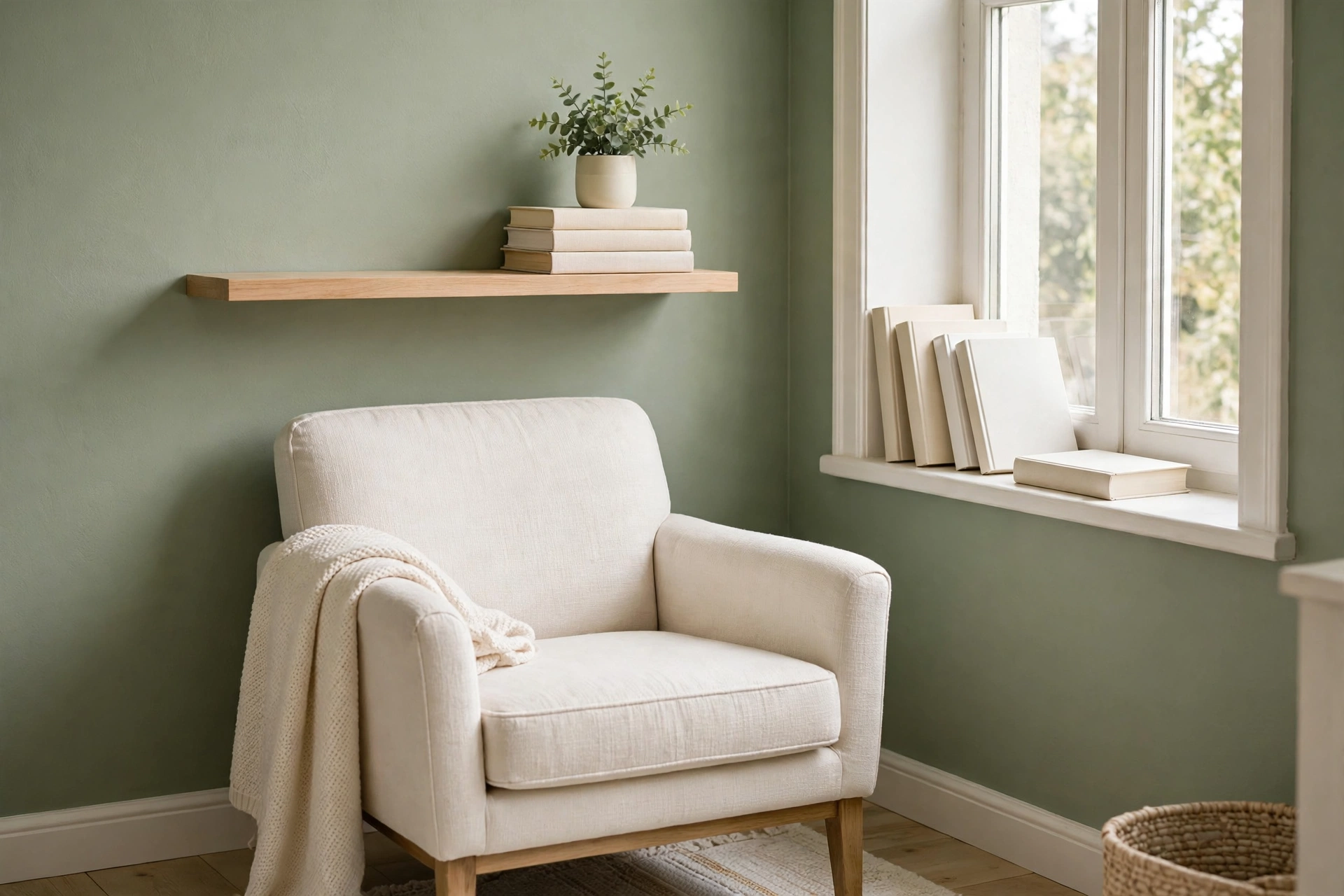
The book basket holds the books you are reading now, but the rest of your books need a home too, and a small flat has no room for a big bookshelf. The answer is to spread the books around the flat in small groups, instead of putting them all in one place. A small stack on the windowsill, a row on the shelf above the desk, a few on the bedside table, and the rest in a box under the bed. Books in small groups look intentional and tidy, while books piled in one corner look like clutter.
Use the books as decoration as well as storage. A stack of three books on the side table, with a small plant on top, looks lovely and it keeps the books within reach. A row of books on a floating shelf above the nook turns the wall into a tiny library, and it costs nothing if you already have the shelf. Sort the books by size, not by colour, because books sorted by size look calm, while books sorted by colour look like a rainbow that fights with the rest of the room.
Do a book clear-out twice a year, and donate the books you will not read again. A small flat cannot hold every book you have ever read, and a book that sits on a shelf for two years without being opened is a book that someone else would love. Keep the favourites, donate the rest, and the books you keep will mean more, because every one of them is a book you chose.
Make it a habit: the twenty minute reading ritual
A reading nook only works if you use it, and the best way to use it is a small daily ritual. Pick a time, for example after dinner, or before bed, and sit in the nook for twenty minutes with a book and a cup of tea. Twenty minutes is short enough to fit into any evening, and long enough to finish a chapter and feel like you have had a break. Put your phone on silent and leave it on the side table, face down, so it does not pull you away.
The ritual matters more than the reading. The point is not to finish a book a week, it is to have a small, calm part of the day that belongs to you. Some evenings you will read for an hour, some evenings you will sit in the nook and do nothing at all, and both count. A nook that is used for twenty minutes a day is a nook that earns its corner, and a nook that is never used is just a chair.
Keep the nook ready, so the ritual is easy. The blanket is folded on the arm, the book is in the basket, and the lamp is on a timer, so the corner is lit when you come home. A nook that is ready is a nook that gets used. A nook that needs setting up every time is a nook that stays empty.

Winter cosy: making the nook work in the dark months
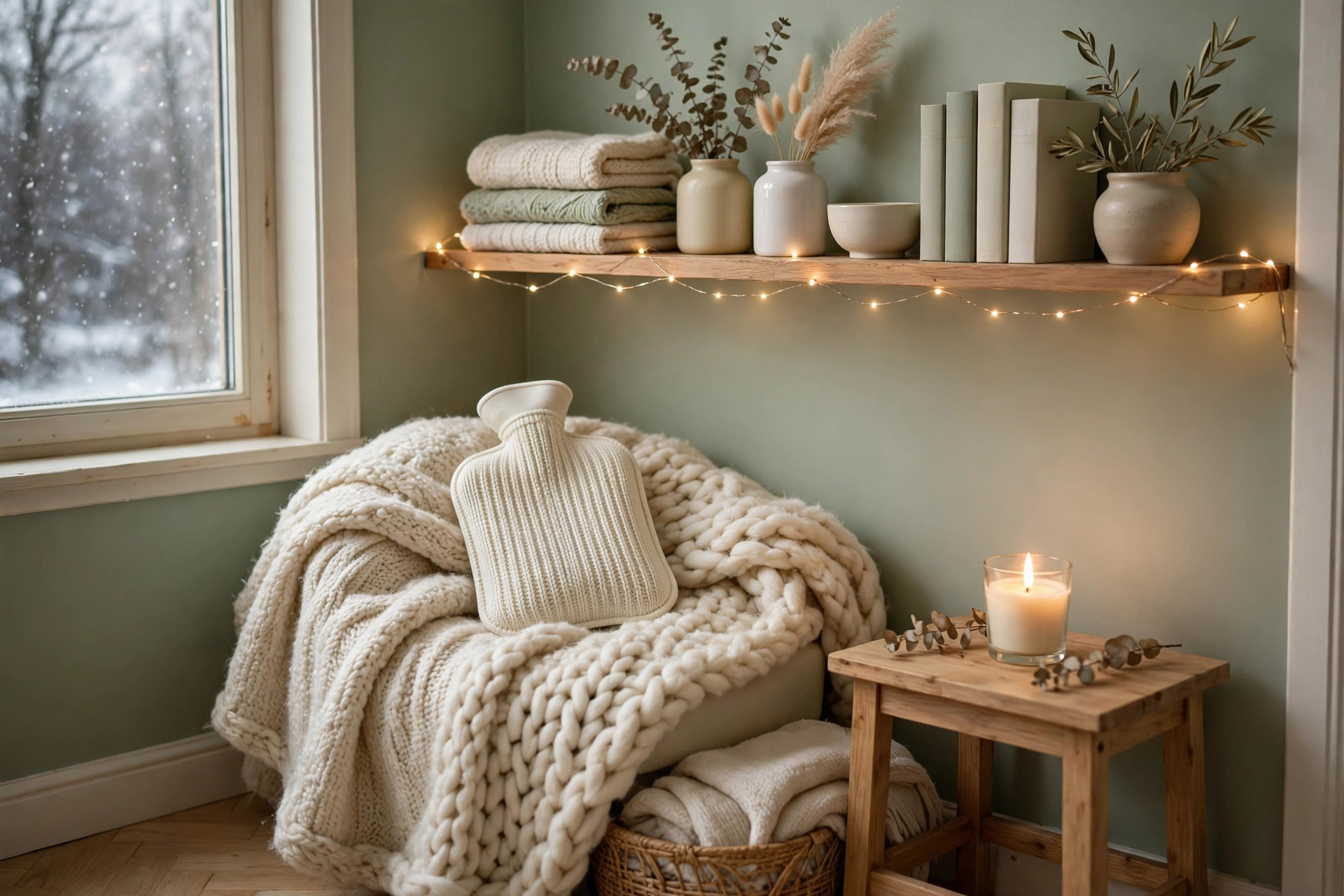
Winter is when a reading nook earns its keep, because the evenings are long and the flat can feel cold and dark. A few small changes make the nook warmer and cosier without costing much. A thicker blanket, a hot water bottle, and a pair of warm socks are the cheapest upgrades, and they cost under ten dollars together.
Add a second layer of light in winter, because one lamp can feel dim on a dark evening. A small string of battery fairy lights along the shelf above the nook costs about five dollars, and it makes the corner glow. A candle in a jar on the side table adds a flickering light that no lamp can copy, and it makes the nook feel special, like a small treat at the end of the day.
Keep the nook away from draughts. A draught from a window or a door makes a reading corner cold and unpleasant, even with a blanket. Move the chair a few inches away from the window, or hang a heavy curtain, and the nook will feel warmer. A small draught excluder along the bottom of the door costs about five dollars and keeps the whole flat warmer, not just the nook. A warm nook in winter is the best seat in the flat.
Nooks for every room: bedroom, living room, and hallway
A reading nook does not have to be in the living room. A bedroom nook, a chair by the bedroom window with a small basket, is perfect for reading before bed, and it keeps the books out of the living room. A hallway nook works too, if the hallway is wide enough for a chair and a basket, and it turns a wasted landing into a quiet spot. Even a kitchen nook works, a chair in the corner by the kitchen window with a cup of tea, for a slow morning.
If you share a flat, a nook can be a shared space with a simple rule: whoever is sitting in the nook is not to be disturbed. A shared flat needs a quiet corner, and a nook with a clear rule gives everyone a place to be alone without leaving the flat. One chair, one basket, one light, and one rule, and the nook works for the whole flat.
Your reading nook plan, step by step
Here is the whole nook as a one afternoon plan. First, find the corner and measure it, checking the light and the plug socket. Second, clear the corner and sort what was there into keep, move, and donate. Third, bring in the chair and put it at a slight angle, with a cushion behind your back and a blanket over the arm. Fourth, add the light, a table lamp, a floor lamp, or a clip-on light, with a warm bulb.
Fifth, put the basket of books beside the chair and the small side table or shelf on the other side. Sixth, add the rug under the chair and the personal touch, a photo, a plant, or a favourite mug. Seventh, sit down, switch on the lamp, open the book, and read for twenty minutes. If the chair feels good, the light is warm, and the tea is within reach, it works.
A reading nook in a tiny flat is not a luxury and it does not need a spare room. It needs a corner you already have, a chair that fits, a warm light, and a basket of books. Start with the corner, find the chair this weekend, and by next week you will have the best seat in the flat, a small calm spot that belongs to you, where the day slows down and the book opens.
Related pins
- Small Apartment Organization Ideas
- Small Bedroom Storage Ideas for Renters
- Refresh Your Living Room on a Budget
- New Year Home Reset in 7 Days
- Cozy Christmas Bedroom Makeover on a Budget