Small Christmas Tree Ideas for Tiny Apartments
A tiny apartment still deserves a Christmas tree. You do not need a big living room, a high ceiling, or a hundred dollars to spend on decorations to make December feel like Christmas. You need a tree that fits your space, a spot that does not block the door, and a few simple decorations that make the whole room feel warm. A small tree can do all of that, and it can do it better than a big tree in a small room, because it leaves you room to live, eat, and move around.
The mistake most small flats make is buying a tree that is too big. A full six foot tree in a studio apartment eats the whole corner, blocks the light, and turns the living room into a forest you have to walk around. A slim tree, a tabletop tree, or a wall tree gives you the same Christmas feeling in a fraction of the space, and it costs less too. This article shows you how to pick the right tree for your flat, where to put it, how to decorate it on a budget, and how to store it when January comes, all without drilling a single hole in a rented wall.
The whole setup costs between twenty and fifty dollars if you buy a new small tree and a few decorations, and under fifteen dollars if you already own a tree or you make a wall tree from garland and lights. It takes one afternoon to set up, it takes up less than two square feet of floor space, and it makes the apartment feel like Christmas from the first evening you switch the lights on.
Measure your space before you buy a tree
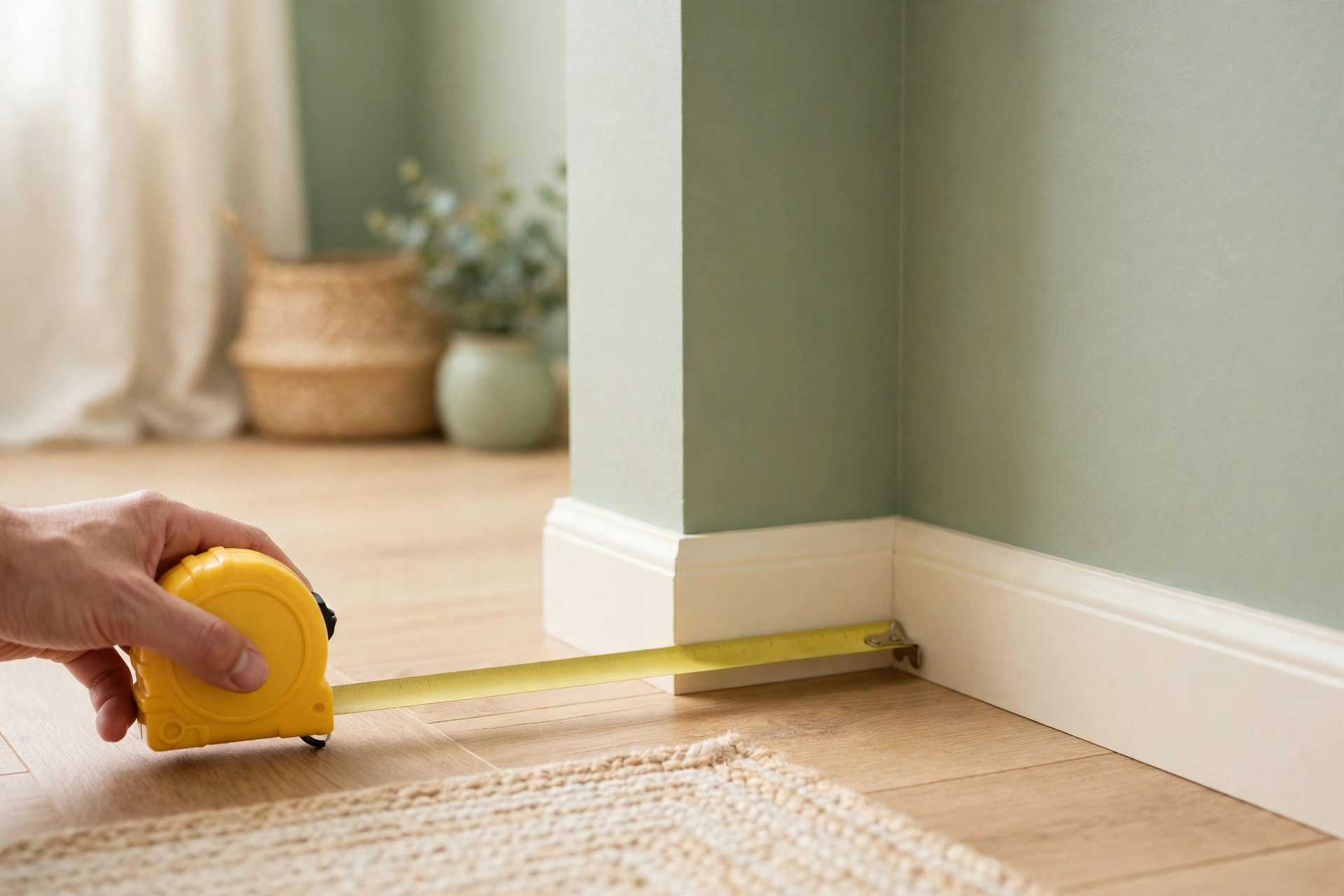
Start with a tape measure, not a shopping trip. Measure the corner or the spot where the tree will go, and write down three numbers: the width of the floor space, the height from the floor to the ceiling, and the distance from the wall to the nearest walkway. A slim tree needs about eighteen to twenty-four inches of floor width. A tabletop tree needs about twelve inches of table or shelf space. A wall tree needs no floor space at all, just a clear patch of wall about three feet wide and five feet tall.
Measure the height too, because a tree that touches the ceiling looks cramped and a tree that is too short for the room looks lost. In a flat with an eight foot ceiling, a four to five foot tree is usually right. In a studio with a lower ceiling or a shelf above the spot, a three foot tabletop tree is better. Leave at least six inches between the top of the tree and the ceiling, so the star or the topper has room and the tree does not look squeezed in.
Check the walkway as well. You need at least two feet of clear space to walk past the tree without brushing against it. If the tree blocks the path from the sofa to the kitchen, it is in the wrong spot. A tree that you bump into every day will lose ornaments, drop needles, and annoy you all month. Measure first, buy second, and you will only buy once.
Pick the right tree: slim, tabletop, or wall
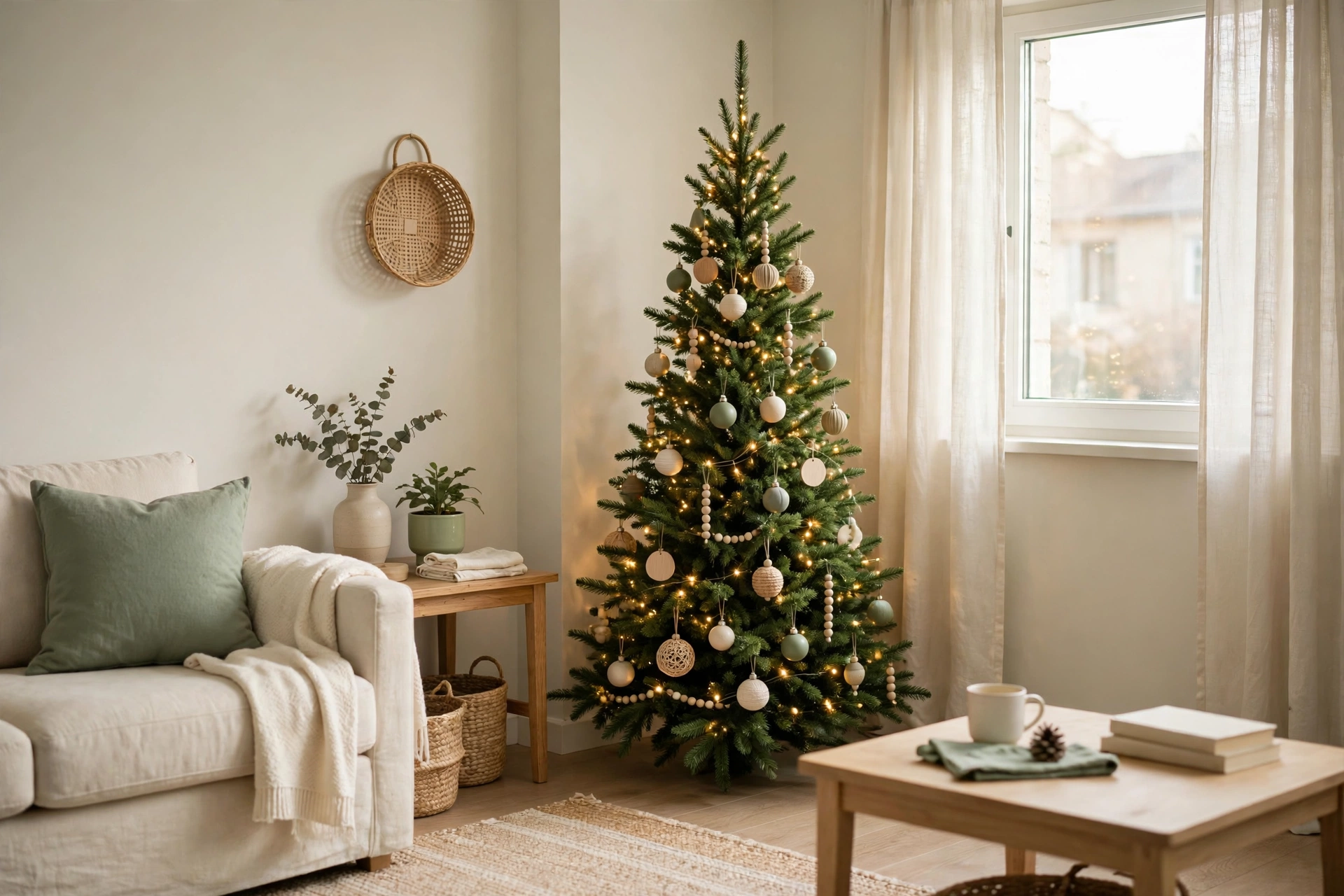
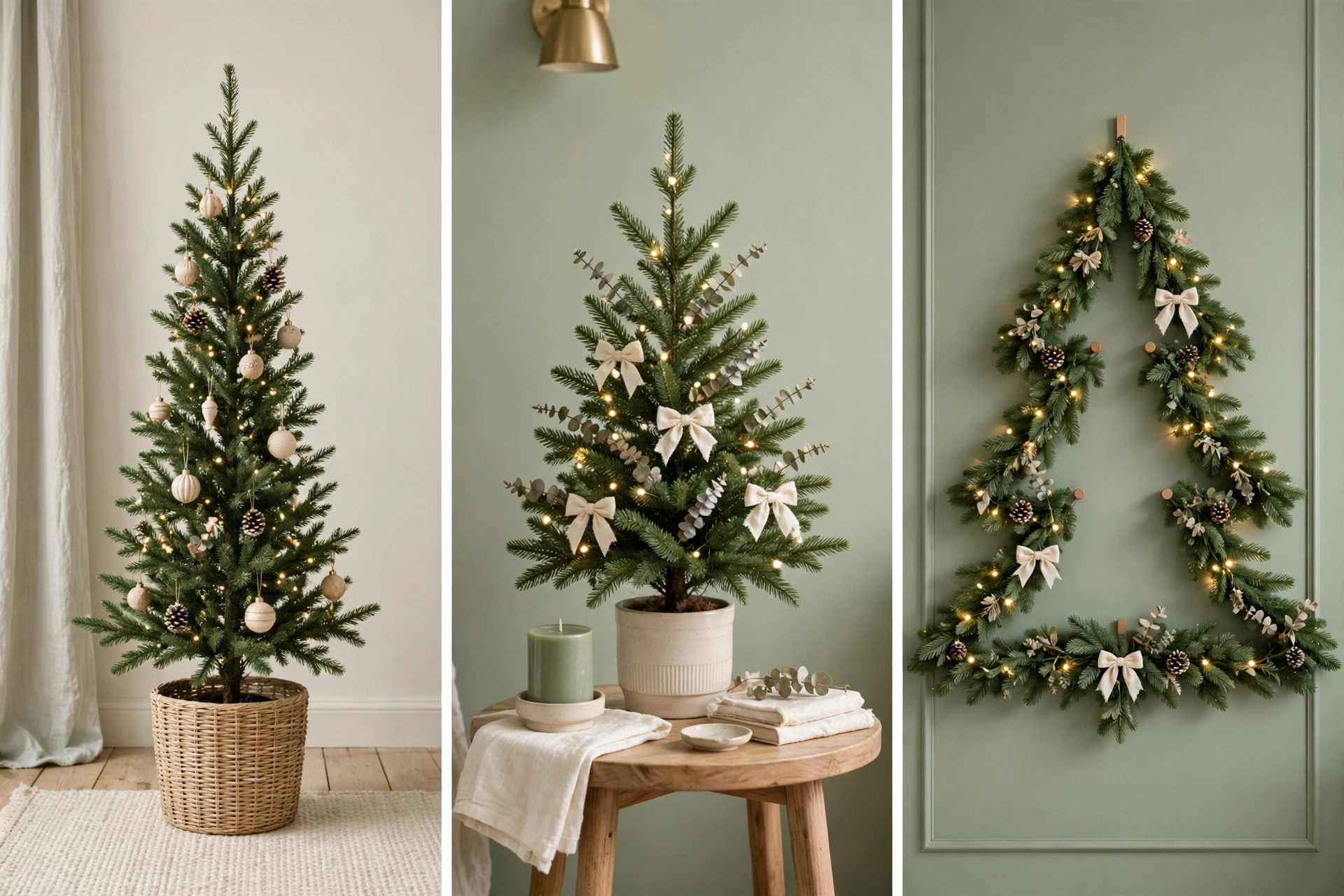
There are three tree types that work in a tiny apartment, and each one suits a different flat. A slim tree is a tall, narrow artificial tree, usually four to six feet tall and eighteen to twenty-four inches wide at the base. It looks like a real tree, it holds ornaments and lights, and it fits in a corner that a normal tree never could. A slim tree costs between twenty-five and forty-five dollars new, and between ten and twenty dollars second hand. It is the best choice if you have a free corner and you want a proper tree.
A tabletop tree is a small tree, usually two to three feet tall, that sits on a table, a shelf, a sideboard, or a windowsill. It costs between eight and twenty dollars, it needs no floor space at all, and it is the best choice for a studio, a bedroom, or a flat with no free corner. A tabletop tree looks best on a piece of furniture you already own, with a small basket or a fabric skirt under it to hide the base. It is also the easiest tree to store, because it fits in a cupboard or under a bed.
A wall tree is a tree shape made on the wall from garland, fairy lights, or branches, with ornaments hung from hooks that leave no marks. It costs between five and fifteen dollars in materials, it takes up zero floor space, and it is the best choice for the smallest flats and for renters who cannot bring a tree indoors. A wall tree looks best on a clear wall in the living room, where everyone can see it from the sofa.
Where to put a tree in a small flat
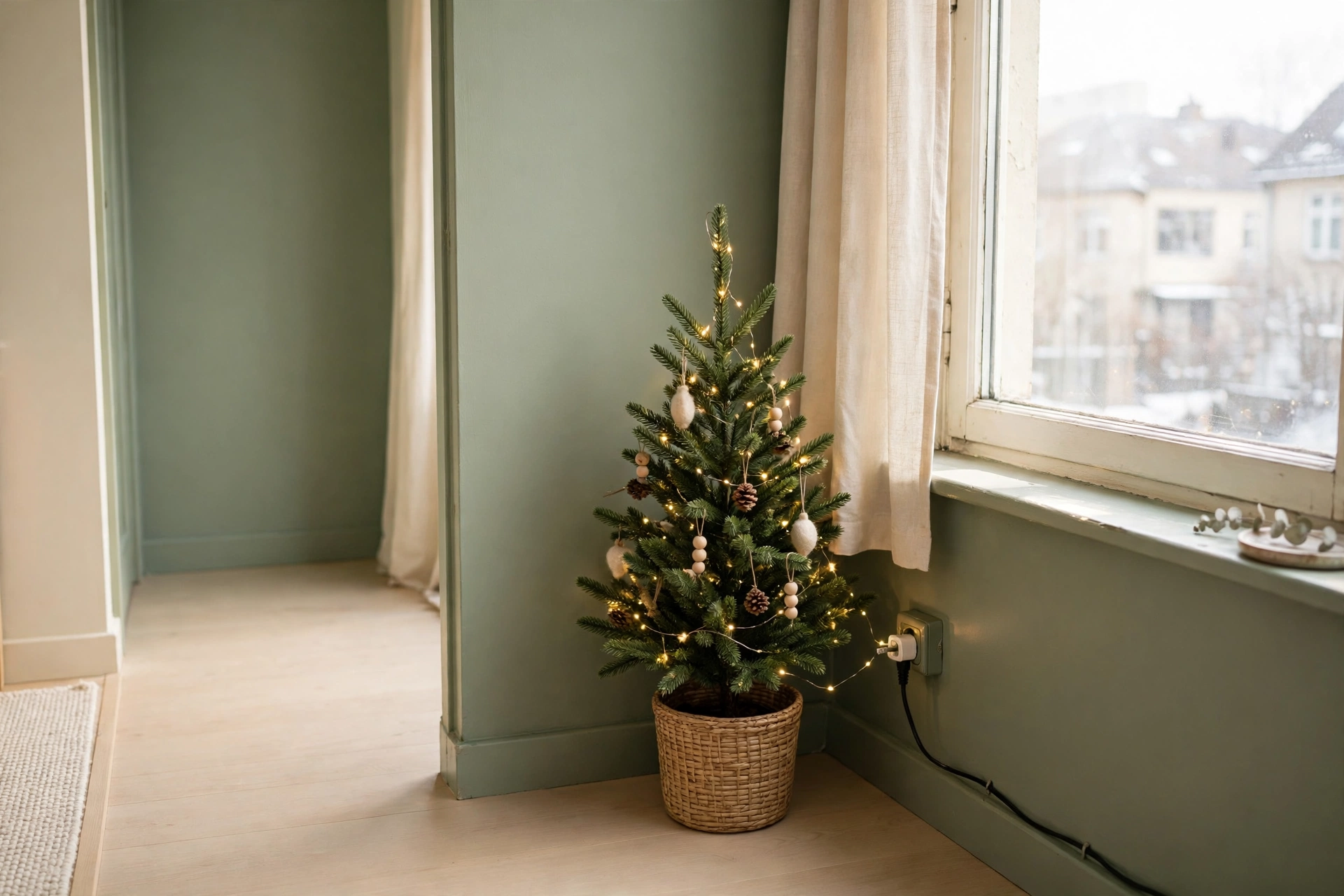
The best spot for a tree in a small flat is a corner you do not use, near a plug socket, where you can see it from the sofa. A corner by the window is ideal, because the daylight shows the tree during the day and the lights glow through the window at night. A corner next to the television works too, as long as the tree does not block the screen. A corner by the front door is the worst spot, because coats, bags, and shoes will knock ornaments off every time someone comes home.
If you have no free corner, look up. A tabletop tree on top of a bookshelf, a sideboard, or a kitchen counter uses space you already have. A wall tree on the wall above the sofa uses space that was empty anyway. A small tree on a windowsill uses the brightest spot in the room and needs no furniture at all. The rule is simple: the tree goes where it does not block a walkway, a door, or a cupboard, and where you can see it while you sit down in the evening.
Keep the tree away from radiators, heaters, and candles. Heat dries out a real tree and it can melt the tips of an artificial one. Keep it away from the cooking area too, because steam and grease will dull the ornaments. A tree near a plug socket is best, because the lights need power and an extension lead across the floor is a trip hazard in a small flat. If the nearest socket is far away, use battery lights, which cost about five dollars and need no plug at all.
Slim tree: big Christmas feeling, small footprint
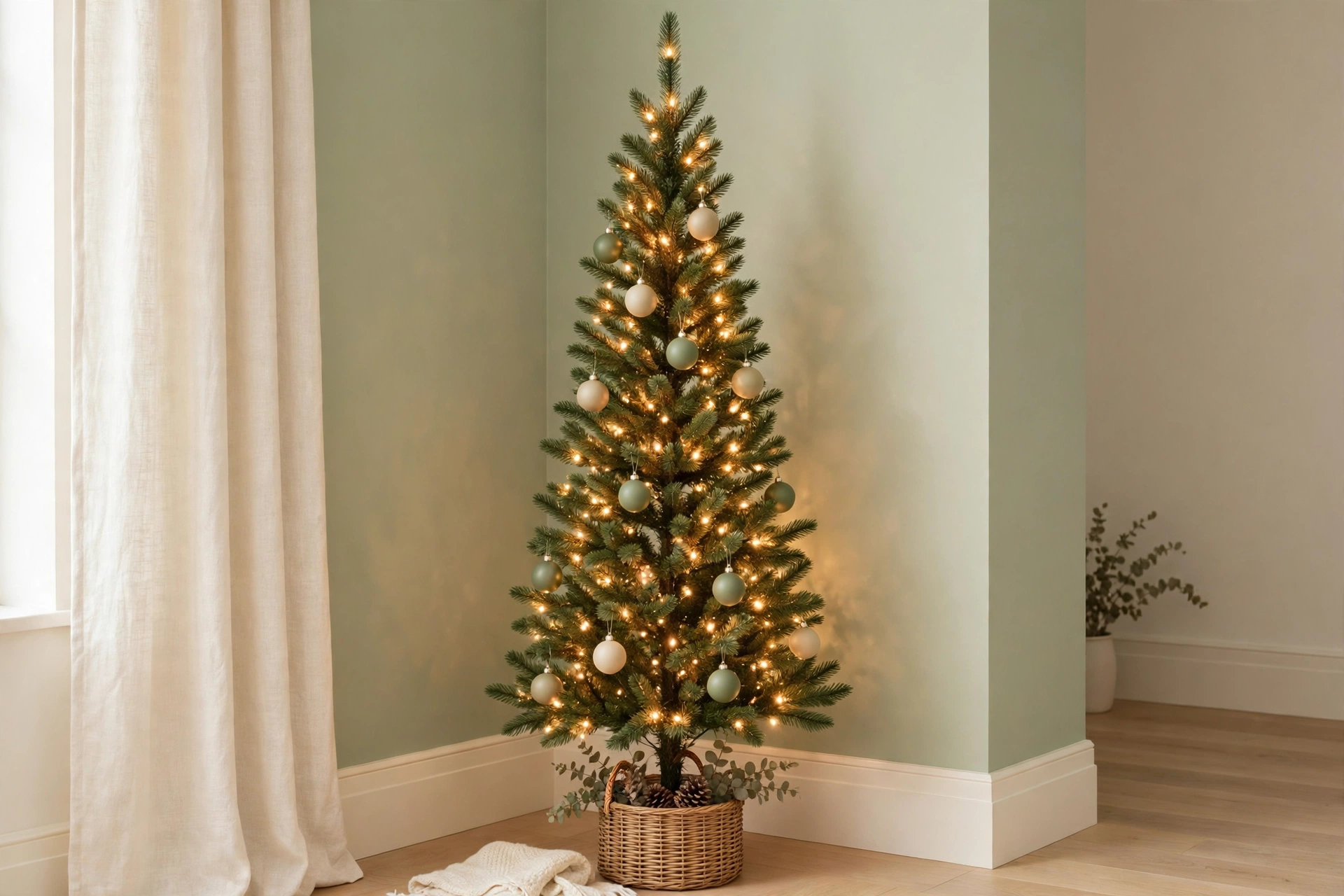
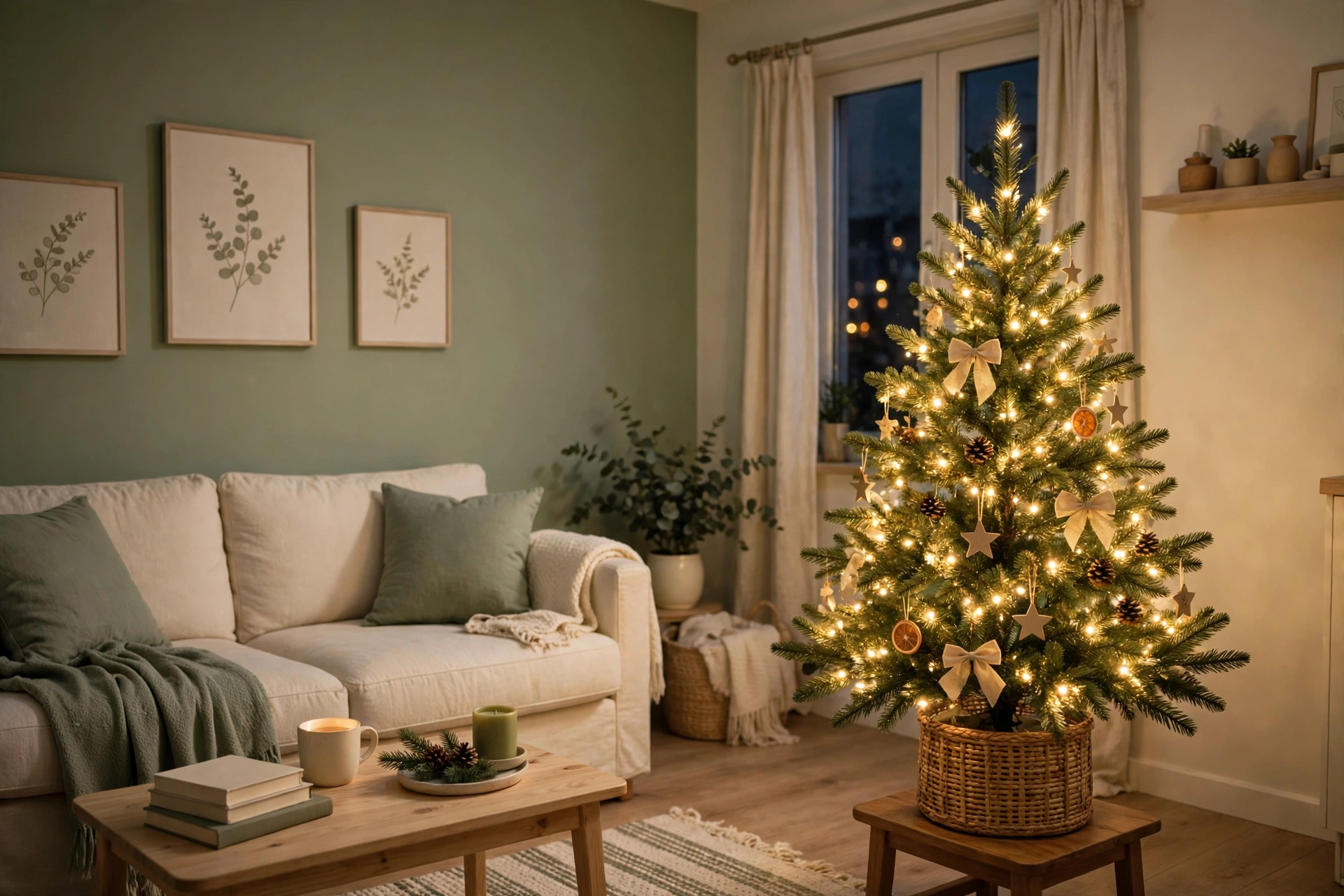
A slim tree is the closest thing to a normal tree that fits in a tiny flat. Set it up in the corner you measured, fluff the branches out from the bottom up, and step back to check the shape before you add anything. A slim tree looks best when the branches are spread evenly, with no big gaps and no branch poking out into the walkway. Fluffing takes ten minutes and it makes a cheap tree look twice as full.
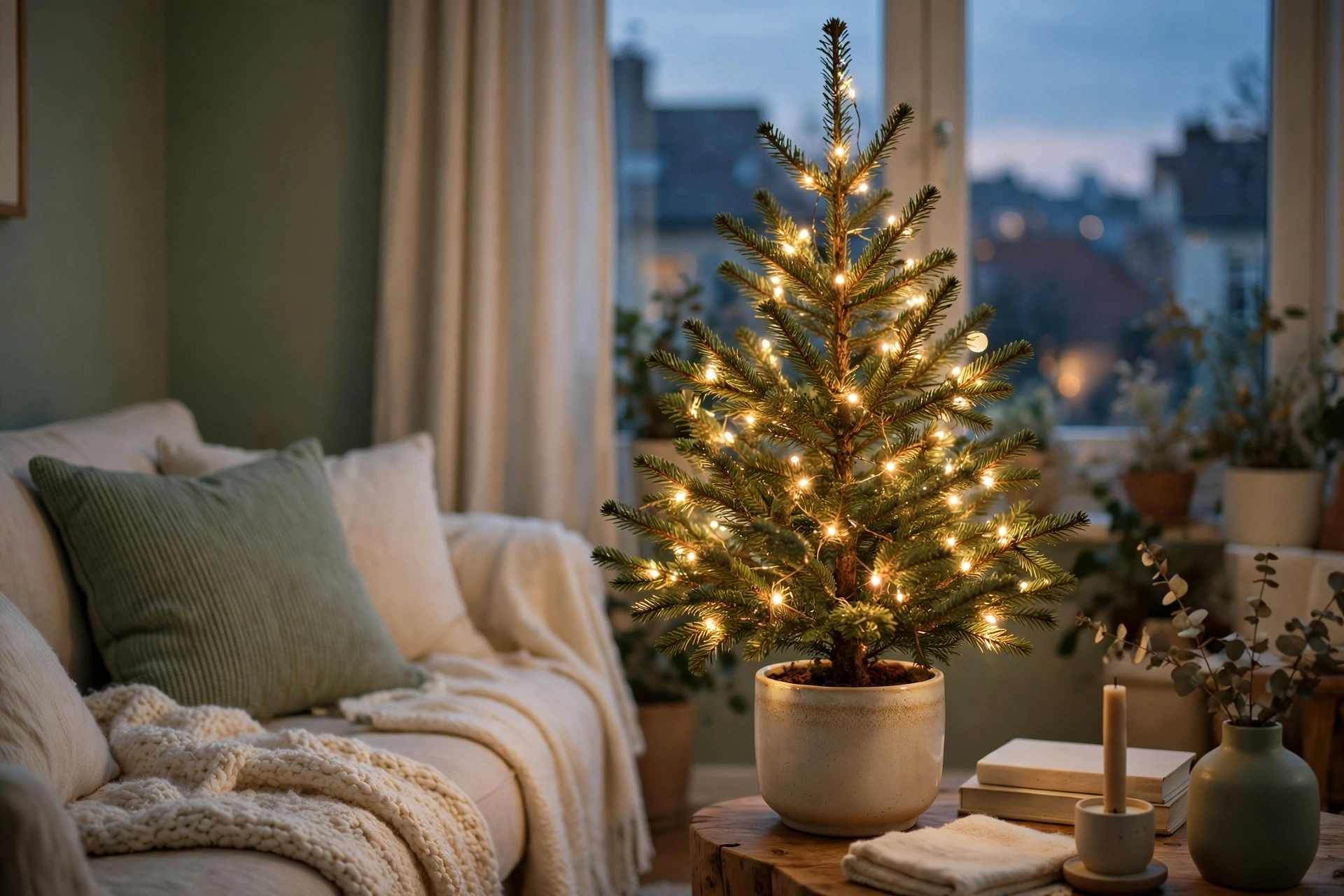
Decorate a slim tree from the inside out. Put the lights on first, starting at the bottom and working up in a spiral, tucking the wire close to the trunk so the lights glow from inside the tree. Use one string of fifty to one hundred warm white lights, which costs about five to eight dollars. Then add the ornaments, biggest ones at the bottom and smallest ones at the top, with a few near the trunk so the tree looks deep. Finish with a simple topper, a star or a bow, and a small skirt or a basket at the base to hide the stand.
A slim tree holds about twenty to thirty ornaments, which is plenty. You do not need to fill every branch. A tree with space between the ornaments looks calm and tidy, and it matches a small room better than a tree covered in decorations. If the tree still looks bare, add a garland of wooden beads or a ribbon wrapped in a loose spiral. Both cost a few dollars and both fill the gaps without adding clutter.
Tabletop tree: the easiest tree for a studio
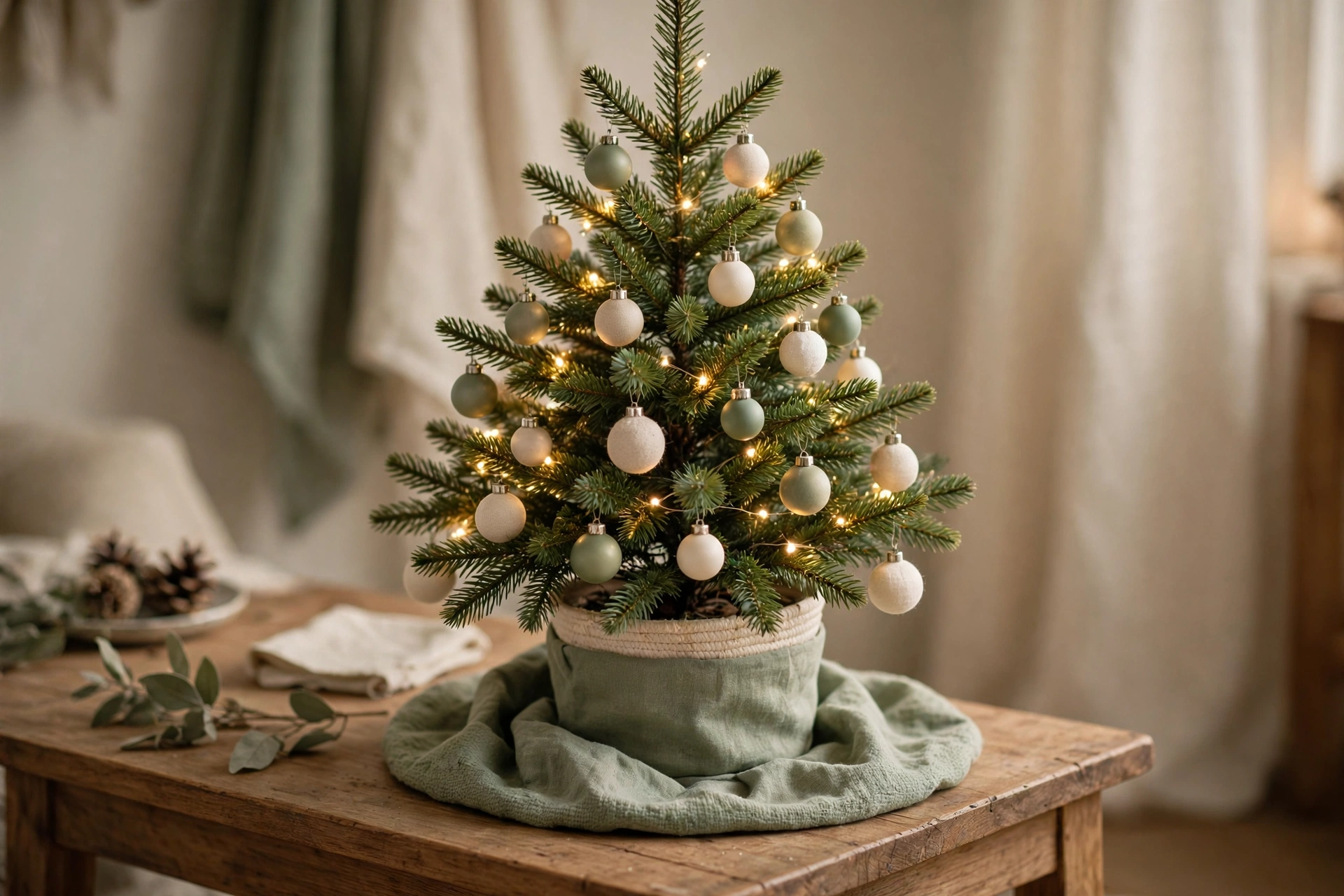
A tabletop tree is the easiest Christmas tree to own. It needs no assembly, no floor space, and no heavy lifting. Put it on a side table, a shelf, a chest of drawers, or a windowsill, and it is done. The best tabletop trees are two to three feet tall, with a sturdy base that will not tip over when a cat or a child brushes past it. If the base is light, put the tree inside a basket, a pot, or a fabric bag to weigh it down and make it look finished.
Decorate a tabletop tree with ten to fifteen small ornaments and one short string of battery lights. Small ornaments look better than big ones on a small tree, because big ornaments hide the branches. Use plain baubles in two or three colors that match your room, for example cream, sage green, and gold, and add a few pinecones or wooden shapes for texture. A tiny star on top finishes it, and a folded tea towel or a small piece of fabric under the tree hides the base and catches any fallen needles.
A tabletop tree also works as a second tree. If you have a slim tree in the living room, a tabletop tree in the bedroom or the hallway makes the whole flat feel like Christmas, and it costs very little extra.
Wall tree: zero floor space, no drilling
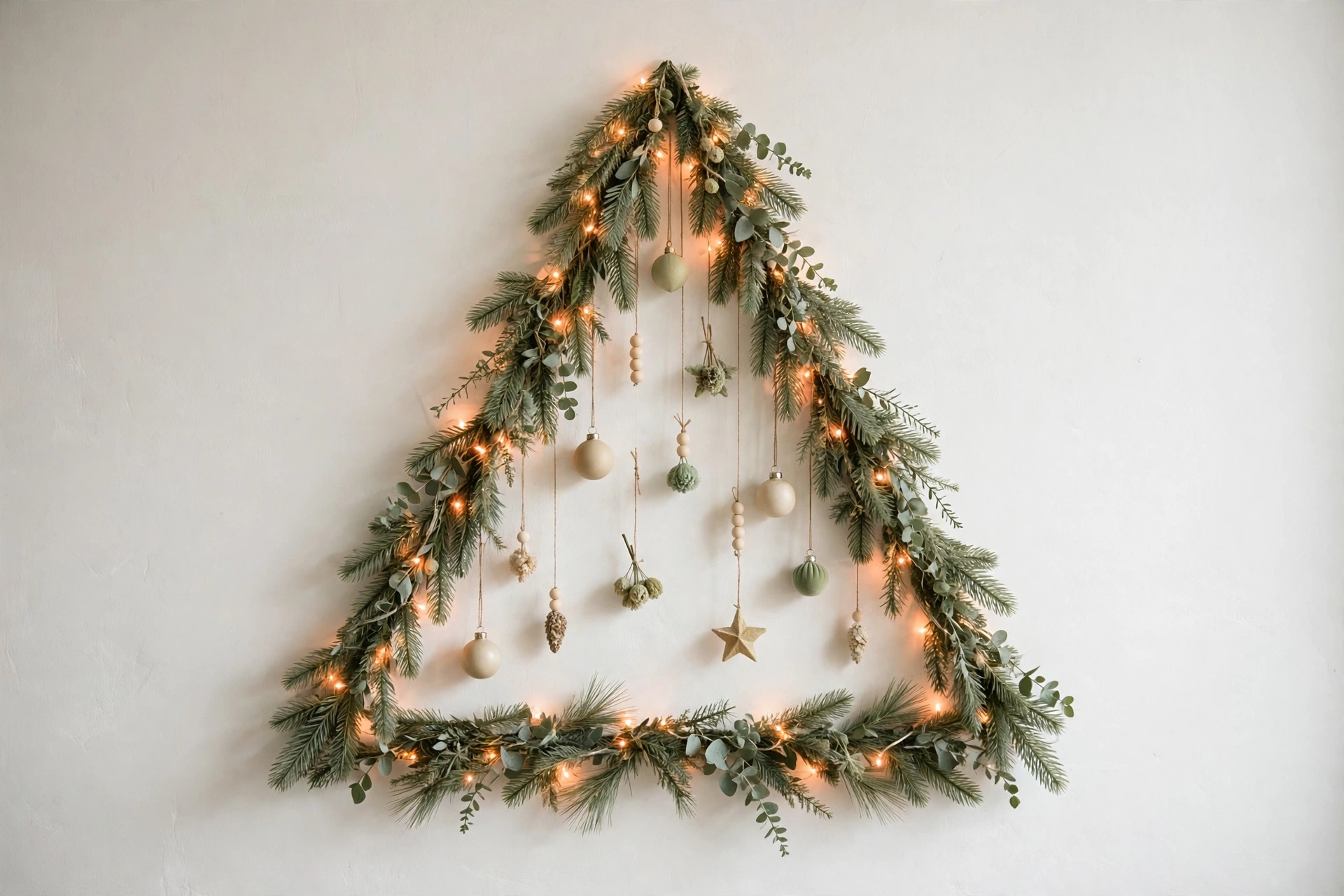
A wall tree is the cleverest option for a very small flat, and it is completely renter-friendly. You need a clear wall, a string of fairy lights, a pine garland or a few branches, and some removable hooks. Start by marking the tree shape on the wall with the lights: a wide zigzag at the bottom that gets narrower toward the top, like a triangle. Fix the lights with removable adhesive hooks, the kind that peel off without leaving a mark, spaced about twelve inches apart along the shape.
Add a garland along the same zigzag if you want a fuller look, or hang the ornaments straight from the hooks. Small, light ornaments work best, because heavy ones will pull the hooks off the wall. Hang ten to fifteen ornaments inside the triangle, a star or a bow at the top, and a small basket or a wrapped box at the bottom as a pretend tree base. The whole wall tree costs between five and fifteen dollars, it takes about an hour to build, and it takes up no floor space at all.
When January comes, a wall tree takes five minutes to take down. Peel off the hooks, coil the lights, and put the ornaments back in their box. There are no holes to fill, no marks to clean, and no tree to carry down the stairs. It is the best tree for a renter, a studio, or anyone who wants Christmas on the wall instead of on the floor.
Budget ornaments that look expensive
You do not need expensive ornaments to make a small tree look good. You need a simple color plan and a few plain shapes. Pick two or three colors that match your room, for example cream and sage green with a little gold, or white and red with a little wood. Buy one pack of plain baubles in those colors, which costs about five to eight dollars for twelve, and add a few natural pieces like pinecones, dried orange slices, or cinnamon sticks tied with twine. Natural pieces cost almost nothing and they make the tree smell like Christmas too.
Make some ornaments yourself if you want to save more. Paper stars folded from plain paper, salt dough shapes cut with cookie cutters, or wooden beads threaded on twine all look lovely on a small tree and cost pennies. Keep them simple and in the same colors as the rest of the tree, so the handmade pieces look like part of the plan, not like leftovers.
Use what you already own before you buy anything new. A ribbon from a gift, a scarf wrapped around the base, a basket you already have, or a few ornaments from last year in a new color plan all save money. Check the pound shop or the dollar store first, because plain baubles, ribbons, and battery lights there cost one to three dollars each.

Lights, the part that makes it feel like Christmas
Lights are the cheapest way to make a small tree feel magical. Warm white lights are the best choice for a small flat, because they make the room feel warm and calm. Cool white lights look bright and cold, and colored lights look busy on a small tree. One string of warm white lights is enough for a slim tree, and a short battery string is enough for a tabletop tree. A string of fifty lights costs about five dollars, and a string of one hundred costs about eight dollars.
Put the lights on before the ornaments, and weave them in and out of the branches instead of wrapping them around the outside. Lights tucked inside the tree glow from the middle and make the tree look deep and full. Lights wrapped around the outside sit on the surface and look flat. Start at the bottom, plug the string in to check it works, and work up in a spiral, leaving a little slack at the top for the star.
Set the lights on a timer plug if you have one, which costs about seven dollars and switches the lights on at the same time every evening. A timer saves electricity, it saves you remembering to switch the lights off at night, and it means you come home to a glowing tree every evening in December.
Keep the tree tidy all December
A small tree stays tidy if you give it a little care once a week. Check the ornaments every few days and push back any that have slipped to the edge of a branch. Pick up fallen needles or pinecones from the floor so they do not spread through the flat. Water a real tree every two days if you have one, because a dry tree drops needles fast and becomes a fire risk. An artificial tree needs no water, just a quick shake of the branches once a week to keep the dust off.
If the tree starts to look tired by mid-December, refresh it in ten minutes. Move a few ornaments to new spots, add a fresh ribbon, or swap the topper. A small change makes the tree feel new again, and it costs nothing.

Storage: pack it away in one box
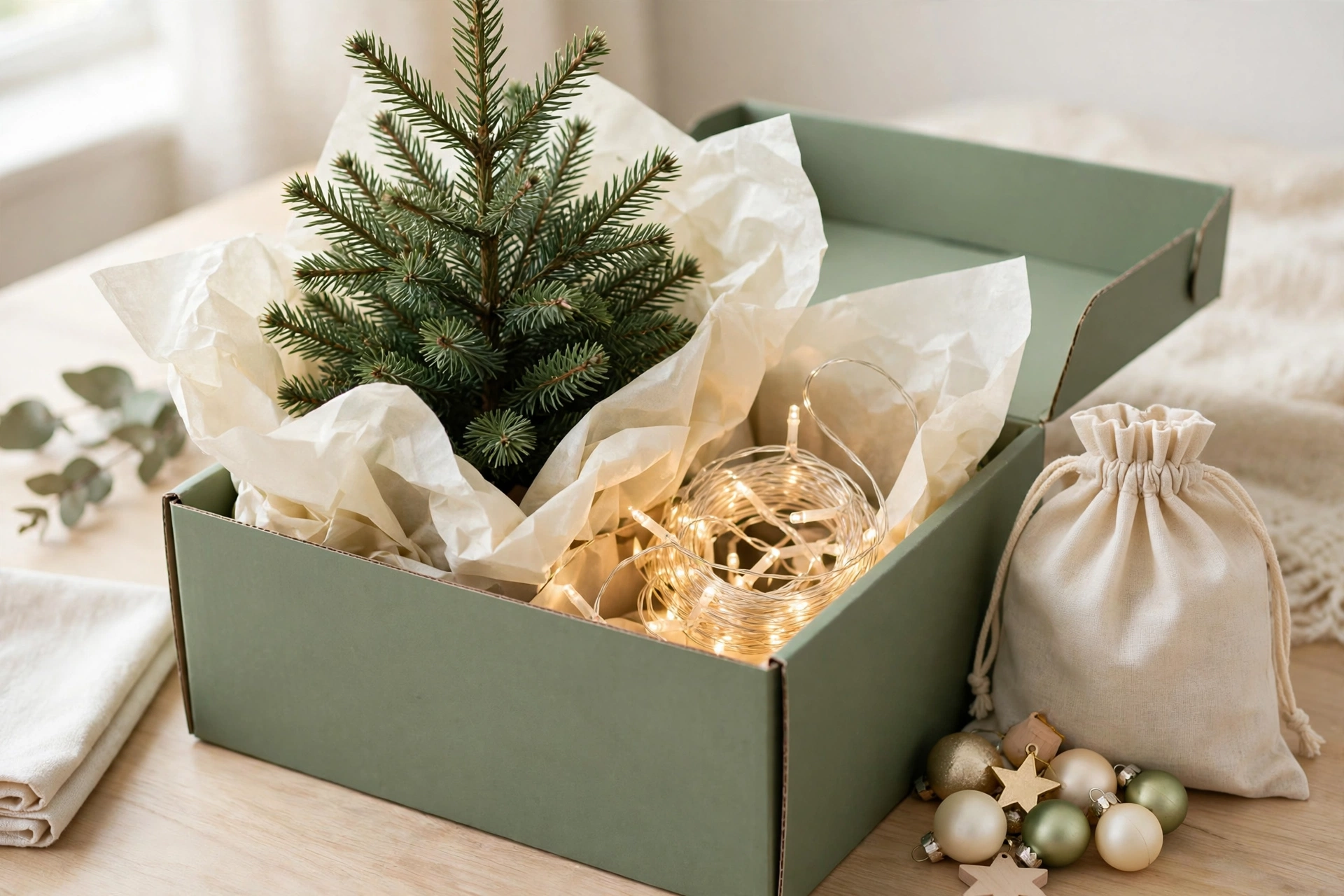
When Christmas ends, a small tree is easy to store, and that is one of its best features. A slim tree folds down into its box, a tabletop tree fits in a cupboard, and a wall tree folds into a bag. Pack the ornaments in the same box as the tree, wrapped in tissue paper or old tea towels so they do not break. Coil the lights neatly and tie them with a twist tie so they do not tangle next year. Label the box with a plain blank label and put it on top of a wardrobe, under a bed, or on a shelf in a cupboard.
Do not throw the tree away after one Christmas. A good artificial tree lasts five to ten years, and a tabletop tree lasts even longer because it is small and light. The cost per year drops to a few dollars, which makes it one of the cheapest Christmas decorations you can own. If you bought a real tree, check your local council collection dates in January, or cut it up for compost if your area allows it. A real tree should never go in the normal bin if a greener option exists.
Store the decorations you made yourself with the same care, because handmade ornaments are the ones you will want again next year. Put them in a small box inside the main box, so you find them easily next December. A tidy box in January means a fast setup next Christmas, and a fast setup means you will put the tree up earlier and enjoy it longer.
A one afternoon setup plan
Here is the whole tree as a one afternoon plan. Hour one: measure the spot, clear the corner, and put the tree together. Fluff the branches, check the shape, and plug in the lights to make sure they work. Hour two: add the lights, then the ornaments, then the topper, and finish with the skirt or the basket at the base. Step back, look at the tree from the sofa, and move anything that looks out of place. Hour three: tidy the room, put the empty boxes away, and switch the lights on as it gets dark.
If you only have one hour, do a tabletop tree or a wall tree. A tabletop tree takes twenty minutes to decorate, and a wall tree takes about an hour to build. Either one gives you a finished Christmas corner in a single hour, and you can add more ornaments over the next few days if you want to. A small tree done well in one hour beats a big tree half done all weekend.
Take a photo when you finish, and enjoy the tree every evening. A small tree in a tiny apartment is not a compromise. It is the right tree for the space, and it does the job a big tree does: it makes December feel like Christmas, it gives you a place to hang the ornaments you love, and it makes the whole flat feel warm when the lights come on. Start with the measure, pick the tree that fits, and put it up this weekend.
Related pins
- Christmas Decoration Storage Ideas on a Budget
- Cozy Christmas Bedroom Makeover on a Budget
- Christmas Kitchen Cabinet Decor on a Budget
- Christmas Bathroom Styling on a Budget
- New Year Home Reset in 7 Days