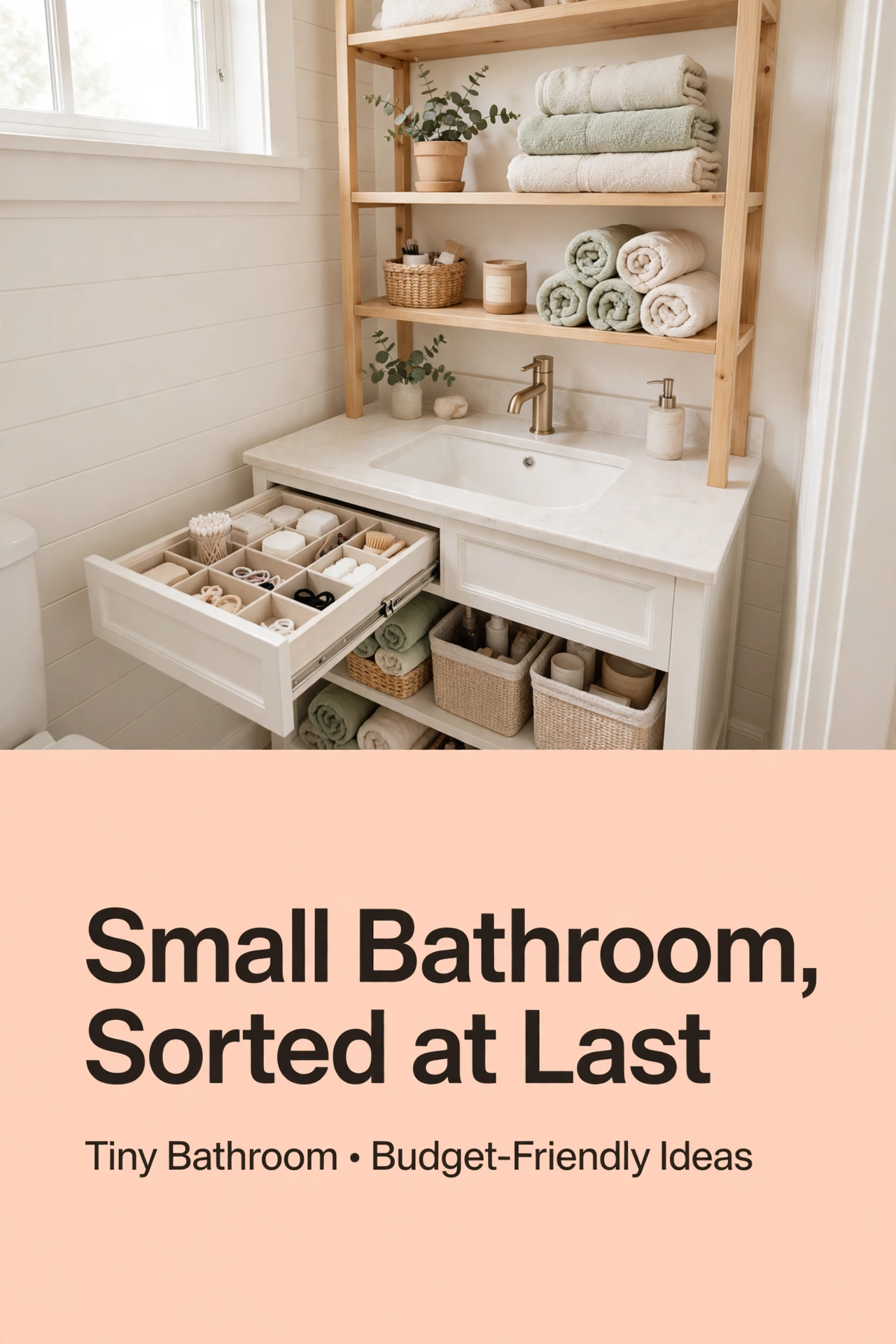
Bathroom Organization Ideas for Small Bathrooms
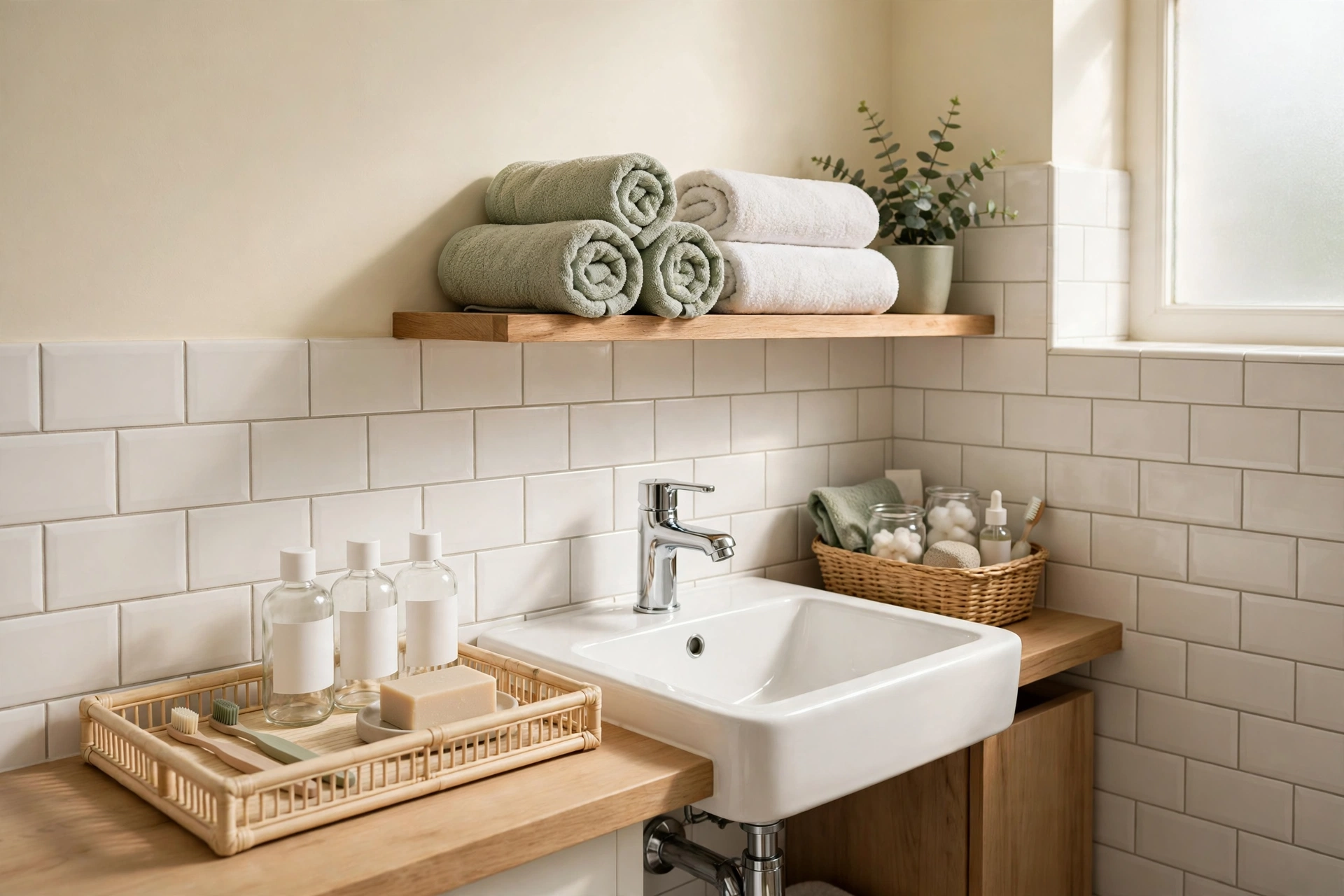
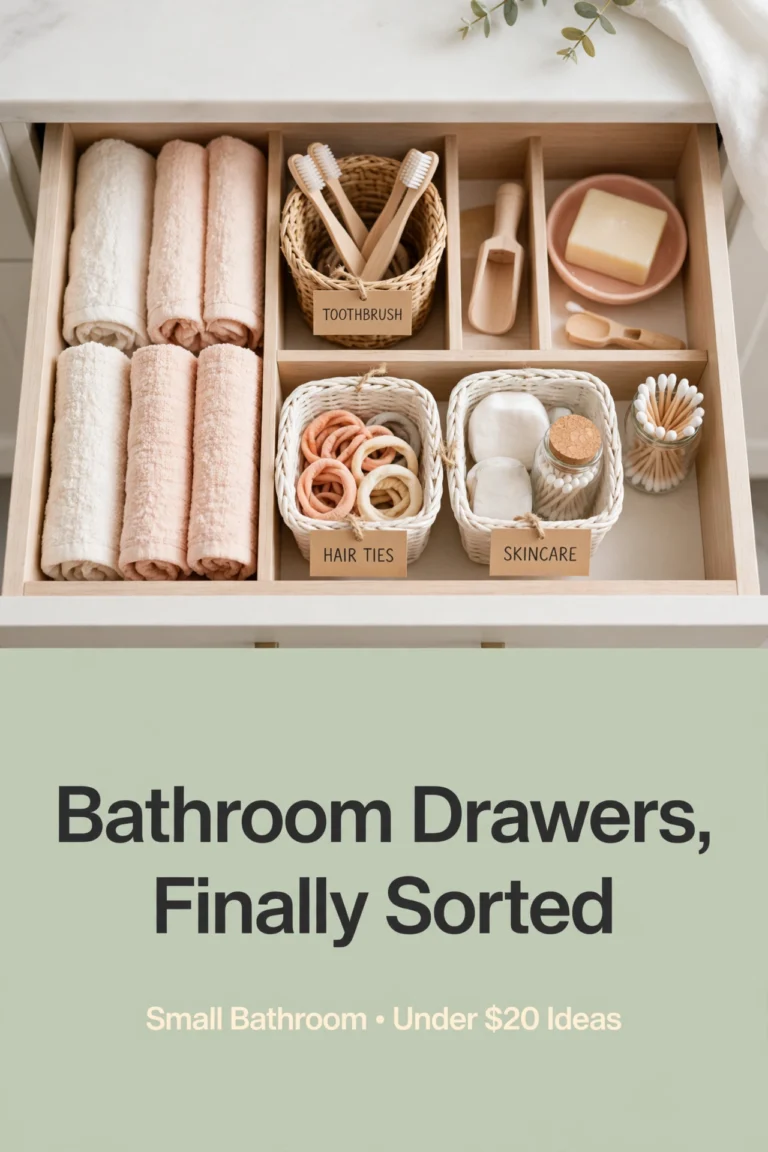
A small bathroom organized by routine a morning zone by the sink, an evening zone on the shelf, and rolled towels ready to grab.
Introduction
Post 4 on this blog covered ten under-$20 bathroom storage ideas, shelves, bins, caddies, and carts. This post is different. It is not about buying more storage. It is about organizing your small bathroom around the way you actually live in it, morning to night, one routine at a time.
Most small bathrooms fail at the same two moments of the day. In the morning, two people need the sink at once, toothbrushes fall behind the tap, and the one hairbrush you need is buried in a drawer. In the evening, the products you need to wind down are scattered across three shelves, so you skip the routine altogether. The fix is not a bigger bathroom. It is giving every routine its own small zone, and giving every person in the house a fair share of the space.
The ten ideas below each cost under $20, need no drilling, and work for renters. They are written for real households: couples sharing one sink, families squeezing a whole routine into one small room, and anyone whose bathroom has to hold makeup, medicine, towels, and cleaning supplies in about the space of a wardrobe. Start with the morning zone, because that is the one you will feel tomorrow, then add the rest one zone at a time. Prices are approximate US budget-store prices in 2026.
Bathroom organization is also one of the strongest topics in this niche right now: “bathroom organization ideas” is up about 100% year-on-year in Pinterest Trends (US, data to 31 Oct 2026), so this is the post Pin 14 will link to when the website goes live.
Before you buy anything
Do not buy a matching set of baskets first. Baskets bought before you know your routines become clutter themselves.
1. Watch one day first. Before you spend anything, notice where things pile up. Is the morning rush the problem, or the evening wind-down? Is the towel situation the mess, or is it the makeup? Fix the routine that annoys you most, not the shelf that looks worst in a photo.
2. Declutter by routine, not by shelf. Empty one routine at a time: everything you touch in the morning, then everything you touch in the evening, then everything you only touch once a week. Throw out anything expired, empty, or unused in a year. Old medicines, dried-out makeup, and hotel samples you will never open are the usual suspects. Put “maybe” items in a dated bag; unopened in 30 days, donate or bin it.
3. Group by when you use it, not what it is. Put everything you use in the morning together, and everything you use at night together, even if that means the moisturizer lives next to the toothpaste instead of next to the other skincare. A bathroom organized by routine is faster to use than a bathroom organized by category.
Common mistake: organizing by product type instead of by routine. A shelf of “all skincare together” looks tidy in a photo, but it means you open three different cupboards to get ready in the morning. Group by the moment you need it, and the tidiness follows.
Small bathroom layouts
One-wall bathrooms have the sink, toilet, and shower along a single wall, often in a studio or a small flat. There is usually only one moment when the room is crowded, the morning rush, so the morning zone matters most here. Keep the sink counter for morning essentials only, and move evening and weekly items to a shelf or the top of a small storage unit.
Galley-style bathrooms are long and narrow, with fixtures on both sides. Two people can be in the room at once here, which is good for a family, but the walkway gets blocked fast. Give each person their own basket on opposite sides of the room if you can, and keep the floor clear of anything that is not a towel basket or a step stool.
Bathrooms with no storage at all, just a pedestal sink and a toilet, need routines more than they need furniture. A tray by the sink holds the morning zone, a basket on the floor holds the towels, and a caddy under a small shelf holds the cleaning supplies. When there is nowhere to hide things, the routine itself is the storage system: everything you use comes out, gets used, and goes back to its one place.
Whichever shape you have, store things where the routine happens: morning products by the sink, evening products where you can reach them without bending down in the dark, towels within arm’s reach of the shower, and cleaning supplies under the sink or on the door.
1. The morning routine zone
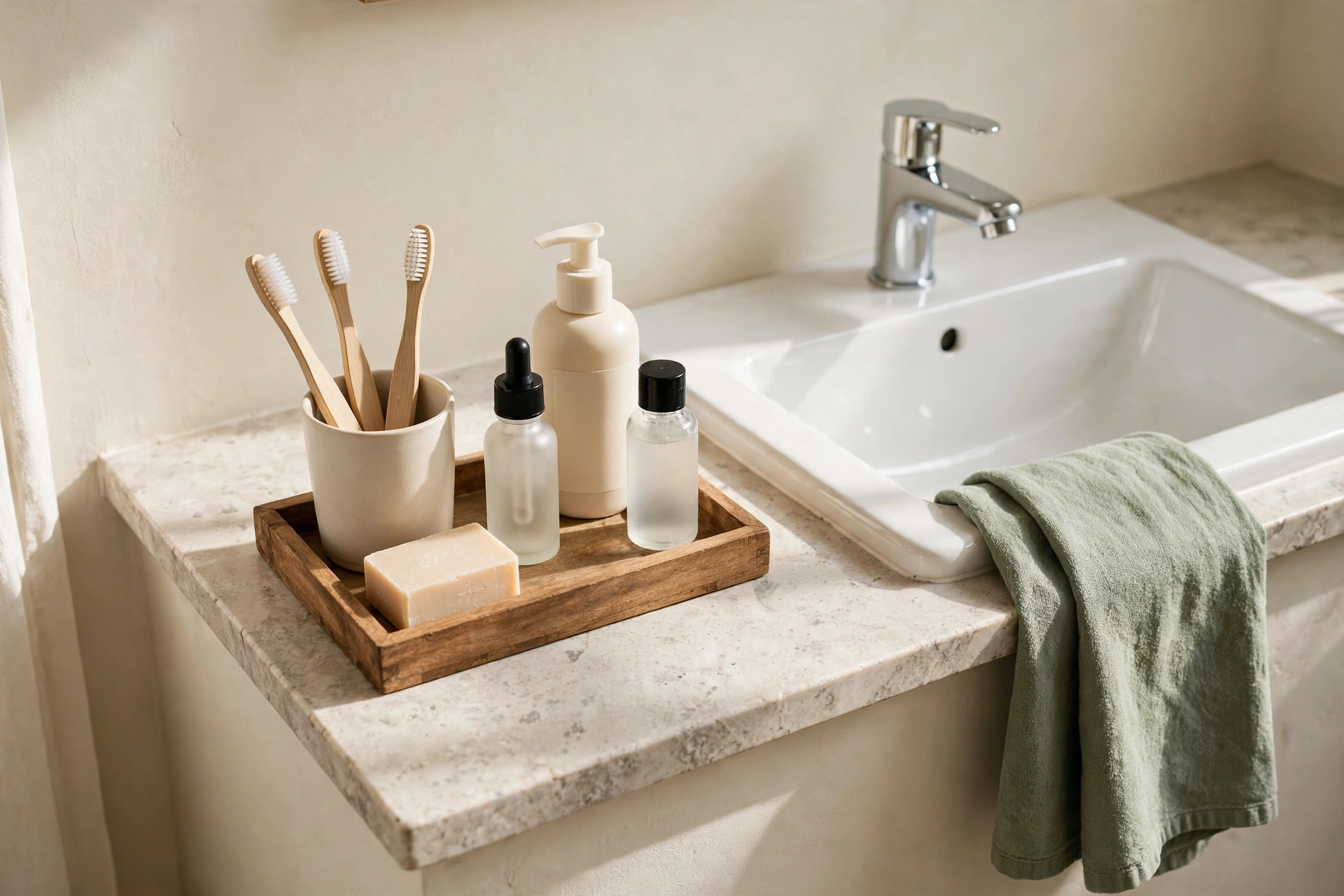
The morning zone one tray by the sink with everything you touch before 9am, and nothing else.
What to buy: One small tray or a shallow basket, about $4–$8, plus a toothbrush holder or a small cup, about $2–$4. A kitchen tray or a breakfast tray works just as well and costs about the same.
Where it goes: On the sink counter, on the side you naturally reach for with your dominant hand. Toothbrush, toothpaste, face wash, deodorant, and the one or two products you use every single morning go on the tray. Everything else lives somewhere else.
Common mistake: Letting the morning tray grow. It starts with five items and ends with fifteen, because every new product lands on the tray “for now”. Once a week, take everything off the tray and put back only what you actually used that week.
Try this today: Clear the sink counter completely, then put back only the five things you used this morning. Put the rest in a box under the sink for a week and see if you miss any of it.
2. The evening wind-down zone

The evening zone a small basket of night products on a shelf, so winding down takes two minutes, not a search.
What to buy: One small basket or a fabric pouch, about $3–$6. If you use a lot of night products, add a small shelf or a stackable tray, about $5–$10.
Where it goes: On a shelf at eye level, or on top of the towel basket, somewhere you can reach without bending down when you are tired. Night cream, lip balm, a hairbrush, and anything you use to take makeup off go in the evening basket. Keep it separate from the morning tray, even if some products appear in both. Two small sets beat one big set that you have to dig through twice a day.
Common mistake: Keeping the evening products in the same place as the morning ones. The morning rush then knocks over the night cream, and the evening routine starts with a cleanup. Two zones, two baskets, no arguments.
Try this today: Gather everything you use after 8pm into one basket and put it on a shelf. Tomorrow morning, notice how much faster the sink counter feels.
3. One basket per person, and shared bathroom rules
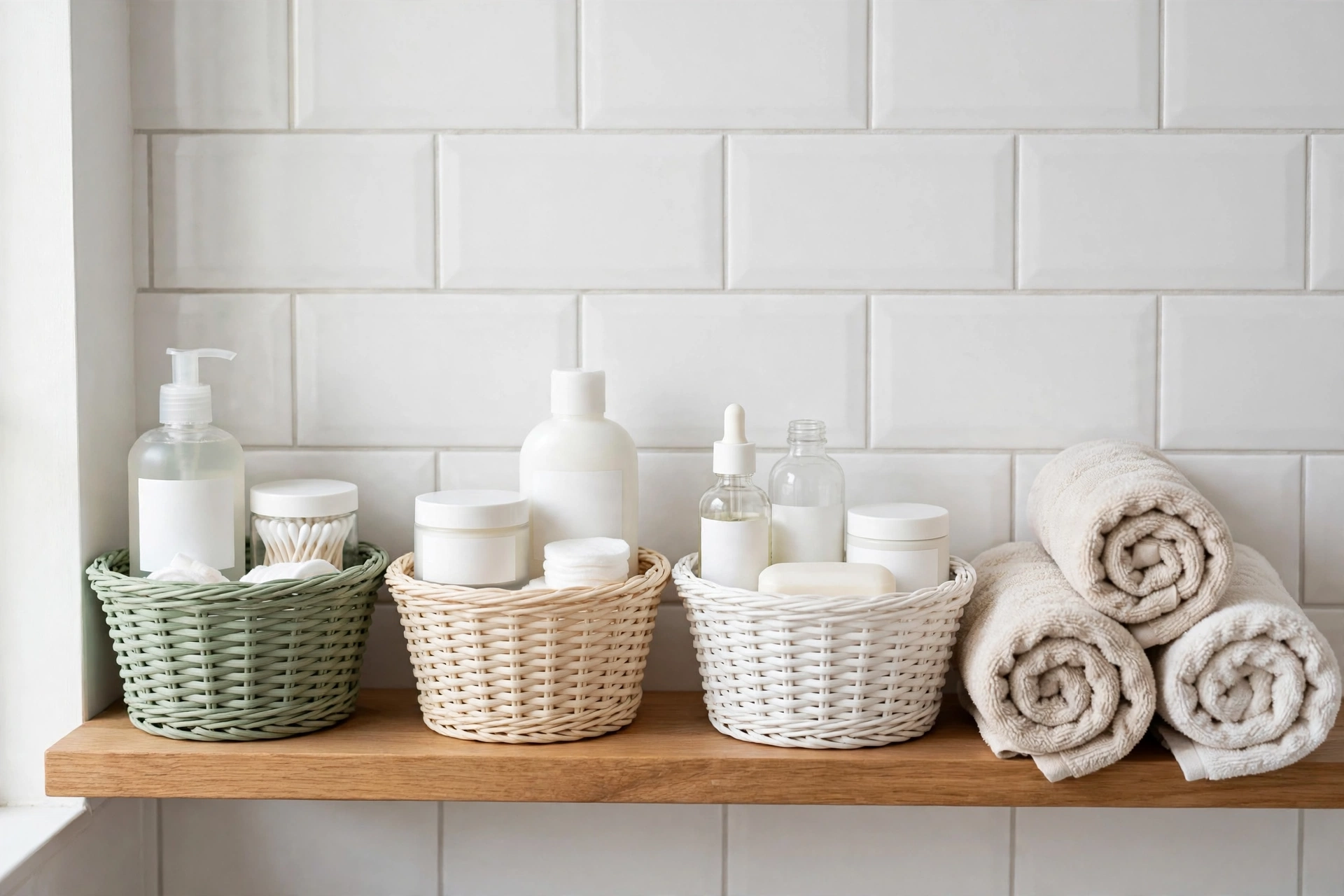
One basket per person no more sorting through someone else’s products to find your own.
What to buy: One small basket per person, about $3–$5 each, plus a label maker or masking tape and a pen, about $2. Different colors help: one sage, one cream, one white, so nobody has to read a label half asleep.
Where it goes: On a shelf or in the cabinet, one basket each. Everything that person uses daily lives in their basket, and the basket comes out for the routine and goes back when it is done. This is the same idea as the one-basket rule in Post 4, but here the point is fairness: in a shared bathroom, the person with the most products slowly takes over the whole room, and the other person ends up keeping their toothbrush in the bedroom.
Common mistake: Making the baskets too big. A small basket forces a choice about what you actually use; a big one just becomes another drawer. Agree on a simple rule: if it does not fit in your basket, it does not live in the bathroom.
Try this today: Give everyone in the house one small basket and ask them to put only what they used this morning into it. Anything that does not fit is a candidate for the bedroom or the bin.
4. A family bathroom in one small room
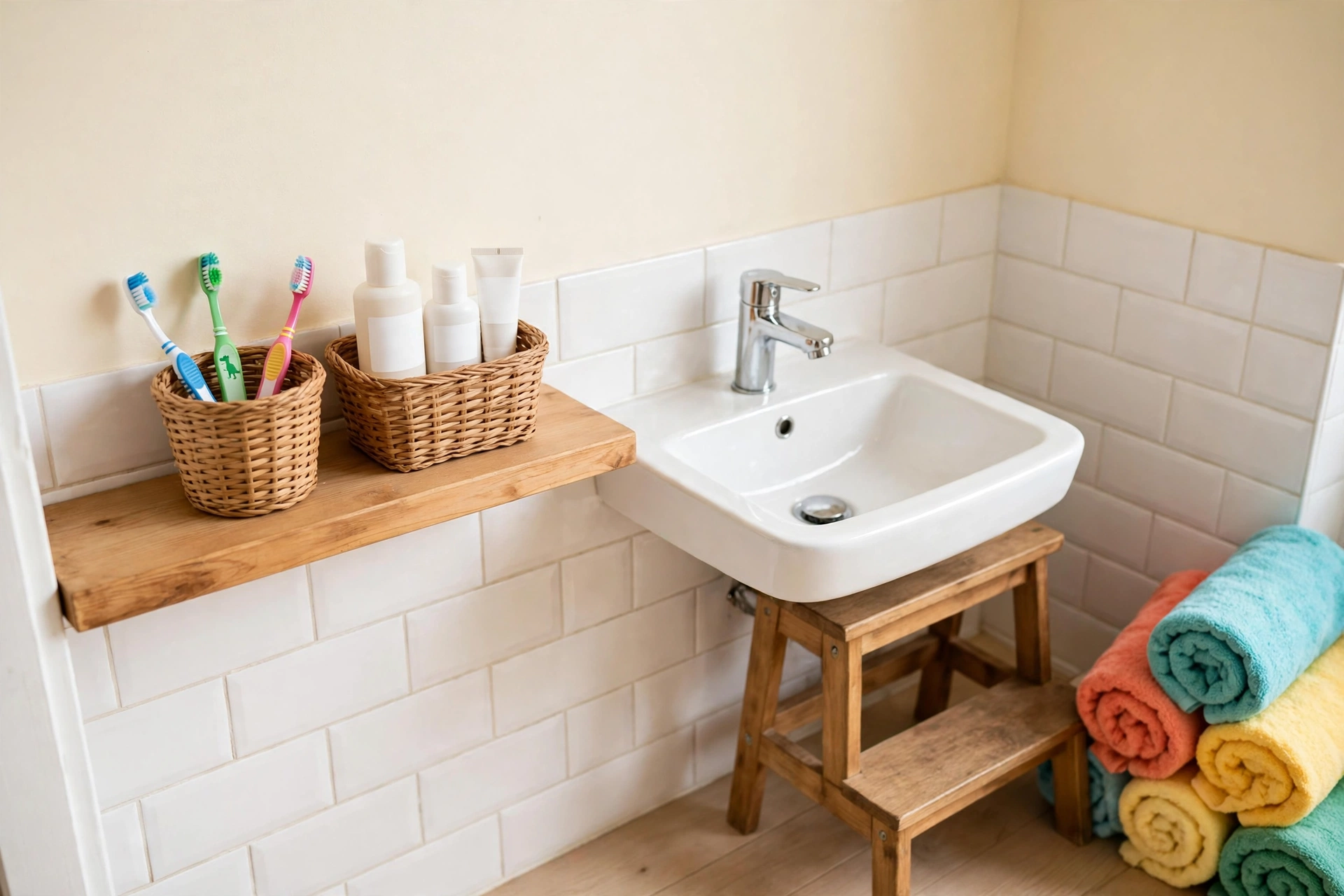
A family bathroom in one small room low baskets the kids can reach, and a step stool that folds away.
What to buy: One small step stool, about $8–$12, plus one small basket per child, about $3–$5 each. A suction-cup hook at child height, about $2–$3, gives each child a towel hook of their own.
Where it goes: The children’s baskets go on a low shelf or on the floor by the sink, where small hands can reach them without climbing. The step stool lives beside the toilet or behind the door, and folds or tucks away when guests come. Each child gets a towel hook at their own height, so towels stop ending up on the floor.
Common mistake: Storing the children’s things on the highest shelf “to keep them tidy”. Out of reach means out of use, and it means you are the one fetching the toothbrush every morning. Low and reachable beats high and tidy.
Try this today: Put one basket per child at their height with just their toothbrush, toothpaste, and hairbrush in it. Watch how much of the morning runs itself.
5. A makeup and skincare station
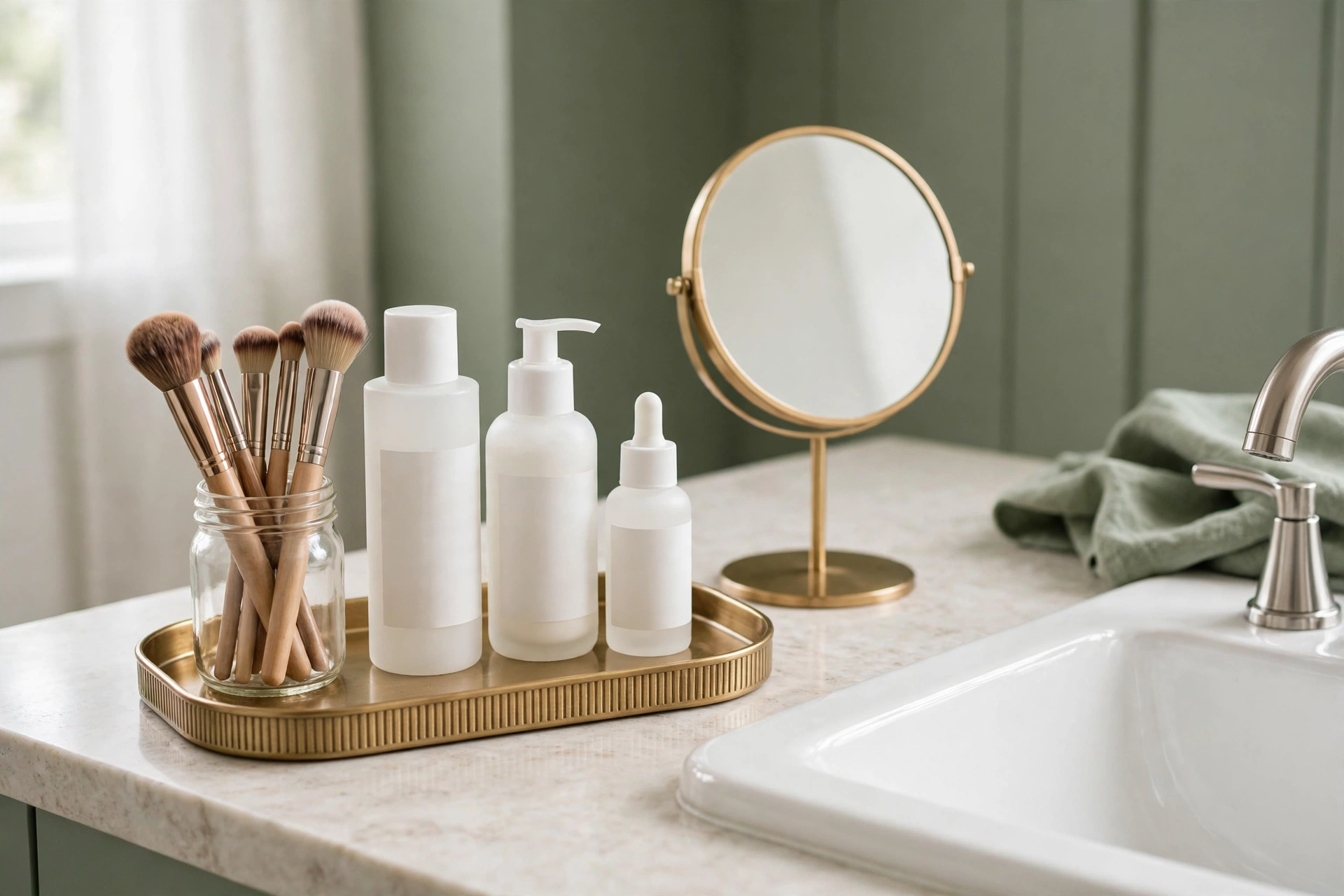
A makeup and skincare station one tray, one mirror, and a five-minute limit on what stays out.
What to buy: One tray or a small rotating turntable, about $5–$10, plus a small jar or cup for brushes, about $2–$4. A small standing mirror, about $6–$10, helps if the main mirror is shared or too high.
Where it goes: On one corner of the counter, or on a shelf near the mirror, never spread across the whole sink. Daily makeup and the skincare you use every day go on the tray. The rest, the special-occasion palettes and the products you use once a week, live in a basket in the cabinet and come out only when needed.
Common mistake: Keeping your whole collection on the counter. A small bathroom counter is not a dressing table. Keep out the five products you use on a normal weekday, and store the rest. Your morning will be faster and your counter will be cleaner.
Try this today: Take every makeup and skincare product off the counter, then put back only what you used yesterday. The rest goes in a basket in the cabinet.
6. A towel system that actually works
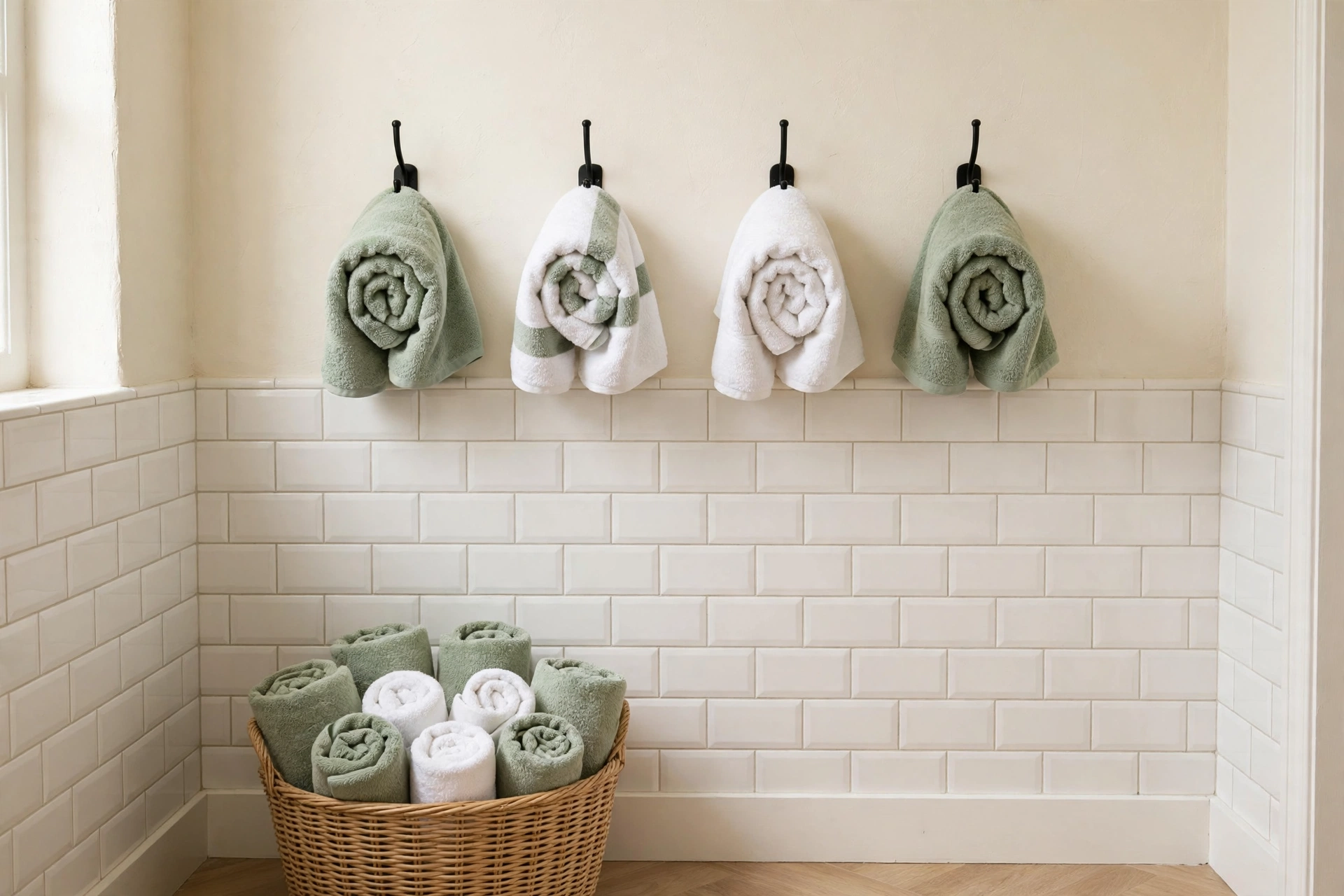
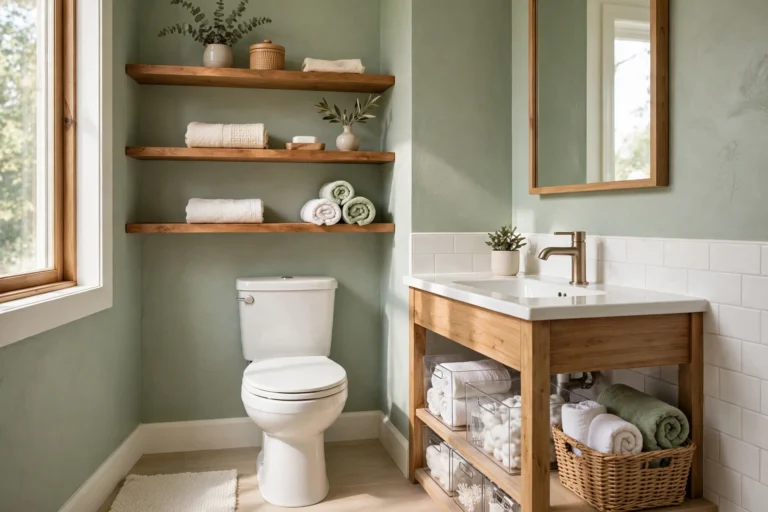
A towel system one hook per person, one towel in use, and the spares rolled in a basket.
What to buy: One hook per person, about $2–$4 each for adhesive or over-door hooks, plus one basket for spares, about $6–$12. Rolling is free.
Where it goes: Hooks go on the back of the door or on the wall near the shower, one per person, at a height each person can reach. The towel in use hangs on its hook. Clean spares are rolled in a basket on the floor or on a shelf. Used towels go straight to the laundry, not back on the hook for a third day.
Common mistake: Keeping six towels per person “just in case”. Two per person in use, plus two spares in the basket, is enough for a small bathroom. The rest are just taking up a shelf. Wash the towel in use twice a week, and the system runs itself.
Try this today: Count the towels in the bathroom. If there are more than two per person plus two spares, move the extras to the linen cupboard or the airing cupboard.
7. Medicine and first-aid storage
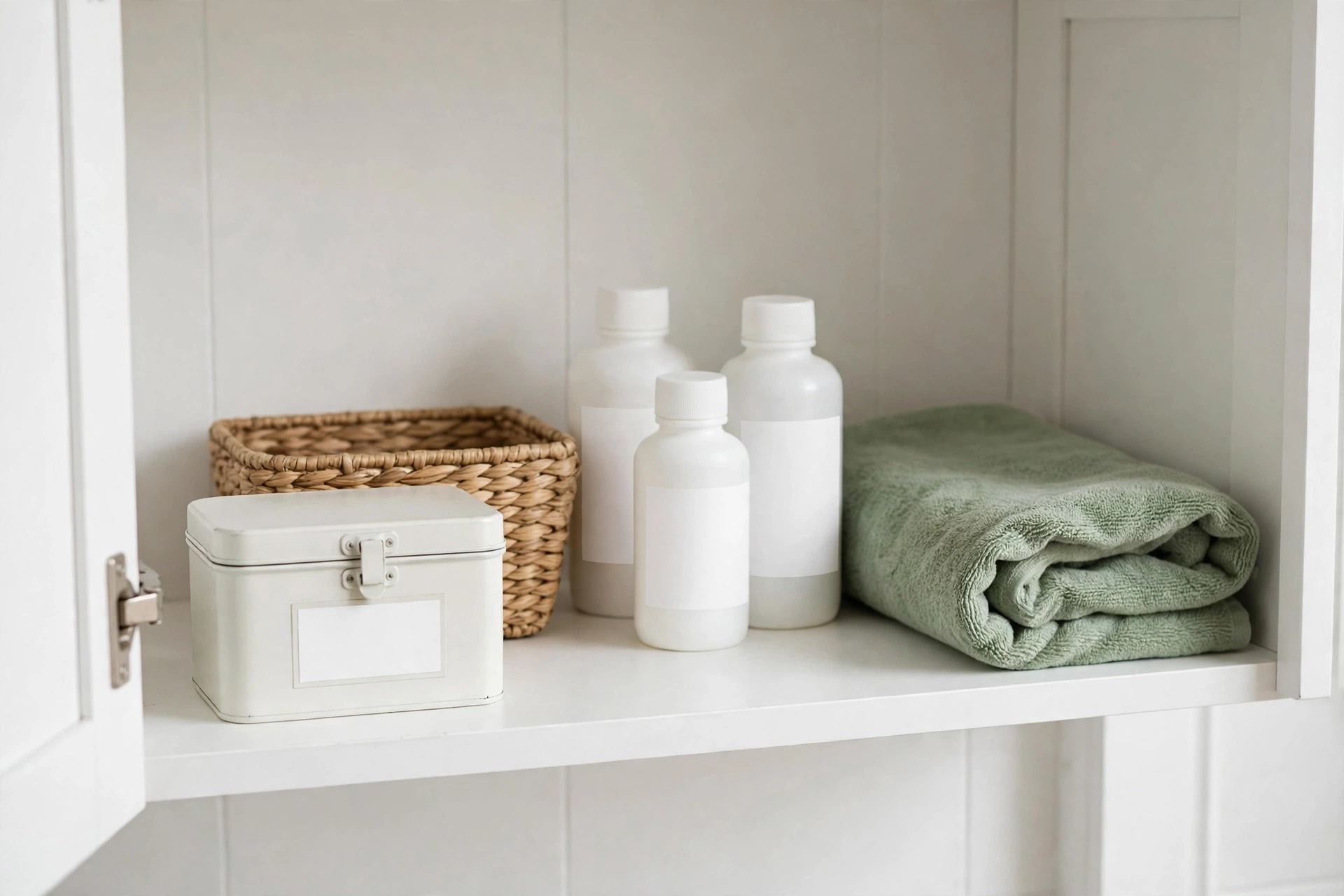
Medicine and first aid one small box, up high and dry, with nothing expired inside.
What to buy: One small lidded box or a small basket with a lid, about $4–$8, plus a small bag for travel medicines if you keep them, about $2–$3.
Where it goes: On the highest shelf in the cabinet, or on top of a shelf unit, up high and away from steam and small hands. Daily medicines go in a small pouch in the morning zone instead, so you never have to climb for them. Everything else lives in the one box, and the box gets checked every three months for expiry dates.
Common mistake: Keeping medicines in the bathroom at all when they do not need to be there. Heat and steam are bad for most medicines, so keep only the ones you actually use in the bathroom, and keep the rest in a cool, dry place like a bedroom drawer. And never keep old prescriptions “just in case”: if the date has passed, take them to a pharmacy for safe disposal.
Try this today: Open the medicine box, check every date, and throw out anything expired. Write the next check date on a piece of tape on the lid.
8. Cleaning supplies that live in the bathroom
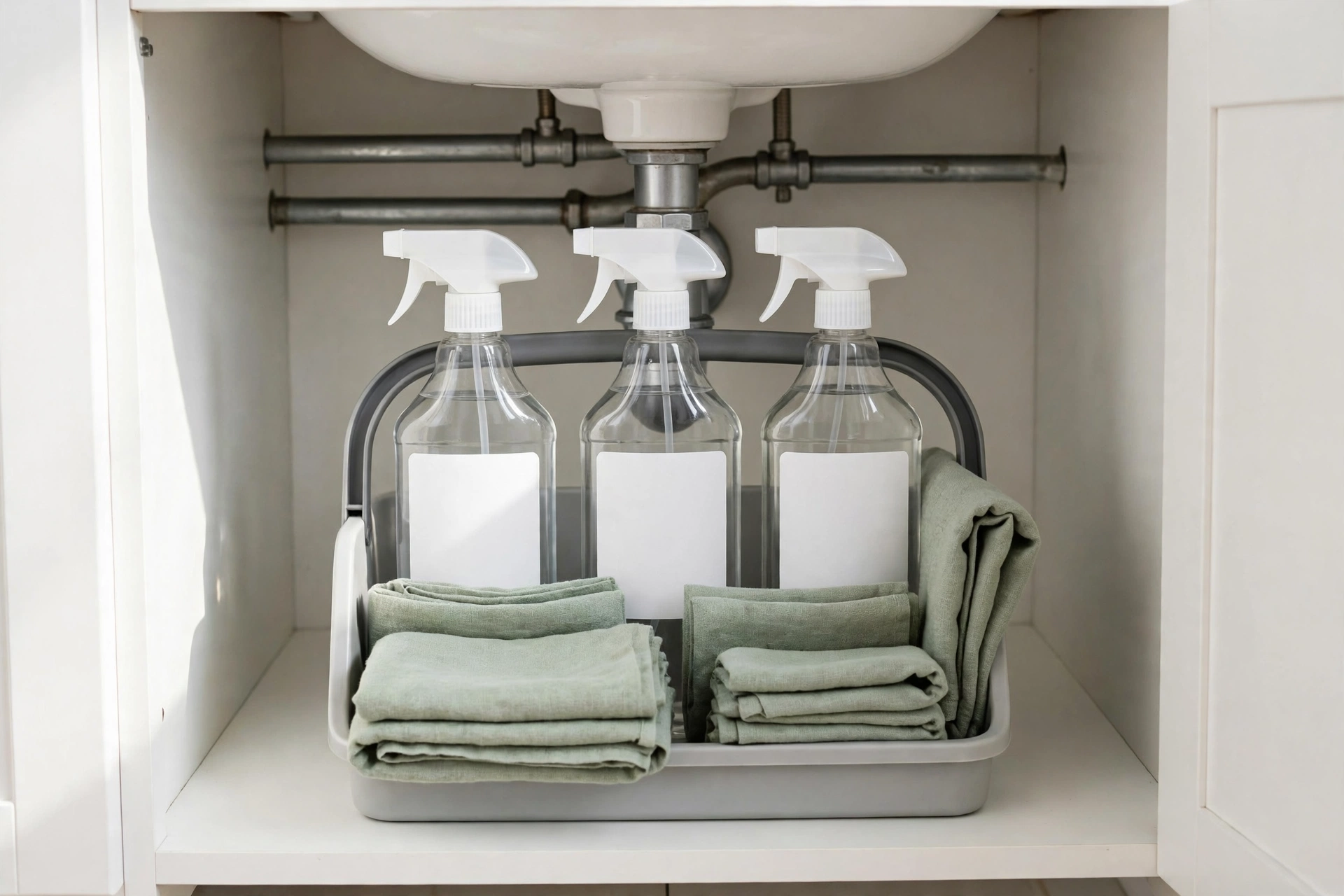
One handled caddy sprays, cloths, and scrubber in one place, ready to grab for a two-minute wipe.
What to buy: One handled caddy, about $6–$10, plus the cloths and sprays you already own.
Where it goes: Under the sink, or on the floor beside the toilet if there is no cabinet. One caddy holds your bathroom spray, glass cleaner, cloths, and scrubber. Because it has a handle, you can carry it out, clean, and put it back in one trip, and the bathroom gets a quick wipe far more often than if the supplies lived in the kitchen.
Common mistake: Keeping a spray bottle in every room. You end up with five half-empty bottles and no idea which one is which. One caddy, one set of supplies, one home. This is the same caddy from Pin 16, “Cleaning List by Room”: it serves the whole house, and it lives in the bathroom between uses.
Try this today: Gather every bathroom spray and cloth into one caddy, and put the caddy where you can grab it without moving anything else.
9. Using the door and the wall

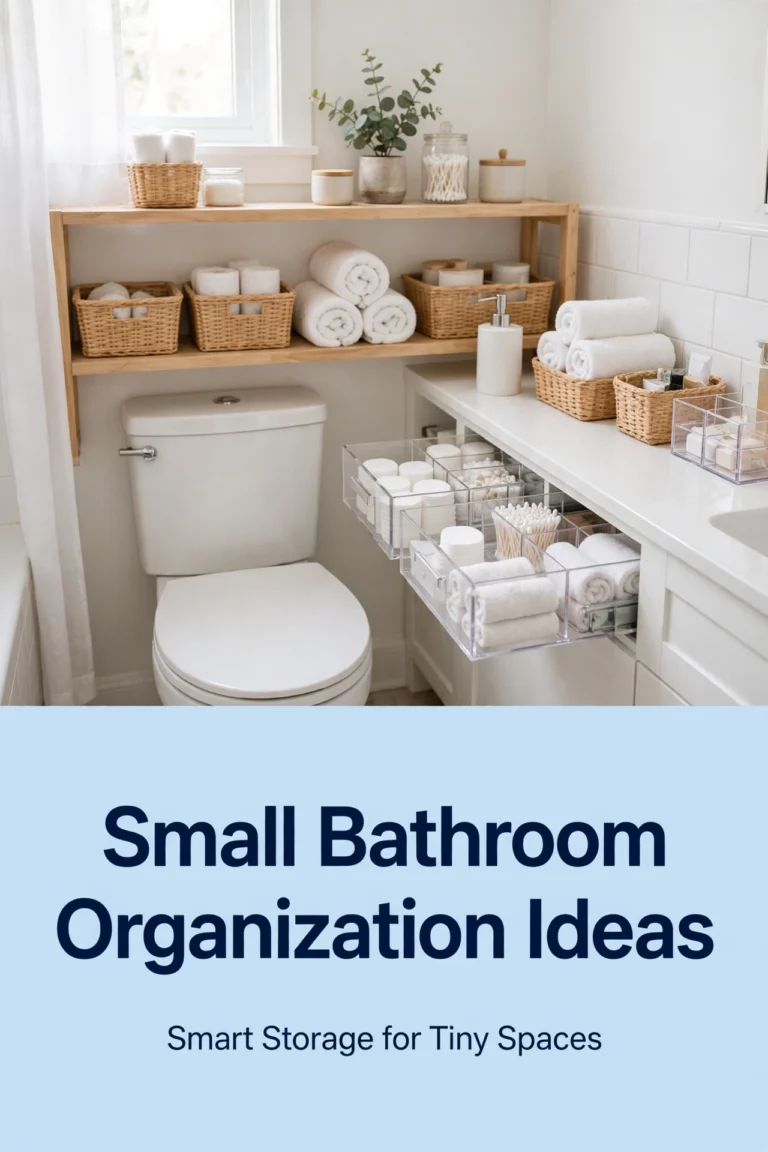
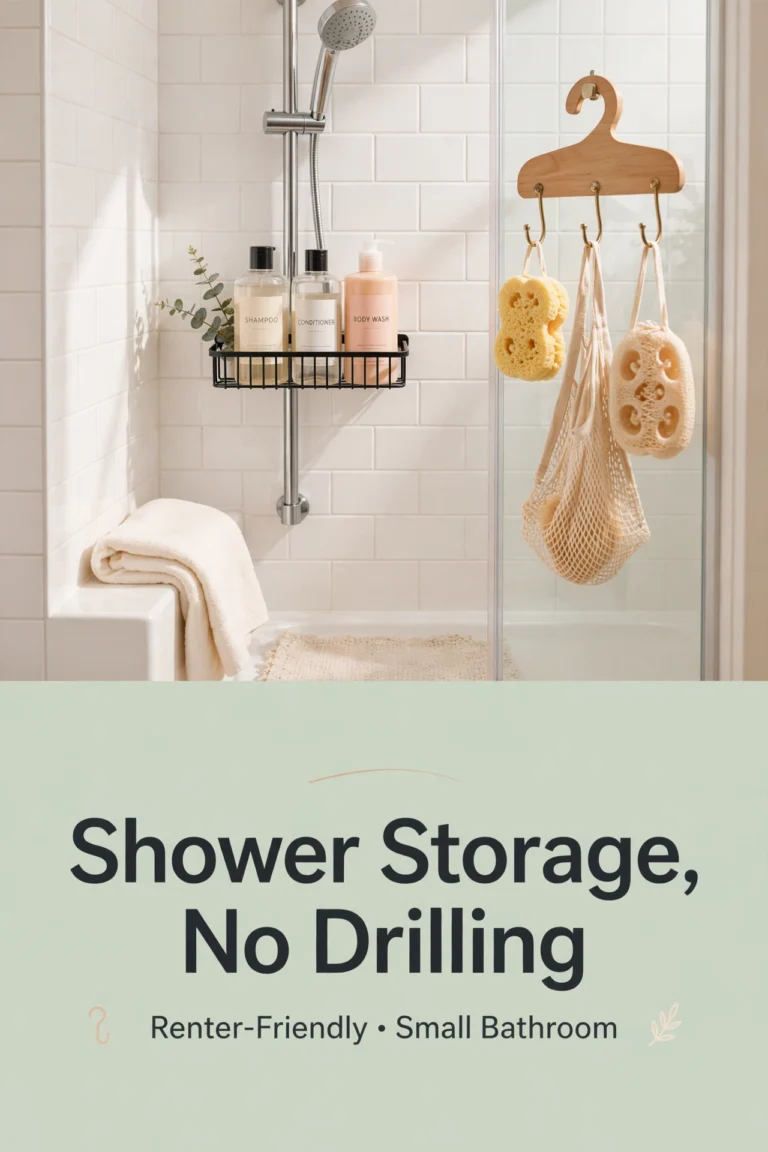
The door and the wall hooks on the door, a shelf above the toilet, and storage that needed no drilling at all.
What to buy: One over-door hook rail, about $4–$8, plus one or two adhesive hooks, about $2–$4, and a small shelf for above the toilet if you do not have one yet, about $8–$15.
Where it goes: The back of the door holds towels, a dressing gown, and a wash bag. The wall above the toilet holds a shelf for spares and the evening basket. The wall beside the mirror holds a small adhesive hook for a hand towel, so nobody drips water across the room to reach the towel rail.
Common mistake: Hanging items so long they catch on the floor, and sticking adhesive hooks to a damp or steamy surface, which is why they fall off a week later. Wipe the surface dry first, wait a day before hanging anything heavy, and keep the heaviest things low.
Try this today: Hang two hooks on the back of the door and move the towel that lives on the floor onto one of them. Then look at the wall above the toilet: if it is empty, that is your next shelf.
10. The weekly reset

The weekly reset fifteen minutes, once a week, and the zones stay zones instead of sliding back into piles.
What to buy: Nothing. The weekly reset uses the caddy, the baskets, and the trays you already have.
Where it goes: Everywhere, once a week, for fifteen minutes. Pick a day, Sunday evening works for most households, and run through the same five steps: empty the morning tray and put back only what was used that week; wipe the counter and the mirror; swap the towels; check the medicine box for anything that ran out; and put anything that drifted into the bathroom back where it belongs. Set a phone reminder so the reset happens even on a busy week.
Common mistake: Treating the reset as a deep clean. It is not. It is a tidy, not a scrub. If the reset turns into an hour of cleaning, you will skip it next week. Fifteen minutes, five steps, done. The deep clean can be monthly, and it is much faster when the zones are already in place.
Try this today: Set a weekly reminder on your phone for your reset day, and do a five-minute version right now: clear the counter, swap one towel, and put one stray item back where it belongs.
What it costs in total
| Item | Approximate US price |
|---|---|
| Morning tray + toothbrush cup | $6–$12 |
| Evening basket | $3–$6 |
| Baskets, one per person (2) + labels | $8–$12 |
| Step stool + child baskets (family) | $11–$17 |
| Makeup tray + brush jar | $7–$14 |
| Towel hooks + spare basket | $10–$20 |
| Medicine box with lid | $4–$8 |
| Handled cleaning caddy | $6–$10 |
| Over-door hooks + adhesive hooks | $6–$12 |
| Weekly reset | $0 |
| Total, all ten ideas | about $61–$111 |
The starter set under $35: Buy the morning tray and toothbrush cup ($6–$12), one basket per person ($6–$10 for two), and the over-door hooks ($4–$8), plus labels ($2). That is roughly $18–$32, and it fixes the morning rush, the shared space, and the towels. Add the evening basket and the cleaning caddy next week, and the rest when a specific routine starts to annoy you.
The 15-minute version
If you only have 15 minutes today, do this: clear the sink counter completely, put the five things you used this morning on one tray, give everyone in the house one small basket for their own products, and roll the towels into one basket. One morning zone done is better than a whole bathroom planned and never started.
FAQ
How do I organize a bathroom with no storage?
Start with the routines, not the furniture. One tray by the sink for the morning, one basket on the floor for towels, and one caddy under a small shelf for cleaning supplies. That is the whole system, and it works even in a bathroom with just a pedestal sink.
How do I share a small bathroom with my partner?
Give each person one basket and one hook. The basket holds what they use daily, and the hook holds their towel. Agree on a simple rule: if it does not fit in your basket, it does not live in the bathroom. Most arguments about bathroom mess are really arguments about one person slowly taking over the whole room.
Where should I store medicines in a small bathroom?
Keep only the ones you actually use there, in one small box on the highest shelf, away from steam and small hands. Store the rest somewhere cool and dry, like a bedroom drawer, because heat and steam are bad for most medicines. Check dates every three months and take anything expired to a pharmacy.
How many towels should a small bathroom hold?
Two per person in use, plus two spares. Roll the spares in a basket and wash the towel in use twice a week. Any more than that is just filling a shelf.
Can I do this as a renter?
Yes. Every idea in this post uses trays, baskets, hooks, and caddies. Nothing needs drilling, and adhesive hooks and over-door rails come off cleanly when you move.
How do I keep it tidy after the first week?
Use the weekly reset in idea 10: fifteen minutes, once a week, same five steps. The reset is what stops the zones sliding back into piles. Set a phone reminder and treat it like any other appointment.
Keep it going
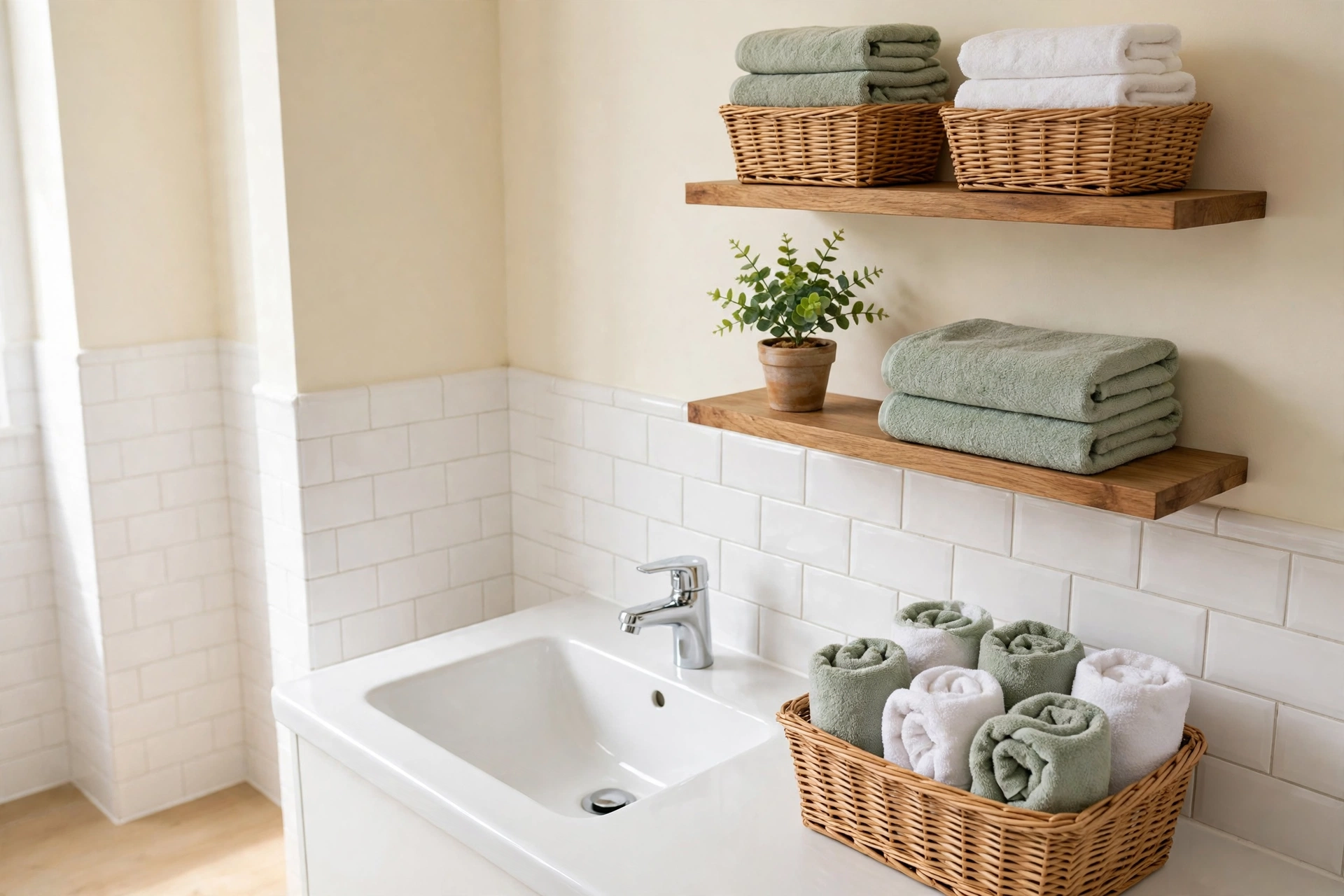
A small bathroom that runs itself a clear counter, one basket per person, and a weekly reset on the calendar.
A small bathroom works when every routine has a zone and every person has a basket. Start with the morning tray tonight, add one basket per person this weekend, and set the weekly reset reminder before you forget. By the end of the month, the counter will be clear, the towels will have a home, and the bathroom will be organized around your life, not the other way around.
Related pins
- Pin 4: “10 Bathroom Storage Ideas Under $20”
- Pin 10: “Under-Bed Storage Ideas That Hide Clutter”
- Pin 11: “Bathroom Organization Ideas for Small Bathrooms”
- Pin 19: “Small Bedroom Layout Ideas for a Tiny Room”
- Pin 24: “Hallway Organization Ideas for Small Spaces”