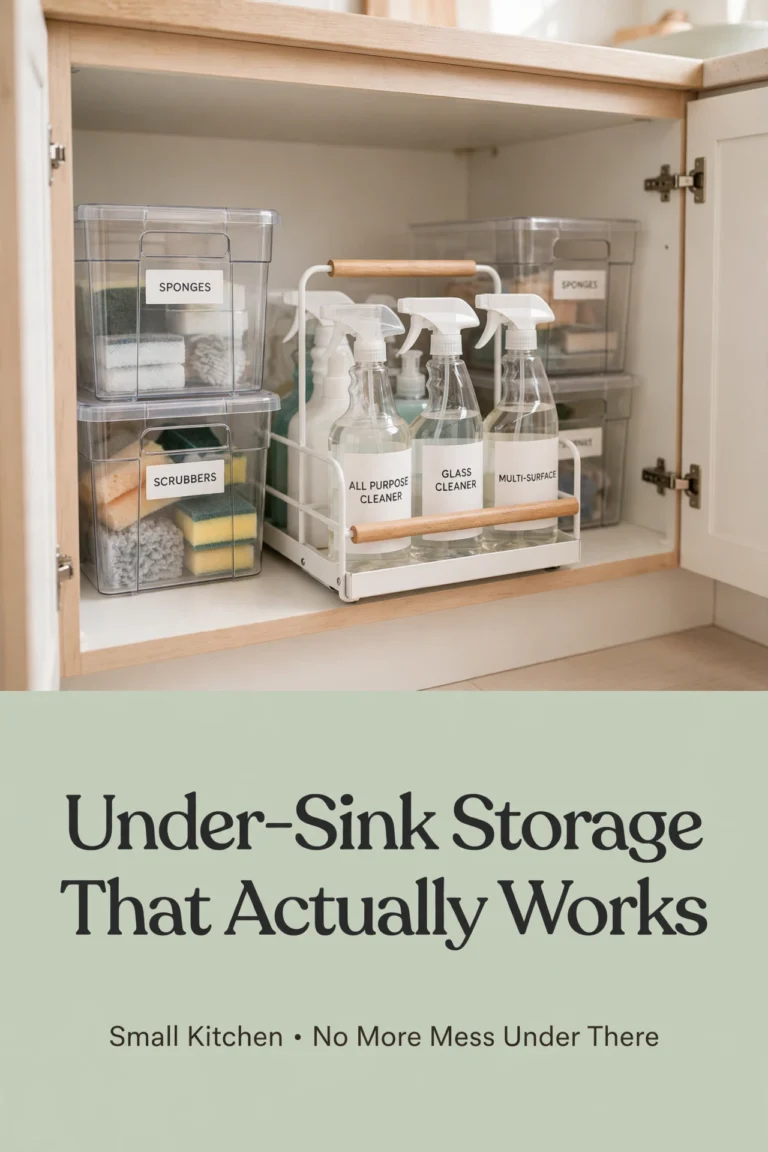
Dollar-Store Kitchen Organizers Worth Buying
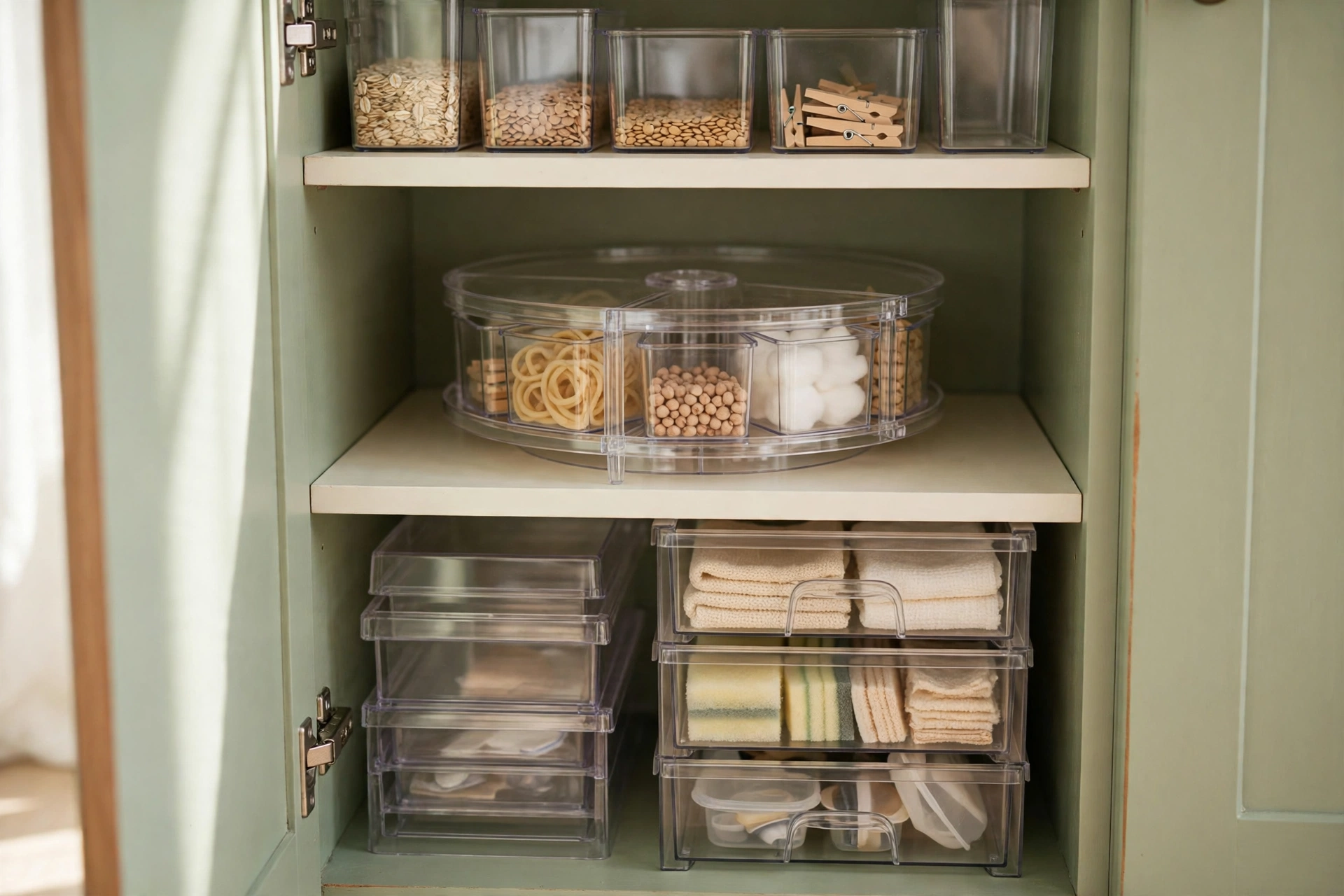
The dollar-store bins that actually work, and the ones to leave on the shelf.
Introduction
A small kitchen does not need expensive organizers. It needs the right cheap ones, in the right places. Dollar stores sell bins, trays, racks and hooks for $1.25 to $5, and a few of them work as well as the $20 versions from a home store. The trick is knowing which ones to buy, because half the shelf is clutter in disguise.
The ten organizers below are the ones worth buying. Each one costs under $5, most cost under $3, and a whole cabinet can be sorted for under $20. They work in a rental kitchen with no drilling and no damage, because everything here sits, hooks or sticks on without tools.
Buy only what your kitchen actually needs. Measure one cabinet first, buy for that cabinet, and see how it feels for a week. Then do the next one.
Before you buy anything
Do not walk into the dollar store without a plan. The store is designed to make you buy ten things you do not need, and a small kitchen has nowhere to put them.
1. Empty one cabinet and count what lives there. Cans, jars, spices, packets, lids. Put it all on the counter and look at it. You will find three half-used packets of the same thing and a gadget you have not touched in a year.
2. Measure the shelf before you shop. Height, width and depth, in inches. A bin that is half an inch too tall wastes a whole shelf. Take the numbers on your phone.
3. Buy clear where it matters. You need to see what is inside a bin without pulling it out. Clear bins cost the same as coloured ones and save you opening five bins to find the rice.
Common mistake: buying matching sets of pretty bins before you know what goes in them, then forcing food to fit the bins instead of the other way round. Buy for the food you own, not the shelf you imagine.
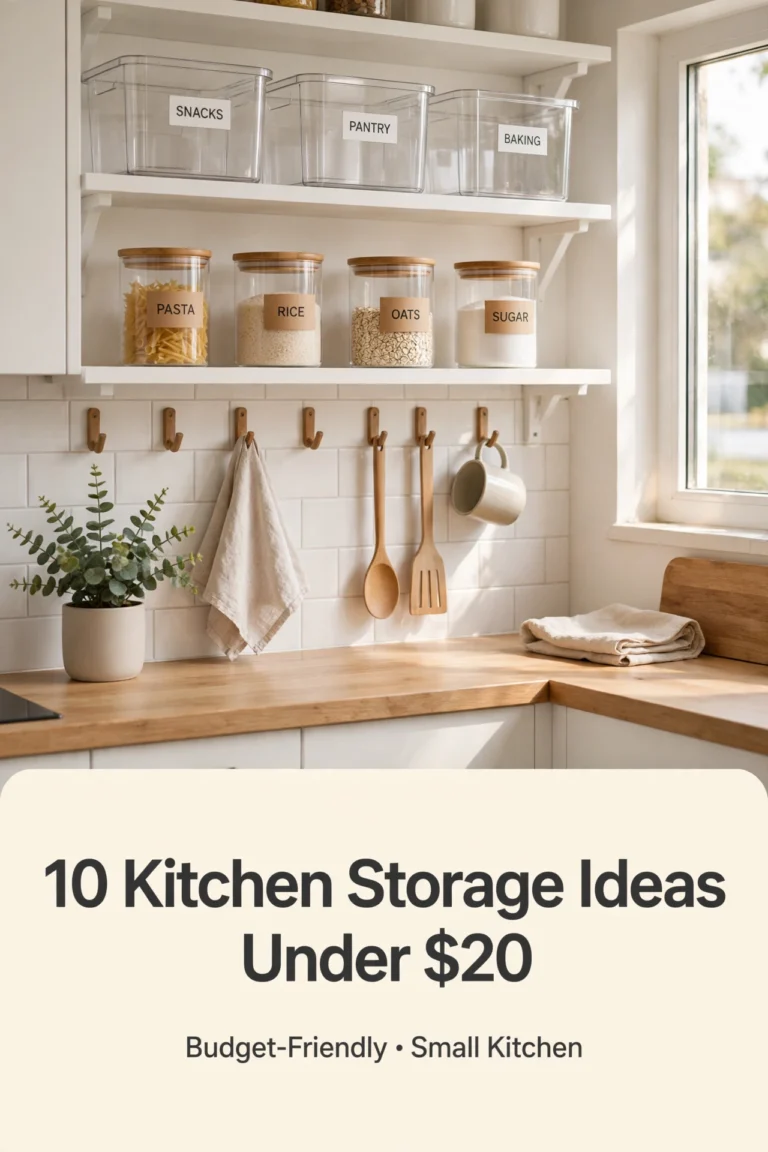
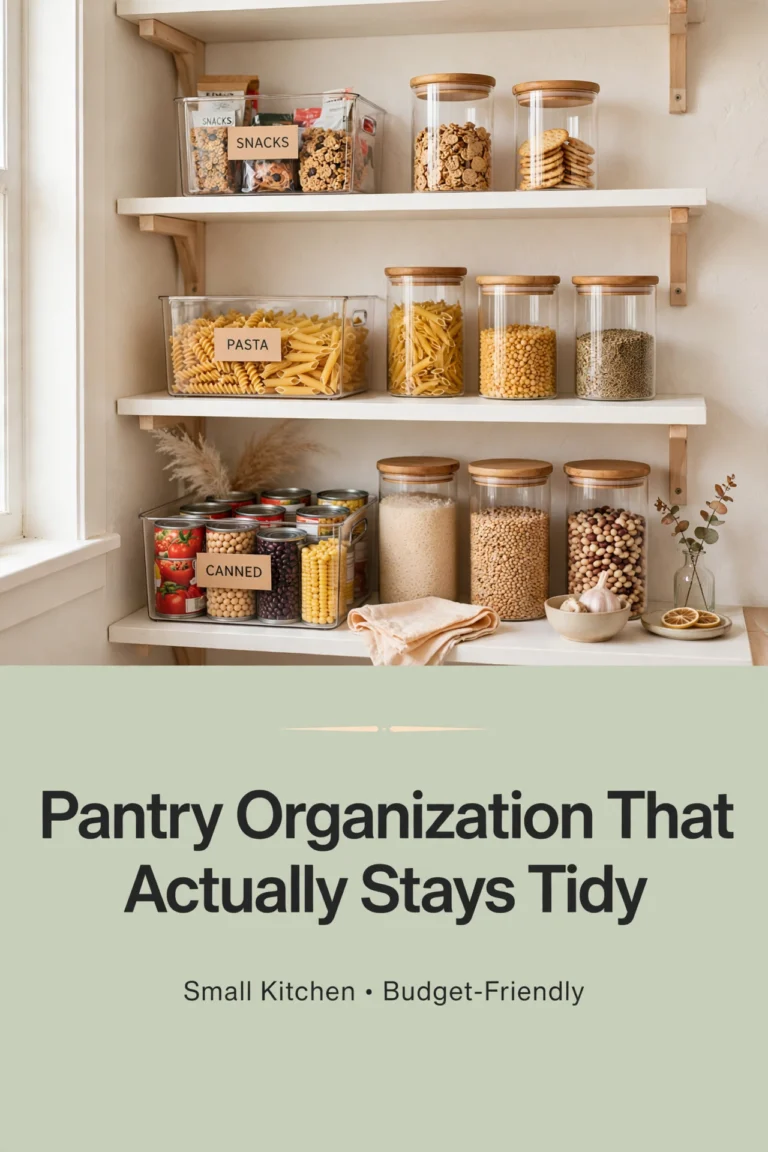
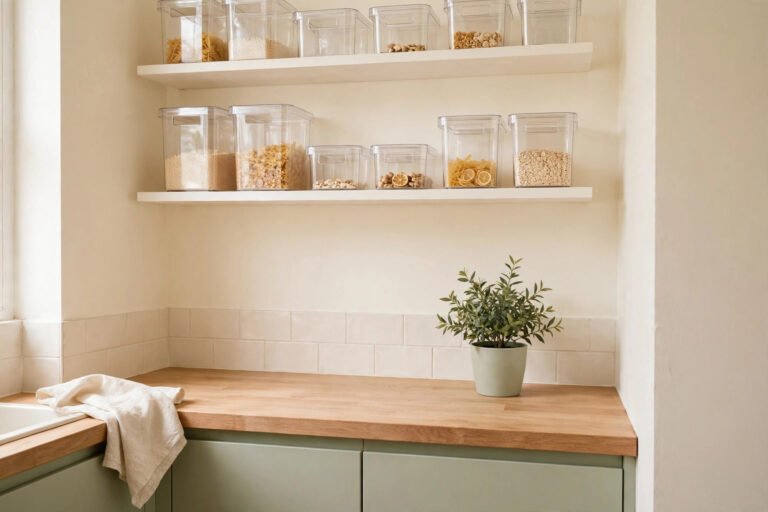
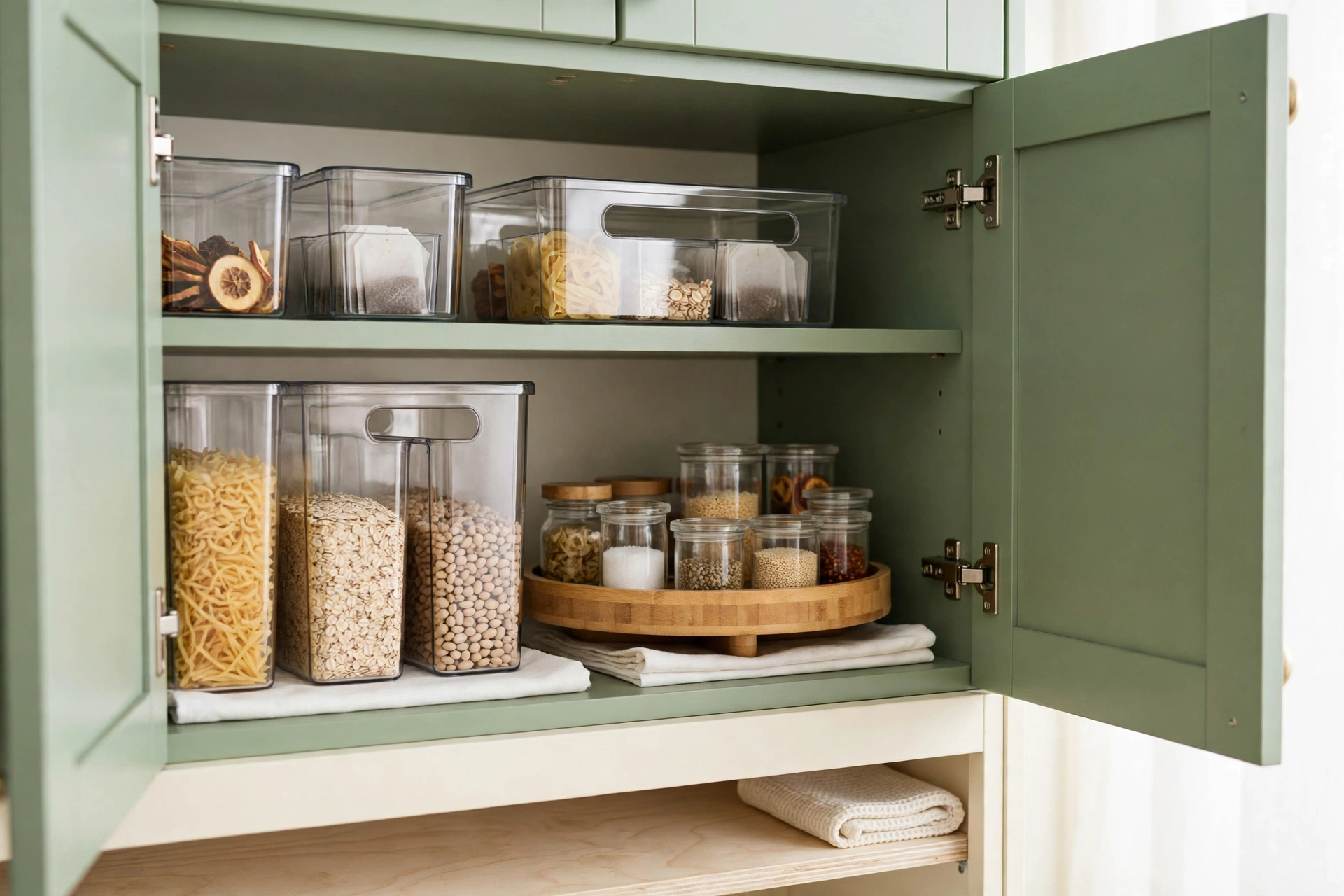
1. Clear pantry bins for the middle shelf
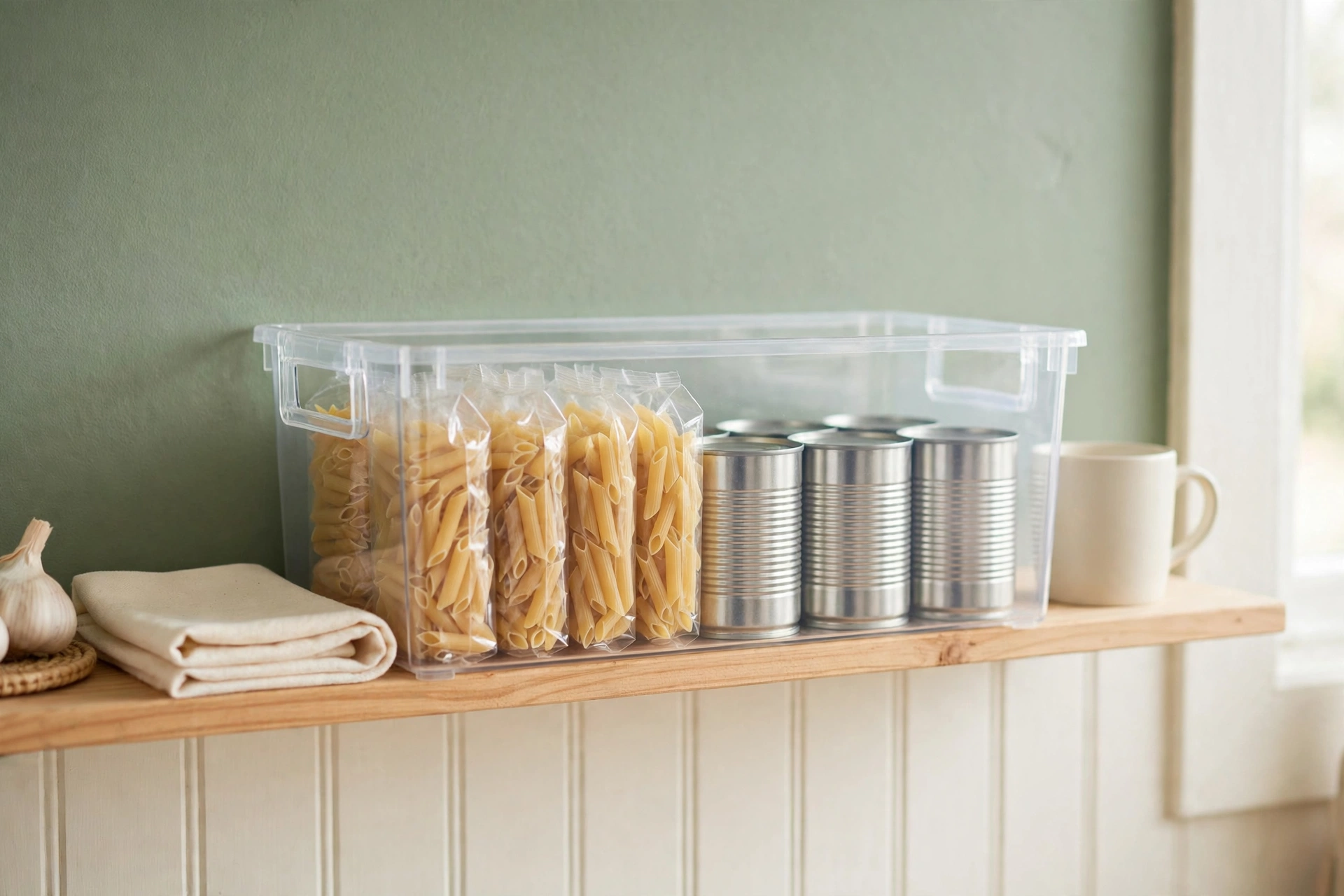
One bin per food family, and the shelf stops being a pile.
What to buy: Two or three clear bins with low sides, about $1.25 to $3 each. Choose bins with a small handle or a cut-out front so you can pull them out like a drawer.
Where it goes: Pasta and rice in one bin, cans in another, sauces and jars in a third. Put the bins you reach for daily at eye level and the rest one shelf up.
Common mistake: Buying deep bins with high sides, then losing small packets at the bottom. Low sides let you see everything at a glance.
Try this today: Put all the pasta in one bin. If it fits with room to spare, one bin is enough. If it overflows, you own too much pasta, not too few bins.
2. A rotating Lazy Susan for the corner
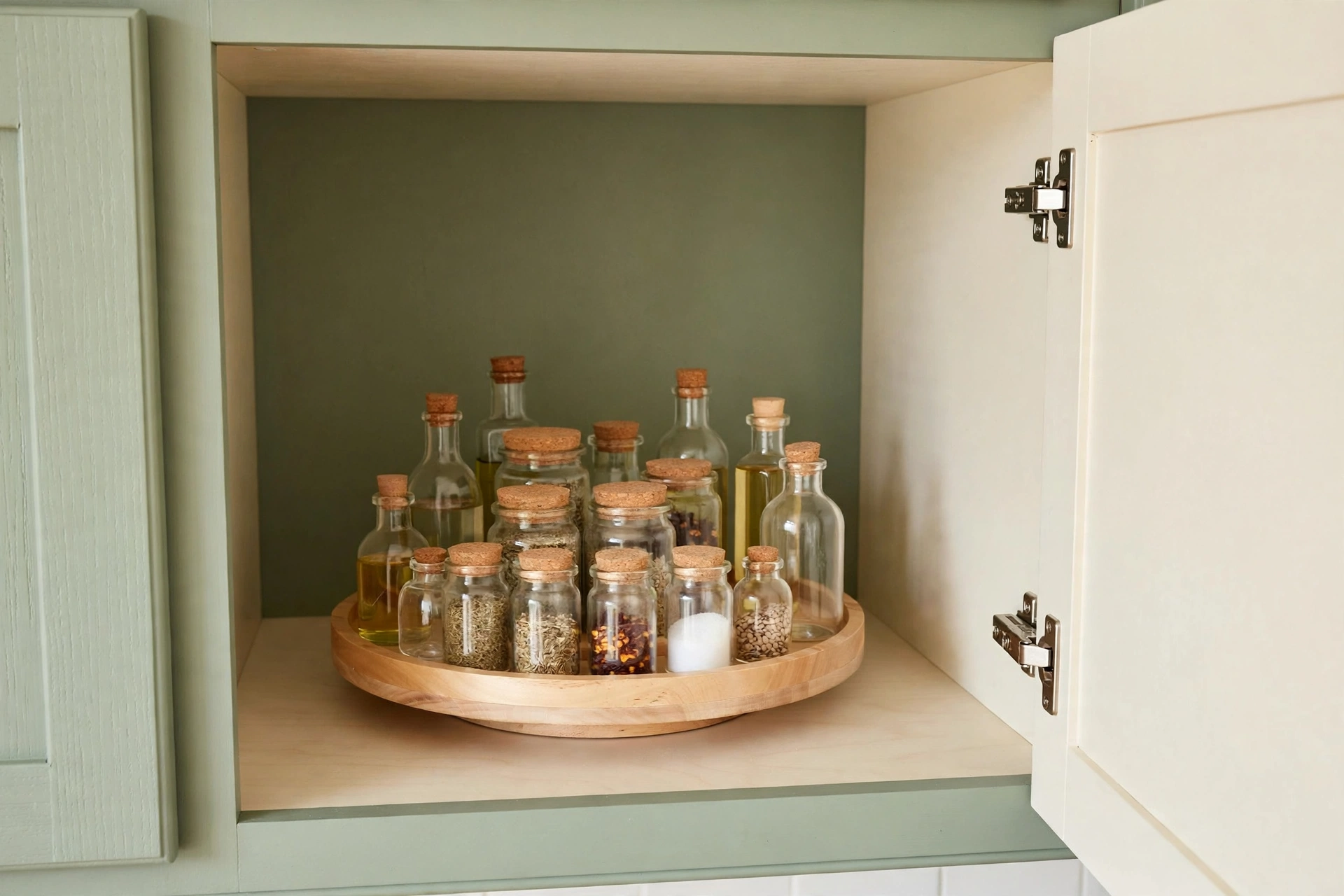
Spin, grab, done. No more reaching past five jars to find one.
What to buy: One round rotating tray, about $3 to $5. A 10-inch tray fits most cabinets. Choose one with a small raised edge so bottles do not slide off when it spins.
Where it goes: In the corner cabinet or on a deep shelf where things get lost at the back. Spices, oils, sauces and vitamins all work here.
Common mistake: Putting tall bottles on a small tray, then watching them fall over every time it spins. Keep the tall bottles on a shelf and the short jars on the tray.
Try this today: Put your five most-used sauces on the tray and spin it. If you can reach each one in one turn, it is working.
3. Stackable drawer trays for the utensil drawer
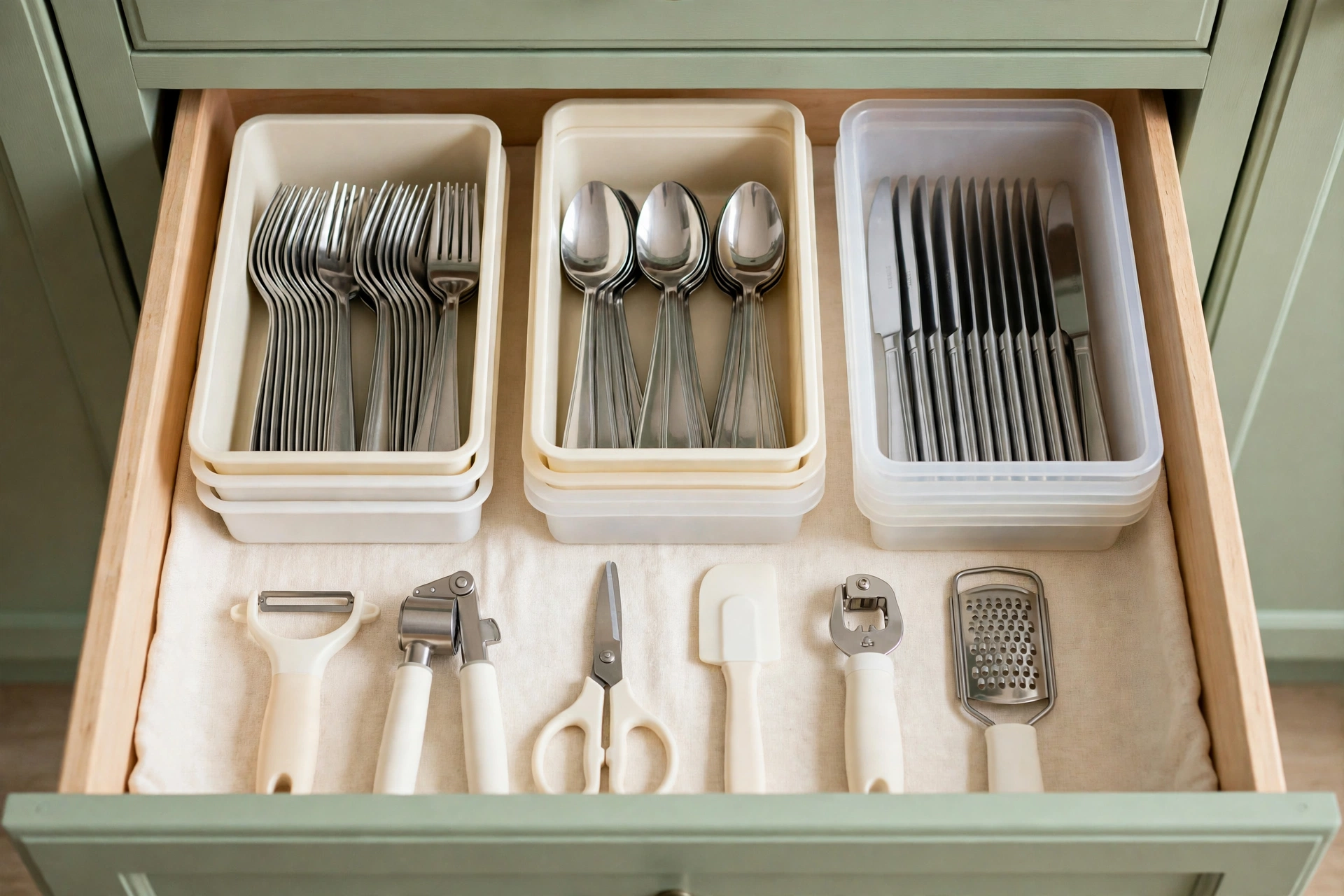
A drawer with trays holds twice as much, because nothing slides around.
What to buy: One set of stackable drawer trays, about $1.25 to $3 per tray. Measure the drawer first, because trays come in two widths and the wrong one wastes an inch on each side.
Where it goes: In the cutlery drawer, one tray for forks and spoons, one for knives and serving spoons, one small tray on top for the fiddly bits like clips and ties.
Common mistake: Buying one big tray that fills the drawer, then piling everything in one layer. Two shallow stacked trays beat one deep tray every time.
Try this today: Empty the drawer, put the trays in first, then put things back only if you used them in the last month.
4. Small bins for the packets and sachets
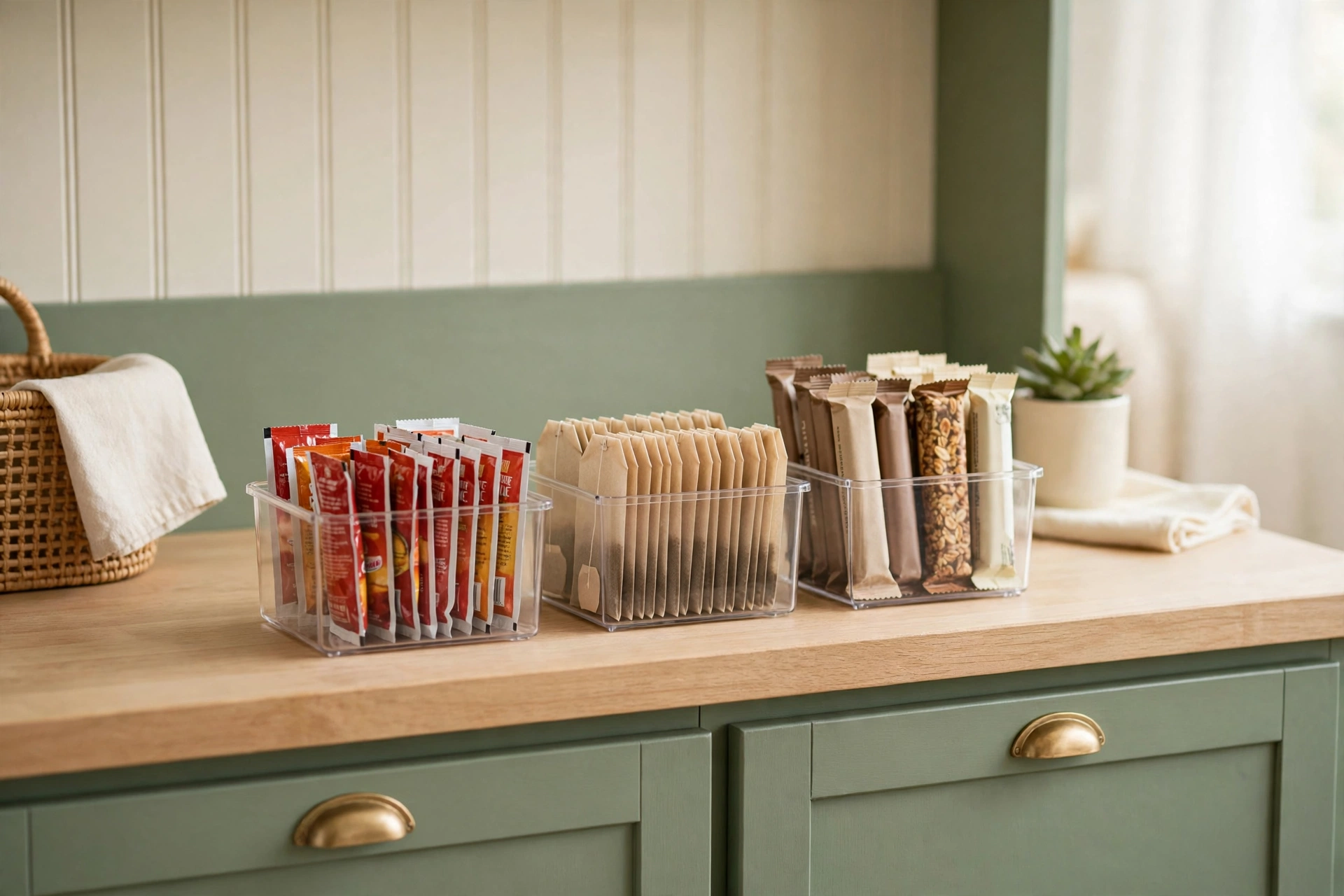
Packets stand up or they disappear. There is no third option.
What to buy: Three or four small clear bins, about $1.25 each. The narrow ones work best, because packets stand upright in them like files.
Where it goes: On a shelf or inside a cabinet door, one bin for tea and coffee, one for sauce packets, one for snack bars and one for baking bits.
Common mistake: Laying packets flat in a big box, then digging through twenty of them to find the one you want. Standing up, you can read every label at once.
Try this today: Stand all the tea bags in one small bin. If you can read every box, the system works.
5. A tension rod under the sink
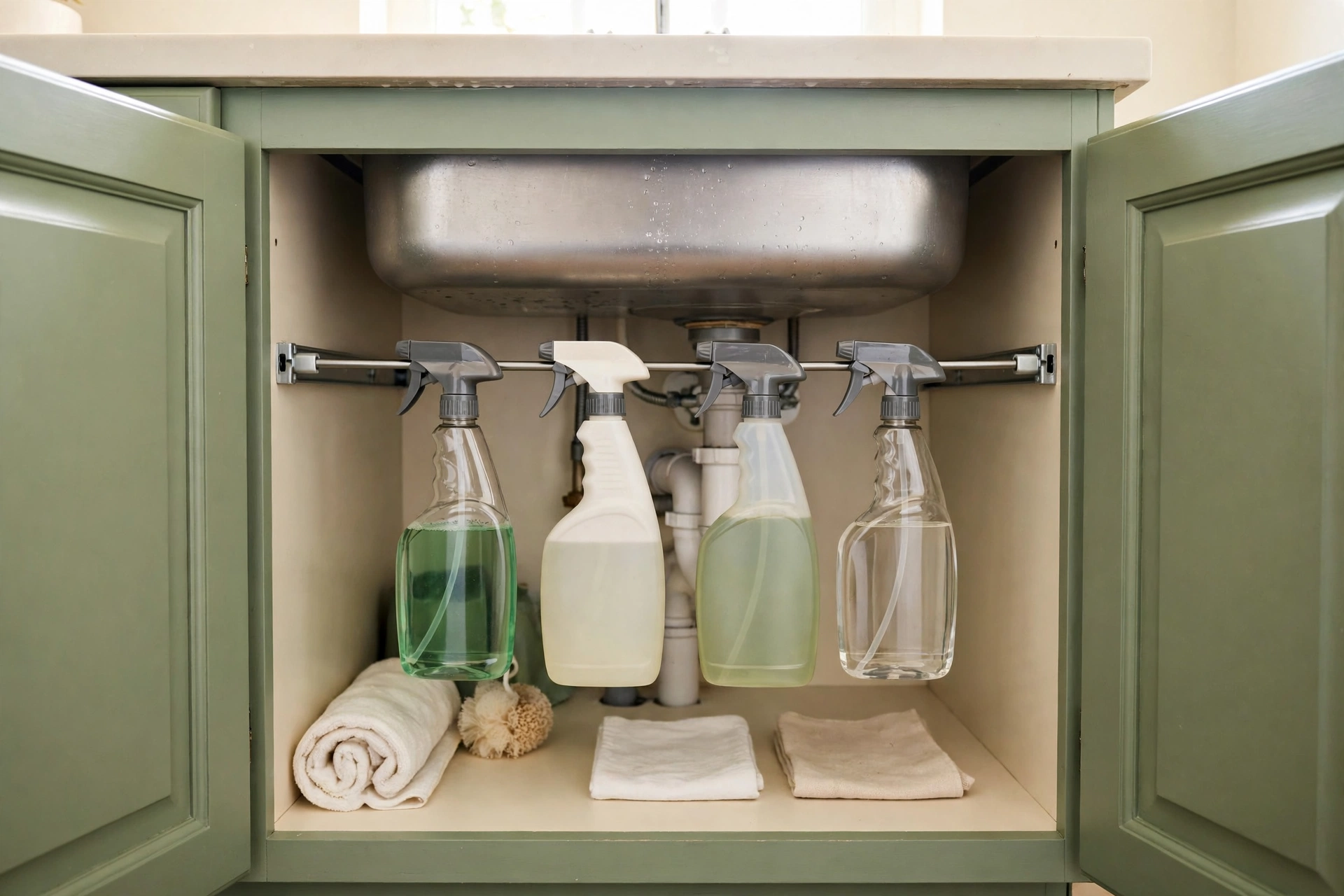
The space under the sink is wasted until you hang things in it.
What to buy: One spring tension rod, about $1.25 to $3. Measure the width under the sink first, because rods come in fixed size ranges.
Where it goes: Across the cabinet under the sink, high enough that spray bottles hang from it by their triggers. The floor of the cabinet stays free for a bin of sponges and cloths.
Common mistake: Fitting the rod too low, so the bottles sit on the floor anyway. Fit it high, near the top of the cabinet, and let the bottles hang.
Try this today: Hang two spray bottles on the rod. If the cabinet floor is clear, you just gained a whole shelf.
6. Adhesive hooks inside cabinet doors
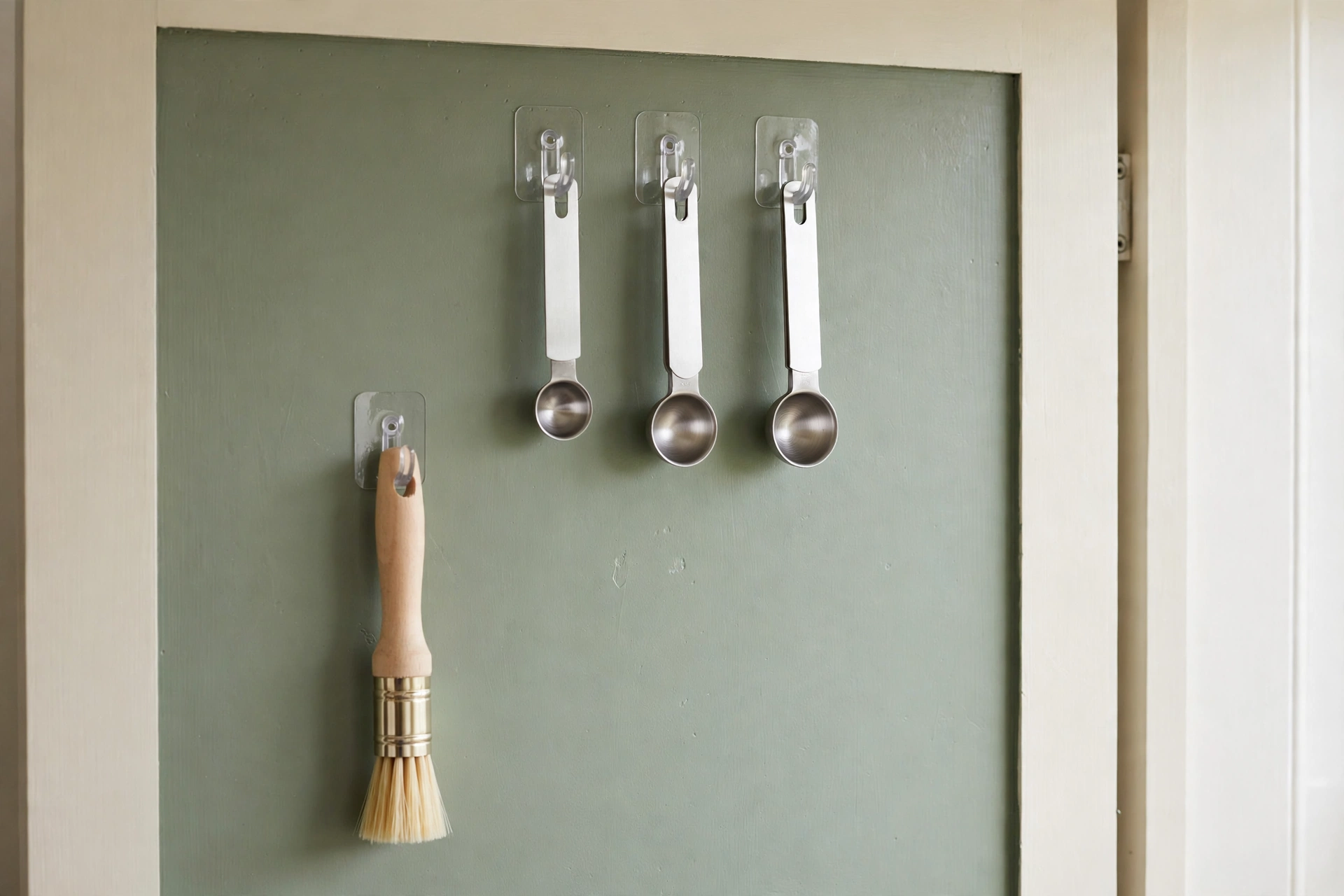
The inside of the door is free storage, and it costs about a dollar.
What to buy: One pack of small adhesive hooks, about $1.25. Choose hooks rated for at least 1 pound, and check they are removable, so they peel off clean when you move out.
Where it goes: On the inside of a cabinet door, holding measuring spoons, a scrubbing brush, or the lids you can never find. Keep it to light things, because a hook that holds too much falls off and takes the paint with it.
Common mistake: Sticking hooks on a greasy door, then wondering why they fall off in a week. Wipe the door with a damp cloth, dry it, then stick the hook and press for thirty seconds.
Try this today: Hang the measuring spoons on one hook. If you reach for them without opening a drawer, the hook has earned its dollar.
7. A dish rack tray for the lids
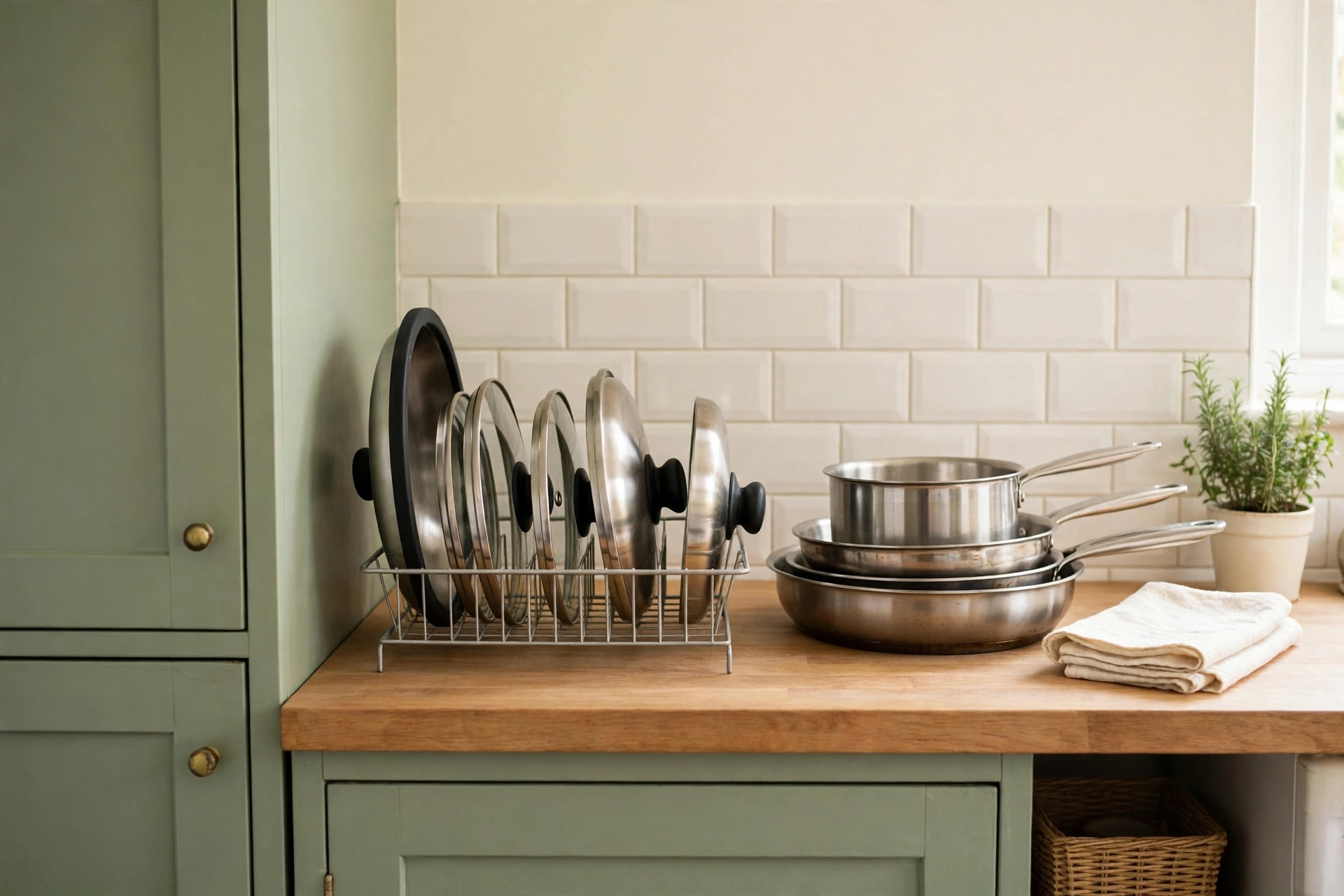
Lids are the hardest thing in a kitchen to store, and the cheapest to fix.
What to buy: One small dish rack or file organizer, about $1.25 to $3. The wire racks work best, because lids slot between the wires and stay upright.
Where it goes: Inside a cabinet, beside the pans, or on a shelf. One rack holds four or five lids upright, and you can see every size at once.
Common mistake: Stacking lids flat on top of each other, then lifting four lids to reach the one at the bottom. Upright, every lid is one pull away.
Try this today: Stand the lids in the rack, biggest at the back. If you can pull any lid without moving another, it works.
8. Small baskets for the top shelf
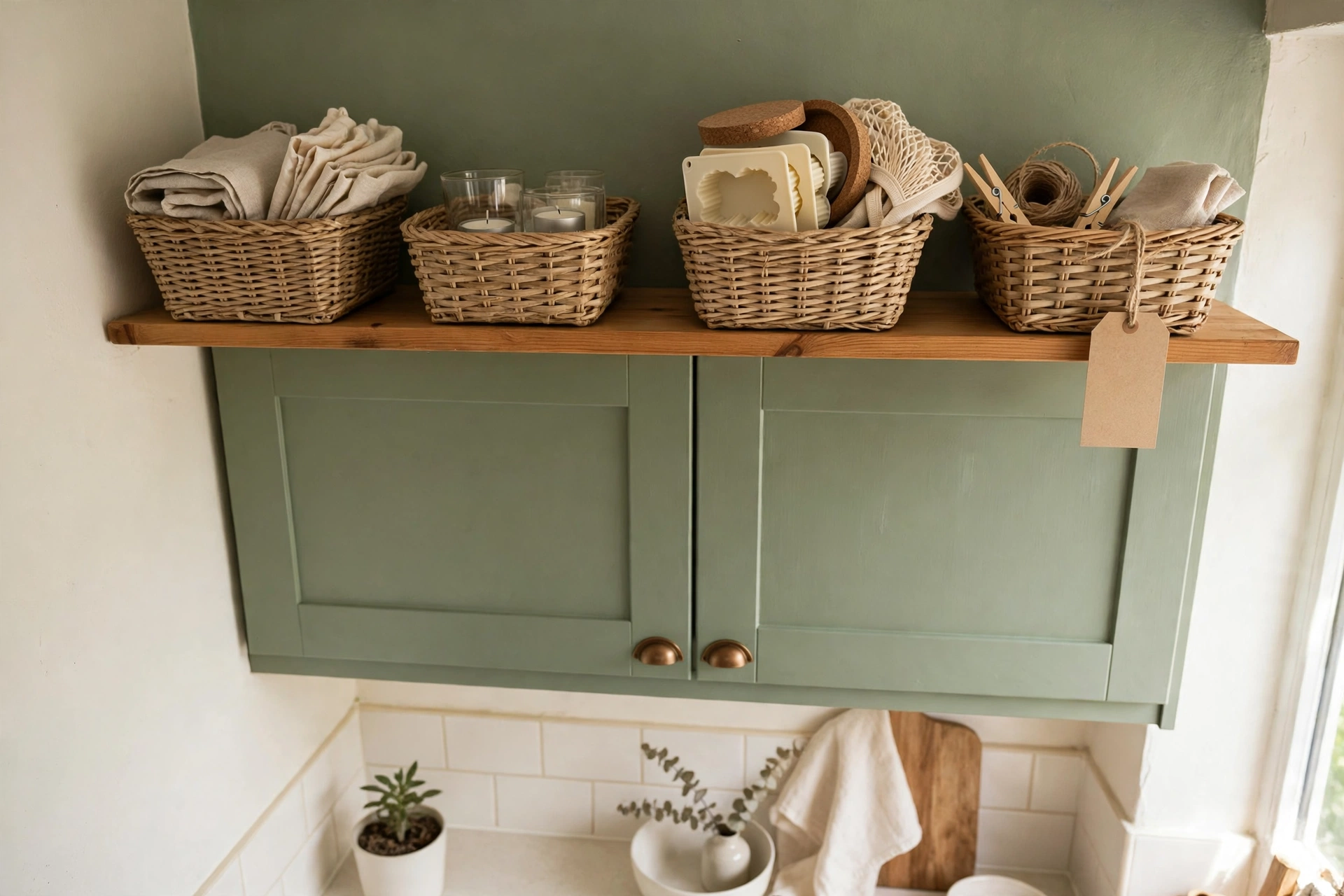
The top shelf is for things you use once a month, in a basket you can pull down in one move.
What to buy: Two small baskets with handles, about $1.25 to $3 each. Handles matter, because you will be pulling the basket down from above your head.
Where it goes: On the top shelf, one basket for baking things, one for the gadgets you use rarely. Put a simple label on the front, so you know which basket to pull down.
Common mistake: Putting daily things on the top shelf, then climbing on a chair three times a day. Daily things live at eye level, and the top shelf is for the rest.
Try this today: Put the bread maker or the big mixing bowl in a basket up top. If you only reach for it once a month, it belongs there.
9. A caddy for the cleaning sprays
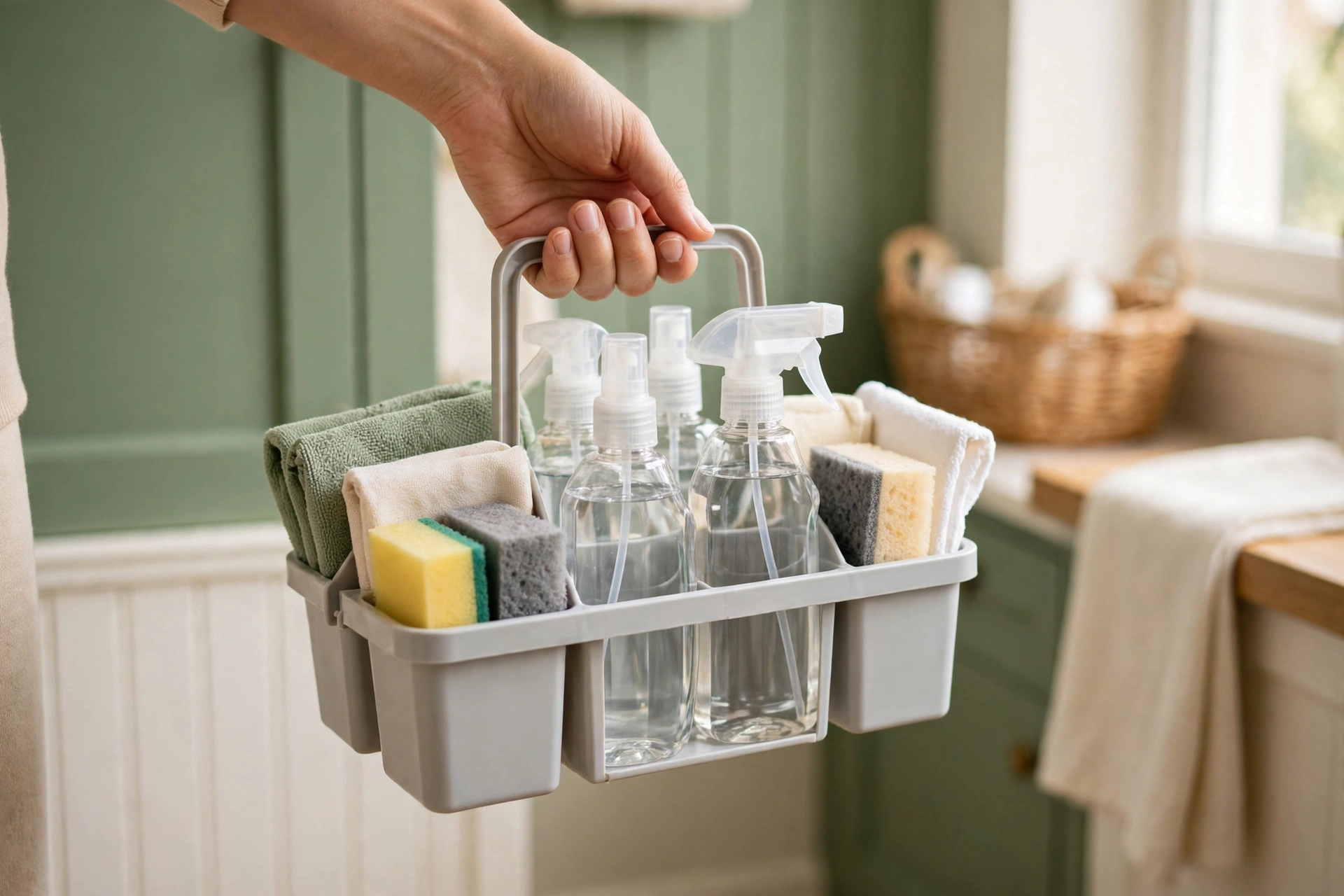
One caddy, one trip, the whole kitchen wiped down.
What to buy: One small caddy with a handle, about $1.25 to $3. Choose one with a handle in the middle, so it balances when you carry it.
Where it goes: Under the sink when it is not in use, and in your hand when you clean. Sprays in the middle, sponges and cloths in the sides, and nothing else.
Common mistake: Keeping cleaning sprays in five different places, then buying a second bottle because you forgot you owned the first. One caddy means you can see what you own.
Try this today: Put every spray you own in the caddy. If one does not fit, check whether you actually use it.
10. Labels you can read from the doorway
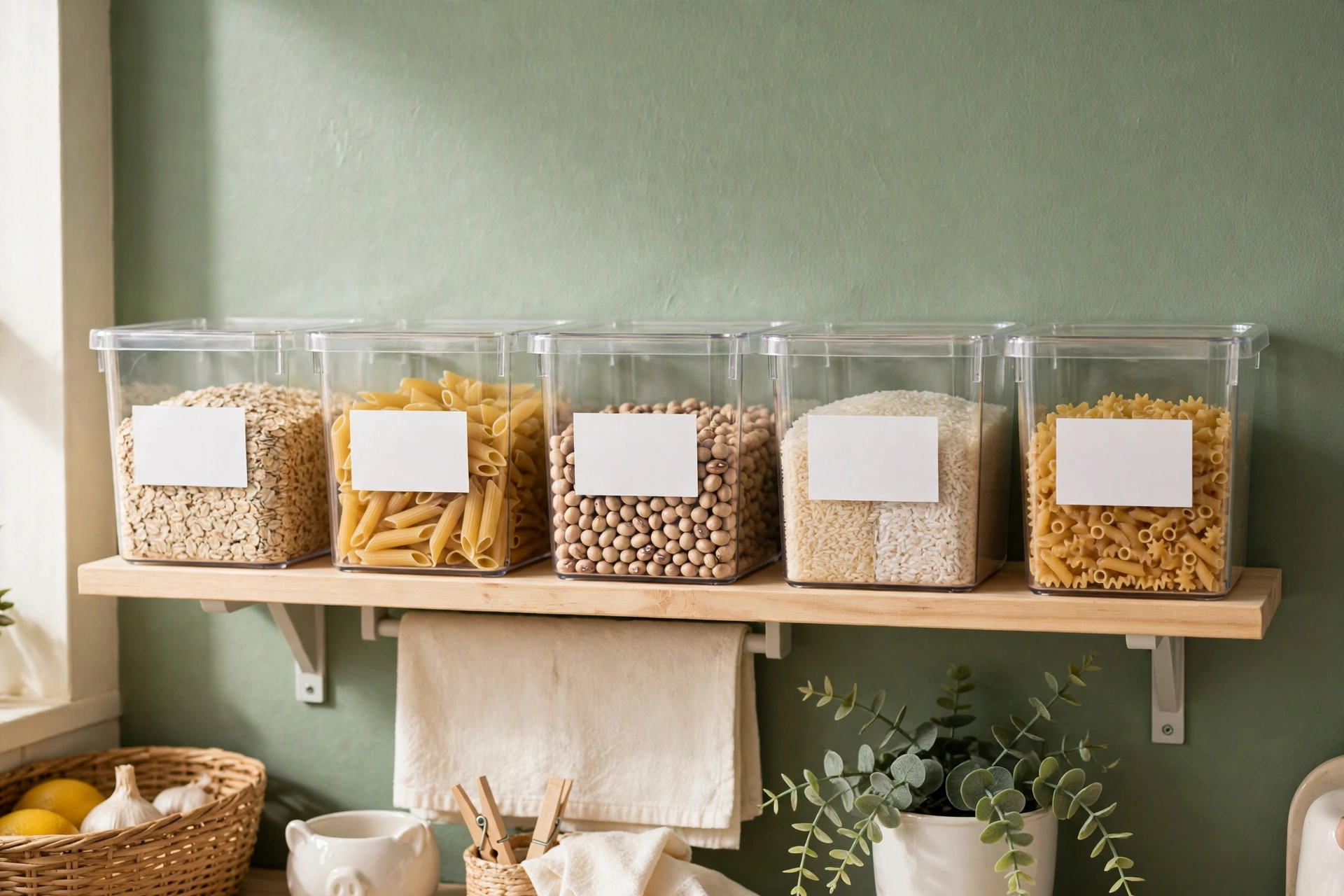
A label costs pennies and saves you opening five bins every time you cook.
What to buy: One roll of masking tape and a marker, about $1.25 to $2, or a pack of simple adhesive labels. Masking tape works fine and peels off clean.
Where it goes: On the front of every bin, at eye level, in big letters. Pasta, rice, cans, baking. One word is enough, and everyone in the house can put things back in the right place.
Common mistake: Labelling the lids instead of the fronts, so you have to lift the bin to read it. Labels go where your eyes go, on the front.
Try this today: Label three bins. If someone else in the house puts the pasta back in the right bin, the labels are working.
What it costs
One cabinet, sorted properly, costs about $12 to $18 in dollar-store organizers. A whole small kitchen, done one cabinet at a time, costs about $30 to $40, spread over a few weeks. Start with the cabinet that annoys you most, and buy only for that cabinet.
| Organizer | Price each |
|---|---|
| Clear pantry bins | $1.25 to $3 |
| Rotating Lazy Susan | $3 to $5 |
| Stackable drawer trays | $1.25 to $3 |
| Small packet bins | $1.25 |
| Tension rod | $1.25 to $3 |
| Adhesive hooks, pack | $1.25 |
| Dish rack for lids | $1.25 to $3 |
| Small baskets | $1.25 to $3 |
| Cleaning caddy | $1.25 to $3 |
| Labels and tape | $1.25 to $2 |
The 15-minute version
If you have fifteen minutes, do this and stop. Empty one shelf, wipe it, put the pasta and rice in one clear bin, the cans in another, and the sauces on a Lazy Susan if you own one. Label the bins. That one shelf will stay tidy, because everything in it now has a place.
FAQ
Do dollar-store bins break easily?
The thin ones do, if you overload them. Buy the sturdier bins for heavy things like cans, and use the thin ones for light things like packets. A bin that holds only packets lasts for years.
Are these organizers renter friendly?
Yes. Everything here sits, hooks on with removable adhesive, or hangs from a tension rod. Nothing is drilled, screwed or glued to the walls.
What should I not buy at the dollar store?
Skip the flimsy drawer organizers with no weight to them, and skip any bin that smells strongly of plastic. Buy one, test it for a week, and only then buy more of the same.
How often should I re-sort the kitchen?
Once a season is enough if the bins are labelled. When a bin starts overflowing, that is the sign to use things up before you buy more.
Keep it going
Once a month, pull one bin out and check what is in it. Throw away anything out of date, use up the half-empty packets, and put the bin back. A kitchen stays sorted when the system is checked, not when it is perfect.
Related pins
- Pin 5, Pantry Organization on a Budget, on the Kitchen board
- Pin 8, Under-Sink Kitchen Storage, on the Kitchen board
- Pin 31, Thanksgiving in a Tiny Kitchen, on the Kitchen board