
15-Minute Daily Reset Routine
Introduction
You come home, drop your bag by the door, and the day starts to pile up on every surface: a mug on the coffee table, a jacket on the chair, dishes in the sink. None of it is a big job on its own, but together it makes a small home feel chaotic and a chaotic home makes it harder to rest.
The 15-minute daily reset fixes that without turning your evening into a cleaning session. It is not deep cleaning or a weekend project it is a short, repeatable routine that puts things back where they belong, one zone at a time, so the mess never gets big enough to feel overwhelming. Fifteen minutes, once a day, keeps a small home at a calm baseline almost all week.
This routine was made for small homes and busy people: renters who cannot renovate, families sharing one bathroom, anyone who works long hours and wants to come home to a space that feels finished. Everything here costs nothing, or close to it. You need a timer, a basket, and one caddy.

What is a daily reset, exactly?
A reset is different from cleaning. Cleaning removes dirt: you scrub, mop, and vacuum. A reset removes clutter: you return things to their homes. Nothing gets deep-cleaned, and that is the point a reset is light enough to do every day, and doing it every day keeps the home from sliding into the kind of mess that needs a whole Saturday to fix.
Think of it like making the bed: it does not clean the bedroom, but a made bed makes the whole room feel finished. The daily reset does the same for the whole home, in fifteen minutes.
Why 15 minutes works
Most home routines fail for the same reason: they ask for too much. A routine that takes an hour will be skipped on a tired day, and once it is skipped twice, it is abandoned. Fifteen minutes is short enough to do even when you are tired, and that is exactly why it works.
Habit researchers call this the “small habit” effect: a habit sticks when it is easy to start, happens at the same time every day, and gives a visible reward straight away. The reset has all three it needs only a timer, it happens at the same time each evening, and the reward is immediate: a calm living room, clear counters, and an entryway ready for tomorrow.
It also matches how mess builds up. In a small home, one day of living creates about fifteen minutes of tidying. Two days create thirty. A week creates two hours. The reset matches the speed of the mess, so it never gets ahead of you.
Try this today: set a timer for fifteen minutes tonight, after dinner. Do not aim for perfect just follow the three zones below, stop when the timer rings, and notice how the home feels afterwards.
The routine 15 minutes, three zones
Work in this order: living room first, kitchen second, one small space last. Finishing the living room first means you can relax in a tidy room while you finish the rest.
Minutes 1–5: Living room
The living room gives the biggest payoff for the least effort. Start at the sofa: fluff the cushions and fold the throw blanket over one arm. Next, clear the coffee table cups to the kitchen, books and remotes back to their spot, anything that belongs elsewhere into your reset basket. Finally, scan the floor for thirty seconds: shoes by the door, bags hung up, stray items into the basket. Do not start a new job here; a drawer that needs sorting is a weekend job, not a reset job.
Common mistake: starting with the messiest corner. It takes the longest and eats the whole fifteen minutes. Start with the sofa and the coffee table instead the visible win keeps you going.

Minutes 6–10: Kitchen
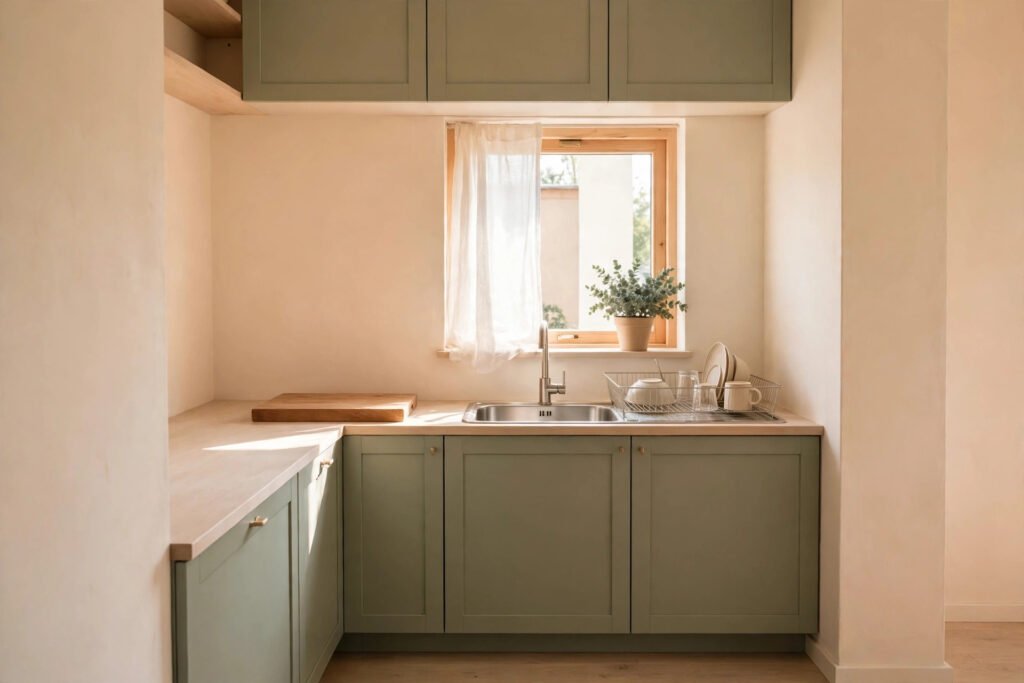
The kitchen reset is mostly about the sink and the counters: load the dishwasher or wash the few dishes in the sink, put clean dishes away a drying rack that stays full is just a second sink wipe the counters and the stove top, and take out the trash if it is full. A kitchen with empty counters feels clean even if the floor was not mopped, so short on time, always choose the counters over the floor.
Exact steps, in order:
- Clear the counters into the sink or the dishwasher, so you can actually wipe.
- Load or start the dishwasher, or wash the dishes by hand if there are only a few.
- Wipe the counters, then the stove top, with a damp cloth.
- Put the clean dishes away a dish left in the rack overnight becomes tomorrow’s clutter.
- Take out the trash if it is more than half full, and put a fresh bag in.
Common mistake: wiping around the clutter instead of moving it first. Move things, wipe, put them back. It takes the same five minutes, but the counter is actually clean.
Minutes 11–15: One small space (rotate daily)
The last five minutes go to one small space, rotating through the week so every part of the home gets attention:
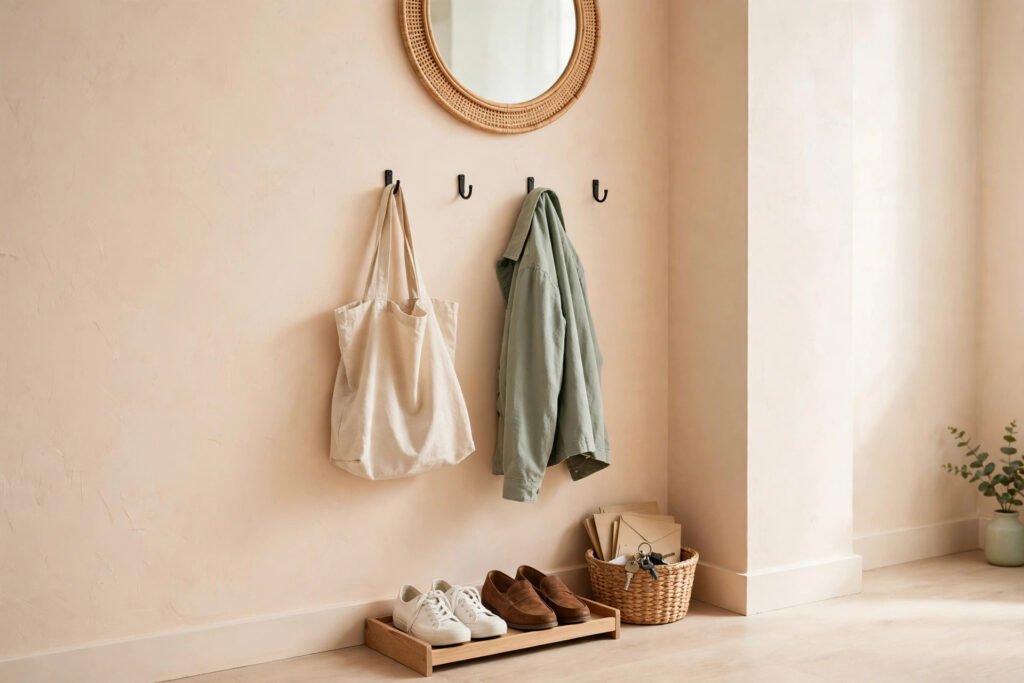
- Monday Entryway. Shoes on the tray, coats on hooks, keys and mail in the basket.
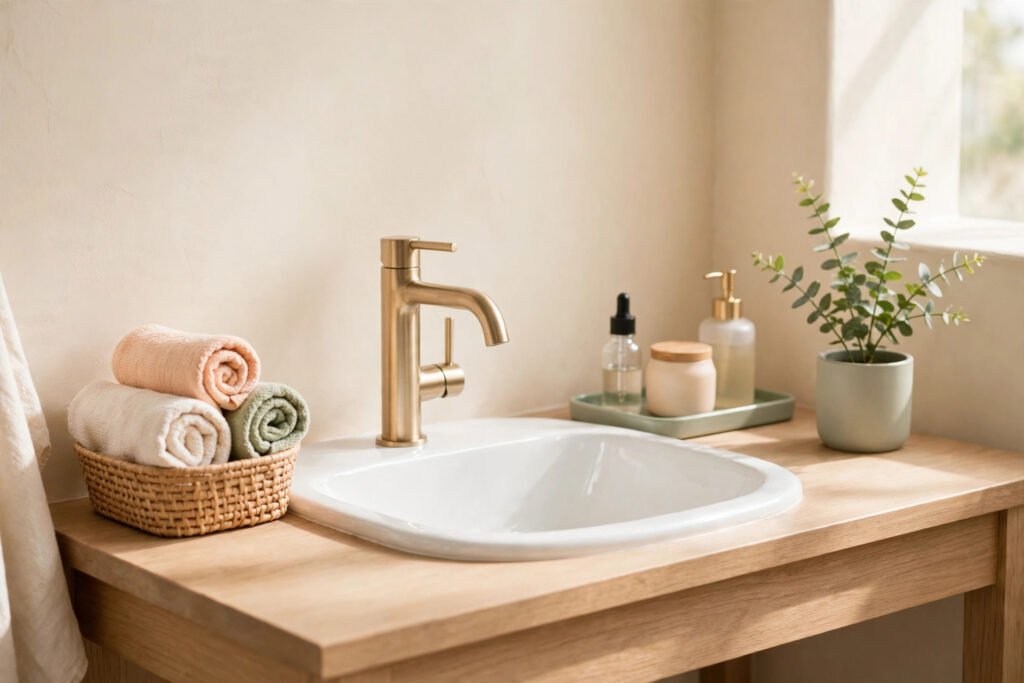
- Tuesday Bathroom counter. Toothbrushes and bottles back in their place, the mirror given a quick wipe, towels hung straight. Keep only what you use every day on the counter; a clear counter makes a tiny bathroom feel twice as big.
- Wednesday Bedroom. Make the bed, put clothes in the hamper or the closet not on the chair and clear the nightstand to three things: what you use at night, what you charge, and one book.
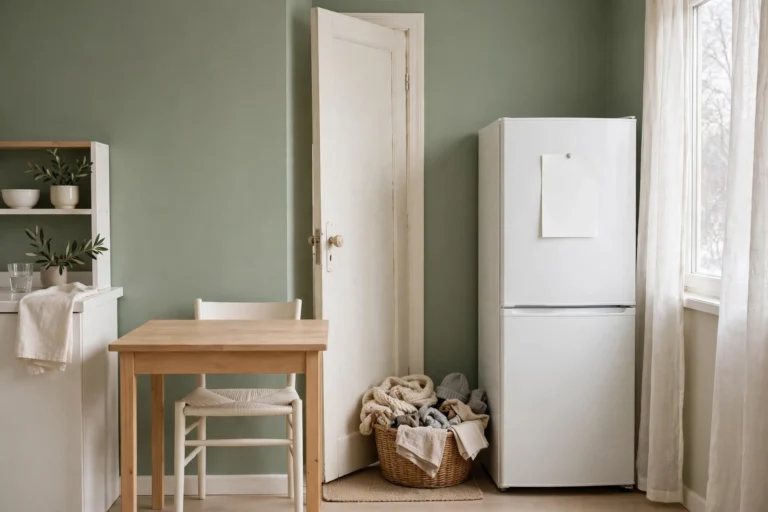
- Thursday Entryway again, or the laundry spot. In a small home, the entryway and the laundry pile fill up fastest, so they get two turns a week.
- Friday Bathroom again. A Friday bathroom reset means the weekend starts clean.
- Saturday and Sunday your choice. Pick the space that bothers you most, or set out tomorrow: keys, bag, and one outfit by the door.
Try this today: reset just one small space tonight five minutes, done.

The caddy that makes it faster
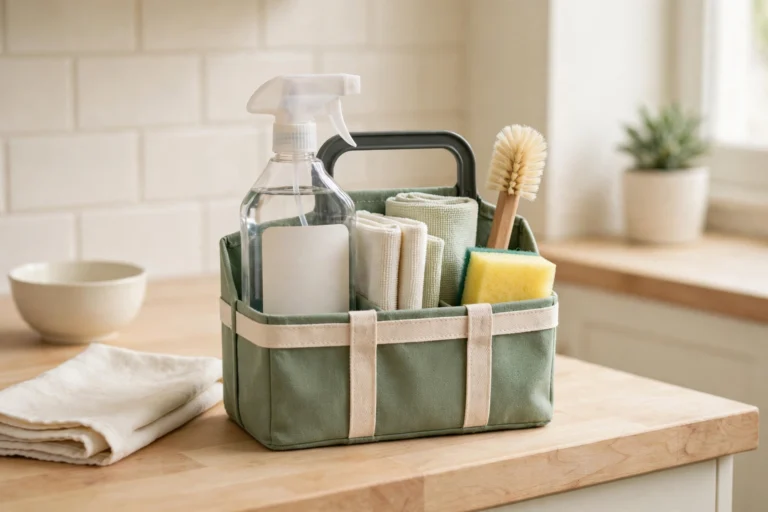
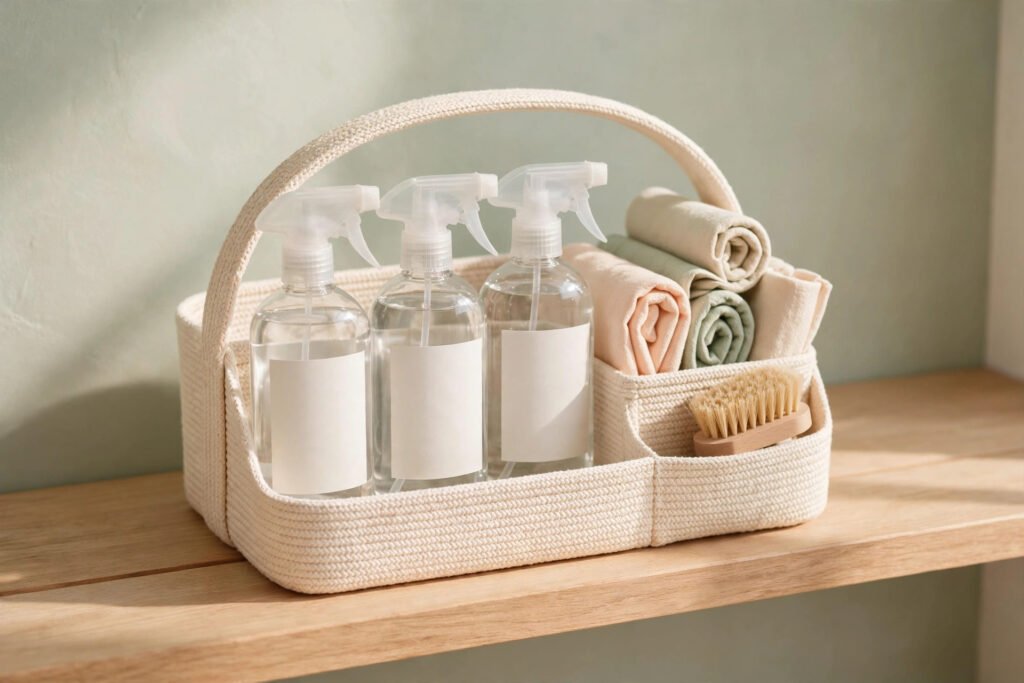
The single best tool for a daily reset is not a gadget. It is a caddy: one handled basket or tote that holds your cleaning supplies in one place, so the reset starts in seconds instead of hunting for a spray under the sink. Keep it in one spot under the kitchen sink or in a hallway cupboard and carry it with you from room to room.
What to keep in the caddy: one all-purpose spray, one glass spray, one bathroom spray, three or four rolled microfibre cloths, one small scrub brush, and a small bag for rubbish.
That is all six things, one caddy, every room. Do not fill it with every product you own; a heavy caddy stays in the cupboard, and a light one gets used. Refill it once a week, during the weekly reset. See also Pin 16: Cleaning List by Room, Step by Step.
Budget tip: you do not need to buy a special caddy. A basket, a tote bag, or a small bucket with a handle all work.
Morning vs evening reset
The routine works at either end of the day. Choose the one that fits your life, and keep it at the same time every day the fixed time is what turns it into a habit.
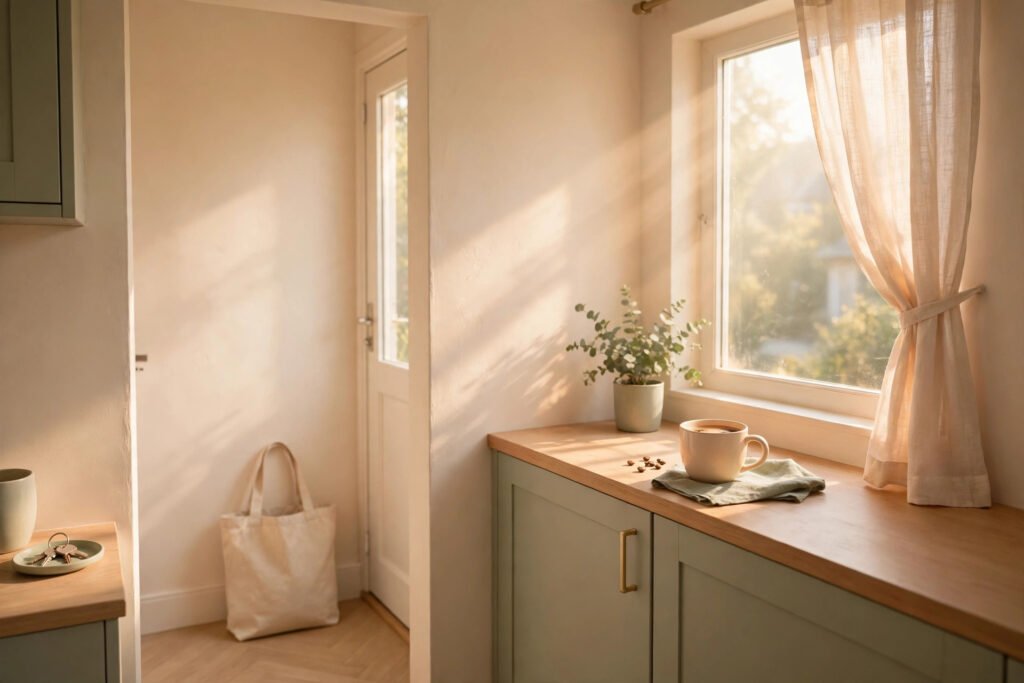
The evening reset (recommended). Do it after dinner, before you sit down. You wake up to a tidy home and a calmer morning. Evenings are when you are most tired, so the timer matters most: fifteen minutes, then stop, then rest.
The morning reset. Do it after breakfast, before you leave. You are fresher, but mornings are rushed keep it to ten minutes, living room and kitchen only. If mornings are rushed in your home, do the evening version instead.
Try this today: pick one time after dinner or after breakfast and write it down.

Reset for families and shared homes
A daily reset is even more useful in a shared home, because more people means more mess per day but it only works if the work is shared. One person resetting while everyone else adds to the mess will burn out in a week.
Give each person one zone and rotate weekly: one takes the living room, one the kitchen, and the rotating small space goes to whoever is free. Kids can own one small job each shoes on the tray, toys in the basket, books back on the shelf. A job a child can finish in two minutes is a job they will actually do.
In a shared flat, agree on two rules: dishes never stay in the sink overnight, and the entryway stays clear. Two rules are enough ten get ignored.

Weekly reset (30 minutes, once a week)
The daily reset keeps things tidy. The weekly reset keeps things clean. Once a week Saturday morning works for most people spend thirty minutes on the jobs the daily reset never touches:
- Vacuum or sweep the floors (10 minutes) living room and kitchen first, bedroom if time allows.
- Bathroom quick clean (8 minutes) sink, taps, mirror, and toilet. A wipe-down, not a deep clean.
- Change the bedding and start one load of laundry (5 minutes).
- Fridge and bins (4 minutes) throw out anything expired, wipe one shelf, take out the trash and recycling.
- Refill the caddy (3 minutes) check the sprays, wash the cloths, put it back in its home.
That is thirty minutes, and it replaces the two-hour weekend clean most of us dread. The daily reset does the tidying, the weekly reset does the cleaning, and neither is a big job on its own.
Common mistakes
Mistake 1: Trying to do it perfectly. A reset is not a deep clean. Good enough, every day, beats perfect once a month.
Mistake 2: Starting a new project mid-reset. The reset is for putting things away, not sorting a drawer. Write that job on a list for the weekend and keep moving.
Mistake 3: No homes for things. If the scissors have no drawer, you cannot put them away you can only move them. Homes first, reset second.
Mistake 4: Doing it alone when you share a home. A reset that belongs to one person becomes a resentment. A reset that belongs to everyone becomes a habit.
Mistake 5: Skipping the timer. Without a timer, fifteen minutes quietly becomes thirty. Stop when it rings, even if one small thing is left it will take thirty seconds tomorrow.
What if you miss a day?
Miss a day, and the next reset takes twenty minutes instead of fifteen. Miss a week, and it takes an hour. Just restart the next evening do not try to catch up by cleaning for two hours. The goal is not a perfect streak; it is a home that is tidy most days, and a routine you can come back to after a busy week or a trip, without guilt.
Printable checklist
Print this, stick it on the fridge, and tick it off each evening.
Daily reset 15 minutes
- Living room: cushions fluffed, blanket folded, coffee table clear, floor scan done
- Kitchen: dishes loaded or washed, counters and stove wiped, trash out if full
- One small space: entryway / bathroom / bedroom (rotate daily)
- Tomorrow ready: keys, bag, and one outfit by the door
Weekly reset 30 minutes, once a week
- Vacuum or sweep the floors
- Bathroom quick clean: sink, taps, mirror, toilet
- Change the bedding, start one load of laundry
- Fridge check: throw out anything expired, wipe one shelf
- Refill the caddy: sprays topped up, cloths washed, caddy back in its home
FAQ
1. Does the reset really only take 15 minutes?
Yes, once you have done it for a week. The first few days take longer while you learn the order; by day five, most people finish in twelve to fifteen minutes.
2. What if my home is really messy right now?
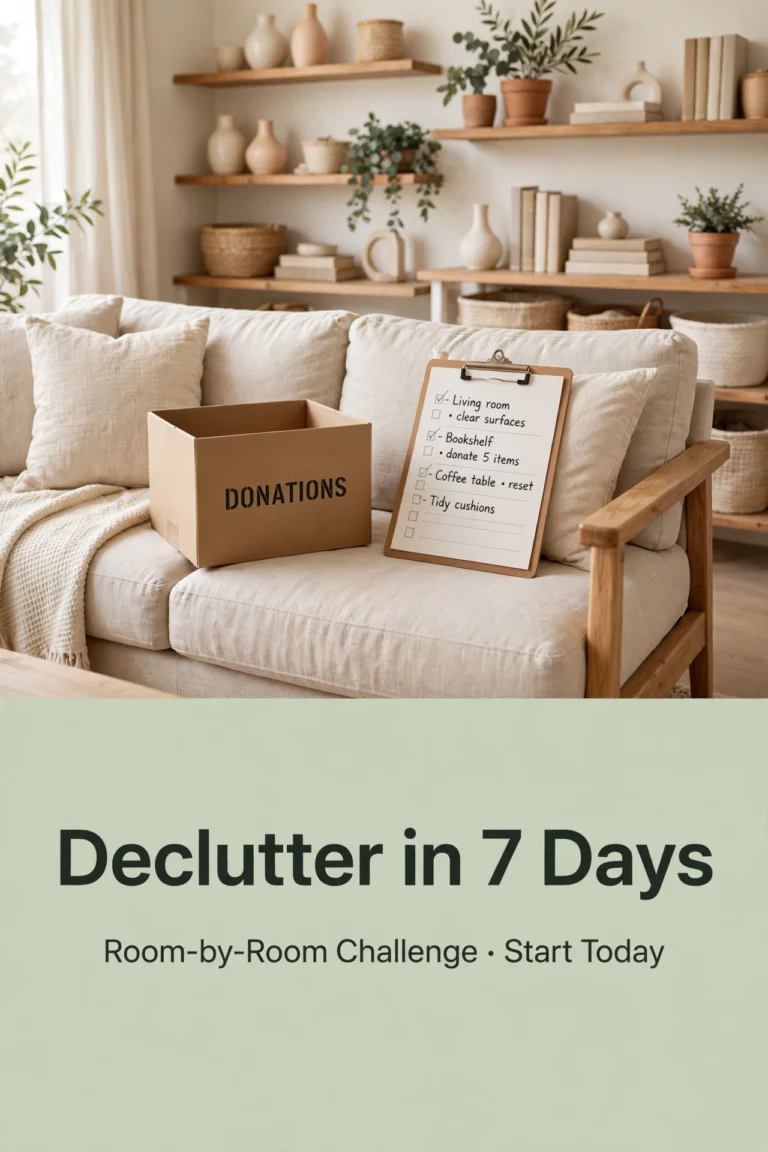
Declutter first, then start the reset. Spend one hour on the worst room or follow Pin 8, Declutter in 7 Days, one small area a day. The reset maintains a tidy home; it does not create one from scratch.
3. Do I need to buy anything to start?
No. You need a timer (your phone), a basket for stray items, and a cloth. Start with what you have.
4. Morning or evening which is better?
Evening, for most people, because you wake up to a tidy home. But the best time is the one you will actually do.
5. Will this work in a tiny flat or a shared house?
Yes it works best in small homes, because there is less space for mess to hide. In a shared house, split the three zones between the people who live there and rotate weekly.
Related pins
- Pin 3: 15-Minute Daily Reset Routine
- Pin 8: Declutter in 7 Days Room-by-Room Challenge
- Pin 16: Cleaning List by Room, Step by Step