Vision Board for a Sorted Home in 2027
Dream it in November, live it all year. One board, one goal per room.
Introduction
A vision board sounds like a craft project, but for a small home it is really a plan you can see. One board, one goal per room, and a simple monthly reset to keep it real. Instead of a list of chores you never look at, you get a picture of the home you want, on the wall where you see it every day.
The ten ideas below build a vision board that actually works, for under $20 in total. Most of them cost nothing, because the board is made from things you already own: a cork board, a piece of card, or even the inside of a cupboard door.
Start in November, while the year is still young in your mind. By January, the board is already on the wall, and the year starts sorted instead of starting with a rush.
Before you buy anything
Do not buy a fancy board before you know what goes on it. The board is the last thing you need, and the goals are the first.
1. Walk through your home with a notebook. One room at a time, and write down the one thing that bothers you most in each room. Not ten things, just one per room.
2. Pick one goal per room. The kitchen goal might be clear counters. The bedroom goal might be a closet you can open without things falling out. One goal per room is enough, because five goals you can see beat twenty goals you forget.
3. Find the pictures last. Once the goals are written, find one picture per goal. A photo from Pinterest, a picture from a magazine, or a photo of your own room on a good day. The picture is the reminder, and the goal is the work.
Common mistake: filling a board with twenty beautiful pictures of homes that look nothing like yours, then feeling worse every time you look at it. A vision board works when the pictures look like your home, only tidier.
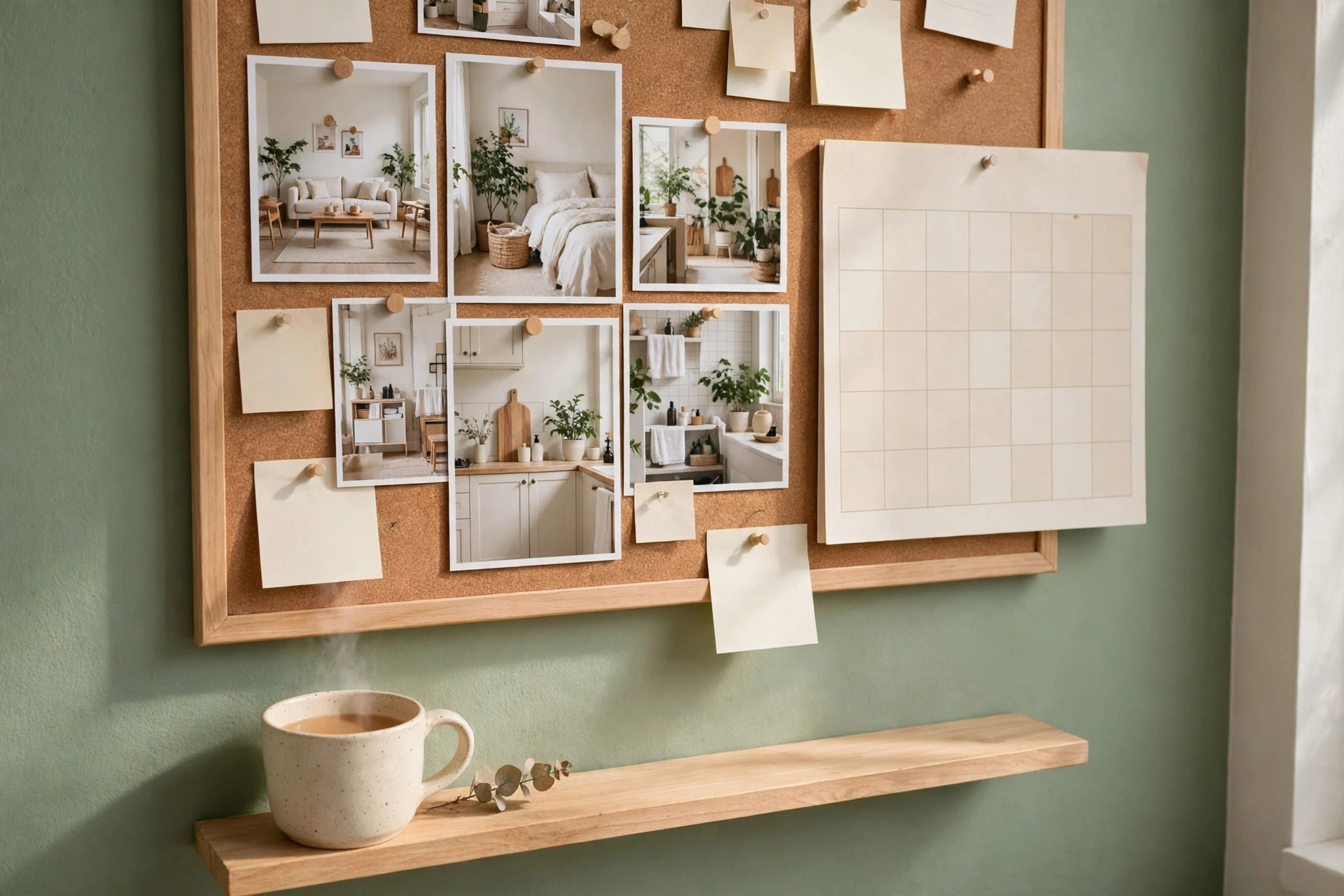
1. One board, five rooms
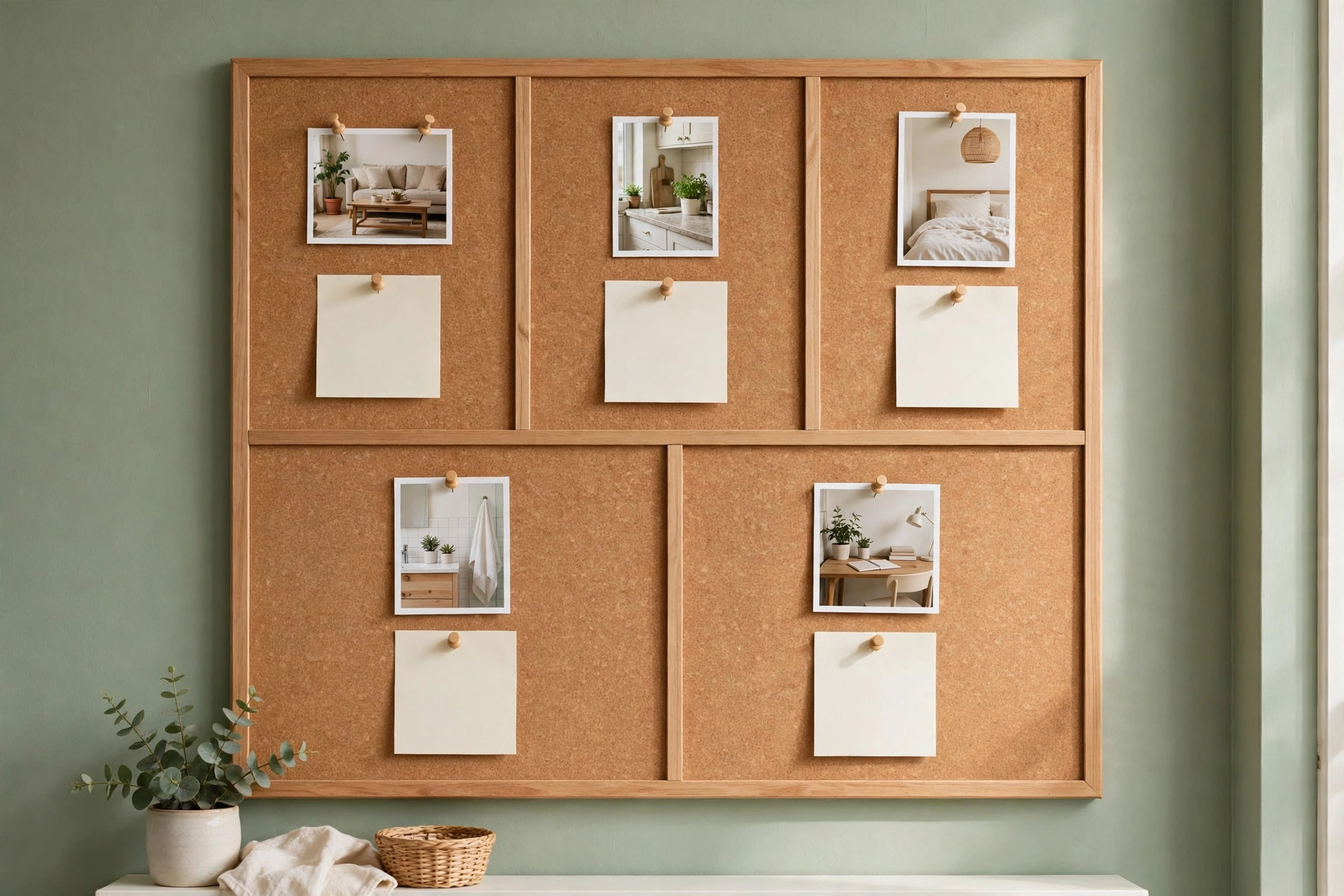
Five rooms, five goals, one board you can read in ten seconds.
What to buy: One cork board or foam board, about $5 to $10, or a piece of card you already own. Divide it into five sections, one per room, with a pen or a strip of tape.
Where it goes: On a wall you walk past every day, at eye level. The hallway, the kitchen wall, or the inside of the bedroom door all work.
Common mistake: Making the board too big, then filling it with clutter to fill the space. A small board with five clear goals beats a big board full of pictures you never look at.
Try this today: Draw five boxes on a piece of card and write one goal in each box. If you can read all five in ten seconds, the board is the right size.
2. One goal per room, written in plain words
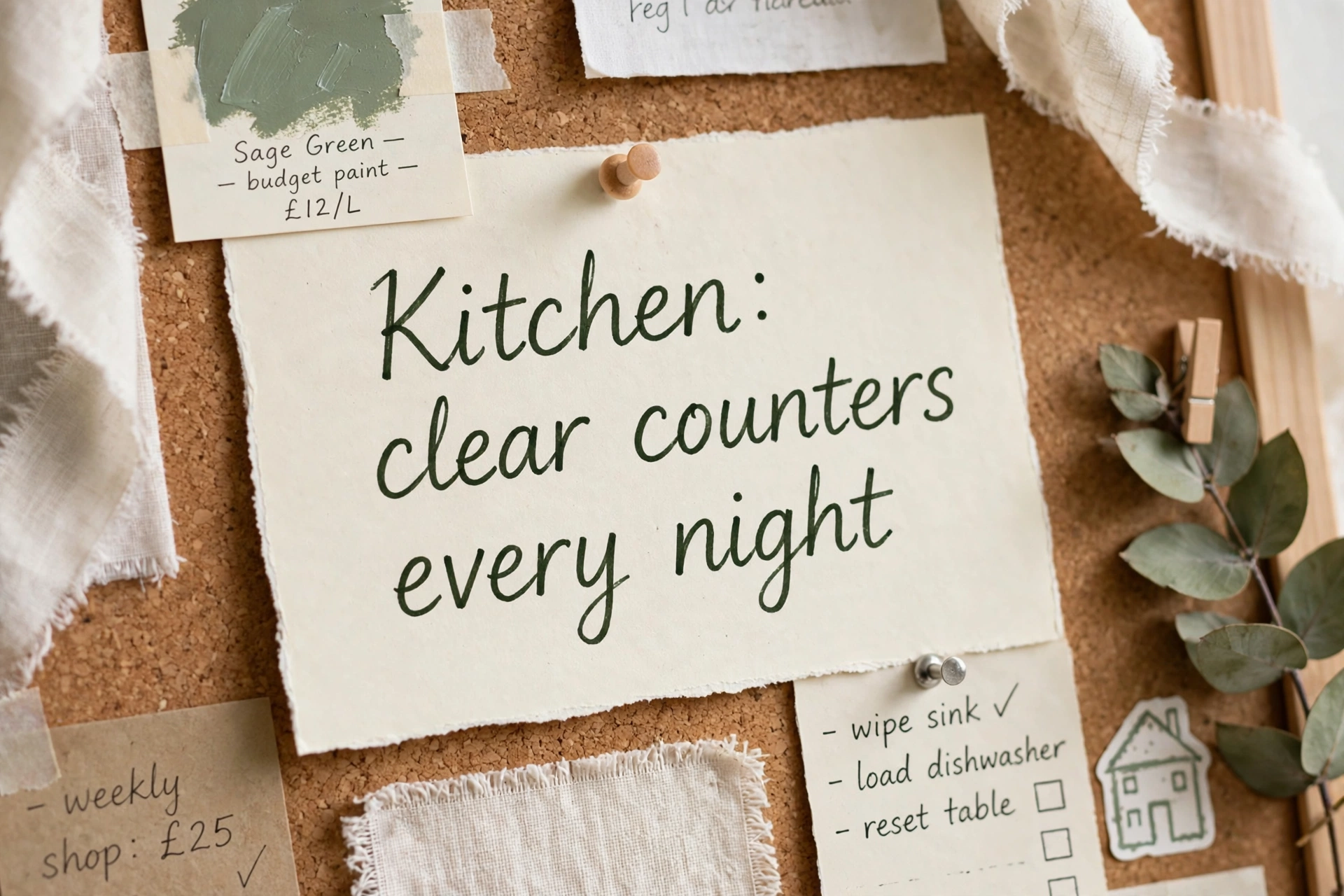
A goal you can say in one sentence is a goal you can do.
What to buy: A pen and a few small cards, about $1 to $2. Write each goal in plain words, starting with a verb: clear, sort, fix, keep.
Where it goes: On the board, under the picture for that room. One card per goal, and the card stays until the goal is done.
Common mistake: Writing goals like “be more organized”, which means nothing and cannot be finished. Write “clear the kitchen counters every night”, which you can do tonight and tick off.
Try this today: Write your kitchen goal in one sentence. If a friend could tell whether you did it, the goal is clear enough.
3. A photo of your own room on a good day
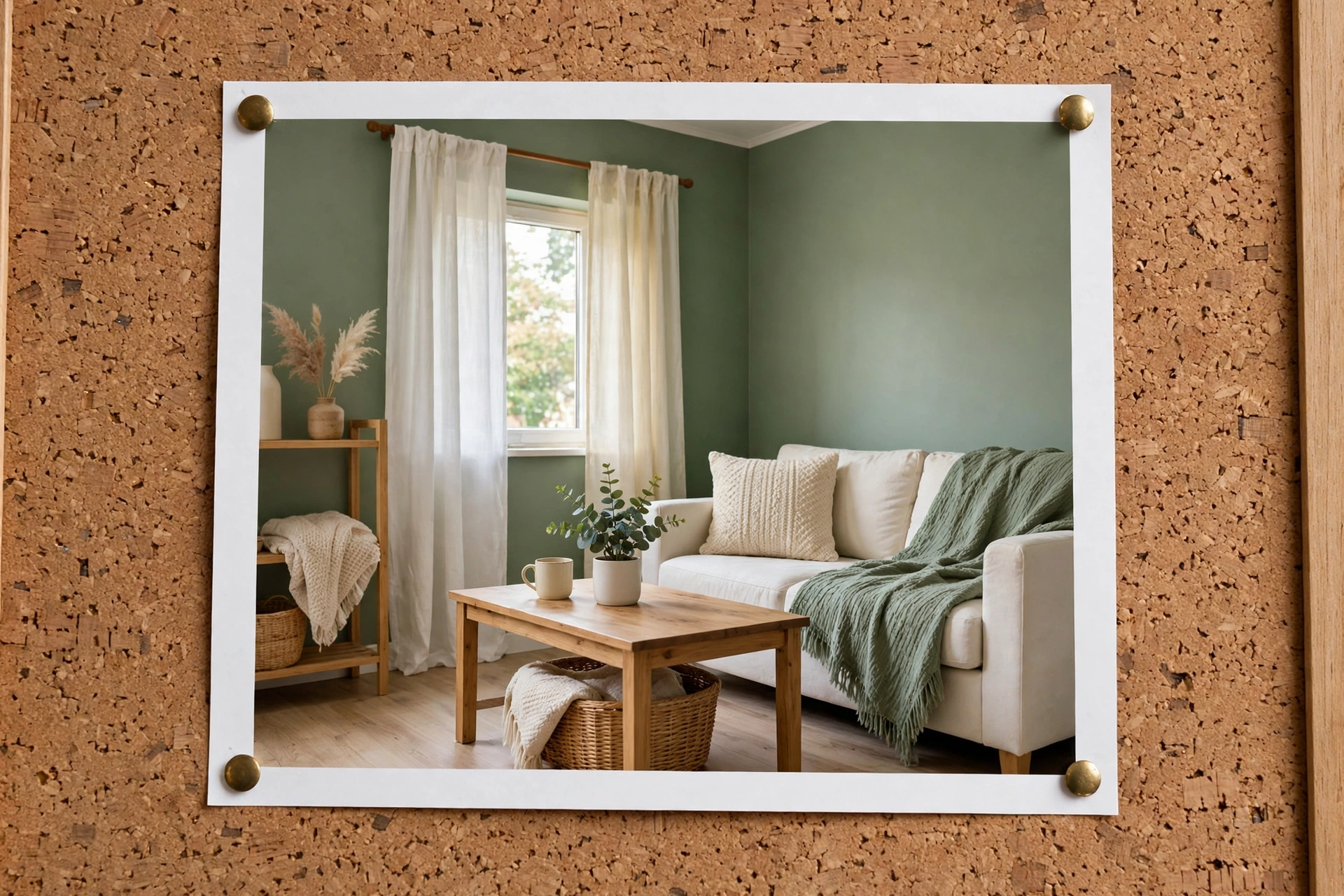
Your own tidy room is the best picture, because you know it is real.
What to buy: Nothing. Tidy one corner of a room, take a photo on your phone, and print it at home or at a library for a few cents.
Where it goes: On the board, next to the goal for that room. When the room looks like the photo, the goal is done, and you can see the proof.
Common mistake: Using only pictures of other peoples homes, then deciding your home can never look like that. Your own room, on a good day, is the picture that keeps you going.
Try this today: Tidy the kitchen counter, take a photo, and pin it to the board. That photo is your goal for the whole year.
4. A monthly reset, written on the board
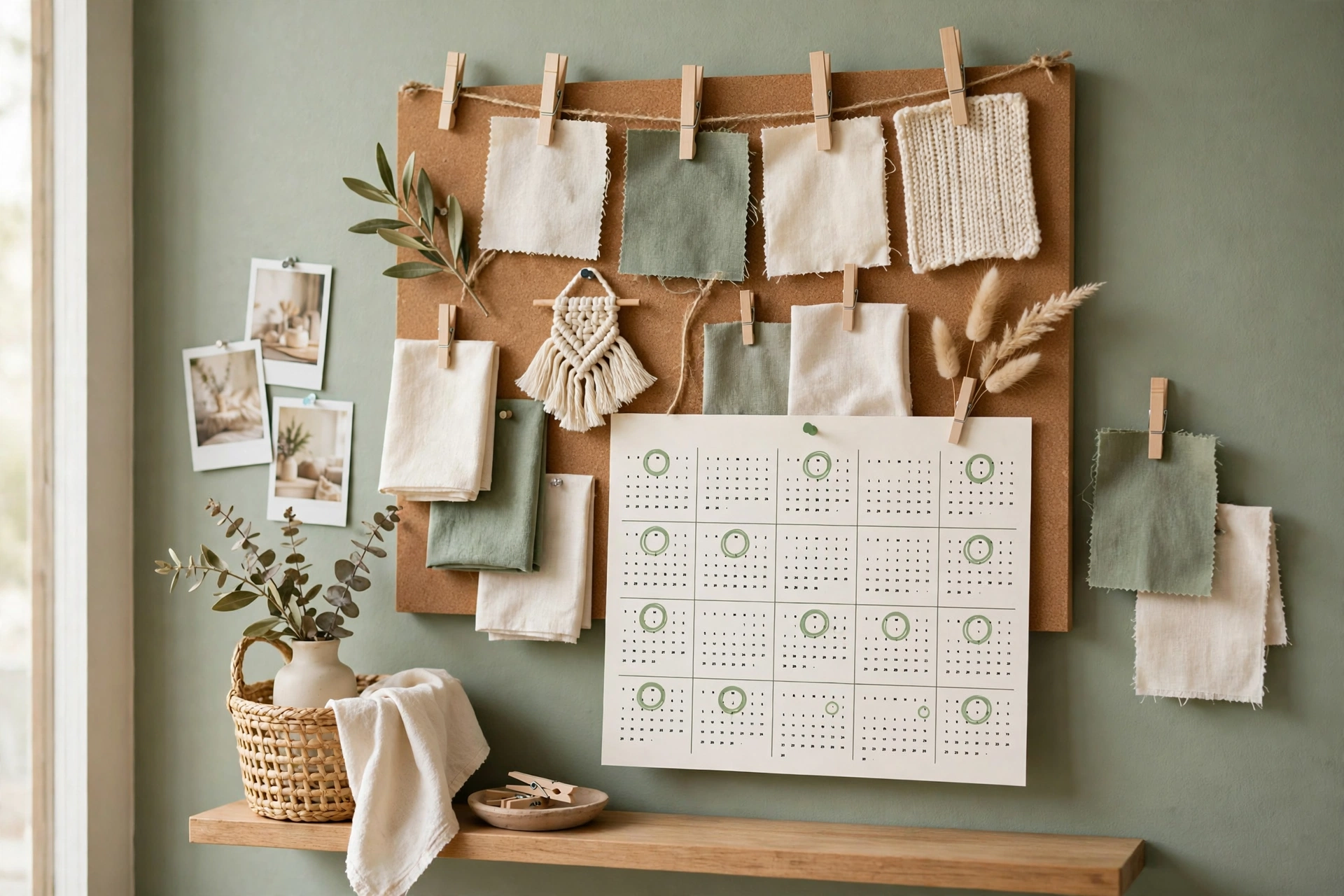
One reset day a month keeps the board honest, and the home sorted.
What to buy: A small calendar or a printed month planner, about $1 to $3. Circle one day each month, and write “reset” on it.
Where it goes: On the board, beside the goals. On reset day, spend fifteen minutes in each room, put things back where they belong, and tick off the goals you kept.
Common mistake: Setting a reset for every week, then giving up by February. One reset a month is enough, because a home does not fall apart in a week, and a monthly habit lasts all year.
Try this today: Circle the first Sunday of next month on the calendar. That is your first reset day, and it is already on the board.
5. The “one in, one out” rule, in writing
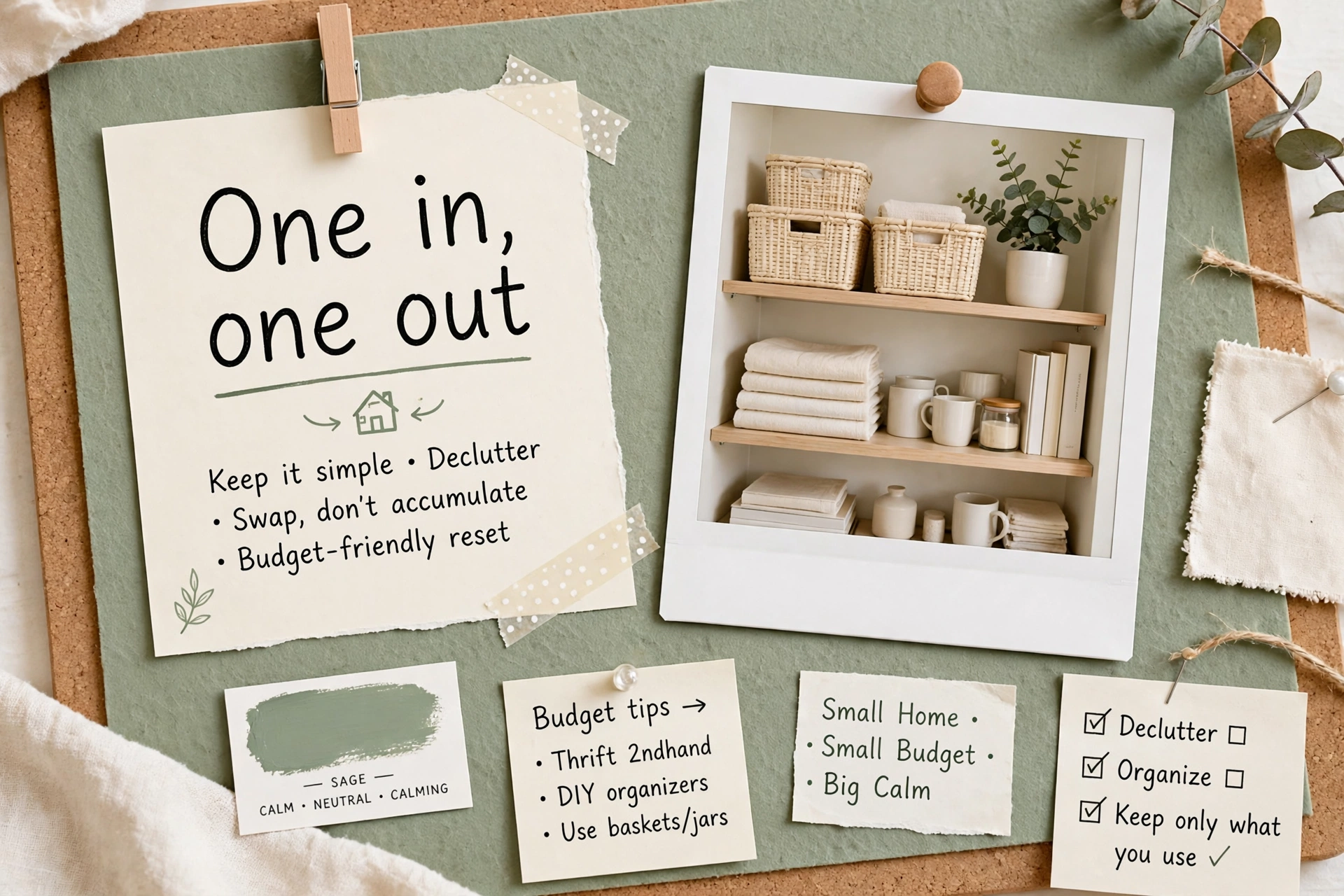
Every new thing means one old thing leaves. Write it down, and it works.
What to buy: One card and a pen, about $1. Write “One in, one out” on the card, and pin it where you can see it when you come home with shopping.
Where it goes: On the board, or on the inside of the front door. The rule is simple: a new mug means an old mug leaves, a new jumper means an old jumper leaves.
Common mistake: Keeping the rule in your head, then forgetting it the moment you bring something new home. Written down, the rule is there when you need it.
Try this today: Write the rule on a card and pin it by the door. The next time you bring something home, the card will remind you.
6. A “done” column for the wins
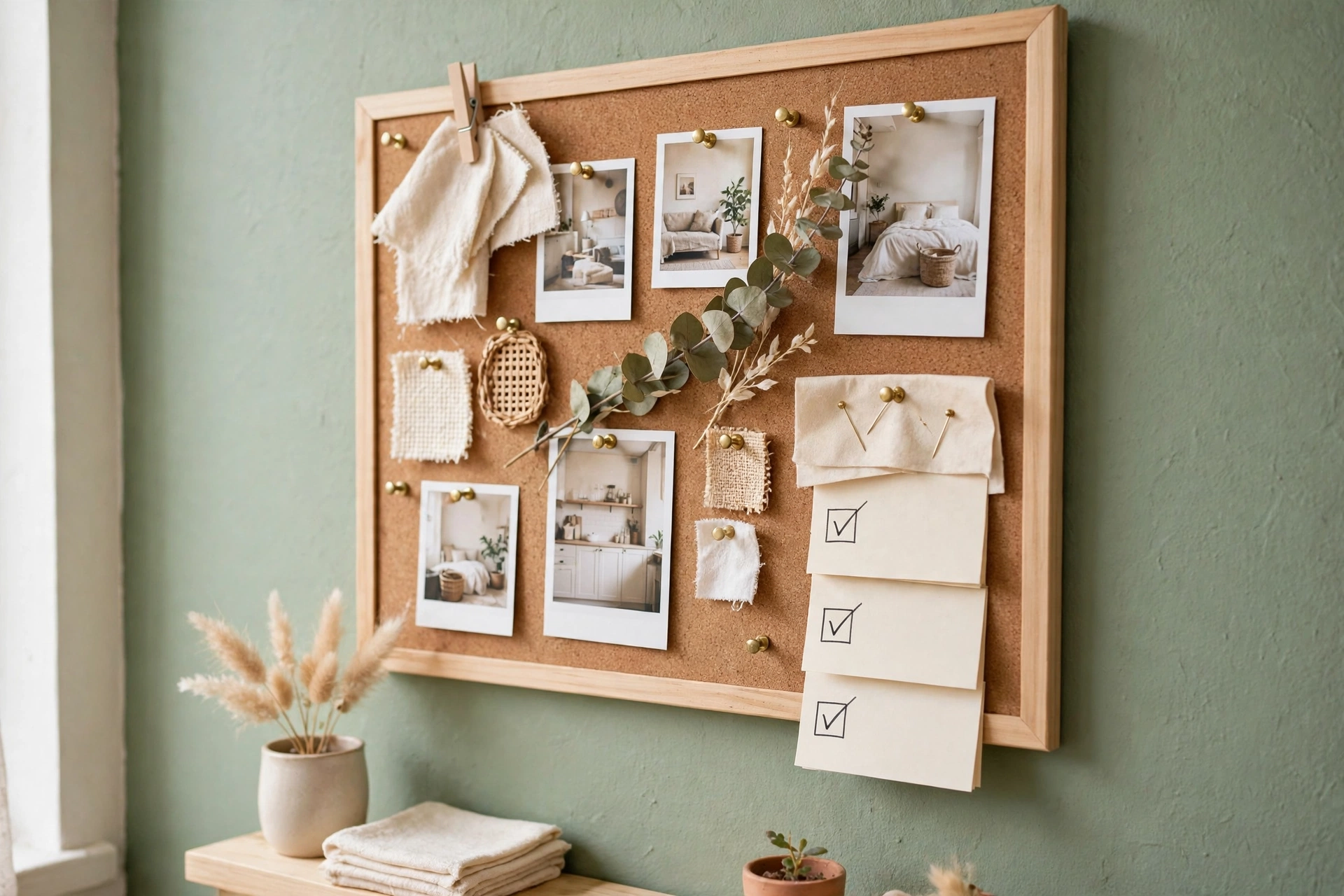
A board with no wins is a list of chores. A board with wins is proof you are doing it.
What to buy: A few small stickers or a coloured pen, about $1 to $2. When a goal is done, move its card to the “done” column and tick it.
Where it goes: On the right side of the board, where you can see it. Three ticked goals by March is a good year, and the board shows it.
Common mistake: Moving the goalposts every time you finish something, so the board never shows a win. Let the wins stay on the board, and add a new goal only when one is done.
Try this today: Write down one thing you already sorted this year, and pin it in the “done” column. The board starts with a win.
7. A budget line, so the dream stays affordable
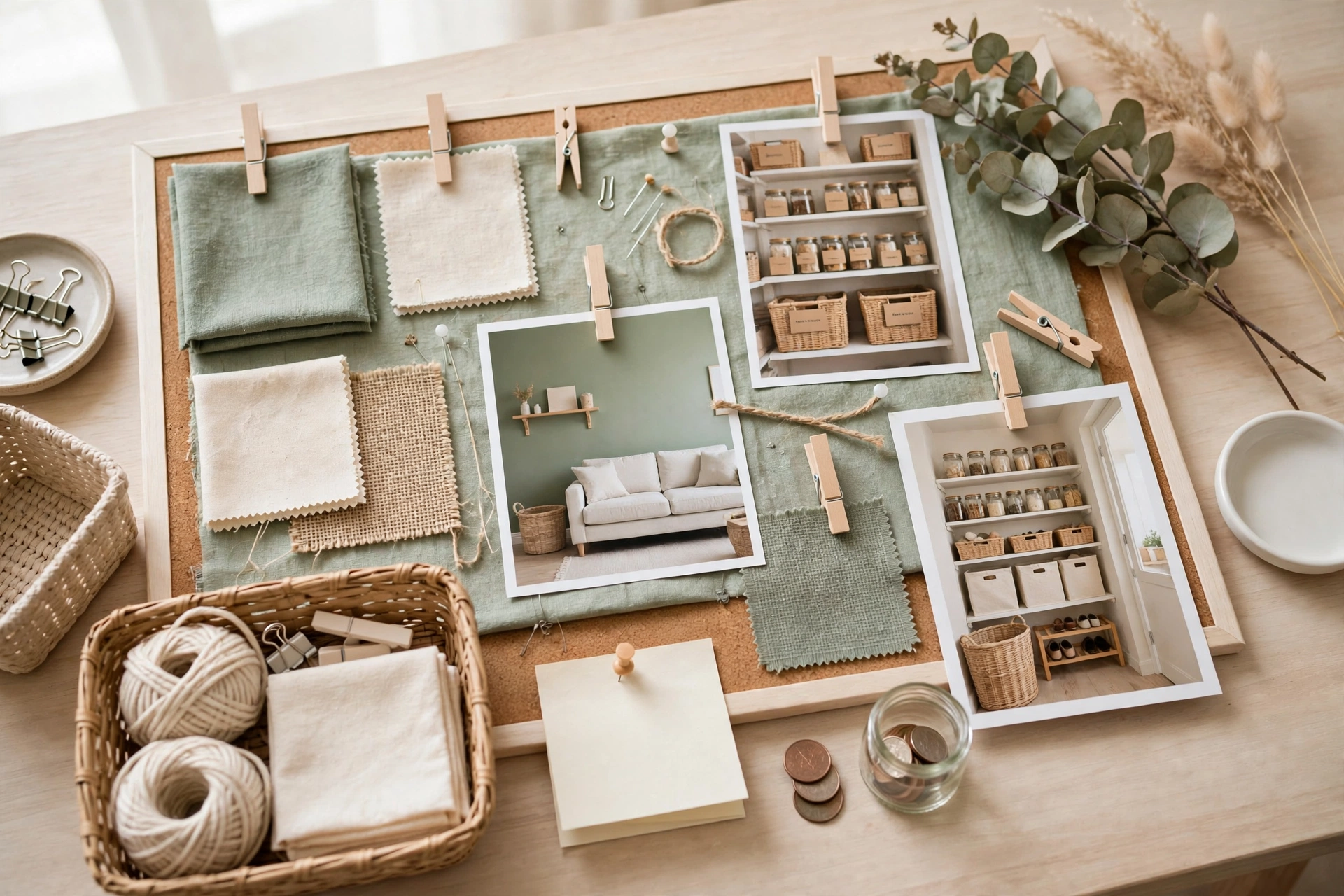
A sorted home does not need a big budget. It needs a small one, written down.
What to buy: One card and a pen. Write your monthly home budget on it, even if it is only $10 or $20, and pin it to the board.
Where it goes: Under the goals, where you see it before you shop. The budget keeps the vision board honest, because a goal that needs $200 is not a goal for this month.
Common mistake: Planning a whole new room in January, then doing nothing because it costs too much. A $20 goal you can do this month beats a $200 goal you never start.
Try this today: Write “$20 this month” on a card and pin it to the board. Spend it on the goal that matters most, and nothing else.
8. A seasonal swap, four times a year
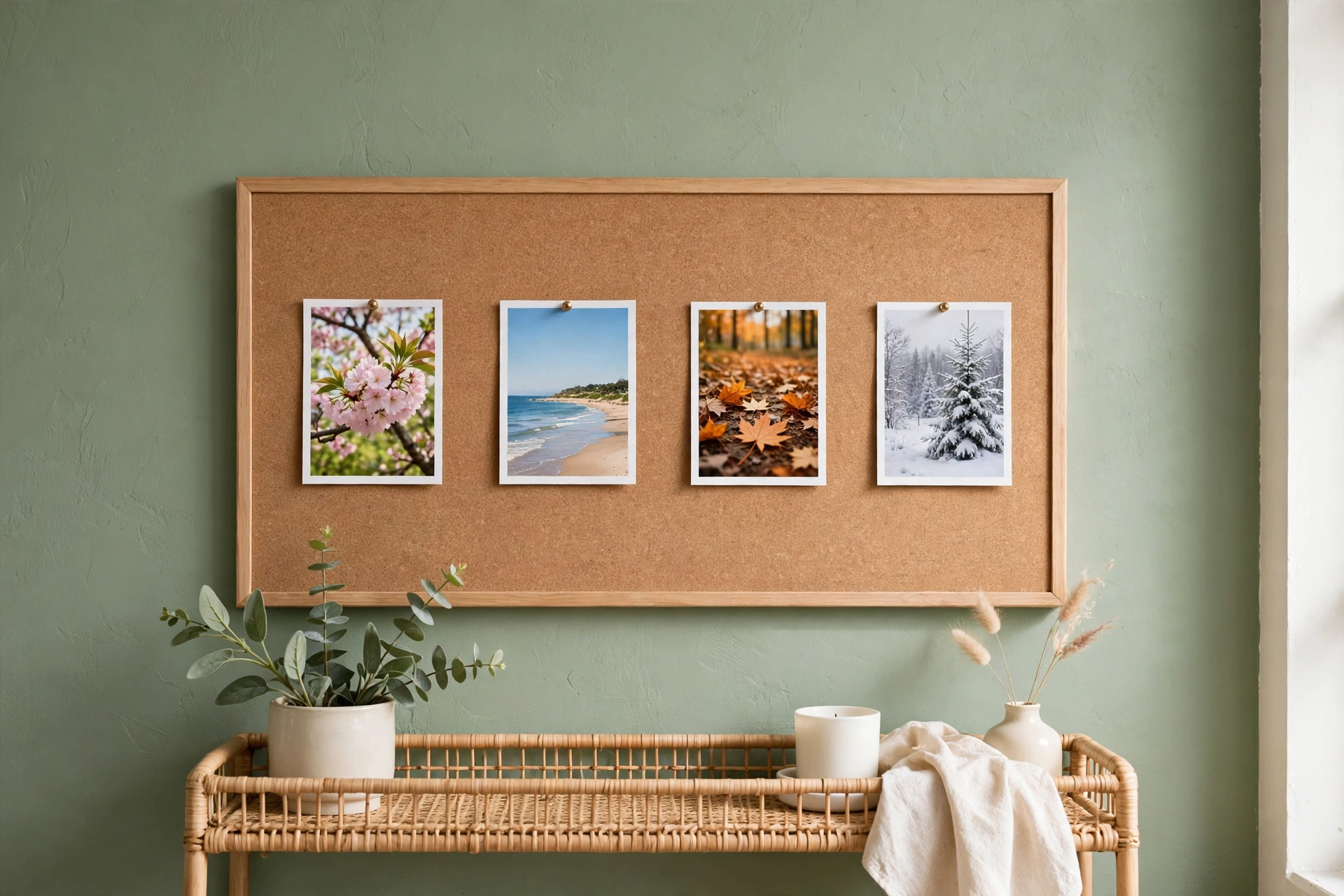
Four seasons, four small changes, and the board never goes stale.
What to buy: Nothing. Four times a year, swap one picture on the board for a seasonal one, and change one goal to match the season.
Where it goes: On the board, in the same five sections. Winter is for the closet, spring is for the big clear-out, summer is for the kitchen, and autumn is for the cosy corners.
Common mistake: Making the board in January and never touching it again, until it becomes wallpaper. A board you update four times a year stays alive, and so does the habit.
Try this today: Pick the season we are in now, and write one seasonal goal on the board. Winter is coming, and the closet is a good place to start.
9. A photo of the people who live there
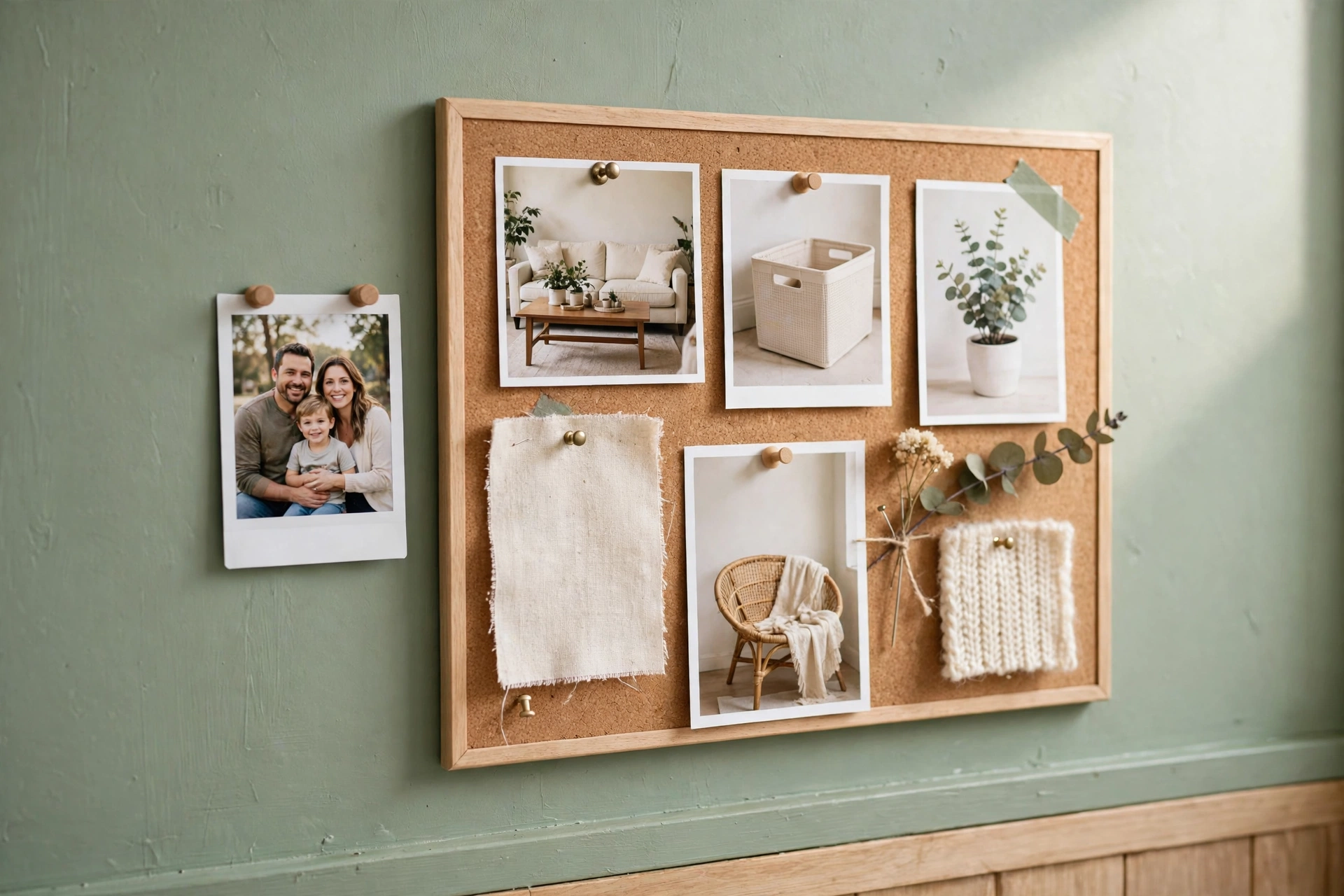
A home is sorted for the people in it, not for the pictures on the board.
What to buy: Nothing. Print one photo of the people who live in the home, and pin it in the middle of the board.
Where it goes: In the centre, where all five rooms meet. The photo reminds you why the goals matter, and it keeps the board warm instead of perfect.
Common mistake: Making a board that looks like a shop display, with no sign of the people who live there. A home is for living in, and the board should show that.
Try this today: Pin one family photo to the middle of the board. If the board feels like yours now, it is done.
10. The December check-in
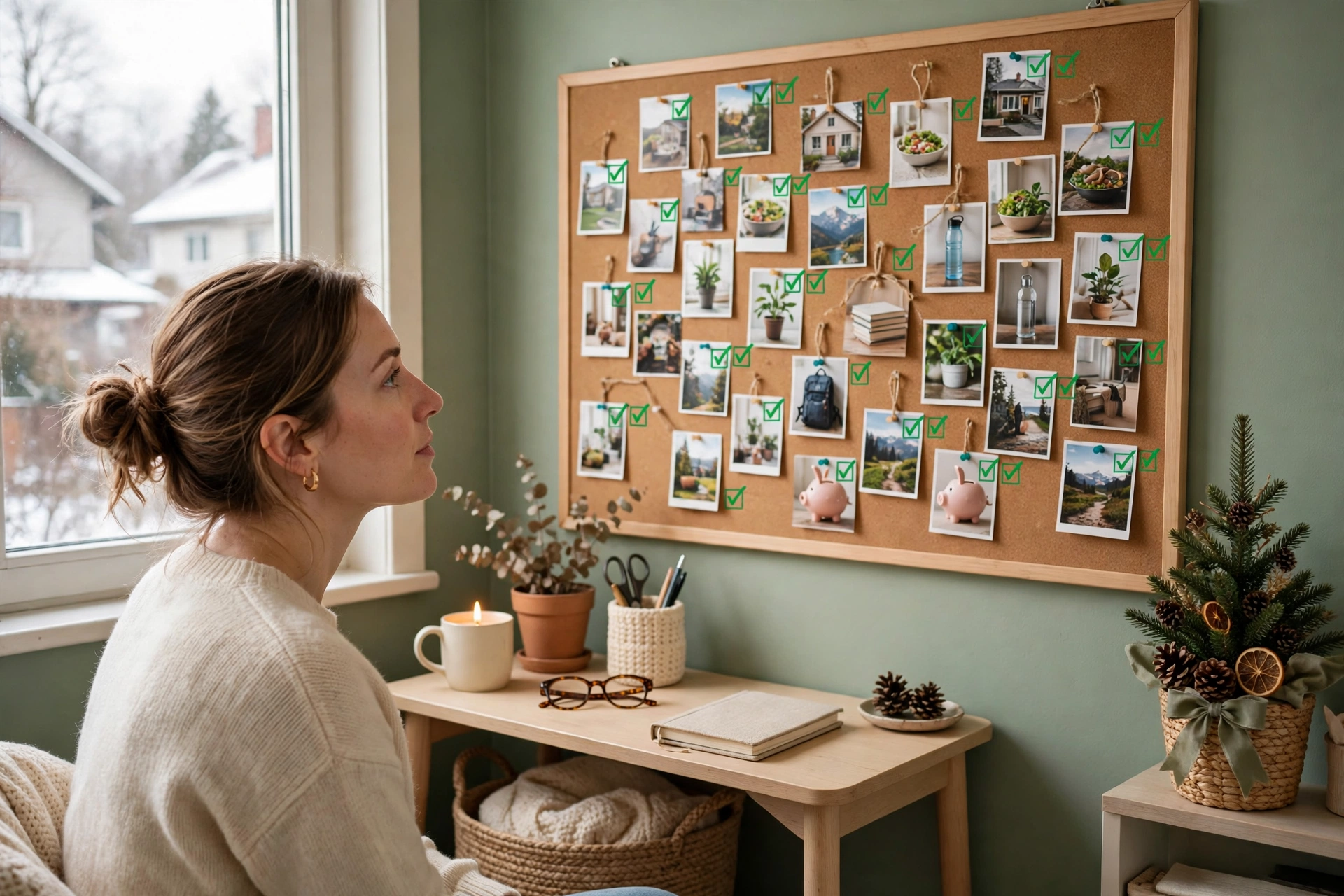
In December, look at the board and count the wins. Then start the next board.
What to buy: Nothing. In December, take the board down, count the goals you finished, and keep the ones that still matter for next year.
Where it goes: On the wall until December, then in a drawer as a record of the year. The next board starts in January, with the lessons from this one.
Common mistake: Keeping the same board up for two years, until the goals mean nothing. A board is for one year, and a new year gets a new board.
Try this today: Write “December check-in” on the calendar now. When December comes, the board will be waiting, and so will the wins.
What it costs
A vision board costs about $5 to $15 in total, and most of that is the board itself. The pins, cards and pens cost a few dollars, and the pictures are free if you print them at home or use photos you already own.
| Item | Price |
|---|---|
| Cork or foam board | $5 to $10 |
| Pins or tape | $1 to $2 |
| Cards and pens | $1 to $2 |
| Printed photos | $1 to $3 |
| Small calendar | $1 to $3 |
The 15-minute version
If you have fifteen minutes, do this and stop. Take a piece of card, draw five boxes, write one goal per room in plain words, and pin the card where you can see it. That card is your vision board, and it works just as well as a fancy one.
FAQ
Do I need to be crafty to make a vision board?
No. A piece of card, a pen and five goals is a vision board. The craft supplies are optional, and the goals are the point.
What if I do not reach a goal?
Move it to next month, or make it smaller. A goal that is too big is not a failure, it is a goal that needs to be cut in half.
Should the board be private?
Put it where you see it every day. If you share the home, put it somewhere everyone can see it, because a shared board gets shared help.
When should I start?
In November, while the year is still ahead of you. By January, the board is already on the wall, and the year starts with a plan instead of a rush.
Keep it going
Once a month, on reset day, look at the board for five minutes. Tick off what is done, move one goal to the “done” column, and add one new goal if you are ready. A board you look at once a month stays alive all year.
Related pins
- Pin 32, New Year Home Reset in 7 Days, on the Cleaning board
- Pin 36, Vision Board for a Sorted Home in 2027, on the Cleaning board
- Pin 3, 15-Minute Daily Reset Routine, on the Cleaning board